© Shutterstock
 Votre guide Ryo
Things to Do in Bucharest in 2026: 15 Must-Have Experiences
Behind its wide Haussmann-inspired boulevards, Bucharest carries a mixed reputation: too Soviet for some, too chaotic for others. Yet the Romanian capital is home to the largest civilian administrative building in the world, almost-secret art nouveau gardens, and a century-old beer bar scene that holds its own against Prague. What to do in Bucharest when you have a weekend or a full week? The answer comes in fifteen steps, from Ceaușescu's pharaonic palace to the geothermal spa complex on the city's outskirts. If you've gotten into the habit of exploring a city with a Ryo audio guide in your ears, keep that reflex here: every neighborhood of Bucharest has a story to tell — you just need to know where to listen.
The Palace of the Parliament alone weighs nearly 4.1 million tonnes and sinks a few millimeters every year under its own weight, a detail that continues to fascinate architects around the world. A few streets away, the old town of Lipscani hides breweries founded in 1879, while Herăstrău Park spreads across 187 hectares along a lake where locals come to cycle at the first sign of good weather. Also on the itinerary: the Therme spa complex, a full-scale open-air village museum, and for those with a taste for gothic atmosphere, a day trip to the castle that inspired Dracula. Whether you're staying for one day or five, here is everything you need to fill every hour of your trip, whether you're looking to visit Bucharest in 1 day or spread your plans across five full days.
1. The Palace of the Parliament, an XXL Symbol of the Ceaușescu Era
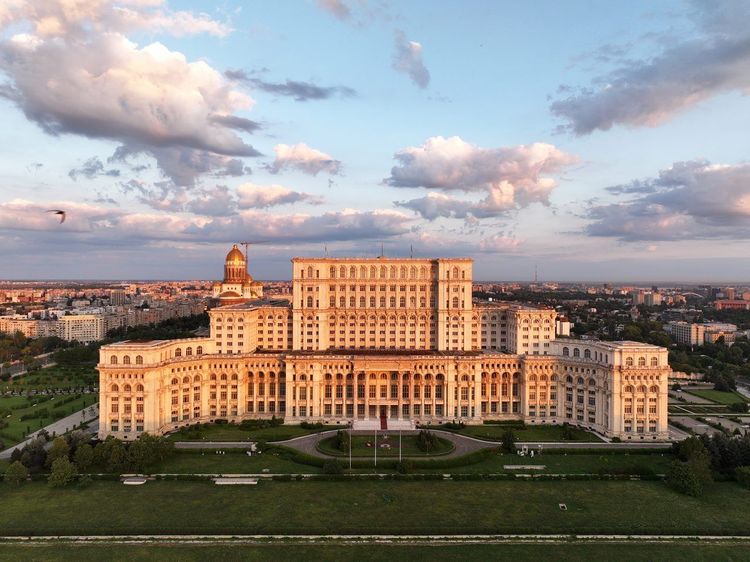
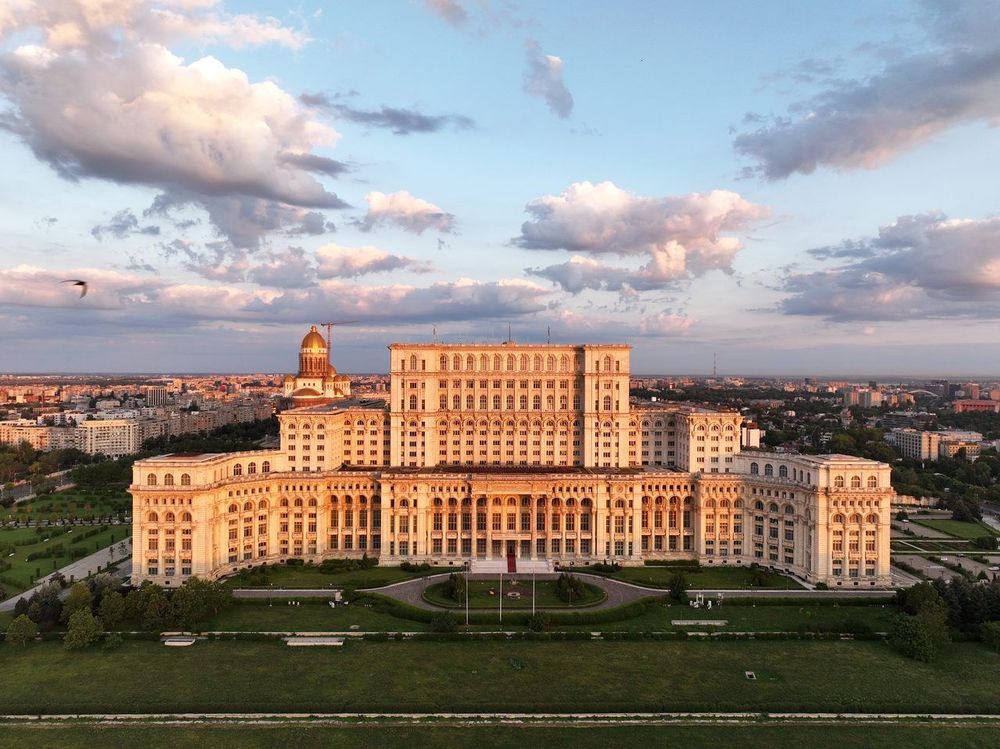
The Palace of the Parliament (Strada Izvor 2-4, 050563 București, rated 4.6/5 on Google based on 45,021 reviews) remains the number-one architectural landmark for anyone wondering what to visit in Bucharest in a single day. Commissioned by Nicolae Ceaușescu in 1984, the building required the demolition of a fifth of the historic city center and the mobilization of tens of thousands of workers operating in three shifts, day and night, for years. The result: 365,000 m² spread across twelve above-ground floors and eight underground levels, making it the largest civilian administrative building on the planet, just behind the Pentagon if military buildings are included.
Only a fraction of the building is open to visitors — between 70 and 100 rooms depending on the tour chosen — but that is more than enough to appreciate the project's staggering ambition. Of the 1,100 rooms in the complex, a large majority remain unoccupied to this day. The grand hall rises 18 meters high, with a carpet so heavy it had to be brought in through a specially cut window. Allow approximately 45 minutes for the guided tour, available in English or Romanian depending on the time slot, and bring a photo ID: access is only permitted with a guide, either by reservation or on the spot depending on the day's attendance.
The marble comes almost entirely from Romanian quarries, as does the wood used for the paneling and the crystals in the chandeliers, in keeping with the regime's policy of total self-sufficiency. One detail never fails to amuse visitors: some rooms were never finished after the regime fell in 1989, and remain frozen today somewhere between bare concrete and unfinished grandeur. The construction project consumed a considerable share of the country's resources, which partly explains why Romania took several decades to recover economically. Today, the Palace of the Parliament houses both the Chamber of Deputies, the Romanian Senate, the Constitutional Court, and the National Museum of Contemporary Art — a striking contrast with the building's architectural style. For the most dramatic photograph, position yourself on Bulevardul Unirii in the late afternoon, when the raking light highlights the colonnades.
2. Getting Lost in the Old Town of Lipscani
The Lipscani district (Strada Lipscani, București, rated 4.6/5 on Google based on 18,500 reviews) concentrates several centuries of commercial history within a single neighborhood. The name comes from the merchants of Leipzig who sold their fabrics here as early as the 16th century, an activity that shaped a maze of cobbled alleyways now pedestrianized.
You'll encounter Curtea Veche, a remnant of the princely court of Vlad Țepeș — the famous Vlad the Impaler — wedged between two Belle Époque buildings. A little further on, the Banca Națională displays an impressive neoclassical facade, while the Macca-Vilacrosse covered passages, with their colorful glass roofs installed in 1891, now house tea rooms. The architectural contrasts are stark: a grey communist building sits next to a carefully restored art nouveau villa, while a construction site elsewhere reveals 18th-century Orthodox frescoes beneath the scaffolding. During World War II, several bombings destroyed part of the neighborhood, which explains the gaps filled by modern buildings that occasionally interrupt the continuity of older facades.
The city launched a major pedestrianization and restoration program in the 2010s, so that most streets in the historic center are now closed to traffic — a rarity at this scale in Eastern Europe. Specialty coffee shops have multiplied here in recent years, driven by a generation of baristas trained abroad, which has shifted the neighborhood's reputation well beyond beer lovers alone. At night, the district transforms completely: terraces fill up and music spills out of bars onto several streets, drawing both locals looking to go out in Bucharest and passing visitors alike. If you enjoy decoding facades layer by layer, as the Ryo audio guide tour of Cracow does in the Polish old town, allow plenty of time: Lipscani layers eras on top of each other with no apparent logic.
3. Walking down Calea Victoriei, the Historic Avenue
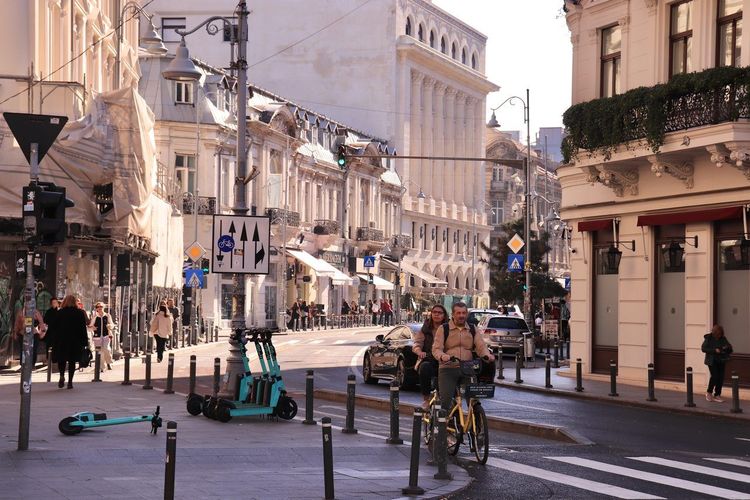
Calea Victoriei (Calea Victoriei, București) runs nearly 3 kilometers from north to south through the capital, between the Royal Palace and University Square. Laid out in the 17th century as a simple dirt path connecting Bucharest to the princely court of Curtea Veche, it took its current name following Romania's victory of independence in 1878.
Along the way you'll pass the Royal Palace, now converted into the National Museum of Art, the National Military Circle with its white neoclassical facade, and several early 20th-century private mansions now repurposed as galleries or boutiques. The full walk takes about 45 minutes without stopping, but it's better to allow half a day to step inside two or three buildings along the way. Film enthusiasts will also spot several facades used as sets for international productions shot in Bucharest in recent years, as the city has become a sought-after filming location for its blend of European architectural styles that can be recreated at lower cost. Architecture lovers will notice a rare mix of neo-Romanian style, inspired by Orthodox monasteries, and French eclecticism brought back by architects trained in Paris at the turn of the century.
4. Photographing the Arc de Triomphe of Bucharest
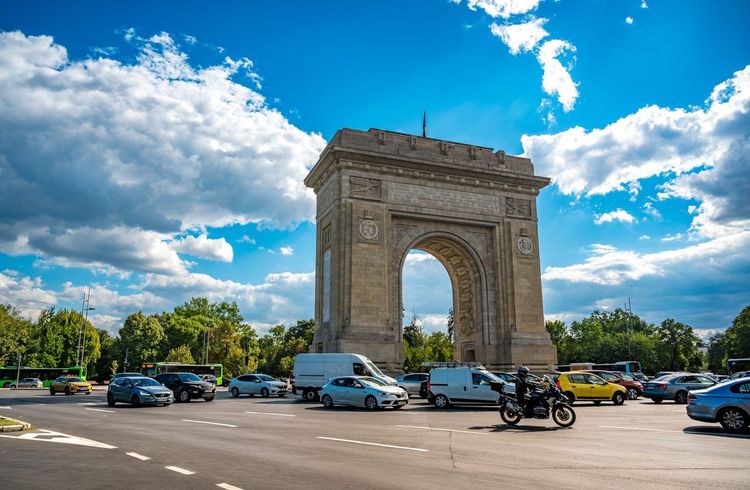
Less famous than its Parisian counterpart, the Arcul de Triumf (Piața Arcul de Triomphe, București, rated 4.7/5 on Google based on 19,472 reviews) still stands 27 meters tall. A first wooden arch was erected in 1878 to welcome back the victorious troops, replaced in 1922 by a concrete structure clad in plaster, then by the stone edifice we know today, inaugurated on December 1, 1936, based on designs by architect Petre Antonescu.
Access to the rooftop terrace is only open occasionally, during open-door days and national celebrations. The simplest option is to admire the monument from the central median, early in the morning, when traffic is still light and the light is still soft.
5. Attending a Concert at the Romanian Athenaeum
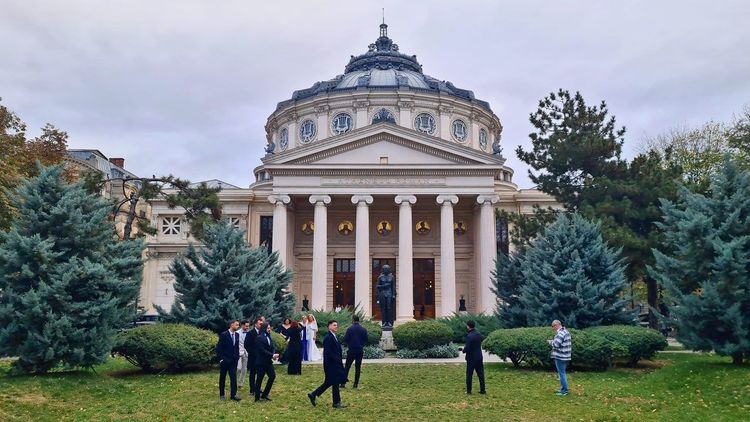
With its neoclassical rotunda inaugurated in 1888, the Ateneul Român (Strada Benjamin Franklin 1-3, București, rated 4.8/5 on Google based on 9,200 reviews) is the most photographed concert hall in the city. Its dome rests on six Ionic columns funded in part through a major public subscription launched in 1886 to complete the construction when funds were running short.
Inside, a 75-meter-long circular fresco traces 25 centuries of Romanian history, from the Dacian king Burebista to the union of 1918. The hall hosts the George Enescu Philharmonic Orchestra during the regular season, with seats available from around thirty lei in the upper categories. The cheapest tickets are sometimes sold directly at the box office an hour before the concert, an option worth trying for budget-conscious visitors willing to wait on-site. If your stay doesn't coincide with a concert, daytime visits are possible on certain days: check at the reception desk, as opening hours vary depending on the program.
6. Crossing Rural Romania at the Village Museum
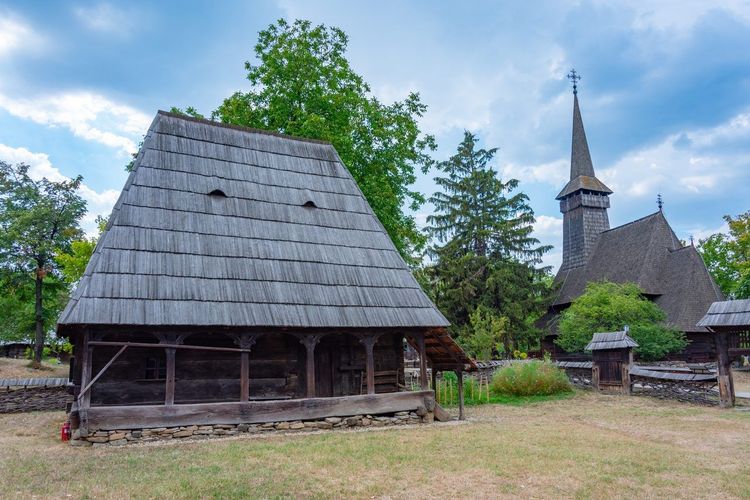
On the shores of Herăstrău Lake, the Muzeul Național al Satului « Dimitrie Gusti » (Șoseaua Kiseleff 28-30, București, rated 4.7/5 on Google based on 16,000 reviews) brings together more than 360 monuments dismantled and rebuilt piece by piece from all of the country's historic regions. The museum was inaugurated on May 10, 1936, in the presence of King Carol II: at the time it was the fourth open-air museum in Europe, after Stockholm, Oslo, and Cluj-Napoca.
You wander between wooden farmhouses from Maramureș with their vertiginously steep roofs, still-functional water mills from Banat, and wooden churches whose regional counterparts are listed as UNESCO World Heritage Sites. Each house is furnished in its original style, with everyday objects collected from the source villages: agricultural tools, looms, and glass-painted icons. The full route covers around ten hectares and requires a good two hours of walking, longer if you stop at the pottery workshop that holds demonstrations on weekends.
The museum also organizes, every spring, a major craft fair where potters, weavers, and wood carvers present techniques passed down over several generations. It is one of the rare moments when the museum recaptures some of the village life it strives to preserve throughout the rest of the year, with culinary demonstrations at the traditional bread oven and vegetable dyeing workshops open to children. A visit to the Museum of the Romanian Peasant, located closer to the city center, allows you to compare the two curatorial approaches — one organized in the open air, the other indoors around more intimate objects.
This museum directly answers a question frequently asked by those looking for things to do in Bucharest off the beaten track: in a single visit it offers a glimpse of regions that a conventional trip could never cover in a week. Wear closed shoes, as the paths remain unpaved even in good weather, and remember to bring water: shade is scarce in the upper part of the park during the height of summer.
7. Taking a Break in Herăstrău Park
Herăstrău Park, officially renamed King Michael I Park (Șoseaua Nordului, București, rated 4.7/5 on Google based on 34,000 reviews), stretches across 187 hectares around a lake where renting a pedal boat costs just a handful of lei per hour. It is the favorite green lung of Bucharest residents, particularly popular on Sunday mornings with joggers and cycling families.
Several floating restaurants line the northern shore, with a view of the business district skyscrapers as a backdrop — a contrast few European capitals offer so directly. A large playground occupies the northeast corner of the park, enough to keep a family busy for an hour between strolls. You can rent a bike at the main entrance near Casa Presei Libere for a full loop of the lake in about 40 minutes, or simply settle on one of the shaded lawns with a coffee to go.
8. Strolling through Cișmigiu Garden, the Oldest in the City
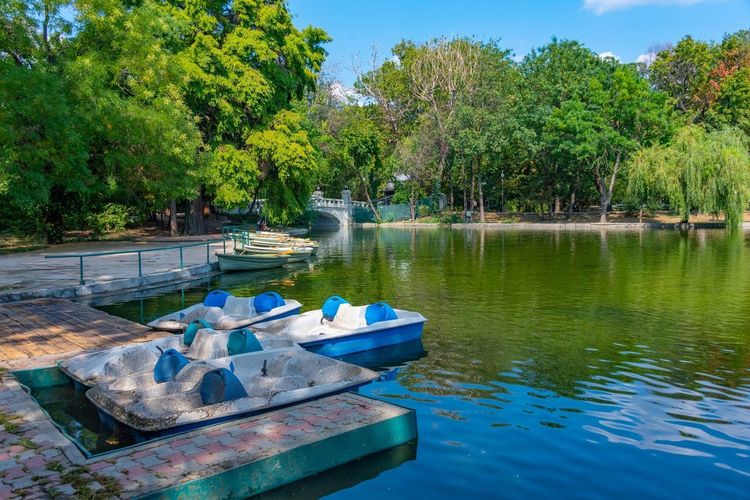
Laid out as early as 1847 by German landscape gardener Carl Meyer, Cișmigiu Park (Bulevardul Regina Elisabeta, București, rated 4.6/5 on Google based on 21,000 reviews) remains the most central and most frequented public garden in Bucharest.
Its artificial lake turns into an ice-skating rink in winter, a tradition that goes back more than a century. In summer, the deckchairs set up along the pathways offer a shaded spot to read under century-old chestnut trees, just steps away from University Square.
9. Visiting the Orthodox Patriarchal Cathedral
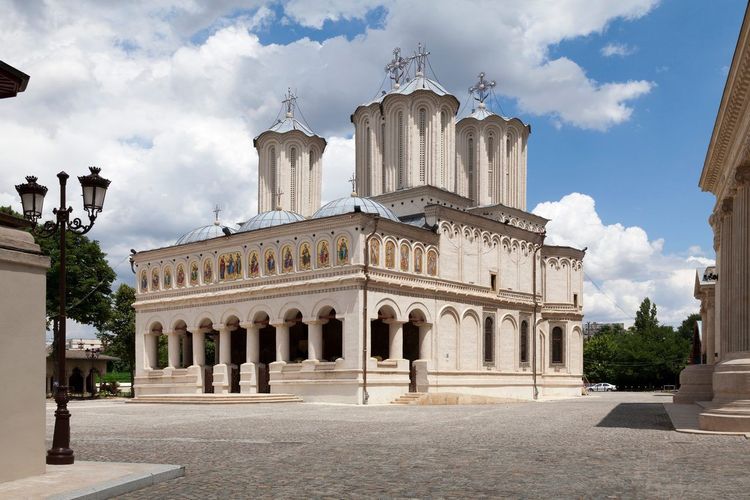
Perched on Dealul Mitropoliei hill, the Catedrala Patriarhală (Aleea Dealul Mitropoliei 25, București, rated 4.8/5 on Google based on 7,500 reviews) has been the seat of the Romanian Orthodox Church since 1925, the year the patriarchate was officially recognized.
The current building, constructed between 1655 and 1659 at the initiative of Prince Constantin Șerban, long predates its status as a cathedral: it originally served as a princely church, in a Brâncovenesc style still visible on the facade. The interior frescoes, continuously restored since the 1960s, blend Byzantine and Romanian influences in a palette dominated by deep blues and gilding. The independent bell tower, erected in 1698 and restored in 1958, still rings for major Orthodox feast days, most notably during the Easter procession that draws several thousand worshippers around the hill. Nearby, the Patriarchal Palace houses the administrative headquarters of the Synod, generally closed to the public, but whose neoclassical facade is worth a detour from the surrounding gardens.
10. Exploring the Collections of the National Museum of Art of Romania
For those looking for things to visit in Bucharest beyond outdoor squares, the Muzeul Național de Artă al României, housed in the former Royal Palace (Calea Victoriei 49-53, București, rated 4.5/5 on Google based on 6,800 reviews), holds two distinct collections under one roof: the national gallery, dedicated to Romanian art from the Middle Ages to the 20th century, and the European gallery, which displays, among others, paintings by Rembrandt, several Rubens, and a fine collection of Flemish painting.
The Romanian gallery traces the country's pictorial evolution through the works of Nicolae Grigorescu, founding figure of the modern Romanian school, and those of Ion Andreescu. The wing devoted to Romanian medieval art houses one of the country's richest collections of wooden icons, originating from monasteries now difficult to access in Romanian Moldova. The decorative arts section, often bypassed by visitors in a hurry, also displays pieces of Ottoman-influenced goldsmithery linked to Romanian princes, testifying to a complex diplomatic relationship with the Sublime Porte. Allow two hours for a complete tour; the air-conditioned rooms also provide a welcome break in summer, when the heat makes long outdoor walks less comfortable.
The building itself remains an attraction in its own right: a former royal residence damaged during the 1989 revolution amid street fighting around the city center, it still bears a few visible restoration marks on the rear facade. Admission is free on the first Wednesday of each month, a tip that few guides mention and that allows you to visit Bucharest without straining a travel budget already stretched by paid admissions.
11. Discovering the Presidential Palace of Cotroceni
The official residence of the Romanian president, Palatul Cotroceni (Bulevardul Geniului 1, București, rated 4.6/5 on Google based on 2,399 reviews) occupies a site that has been continuously inhabited since the founding, in 1679, of a monastery by Prince Șerban Cantacuzino.
Only the museum wing is open to visitors, exclusively by prior reservation and with mandatory ID, a format that deliberately limits visitor numbers. Inside, you'll discover the royal apartments from the early 20th century, restored in a flamboyant neo-Romanian style, as well as the archaeological remains of the original monastery, uncovered during excavations carried out in the 1980s.
12. Spending a Day at Therme București
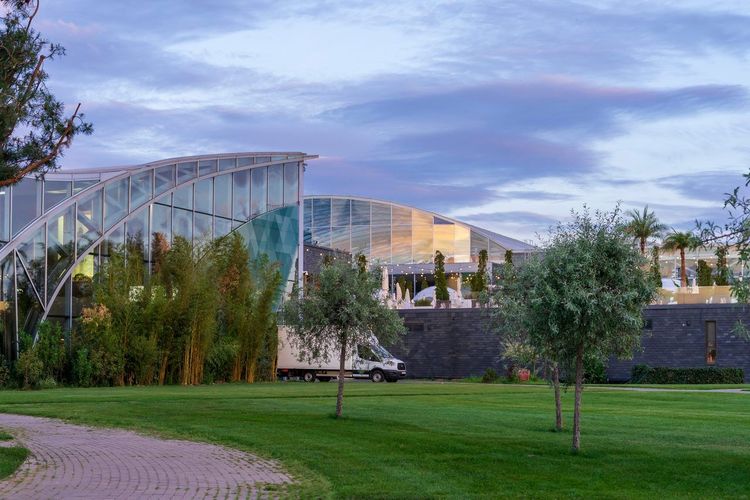
About thirty minutes from the city center, in Balotești, the Therme București complex (Șoseaua de Centură 1, Balotești, rated 4.4/5 on Google based on 38,000 reviews) claims the title of largest wellness center in Europe, housed under an architecture of translucent domes largely inspired by Victorian botanical greenhouses.
The complex is divided into three zones: Galaxy, the liveliest, with its seventeen water slides, wave pool, and 1.7 kilometers of combined slides, open to children; The Palm, focused on relaxation beneath a canopy of palm trees, with thermal pools maintained at a constant temperature; and Elysium, reserved for adults, featuring a sauna circuit inspired by Finnish and Hungarian traditions. Entrance tickets start at around 25 euros on weekdays and rise at weekends, when attendance can triple compared to a Tuesday afternoon. Three-hour, half-day, or full-day passes allow you to match the budget to the time available.
Several restaurants and bars are located directly under the canopy, making it possible to spend the entire day on-site without going back outside. Spa treatments, booked separately, include essential oil massages as well as rituals using Praid salt, from a Romanian resort renowned for its underground salt mines. Families with children will prefer the Galaxy zone, while couples seeking peace and quiet will gravitate toward Elysium, where access is restricted to adults.
Many visitors planning their trip wonder what to do in Bucharest in winter when the cold discourages outdoor walks: Therme answers that need precisely, since the facility operates at a constant temperature year-round, tropical vegetation included, with thousands of plants maintained indoors. Allow at least half a day, or a full day if you add a spa treatment. Remember to book your time slot online at least 48 hours in advance during peak season, as spots in the outdoor pools fill up quickly once warm weather returns. The shuttle from the city center exists but runs infrequently: it is better to book a taxi or rideshare for the journey there and back, especially in the evening.
13. Dining at Caru' cu Bere and Touring the Historic Beer Bars
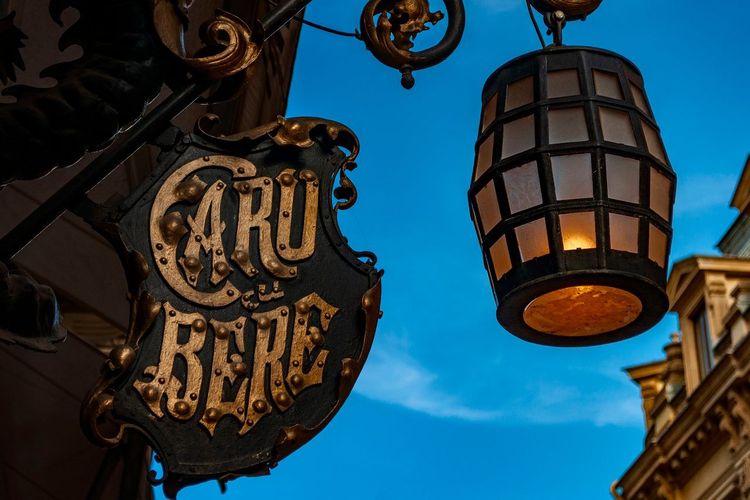
Founded in 1879, Caru' cu Bere (Strada Stavropoleos 5, București, rated 4.5/5 on Google based on 27,000 reviews) remains the most photographed address in the Lipscani district, with its neo-Gothic stained-glass windows and painted frescoes depicting medieval scenes.
The menu blends traditional Romanian dishes such as sarmale — stuffed cabbage leaves — with locally brewed beer served in mugs that are well worth their weight. Prices remain reasonable for such a well-known tourist address, with a main course generally between 12 and 18 euros, drinks not included. Reserving for the evening is essential, as the dining room fills up by 7:30 p.m. on most weekends, with tourists and locals arriving in equal measure.
Nearby, a handful of newer microbreweries installed in former vaulted cellars around Strada Șelari offer a more contemporary option for going out in Bucharest beyond the folkloric. The ideal approach is to combine the two: a traditional dinner early in the evening, then a few drinks at a more modern venue to extend the night.
14. Taking a Day Trip to Bran Castle, on the Trail of Dracula
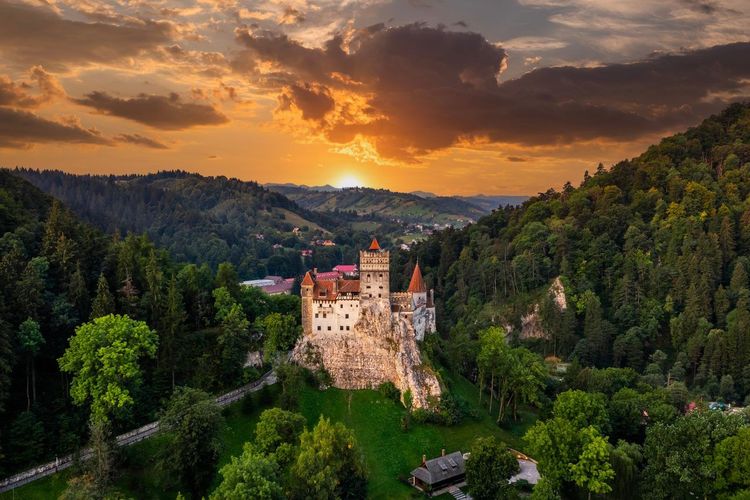
About 170 kilometers north of the capital, Castelul Bran (Strada General Traian Moșoiu 24, Bran, rated 4.3/5 on Google based on 111,339 reviews) attracts more than half a million visitors every year, all coming in search of Dracula's traces — even though Vlad Țepeș, the prince who inspired Bram Stoker's character, most likely never stayed there for any length of time.
Built from 1377 onwards by the Saxons of Brașov to guard a strategically important commercial pass, the castle later served as a residence for Queen Marie of Romania in the 1920s, who had most of the furniture still visible today installed there. The spiral staircase connecting the floors is deliberately narrow, an original defensive choice rather than a piece of gothic staging. Inside, several rooms remain furnished in the style Queen Marie would have known, with some unusual features for the era, reflecting her British and German origins.
Allow a full day for the round trip from Bucharest, between 2.5 and 3 hours of driving depending on traffic on the DN1. The Râșnov Citadel, whose origins date back to the 13th century, is worth a stop on the way back: perched on its rocky outcrop, it overlooks the valley and can be visited in about an hour. Brașov, meanwhile, preserves one of the best-kept medieval squares in Romania, with its clock tower and colorful bourgeois houses — a setting that contrasts sharply with the darker atmosphere of Bran Castle. Several agencies organize combined tours that make the long drive worthwhile by visiting three sites in a single day.
If you're wondering what to do in Bucharest in 5 days, reserving a full day for this excursion remains the best way to escape the strictly urban frame without sacrificing time at the capital's must-see attractions. Driving a rental car is possible but navigating Romanian national roads requires extra vigilance, given the frequent overtaking and heavy truck traffic. The train to Brașov followed by a local bus to Bran is cheaper but adds considerable time to the day. For travelers in a hurry, a private driver for the day generally costs between 80 and 120 euros, a reasonable rate once split among several people. The souvenir shop at the exit, often criticized for its highly touristy character, is nonetheless a near-obligatory stop if you want to leave with a local item rather than just a vampire gadget.
15. Seeking Out an Unusual Side of Bucharest, Between Street Art and Local Markets
The Uranus district, partly razed in the 1980s to open up the perspective toward the Palace of the Parliament, now concentrates a large share of the local street art scene. The dilapidated facades that escaped demolition serve as canvases for Romanian and international collectives, with murals renewed almost every season. The Street Delivery festival, held each year in June in the city center, extends this artistic energy by closing several streets to traffic and turning them into open-air stages, with concerts, designer markets, and participatory workshops.
Further to the northeast, the Piața Obor market (Piața Obor, București, rated 4.3/5 on Google based on 5,200 reviews) has been operating for more than two centuries and remains the largest market in the city. You'll find stalls selling smoked sheep's cheese, barrels of fermented cabbage for winter sarmale, and an entire gallery devoted to second-hand clothing, hugely popular with students from the neighborhood.
For those truly looking for unusual things to do in Bucharest, head also to the former industrial buildings of the Grozăvești district converted into exhibition spaces, or to the railway remnants near the North Station, which some local collectives offer guided visits of on request. These addresses change faster than any guide can document them: ask the baristas at the specialty coffee shops in the city center for advice, as they tend to be the best-informed about the current alternative scene. That is exactly the kind of hidden gem that a Ryo audio guide tour like the one for Budapest is designed to uncover, built to go beyond the beaten path rather than simply following a tourist map.



FAQ
How Many Days Do You Need to Visit Bucharest?
Two full days are enough to cover the Palace of the Parliament, the old town, and the Romanian Athenaeum. To include a day trip to Bran or a day at Therme, plan for four to five days instead. If you're wondering what to do in Bucharest in 3 days, add a morning at the Village Museum and a visit to Cotroceni Palace. Visiting Bucharest in 5 days also allows you to add the less-frequented museums, which are often overlooked for lack of time.
What to Do in Bucharest in 1 Day?
Focus on the triangle of the Palace of the Parliament, Calea Victoriei, and the old town of Lipscani, all within less than 20 minutes' walk of each other. End with dinner at Caru' cu Bere before heading up to the Arc de Triomphe by taxi for the night view, as traffic is noticeably lighter after 9 p.m.
What to Do in Bucharest in 2 Days?
Add to the first day a morning at the Village Museum and an afternoon at Herăstrău Park, then save the second evening to go out in Bucharest in the bars of the historic center. The National Museum of Art or the Patriarchal Cathedral complement this format well, depending on whether you prefer art or religious heritage.
Is Bucharest an Unusual Destination or Too Touristy?
The capital remains far less crowded than Prague or Budapest, leaving real room to explore street art and local markets without the crowds. The architectural contrast between grand communist boulevards and Belle Époque villas is enough to make the city feel unusual to the majority of visitors who hadn't anticipated it before arriving.
What Is the Best Time to Visit Bucharest?
Spring, between April and June, and early autumn offer mild temperatures ideal for walking through the parks. Summer can exceed 35°C, making Therme București particularly relevant for cooling off during the day under the plant canopy.
How to Get Around Bucharest Without a Car?
The metro covers most of the city center and runs until around 11 p.m., with a single ticket also valid on buses and trams. For the day trip to Bran, it is better to book a private driver or an organized tour, as the regular bus line remains impractical with luggage or a tight schedule.
Bucharest, a Capital That Rewards the Effort
Bucharest cannot be reduced to its image as a grey capital wedged between two concrete blocks. In fifteen steps, the city reveals an outsized palace, art nouveau gardens, an open-air museum dedicated to Romanian villages, and, just a short distance away, a castle that has fueled the Western gothic imagination for more than a century. Whether you stay for a weekend or a full week, the balance between serious heritage and an alternative scene is rare at this scale in Central Europe.
Bucharest is not yet covered by a Ryo audio guide tour, but keep the reflex for your next stop: the audio-guided tour of Prague or the one for Budapest can be explored with headphones on, in the same spirit. In the meantime, head to Calea Victoriei or the Lipscani district — two starting points that sum up everything Bucharest has to offer, between past grandeur and contemporary energy.
À lire également