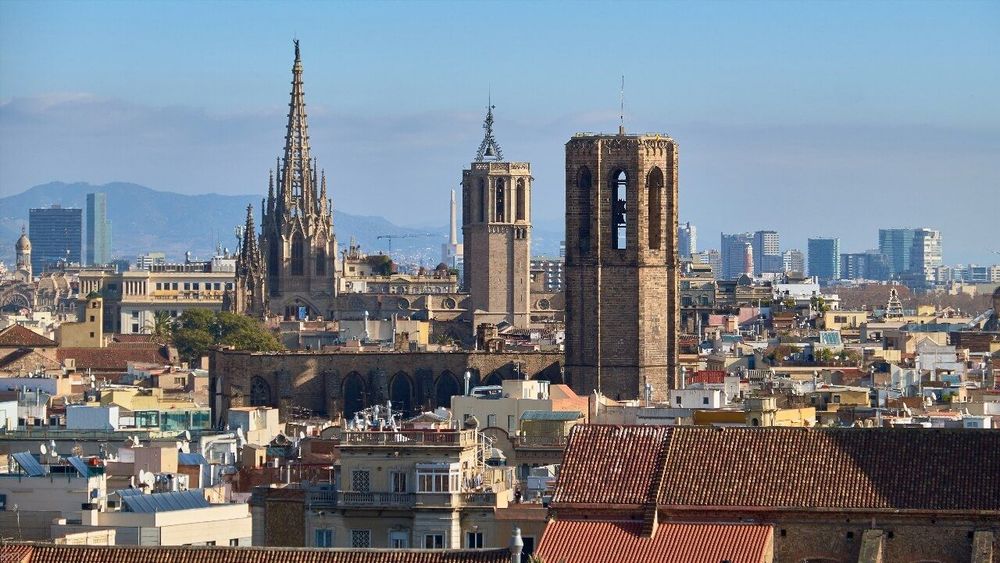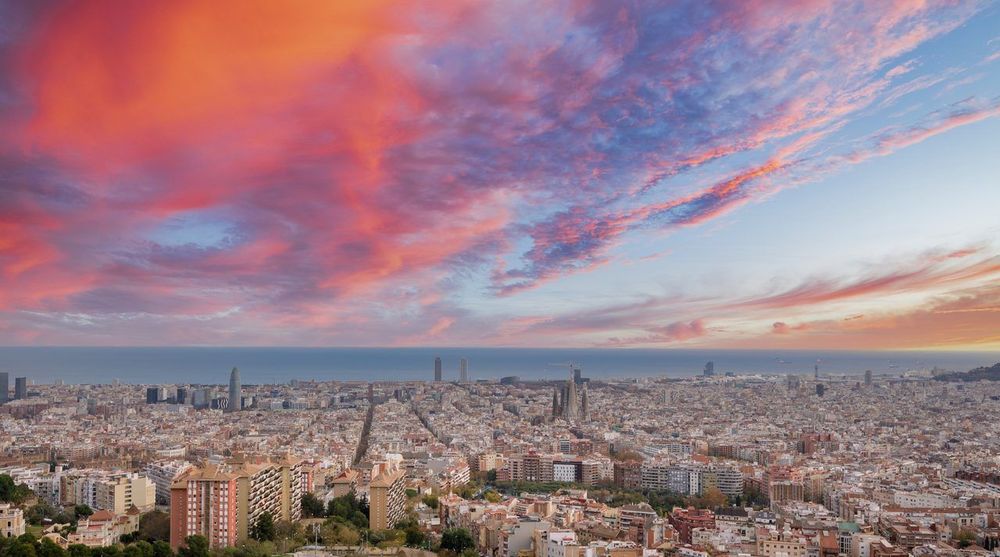
© Shutterstock
 Votre guide Ryo
Weekend in Barcelona 2026: Complete Itinerary, Neighborhoods, and Gaudí Highlights
A weekend in Barcelona often begins with the scent of garlic bread and sea salt drifting up from the Ramblas around five in the afternoon, when the morning tourists give way to locals finally emerging from their siesta. Two days are barely enough to scratch the surface of this city that layers its eras one on top of another: Roman ruins beneath the cathedral, a medieval quarter that was never straightened out, and Gaudí's stone fantasies planted like architectural UFOs among the Eixample's apartment blocks. To make the most of this density once you arrive, the Ryo audio tour of Barcelona guides your walk across 6.4 km and 26 commented stops, to be enjoyed at your own pace rather than in step with a group.
On this short format, a few practical pointers make all the difference: the Sagrada Família should be booked at least three weeks in advance to avoid the morning queue, the Barceloneta beach is a twenty-minute walk from the Born, and la Boqueria sells its freshly squeezed juices at twice the price near the main entrance compared to the back of the stalls. Between the Gaudí houses on the Passeig de Gràcia, the terraces of the Barri Gòtic, and a stroll down to the Parc de la Ciutadella, this guide offers an itinerary designed for those who have only 48 hours but want to make the most of them.
When Is the Best Time to Visit Barcelona for a Weekend?
Barcelona can be visited year-round, but a 48-hour stay leaves no room for timing mistakes: each season radically changes the way you experience the city.
Spring and autumn remain the most comfortable window for combining walking and sightseeing: temperatures between 15 and 22°C, shorter queues at the Sagrada Família, and a low-angle light that flatters the Modernista facades of the Passeig de Gràcia at the end of the day. It is also the period when flight and hotel prices drop after the summer peak.
Winter draws fewer visitors but remains mild (10–15°C during the day), with the advantage of visiting Parc Güell or the Barri Gòtic without pushing through crowds. The Santa Llúcia Christmas market, in front of the cathedral, adds a special atmosphere to December city breaks.
Summer, from June to September, turns the stay into a seaside getaway: the Barceloneta beaches fill up by 10 a.m., terraces stay open late, but the thermometer regularly exceeds 30°C and queues at the Gaudí sites form from the moment they open.
Showers are not out of the question, especially in autumn: a light rain jacket in your bag will save you from losing a morning of sightseeing.
How to Get to Barcelona for a Weekend?
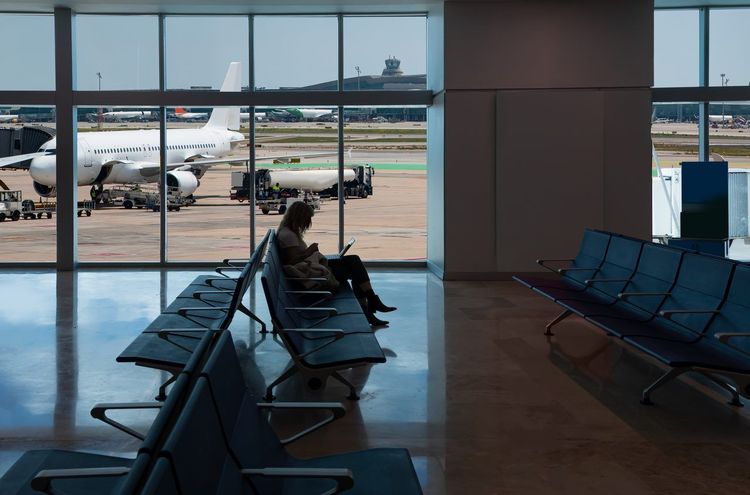
From France, the plane remains the fastest option: around 1h30 from Paris, Lyon, or Marseille to El Prat airport, located 25–35 minutes from the city center by metro or Aerobús. Low-cost airlines multiply direct flights, making the getaway viable even if you leave on a Friday evening after work.
If you prefer the train, the high-speed line connects Paris to Barcelona-Sants in just under 6h30, without going through the airport or dealing with early boarding checks. From Perpignan, it takes barely 1h30, and around 3 hours from Montpellier. For those living in the south of France, the train is often simpler than a connecting flight.
Many travelers also opt for a train + hotel package: the bundle combines tickets and nights at a negotiated price and simplifies booking for a short stay where every hour counts.
How to Get Around Barcelona Once You Arrive?
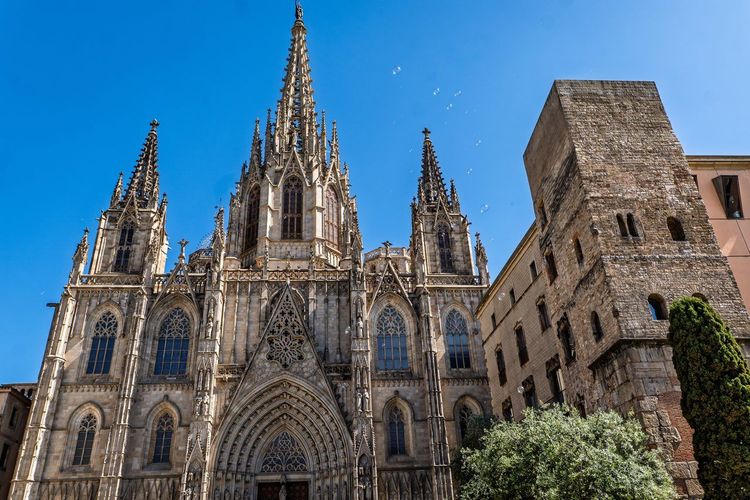
The historic center is best explored on foot: between the Barri Gòtic, the Rambla, and the Born, distances are measured in minutes rather than kilometers. Make sure to wear comfortable shoes, though — the Catalan cobblestones are not kind to flip-flops.
To reach more outlying sites (Sagrada Família, Parc Güell, Camp Nou, Montjuïc), the metro is unbeatable: a T-Casual ticket (10 trips) costs significantly less than 10 single tickets and also covers buses.
A Hop-on Hop-off bus ride appeals to those on a tight schedule: the service drops off and picks up passengers at the main landmarks, with audio commentary in several languages. The Bicing bike-share scheme is reserved for subscribed residents, and the city does not allow free-floating electric scooters: if you want to cycle, head to one of the many bike rental shops in the center.
Where to Stay in Barcelona: the Best Neighborhoods for a Short Stay
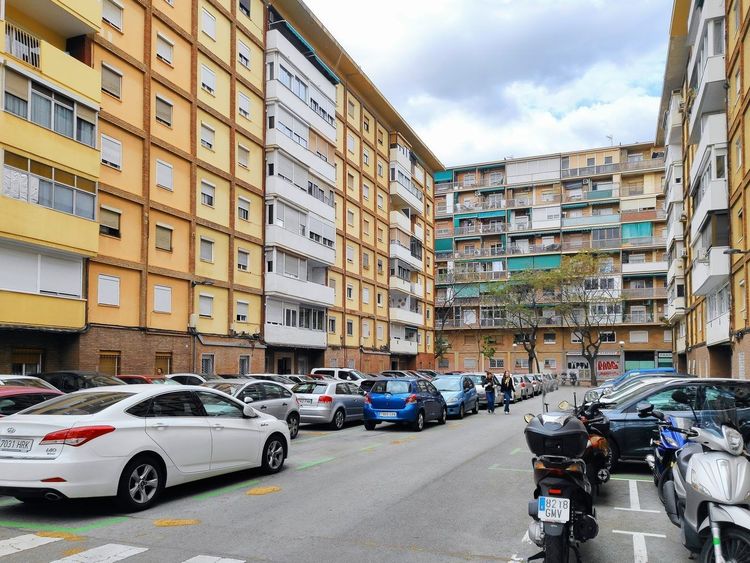
The choice of neighborhood shapes the atmosphere of the stay just as much as the price per night. Four areas concentrate most of the accommodation options for a short visit.
The Barri Gòtic puts everything within reach: the cathedral, the Rambla, and la Boqueria just minutes away, at the cost of a little more nighttime noise on Fridays and Saturdays. It is the logical choice if you want to drop your bags and head out to explore without taking any transport.
The Eixample, more residential, lines the Modernista buildings of the Passeig de Gràcia and suits a romantic weekend in Barcelona: more spacious rooms, quieter streets in the evening, and a central position between the Gaudí sites and the historic center. The Hotel Barcelona 1882, on the Sagrada Família side, plays the romantic card with its carefully appointed rooms and rooftop terrace.
The Born, a former artisans' quarter, draws travelers who want to sleep near tapas bars and independent boutiques while staying fifteen minutes' walk from the beach. Several boutique hotels set in former industrial buildings, such as the Magatzem 128 frequently mentioned by travelers, embrace this charm of preserved character.
La Barceloneta, finally, puts the sand right outside your door: ideal for an all-in-one stay centered around the beach, but less convenient for venturing out to Gaudí or Montjuïc without transport.
For those on a tight budget, the Yeah Barcelona Hostel offers clean, well-located dorms at a fraction of the price of a hotel room. On booking platforms, you will almost always find these four neighborhoods at the top of the results: filter first by area, then by recent reviews.
Once your bags are dropped, whatever neighborhood you choose, the Ryo express audio tour of Barcelona lets you head out for a walk without a map to consult or an itinerary to plan the night before: the Ryo app simply points you in the right direction and tells you about what lies around every corner.
Planning Your Weekend in Barcelona Over 2 Days: Our Itinerary
A 48-hour format forces you to make choices: it is better to pack two full days than to chase an overly long list.
Your first day naturally focuses on Gaudí and the historic center: a morning at the Sagrada Família (booked in advance), a quick lunch in the Eixample, an afternoon dedicated to Casa Batlló or Casa Milà, then a walk down to the Barri Gòtic for the cathedral and the medieval lanes before a tapas dinner in the Born.
The second day shifts toward the open air and the waterfront: a morning at Parc Güell to enjoy the light before the crowds arrive, lunch at la Boqueria market while strolling along the Rambla, then an afternoon split between Montjuïc for the panoramic view and the Barceloneta for a quick swim if the season allows. An evening flamenco show or a final stroll through the Eixample rounds off the stay.
If you have three days, simply slot in a morning at the Museu Picasso and a day trip to Montserrat or Sitges, without disrupting the rest of the program.
This entire route, from the Gothic lanes to the beach, fits into a single Ryo audio narrative of 26 stops and 2h30 of cumulative listening: a useful benchmark for planning the actual timing of the two days rather than relying on rough estimates.
The Sagrada Família, Gaudí's Unfinished Masterpiece
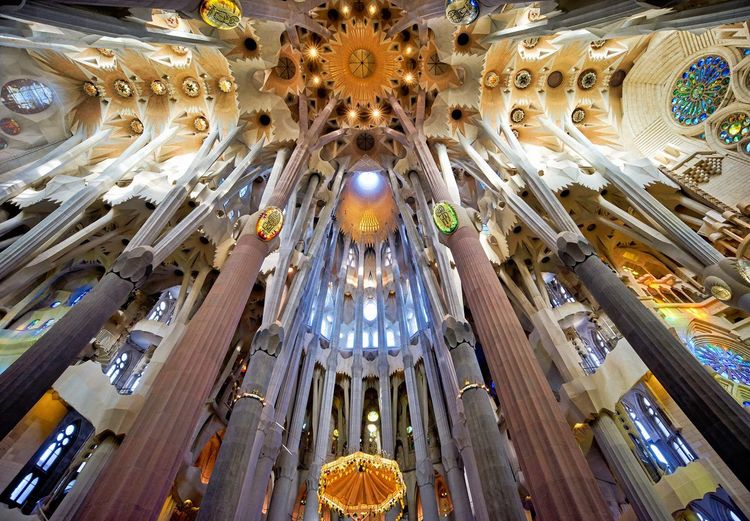
The silhouette of the Sagrada Família (Carrer de Mallorca 401, 08013 Barcelona, rated 4.8/5 on Google based on 334,101 reviews) is impossible to miss from several streets away: its spires, under construction since 1882, still tower over the Eixample, and the cranes working on them have become almost part of the scenery.
Booking online at least three weeks before departure avoids the queue that stretches from 9 a.m. in front of the main entrance. Allow 1h30 for the interior visit, longer if you climb one of the towers (separate ticket, guaranteed thrills if you don't have a head for heights). Those overseeing the construction project suggest a completion date around 2034, more than a century and a half after the first stone was laid, which says a great deal about the ambition of the original vision.
Inside, the basilica shifts register entirely: the exterior facade, ornate and at times austere, gives way to a forest of columns that spread like branches, bathed in light filtered through vibrantly colored stained glass. It is this contrast, more than the sheer size of the monument, that surprises hurried visitors the most.
Two facades can be visited separately: the Nativity facade, carved during Gaudí's lifetime, tells a richly detailed story at eye level; the Passion facade, starker and more angular, was entrusted after his death to sculptor Josep Maria Subirachs, which explains the marked change in style between the two.
To explore the architect's logic beyond this single monument, the Ryo audio sub-tour Through the Eyes of Gaudí connects the Sagrada Família to the architect's other creations across 22 stops and 4h15 of listening, with construction anecdotes told directly in your ear as you walk between sites.
Parc Güell: Between Nature and Fantasy
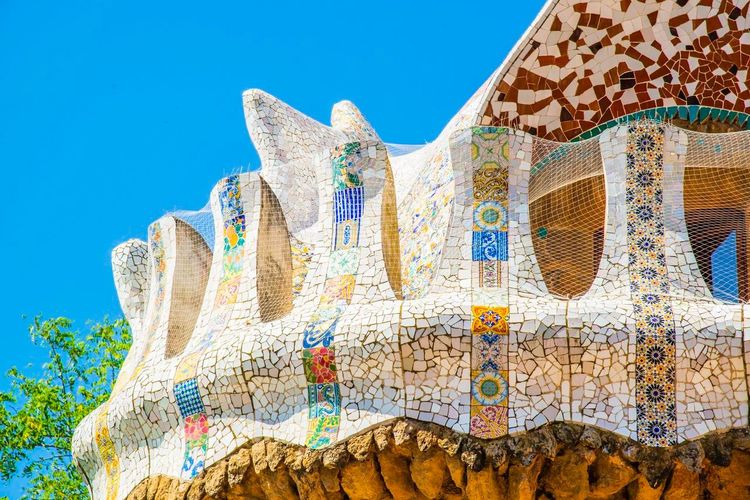
On a hillside in the Gràcia neighborhood, Parc Güell (Carrer d'Olot, 08024 Barcelona, rated 4.4/5 on Google based on 242,437 reviews) was originally intended to be an upscale residential development. The real estate project failed, but the public park that emerged from it remains one of Gaudí's most photographed works.
The monumental zone, the only ticketed section, concentrates the trencadís mosaics, the stairway guarded by the famous multicolored dragon, and the hypostyle hall with its 86 Doric columns. The rest of the park, freely accessible, offers shaded paths, viaducts with tilted columns, and one of the finest viewpoints over the city and the sea, often overlooked in favor of the ticketed area.
Book your ticket online with a specific time slot: on-site entry is limited and refused once the quota is reached, particularly on Saturday mornings. Also be prepared for a walk: the approach from the Lesseps or Vallcarca metro stations climbs several hundred meters, which is strenuous in intense heat.
To limit the uphill walk, buses 24 and V19 drop off closer to the entrances, a welcome option in the height of summer or when traveling with young children.
Casa Batlló and Casa Milà: Gaudí's Other Houses
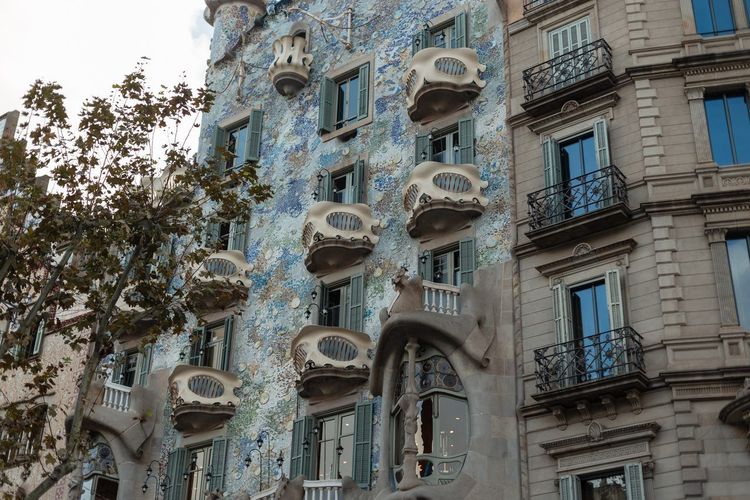
On the Passeig de Gràcia, a few hundred meters apart, Gaudí's other two major houses can be visited together in the same afternoon.
Casa Batlló (Passeig de Gràcia 43, 08007 Barcelona, rated 4.7/5 on Google based on 220,842 reviews) strikes with its undulating facade covered in colorful ceramic fragments, locally nicknamed "the house of bones" for its mask-shaped balconies. The interior scenography is highly immersive, projecting light effects across the curved walls of the main hall.
Casa Milà, better known as La Pedrera, takes a mineral, almost marine aesthetic, with its undulating limestone facade. The rooftop terrace, bristling with helmeted chimneys that evoke warriors, is best visited at the end of the day to enjoy the raking light over the Eixample.
Over 48 hours, choose one of the two houses rather than forcing both interior visits: admiring the exterior of the other from the opposite pavement is more than enough to appreciate the difference in style.
The Barri Gòtic and the Ribera Quarter
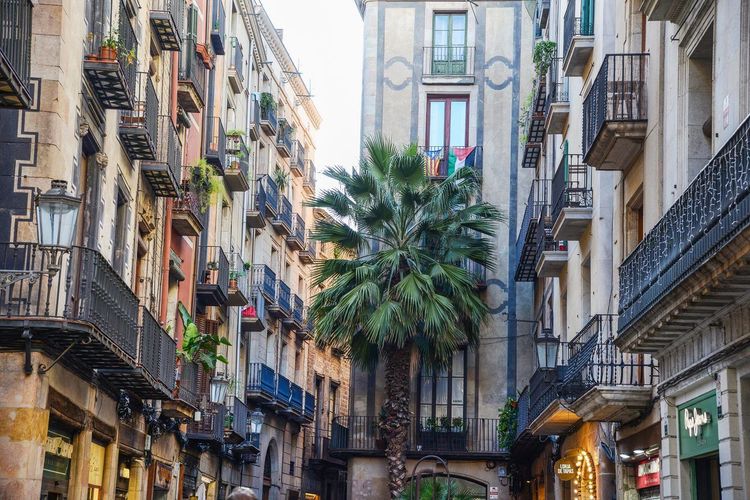
The Barri Gòtic, the medieval heart of the city, is organized around lanes too narrow for most cars, making it the most pleasant neighborhood to explore without a fixed route.
The Barcelona Cathedral (Pla de la Seu, 08002 Barcelona, rated 4.6/5 on Google based on 84,927 reviews), free to enter during certain worship hours, hides a cloister home to thirteen white geese, a tradition linked to the legend of Saint Eulalia. Right next door, remains of the ancient Roman walls emerge between buildings, a reminder that the city existed long before the Middle Ages.
Wandering deliberately through the lanes toward the Plaça Reial, you will come across several historic buildings in the Gothic quarter with their characteristically Catalan Gothic facades, recognizable by their mullioned windows and cool inner courtyards — a genuine relief in the height of summer. The Plaça Sant Jaume, which houses both the city hall and the seat of the Catalan government facing each other, encapsulates the local political tensions in a single glance, though a passing visitor would likely notice nothing at first look.
Heading east, the neighborhood transitions into la Ribera, more open, organized around the former Born market hall and the church of Santa Maria del Mar, often cited as one of the finest examples of unadorned Catalan Gothic.
Allow a good hour and a half for this area alone if you go inside the cathedral and the city history museum, beneath the Plaça del Rei, where archaeological excavations expose the remains of Roman Barcino just a few meters below the current street level.
It is precisely this transition from one neighborhood to the next, lane by lane, that the Ryo audio tour comments on step by step: each street corner corresponds to an anecdote about the medieval history of the area, turning an aimless wander into a guided visit with no preparation required.
The Rambla and la Boqueria Market
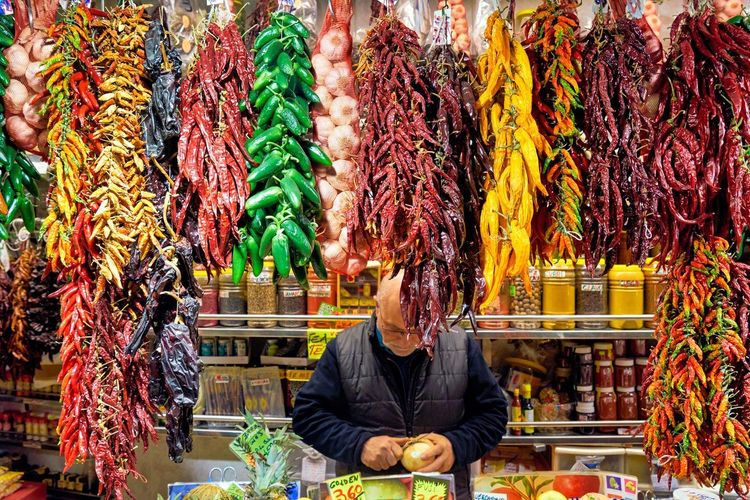
The Rambla connects the port to the Plaça de Catalunya over nearly 1.2 km, lined with flower kiosks, living statues, and — it must be said — a handful of tourist restaurants charging double the price of the adjacent streets.
Stay vigilant on this busy stretch: pickpockets are a known presence, particularly around metro stops and during street performances that draw people's attention.
Halfway along, la Boqueria market deserves a longer stop than a quick photo of the entrance: the stalls of Iberian ham, seafood, and freshly cut tropical fruit lend themselves to a quick lunch, provided you move away from the first stands near the Rambla, which are considerably more expensive than those at the back of the hall.
Regulars come early, before 10 a.m., to rub shoulders with the chefs from nearby restaurants doing their shopping before the tour groups arrive.
The Born and the Barceloneta: From Trendy Quarter to the Beach
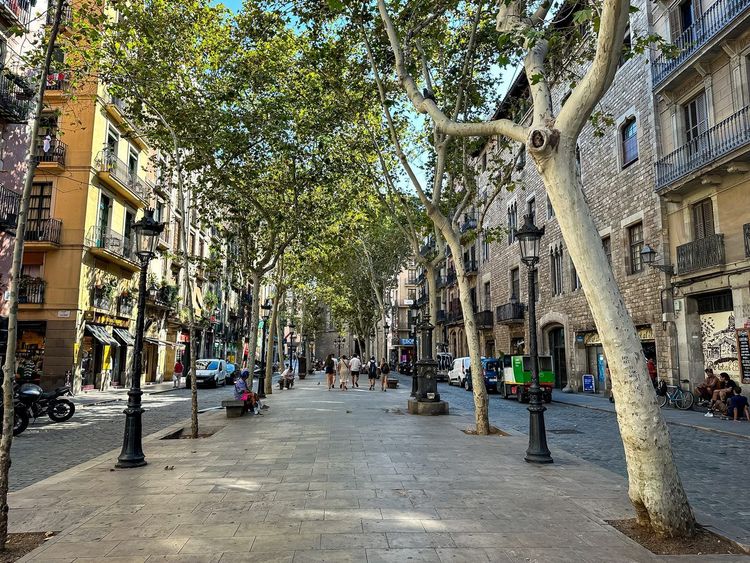
The Born, a former quarter of weavers and craftspeople, now lines Catalan concept stores around the old market hall. It is a place to wander without a set destination, between ceramics workshops and natural wine bars set up in former warehouses.
Heading southeast, the neighborhood opens onto la Barceloneta, a former fishing village that has become the city's most lively waterfront. The transition is clear: the narrow lanes of the Born give way to a grid of perpendicular streets inherited from the 18th century, before reaching the sand. The very name "Barceloneta" (little Barcelona in Catalan) recalls its origins: a neighborhood built to rehouse residents displaced when the military citadel was constructed. The streets, all identical and perpendicular to the sea, still bear the mark of that planning, far removed from the labyrinthine layout of the Barri Gòtic just a few hundred meters away.
The Barceloneta beach (Passeig Marítim de la Barceloneta, 08003 Barcelona, rated 4.4/5 on Google based on 16,605 reviews) itself remains the busiest, with its impromptu beach volleyball games and chiringuitos serving paella and sangria with sand between your toes. From the beach, the sail-shaped silhouette of the W hotel serves as a visual landmark if you get lost among the chiringuitos lining the promenade. For more peace and quiet, the beaches of Nova Icària and Bogatell, a little further north toward the Olympic village, offer the same fine sand with noticeably fewer people at peak season.
When it comes to the best Barcelona beaches for a short stay, the choice is simple: Barceloneta for the atmosphere and proximity to the center, Bogatell for a quieter late afternoon after a day of sightseeing.
It is precisely this geographic continuity — from the last workshop in the Born to the first beach bar — that the Ryo audio tour of Barcelona narrates as you walk: no need to take out your phone to check the direction, the app points the way while the neighborhood's story is told in your ear.
Montjuïc and Parc de la Ciutadella: the Green Lungs of the City
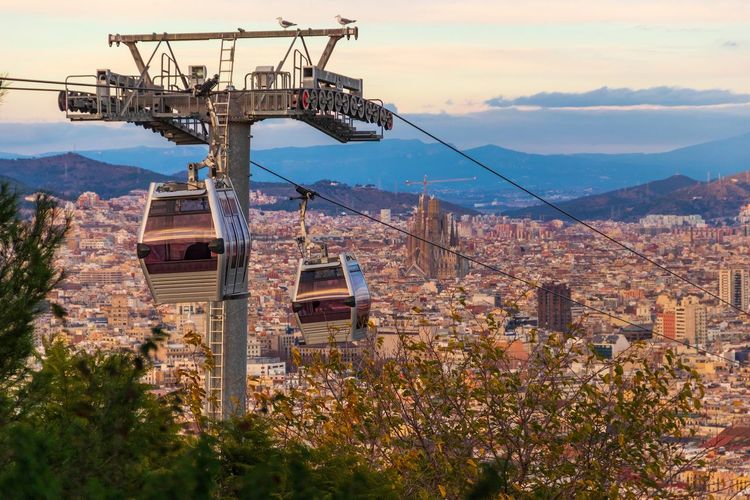
Montjuïc, the hill that overlooks the port, packs in enough for several half-day visits on its own: gardens, museums, the Olympic stadium, and above all a panorama that sweeps across the entire city down to the sea.
The Castell de Montjuïc, a military fortress converted into a cultural space, can be reached by cable car from the upper funicular station — an aerial crossing worth the trip in itself for the view over the port.
To go up or come back down, the funicular connects directly to the Paral·lel metro station, a faster option than walking in strong heat. The Olympic stadium from the 1992 Games, still standing on the hill, is a reminder that Barcelona owes much of its modern urban transformation to that event, long before the current tourist boom.
On the opposite side of the city, near the historic center, the Parc de la Ciutadella (Passeig de Picasso, 08003 Barcelona, rated 4.6/5 on Google based on 78,350 reviews) offers a different face of Barcelona, greener and calmer. Its monumental cascade, on which a young Gaudí still a student contributed, serves as the backdrop for rowing boat rides on the small artificial lake.
The park also houses the city zoo and serves as a green lung for the neighboring Ribera quarter. If you are looking for the best parks in Barcelona on a short stay, the choice often comes down to Montjuïc for the view and the Ciutadella for a relaxing time in the shade. Allow half a day for each site if you want to enjoy the gardens without rushing through them.
Museu Picasso and the Best Museums in Barcelona
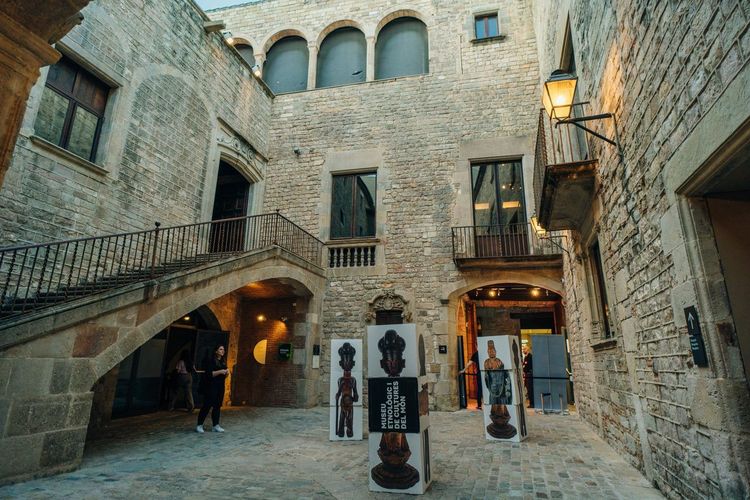
Housed in five medieval palaces on Carrer Montcada in the Ribera, the Museu Picasso focuses primarily on the artist's youth and formative years rather than his best-known Cubist period.
Booking online avoids a wait that can exceed an hour on weekends. A useful tip if your stay falls at the right time: entry is free on the first Sunday of the month and on Thursday afternoons, with mandatory advance reservation.
For lovers of Catalan painting, the MNAC, perched on Montjuïc, makes a fine complement with its collection of Romanesque frescoes and modern Catalan art. Families often prefer CosmoCaixa, an interactive science museum that even recreates a section of the Amazon rainforest under a glass roof — a welcome alternative on rainy days. The Museum of the History of Catalonia, at the Port Vell, usefully rounds out this trio if you want to understand the key stages of the region's history without dedicating a full day to it.
The Articket pass, which bundles several major art museums in the city, makes a cultural stay more cost-effective without queuing at every ticket desk.
Camp Nou: Visiting the Temple of FC Barcelona
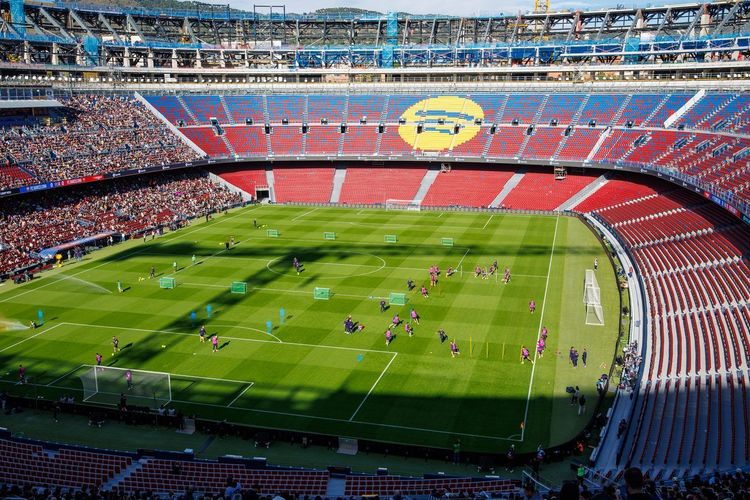
If you love football, Camp Nou (Carrer d'Arístides Maillol 12, 08028 Barcelona, rated 4.6/5 on Google based on 169,712 reviews), Europe's largest stadium, can be visited on non-match days with a ticket that includes the club museum.
The tour brings the club's greatest moments to life and offers a bird's-eye view of the pitch — a moment that resonates even with those who only follow Barça from a distance. The interactive museum traces the club's history through touch-screen displays and video clips with commentary in several languages, including English.
The stadium remains under phased renovation: check before you go which areas are open to visitors.
Unusual Activities: Tibidabo, Aquarium, Zoo, and Thrills
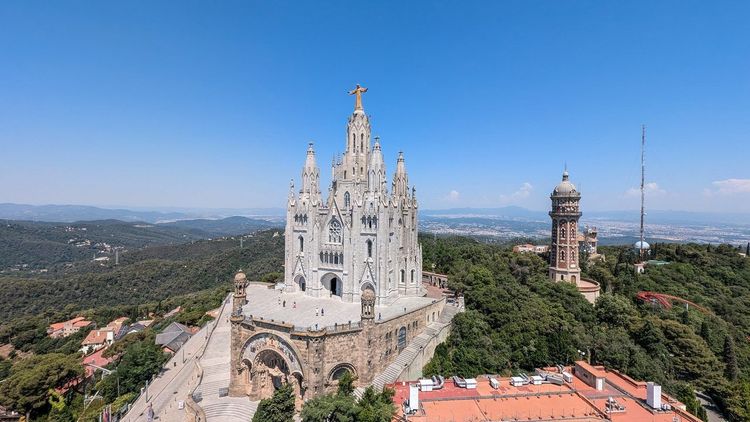
Beyond the classics, Barcelona has a more playful side, perfect for varying the experience on a short stay.
Perched on its hill, the Tibidabo amusement park, open since 1901, blends retro rides with a dizzying view over the entire city and sea. The Avió, a replica plane suspended in service since 1928, remains the most sought-after souvenir photo.
Access is by the Tibidabo funicular, reached by bus from Place John F. Kennedy while the Tramvia Blau, a historic wooden tram undergoing renovation for several years, has not yet returned to service. Check its status before you go: the journey up is already part of the experience.
On the waterfront, the Barcelona Aquarium (Moll d'Espanya, 08039 Barcelona, rated 4.1/5 on Google based on 75,756 reviews) features an 80-meter underwater tunnel where rays and sharks pass literally above you as you glide along a moving walkway.
The Barcelona Zoo, located in Parc de la Ciutadella, focuses more on education and its recently renovated enclosures than on the size of its collection — a good option for keeping a family occupied for a morning without leaving the city center.
For those after more of an adrenaline rush, a jet ski ride off the Barceloneta lets you see the skyline from the sea, a perspective quite different from the one you get from the beach. These outings generally operate only from April to October, excluding windy days.
Fans of TV series can follow in the footsteps of Game of Thrones: several scenes were filmed in Girona, about 40 minutes by high-speed train, in the old town and around the cathedral, as well as at the Castell de Santa Florentina in Canet de Mar. Guided full-day excursions fill up quickly in high season, so book them in advance.
There remains the question of unusual Barcelona activities if you return to the city a second time: between a historic amusement park, marine life, local wildlife, and filming location tourism, the offer shifts register entirely compared to the Gaudí visits of a first trip. Over 48 hours, slot one of these in on Friday evening or Sunday morning before heading home, so as not to sacrifice a cultural visit.
Day Trips Around Barcelona
If you extend to three days or feel like stepping outside the urban area, three day trips come up again and again among regular visitors.
Montserrat, a mountain range home to a Benedictine monastery perched at more than 700 meters above sea level, is reached in just over an hour by train followed by a rack railway or cable car. The view of the rounded rocky peaks, almost surreal in shape, justifies the trip on its own, even for a half-day visit. Several marked trails around the monastery allow you to extend the visit, with additional viewpoints over the Catalan plain.
Sitges, a seaside town about forty minutes by train, offers a compact historic center, quieter beaches than those of Barcelona, and a lively atmosphere well known beyond Catalonia, particularly during carnival.
Further north, the Costa Brava unfolds its coves and turquoise waters along dozens of kilometers of rugged coastline. The drive or bus journey from Barcelona takes a good hour and a half, making a full day trip more suited to a three-day format than a quick round trip. To scout the best spots before you go, our Ryo article on the Costa Brava coves details the least crowded inlets.
These Catalonia getaway ideas are difficult to combine with city center sightseeing over two days: choose just one, or save the others for a longer future stay.
Where to Eat in Barcelona: Gastronomy and Tapas

Eating in Barcelona is as much about covered markets as formal restaurants, and you will often find the best value for money at the former.
For traditional Catalan cuisine, pa amb tomàquet (bread rubbed with tomato and garlic) accompanies almost every meal, while fideuà, a paella-like dish made with vermicelli noodles, deserves at least one try at lunchtime. Calçots, large grilled spring onions dipped in romesco sauce, are a winter specialty, served mainly between January and March.
For the best Barcelona restaurants on the market side, the counters at the back of la Boqueria or the Santa Caterina market often offer more authentic and less expensive food than a terrace on the Rambla, provided you are happy to eat standing at the counter.
In the evening, an evening at a tapas bar remains the most flexible format for sampling many things without committing to a single dish: Iberian ham, croquettes, Barceloneta bombas, and patatas bravas are easily shared among a group, with a glass of vermouth as an aperitif — a Catalan ritual on Sunday at midday. Breakfast also deserves attention: churros dipped in thick hot chocolate, served in the granjas of the Barri Gòtic, including those on Carrer Petritxol.
Watch out for terraces located directly on the Rambla or facing major landmarks: the cover charge and bread, sometimes billed without being clearly mentioned on the menu, quietly inflate the bill. A quick glance at recent reviews before sitting down avoids an unpleasant surprise.
Where to Go Out at Night in Barcelona: Bars, Flamenco, and Nightlife
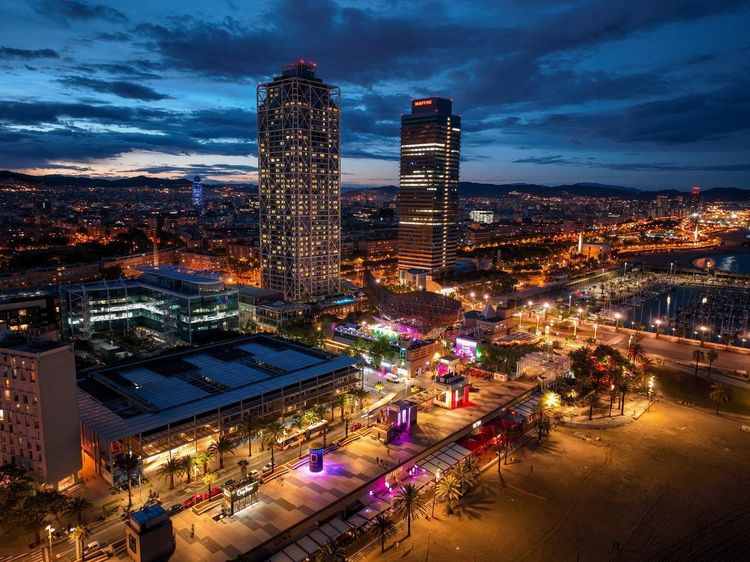
Barcelona's nightlife spans several registers, from a quiet rooftop to a club that closes at dawn.
For a relaxed evening, cocktail bars in the Born and the Eixample often feature interior courtyards tucked inside city blocks, invisible from the street — a local architectural quirk worth discovering for the setting alone.
For the best livelier Barcelona bars, the Poble Sec neighborhood concentrates a dense offering of wine bars and bodegas open late, with a more local than touristy feel compared to the Barri Gòtic.
For the best clubs in Barcelona, the waterfront near the Olympic port groups several venues that generally do not open before midnight and are still going at 5 a.m. — a Spanish rhythm that often catches visitors off guard. Some clubs enforce a strict dress code on weekends, turning away flip-flops and swimwear even in the middle of a heatwave.
Finally, an evening at a flamenco show offers a more cultural way to end the day: while the art form originates historically from Andalusia, several venues in the Barri Gòtic and on the Rambla stage quality performances, best booked in advance on weekends.
Over just two days, choose a single memorable night out rather than combining a bar, a club, and a flamenco show on the same evening: the fatigue built up after a full day of walking takes its toll early the next morning.
Shopping in the Eixample Neighborhood
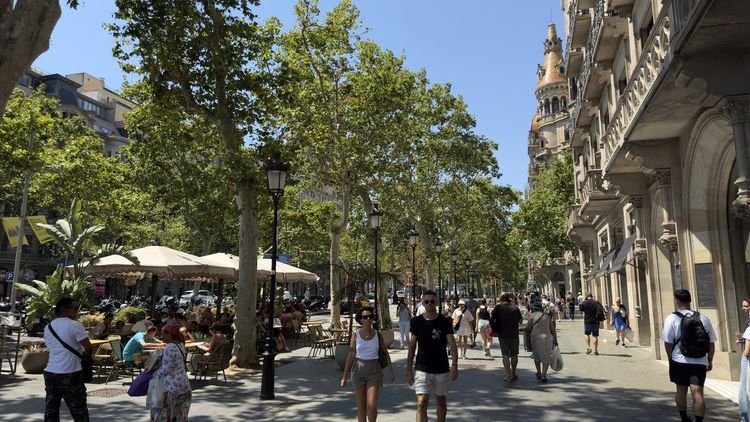
The Passeig de Gràcia concentrates international luxury brands between two Modernista facades — a rare architectural setting for a simple shopping trip in the Eixample.
A few streets away, around the Rambla de Catalunya, independent Catalan boutiques take over with local designers in fashion, ceramics, and jewelry, often at more affordable prices than on the main avenue.
If you enjoy browsing, head to Els Encants, a vast flea market sheltered under a spectacular mirrored roof, where antique furniture and vinyl records are still negotiated by conversation rather than price tag. The summer and winter sales, aligned with the Spanish retail calendar, fall slightly later than the French dates: worth checking if you are hoping for a bargain.
A Weekend in Barcelona as a Couple or with Family
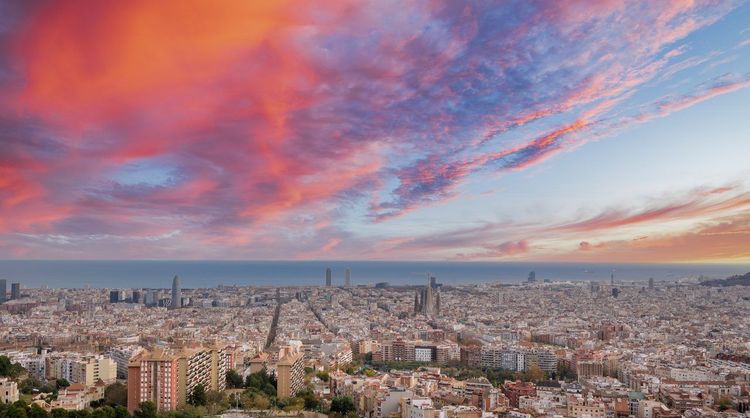
As a couple, Barcelona lends itself to a few more intimate detours: a sunset from the Bunker del Carmel, a former anti-aircraft battery that has become one of the best free viewpoints over the city; a terrace dinner in the Born away from the tourist trails; or a night stroll through the Barri Gòtic once the tour groups have headed back to their hotels. Eixample hotels often offer last-minute deals — a good reflex if you are booking on impulse.
With family, the approach changes: the zoo and Tibidabo amusement park can easily fill an entire day with children, while the aquarium and CosmoCaixa are reliable options on rainy days. The Barceloneta beach, shallow in the first few meters, is well suited to younger children, provided you keep an eye on the crowds at peak season.
In both cases, it is mainly the pace and schedule that change, not the list of neighborhoods to explore. With very young children, planning an afternoon nap is realistic: the city is equally alive late in the evening, when the heat dies down and the terraces fill up.
Practical Tips and Budget for a Weekend in Barcelona
For two days on the ground, budget an average of €90 to €140 per person per day, accommodation included, excluding flights or train tickets: roughly €30–50 for accommodation in a shared format, €30–40 for meals, and €20–30 for transport and entry tickets. Add the tourist tax, billed per night per person, which has risen noticeably in recent years.
On the safety front, pickpocketing remains the main concern, concentrated on the Rambla, on the metro during rush hours, and at ATMs. Wear your bag in front rather than on your back. Also favor ATMs attached to a bank rather than standalone machines, whose fees can sometimes exceed 10%.
Tipping is optional in Spain: a few coins or rounding up the bill is sufficient at a restaurant, with no percentage expected.
While Catalan is the co-official language displayed on most signs, Spanish is spoken everywhere in the tourist sector, and English is widely understood in hotels and restaurants in the center. You can therefore organize a full stay without any knowledge of Spanish.
One final useful note: outside the tourist center, small shops often close between 2 p.m. and 5 p.m. — worth bearing in mind if you plan to do any last-minute shopping before a Sunday evening flight or train.
FAQ
How many days do you need to visit Barcelona on a weekend?
Two full days are enough to cover the must-sees (Sagrada Família, Parc Güell, Barri Gòtic, a beach), provided you organize the itinerary by geographic area rather than at random. A third day allows more room for a day trip to Montserrat or Sitges, or to slow the pace between visits.
What budget should you plan for a weekend in Barcelona?
Budget between €90 and €140 per day per person, accommodation included, excluding the round trip. This covers a mid-range hotel or a quality hostel, meals at local spots, and entrance tickets to the main paid sites such as the Sagrada Família or Parc Güell. Prices rise sharply during peak summer season and major events.
When is the best time to visit Barcelona for a weekend?
Spring and autumn offer the best balance between pleasant weather and moderate crowds. Winter remains mild and less busy, while summer suits those who prioritize the beach, at the cost of heat and longer queues at Gaudí sites.
How do you get around Barcelona without a car?
The metro and walking cover most needs over two days: the historic center can be crossed entirely on foot, while the metro quickly connects more outlying sites such as the Sagrada Família, Camp Nou, or Montjuïc. A 10-trip T-Casual ticket remains the most economical option.
Where should you stay in Barcelona for a weekend with friends or as a couple?
The Barri Gòtic and the Born are well suited to a trip with friends, with nightlife right on the doorstep. For couples, the Eixample offers more calm and a central position between the Gaudí sites and the historic center, with options such as the Hotel Barcelona 1882.
Do you need to book the Sagrada Família in advance?
Yes, booking online at least three weeks before departure is essential to avoid the morning queue, which is particularly long on weekends and during peak season. Climbing one of the towers requires a specific ticket, which should be booked at the same time as the entry ticket.
Is Barcelona a good destination for a family weekend?
Yes: the zoo, the aquarium, CosmoCaixa, the Tibidabo amusement park, and the Barceloneta beach offer more than enough to fill two days with children, alternating activities and rest time. The walking distances between sites are substantial, however, and should be adjusted according to the age of younger visitors.
A weekend in Barcelona fits comfortably into 48 well-organized hours, provided you accept making choices: Gaudí and the historic center on the first day, the waterfront and open air on the second, saving Montserrat or the Costa Brava for a future longer stay.
To turn this itinerary into a real walk without juggling between a paper map and your phone, the Ryo audio guide for Barcelona takes you step by step along the 6.4 km main route, from the Barri Gòtic to the seafront, with the city's story told directly in your ear as you walk. Whether you opt for two days or an extended three-day version, the key is to accept that you cannot see everything: Barcelona lends itself particularly well to a return visit, with each neighborhood holding enough in reserve to fill a future stay.
À lire également