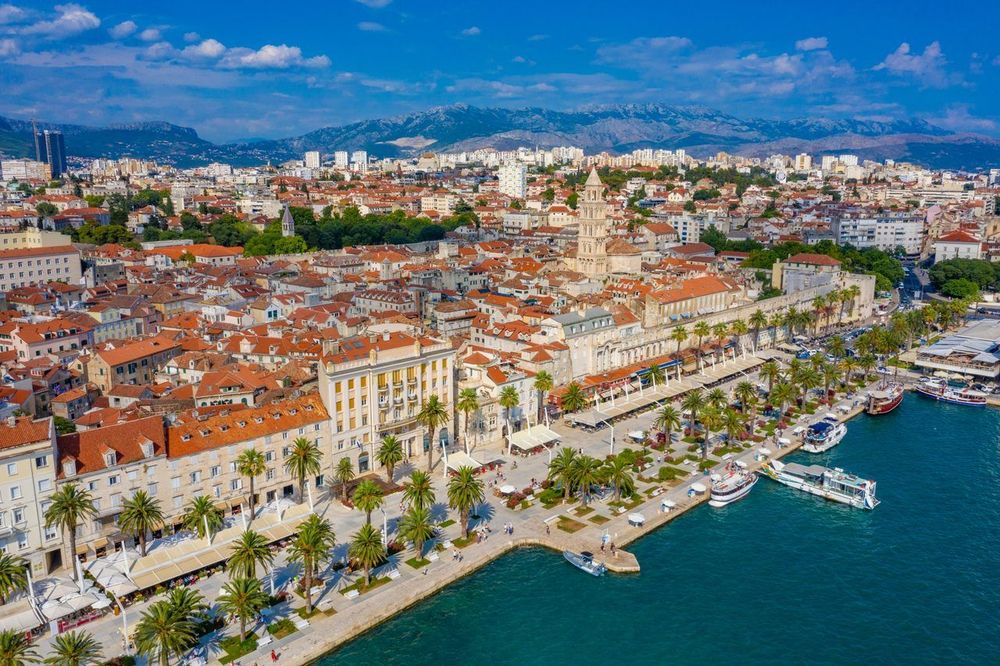
© Shutterstock
 Votre guide Ryo
Visit Split in 3 Days: 2026 Itinerary Between a Roman Palace, Hills, and Islands
In Split, you literally live inside a monument. Locals do their shopping, drink coffee, and hang their laundry between the walls of a Roman imperial palace built over 1,700 years ago — an architectural quirk that UNESCO listed as early as 1979. To visit Split in 3 days without getting lost in its white limestone lanes, it helps to have a guiding thread: the Ryo audio guide for Split traces exactly that path, from Diocletian's Palace all the way to the seafront promenade.
Over three packed days, you'll climb a Romanesque bell tower 57 meters above the rooftops, rub the gilded toe of a statue by Ivan Meštrović for good luck, and catch a catamaran to an island whose beach changes shape with the wind. You'll also eat grilled fish near Bačvice, the city's liveliest beach, and discover why some cellars of the historic center served as a set for Game of Thrones. This guide breaks down the itinerary day by day, covers excursions to Hvar, Brač, and Trogir, and includes where to sleep, where to eat, and a realistic budget for three days on the ground.
Day 1: Diocletian's Palace and the Historic Heart of Split
Dedicate your first day to the palace perimeter and the lanes surrounding it: almost everything worth seeing fits within an 800-meter radius, making this a full but never exhausting day. Plan to start early, before cruise ship groups arrive around 10 a.m.
Diocletian's Palace, the Peristyle, and the Roman Cellars
The Diocletian's Palace is not an archaeological site you visit from the outside: it is the city center itself, built around 305 AD as a retirement residence for Roman Emperor Diocletian, who spent his final years growing cabbages rather than governing Rome — or so the anecdote recorded by ancient historians goes. Its limestone walls, in places more than 20 meters high, now house around 3,000 residents, shops, bars, and several churches.
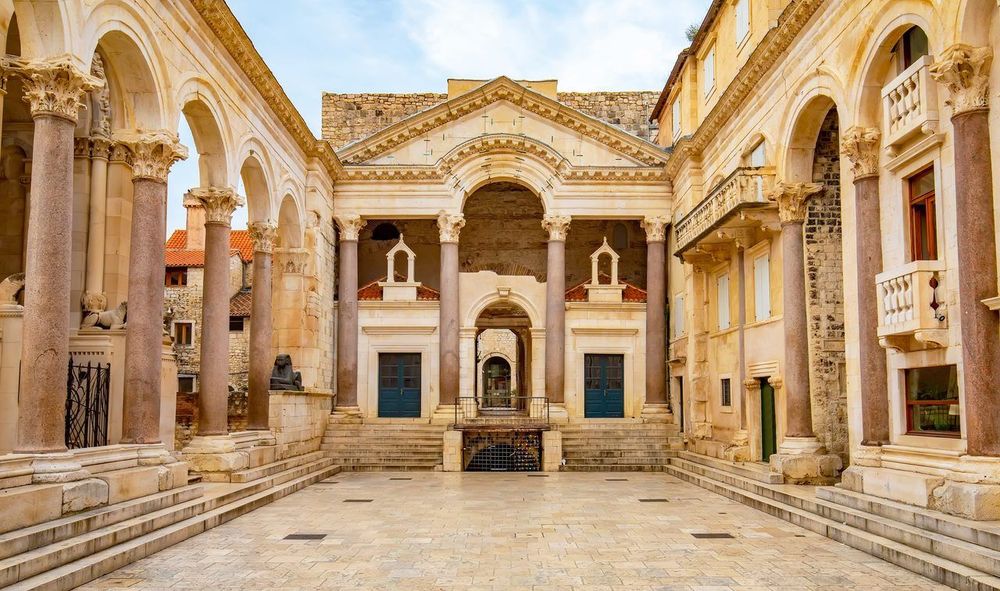
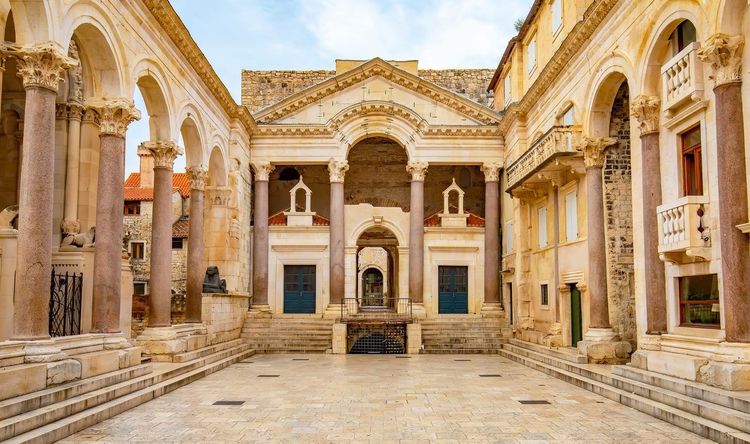
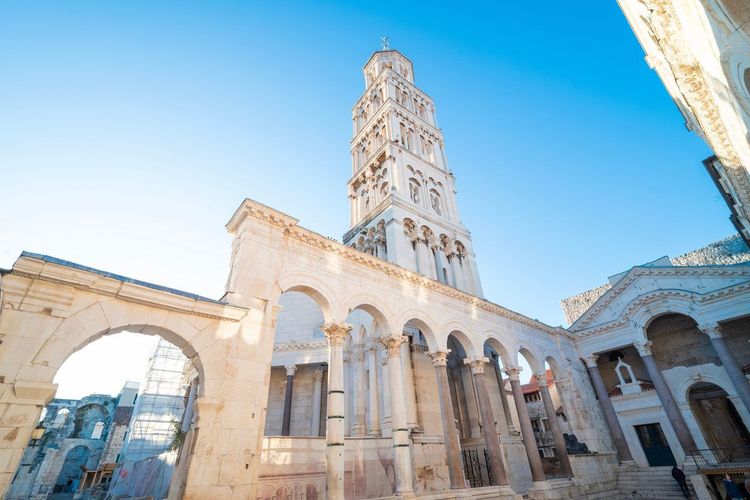
Enter through the Silver Gate on the east side, closest to the market, and make your way toward the peristyle, the central colonnaded square where subjects once came to prostrate themselves before the emperor. A black granite sphinx, one of twelve brought from Egypt by Diocletian, still stands guard there; a second, headless one, waits outside the nearby Temple of Jupiter. Today, this is where these millennia-old remains rub shoulders with café terraces.
Head down into the Roman cellars, a maze of vaulted rooms that faithfully mirrors the floor plan of the imperial apartments above. Game of Thrones fans will recognize the setting: this is where Daenerys Targaryen locks up her dragons in season 4. Allow around 45 minutes for the visit, with a ticket of around €10 in 2026. If you follow the Ryo audio guide, entry is also through the Silver Gate, with the story of this emperor who abdicated to live out his days far from Rome's power playing in your ears — a tale that most printed guides tend to gloss over.
The Cathedral of Saint Domnius and Its Bell Tower
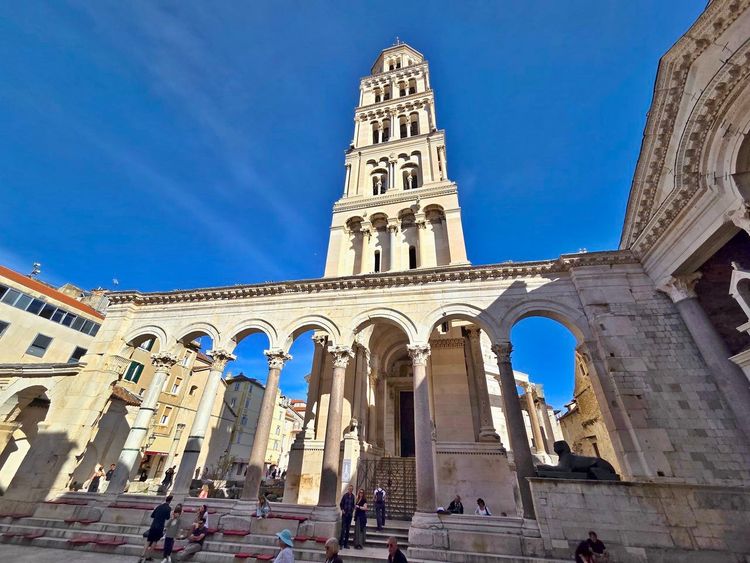
The Cathedral of Saint Domnius occupies Diocletian's former octagonal mausoleum, making it the oldest Catholic cathedral in the world still in use in its original structure. The irony has not been lost on historians: the emperor who persecuted Christians saw his tomb transformed into a church dedicated to one of his own martyrs.
Climb the adjoining bell tower (paid access): around 200 steps — first a stone staircase, then narrow metal stairs — lead to the top of this 57-meter tower, with views over the orange rooftops of the historic center, Marjan hill, and the ferry port. Wear closed-toe shoes; the climb is not suitable for those prone to vertigo.
Just steps away on Ulica Majstora Jurja, the tiny Church of St. Martin is worth a five-minute detour: it is one of the narrowest churches in Europe, fitted out as early as the Early Middle Ages in the former wall walk above the Golden Gate.
The Green Market and the Statue of Gregory of Nin
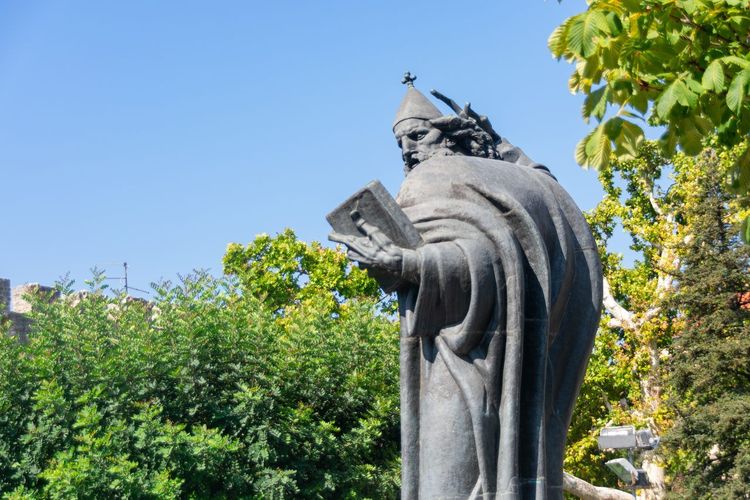
Stepping out of the palace on the east side, the Green Market (the Pazar) has enlivened Split's mornings for generations: regional fruit and vegetables, flowers, lavender from Hvar, inexpensive textiles, and a few souvenir stalls. A coffee or a slice of burek can be found there for under €5.
Just north of the Golden Gate stands the statue of Gregory of Nin (Ispod Ure 2, 21000 Split, rated 4.7/5 on Google with 1,387 reviews) (Grgur Ninski), a monumental sculpture by Ivan Meštrović originally installed in 1929 on the peristyle, then relocated here in 1954. It depicts the medieval bishop who defended the use of Croatian in the liturgy against the Latin imposed by Rome. Tradition holds that you rub his large left toe — polished and gilded by decades of touch — to bring yourself a little luck or a promise of returning to Split.
Exploring the old town at this pace — moving from the palace to the market to ancient stonework — takes a good half-day. Save the afternoon to wander without a set itinerary through the less-frequented lanes north of the decumanus, where inner courtyards still conceal fragments of Roman capitals reused in building facades.
Day 2: Marjan Hill, the Riva, and the Veli Varoš Neighborhood
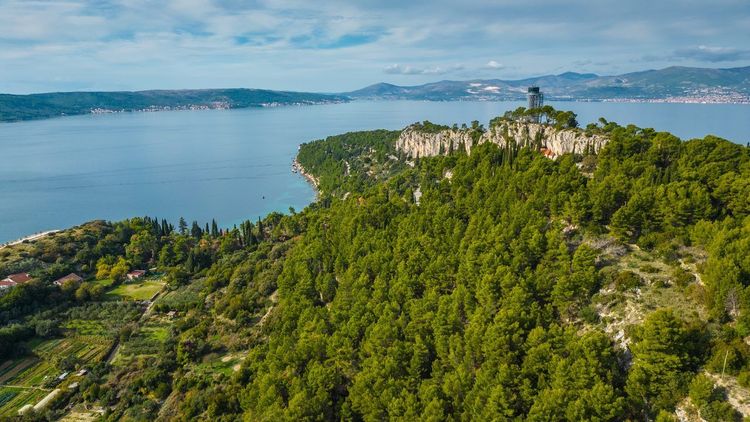
After the density of the palace, the second day opens up: a wooded hill, a seafront promenade, and a fishermen's quarter of steep lanes make for a more physical loop, but one far lighter on monuments.
Marjan Hill and the Telegrin Peak
The Marjan hill (Setalište Ivana Meštrovića, 21000 Split, rated 4.7/5 on Google with 14,003 reviews) is Split's green lung — a peninsula once stripped bare by goats and replanted with Aleppo pines from the second half of the 19th century onward: more than 115,000 trees were already counted there by 1970. Split's residents come here to run at dawn.
Allow about 1.5 hours round trip from the center to reach the Telegrin Peak, the highest point at 178 meters, topped since 2024 by a 19-meter viewing platform. Along the way, you'll pass two chapels: Saint Nicholas, protector of fishermen, dating from the early 13th century, and Saint Jerome, from the 15th century, built against the caves where hermits once lived. The path is marked but stony: wear hiking shoes rather than sandals, especially if you head up in late morning under the Dalmatian sun.
Several viewpoints dot the ascent, popular among locals for watching the sunset over the islands of Šolta and Brač. The first one, near the Vidilica bar, leads directly back down toward Veli Varoš, allowing you to loop around without retracing your steps.
The Riva Promenade
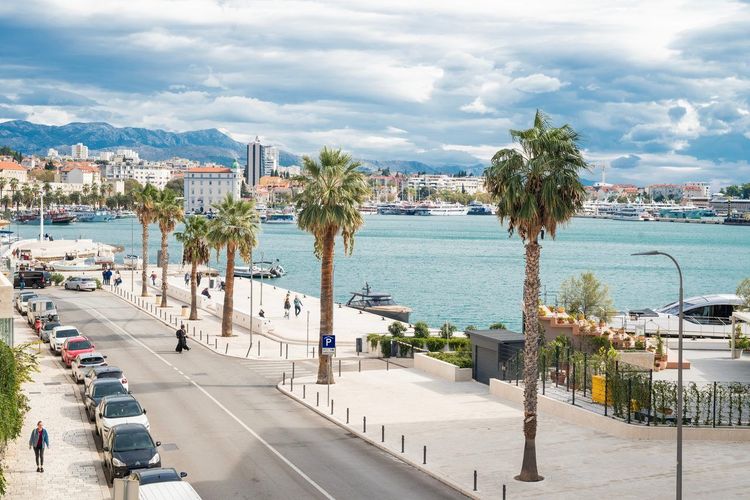
Head back down toward the waterfront and the Riva promenade, the palm-lined boulevard where Split gathers in the late afternoon since its redesign by the 3LHD architectural firm in 2007.
At the western end, the Republic Square (the Prokurative), with its 19th-century neo-Renaissance arcades inspired by the procuratie of St. Mark's Square in Venice, hosts outdoor concerts in summer and a Christmas market in December.
Pull up a terrace chair for an early morning coffee rather than an evening one: that's when the city is at its most alive, before the crowds arrive — a coffee typically costs €2 to €3.
The Veli Varoš Neighborhood
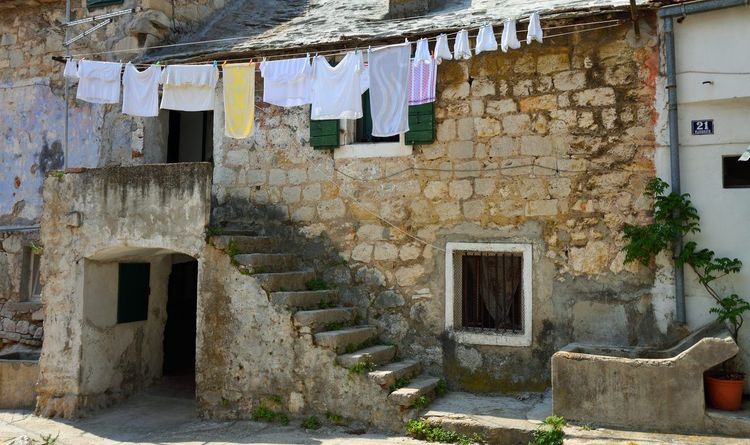
Heading west from the Riva, the steep lanes of the Veli Varoš neighborhood climb up the hillside, between white stone fishermen's houses and oleanders at the windows.
It's an authentic residential neighborhood, free of souvenir shops, where you're more likely to encounter laundry drying on a line than tourists, and where a few discreet guesthouses offer a genuine contrast with the bustle of the palace. To connect Marjan and Veli Varoš without doubling back through the same lanes, the Ryo sub-tour Between Marble and the Mediterranean guides you by ear — about 1.5 hours of walking with the Adriatic below.
Day 3: Archaeological Museum, Filming Locations, and Split's Beaches
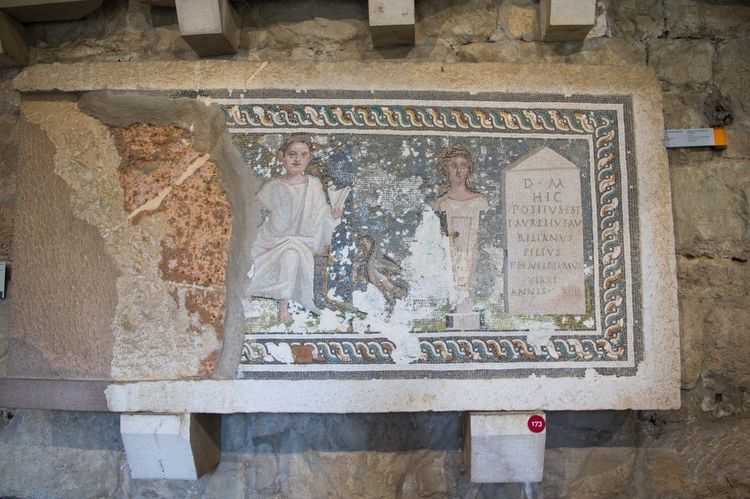
Save your final morning for culture and the afternoon for relaxation: this is the only day you'll truly leave the tight perimeter of the palace to reach the city's eastern shoreline.
The Archaeological Museum of Split
The Archaeological Museum of Split is Croatia's oldest museum, founded in 1820, and houses tens of thousands of objects spanning prehistory, the Greek colonial period, and above all the Roman province of Dalmatia.
The sarcophagi and mosaics from Salona, the former Roman capital of the region 5 km from Split, are worth the visit on their own, as is the lapidary garden where Latin inscriptions line up under the arcades. Allow 1 to 1.5 hours; tickets are around €8, and it's closed on Sundays outside the summer season. If time allows, Salona itself can be visited in an hour: amphitheater, early Christian basilicas, and necropolises, 20 minutes away by bus.
Game of Thrones Filming Locations
Split served as a backdrop for season 4 of the series, primarily for the fictional city of Meereen: the cellars of Diocletian's Palace, already visited on day one, but also the Klis Fortress, which you may pass on an excursion.
A tip if you're a fan: explore the filming locations by wandering freely through the lanes, but skip the Game of Thrones museum in the city center — a private exhibition of costumes and replicas that many visitors find disappointing and overpriced. A themed guided tour of about 1.5 hours will usually offer far richer behind-the-scenes stories.
Split's Beaches (Bačvice and Surroundings)
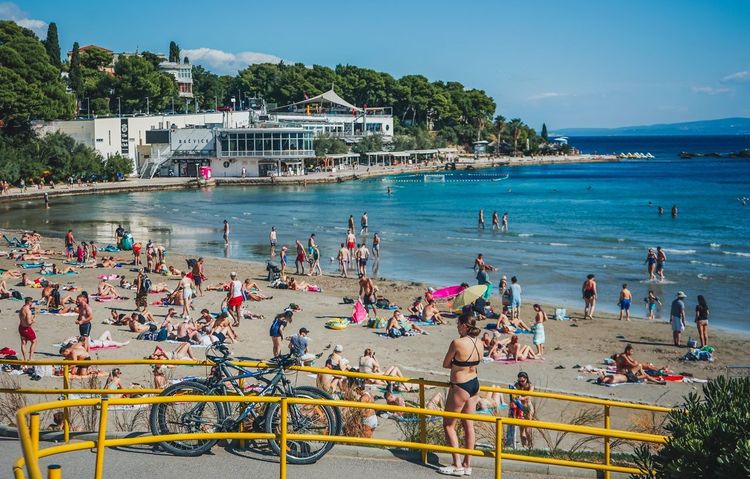
The most central and lively beach in Split is Bačvice (Šetalište Petra Preradovića, 21000 Split, rated 4.4/5 on Google with 1,141 reviews), a 10-minute walk from the train station and the port.
Its shallow, sandy bay — rare on this predominantly rocky coast — makes it a popular family spot in the afternoon and the birthplace of picigin, a traditional ball game played standing in the shallows, inscribed on Croatia's intangible cultural heritage list. For a quieter sunbathing spot, head to Kašjuni, a small pebble beach at the foot of Marjan, 30 minutes on foot or 10 minutes by bus from the center — far more peaceful in July and August.
Do you like understanding what you're looking at? The Ryo audio guide works just as well on the walk from the museum to Bačvice as it does from your beach towel: each stop tells the city's story in whatever order you choose to listen.
Day Trips: the Islands and the Surroundings of Split
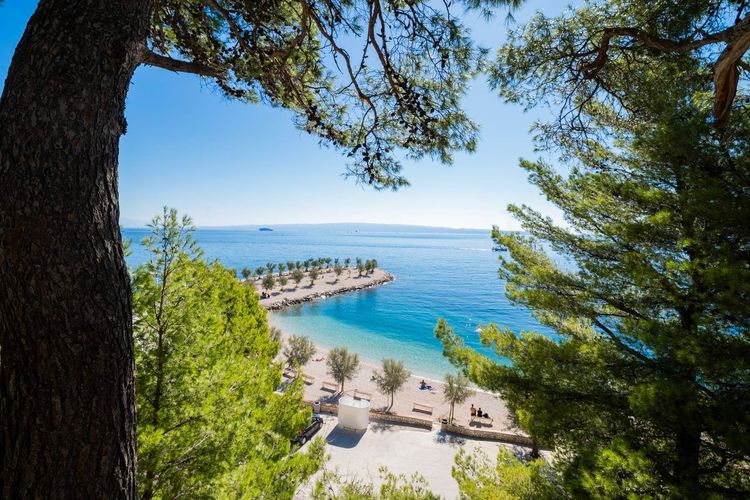
If you've centered your three days on the city center, know that a day trip can replace the beach afternoon on day three, or be added on if you're staying longer in Split.
The Island of Brač and the Island of Hvar
About 1 hour by catamaran from Split's port (Jadrolinija connections among others), the island of Brač draws visitors mainly for its Zlatni Rat beach, a spit of white pebbles that literally changes shape with the currents and the wind, near the small town of Bol.
Hvar, 1 to 1 hour 15 minutes by catamaran, cultivates a more glamorous image: stone lanes around St. Stephen's Square, a Spanish fortress (Fortica) overlooking the bay, and a nightlife scene with a reputation across the entire Adriatic. In high season (July–August), morning catamarans are often fully booked the day before: reserve online if possible.
The Pakleni Islands (Paklinski Otoci)
Just off the coast of Hvar, the Pakleni Islands form an archipelago of about twenty pine-covered islets, prized for their coves and shallow turquoise waters, starting with Sveti Klement and Marinkovac.
Reachable by water taxi from Hvar (10 to 20 minutes) or on a combined excursion from Split, they're best visited in a half-day, with a lunch stop at one of the konobas set up on the islets. For a full day at sea without organizing connections yourself, catamaran cruises departing from the Riva often combine Hvar, the Pakleni Islands, and the Blue Cave at Biševo: expect to pay €60 to €120 depending on the itinerary.
Trogir and the Klis Fortress
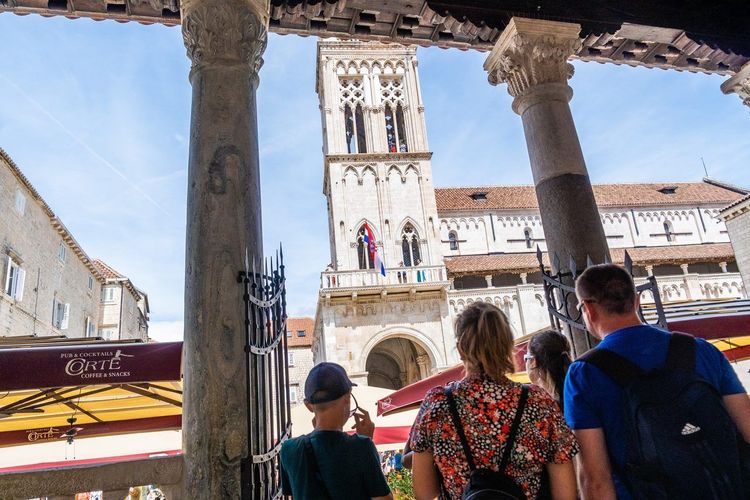
Thirty minutes' drive to the northwest, Trogir unfolds an entire historic center on a small island connected by bridges to the mainland and to the island of Čiovo, UNESCO-listed since 1997 for its Romanesque Saint Lawrence Cathedral and its urban layout inherited from Antiquity and the Middle Ages.
On the way back, a stop at the Klis Fortress (Klis, 21231 Klis, rated 4.5/5 on Google with 12,415 reviews), perched on a rocky spur that once controlled the route between the hinterland and the Dalmatian coast, rounds out the day nicely: it withstood several Ottoman sieges before serving, also, as a set for Meereen.
Before boarding, the Ryo audio sub-tour runs along the waterfront from which the boats depart and recounts the Roman founding of Split — a good way to make use of time spent waiting on the quay. To chain several islands together, our Ryo article on Croatia's most beautiful islands details the connections and travel times.
Hidden Gems: Visiting Split off the Beaten Path
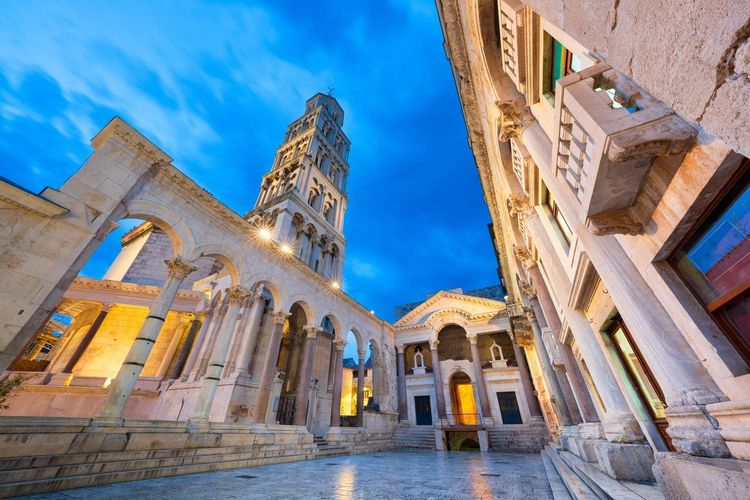
Split is not just an open-air museum: the city has its own nocturnal rhythms and local habits that most rushed guides tend to overlook.
Listening to Music at the Palace Peristyle
On evenings, especially between June and September, klapa groups — those Dalmatian a cappella choirs inscribed on UNESCO's intangible cultural heritage list since 2012 — sometimes sing in the round vestibule adjoining the peristyle, without microphones or a stage, carried by the natural acoustics of the dome. Nothing is scheduled at a fixed time: the best approach is to hang around the area between 8 and 9 p.m. and follow the sound.
Going Out and Having a Drink in Split
Is Split a lively city for nightlife? Yes, but differently from Hvar: the atmosphere stays more local, concentrated around a few streets of the historic center rather than in large seafront clubs.
The liveliest area is the lanes around the Fruit Square (Voćni trg) and Bajamontijeva Street, nicknamed "the narrowest street in Split": several small bars are packed into just a few dozen meters, with tables set directly on the steps.
For a drink with a view rather than a dense crowd, head up to Vidilica, a rooftop bar perched above Veli Varoš, with one of the best sunset panoramas over the city and the islands.
Where to Stay in Split: Neighborhoods and Best Hotels
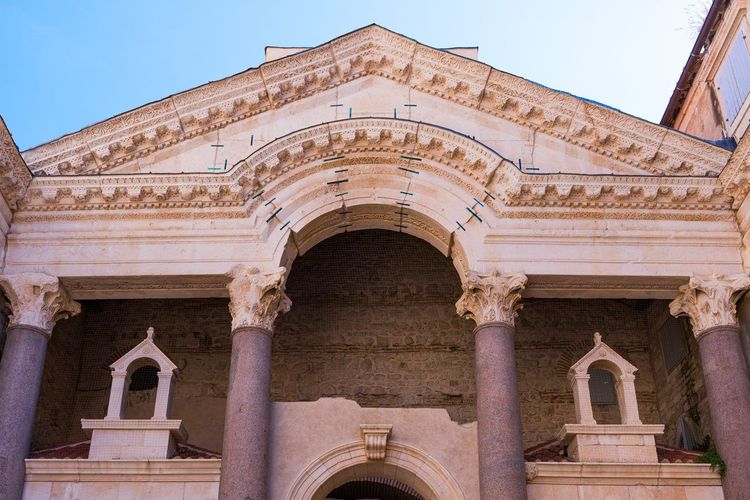
Where to stay in Split depends mostly on the pace you want to set for your three days: inside the palace walls to do everything on foot, or a little further out for peace and quiet.
The Historic Center, for Staying at the Palace's Doorstep
Staying inside or on the edge of Diocletian's Palace often means noisy lanes in the evenings during high season, but no commute is needed to reach the peristyle, the cathedral, or the Green Market. Accommodation here is mostly apartments and boutique hotels housed in historic buildings.
Expect between €90 and €180 per night in a double room at a well-located boutique hotel in July and August, and noticeably less in May, June, or September — a period when the best properties also tend to have more availability.
Veli Varoš and Bačvice, Between Tranquility and the Beach
For quieter evenings while remaining within walking distance of the center, Veli Varoš offers guesthouses and charming small hotels clinging to the hillside, with views over the rooftops and sometimes out to sea.
On the Bačvice side, several mid-range hotels trade on their immediate proximity to the beach rather than historic charm — practical if you're traveling with children.
Whatever neighborhood you choose, the Ryo audio guide for Split starts just a few minutes' walk away: there's no need to sleep right at the foot of the palace to begin exploring from the very first hour.
Where to Eat and Drink in Split: Our Top Picks
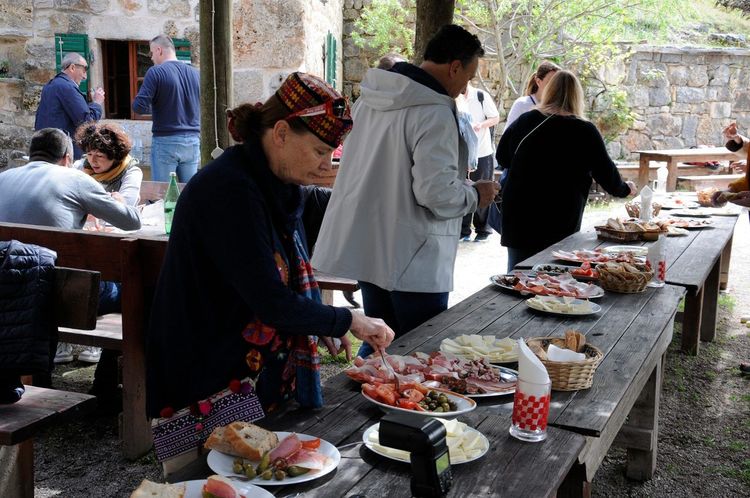
Dalmatian cuisine focuses on fresh-caught fish, local olive oil, and a few specialties that came over from neighboring Italy — without the prices charged in other European gastronomic capitals.
Restaurants and Foodie Addresses
For a simple, quality meal, Konoba Marjan, at the foot of Veli Varoš, serves Dalmatian dishes in a family setting, far from the tourist traps of the historic center. Try the pašticada — beef marinated and braised in red wine and prunes, served with gnocchi.
Closer to the palace, Zinfandel Food and Wine Bar (Marulićeva poljana 1, 21000 Split, rated 4.5/5 on Google with 1,663 reviews) offers creative Mediterranean cuisine and an impressive selection of Croatian wines little known outside the country, in a dining room that's best reserved in advance on summer evenings.
For a quick lunch between visits, the Green Market stalls or small spots around the Fruit Square serve burek and sandwiches for under €5 each. Don't leave without trying rožata, a Dalmatian custard dessert similar to crème caramel.
Bars and Rooftops with Views over the Adriatic
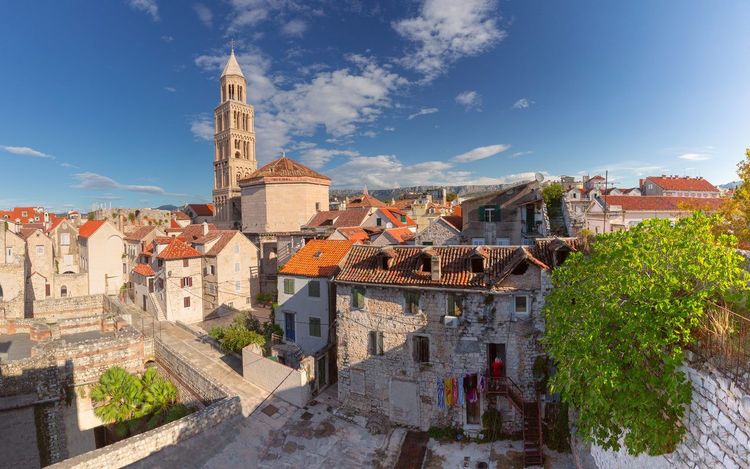
For an elevated drink, the terraces of hotels set within the old palace walls offer a rare view over the terracotta rooftops and the sea at sunset, with cocktails ranging from €10 to €14.
More laid-back, Bajamontijeva Street remains the obvious stopping point for bar-hopping without moving far, while Vidilica remains the city's most photographed spot for a cocktail facing the Adriatic.
How to Get to and Get Around Split

Split Airport (Kaštela, code SPU) is served in summer by numerous direct flights from across Europe, with a flight time of around 2 hours 15 minutes from the UK. To get to the center from the airport, a shuttle timed to arrivals reaches the port's bus station in 30 to 40 minutes for around €8. Urban bus no. 37 is slower but cheaper, and a taxi costs €30 to €50 depending on the time of day.
Split is also a major port for Jadrolinija ferries connecting Ancona in Italy, as well as the islands of Brač, Hvar, Vis, and Korčula — convenient if you're following up with a road trip through Croatia once your three days in Split are done.
On the ground, exploring Split on foot is the best option: the city is compact, and the palace lanes are off-limits to cars anyway. The historic center, Veli Varoš, the Riva, and Bačvice all fall within a 20-minute walking radius. Bus no. 12 connects the Riva to the far end of Marjan for those who'd rather skip the climb, and the Promet Split network serves the surrounding areas (Salona, Trogir, Klis) for just a few euros.
Where to park in Split? Paid parking lots around the port and the bus station, within walking distance of the palace, generally charge €2 to €5 per hour in summer. Avoid hunting for free parking near the historic center in high season: if you're staying outside the center, leave the car at the hotel and doing everything on foot or by bus becomes far more relaxing.
When to Go and How Long to Stay in Split
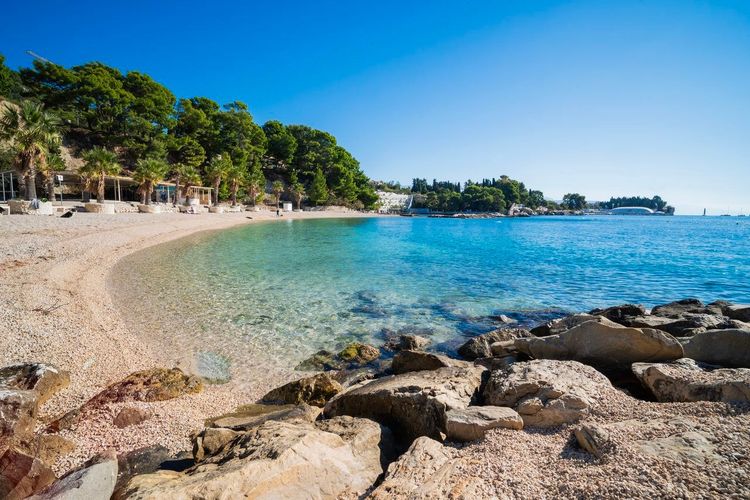
May, June, and September offer the best compromise: the sea is already pleasant, around 22 to 24°C in June, crowds are noticeably lighter than in midsummer, and accommodation is considerably cheaper than in July and August. July and August remain the hottest months, often above 30°C, and the busiest, between morning cruise ship visitors and the Ultra Europe festival, which drives prices up in July.
Three days are enough to cover the palace, Marjan hill, the museum, and an island excursion — the balance this itinerary proposes. To visit Split in 1 day, focus on the palace, the cathedral, and the Riva, starting early before the groups arrive. To visit Split in 2 days, add Marjan hill and the Archaeological Museum. With four days or a week on hand, slot in one or two extra excursions to Trogir, Hvar, the Krka waterfalls, or even Dubrovnik — about 3 hours by road — rather than piling up more visits in a city already well covered in three days.
Budget for 3 Days in Split and Free Activities
Split remains affordable as long as you keep an eye on accommodation and boat excursions — generally the most expensive part of a stay. For three days, budget around €250 to €350 per person excluding transport, including a mid-range hotel (€100 to €140 for two nights in a double room off-season), meals (€30 to €40 per day per person if you alternate between konobas and street food), entrance tickets for the palace, the cathedral, and the museum (around €25 to €30 in total), and a boat excursion to the islands (€40 to €60 by ferry, more for a cruise).
On the free-activities front, the palace peristyle, the historic center's lanes, the Riva promenade, the hike up Marjan hill, and Bačvice beach all cost nothing. Only the bell tower, the cellars, the Archaeological Museum, and boat excursions are paid, leaving a good half of the stay accessible without spending a cent.
One last tip: book island boat tickets early in high season and keep some flexibility in your day-by-day order in case of the bora — the north wind that can ground catamarans in port for an entire day.



FAQ
How many days do you need to visit Split?
Three days are enough to cover Diocletian's Palace, Marjan hill, the Archaeological Museum, and a trip to the nearby islands. Two days suffice for the main highlights of the historic center, while an extra day opens the door to Hvar, Brač, or Trogir.
What is the best time to visit Split?
May, June, and September offer the best balance between pleasant weather, a sea already warm enough for swimming, and moderate crowds. July and August remain the hottest and busiest months.
How do you get to Split from the airport?
A shuttle timed to arrivals connects the airport to Split's port in 30 to 40 minutes for around €8. Urban bus no. 37 is cheaper but slower; a taxi costs €30 to €50 depending on the time of day.
Where can you park in Split?
Paid parking lots around the port and the bus station are the simplest option, within walking distance of the palace. The historic center is pedestrian-only anyway.
What is the liveliest neighborhood in Split?
Bajamontijeva Street and the area around the Fruit Square concentrate the nightlife of the historic center, with several small bars packed into just a few dozen meters.
Is Split a lively city for nightlife?
Yes, but with a more local and less rowdy atmosphere than Hvar. Evenings center around the historic center rather than large seafront clubs.
What can you do for free in Split?
The palace peristyle, the lanes of the historic center, the Riva promenade, the hike up Marjan hill, and Bačvice beach are all entirely free.
Three days in Split leave enough time to understand why this city holds a special place on the Dalmatian coast: nowhere else does a Roman palace still serve as a residential neighborhood. Between the peristyle at dawn, the view from Marjan, and a trip to Hvar or Brač, the itinerary outlined here covers the essentials without rushing.
To explore these places in order, with the stories there wasn't room to tell here, the Ryo audio guide for Split lets you go at your own pace, without depending on a group or a fixed schedule.
À lire également