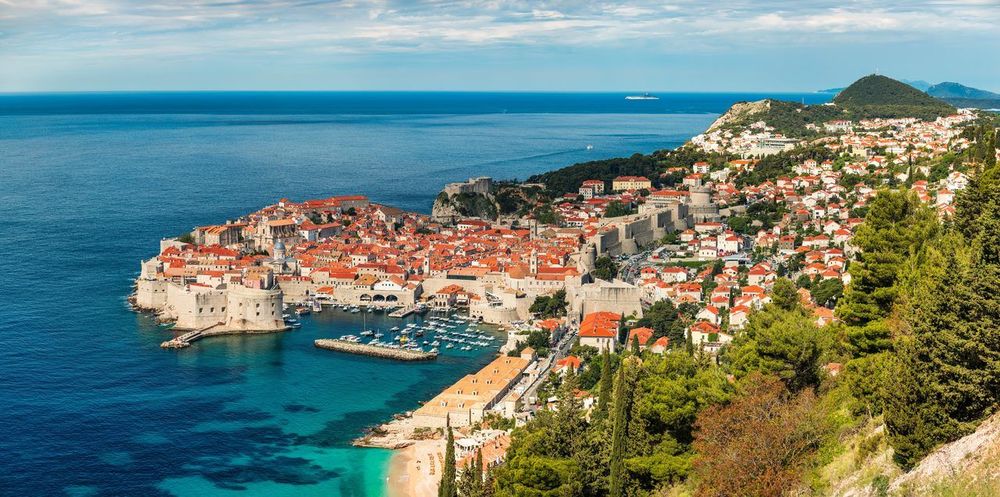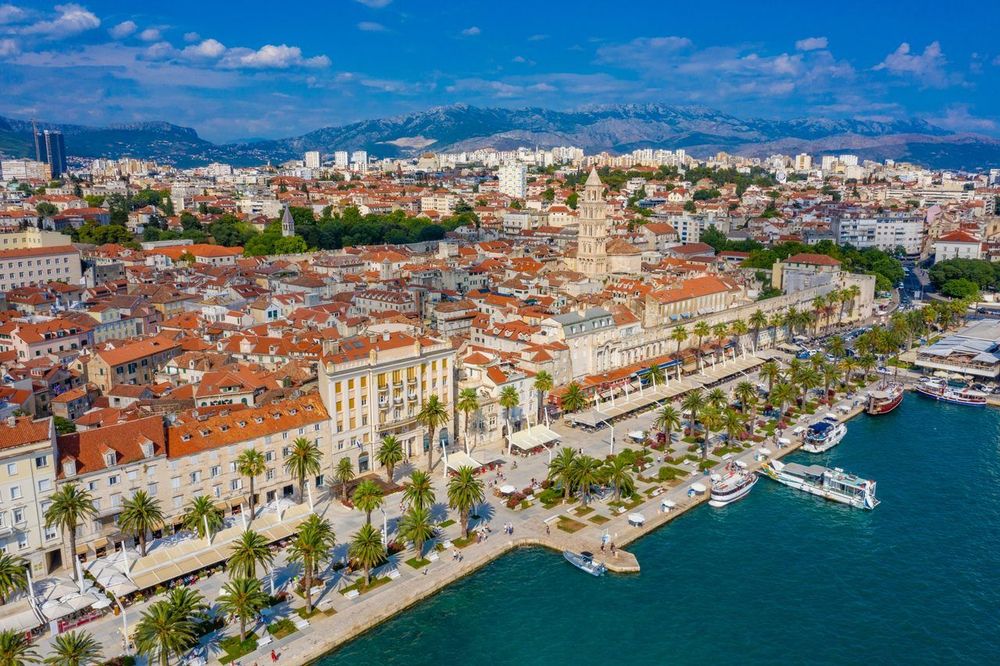
© Shutterstock
 Votre guide Ryo
Visiting Split with Family: The Complete Guide for a Successful Stay in 2026
In Split, Roman history unfolds without you even realising it: kids run through the vaulted cellars of a 1,700-year-old imperial palace as though it were a treasure hunt, emerge into daylight in the middle of a fruit market, and end the day with their feet in crystal-clear water five minutes' walk from the historic centre. Visiting Split with family means enjoying a city compact enough to explore entirely on foot, and rich enough that no one gets bored — neither parents nor younger visitors. To get a feel for the place from the moment you arrive, the Ryo audio guide tour of Split starts at the heart of the palace and tells, step by step, how this city was literally built inside the walls of a Roman residence.
In the pages that follow, you will encounter a museum displaying more than 500 stuffed frogs arranged in scenes from everyday life, a beach where a local sport invented with a simple ball has been played for over a century, a mountain-side fortress that served as the backdrop for a cult TV series, and an entire medieval city listed by UNESCO less than 40 minutes away by road. We also cover the beaches that genuinely suit toddlers, the boat excursions that won't exhaust anyone, and the practical questions you are probably asking yourself before booking: budget, season, transport and accommodation — everything you need to build a complete itinerary without spending hours comparing travel blogs.
Diocletian's Palace, the Living Heart of Split
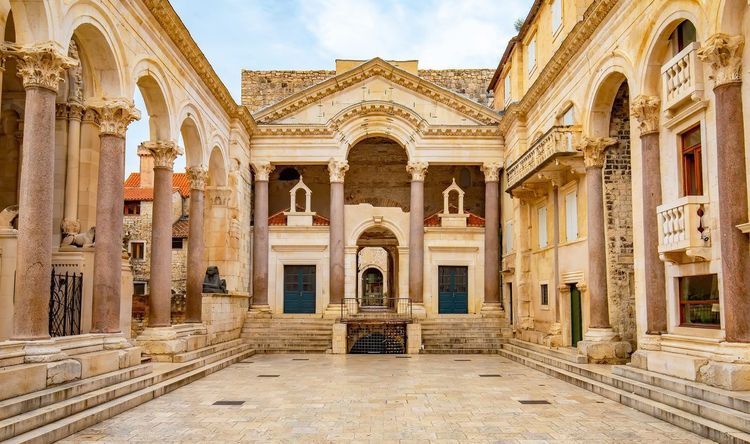
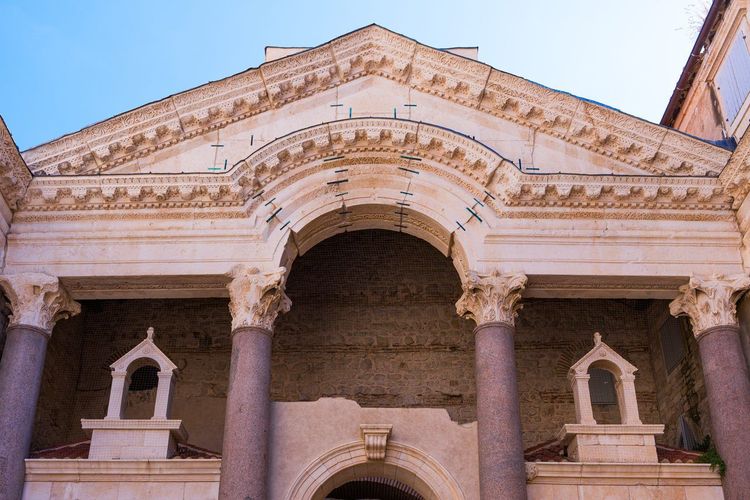
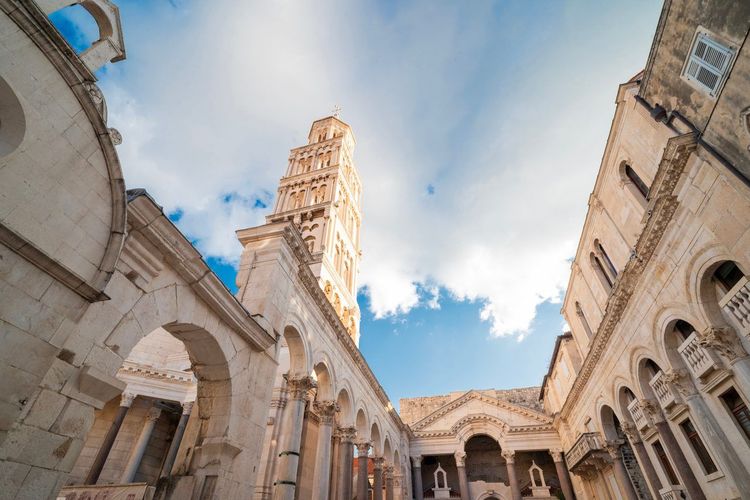
It is hard to visit Split without first understanding its origins: the entire old town is built inside and around a single building, Diocletian's Palace, completed around AD 305 as the retirement residence of the Roman emperor of the same name. Unlike a conventional palace, you don't visit it from the outside: you enter it, live in it, eat in it — literally, since Split residents still live today in apartments fitted out between the ancient walls. For your young explorers, it is a very tangible way to understand what an ancient city is, without a static museum or a security rope in sight.
The Ryo audio tour of Split starts precisely in this imperial quarter and tells the story of the palace's construction by Diocletian, before following its transformation into a living city over the centuries. This keeps younger visitors engaged without making them feel as though they are sitting through a compulsory history lesson. Come evening, some of those same vaulted lanes turn into the terraces of quiet bars — a contrast that few visitors anticipate when they arrive by day.
The Palace Cellars: a Treasure Hunt for Kids
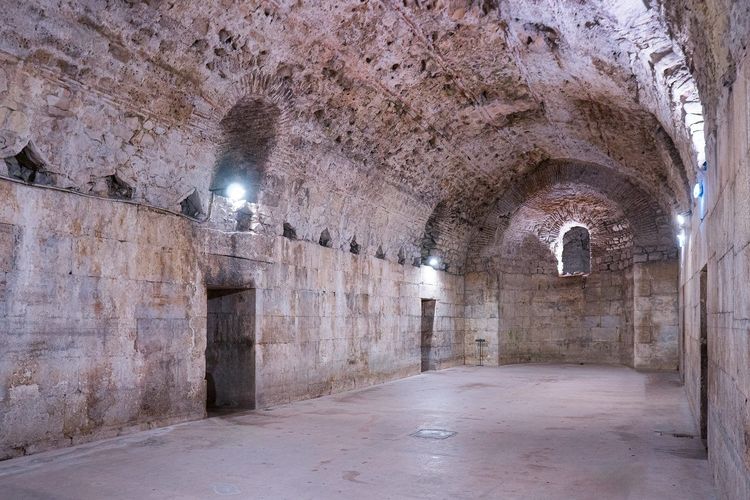
Beneath the level of the Riva (Obala Hrvatskog narodnog preporoda, 21000 Split, Croatia, rated 4.7/5 on Google based on 25,411 reviews) lies one of the best-preserved sets of Roman substructures in Europe: vast vaulted halls that served as the foundation of the imperial apartments, now emptied and open to visitors. For a child aged 6–12, the place works like a real labyrinth: high ceilings, massive columns, echoes that carry far, and the occasional temporary exhibition to punctuate the route.
Allow around 45 minutes for a full visit, a little longer if your curious ones want to read everything or if you alternate with photo stops. Combined tickets with the bell tower or other palace sites often work out cheaper than buying separate entries: check the options at the ticket office on the day. Strollers struggle on some of the cobbled, damp sections — bring a baby carrier instead and wear shoes with good grip, as the stone can be slippery in places.
The Peristyle and Saint Domnius Cathedral
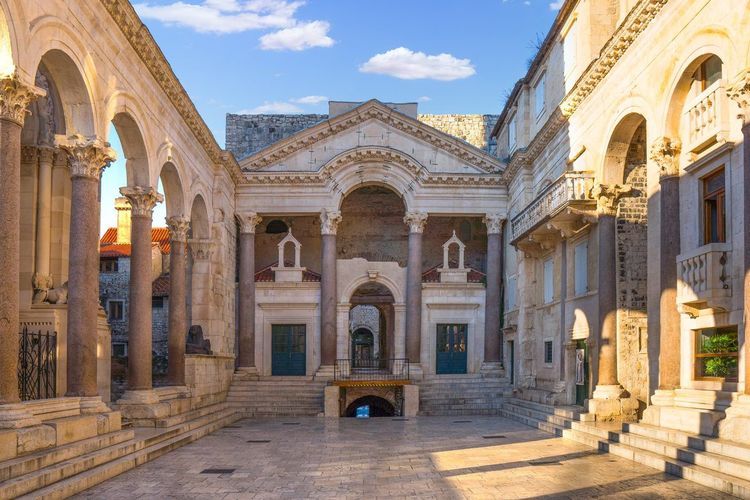
Emerging from the cellars, you step straight onto the peristyle, the central colonnaded square that served as the emperor's ceremonial antechamber. This is where groups congregate during the day, and also where costumed re-enactors dressed as Roman legionaries are happy to pose for a photo with your children — for a few euros.
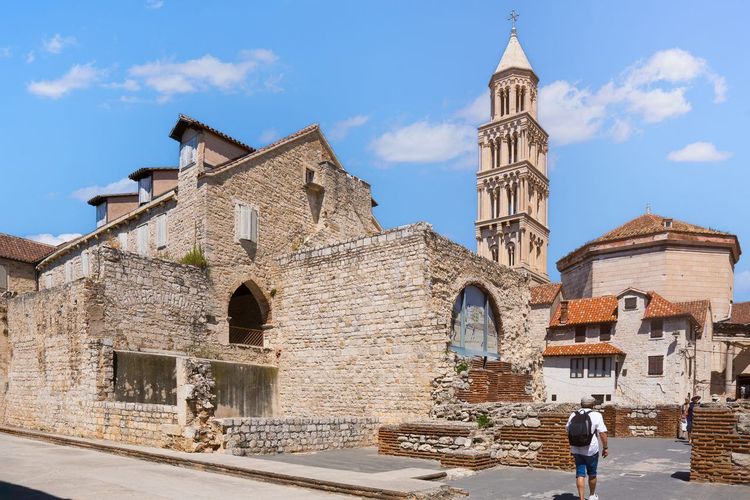
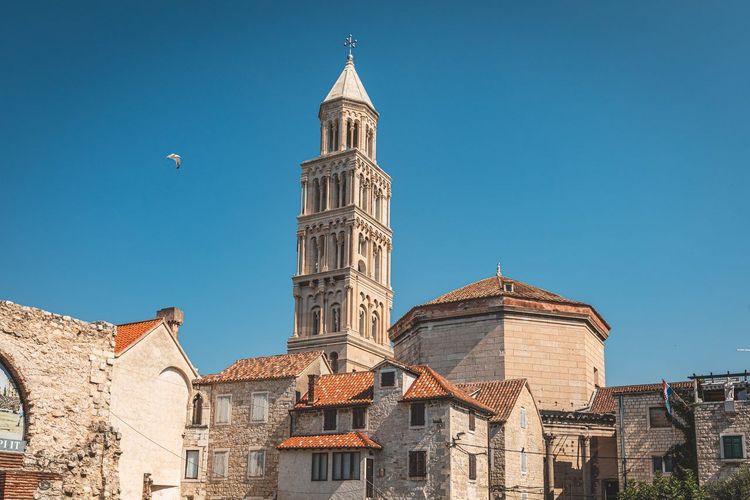
Right next door stands Saint Domnius Cathedral (Kraj Sv. Duje 5, 21000 Split, Croatia, rated 4.6/5 on Google based on 7,580 reviews), which was originally Diocletian's mausoleum before being converted into a church in the 7th century: the emperor who persecuted Christians rests, by an irony of history, beneath one of the oldest Catholic places of worship still in use. Its 57-metre Romanesque-Gothic bell tower, built between the 13th and 16th centuries, can be climbed via a narrow staircase of more than 180 steps — vertiginous for some, exhilarating for others, but the view over the terracotta rooftops and the Adriatic makes the effort worthwhile. Wear closed shoes, as the steps become slippery in wet weather, and avoid taking children under 5 who may tire halfway up.
Split's Old Town: the Riva, Lanes and Neighbourhoods to Explore
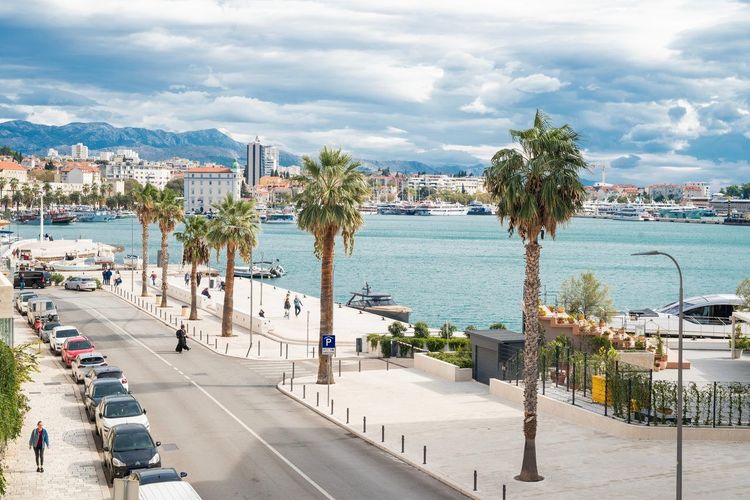
Once you leave the palace on the seafront side, you step directly onto the city's most lively promenade, extended by a web of lanes that together form a neighbourhood worth exploring without any fixed itinerary. This is where Split truly breathes: café terraces, ice-cream sellers, fishermen hauling in their nets early in the morning, and a light that shifts the atmosphere completely between 9am and 7pm. Set aside a good part of one morning for a leisurely wander — it is often the highlight of the stay for those who don't like following a rigid schedule.
The Riva and the Republic Square
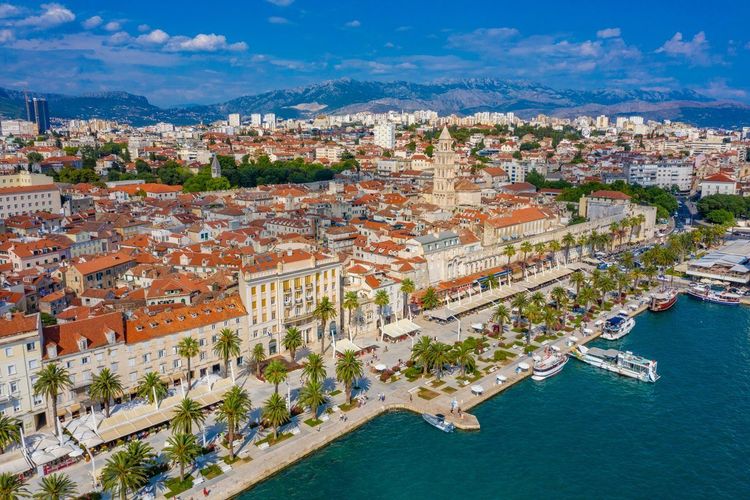
The Riva is the palm-lined seafront promenade running along the entire southern façade of the palace. It is the natural meeting point at the end of the day: you settle onto a terrace while the children run between the benches, and it is also the easiest place to regroup if someone wanders off to stare at a gelato shop window.
A short walk away, Republic Square, known locally as Prokurative, echoes the Venetian arcade architecture of St Mark's Square in miniature. Younger children find plenty of space to run freely here, away from traffic, while you enjoy the shade of the arcades during the hottest hours. Concerts and small craft markets set up here regularly on summer evenings — a good excuse to extend the walk after dinner.
The Neighbourhood of Veli Varoš
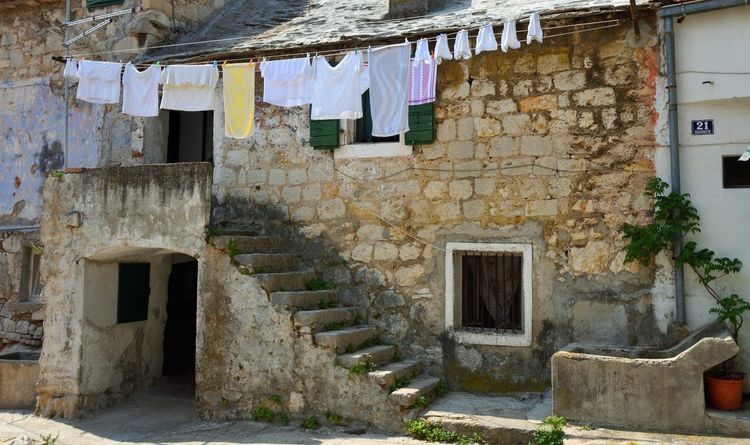
Heading west, the cobbled lanes give way to the low stone houses of Veli Varoš (21000 Split, Croatia), a former fishing and farming village now absorbed into the city. You encounter fewer tourists here, more laundry drying at windows, and a handful of craftsmen's workshops at street level. It makes a welcome contrast after the density of the historic centre, and an opportunity to show your teenagers what Split looked like before mass tourism.
The Ryo audio tour makes precisely this connection between the seafront and these quieter lanes: you move at your own pace, headphones on, and pause whenever an ice cream becomes unavoidable — which happens quickly given the number of gelato shops along the way.
Marjan Hill: Hiking and Panoramic Views
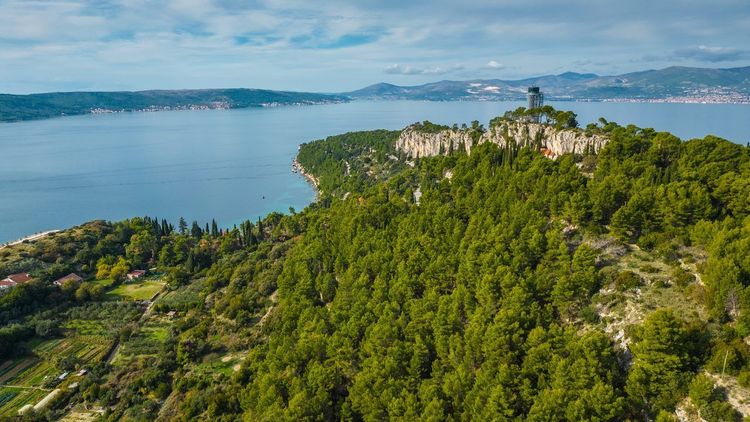
Nicknamed "the green lung of Split", Marjan Hill (Setalište Ivana Meštrovića, 21000 Split, Croatia, rated 4.7/5 on Google based on 14,003 reviews) rises just behind Veli Varoš and peaks at 178 metres at the Telegrin summit. It is a Mediterranean pine forest crossed by a network of marked trails, reachable on foot from the city centre in about fifteen minutes.
With young walkers, aim for the first viewpoint, Vidilica, reached in 20–25 minutes of moderate climbing via steps from Veli Varoš: the view over the harbour, the offshore islands and the old town's rooftops already justifies the effort, and a café terrace at the top lets you catch your breath. If your teenagers have the stamina, continue to Telegrin, though that turns the outing into a 2–3 hour round trip with little shade on some sections in midsummer.
The path also passes small hermitage chapels and an old Jewish cemetery — curiosities that provide a shady pause and a chance to share a little local history. Bring plenty of water and set off early in the morning or late in the afternoon between June and August: the heat on the hill is noticeably stronger than in the city, without the sea breeze of the Riva to temper it.
Before heading up, the Ryo audio guide for Split helps you identify what you will see from the top — from the palace to the harbour — a good way to turn the panorama into a spotting game for those who stop to examine every lizard on the path.
Split's Beaches for Young Children
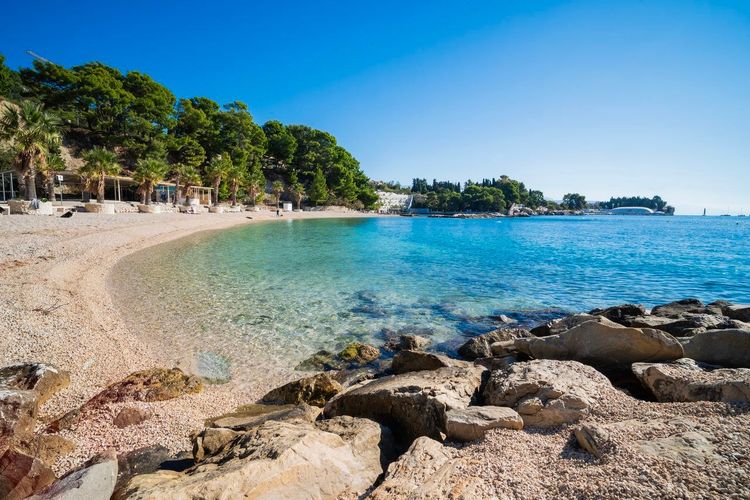
Split is not a seaside resort in the classic sense, but it has several beaches within walking distance of the centre — which changes everything when younger children refuse journeys of more than 20 minutes at the end of the day. Most offer sun lounger and parasol rental by the day, so there is no need to haul everything from the hotel. For a broader comparison of the coastline, our selection of the most beautiful beaches in Croatia will give you further ideas.
Bačvice, the Family Favourite Beach
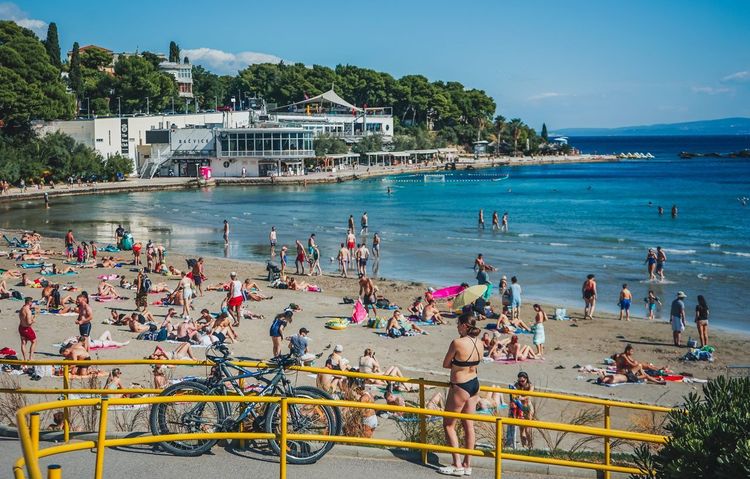
Bačvice beach is the busiest in the city, 10–15 minutes' walk from the old town. Its main draw: a sandy bottom that stays shallow over a wide distance, unlike the majority of Croatian beaches, which tend to be pebbly and quickly deep.
This is also where picigin was born — a local game in which players keep a small ball from touching the water, played for over a century by generations of Split residents. Your young swimmers will pick up the game in minutes by watching the locals, and cafés and snack bars line the entire promenade for when hunger strikes.
Jezinac and the Quieter Coves
A few hundred metres from Bačvice, the cove of Jezinac offers a calmer alternative: smaller, less known to organised groups, with a mix of pebbles and sandy patches on the seabed. It is the better choice if your group needs some quiet after a busy morning visiting the palace.
Neither beach has permanent lifeguard supervision: keep a close eye on younger children, especially on busy days in July–August when towels are packed tightly together. A day that works well: the Ryo audio guide tour of Split in the palace in the morning, lunch on the Riva, then feet in the water at Bačvice in the afternoon.
Museums and Hands-On Discoveries for Children
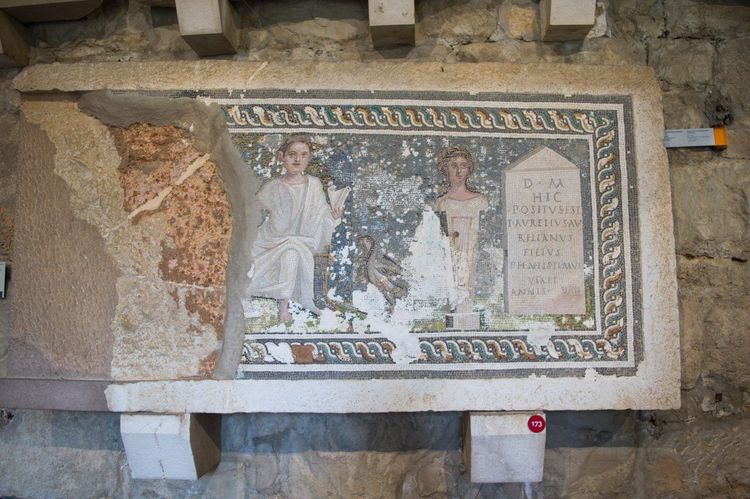
Between heritage visits, Split hides two museums that speak directly to young visitors, each in its own way: one through the quirky, the other through historical depth.
Froggyland, the Unusual Museum of Stuffed Frogs
Housed in an apartment in an ordinary city-centre building, Froggyland brings together 507 stuffed frogs arranged in 21 tableaux depicting everyday life in the early 20th century: a classroom, a circus, a workshop, a game of billiards. Hungarian taxidermist Ferenc Mere created this one-of-a-kind collection between 1910 and 1920, and it can only be seen in Split.
Allow 20 to 30 minutes for a modest entrance fee, and be prepared to explain to more sensitive children that this is a traditional craft rather than a current practice — the question tends to come up on the way out. Opening hours are extended in season and reduced outside summer; check them the day before.
The Split Archaeological Museum
Founded in 1820, the Split Archaeological Museum (Zrinsko-Frankopanska 25, 21000 Split, Croatia, rated 4.3/5 on Google based on 1,122 reviews) is the oldest museum in Croatia and holds thousands of objects unearthed from the excavations of Salona, the former Roman capital of the province of Dalmatia. Sculpted sarcophagi, mosaics and ancient jewellery tell the story of Roman daily life to visitors already won over by Diocletian's Palace.
The shaded lapidary garden, dotted with funerary steles, provides a welcome break with enough space for children to stretch their legs without risk of knocking over a display case. The entrance fee remains noticeably lower than the palace sites — a solid option when the day's budget is already stretched.
Markets and Local Life: the Pazar and the Fish Market
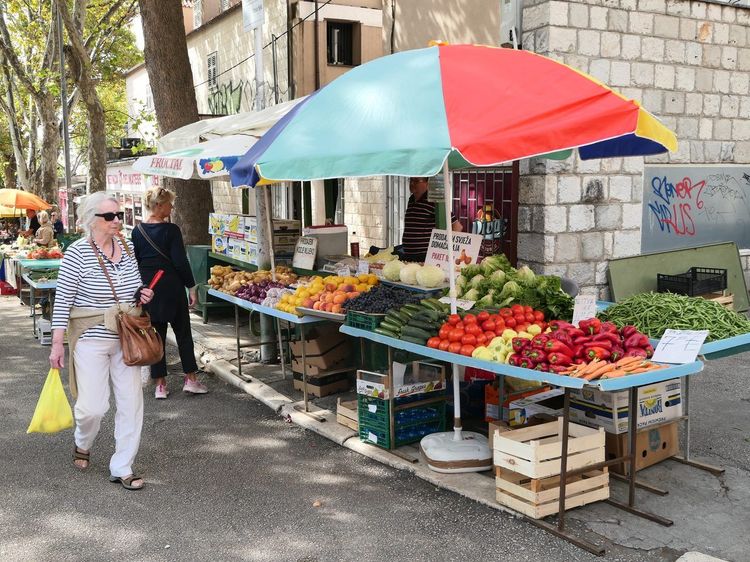
Just outside the Silver Gate, to the east of the palace, the Pazar fruit and vegetable market comes alive every morning, with local producers selling tomatoes, figs, almonds and lavender according to the season. Use it to let your young foodies try a local fruit, or pick up enough for a picnic on the Riva rather than eating at a restaurant for every meal.
On the other side of the old town, the fish market (Kraj Sv. Marije 1, 21000 Split, Croatia, rated 4.4/5 on Google based on 1,880 reviews) has a peculiarity that never fails to surprise: no flies, despite the heat. The explanation lies in the sulphurous vapours from a nearby spring that keep insects at bay — an anecdote Split residents love to share. The strong smells can put off younger noses: ten minutes is enough to take in the atmosphere, ideally before 10am when the stalls are at their fullest.
In the Footsteps of Game of Thrones in Split
Teenagers who grew up with the series will recognise several Split locations. The cellars of Diocletian's Palace served as the hall where Daenerys chains her unruly dragons in Meereen. The vaulted, dark atmosphere matches the series perfectly, to the point that some passages remain recognisable without any special effects.
The Klis Fortress, about twenty minutes' drive from the city centre, served as the set for the city of Meereen. Several local agencies offer themed tours combining both sites in a half-day, with frame-by-frame comparisons with the relevant episodes.
If your teenagers have never seen the series, the interest remains entirely intact: these are first and foremost two major historic sites, and the Game of Thrones connection is simply a bonus for keeping older visitors engaged during the tour.
Day Trips from Split: Trogir, Klis and Kaštel Gomilica
Split lends itself very well to day trips without necessarily renting a car: regular buses, organised tours or a simple taxi are enough to reach the three destinations below, all doable in a half-day from the centre. A car is useful if you plan to combine all three in a single day, but becomes unnecessary if you spread them across two or three outings.
Trogir, the UNESCO-Listed Medieval City
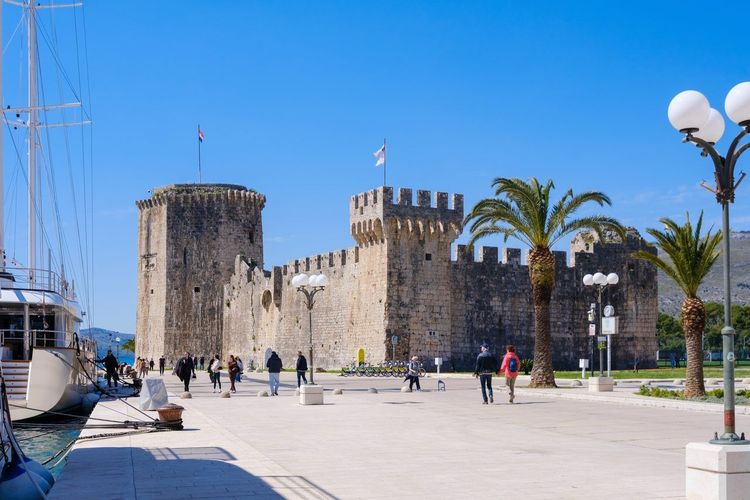
27 kilometres from Split, about 40 minutes by road or bus, Trogir is an entire medieval city built on a small island connected to the mainland and to the island of Čiovo by two bridges. Listed as a UNESCO World Heritage Site since 1997, it can be visited in a half-day: cobbled lanes, Saint Lawrence Cathedral with its Romanesque portal carved by Master Radovan, and the Kamerlengo Fortress guarding the harbour entrance.
The appeal for younger visitors lies mainly in the compact size of the pedestrianised old town, where you can let them run ahead without worry. The seafront promenade, lined with restaurants overlooking the boats, is well suited to a lunch stop before heading back. Buses depart from Split's bus station very regularly throughout the day — a simple journey requiring no advance booking.
Klis Fortress, Spectacular on the Mountainside
About twelve kilometres north-east of Split, Klis Fortress has guarded the pass leading to the hinterland since antiquity, held in turn by Croatian kings, the Ottomans and then the Venetians. Perched on a rocky spur, it commands a view stretching all the way to Split and the offshore islands — particularly spectacular in the late afternoon when raking light colours the ramparts.
The visit involves walking on uneven terrain and some elevated passages without continuous railings: hold younger children by the hand. Allow 1.5 to 2 hours on site; closed shoes are recommended, and bring water — shade is scarce once you are on top of the walls. A small exhibition of historic weapons and costumes near the entrance will delight anyone with a passion for military history.
Kaštel Gomilica, the Fortified Seaside Village
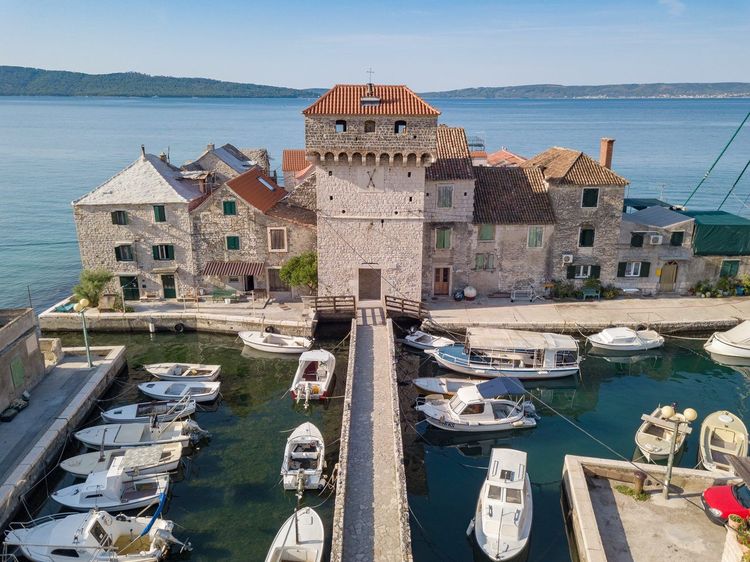
Between Split and Trogir, the fishing village of Kaštel Gomilica (Kaštel Gomilica, 21212, Croatia) deserves a 30–45 minute stop — less well known than its two neighbours and therefore considerably less crowded. Its 16th-century Benedictine castle, built on a small island connected to the village by a stone bridge, can be explored on a short stroll, with a small sandy beach right next to it for an impromptu swim.
It is the kind of stop that breaks the rhythm of an overpacked day, with just enough interest to justify the halt without exhausting the patience of your passengers. Our article on the best outings from Split details further options if you are looking to vary the experience over a longer stay.
Boat Excursions: Islands and Marine Life from Split
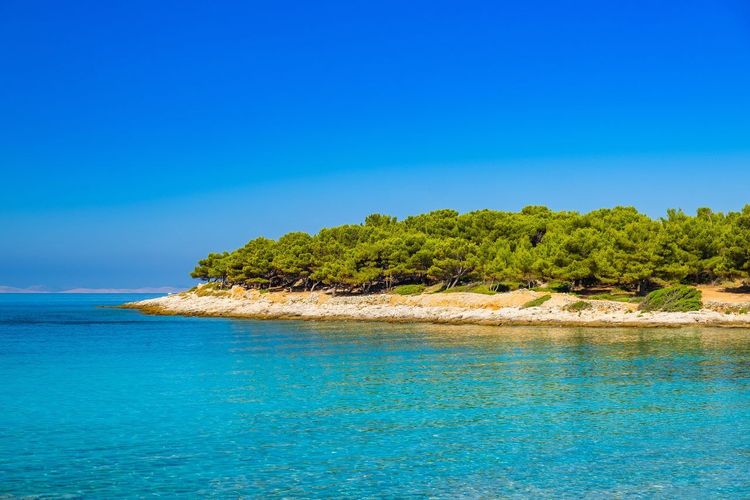
Split is also a natural jumping-off point for the Dalmatian islands, provided you choose an option suited to younger children's pace rather than a marathon cruise that ends in a meltdown around 4pm.
A Day on Hvar and the Pakleni Islands
The island of Hvar (Hvar, 21450, Croatia, rated 4.7/5 on Google based on 14K reviews) is reached in 1 to 2 hours depending on the boat — fast catamaran or regular ferry — with several daily departures in season from Split's harbour. The town of Hvar holds most of the interest for a day visit: the Fortica fortress overlooking the bay, lavender fields in the island's interior, and a lively waterfront that appeals as much to teenagers as to parents in search of a shaded terrace.
Just opposite, the Pakleni Islands archipelago offers much quieter coves, reachable by water taxi from Hvar harbour in 10 to 20 minutes. This is the better option for swimming with young children, away from the bustle of the town and its yachts. Plan for a full day — early morning departure, late afternoon return — with a budget that stays reasonable if you book the boat crossing separately rather than through an all-inclusive tour.
Dolphin Watching and Water Activities
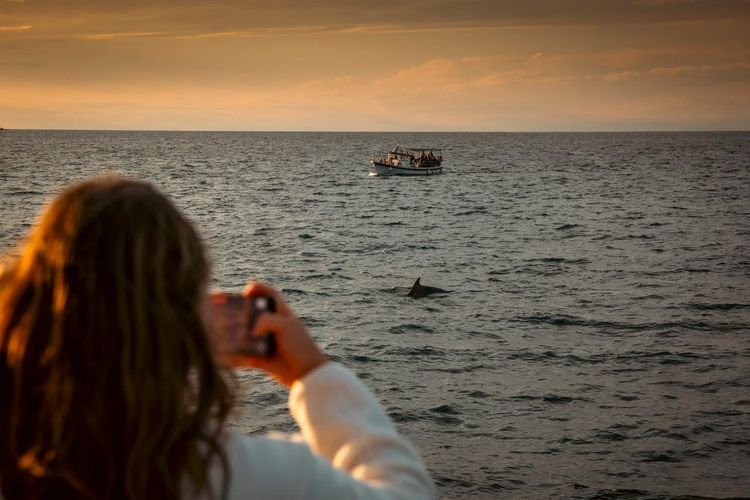
Several operators departing from Split offer trips focused on marine life, with dolphins as the headline attraction — no sighting is guaranteed, but the success rate is decent. Morning departures, on calmer water, generally offer the best chances.
If your group prefers a more hands-on activity over a contemplative one, sea kayaking and paddleboarding are easily practised from the central beaches, with hourly rentals and short introductions available from around age 6–7. It is a good way to add variety between sightseeing days without needing to book in advance. Do pack seasickness medication for those prone to motion sickness — the crossing to Hvar can be choppy in strong winds. Our article on the most beautiful Croatian islands covers the other archipelagos reachable from the city if Hvar is not enough to fill a full week.
How to Get to Split and Get Around with Children

Split Airport is located about 25 kilometres west of the city centre, in Kaštela. A shuttle connects the airport to the port bus station in 30 to 40 minutes depending on traffic, for a fare considerably lower than a taxi — though a taxi remains more comfortable with a stroller and multiple bags. Allow around 30 minutes by taxi, a little longer during summer peak hours.
If you are arriving from Italy, overnight ferries link Ancona to Split — sometimes more practical than a flight with young children who sleep through the crossing and wake up directly at the port. The train station and bus station are neighbours of the ferry terminal, a few minutes' walk from the palace. Once in the city, the old town and most of the neighbourhoods in this guide are easily walkable: Split is a compact city where a car quickly becomes a liability, between limited parking and pedestrianised streets.
To reach Bačvice, Marjan or nearby destinations such as Trogir and Klis, the Promet Split bus network is economical and frequent, with tickets available from the driver or at a kiosk. Ride-hailing apps such as Uber or Bolt work well in the city and are handy at the end of the day when tired legs make walking less appealing than it was in the morning.
Where to Stay in Split with Family
Three areas stand out. The historic centre, around the palace, is appealing for its immediate proximity to everything you can visit on foot, but accommodation there is often in upper-floor apartments without a lift — poorly suited to strollers — and nighttime noise from the terraces can disturb early-to-bed children.
The Bačvice neighbourhood, 10–15 minutes' walk from the centre, offers a good compromise: more modern hotels, sometimes with a pool, a short walk from the beach best suited to young swimmers, and quick access to the historic centre for morning visits. It is often the choice made by those returning for a second stay.
Finally, the Kaštela area, between the airport and the city centre, offers noticeably lower rates and more options with private parking — a real advantage if you are renting a car for Trogir or Klis. The downside: you will need a bus or a car for every trip into the centre, which limits spontaneous evening outings.
One practical tip: an apartment with even a basic kitchenette lets you prepare breakfast and avoid the tourist prices of the city centre first thing in the morning — a real budget saving over a full week.
Where to Eat in Split with Children
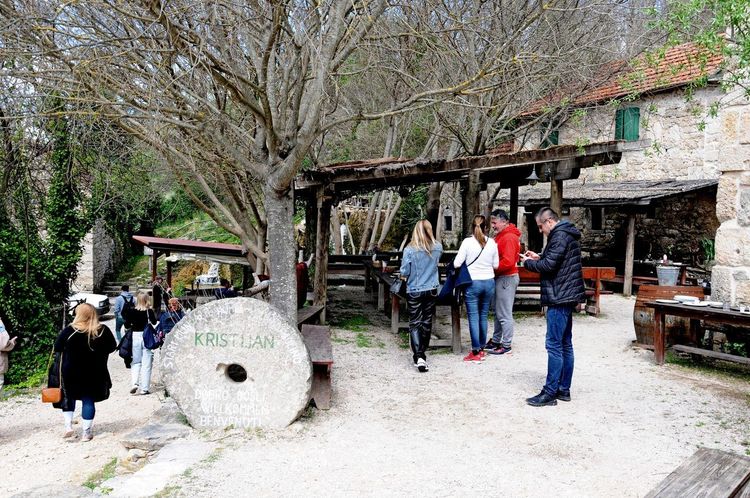
Konobas, traditional taverns, remain the safe bet for discovering Dalmatian cuisine without complications for picky eaters: grilled meat or fish, fresh pasta and grilled vegetables, with a half-portion often served on request even if it does not appear on the menu.
Peka, the signature dish of meat or octopus and vegetables slow-cooked under a bell covered with embers, is worth trying but often needs to be ordered the day before: plan ahead if you want to try it on a specific evening. Ćevapi, small grilled sausages served in flatbread with onions, on the other hand, are a reliable hit with the most reluctant young diners. For dessert, the old town's gelato shops and fritule — small Dalmatian doughnuts dusted with sugar — win everyone over.
For quick meals between visits, pizzerias and bakeries (pekara) are plentiful, with a decent price-to-quality ratio despite the footfall. A useful habit is to move a few streets away from the peristyle for dinner: prices drop noticeably as soon as you leave the main tourist axis, with no discernible loss of quality on the plate.
Budget and Tips for Visiting Split with Family
Since the switch to the euro in 2023, prices are easy to compare with a stay in France, with a cost of living broadly similar — sometimes slightly lower for dining and accommodation outside high season. For four people, budget an average daily spend of 150 to 220 euros in mid-range accommodation, eating at konobas rather than on the waterfront, and one paid activity per day.
Combined tickets for palace sites save a few euros compared with buying entries individually, and many sites offer a reduced rate for under-18s. Catamarans to Hvar generally cost between 15 and 30 euros per adult for a one-way ticket depending on the operator and the season, with discounts for younger passengers available from most companies.
On the free side, several activities cost nothing: the Riva, Marjan Hill, the lanes and squares of the palace and all of the city's beaches. The Pazar (Marmontova ul., 21000 Split, Croatia, rated 4.4/5 on Google based on 3,458 reviews) lets you put together a complete picnic for a few euros — an economical alternative to the central terraces. Finally, buying your catamaran tickets online as soon as your July–August dates are confirmed avoids missing the morning departure, which often sells out.
When to Go to Split with Family?
June and September represent the best compromise: the sea is already, or still, warm enough for swimming at around 22–24°C, while temperatures remain manageable for walking through the palace in the middle of the day, between 24 and 28°C.
In July and August, temperatures frequently exceed 32°C in the shade, and both the peristyle and the palace cellars fill with cruise-ship groups from 10am onwards. This is not a dealbreaker if your children cope well with heat, but it requires scheduling visits early in the morning or late in the day, and booking accommodation several months in advance.
Spring, from mid-April, and autumn through to mid-October remain valid options for a stay focused on cultural sightseeing rather than the beach, with noticeably lower accommodation prices and a far less saturated city. These rules apply across the entire Dalmatian coast if you are planning a road trip in Croatia with your children.
FAQ
How many days should you plan to visit Split with family?
Three to four days are enough to cover Diocletian's Palace, the old town, Marjan and a beach at a pace suited to younger visitors. Add one day per desired excursion — Trogir and Klis on one side, Hvar on the other — for a complete stay of around one week.
What budget should you plan for a stay in Split for four?
Budget between 150 and 220 euros per day for two adults and two children in mid-range accommodation, meals at local taverns and one paid activity per day, excluding transport to Split.
What is the best time to go to Split with young children?
June and September offer the best balance between warm sea, manageable temperatures and reasonable crowds. July–August is still possible but requires visiting early in the morning to avoid the heat and the crowds.
How do you get around Split with a stroller?
Walking is sufficient for almost all sightseeing in the city centre, although the cobblestones of the palace make a baby carrier more practical. The Promet Split bus network serves Bačvice and the airport, and ride-hailing apps are handy in the evening.
What free activities are there to do in Split?
The Riva, Marjan Hill, the lanes and peristyle of Diocletian's Palace and all of the city's beaches require no ticket. Only the bell tower, the palace cellars and the museums are paid.
Do you need to book a boat excursion to the islands from Split?
In July–August, yes, ideally a few days in advance: the fast catamarans to Hvar sell out on some mornings. Out of season, a ticket bought the day before or on the morning itself is more than sufficient.
Split ticks every box for a successful stay with children: heritage you can touch rather than admire behind glass, beaches accessible on foot, and enough varied excursions to fill a full week without boarding another plane.
To make the most of your first days on the ground, the Ryo audio guide for Split is the simplest way to understand Diocletian's Palace without depending on a guide's schedule: you move at your own pace, stop whenever someone needs an ice cream, and pick up the story right where you left off — turning a list of sights into a real shared memory.
À lire également