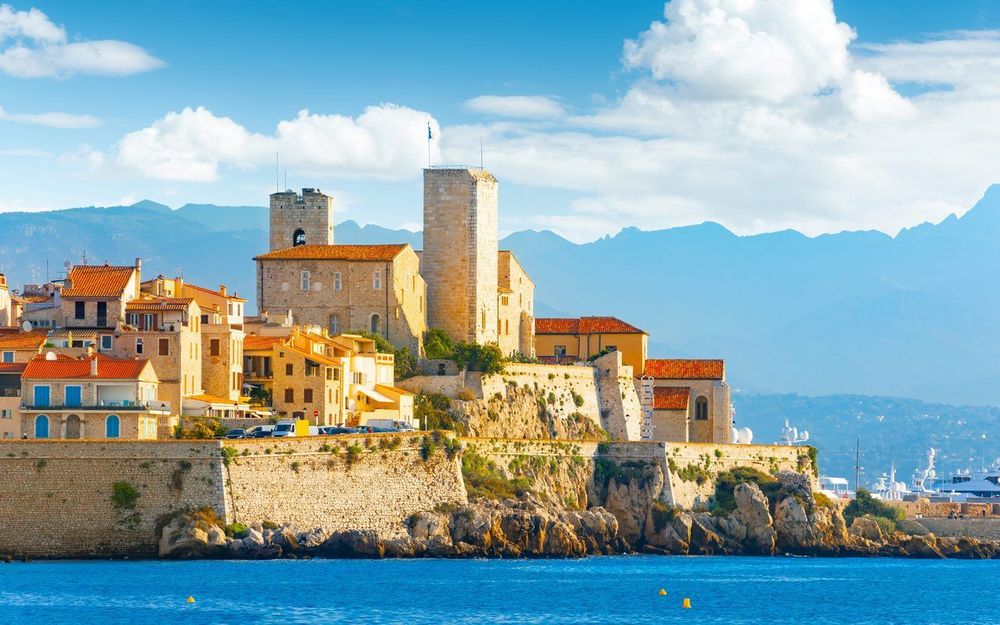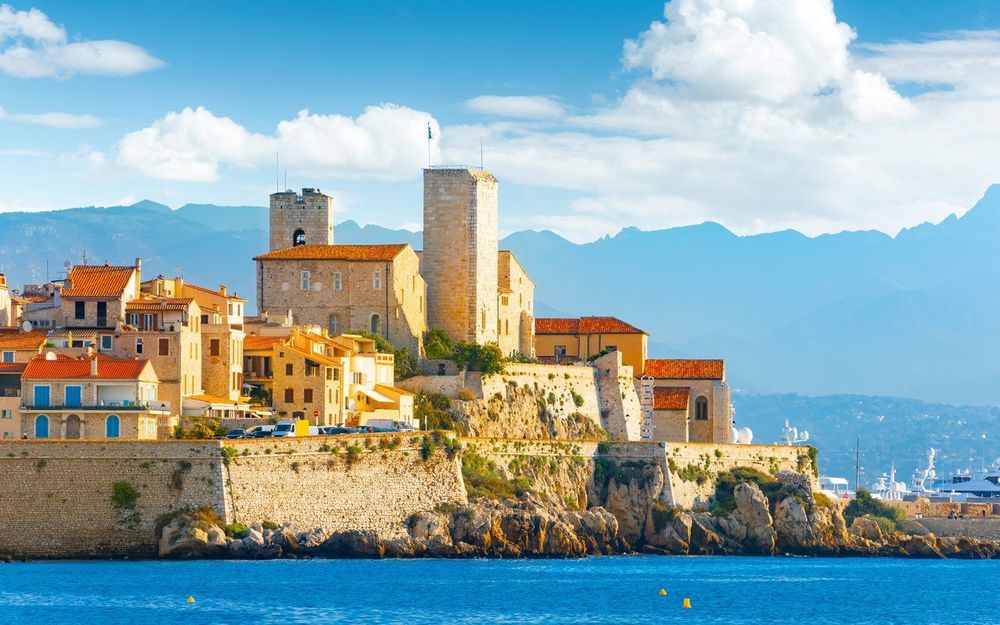
© Shutterstock
 Votre guide Ryo
Visit Antibes in 2 Days: The Complete Itinerary for 2026
Twenty minutes' walk is all it takes in Antibes to go from a 16th-century rampart to a hundred-metre yacht moored right opposite. It is this proximity between fortified history and seaside idleness that makes it possible to visit Antibes in 2 days without ever rushing. The town fits in a pocket handkerchief between Old Antibes and the Cap, which changes everything for a weekend organized around two complementary days rather than scattered ones. The Ryo audio-guided tour of Antibes follows exactly this route, from the ramparts to the harbor, with a single earpiece replacing a paper guide.
In two days, you will walk past a medieval castle where Picasso painted tirelessly during the autumn of 1946, a star-shaped fortress that held Napoleon Bonaparte prisoner for a few days in 1794, and a coastal path cut into the rock where the waves sometimes lap at the trail. You will also pass a pine grove where the Jazz à Juan festival was born in 1960, fine-sand beaches reachable on foot from the center, and a covered market that has sold local produce for over a century. The first day is built around Old Antibes, the Picasso Museum and the Fort Carré. The second climbs up Cap d'Antibes before heading back down to Juan-les-Pins. In between, there remain the choice of a hotel, the price of a proper socca and the question of the rainy day.
A Short History and Identity of Antibes
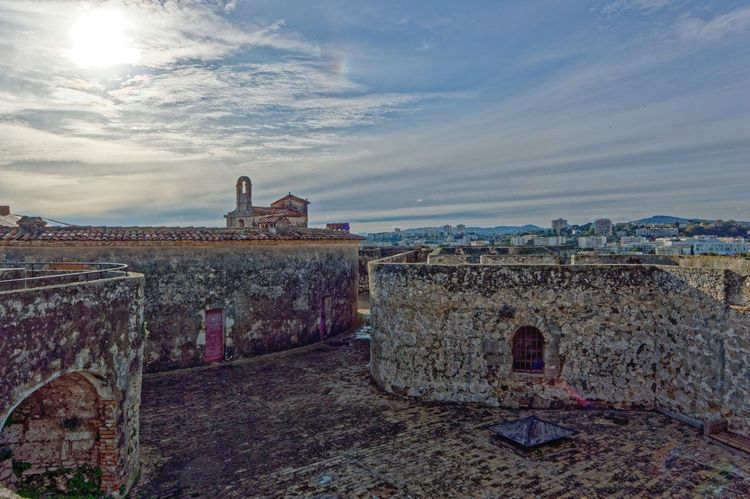
Antibes was called Antipolis, the city opposite, when Greek sailors from Marseille founded it in the 4th century BC, facing the rival city of Nikaia (Nice). The Romans made it a trading port, then a branch of the Grimaldi family held the town from 1385 to 1608, when Henri IV bought it back to turn it into a stronghold of the kingdom. Vauban came next, tasked by Louis XIV with locking down a border that, until 1860, stopped a few kilometers away, on the other side of the Baie des Anges: Nice still belonged to the Kingdom of Sardinia. It is this border-town status that explains the ramparts, the Fort Carré and the almost military profile of Old Antibes.
You won't need a car to see the essentials: the historic center, the harbor and the first beaches all lie within a radius of a kilometer and a half. This is what makes a two-day program realistic without sacrificing either heritage or the sea, provided you accept walking rather than trying to tick everything off by car.
In the 20th century, Cap d'Antibes attracted a different crowd: writers and film stars. F. Scott Fitzgerald set part of the plot of Tender Is the Night there, and in the 1920s the Hôtel du Cap-Eden-Roc became a haunt of the international jet set, long before the Cannes festival settled twenty minutes away by road. This dual identity, fortress town and glamorous peninsula, explains why Antibes is visited so differently depending on whether you stay within the ramparts or push on to the Cap.
Day 1: Old Antibes, the Picasso Museum and the Fort Carré
To visit Antibes in 2 days without running, devote your first morning to the ramparts and the historic heart, your afternoon to the most photographed museum in town, and the end of the day to a fortress that overlooks the whole bay. The sequence is natural: you leave the market through the lanes, climb toward the place Nationale, enter the Château Grimaldi, then walk twenty minutes to the Fort Carré (Avenue du 11 Novembre, 06600 Antibes, rated 4.3/5 on Google from 3,285 reviews) to admire the sunset over the roadstead.
The Lanes of Old Antibes and the Covered Provençal Market
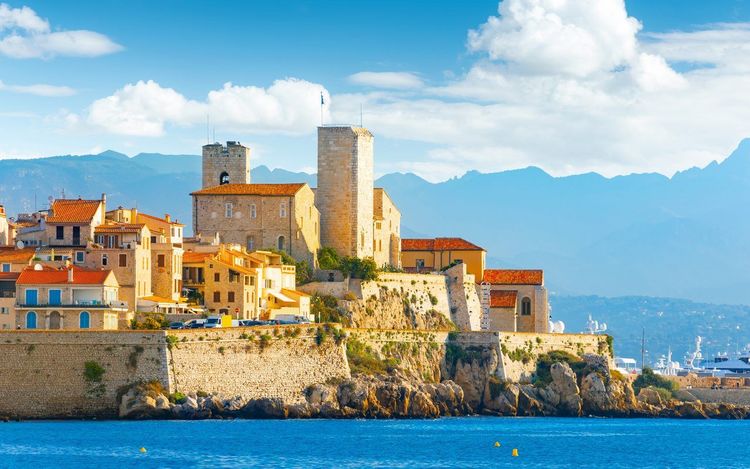
Start by deliberately getting lost in the cobbled lanes of Old Antibes, between ochre façades and blue shutters.
The district has kept its medieval layout, narrow and without apparent logic, which is precisely its appeal: you are not looking for a specific monument, you are strolling.
The heart of the district beats at the covered Provençal market, set up under a hall on the cours Masséna since 1874.
Every morning except Monday out of season, local producers sell heirloom tomatoes, cut flowers, goat cheeses and fish just landed at the harbor. In the afternoon, the same stalls turn into a craft market, a handy habit if you prefer to stroll later in the day.
Heading east, you come out onto the place Nationale, lined with plane trees and café terraces, where the herb market once stood.
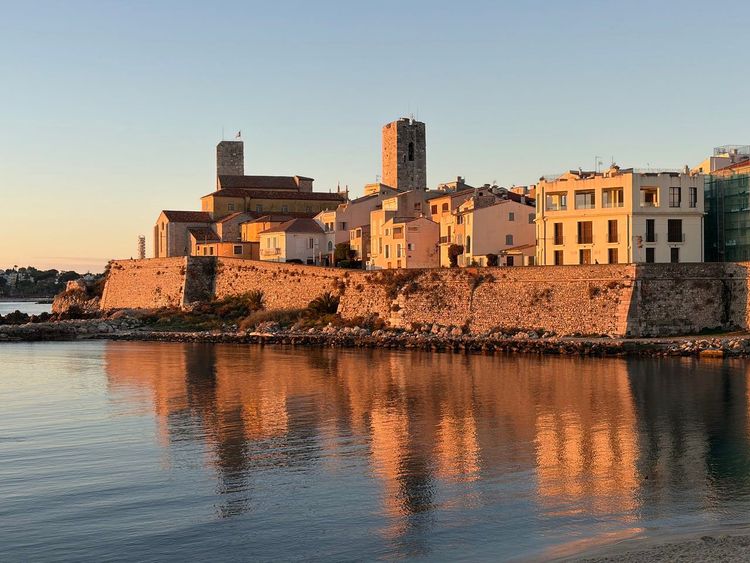
From there, follow the ramparts and the Saint-Jaume bastion that run along the waterfront: built in the 16th century and then reworked under Vauban at the end of the 17th century, they still separate the old town from the Mediterranean by a simple walkway you can follow on foot.
Allow a good hour for this first loop, two if the market holds you longer than planned.
The Picasso Museum at the Château Grimaldi
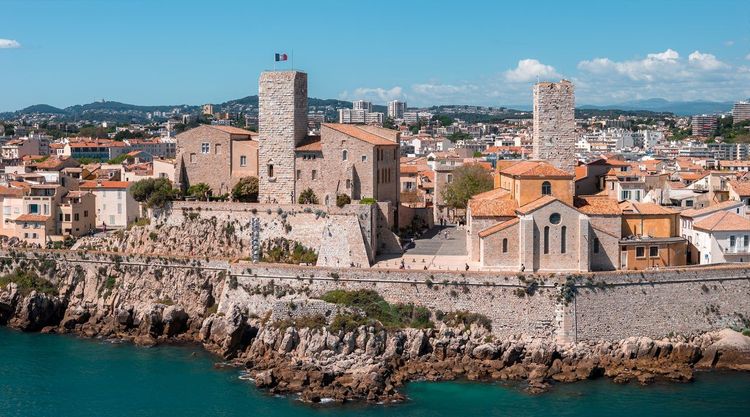
The Picasso Museum occupies the Château Grimaldi, a former residence of the lords of Antibes built on the site of the Greek acropolis of Antipolis.
Pablo Picasso worked here for about two months, from September to November 1946, after the curator Romuald Dor de la Souchère offered him the castle's rooms as a temporary studio. The artist, then 65, produced an entire body of work in a few weeks, driven by a feeling of freedom regained after the war.
On leaving, he left most of this production to the town, as a thank-you. You will see in particular La Joie de vivre, a large composition painted directly on fibre cement, as well as a series of ceramics made in the workshops of Vallauris, the neighboring village that has specialized in pottery for centuries. The upper rooms also offer a direct view of the sea, the kind of detail that makes you want to linger in front of each canvas longer than planned.
The museum is closed on Mondays and open the rest of the week, with shorter hours in low season. Allow an hour and a half for the visit if you like taking the time to read the labels, noticeably less if you head straight for the Picasso rooms.
The Fort Carré and the View over the Bay
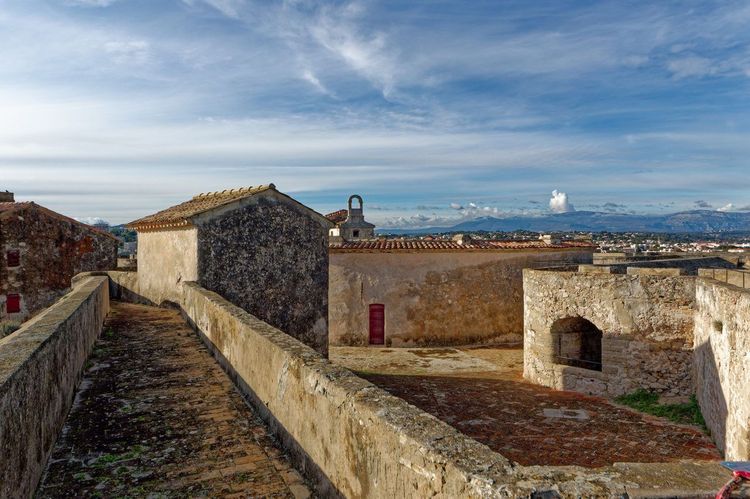
From the museum, a twenty-minute walk along the shoreline leads to the Fort Carré, a four-bastion star-shaped fortress that overlooks the entrance to the roadstead.
Built in the 16th century and later reinforced by Vauban, it notably held Napoleon Bonaparte prisoner for a few days in 1794, after the fall of Robespierre, the young Corsican officer being suspected of Jacobin sympathies. The visit, paid but inexpensive, climbs by fairly steep outdoor ramps and stairs: bring closed shoes rather than beach sandals.
At the top, the view covers the whole Baie des Anges as far as Cap d'Antibes on one side, and as far as the snow-capped Alps on the other on some clear winter days. It is one of the few points in town where you take in at a single glance the complete program of your stay, from Old Antibes to the Cap you will climb the next day.
If you prefer a narrated version of this first day, the Ryo audio-guided tour of Old Antibes and the Fort Carré links precisely these four stops, with at each one an anecdote about Picasso's stay or the fort's military history, told in your earpiece at the pace of your walk.
Day 1 (Continued): Port Vauban and the Gravette Beach
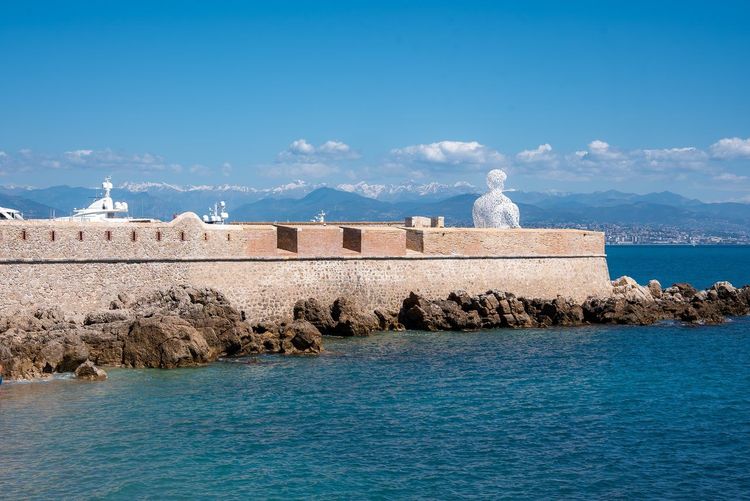
Heading back down from the Fort Carré toward the center, the late afternoon lends itself to a completely different atmosphere: that of the harbor and the beach closest to the historic center.
Port Vauban and the Billionaires' Quay
The Port Vauban stretches right at the foot of the ramparts, with nearly 1,600 berths making it one of the largest marinas in Europe.
The most photographed part bears a nickname that says it all: the billionaires' quay, where yachts over a hundred meters long line up, belonging to families you never really meet, except through the uniformed crew scrubbing the deck at dawn.
You have nothing to pay to walk along the quay and watch these boats, which makes it an end-of-day activity as free as it is unexpected on the Côte d'Azur. The sizes involved sometimes exceed those of certain ferries: one of the largest yachts in the world was long moored here for several months a year, big enough to be mistaken from afar for a cruise ship.
The Gravette Beach and the Amiral de Grasse Promenade
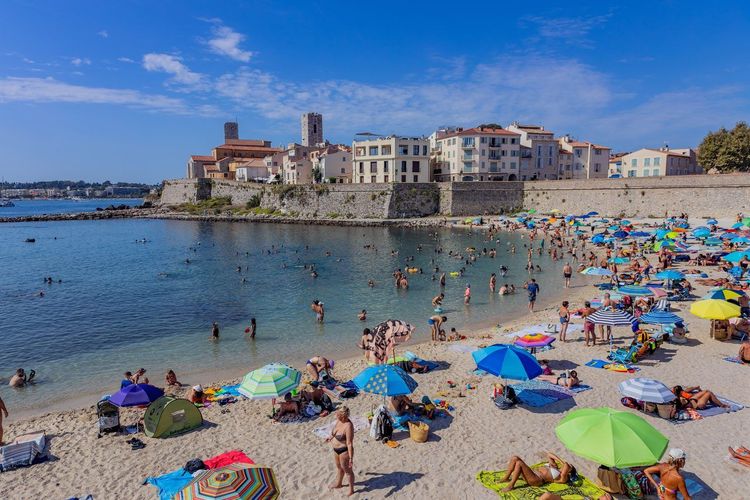
At the other end of the harbor begins the Gravette beach (Boulevard Albert 1er, 06600 Antibes, rated 4.3/5 on Google from 3,423 reviews), a fine-sand cove nestled between the harbor and the ramparts, sheltered from the wind by its recessed position.
It is the most central beach in Antibes, less than five minutes' walk from the place Nationale, and therefore the simplest if you want to end the day with your feet in the water without getting back in the car.
To get there from the Fort Carré, follow the Amiral de Grasse promenade, which runs along the foot of the ramparts on the sea side for nearly a kilometer.
The late-afternoon light is particularly photogenic there, golden ramparts on one side, turquoise sea on the other. You can stop on one of the benches to watch the boats return to port, a local ritual that costs nothing and takes barely ten minutes.
The same Ryo audio-guided tour continues naturally to this point: after the ramparts and the fort, it heads back down to the harbor and its row of yachts before following the promenade to the beach, with a commentary dedicated to the billionaires' quay.
Day 2: Cap d'Antibes, Between Coastal Path and Wild Beaches
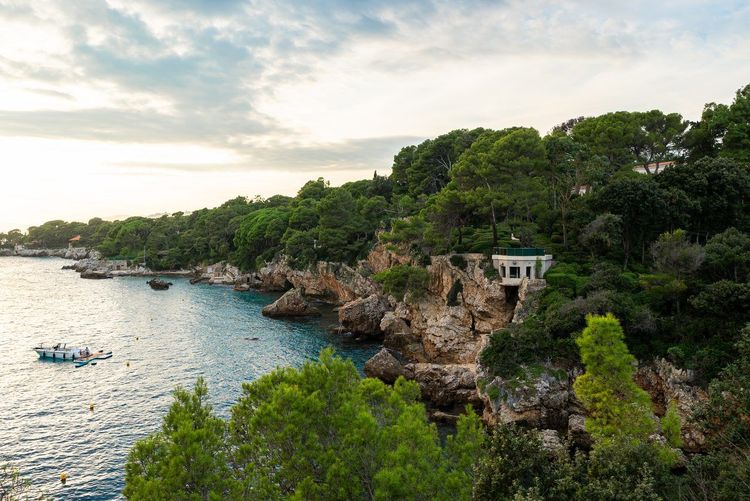
The second day changes scenery completely: head for Cap d'Antibes, this peninsula wooded with umbrella pines where private properties sit alongside paths open to all. Allow a full half-day to walk around it, starting early if you want to enjoy the coastal path before the heat arrives.
The Coastal Path (Tirepoil) and Its Cliffs
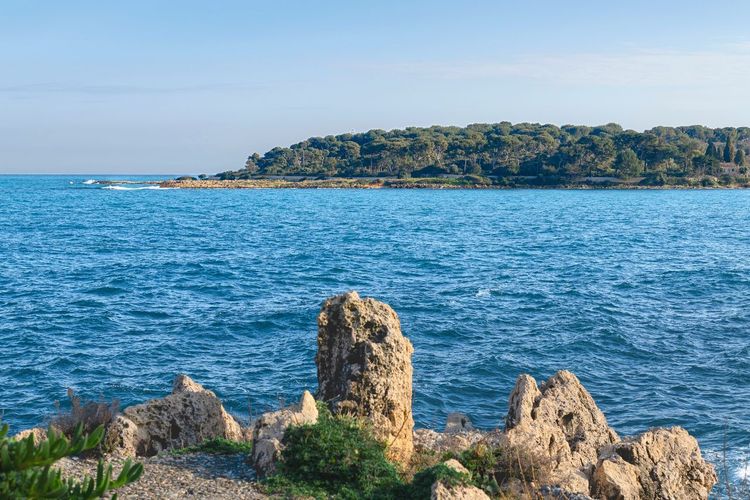
The coastal path, also called the Tirepoil path, follows the tip of the Cap for about two and a half kilometers, from the Garoupe beach to the surroundings of the Villa Eilenroc, cut right into the rock a few meters above the water.
The most spectacular section crosses a cliff zone where waves sometimes wash over the path in bad weather, to the point that the trail is closed on certain windy days for safety. Wear shoes that support the ankle: the ground is uneven, rocky in places, and the waymarking remains discreet.
Along the way you will pass a few legendary properties, including the one that inspired part of F. Scott Fitzgerald's novel about the Riviera of the Roaring Twenties. Don't expect to visit them: they remain private, hidden behind gates and century-old pines, but the path passes close enough to glimpse the gardens.
The Garoupe Lighthouse and Sanctuary
Continuing toward the highest point of the Cap, you reach the Garoupe lighthouse, whose beam overlooks the sea at 103 meters above sea level: inaugurated in 1837, blown up in 1944, it was rebuilt in 1948.
Right next to it stands the Garoupe sanctuary, a pilgrimage chapel housing maritime ex-votos accumulated over centuries by sailors thanking the Virgin for a shipwreck avoided.
The viewpoint right in front offers one of the most complete 360-degree panoramas in the region: Antibes and its fort on one side, the Alpes-Maritimes and sometimes Corsica on very clear days on the other. The climb can be done by car or on foot from the coastal path, and is well worth the few extra bends.
The Garoupe Beach and Woods
Heading back down toward the east coast of the Cap, the Garoupe beach unrolls its fine sand in a sheltered cove, one of the most popular and family-friendly in the whole area.
It is bordered by the Garoupe woods, a shaded pine grove where you can picnic out of the direct sun, a welcome option in the middle of August.
On the other side of the peninsula, the Pointe Ouest beach (Boulevard JF Kennedy, 06160 Antibes, rated 4.7/5 on Google from 135 reviews) offers a wilder atmosphere, with an unobstructed sunset view and fewer people than at the Garoupe, at the price of a slightly steeper access from the coastal path.
Between the two, you have everything you need to alternate peaceful swimming and an active walk without ever getting back in the car.
The Villa Thuret Botanical Garden
To finish this loop gently, the botanical garden of the Villa Thuret has gathered since 1857 Mediterranean and exotic species introduced to France by Gustave Thuret, a pioneer of plant acclimatization.
Admission is free and the garden stays open all year on weekdays, making it a welcome break in the shade of eucalyptus and century-old palm trees after several hours of walking in the sun. You will also find a few discreet benches, perfect for an improvised picnic before heading down to Juan-les-Pins.
An entire sub-route is dedicated to this peninsula: the Ryo audio-guided sub-route Cap sur la French Riviera gathers 22 audios over 1h15 and 3 km, from the Tirepoil path to the Garoupe lighthouse, handy if you prefer a guided loop to a paper map.
Day 2 (Continued): Juan-les-Pins and Its Beaches
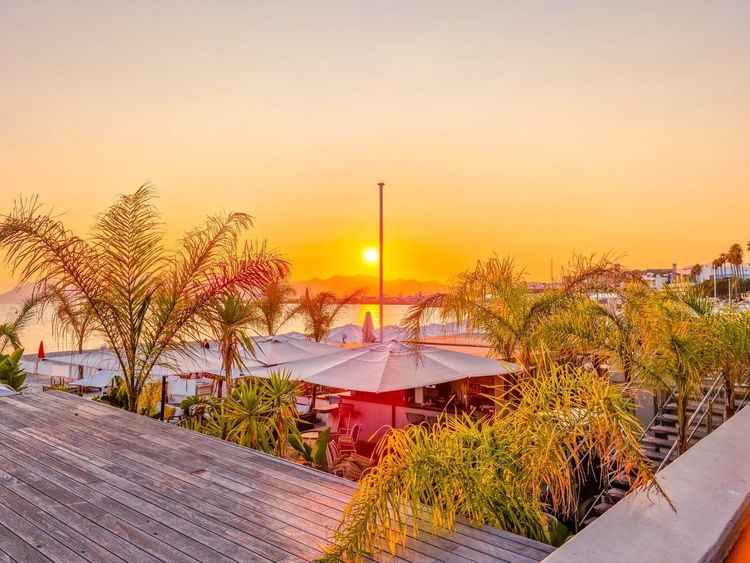
Heading down from the Cap by the west, Cap d'Antibes extends directly toward Juan-les-Pins, the liveliest seaside resort in the municipality, where the evening takes on a markedly more festive feel than in Old Antibes.
The Pinède Gould and the Jazz à Juan Atmosphere
In the heart of the resort, the Pinède Gould is a park of century-old umbrella pines that runs almost down to the sand.
It was here, under these same trees, that the first edition of the Jazz à Juan festival was held in 1960, with Sidney Bechet headlining, before Ray Charles made his European debut there the following year, in 1961, launching what would become one of the greatest jazz festivals in Europe.
The festival takes place every year in July, with a program that still mixes pure jazz and more contemporary pop or soul artists. If your stay falls outside these dates, the pine grove remains pleasant all year for a break in the shade between two swims, with a few kiosks and benches scattered under the pines. On some summer evenings you will also come across free concerts organized on the sidelines of the official festival, a simple way to hear some music without paying for a ticket.
The Juan-les-Pins Beaches
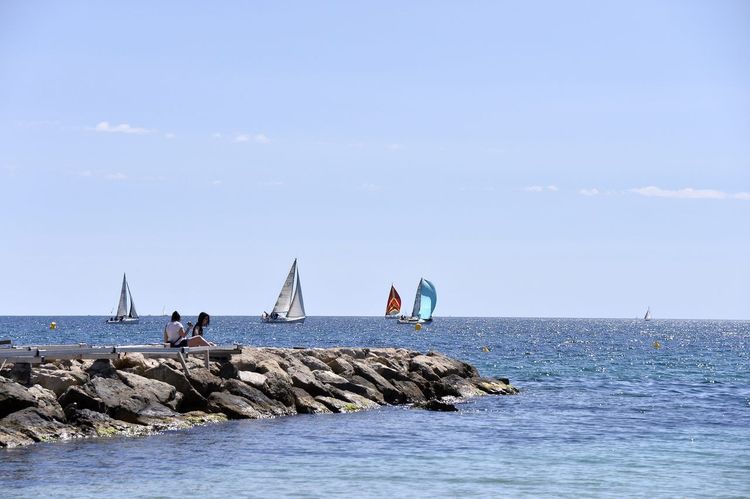
Right in front of the pine grove stretch the Juan-les-Pins beaches (Boulevard Charles Guillaumont, 06160 Antibes, rated 4.4/5 on Google from 2,285 reviews), a long strip of fine sand dotted with paid private beaches and free public sections.
The atmosphere is livelier than at the Gravette or the Garoupe, with beach bars open late and shallow water for several dozen meters, handy if you are traveling with young children who don't like losing their footing too quickly. In the evening, the promenade along the seafront fills with people, among restaurants, shop windows and ice-cream vendors, a sharp contrast with the calm of Old Antibes at the same hour.
This is also where the Ryo audio itinerary ends, with an episode devoted to the history of the festival told under the Pinède Gould, as close as possible to where it all began in 1960. If beaches interest you in particular, our Ryo article on the most beautiful beaches in Antibes also covers those we didn't have room for here.
What to Do in Antibes with Children
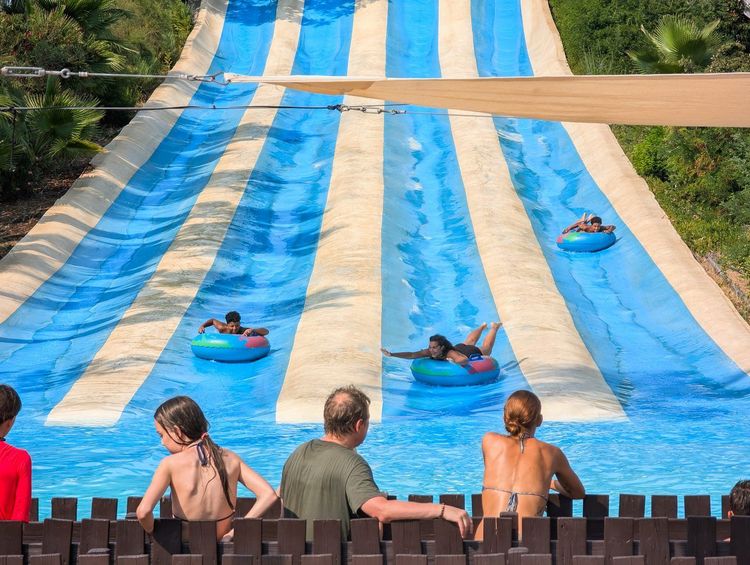
If you are traveling as a family, two options easily structure an extra half-day without leaving the territory of Antibes.
Marineland and the Theme Parks
Be careful if you rely on older guides: Marineland closed its doors permanently on January 5, 2025. The 2021 law banning cetacean shows by the end of 2026 made the model unsustainable, since nine out of ten visitors came for the orcas and dolphins.
Its neighbors, meanwhile, continue to welcome families. Aquasplash (306 Avenue Mozart, 06600 Antibes, rated 3.2/5 on Google from 4,964 reviews), the water park with its slides, opens in the warm season, generally from June to early September.
Right next door, Adventure Golf offers several themed mini-golf courses, a good option for a late afternoon when the children are of different ages and have uneven energy levels. The site is at the edge of Antibes on the Biot side, reachable by bus from the center, which saves you from hunting for a parking space in midsummer. Check the opening calendar before planning your visit: outside summer, only the mini-golf runs on certain days, and plan for a budget noticeably higher than a classic beach day.
Water Sports and Activities for Families
Closer to the center, water sports are easy to enjoy from the Salis or Garoupe beaches: paddleboards, kayaks and stand-up boards can be rented by the hour without mandatory booking in low season.
A boat excursion to the Lérins islands, off Cannes, rounds off a beach day nicely if the children start going in circles on the sand: from the old port of Cannes, the crossing takes about twenty minutes and lands directly on an island with no cars or traffic.
For a calmer option, the Gravette beach remains the most practical with young children thanks to its shallow water and its immediate proximity to the town center, useful if you need to get back quickly for a nap or a meal. Our Ryo guide to visiting Antibes with family details other addresses tested with young children.
Shopping, Provençal Market and Antibes Gastronomy

Between two visits, Antibes also lends itself to a few quieter hours, devoted to shops and the table rather than heritage.
Where to Go Shopping in Antibes
The covered Provençal market on the cours Masséna turns back into a craft market at the end of the morning, with Marseille soaps, Provençal fabrics and Vallauris pottery sold directly by their makers.
The pedestrian streets surrounding the place Nationale bring together most of the town's independent shops, between recent concept stores and businesses established for several generations, a mix that avoids the uniformity of the big chains found elsewhere on the Côte. For more specialized addresses, the art galleries lining the old town remain a local habit, a direct legacy of Picasso's stay and the proximity of Vallauris, the historic capital of ceramics.
A few products consistently end up in suitcases: genuine Marseille soap, Provençal olive oil sold loose at the market, and small Vallauris pottery picked up in one of the old town's galleries. Nothing essential, but everything is easy to carry and recalls the trip better than a generic fridge magnet. If you are rather looking for international brands, it is better to push on to Cannes or Nice: Antibes plays a more artisanal card.
Specialties and Restaurants to Try
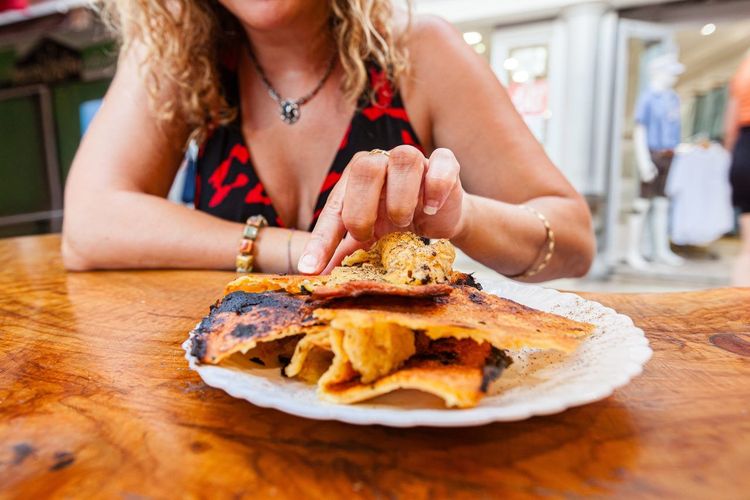
At the table, socca, this chickpea-flour flatbread baked in a wood-fired oven, is eaten standing, folded in paper, on the go between two visits. The petits farcis niçois, vegetables stuffed with meat and rice, and the pan-bagnat, a Provençal sandwich soaked in olive oil, easily make up a light lunch before an afternoon of walking.
The best addresses are split between the lanes of Old Antibes, where prices remain reasonable away from the harbor terraces, and the tables looking directly onto the Port Vauban, pricier but with a view of the yachts thrown in. For a more refined dinner, the bistros around the place Nationale offer market cuisine that changes depending on what the producers brought that very morning, a simple way to eat local without searching long.
What to Do Around Antibes: Cannes, Nice and the Hilltop Villages
If your stay extends to a third day, or if you simply want to vary the pleasures in the late afternoon, several destinations can be reached in under thirty minutes from Antibes, each in a different direction. West to Cannes, east to Nice, and inland for the hilltop villages: three directions that each make a half-day on their own, without any of them requiring an overnight stay.
Cannes and Sainte-Marguerite Island
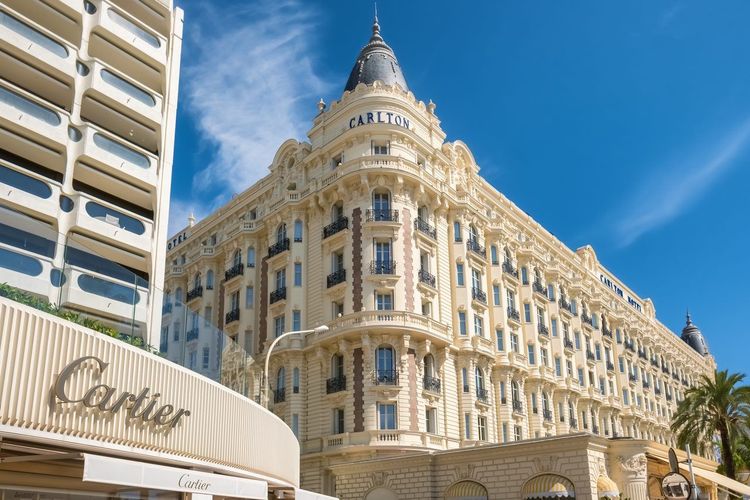
To the west, Cannes is a quarter of an hour away by train, with its Croisette, its Palais des Festivals and its Forville market, noticeably less touristy than the seafront.
Offshore, Sainte-Marguerite Island is under thirty minutes by boat from the old port of Cannes: the crossing lands in a forest of eucalyptus and pines, far from the bustle of the Croisette, with a fort where the mysterious Man in the Iron Mask was imprisoned.
On the way, a detour to the Château de la Napoule, west of Cannes, adds a more unusual stop: this medieval fortress restored in the 20th century by an American sculptor combines an authentic keep with Mediterranean gardens.
Nice and Old Nice
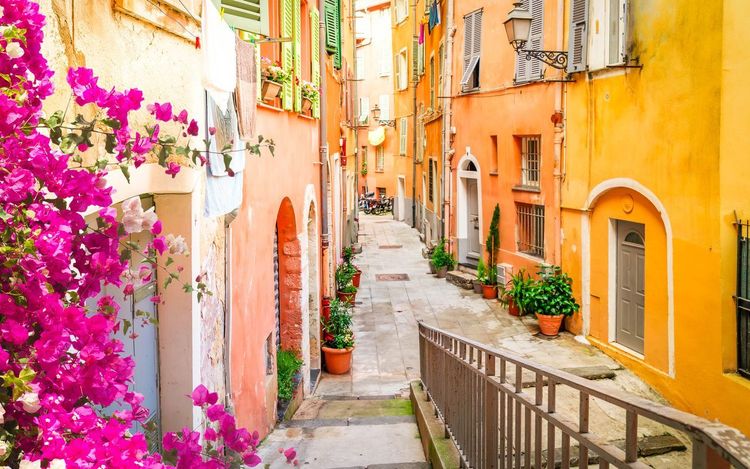
To the east, Nice is just as easy to reach by train, with a direct trip of about twenty-five minutes that follows the sea for a good part of the journey.
The Old Nice concentrates the essentials of a short visit: the flower market on the cours Saleya, Baroque lanes and colorful façades that recall, in a denser form, those of Old Antibes. The Promenade des Anglais completes the visit for those who want to walk with the wind in their face, a long strip facing the sea where joggers and cyclists cross paths from morning to night.
Allow a full day if you also want to climb the Castle Hill for the panorama, noticeably less if you settle for the market and the surrounding lanes.
The Hilltop Villages: Biot, Saint-Paul-de-Vence, Vence, Cagnes-sur-Mer
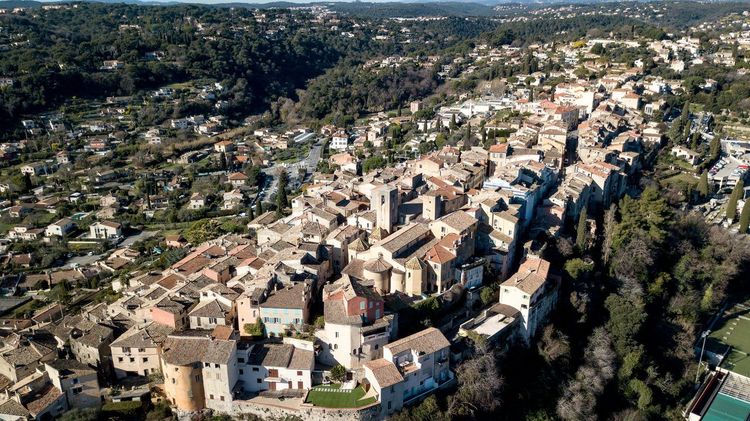
In the hinterland, four hilltop villages round out an extended stay nicely. Biot, ten minutes away by road, is known for its blown glass and flowered lanes, best visited on a weekday outside July-August.
Saint-Paul-de-Vence (Place de la Grande Fontaine, 06570 Saint-Paul-de-Vence, rated 4.6/5 on Google from 158 reviews), a little farther, remains the most famous village in the region, with its art galleries and the Fondation Maeght overlooking the neighboring hill.
Vence, just above, is home to the Chapelle du Rosaire decorated by Matisse, a short but striking stop for anyone interested in 20th-century art. Cagnes-sur-Mer, finally, combines a medieval hilltop village and a seafront more discreet than its neighbors, with the former studio of the painter Renoir open to visitors.
Our Ryo article on the surroundings of Antibes details a complete itinerary to link these four villages in a single day if you have a car.
What to Do in Antibes When It Rains
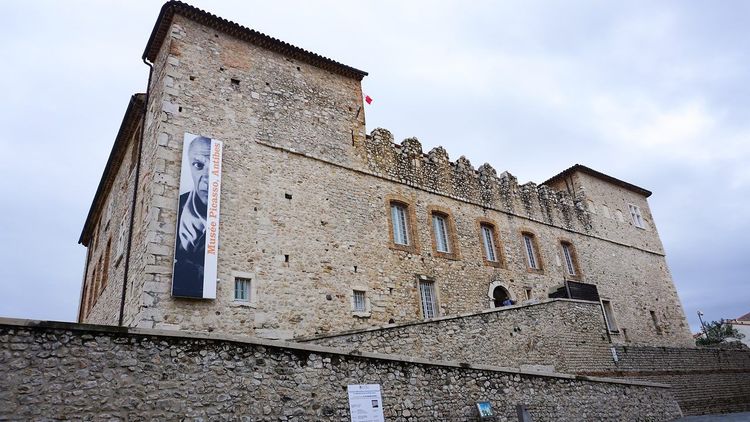
Rain is rare on the Côte d'Azur, but when it does show up, Antibes has a few indoor options. The Picasso Museum is the obvious choice: its covered rooms and permanent collection are more than enough to fill an entire morning, mistral or not.
The town also has other lesser-known museums: the Peynet and Humorous Drawing Museum, housed in the former school on the place Nationale, displays the tender drawings of the creator of Peynet's Lovers, and the Museum of History and Archaeology, housed in the Saint-André bastion, traces the history of Antipolis through amphorae recovered from the sea.
If the rain sets in for the entire day, a round trip by train to Nice, twenty-five minutes away, opens up access to the Matisse and Chagall museums, an option to keep in mind if the beach is out of the question. For a calmer option, the art galleries around the old town remain open and free, a simple way to keep walking without getting completely soaked between two porte-cochères.
How to Get to Antibes and Get Around

Antibes sits halfway between Nice and Cannes, which greatly simplifies access from the airport or from Monaco.
From Nice or Monaco: Train, Bus or Car
By train, Antibes is reached in about twenty minutes from Nice-Ville and in a little under an hour from Monaco, on the line that follows the coast and also serves Cannes. It is the simplest option for visiting Antibes by train, the station being less than ten minutes' walk from Old Antibes.
The bus also connects Antibes to Nice and the airport, with slightly longer journeys but fares often lower than the train, an option to consider if you are traveling on a tight budget or if train times don't match your flight.
By car, allow about thirty minutes from Nice airport via the motorway, more in summer because of the traffic that regularly saturates the A8 between Nice and Antibes on weekends. From Monaco, the trip takes a little under an hour in good conditions, noticeably more on certain Friday evenings in July and August.
If you come without a car from Monaco, the train remains the most reliable combination: direct, frequent, and independent of the traffic jams that regularly hit the Moyenne Corniche in high season. For groups or if you are traveling with a lot of luggage, a taxi or ride-hailing car from Nice airport remains a comfortable option, around forty-five minutes depending on traffic, at a fare noticeably higher than the train but with no connection or walk to the station. Some local companies also offer shared shuttles booked in advance, an in-between solution if an individual taxi budget seems too high for a simple airport transfer.
Getting Around and Parking on Site
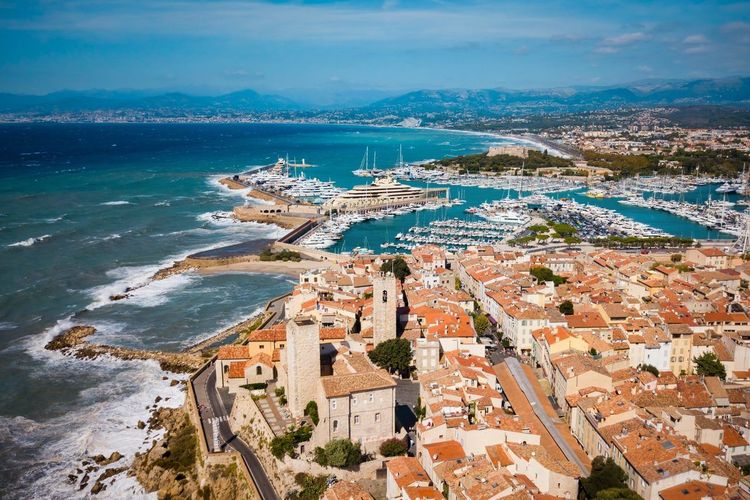
Once on site, walking is enough for the essentials: Old Antibes, the harbor and the first beaches are all within fifteen minutes' walk of each other. For Cap d'Antibes and Juan-les-Pins, however, count rather on the local bus or a bike, the distance becoming long to cover on foot in the afternoon heat.
Where to park to visit Antibes remains the most frequent question from visitors arriving by car: the car parks in the center, notably the Pré-des-Pêcheurs one near the harbor, are full by mid-morning in high season. It is better to arrive early or park a bit farther away, near the station or toward Juan-les-Pins, then continue on foot or by bus.
To get around Antibes without a car, a rental bike is more than enough to cover the Cap in one morning, with cycle paths running along a good part of the coastline. Those in more of a hurry will opt for an electric scooter, available for self-service in the center, handy for climbing toward the Garoupe without straining your calves too much.
Where to Stay in Antibes: Neighborhoods and Hotels
Three neighborhoods structure the accommodation offering in Antibes, each with a distinctly different atmosphere. Old Antibes suits you if you want to walk everywhere without a car: charming hotels in old buildings, quiet lanes at night, but rooms that are sometimes small and without sea views.
Juan-les-Pins bets on liveliness: more recent hotels, immediate proximity to the beaches and nightlife, at the price of a bit more noise on summer evenings, especially during the Jazz à Juan festival. It is the logical choice if your priority is the beach and evenings out rather than heritage.
The Cap d'Antibes, finally, concentrates the most upscale addresses on the whole Côte d'Azur, including some legendary establishments frequented for a century by international cinema. Prices climb accordingly, but the calm and the sea view justify the difference for anyone seeking a more hushed interlude.
For a weekend as a couple, a small hotel in Old Antibes with a terrace overlooking the ramparts is often the most romantic choice, provided you book a quiet room on the courtyard side rather than the busy street side. Families, for their part, tend to prefer Juan-les-Pins for the direct proximity to the beach and shops, useful with young children who tire quickly on long walks.
For the best hotels in Antibes in all categories, it is better to book several months in advance in July-August: the town remains small and rooms go quickly once the good weather arrives. Off-season, however, rates drop noticeably and the choice remains wide, including in Old Antibes, which then empties of the day-tripper crowds. Expect a wide range depending on season and neighborhood: a simple room in Old Antibes off-season remains much more affordable than a suite with a sea view on the Cap in the middle of August, when rates can be multiplied by three or four.
When to Go and What Budget to Plan for 2 Days in Antibes
The best time to visit Antibes is in May-June or September: the sea is already or still warm enough for swimming, prices remain reasonable, and the town has not yet reached the tourist density of the height of summer. July-August brings almost guaranteed dry, hot weather, at the price of maximum crowds on the beaches and in the lanes of Old Antibes.
Two events particularly punctuate the local calendar: the Jazz à Juan festival, every July under the Pinède Gould, and the Antibes Yacht Show in spring, generally in April, which turns the Port Vauban into an open-air boat show for a few days. If you want to attend either event, book your accommodation several months in advance: rooms vanish quickly during those weeks.
Budget-wise, visiting Antibes in 2 days remains affordable compared to Nice or Cannes at the same time: the major sights, the Picasso Museum and the Fort Carré, each cost a few euros, public beaches are free, and a simple meal such as socca or pan-bagnat comes to under ten euros. For a rather economical weekend, expect around fifty euros per day per person excluding accommodation, with simple meals and main visits included. For a more comfortable stay, with a terrace lunch and a boat excursion, easily double this estimate. Accommodation remains by far the item that makes the total budget vary from single to triple depending on the neighborhood and season chosen.
As for how long to visit Antibes, two days cover the essentials described here well; a third day lets you add Cannes, Nice or the hilltop villages without rushing.



FAQ
How long does it take to visit Antibes?
Two days cover the essentials: Old Antibes, the Picasso Museum and the Fort Carré on the first day, then Cap d'Antibes and Juan-les-Pins on the second. A third day lets you add Cannes, Nice or the hilltop villages of the hinterland without rushing. For a simple stopover between two destinations, a full day is enough to see Old Antibes and a beach, even if it means skipping the Cap.
What is the best time to visit Antibes?
May-June and September offer the best compromise between pleasant weather, swimmable sea and reasonable crowds. July-August almost guarantees sunshine but brings dense crowds on the beaches and in the lanes, especially during the Jazz à Juan festival. Winter remains workable for heritage visits, provided you accept beaches too cold for swimming.
What to see in Antibes in 1 day if time is short?
Prioritize Old Antibes and its place Nationale, the Picasso Museum at the Château Grimaldi, then a late afternoon at the Fort Carré or straight to the Gravette beach, right next to the harbor. This short loop can be done entirely on foot in half a day, leaving the other half for a relaxed lunch around the covered Provençal market.
How do I get to Antibes from Nice or Monaco without a car?
The train remains the simplest solution: about twenty minutes from Nice-Ville, a little under an hour from Monaco, with a station ten minutes on foot from Old Antibes. The bus also serves the town, with longer journeys but often lower fares, a useful alternative outside train hours.
Is the Picasso Museum in Antibes worth it?
Yes, as much for the history of the place as for the works: Picasso painted here for two months in the autumn of 1946, in the very rooms of the Château Grimaldi. The collection is modest in number of works compared to other Picasso museums, but the setting, sea view included, justifies the visit on its own, especially for an hour and a half in the middle of an already dense two-day program.
What are the most beautiful beaches in Antibes?
The Gravette beach appeals for its immediate proximity to the town center, the Garoupe beach for its length and wooded setting on Cap d'Antibes, and the Juan-les-Pins beaches for their livelier evening atmosphere. For more calm, the Pointe Ouest beach, on the wild side of the Cap, is the least crowded of the four.
Where to park to visit Antibes?
The car parks in the center, notably the Pré-des-Pêcheurs one near the harbor, are often full by mid-morning in high season. It is better to park farther away, near the station or in Juan-les-Pins, then continue on foot, by bus or by bike rather than circling in search of an impossible-to-find space in the heart of summer.
Visiting Antibes in 2 days is therefore enough to make the town much more than a stopover between Nice and Cannes: a town that fits into a single day the ramparts of Vauban, the studio of a Picasso autumn and a coastal path cut into the rock, before ending under the pines of Juan-les-Pins, the birthplace of Jazz à Juan.
To keep your hands free rather than juggling a paper guide, launch the Ryo audio guide to Antibes: it follows the essentials of this two-day itinerary, from Old Antibes to the harbor, complemented by the Ryo sub-route dedicated to Cap d'Antibes for the half-day devoted to the coastal path and the Garoupe lighthouse. Download our Ryo app before you leave, and let yourself be guided at your own pace, without depending on the network or an imposed guided-tour schedule. Whether it rains on the Fort Carré or the mistral temporarily closes the Tirepoil path, the town always has a fallback option, a museum, covered market or hilltop village twenty minutes away by road, so that the program still holds across two full days.
À lire également