© Shutterstock
 Votre guide Ryo
Visiting Bayonne for the First Time: The Complete 2026 Guide
Visiting Bayonne for the first time? What surprises you first is the relative calm of its cobbled lanes, just twenty minutes by road from the crowded beaches of Biarritz. Here, there is no seafront promenade or queue for a patch of sand: the city lives to the rhythm of its two rivers, the Nive and the Adour, which meet at the foot of half-timbered façades. For a first visit, the simplest approach is to follow the Ryo audio-guided tour of Bayonne (22 audio tracks, 1h20, 3.4 km): it links the historic districts directly and keeps you from going in circles in front of the cathedral without knowing where to go next. With a Gothic cathedral on the World Heritage list, a ham-drying house still active in the town centre, a street devoted to chocolate and five days of popular festivities every summer, Bayonne packs a condensed version of Basque and Gascon history into a tiny territory. This guide details the three districts, the food you shouldn't miss, the calendar of major events and the practical information you need to plan a stay, whether it lasts half a day or a long weekend.
Bayonne at a Glance: Three Districts, Two Rivers
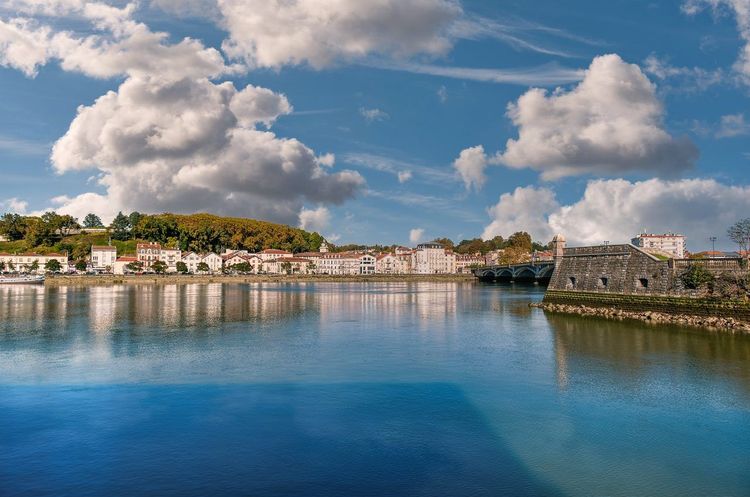
Bayonne is located in the Pyrénées-Atlantiques, in the far south-west of France, a few kilometres from the Atlantic Ocean and half an hour from the Spanish border. Unlike Biarritz or Saint-Jean-de-Luz, it has no beach: its geography is read in its two rivers, the Nive and the Adour, which meet right in the city centre.
This confluence has shaped three very distinct districts. The Grand Bayonne, on the left bank of the Nive, concentrates the religious and merchant heritage around the cathedral and the Château-Vieux. The Petit Bayonne, opposite on the right bank, is the former artisans' quarter turned lively student neighbourhood, home to the bars and the Basque Museum. On the other side of the Adour, the Saint-Esprit district is home to the train station and a citadel that most passing visitors don't even look at.
Remember one simple landmark: the two banks of the Nive can be crossed in under five minutes on foot via the Pont Mayou or the Pont Pannecau, while Saint-Esprit is reached via the Pont Saint-Esprit, which spans the Adour. The whole city can therefore be visited on foot, without a car.
This compactness also explains why Bayonne holds the Ville d'art et d'histoire (City of Art and History) label: few French cities pack so much merchant, military and religious heritage into such a small area. The label translates in practice into themed guided tours led by accredited guide-lecturers, offered all year round by the tourist office (ramparts, cathedral, Petit Bayonne, chocolate). If you like to ask a human your questions, book one; otherwise, the following sections detail each district in the order you discover them while walking.
The Grand Bayonne, the Historic Heart
The Grand Bayonne holds most of the city's religious and merchant heritage. It is the natural starting point for any visit, where the shopping streets and the first half-timbered lanes converge.
Sainte-Marie Cathedral, Its Cloister and the Halles
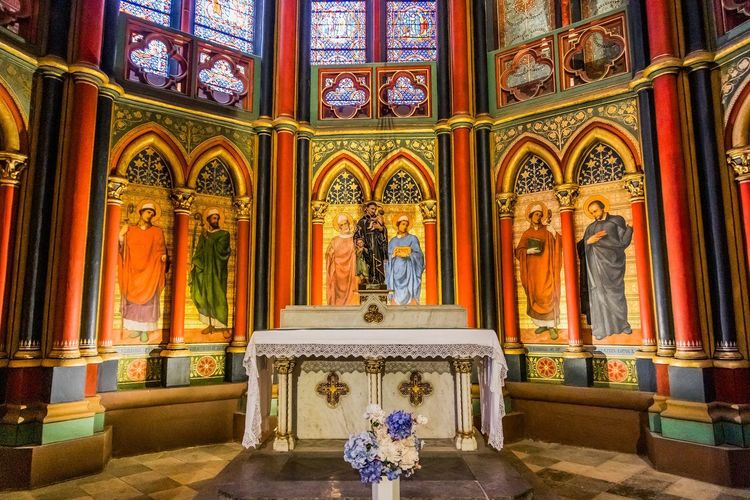
The Sainte-Marie Cathedral (Place Louis Pasteur, 64100 Bayonne, rated 4.6/5 on Google from 7,872 reviews) dominates the Grand Bayonne with its two spires visible from afar. Built between the 13th and 16th centuries on the model of the cathedrals of northern France, it only received its spires in the 19th century, during a restoration. It is a UNESCO World Heritage Site as part of the Routes of Santiago de Compostela. Entry is free, and the nave is worth a pause even if religious architecture usually leaves you indifferent: look up at the Renaissance stained-glass windows of the Saint-Jérôme chapel.
Right next door, the Gothic cloister can also be visited for free, and it is often the spot that hurried visitors wrongly skip. Its open galleries offer a silence that contrasts with the bustle of the shopping streets just steps away, and a very beautiful angle on the cathedral's spires.
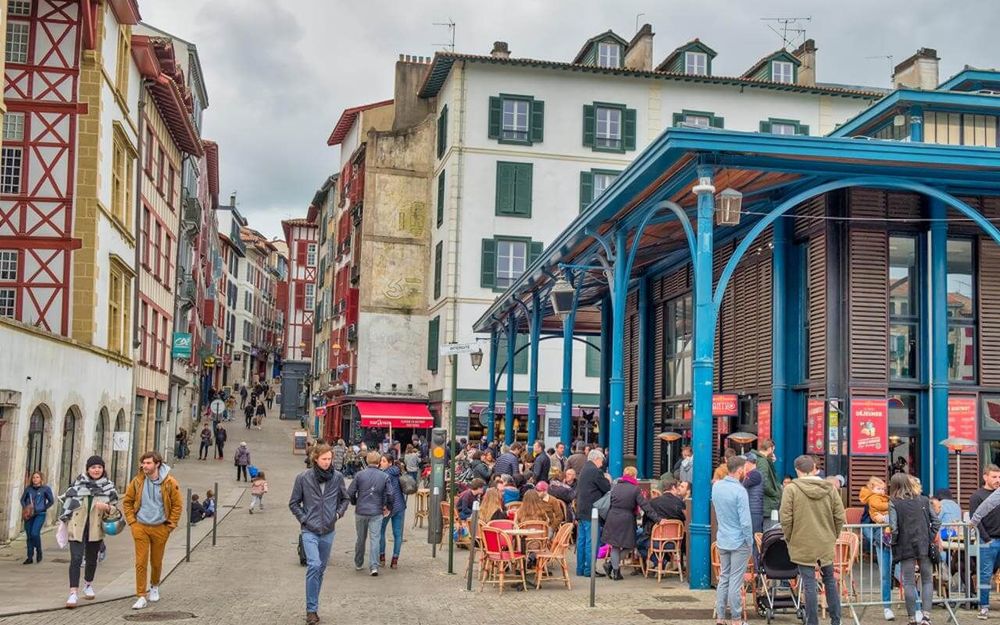
A few streets away, the Bayonne halles host a market every morning on the Nive quay. The first building, constructed between 1860 and 1866 in the spirit of the Baltard pavilions, collapsed under snow in 1945; the current structure dates from 1994. Fish, sliced ham, sheep's cheeses and vegetables from the Basque Country sit side by side. Come between 8am and 10am to see the market at its most authentic and lively, before the groups arrive.
The Ramparts, the Botanical Garden and the Lanes of the Historic Centre
The ramparts of Bayonne, inherited from the Roman wall and then the medieval one, and reinforced in the 17th century under Vauban's direction, still encircle a good part of the Grand Bayonne. You can follow a section on foot, above the former moats that are now green spaces.
Perched on these same fortifications, the botanical garden of Bayonne enjoys an unexpected setting: around 3,000 m² of Japanese-inspired grounds, with a pond, a red bridge and a thousand plant varieties. Entry is free, but note that it only opens from April to October, Tuesday to Saturday. It is an excellent spot for a break with children, away from traffic.
Between these two poles, the historic centre can be explored without a fixed route: Rue Argenterie, Rue d'Espagne or Rue de la Salie line up independent shops, wine bars and half-timbered façades painted in Basque colours, ox-blood red and green. It is this preserved urban fabric that justifies getting lost there for an hour, nose in the air.
On the northern edge of the district, the Château-Vieux recalls the city's military past: this medieval fortress with four corner towers, built on the foundations of the Roman wall, saw the English governors of Bayonne come and go, as the city remained English from 1152 to 1451. Still owned by the army, it can only be visited on rare occasions, during Heritage Days in particular, but its massive silhouette deserves a few minutes' detour between the cathedral and the Nive. A little further down, Place de la Liberté and the town hall mark the boundary between the Grand Bayonne and the Adour quays: this is where the mayor launches the Fêtes each summer from the balcony.
If you would rather be guided than look for your way, the Ryo audio guide of Bayonne devotes several of its 22 stops to this triangle of cathedral, halles and ramparts, with the story of the chapter and the fortifications told directly in your ears, with no time constraints.
The Petit Bayonne, the Popular and Festive Soul
On the other bank of the Nive, the Petit Bayonne changes register radically. There is no imposing religious monument: the district lives on its bars, its museum and its trinquet, and it is the one that comes alive most in the evening.
The Basque Museum, the Trinquet Saint-André and Pelota
The Basque Museum and History of Bayonne, housed in the Maison Dagourette and open to the public since 1924, remains the reference for understanding Basque Country culture: agriculture, fishing, pelota, traditional costumes and maritime history are presented through thousands of objects. Allow an hour if you want to see everything, thirty minutes for a quick overview.
Just steps away, the Trinquet Saint-André is presented as the oldest trinquet in France still in operation. In this covered court, Basque pelota is played bare-handed, with a pala or a xare, using a ball that bounces off the walls and the sloping overhang. Late-afternoon matches and training sessions can often be watched from the gallery: poke your head through the door and you have a good chance of catching one.
The Pierre Ibaïalde Ham-Drying House and the Nive Quays
A few streets from the trinquet, the Pierre Ibaïalde drying house is one of the last curing workshops still located in the very heart of the city. Taken over by Pierre Ibaïalde in 1990, it combines a salting room and a drying room where hundreds of hams hang; the guided visit, followed by a tasting, explains what lies behind the designation.
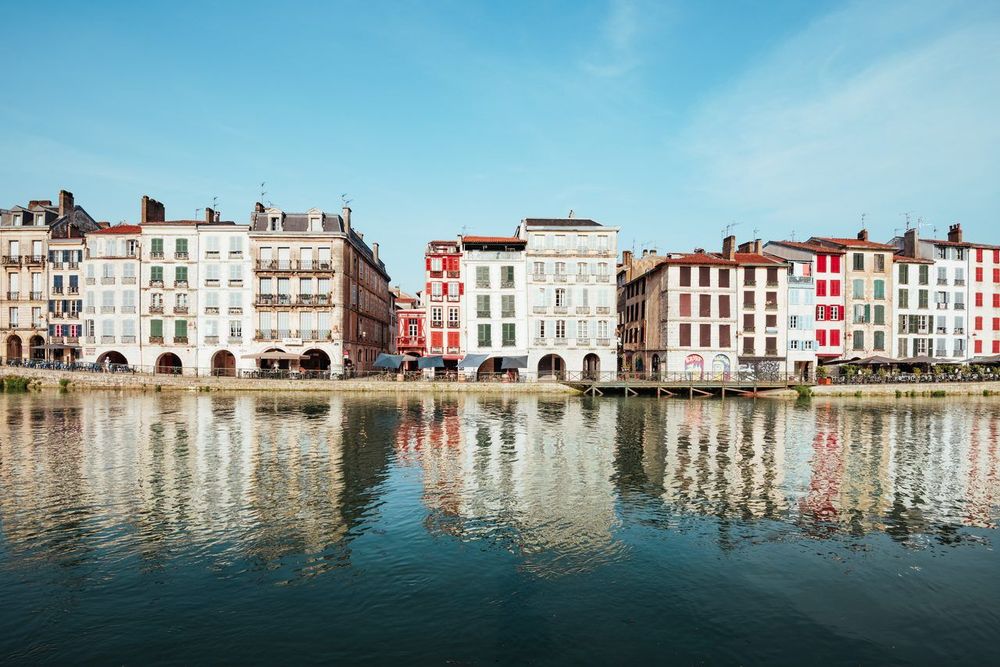
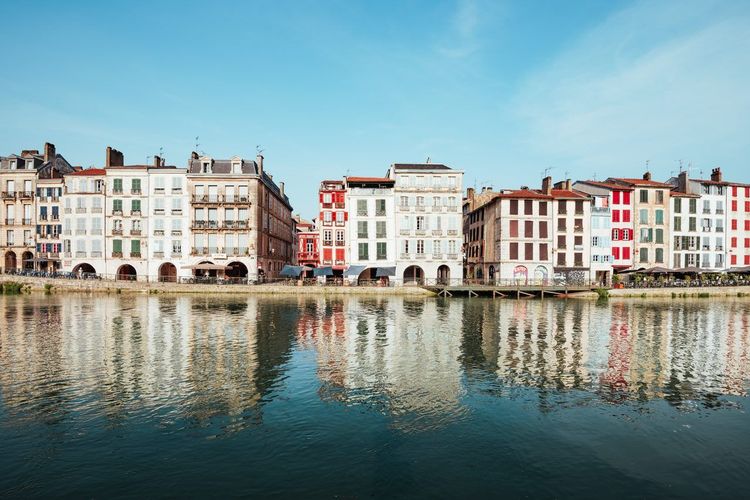
Continuing toward the water, the Nive quays (Quai Galuperie, 64100 Bayonne, rated 4.5/5 on Google from 31 reviews) offer the most photographed image of Bayonne: façades with red, green or blue shutters reflected in the river, café terraces full at the first rays of sunshine. Calm in the morning, loud with conversation in the evening.
It is in the Petit Bayonne that the Ryo audio guide strings together the most consecutive stops: the story of the origins of Basque pelota is best heard sitting near the trinquet, at your own pace.
To extend the evening, our article on the Petit Bayonne district details the bars and terraces not to miss once night falls.
The Saint-Esprit District, Vauban Citadel and Art
On the other side of the Adour, Saint-Esprit is often overlooked by visitors who stop at the two banks of the Nive. Yet this is where you will arrive if you come by train, and the district has a singular history: from the 16th century it welcomed the Jewish community arriving from the Iberian Peninsula, to which the 19th-century synagogue still bears witness. This past also explains the direct link between Saint-Esprit and the birth of Bayonne chocolate, discussed below. Today, the district is changing around the station and the banks of the Adour, redeveloped into a promenade, and you will find neighbourhood addresses that are less touristy than in the centre, notably for a coffee on a terrace facing the river.
The Vauban Citadel and the Pont Saint-Esprit
The Bayonne citadel (Rue Jean Etcheverry-Ainchart, 64100 Bayonne, rated 3/5 on Google from 2 reviews), built at the end of the 17th century to Vauban's plans, overlooks the district from a hill. Still occupied by the army, it cannot be visited, but its surroundings offer one of the best viewpoints over the confluence and the rooftops of the Grand Bayonne.
The Pont Saint-Esprit is worth crossing on foot: from its middle, the view of the quays and the two spires of the cathedral is among the most beautiful in the city, especially late in the day when the light skims the façades.
Less frequented, Saint-Esprit also hosts a few galleries and artists' studios that benefit from more affordable rents than in the centre. If you have already seen the other two districts, it is a good way to end the day away from the crowds, before catching the train.
Ham, Chocolate and Ossau-Iraty: Gourmet Bayonne
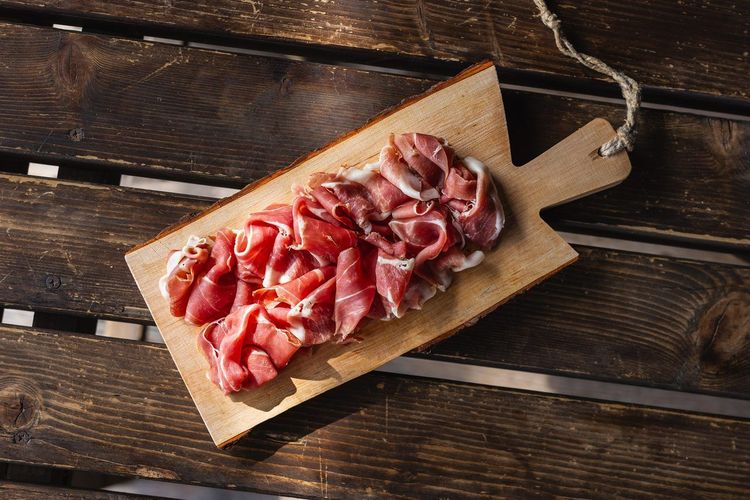
Bayonne's reputation extends well beyond the Basque Country, and it is made first at the table: a ham protected by a PGI, a sheep's cheese with a PDO and a chocolate-making tradition older than Paris's.
Bayonne Ham and Ossau-Iraty, the Products to Taste
The Bayonne ham has benefited from a Protected Geographical Indication since 1998, but the salting tradition goes back to the Middle Ages, when pigs from the Adour basin were prepared with salt from the salt works of Salies-de-Béarn. It cures slowly, for a minimum of seven months and often much longer, before reaching the market stalls.
At the table, it is happily paired with Ossau-Iraty, a PDO sheep's cheese produced in the neighbouring Pyrenean valleys. The mixed platter, served with Itxassou black cherry jam, remains the most common starter in the wine bars of the Petit Bayonne.
To buy without booking, the morning halles and the delicatessens around Rue Argenterie offer a wide choice, often with advice on packaging if you are travelling for several days. To go further, our selection of Bayonne's culinary specialties reviews Espelette pepper, Basque cake and axoa.
Rue Port-Neuf and Bayonne Chocolate Since 1854
Less well known than the ham, Bayonne's chocolate-making tradition goes back to the 17th century, when Sephardic Jews expelled from the Iberian Peninsula and settled in Saint-Esprit brought cocoa know-how. Bayonne is thus often presented as the first chocolate-making city in France.
This history can be read along Rue Port-Neuf, an arcaded pedestrian street lined with chocolatiers' shop windows. In late morning, when the workshops are running, you will smell it before you see it.
Among the historic houses, Cazenave (19 Arceaux Port Neuf, 64100 Bayonne, rated 4/5 on Google from 747 reviews) holds a special place: founded in 1854, it serves in its tea room a frothy, hand-whisked hot chocolate, accompanied by buttered toasted slices of bread. Sitting under the arches for a cup remains one of the simplest and most memorable experiences of a first visit.
One stop on the Ryo audio-guided tour of Bayonne tells precisely this shared history of ham and chocolate in front of the shopfronts of Rue Port-Neuf, to help you understand why both crafts were born in the same city.
Fêtes de Bayonne, Carnival and Markets: The City in Full Swing
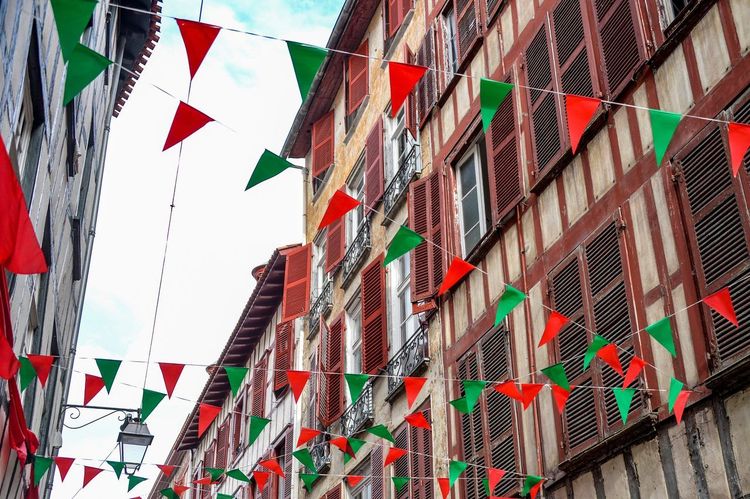
Bayonne changes its face depending on the calendar, between major popular festivals and small neighbourhood markets. If your dates are flexible, choose them according to the atmosphere you are looking for.
The Fêtes de Bayonne and the Carnival
The Fêtes de Bayonne, the famous "five days in white and red", were created in 1932 on the model of the San Fermín festival in Pamplona. They are among the largest popular festivals in France and attract around a million people, all dressed in white with red scarves and sashes. Long scheduled for late July or early August, they were held from Wednesday 15 to Sunday 19 July in 2026: always check the dates for the year before booking.
The programme opens on Wednesday evening with the handing over of the city keys to King Léon, the giant mascot of the Fêtes, woken from the town hall balcony in front of a dense crowd. Five days of concerts, bandas, pelota matches, Landes cow races and float parades follow, with a children's day often appreciated by families. For several editions now, access to the festival perimeter on the busiest evenings has required a paid Pass Fêtes: check the city's website before leaving. If you are travelling with young children or the crowds put you off, choose another period: the city is then unrecognisable, noisy day and night, and many shops in the centre pull down their shutters to protect themselves.
During the festivities and at the Feria de l'Atlantique in September, the Bayonne corridas are held in the city's arena, a bullfighting tradition rooted since the end of the 19th century that continues to divide opinion.
Less well known outside the region, the Bayonne carnival takes place in winter. More family-oriented and more modest, it shows another side of local traditions, far from the summer crowds.
Markets, the Ham Fair and the Quintaou Flea Market
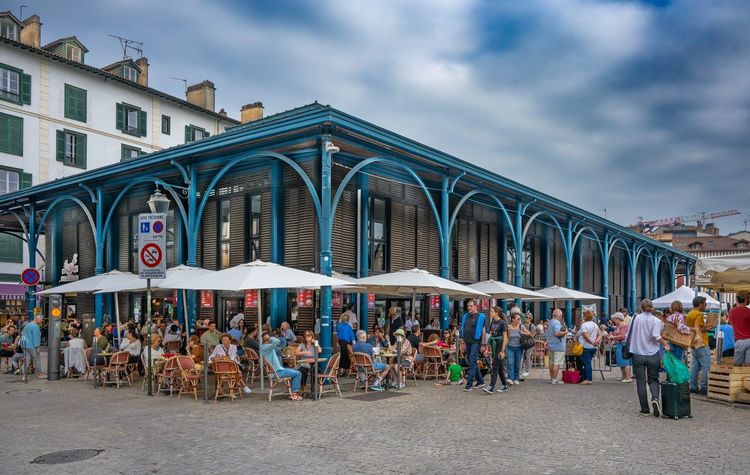
Beyond the big festivals, the halles market runs every morning, and a few annual events are worth the trip.
The Bayonne Ham Fair, one of the oldest fairs in France, traditionally takes place around Easter: in 2026, it was held from 23 to 26 April, just after the Easter weekend. Producers and charcutiers set up their stalls on the Nive quays, offering the chance to compare the houses and taste before buying.
For bargain hunters, the Quintaou Flea Market takes place on the 4th Saturday of each month on the Quintaou esplanade in Anglet, ten minutes by bus from the centre of Bayonne. With around 150 exhibitors, it is the largest flea market on the Basque coast.
How Long to Visit Bayonne and How to Plan Your Day
Half a day is enough to see the essentials of the Grand Bayonne and the Petit Bayonne: cathedral, halles, Basque Museum and Nive quays follow one another effortlessly. To include Saint-Esprit, the citadel and a proper gourmet break, allow a full day; two days if you want to add a Basque village.
If you only have one day, here is an itinerary that works: morning in the Grand Bayonne with a stop at the halles before noon, lunch on the Nive quays, afternoon at the Basque Museum and the trinquet, hot chocolate on Rue Port-Neuf, then the end of the day in Saint-Esprit for the view from the bridge.
In case of rain, which is frequent in this oceanic climate, several options remain open: the Basque Museum, a visit to the Pierre Ibaïalde drying house or the tea rooms of Rue Port-Neuf let you carry on under cover. The cathedral and the arcades of the Grand Bayonne also offer good shelter.
On a tight budget, know that the essentials can be visited without paying: cathedral, cloister, ramparts, botanical garden and a stroll along the quays cost nothing. Only the museum, guided tours and tastings add to the budget.
Timing is easy to plan in advance: the audio tour lasts 1h20 for 3.4 km, which leaves time to add gourmet breaks over half a day, or to spread the visit over a full day with museums.
Where to Stay in Bayonne
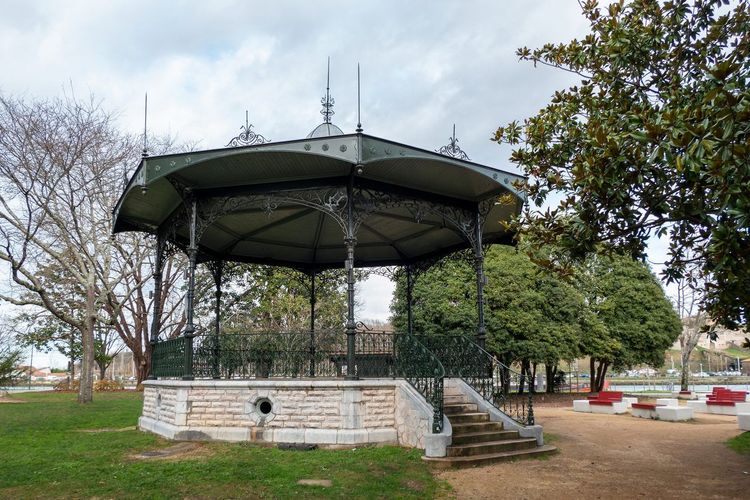
The small size of the centre simplifies the choice: wherever you stay, you will rarely be more than fifteen minutes' walk from the main sights.
Historic Centre and the Arènes District
Staying in the historic centre, in the Grand or Petit Bayonne, puts everything within reach, at the price of some noise on weekend evenings and especially during the Fêtes. It is the logical choice for a short first stay, notably in the small charming hotels near the Nive.
The Arènes district, west of the Grand Bayonne, offers a quieter, residential alternative, about ten minutes' walk from the centre. Its streets lined with Basque villas suit families and travellers with cars well, as parking is easier there.
Limpou and Hotel Deals
More outlying districts such as Limpou, as well as the area around the station in Saint-Esprit, hold a good share of the recommended hotels in Bayonne at more affordable rates. It is a good compromise if you prioritise budget over immediate proximity to the monuments, especially since the centre remains reachable on foot or by bus.
For a family stay or a group, the furnished rentals of the Petit Bayonne, often set in half-timbered buildings with views over the Nive, are an interesting alternative to a hotel. Just check the floor and whether there is a lift, which is rare in these old buildings. Another option: stay in Anglet or Biarritz and reach Bayonne by bus, a formula that lets you alternate heritage and beach without changing accommodation.
Whatever your choice, book several months in advance if your stay falls during the Fêtes de Bayonne: prices climb sharply and availability evaporates as early as spring.
How to Get to and Around Bayonne
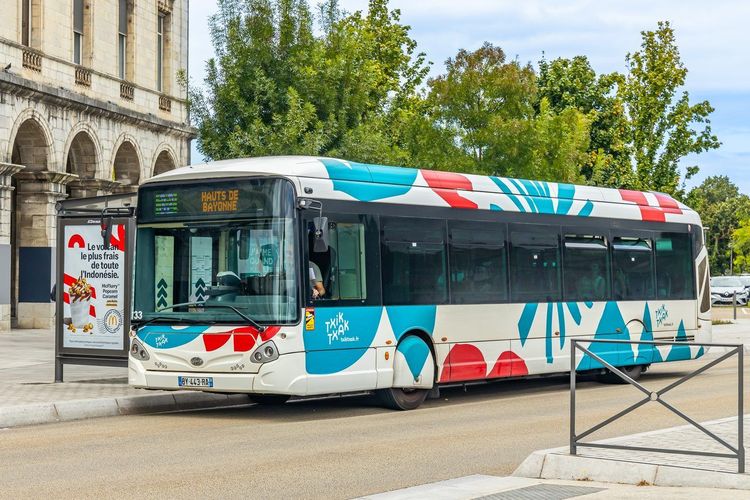
Bayonne is easy to reach by train: the station, served by the TGV, is about four hours from Paris and two hours from Bordeaux. By air, Biarritz-Pays Basque airport is a few kilometres from the centre, with direct flights from several French and European cities. By car, the A63 motorway links Bordeaux to the Spanish border via Bayonne.
Once there, leave the car behind: the historic centre can be explored entirely on foot, and the urban area's bus network links Bayonne to Anglet and Biarritz. If you arrive by car, park in a park-and-ride on the outskirts rather than looking for a space in the Grand Bayonne.
As for weather, the oceanic climate brings the possibility of rain all year round, including in summer. May to September remain the most pleasant months, with mild to warm temperatures, but always pack a waterproof jacket. Autumn, calmer and often bright, is an excellent season for a first visit.
For the budget, allow around 80 to 120 euros per day per person for a comfortable stay including accommodation, meals and a few tastings, an amount that drops significantly if you favour free visits and the halles market for meals.
Around Bayonne: The Hermione, Biarritz and Basque Villages
Bayonne is also part of rugby country: the city is home to the Aviron Bayonnais, a rugby club founded in 1904 and several times French champion. On match nights at the Stade Jean-Dauger, the atmosphere spills over into the bars of the Petit Bayonne, and attending a game is a very local way to round off your stay.
The Hermione and Easy Excursions from Bayonne
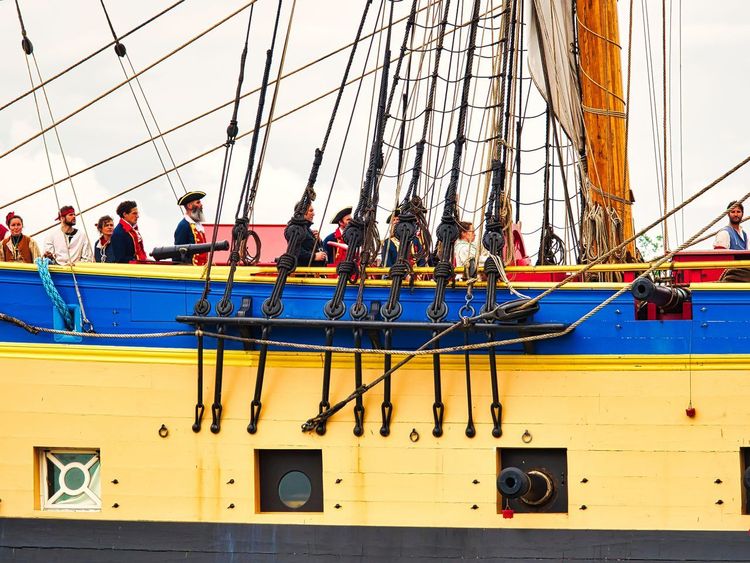
The replica of the frigate the Hermione, which carried La Fayette to America in 1780, has been in dry dock in the port of Bayonne since September 2021: its wood, attacked by fungi, requires an almost complete reconstruction of the hull. For lack of funding, the project is suspended pending court decisions and its future remains uncertain. If the subject fascinates you, ask the tourist office about possible visits before making the trip.
Why visit Bayonne rather than Biarritz for a first trip to the region? The two cities complement each other more than they compete: Biarritz charms with its beaches and seaside atmosphere, Bayonne with a density of heritage and gastronomy that the neighbouring resort lacks. Around twenty minutes apart by bus, combining the two almost suggests itself.
Beyond that, several Basque Country villages deserve a detour if you have an extra day: Espelette with its peppers hanging from the façades, Ainhoa, listed among the most beautiful villages of France, or La Bastide-Clairence and its Labourd architecture. Our guide to the most beautiful villages to visit around Bayonne details a complete itinerary to discover them.



FAQ
How many days do you need to visit Bayonne?
One full day lets you see the essentials of the three districts, but two days leave time to add the citadel, an excursion to a nearby Basque village and a proper gastronomic break without rushing.
Why visit Bayonne rather than Biarritz?
Bayonne offers a historical, religious and culinary heritage that Biarritz, which is more focused on the beach and surfing, does not offer to the same degree. Just twenty minutes apart, the two are easy to combine in the same trip.
What can you do in Bayonne for free?
Sainte-Marie Cathedral, its cloister, the ramparts, the botanical garden (April to October) and a stroll along the Nive quays cost nothing and already cover a good share of the must-sees.
Where can you taste real Bayonne chocolate?
On Rue Port-Neuf, where the historic chocolate houses are concentrated, including Cazenave and its frothy hot chocolate served since 1854.
What can you do in Bayonne when it rains?
The Basque Museum, a visit to the Pierre Ibaïalde ham-drying house and the tea rooms of Rue Port-Neuf let you enjoy the city under cover, as do the cathedral and the arcades of the city centre.
When do the Fêtes de Bayonne take place?
Over five days in summer, from Wednesday to Sunday. In 2026, they were held from 15 to 19 July; the dates change from year to year and are announced by the town hall several months in advance.
Bayonne is much more than a stopover on the road to Biarritz or Spain. Its three districts with sharply distinct identities, its protected gastronomy and its calendar of events reward those who devote at least one day to it. To link all these places without hunting for your way, the Ryo audio-guided tour of Bayonne accompanies you at your own pace, between two gourmet breaks.
À lire également