© Shutterstock
 Votre guide Ryo
Weekend in Cassis in 2026: Village, Calanques, and Cap Canaille
The wind rising from the Port-Miou calanque smells of pine forest and salt at once — a mix found nowhere else along this stretch of coastline. A Cassis weekend takes shape over two well-paced days: the first for the village and a nearby calanque, the second for Cap Canaille and the Route des Crêtes. The town has fewer than 8,000 inhabitants, yet it concentrates everything the Mediterranean does best: a fishing port still in active use, cliffs among the highest in Europe, a vineyard planted facing the sea, and coves reachable on foot from the centre. Between the two days, there is room for a terrace tasting, a swim in turquoise water, and, depending on the season, a ride on a small tourist train up to the heights of the village. This guide covers the calanques and their three modes of access, the beaches, Cap Canaille, the AOC vineyard, where to sleep, where to eat, the budget to expect, and the best season to go. Here is how to plan this stay without missing anything essential.
Cassis, the Provençal Pearl between Sea and Calanques
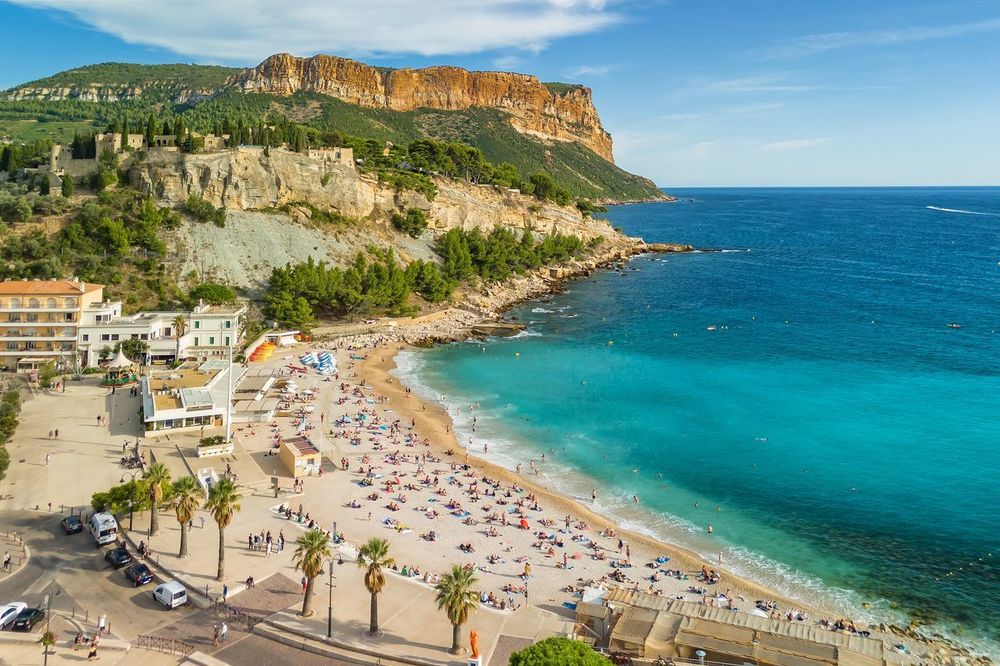
Cassis nestles at the back of a sheltered bay, between Marseille to the west and La Ciotat to the east, backed by the Calanques massif and overlooked by Cap Canaille. This position explains everything: the village grew around a natural harbour protected from the winds, in a ring of hills that cuts the mistral and concentrates the light. People come here for a short stay, often two days, rarely more, as the village can be walked end to end quickly.
What strikes you on arrival is the contrast between the ochre lanes of the centre, clustered around the church of Saint-Michel, and the open horizon over the Mediterranean the moment you reach the quay. Cassis has never sought to grow: buildings rarely exceed four storeys, the streets are too narrow for tour buses, and fishing remains a visible activity rather than a backdrop for tourists. This human scale explains why so many visitors look for what to do in Cassis in a short time rather than on a longer itinerary.
For more detail on the village's must-sees, our Ryo article on the unmissable things to do in Cassis breaks down each neighbourhood with its best viewpoints. The rest of this guide covers the essentials in a format designed for two days on the ground, without any superfluous stops.
The Old Village and the Fishing Port of Cassis
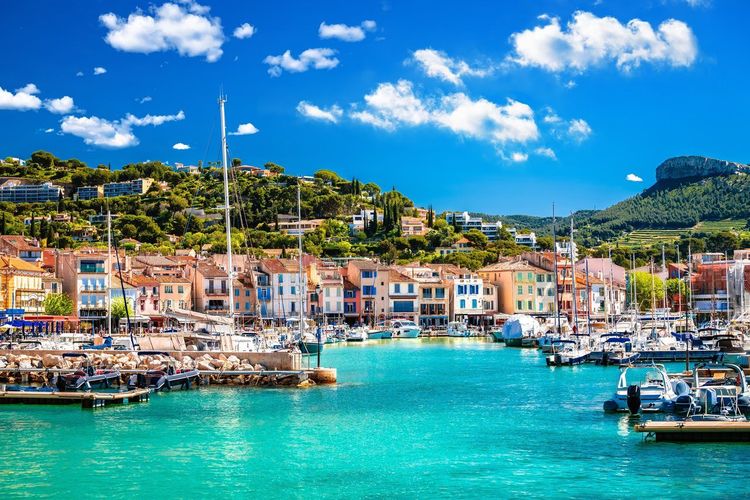
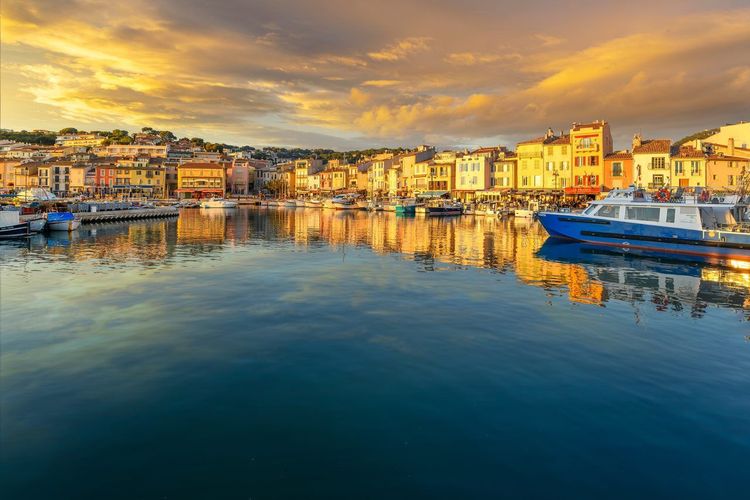
Everything starts at the port of Cassis, a basin still used by traditional fishing boats painted in bright colours. Nets sometimes dry on the quayside in late morning, and it is not unusual to see a fisherman selling the day's catch directly to passers-by. The terraces lining the Quai des Baux offer the best view of the pastel façades climbing towards the heights, and stay lively until late in the evening in summer, between wine bars and ice-cream shops.
The Cassis market sets up on Place Baragnon and in the surrounding streets on Wednesday and Friday mornings: local market gardeners, goat's cheese, olives, fish, and a few stalls of Provençal fabrics. It is the liveliest moment of the week in the village, well attended by locals as much as by visitors, making it a good indicator of local life outside the tourist season. If you only have one morning to devote to the old village, arrange it to coincide with a market day: you combine producers' stalls, the animation of the port, and still-soft light for climbing to the château before the midday heat.
Climbing towards the upper part of the village, the château de Cassis (Traverse du Château, 13260 Cassis, rated 4.4/5 on Google across 219 reviews) dominates the bay from a rocky spur. A private property converted into a hotel, it cannot be visited inside, but the path leading up to it offers one of the best panoramas over the port and the first calanques. Allow about twenty minutes on foot from the centre, longer if you stop to photograph at every bend.
For those who prefer not to walk, the Cassis tourist train connects the centre to the viewpoints in the heights in about twenty minutes, several times a day in season. It is also a simple way to get your bearings in the village before deciding where to return on foot. Several operators also offer tourist boat circuits from the port, generally lasting an hour, which pass the first three calanques without requiring any walking or special equipment. These circuits work well for a weekend with children or people with reduced mobility, when walking to Port-Miou or En-Vau is not an option.
The Calanques of Cassis: Port-Miou, En-Vau, and the National Park
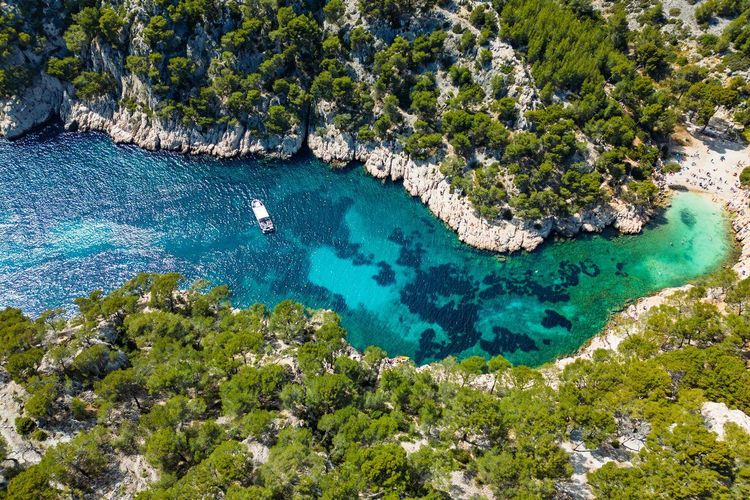
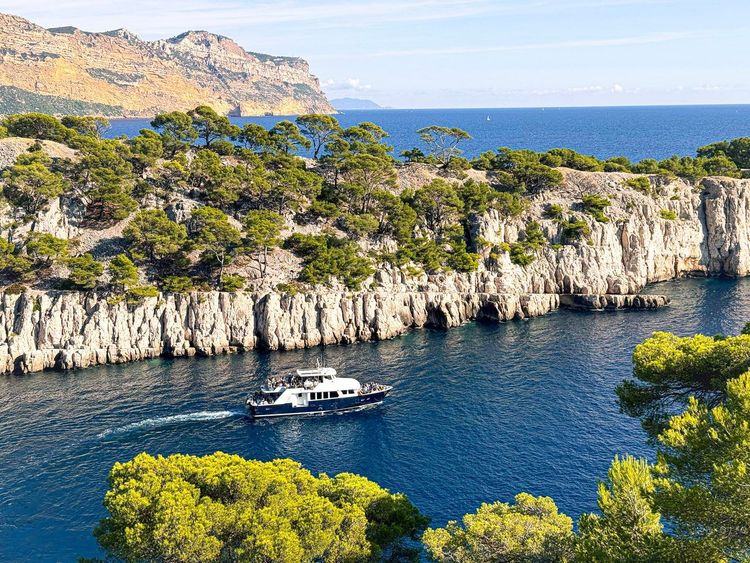
The calanques are the reason many visitors choose Cassis over any other stop on the coast. These narrow inlets between limestone cliffs and Aleppo pines stretch for several kilometres to the west of the village, inside the Parc national des Calanques, created in 2012 to protect a massif that is both land and sea. Regulations here are strict: fires prohibited year-round, access restricted on days of high fire risk, quotas on the most fragile calanques.
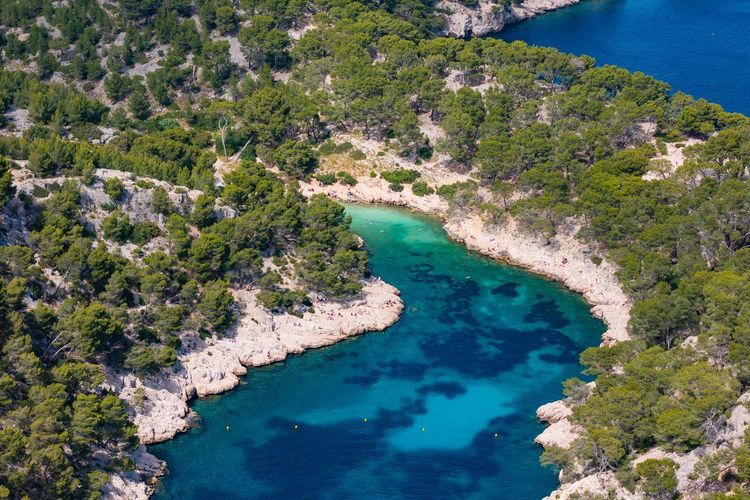
The calanque de Port-Miou is the most accessible of the three historic calanques of Cassis. A track runs along almost the entire basin, converted into a natural marina where several hundred boats moor. Allow twenty minutes on foot from the village centre, with negligible elevation gain, making it the easiest calanque for a short visit or an end-of-day outing.
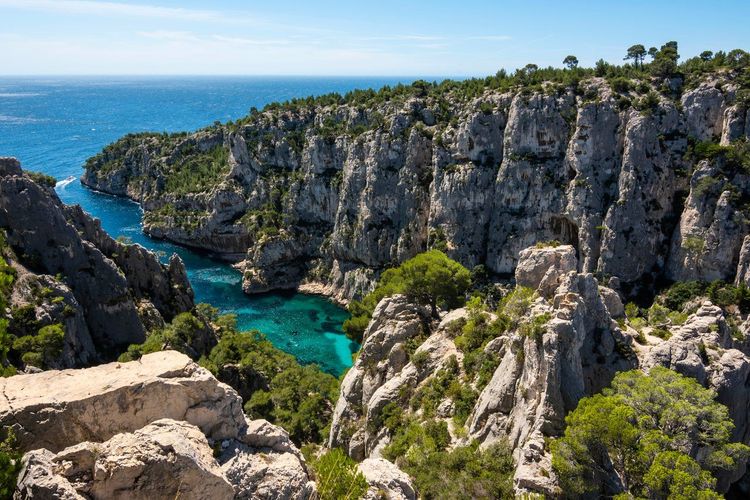
By contrast, the calanque d'En-Vau (13260 Cassis, rated 4.8/5 on Google across 12K reviews) requires a bit more commitment: roughly two hours of walking there and back from the nearest car park, on a stony path with a few mildly exposed sections and a steep final descent to the beach. The effort is amply rewarded — the water takes on an almost unreal turquoise hue between two walls of white limestone rising more than 100 metres. It is the most photographed calanque in the massif, and also the most crowded in summer, to the point that access is sometimes regulated in July–August.
Between the two, the calanque de Port-Pin remains a middle-ground option: about 45 minutes on foot, fewer crowds, a small pebble beach shaded by pines. Many hurried visitors overlook it, yet it offers a good compromise for a short stay.
Three ways to reach the calanques around Cassis coexist: on foot from the village, by boat from the port, or by sea kayak, rented by the hour or half-day, which allows you to stop at coves otherwise inaccessible. The boat remains the effort-free option but gives no direct access to the water, while the kayak demands a minimum level of fitness in exchange for complete freedom over the route. In summer, book your boat or kayak slot at least the day before: departures fill up from morning onwards. Our Ryo selection of the most beautiful calanques of Marseille and Cassis details each route with precise walking times.
To the west, the massif extends all the way to Marseille, with Sormiou, Morgiou, and Sugiton, also subject to regulated access in summer. If you add a day in the Phocaean city, the Ryo audio-guided tour of Marseille connects the Vieux-Port and the historic neighbourhoods on foot, as a complement to a morning in the Marseille calanques.
The Most Beautiful Beaches of Cassis
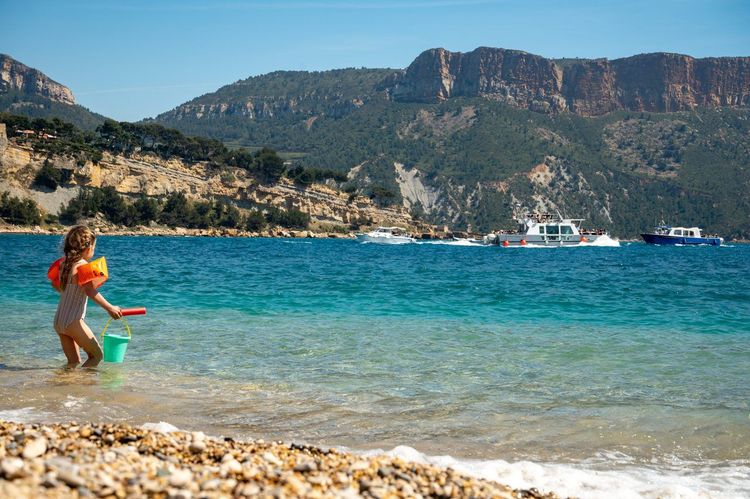
Cassis is not known for large sandy beaches: most of its shorelines are pebble coves, closer in character to the calanques than to the sandy beaches of the Var coast. The Plage du Bestouan, a ten-minute walk from the port, remains the most family-friendly: shallow water for the first few metres, some seasonal facilities, and a sheltered position from the wind that keeps it pleasant even in a light mistral.
Right in front of the port, the Plage de la Grande Mer (Quai des Baux, 13260 Cassis, rated 4.3/5 on Google across 569 reviews) is the most central but also the most crowded in high season. People come here mainly for its immediate proximity to the quayside terraces and ice-cream shops, less for the available space on the pebbles in the middle of August.
To avoid the crowds, the best option remains the calanques themselves: the small pebble beach at Port-Pin or the more secluded one at the calanque d'En-Vau. They require a walk, which naturally filters out a portion of visitors. Arrive before 10am in July–August if you want to lay your towel down without scrambling over rocks to find a free spot.
The water at Cassis, fed by the submarine freshwater resurgences of the Port-Miou springs, stays cooler than elsewhere on the coast, even in the height of summer. Many swimmers are surprised by this sensation when entering the water after a scorching pebble beach. In terms of access, none of the village's beaches have a large dedicated car park: it is better to arrive on foot or by bike, or to park at the relay car parks above and walk down in 15–20 minutes. For a full overview of beaches and coves around the village, our Ryo guide to the beaches of Cassis lists the best access points by season.
Cap Canaille and the Soubeyranes Cliffs
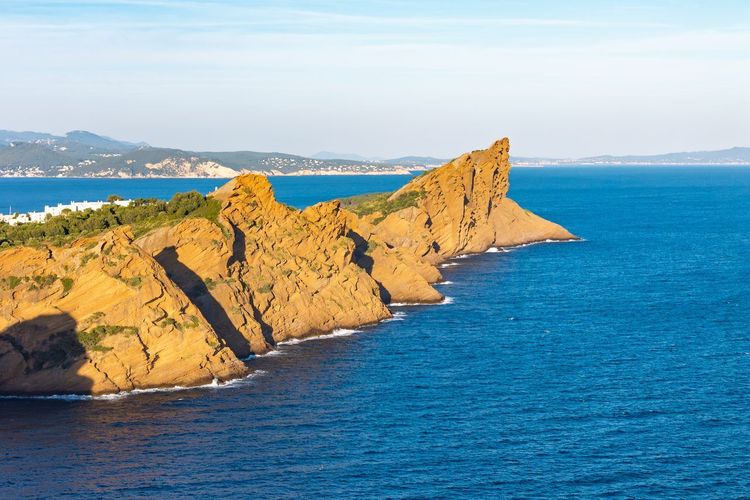
Cap Canaille (Route des Crêtes, 13260 Cassis, rated 4.7/5 on Google across 5,300 reviews) towers nearly 400 metres above the sea, its highest point, the Grande Tête, reaching 394 metres: it is the highest sea cliff in France, far surpassing the famous Norman cliffs of Étretat. Together with the falaises de Soubeyranes stretching towards La Ciotat, it forms a wall of ochre rock plunging directly into the Mediterranean for several kilometres.
The Route des Crêtes connects Cassis to La Ciotat along the crest of these cliffs, with several purpose-built belvederes where you can park safely. The viewpoint at the Grande Tête, halfway along, offers a panorama taking in the village of Cassis below, the calanques to the west, and the bay of La Ciotat to the east. Plan to stop there at the end of the day, when the raking light turns the rock orange — a moment that few hurried visitors take the time to savour.
For visitors who want to get out of the car, a hiking trail links several viewpoints along the ridge, walkable in half a day without technical equipment. Allow around three hours there and back from the car park closest to the summit, with moderate elevation gain but full sun exposure: set out early in the morning or in the late afternoon in summer, and bring more water than you think you will need.
The particularly reddish hue of these cliffs is no accident: the rock is rich in iron oxides, trapped in the sandstones and pudding stones that cap the limestone. This composition explains the ochre-red palette that sets Cassis apart from the whiter calanques further west towards Marseille, and makes for the best photographs in late morning or late afternoon light.
The Route des Crêtes regularly closes to traffic, both in strong winds and on days of high fire risk in summer — a frequent scenario on this very exposed stretch of coastline. Check its status before setting out if you plan to make the crossing by car rather than on foot, particularly off-season when the mistral blows more regularly.
The Cassis Vineyard: Wine Tasting by the Sea
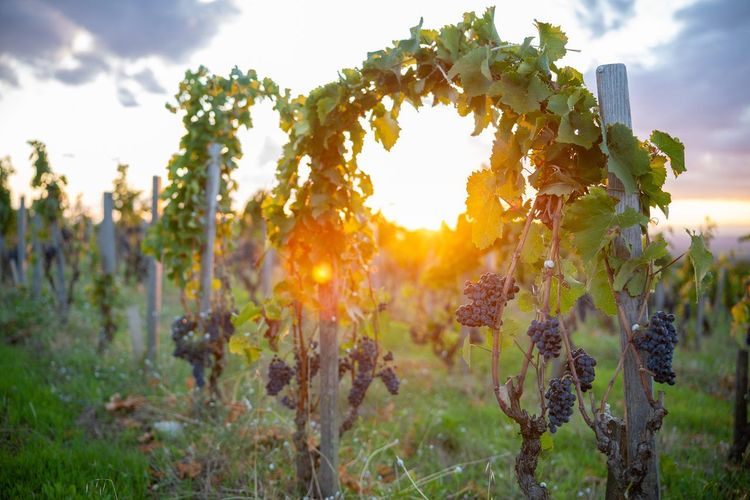
Cassis has its own appellation, the AOC Cassis, one of the very first recognised in France, dating back to 1936. Around a dozen estates share approximately 200 hectares of terraced vines, clinging between the village and Cap Canaille, with a large majority of dry whites that pair naturally with the rock fish caught at the port.
The Clos Sainte Magdeleine, perched on a promontory between the sea and the cliffs, offers a tasting with a view that rivals Cap Canaille itself. Booking is advised in high season, as late-afternoon slots go quickly.
More discreet, the Domaine du Bagnol (Avenue du Revestel, 13260 Cassis, rated 4.6/5 on Google across 61 reviews), one of the appellation's estates run under organic farming, is worth the detour for a more intimate tasting, away from the crowds of the better-known estates.
Expect to pay generally between 5 and 15 euros for a tasting of three to five wines, with the glass included at most estates. Some also offer a short winery tour before the tasting, useful for understanding why these vines grow almost vertically. Slotting an hour of tasting between a morning at the beach and Cap Canaille in the afternoon remains one of the best ways to pace a stay for two, without making it the sole focus.
Where to Eat in Cassis: Rock Fish, Terraces, and Calanque Picnics
The question of what to do in Cassis quickly doubles as another equally decisive one: where to eat without falling into the tourist trap of the quayside. The port terraces line up near-identical menus — grilled fish, mussels, salads — at prices that climb with the view. That is not necessarily a bad choice, but the usual rule applies: tables that display the day's catch on a chalkboard, rather than a laminated menu in four languages, generally serve what they advertise.
The real local marker is rock fish — scorpionfish, chapon, or John Dory — served whole and grilled or as a soup. A dry, mineral white from Cassis pairs with it better than any wine from further afield. Budget 20 to 30 euros for a fish main course, 30 to 45 euros for a full evening menu in season. Book the day before for a quayside dinner between June and September: the best tables fill up by 7:30pm.
In the lanes away from the port, around Place Baragnon, addresses tend to be more affordable, with lunch deals running around 18 to 22 euros. This is also where you find the bakeries and delicatessens useful for putting together a picnic before heading to the calanques: no shops once you pass Port-Miou, and not a single water point on the En-Vau trail. Allow at least one and a half litres per person in summer, and carry your rubbish back out — the national park provides no on-site collection.
One last local habit: the quayside ice-cream shops stay open late in summer, and a scoop in front of the fishing boats is easily worth a restaurant dessert, at a third of the price. Marseille's audio-guided tour is a short drive away for a change of scenery.
A Weekend in Cassis, Day by Day
Two days are more than enough to cover the essentials of Cassis, provided you do not try to squeeze everything into a single day. Here is a realistic pace, designed for an arrival on Saturday morning and a departure on Sunday late afternoon.
Day 1: village and the calanque de Port-Miou. Arrive in the morning, ideally on a market day, and settle into your accommodation before noon. Have lunch on a terrace facing the fishing boats, then head up to the château de Cassis for the panorama as the light begins to shift. In the late afternoon, make for Port-Miou: the closest and easiest calanque, perfect for a first swim without any effort. End the evening on the quay, where ice-cream shops and wine bars stay open late in summer, with views of the port lights reflecting on the still water.
Day 2: Cap Canaille and the vineyard, or En-Vau depending on your energy. Two options emerge on the second day, depending on your fitness and priorities. Hiking enthusiasts will set off early for the calanque d'En-Vau to beat the heat and the crowds, planning to return in early afternoon for a rinse at the Plage du Bestouan. Those who prefer a slower pace will take the Route des Crêtes up to Cap Canaille in the morning, before finishing with a tasting at a wine estate in early afternoon — an ideal moment before hitting the road again.
This two-day structure is intentionally tight: several online accounts stretch the stay to three or four days by incorporating Marseille or La Ciotat, but a Cassis weekend is primarily about the village and its immediate surroundings. If you have a third day, the calanque de Port-Pin or a boat trip towards the islands off Marseille naturally rounds out the programme without overloading it.
Off-season, between October and April, this programme remains valid but tightens further: boats to the calanques run at reduced frequency or stop altogether depending on the weather, and walking then becomes the only reliable way to reach Port-Miou or En-Vau. In return, you gain an almost empty village and a winter light that sculpts the cliffs of Cap Canaille differently.
One final note on pacing: never plan Port-Miou, En-Vau, and Cap Canaille on the same day. That is the main trap for hurried visitors, who end the day exhausted without having truly enjoyed any of the three sites.
Cassis for Two: What Changes When You Come as a Couple
Cassis features on nearly every list of romantic weekend destinations, and for once the promise holds — provided you aim for the right moments. The village lends itself to a stay for two because everything is done on foot: no car to retrieve between stops, no journey to negotiate after a well-watered dinner.
Three moments are worth booking as a priority. The sunset from a belvedere on the Route des Crêtes, where the cliff shifts from ochre to red in about twenty minutes. A late-afternoon tasting at an estate facing the sea, generally quieter than the 11am slot. And the first morning swim at Port-Miou, before 9am, when the calanque still belongs to just two or three swimmers.
For everything else, May, June, and September easily beat summer: comparable water temperatures, terraces accessible without a wait, and accommodation noticeably cheaper than during the first fortnight of August.
Where to Stay in Cassis: Hotels, Camping, Airbnb
The choice of accommodation in Cassis depends mainly on your budget and your willingness to walk. Sea-view hotels, concentrated around the port or on the heights near the château, display rates that climb quickly in summer, often exceeding 200 euros per night for a room with a balcony overlooking the basin. Booking several weeks in advance is essential from June to September, as the town has few rooms relative to its summer footfall.
Camping is the most economical option for a Cassis weekend, with sites located a few minutes by car from the centre, some within walking distance of the trailheads leading to the calanques. It is also the most suitable format for families or visitors who have brought their own beach and hiking gear.
Between the two, an Airbnb in the village itself often remains the best compromise: studios or small apartments in the lanes near the port, within walking distance of everything, with a more local feel than a standard hotel. Expect generally between 90 and 160 euros per night depending on the season and proximity to the quay, with a sharp variation between July–August and the rest of the year.
One detail that matters: most central accommodation has no private parking. If you are arriving by car, check this point before booking, or risk circling for a long time or paying for a public car park two nights running. If availability in Cassis itself is scarce, especially over a long weekend, broadening the search to nearby towns is a reasonable fallback. Our Ryo guide to a weekend in Hyères covers another Mediterranean stop less than an hour's drive away, useful as a backup if Cassis is fully booked on a Saturday in July.
Extending the Stay: La Ciotat, Marseille, and Aix-en-Provence
Two days are enough for Cassis, leaving room if you arrive the evening before or stay an extra day. Three stopovers fit within a radius of one hour.
La Ciotat, a quarter of an hour away via the Route des Crêtes, is the most obvious neighbour. The town has kept its shipyards, visible from the old port, and is home to the Eden, presented as the oldest cinema still in operation in the world, linked to the first screenings by the Lumière brothers. The calanque du Mugel and its botanical park round off a morning nicely, in a noticeably less crowded atmosphere than Cassis.
Marseille is about thirty minutes by road or train, and shifts to a completely different register: the Vieux-Port, the Panier quarter, the MuCEM, Notre-Dame de la Garde. It is also the departure point for maritime shuttles to the Frioul islands and the Château d'If, a half-day excursion that complements a stay focused on the calanques.
Aix-en-Provence, about fifty minutes away, offers the urban counterpoint: the Cours Mirabeau, grand private mansions, daily markets, and Cézanne's studio. The Ryo audio-guided tour of Aix-en-Provence covers the old centre in half a day, a format that fits neatly into a Sunday on the way home.
To the east, Bandol and Sanary-sur-Mer, about forty minutes away, play in the same register of a Mediterranean port backed by a vineyard, with noticeably fewer people than the foot of the Cassis quay in the middle of August.
Practical Information for a Successful Weekend in Cassis
The best season to visit Cassis is May–June or September: the sea is already, or still, swimmable, the calanques remain accessible without enhanced restrictions, and the village breathes more easily than in the height of summer. July and August are still viable, but mean maximum crowds, mandatory bookings for water activities, and accommodation prices at their peak.
Without a car, Cassis is reached by train from Marseille in about thirty minutes, with the station roughly 3 kilometres from the centre. A municipal shuttle or a taxi covers the remaining distance, or a 35–40 minute downhill walk for those in no hurry. By car, allow 30 to 40 minutes from Marseille depending on traffic, with limited, paid parking in the village, especially in July–August: it is better to park at the relay car parks at the edge of town and walk or take a shuttle down.
On the budget side, an all-inclusive Cassis weekend for two generally falls between 250 and 500 euros excluding high-end accommodation: one night in an Airbnb or on a campsite, meals mixing restaurants and picnics, one boat or kayak excursion, and a tasting at a wine estate. The biggest variables in the bill remain accommodation and sea excursions, both significantly more expensive in July–August than off-season.
In summer, book your calanque slots — whether by boat, kayak, or car park — at least the day before, ideally several days ahead for En-Vau. Also check the massif access status the evening before: in periods of high fire risk, the national park trails close or only open in the morning, and the decision comes through the evening before for the following day. This is the piece of advice that comes up most often from visitors left disappointed after having to improvise on the spot on an August day when everything fills up by 9am.



FAQ
How many days should I plan for a weekend in Cassis?
Two days are enough to cover the village, one calanque, and Cap Canaille without rushing. The first day focuses on the port, the old village, and Port-Miou; the second on Cap Canaille or En-Vau depending on your energy. A third day allows you to add a boat trip or a second calanque, but is not essential for a first stay.
What is the best time to visit Cassis?
May–June and September offer the best balance between pleasant weather, swimmable sea, and manageable crowds. July–August remain viable provided you book ahead, especially for water activities and accommodation, whose availability shrinks quickly from spring onwards.
How do I get to Cassis from Marseille without a car?
The train connects Marseille to Cassis in about thirty minutes. The station is roughly 3 kilometres from the town centre, reachable by shuttle, taxi, or on foot in 35–40 minutes downhill to the port.
Do I need to book in advance to visit the calanques of Cassis?
Yes, especially in summer for boat or kayak trips and for parking near trailheads. Booking the day before is enough off-season, but plan several days ahead in July–August for En-Vau, the most in-demand calanque in the massif. Also remember to check access to the massif, which is restricted on days of high fire risk.
Where should I park in Cassis on a weekend?
Parking in the village is limited and paid, and particularly saturated in summer. Park-and-ride lots at the edge of town, connected to the centre by shuttle or a 15–20 minute walk, remain the most reliable option on a busy weekend.
Is Cassis a good destination for a romantic weekend?
Yes: the village's scale, the views over the bay from the château or Cap Canaille, and the seaside wine estates all lend themselves well to a romantic weekend in Cassis, without requiring complex logistics or long transfers between stops.
Cassis doesn't need a long stay to win you over: the village reveals itself in two days, between the rhythm of the fishing port, the coolness of the calanques, and the ochre line of Cap Canaille closing the horizon. It's a format that rewards those willing to choose rather than trying to tick every box, even if it means saving a calanque or a wine estate for a return visit.
To extend the Provence getaway, the Ryo app is a natural next step: the Ryo audio-guided tour of Marseille continues this Cassis weekend seamlessly, thirty minutes by road, in the same spirit of a short and immersive visit.
À lire également