© Shutterstock
 Votre guide Ryo
14 Free Activities to Do in La Rochelle in 2026
The three medieval towers guarding the entrance to the Vieux Port have stood for over six centuries, and it costs nothing to admire them from the quays. That is the whole promise of free activities in La Rochelle: a heritage that can be enjoyed without an entrance ticket, among ramparts, covered market halls and protected marshes on the edge of the city center. To find your way around without spending a thing, the Ryo audio guide for La Rochelle marks out 26 audio stops across the city, from the Vieux Port to the Saint-Nicolas district.
In the pages that follow: one Sunday a month when the municipal museums open their collections to everyone, an animal park with free entry in the heart of an English-style garden, a marsh where you can hear birds just minutes from the ramparts, self-service bikes that the city pioneered back in the 1970s, and a Vauban citadel you can walk around on the Île de Ré. Paid activities in the area (aquarium, tree climbing, water park) have been deliberately left out of this selection. And if rain sets in, the museums and arcades of the historic center step in without adding to the bill.
1. Admire the Vieux Port and Its Medieval Towers
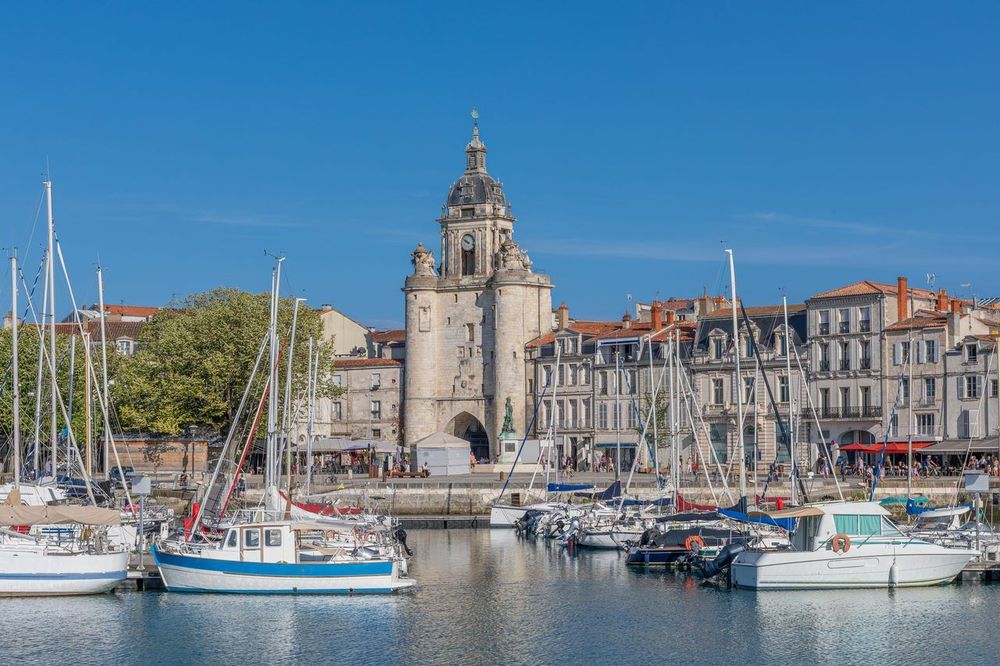
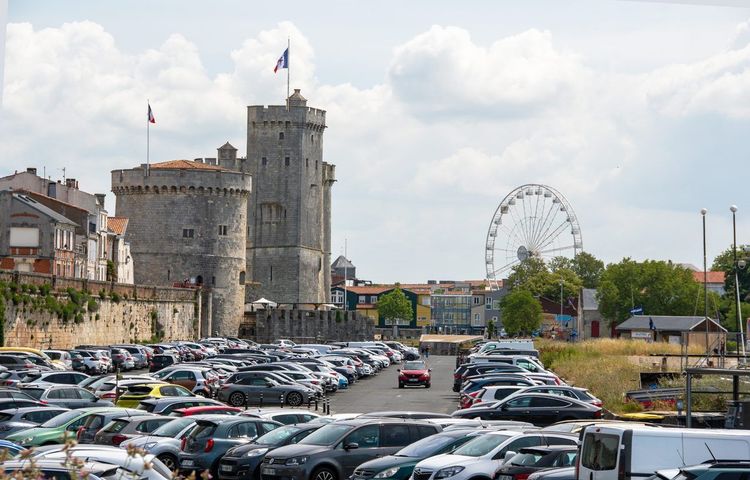
It is impossible to miss the three towers framing the Vieux Port: they were already guarding the entrance to the harbor long before it became the haven for sailboats and fishermen we know today. From the quays, the spectacle is free. Access to the interiors requires a combined ticket of around €9.50 valid for all three towers (free for under-26s).
The Tour Saint-Nicolas is the most massive: an irregular keep built in the 14th century, designed to withstand a siege rather than to charm the eye. Worth knowing before you visit: it is currently closed for consolidation works, though its silhouette is still visible from the quay.
Opposite it, the Tour de la Chaîne takes its name from the heavy chain stretched each evening across to its neighbor to block the entrance to the port. A rudimentary device, but remarkably effective at controlling the comings and goings of ships.
You can then walk along the rue sur les Murs all the way to the Tour de la Lanterne (Rue sur les Murs, 17000 La Rochelle, rated 4.5/5 on Google from 3,702 reviews), the tallest of the three at 55 meters. Its turret served as a lighthouse and landmark for sailors; the tower later became a prison, and English, Spanish and Dutch sailors carved hundreds of graffiti into its walls between the 17th and 19th centuries. All three towers have been listed as historic monuments since 1879.
A full circuit of the quays, past moored boats and terraces that come alive from early morning, takes less than an hour. For the best viewpoint, walk out to the jetty at the end of the day, when the raking light catches the pale stone and the towers stand out against the sky. Many visitors stop at the quay; few make it this far, just five minutes on foot. Want the stories that go with the stones? Several of the 26 audio stops on the Ryo route are devoted to the Vieux Port, including the account of the great siege of 1627–1628 heard while standing before the very ramparts that bore it.
2. Visit the Free Museums on the First Sunday of the Month
On the first Sunday of each month, except in July and August, La Rochelle's municipal museums open their doors to all visitors free of charge. For the rest of the year, the Musée Maritime also admits under-18s and students under 26 free of charge — a detail that makes a real difference for families.
The Musée du Nouveau Monde occupies the Hôtel Fleuriau, a mansion built between 1740 and 1750 and later purchased in 1772 by the merchant Aimé-Benjamin Fleuriau. Its rooms trace the links between La Rochelle and the Americas, and address the port's role in the slave trade without flinching. In the courtyard, the statue of Toussaint Louverture by Ousmane Sow (2014) is worth a visit in its own right, and can be seen from the gate.
Down by the basins, the Musée Maritime (normally €8) is partly visited afloat: its centerpiece is the meteorological frigate France I, which you can explore from the engine room to the bridge. Allow two hours on site.
The Muséum d'Histoire Naturelle (28 Rue Albert 1er, 17000 La Rochelle, rated 4.5/5 on Google from 1,656 reviews), fully renovated in 2007, spans archaeology, zoology and botany across several floors. Two highlights not to miss: Zarafa, the giraffe presented to Charles X, and an Easter Island moai.
One tip: the rooms fill up quickly after 10:30 am on that Sunday. Aim for opening time, or save the Muséum for the afternoon (it closes between 12:30 and 1:30 pm).
3. Explore the City's Religious Heritage
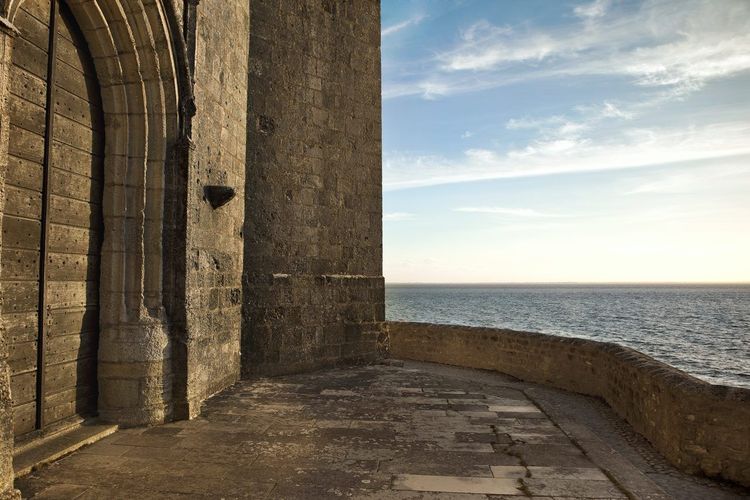
A Protestant stronghold for over a century, La Rochelle's churches bear the traces of this turbulent history. All of these buildings can be visited freely outside of services.
The Cathédrale Saint-Louis had a remarkably drawn-out construction: the foundation stone was laid in 1742, work was halted from 1750 to 1773 for lack of funds, consecration followed in 1784, and the building was only completed in 1857. The two planned bell towers were never built, which explains the somewhat austere classical facade, with its Tuscan and Doric columns beneath a triangular pediment.
The Protestant temple is a reminder that the city was one of the great Reformed strongholds of the kingdom, until the siege of 1627–1628 that killed the majority of its population.
Near the Vieux Port, the église Saint-Sauveur (Rue du Temple, 17000 La Rochelle, rated 4.4/5 on Google from 664 reviews) encapsulates several centuries of destruction on its own: burned down in 1419, razed in 1568, burned again in 1705 and then rebuilt from 1708 to 1718. Only its 42-meter Gothic bell tower survived all these ordeals, and it still bears bullet marks from the 17th-century sieges.
Allow an hour for all three. If you follow the Ryo audio guide route, it stops outside the cathedral and the temple, with the story of the siege told at the very foot of the walls that endured it.
4. Stroll through the Gabut District
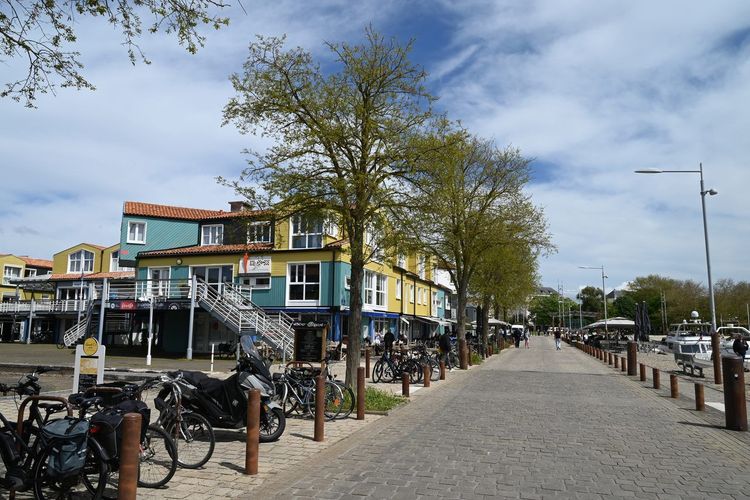
Just a short walk from the Vieux Port, the Gabut district (Quai Marilyn Monroe, 17000 La Rochelle, rated 4.7/5 on Google from 23 reviews) surprises with its timber facades painted red, blue and yellow, lined up in tight rows along the basin. Nothing like the pale stone of the rest of the city: this district was built in the 1980s, inspired by the old fishermen's and fish merchants' huts.
Street art enthusiasts will find several murals tucked between the cabins. About twenty minutes is enough to walk the whole area. The Ryo route passes through here too, with an audio stop that explains how this fishermen's setting was reinvented.
5. Wander through the Saint-Nicolas District
A change of atmosphere just a few hundred meters from the quays: the Saint-Nicolas district (Rue Saint-Nicolas, 17000 La Rochelle, rated 4.9/5 on Google from 299 reviews) has kept the tight layout of an old sailors' quarter. Its narrow streets, lined with low houses, contrast sharply with the grand facades of the shipowners' mansions in the historic center.
It is easy to lose yourself here, among craftsmen's workshops, second-hand shops and small boutiques. The district has been gentrifying in recent years, but it retains a village feel that the Vieux Port has long since lost.
You will encounter fewer tourists here than on the quays: it is the perfect slot for a peaceful late-morning walk. Over 6.1 km, the Ryo audio guide for La Rochelle takes you through these lanes away from the port, without you having to worry about the route.
6. Browse La Rochelle's Markets
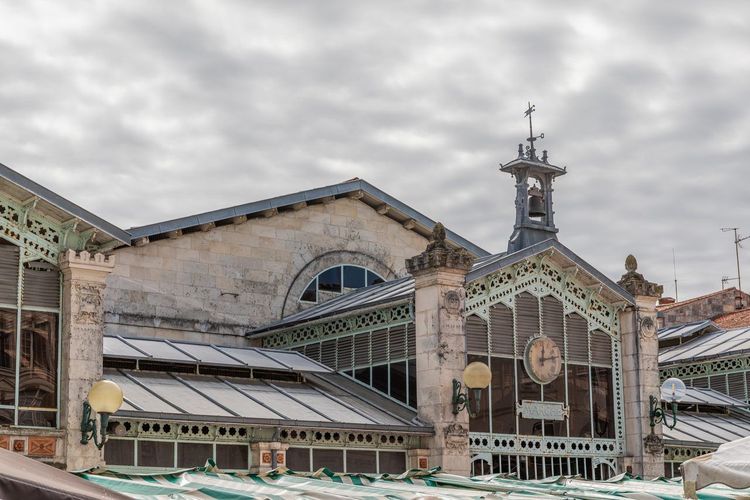
There is no need to fill a basket to enjoy the atmosphere of La Rochelle's markets: simply wandering through them is worth the early start.
The Marché Central (Place du Marché, 17000 La Rochelle, rated 4.6/5 on Google from 2,571 reviews) occupies a 19th-century iron market hall, open every morning. Fishmongers, oyster farmers, cheese sellers and greengrocers follow one another beneath the glass roof, and regulars greet each other from stall to stall. On Wednesdays and Saturdays, the stalls spill out into the surrounding streets: the perfect moment to spot Marennes-Oléron oysters and mussel-rope mussels, which then reappear on the menus of port restaurants.
Further south, near the Minimes, the atmosphere shifts: the marina district moves at a more residential pace, and its food shops cater primarily to locals. The outlying districts also have their own weekly markets, with varying days: check with the tourist office before making the trip.
The best time to visit is at opening, between 8 and 9:30 am: stalls still fully stocked, aisles clear, and vendors happy to talk about their produce.
7. Go for a Bike Ride around the City
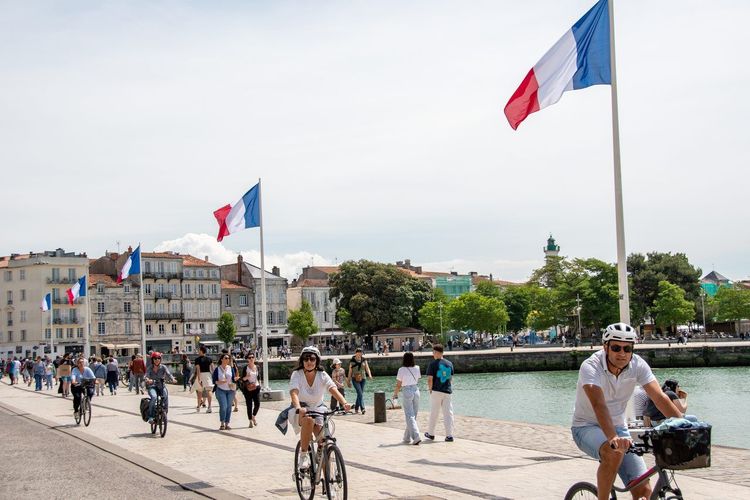
In the mid-1970s, La Rochelle launched the first self-service bike scheme in France: the famous yellow bikes, direct ancestors of the Vélib' and similar systems.
Their successor is called Yélo: around 300 bikes spread across some fifty stations across the urban area, available day and night all year round. Rates remain modest for visitors, well below those of private hire companies such as Cycling Tour, which charge by the hour or by the day. Check the options on the Yélo website before you go: the scheme is primarily aimed at everyday commuting.
For a route, follow the ramparts from the Vieux Port to the Tour de la Lanterne, then head south along the coastal cycle path towards the Minimes. The route is almost completely flat, with the ocean constantly on your right: ideal with children.
Allow one to two hours for a leisurely round trip. In high season, city-center stations empty out quickly after 10 am.
8. Enjoy the Natural Spaces: Marais de Tasdon and Parc Charruyer
Just a few minutes from the ramparts, two green lungs offer a change of pace.
The Marais de Tasdon is a protected wetland where reeds, herons and black-winged stilts share paths and walkways. A smartphone audio walk accompanies the stroll and explains why this marsh matters: it filters water before it reaches the ocean and serves as a stopping point for migratory birds.
The educational panels, designed with children in mind, follow a 'understand, observe, protect' logic. The marsh is about a twenty-minute walk from the Vieux Port, or ten minutes by bike.
To the west of the center, Parc Charruyer (Avenue Général de Gaulle, 17000 La Rochelle, rated 4.5/5 on Google from 5,726 reviews) stretches nearly 2 kilometers across 40 hectares of English-style gardens, laid out between 1887 and 1890 at the foot of the old fortifications and listed as a protected site since 1931. Two streams, the Fétilly and the Lafond, wind beneath the tall trees.
Its real surprise, known to few visitors, is the Charles-Édouard Beltrémieux animal park, created in 1950 across 4 hectares, which is home to around 360 animals and is free to enter. Fallow deer, peacocks, Poitou donkeys and Marans chickens recall the local breeds of the region. With young children, this is probably the best outing on this list.
To combine both, visit the marsh in the morning when the birds are most active, then save the park for a shaded picnic in the late afternoon. Allow 45 minutes to an hour for each.
9. Picnic and Relax on the Minimes Beach
The Minimes beach (Boulevard Aristide Rondeau, 17000 La Rochelle, rated 4.3/5 on Google from 2,205 reviews) faces the largest marina on the European Atlantic coast, with some 5,000 berths. The forest of masts alone is worth the trip.
Supervised in summer, the beach draws families and windsurfers practising offshore alike. Showers, toilets and lawns just behind the seafront make it a great picnic spot, especially in the late afternoon. Only paddle board or catamaran rental will cost you anything.
To get there, 20 minutes by bike along the coast path is all it takes, or a 20-minute sea bus from the Vieux Port (paid, but the journey feels like a mini cruise). Want to compare? Our article on beaches in La Rochelle covers the city's other beaches.
10. Enjoy the Seafront with the Family
La Rochelle's seafront has several free-access playgrounds, spaced out along the promenade to give a rhythm to a long walk with children.
Little ones can let off steam on the play structures while parents enjoy the view from the benches. To turn the walk into a treasure hunt, download Loopi, the app offered by the tourist office: its audio walk 'Voyage au bout du monde' guides families in 12 stops from the Vieux Port to the Pointe des Minimes, and two other circuits tell the story of the Francofolies festival and the remarkable trees of the city center.
Bear in mind that a large part of the family offering is still paid: the Palmilud water park, the tree-climbing course and the aquarium all require a ticket. Excellent additions, but not strictly free activities.
On rainy days, when the seafront loses its appeal, the article what to do in La Rochelle when it rains lists covered alternatives.
In summer, arrive before 11 am: the playgrounds closest to the Minimes fill up as soon as the heat rises, and some have fixed picnic tables that get taken quickly.
11. Attend Outdoor Concerts and Shows
In summer, La Rochelle multiplies its open-air stages on the quays and in public gardens. The program changes every year, but July and August remain the richest period, with amplified music and street arts.
The Mille Plateaux, Centre Chorégraphique National of La Rochelle regularly opens events to the public, including presentations of works in progress: a rare opportunity to see a contemporary dance company before their premiere.
Also note the Fête de la Musique on 21 June, which turns the squares and streets of the center into impromptu stages late into the night. For everything else, check the tourist office calendar or our article on events in La Rochelle a few weeks before your visit.
12. Discover La Rochelle in Explorer Mode
Do you prefer exploring to guided tours? The La Rochelle coastline offers several playgrounds that need no booking.
The coastal path running from the Minimes towards Aytré lends itself to a several-hour walk; to the north, the mudflats of Esnandes alternate with oyster huts and views across to the Île de Ré. At low tide, when the mud is exposed, wading birds come to feed: binoculars recommended.
For sunsets, settle at the foot of the Tour de la Lanterne or on the promenade at the plage de la Concurrence, when the sky blazes behind the masts. Away from the street lights, the jetty beyond the Minimes marina also offers a surprisingly clear starry sky for a city of this size.
Only guided outings (kayaking, sea excursions) require a budget. Walking the coastal path or watching from the ramparts does not.
13. Walk along the Ramparts of the Saint-Martin-de-Ré Fortress
About thirty minutes from La Rochelle, on the other side of the Île de Ré bridge, the Saint-Martin-de-Ré fortress (Place de la République, 17410 Saint-Martin-de-Ré, rated 4.7/5 on Google from 57 reviews) is well worth the excursion.
Listed as a UNESCO World Heritage Site since 2008 alongside other Vauban fortifications, the ramparts encircling the village can be walked freely on foot, with views over the port and the white houses with their colorful shutters. The citadel itself remains a working prison and is closed to the public: the walk takes place along the outer fortifications.
Allow one to two hours to complete the circuit. The island has other villages worth stopping at, listed in the article 13 most beautiful villages around La Rochelle, and its beaches are covered in beaches on the Île de Ré.
One budget point to plan for: if you drive, the bridge has a toll, which is considerably more expensive in summer. To avoid it, cross by bike on the dedicated cycle path, or take a regional Nouvelle-Aquitaine coach from La Rochelle.
14. Practical Tips: Transport, Passes and Discounts in La Rochelle
Before running through this list, a word on what is truly free and what falls under smart budgeting.
The Yélo network covers most journeys: city buses, the sea bus linking the Vieux Port to the Minimes in 20 minutes, and the electric ferry crossing the port to the Michel-Crépeau media library in 5 minutes (daily in season, weekends only from October to March). To reach nearby beaches without a car, TER trains serve Angoulins-sur-Mer and Aytré-Plage, and Nouvelle-Aquitaine regional coaches connect to the islands of Ré and Oléron.
The La Rochelle Océan Pass (also sold as the City Pass) bundles all of this together: unlimited Yélo transport including the sea bus and ferry, TER trains to Rochefort, Saintes and Niort, regional coaches, plus entry to paid sites such as the towers and the Musée Maritime. It comes in 2-, 3- or 7-day versions; the 48-hour option costs €48 for an adult, €28 for a 12-to-17-year-old and €24 for a 4-to-11-year-old. For a weekend focused on the activities on this list, it is not worth it: it becomes good value as soon as you add several paid sites and train or boat journeys.
For parking, the park-and-ride facilities on the outskirts, connected to the center by bus, are far cheaper than city-center car parks, which are often full in summer. To plan a stay that mixes free and paid visits, follow our itineraries visiting La Rochelle in 2 days and visiting La Rochelle in 3 days.

FAQ
What are the best free activities to do in La Rochelle?
The Vieux Port and its three towers viewed from the quays, the municipal museums on the first Sunday of the month, the animal park at Parc Charruyer, the colorful Gabut district, the Marais de Tasdon and the Minimes beach form the essential core. Add a bike ride along the waterfront and a stroll through the Marché Central in the morning.
Which day are La Rochelle's museums free?
On the first Sunday of each month, except in July and August, the municipal museums (including the Musée Maritime) welcome all visitors free of charge. The rest of the time, the Musée Maritime remains free for under-18s and students under 26.
Can you visit La Rochelle's towers without paying?
The exterior of the Tour Saint-Nicolas, Tour de la Chaîne and Tour de la Lanterne can be admired for free. Access to the interiors requires a combined ticket of around €9.50 for all three towers, free for under-26s. The Tour Saint-Nicolas is currently closed for renovation works.
How much time should you allow to visit La Rochelle without spending money?
One day is enough to take in the Vieux Port, the Gabut, Saint-Nicolas and the Marais de Tasdon. Allow two days to add the first-Sunday museums, Parc Charruyer, the Minimes beach and a trip to Saint-Martin-de-Ré.
Where can you park for free in La Rochelle?
Parking in the city center is almost entirely paid, especially in high season. Park-and-ride facilities on the outskirts, connected to the center by bus, remain the most budget-friendly option.
Is La Rochelle a good destination for free family outings?
Yes: the Beltrémieux animal park, seafront playgrounds, the Loopi audio walk, the Marais de Tasdon, the supervised Minimes beach and the Musée Maritime free for under-18s are more than enough to keep children and adults entertained. Only the most popular children's attractions (aquarium, tree climbing, water park) remain paid.
La Rochelle lends itself particularly well to spending nothing, since its heritage is on display from the street rather than behind a ticket booth. Between the Vieux Port towers, the Gabut cabins, the lanes of Saint-Nicolas, the Marais de Tasdon and the ramparts of Saint-Martin-de-Ré, you have more than enough to fill two or three days without reaching for your wallet, aside from the occasional café terrace.
To connect these stops without checking a map at every junction, the Ryo audio guide for La Rochelle offers a 2h30 loop covering 6.1 km, with stories told on the spot, at your own pace and with no booking required.
À lire également