© Shutterstock
 Votre guide Ryo
The Most Beautiful Mountain Biking Trails in France: 12 Destinations to Ride in 2026
You have to have pedaled across the Queyras plateau on a July morning, at 2,800 meters altitude with the snow-capped ridges of the Écrins behind you, to understand what makes France so singular for mountain biking. Nowhere else in Europe will you find within a single country the Alps, the Pyrénées, Breton granite, Provençal scrubland and Norman forests, each offering a radically different experience on two wheels.
This article covers the best places for mountain biking in France: from the legendary crossing of the Massif Central to the coastal loops of Brittany, taking in the singles of the Lubéron or the Pyrenean passes linking Font-Romeu to Collioure. You will find the required skill levels, the best seasons, the essential technical highlights and, between riding stages, suggestions for exploring the towns along the way with the Ryo audio guide, from Ryo's audio-guided tour of Grenoble to that of Marseille, because a cultural stop at the end of the day is sometimes the best recovery there is.
Why France Is an Exceptional Mountain Biking Playground
With 180,000 kilometers of marked trails, France boasts the densest mountain biking trail network in continental Europe. The French Cycling Federation (FFC) and the French Hiking Federation (FFRandonnée) have labeled hundreds of routes, from flat family rides to technical trails that rival the finest Alpine classics.
Two main riding styles coexist here. On one side, long-distance crossings, multi-day routes (3 days to several weeks) that traverse massifs and valleys, often in touring mode with a backpack and trail lodges. On the other, day-ride spots: well-equipped MTB resorts, bike parks, and day loops mapped out by local tourist offices. This diversity is the true richness of the French territory: you can combine a week-long tour through the Pyrénées with an intensive weekend at an Alpine bike park, all without leaving the country.
The variety of landscapes also affects the real difficulty of routes. The same 1,500 meters of elevation gain does not mean the same thing whether it unfolds on Breton schist forest paths (excellent grip, steady gradients) or on the limestone scree of the Queyras (committed sections, constant terrain reading). This guide classifies destinations by massif to help you precisely target what you're looking for.
Mountain Biking in the Alps: Queyras, Beaufortain and Hautes-Alpes
The French Alps alone account for a third of the country's greatest mountain biking routes. Three areas stand out clearly from the rest.
The Tour du Queyras
The Queyras, a regional natural park straddling the Hautes-Alpes and Italy, is probably the best place in France for a multi-day high-mountain mountain bike tour. The star-shaped loop from Ceillac or Aiguilles lets you string together passes above 2,600 meters — col Vieux, col Fromage, col de la Croix — while staying in small, unspoiled villages where hikers' inns still serve local charcuterie.
Required level: advanced to expert. The climbs are long (sometimes 1,200 m of consecutive elevation gain), and certain technical trails require dismounting on a few sections. In return, the descents on the southern slopes offer views of the Écrins glaciers that more than compensate for the effort.
Best season: July to mid-September. The Queyras park receives an average of 300 sunny days per year, but the passes are closed by snow before the end of June.
The Beaufortain and the Tour des Glaciers de la Vanoise
The Beaufortain, in Savoie, is less well-known than the Queyras but equally demanding. The Tour des Glaciers de la Vanoise by mountain bike, 170 km and around 8,000 m of elevation gain depending on the variant, is a benchmark for lovers of great Alpine touring. The massif's distinctive feature: high-altitude pastures teeming with marmots in August, and plunging views of Mont-Blanc from certain vantage points.
The town of Albertville, gateway to the Beaufortain, deserves a cultural stop before or after the effort. If you wish to extend your exploration beyond the trails, the Ryo audio-guided tour of Grenoble, two hours' drive away, takes you in the footsteps of the Alpine capital and its military history.
The Hautes-Alpes: Gap and Its Surroundings
The Gap area offers a remarkably varied mountain biking scene at a more accessible altitude (900–1,800 m). The singles of the Dévoluy and the loops around Lac de Serre-Ponçon (Lac de Serre-Ponçon, 05190 Savines-le-Lac, rated 4.7/5 on Google with 2.1K reviews) delight intermediate-level riders seeking great descents without the physical commitment of the high Savoyard passes.
The area is accessible in 4h30 from Paris via the A7 then the N85 (Route Napoléon), making it a realistic destination for a long weekend from the capital.
Mountain Biking in Brittany: From the Wild Coast to the Interior Forests
Brittany sometimes divides riders accustomed to Alpine terrain: no great elevation changes here, but a quality of trails and variety of landscapes that more than compensate. The peninsula offers three distinctly different experiences.
The Wild Coast of Finistère and the MTB Long-Distance Trails
Finistère features several coastal routes alternating between moorland ridges, customs officers' paths overlooking the sea, and oak woods twisted by the Atlantic wind. The GTV Finistère (Grande Traversée VTT du Finistère) offers 350 km of marked route from the north to the south of the department.
The technical difficulty remains moderate — it's a route suited to endurance cyclists rather than technical riders — but the cumulative elevation over several days can come as a surprise. Allow 3 to 4 days for a full crossing, with overnight stops at Morlaix, Châteaulin and Quimper.
Quimper is the natural stopover town for the Finistère crossing. Beyond the crêpes and cider, the medieval old town deserves exploration on foot after putting the bike away. The Ryo audio guide of Quimper covers the 23 essential highlights of the capital of Cornouaille in barely an hour's walk — the perfect complement to an active recovery evening.
The Forests of Brocéliande and Paimpont
The Paimpont forest (Forêt de Paimpont, 35380 Paimpont, rated 4.5/5 on Google with 157 reviews) (also known as Brocéliande, the setting of Arthurian legend) offers single-track trails through stands of centuries-old oaks. The atmosphere is unique: light filtered through the canopy, dark earth underfoot and sudden clearings give the terrain a mysterious character that is part of the experience itself.
The route known as "Brocéliande by Mountain Bike" covers 90 km over two days with stops at Paimpont and Mauron. Intermediate level, ideal for families with children from 12–13 years old on well-maintained mountain bikes.
Rennes, 35 km to the east of the forest, serves as the perfect logistical base. The city has a wide range of accommodation and its own cultural attractions, including the Ryo's audio-guided tour of Rennes, which explores the historic heart — from the medieval market halls to the Parliament of Brittany — in 1h50 of strolling.
The Morbihan and the Quiberon Peninsula
Morbihan is the Breton territory that surprises most on a mountain bike. The Via Oceana follows the Gulf of Morbihan along paths that alternate between coastal and forest sections, with constant views of the islands and the inland sea. The route is broadly easy, making it an ideal option for a first major Breton loop with family or as a warm-up before tackling more demanding massifs. Allow two days to loop around the gulf starting from Vannes, with a night in Locmariaquer.
Mountain Biking in the Pyrénées: From Font-Romeu to Collioure
The mountain bike crossing of the Pyrénées from Font-Romeu to Collioure is one of France's great iconic routes. Around 230 km, from the Cerdagne plateau all the way to the Mediterranean Sea, with a cumulative elevation gain in the range of 8,000 to 10,000 meters depending on the chosen variant.
Stage 1: Font-Romeu and the Cerdagne Plateau
Font-Romeu (1,800 m altitude) is the ideal starting point on the Pyrénées-Orientales side. The Cerdagne plateau offers wide, well-rolling tracks at high altitude, perfect for acclimatizing before the more demanding passes. The Via Lactea, a local 45 km loop, is the best possible warm-up.
Stage 2: The Corbières Crossing
From Font-Romeu, the descent into the Corbières shifts dramatically in character: altitude drops, vegetation changes from Scots pine to dry scrubland, and the terrain becomes more technical (limestone rocks, roots, narrow paths). This is where the crossing is most selective — the singles between Sournia and Saint-Paul-de-Fenouillet are among the finest mountain bike trails in the south of France, largely unknown to the general public.
Stage 3: The Descent to the Sea and Collioure
Arriving in Collioure is one of the most striking moments mountain biking can offer: after three to five days of crossing, the Mediterranean appears around a bend between two vineyards. The town itself is well worth an extra night — its painted alleyways, royal castle and lively harbor make it one of the most beautiful small towns on the Côte Vermeille.
Level for the full crossing: advanced to expert. Plan good water autonomy (some scrubland sections have no water supply for 30–40 km), a full-face helmet for technical descents and tires suited to dry limestone.
Mountain Biking in the Cévennes and the Massif Central
The Cévennes Crossing
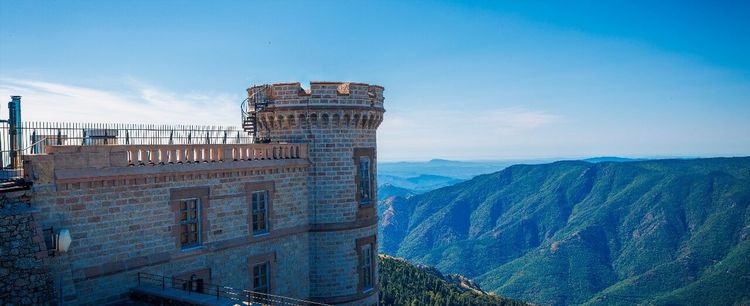
The Cévennes mountain bike crossing is less well known than its hiking equivalent (the GR70 Stevenson Trail), but it is every bit as beautiful. The route follows the ridges of the high Cévennes between Mont Aigoual (1,567 m) and Alès, over roughly 120 km in three days, through a landscape of schist, chestnut trees and dry-stone villages.
The Mont Aigoual is the essential starting summit. Its meteorological observatory, the only one still operating at altitude in France, open since 1894, is accessible by mountain bike via the cols road from Meyrueis or via trails from the Gard side. The northern descent toward the Hérault valley is vertiginous and demands serious technical mastery.
Level: intermediate on the ridges, advanced on the descents. The crossing is rideable from May to October.
The Massif Central Crossing
Longer, wilder, more demanding: the Massif Central mountain bike crossing covers around 400 km from the Auvergne volcanoes to the Cévennes or the Grands Causses. It's a minimum week-long route that passes through sometimes very isolated areas — careful logistics regarding water, supplies and overnight stops are essential.
The Puy de Dôme (Sommet du Puy de Dôme, 63870 Orcines, rated 4.8/5 on Google with 24K reviews) is not accessible by mountain bike (prohibited at the summit), but the plateaus and singles around Clermont-Ferrand make for excellent day-ride loops to get used to volcanic terrain before setting out on a major crossing. The city of Clermont-Ferrand is worth a stop in itself: its Volvic-stone cathedral is one of the rare entirely black Gothic cathedrals in Europe.
To explore the city between rides, the Ryo tour of Saint-Étienne, 80 km to the northeast, offers a route of 19 audio stops behind the scenes of a city that invented everything, from firearms to the bicycle itself.
The Pilat Regional Natural Park
Between the Loire and the Rhône, the Pilat Park is the mountain biking playground of Saint-Étienne and Lyon. Its ridges peak at 1,432 meters (Crêt de la Perdrix) and offer views of the Alps on clear days. On the technical side, the Pilat forest singles are among the smoothest in the Massif Central: sandstone terrain with good grip, steady gradients and few sharp rocks. A 30 to 40 km loop starting from Pélussin is enough to get a taste of the massif's atmosphere.
Mountain Biking in Provence and the Lubéron
The Lubéron by Mountain Bike
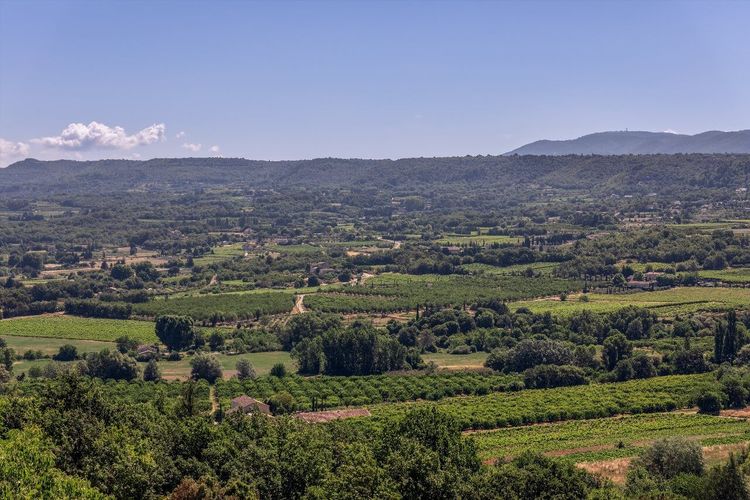
The Lubéron is undoubtedly the most popular mountain biking destination in the south of France for intermediate-level riders. The regional natural park offers more than 150 km of marked trails on white limestone terrain, between vineyards, lavender fields and hilltop villages. Loops starting from Apt, Forcalquier or Bonnieux allow you to plan days of 40 to 70 km with reasonable elevation gains (600 to 1,200 m).
The Lubéron's distinctive feature: the light. Pedaling along its limestone ridges in the late afternoon, with the ochre-and-stone villages glowing in the raking light, is an experience that goes well beyond sport. Make sure your brakes are in perfect condition: the descents into Lubéron villages tend to get fast quickly.
Les Alpilles and the Arles–Avignon–Nîmes Triangle
The Alpilles, that small limestone massif between Arles and Avignon, pack in short but technical and spectacular trails. The Baux-de-Provence loop (35 km, 800 m elevation gain) is considered one of the finest single-day loops in the south of France: exposed ridges, 360° views, descents on rocky terrain.
Arles and its extraordinary Roman heritage are a natural end-of-day visit after mountain biking. The Arena, the Ancient Theatre and the Alyscamps make for a first-rate cultural stop, which the Ryo audio-guided tour of Marseille complements nicely: Marseille, 80 km to the south, is the other major city in the Provence area to explore with the Ryo app.
The Sainte-Victoire Mountain and the Verdon
The Sainte-Victoire mountain (immortalized by Cézanne) offers advanced-level trails on its southern slopes. Note: mountain bike access is regulated there and certain trails are closed to bikes to protect the flora. Check with the Office National des Forêts before setting out.
The Verdon, two hours to the east, is a highly technical mountain biking territory: the gorge cliffs, the improbable color of Lac de Sainte-Croix and the singles overlooking sheer drops make this place unforgettable, but it is strictly reserved for experienced riders.
Mountain Biking in the Jura and the Vosges
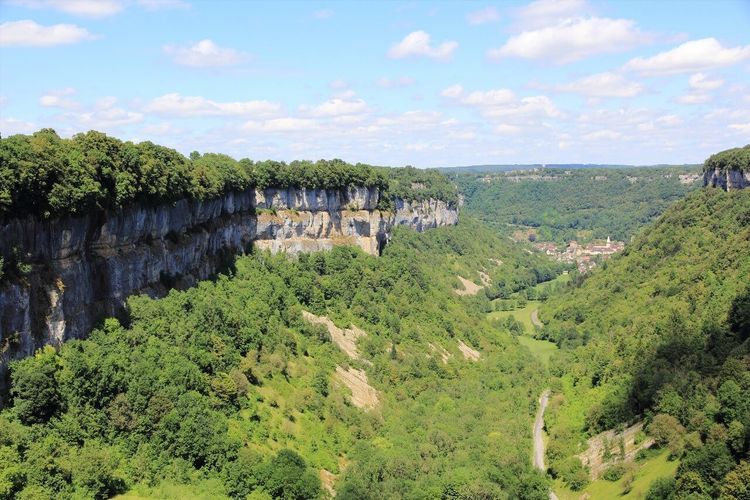
The Jura: Plateaus, Forests and Lakes
The Jura is a revelation for mountain bikers seeking wide-open spaces without high mountains. The karst plateaus stretch for dozens of kilometers at altitudes of 700 to 1,200 meters, covered in fir trees and dotted with dramatic reculées — those steep-sided valleys typical of the Jura landscape, of which the Reculée de Baume-les-Messieurs (Village de Baume-les-Messieurs, 39210 Baume-les-Messieurs, rated 4.7/5 on Google with 1.4K reviews) is the most spectacular example.
The Transjurassienne VTT offers a route of 580 km crossing the massif from north to south. An 8 to 12-day program depending on pace, with trail lodge accommodation every 30 to 50 km. Intermediate level for most of the route.
The city of Besançon, gateway to the Jura and UNESCO-listed for its Vauban citadel, is an ideal logistical base. The mountain bike loops of the Lomont and the Plateau des Mille Étangs are accessible within less than an hour's drive from the city center.
The Vosges: From the Ridge to the Vineyard
The Alsatian Vosges offer a particularly enjoyable mountain biking terrain: the summit ridges (the "Hautes-Vosges") provide panoramas over Alsace and the German Black Forest on clear days, while the eastern slopes tumble down to the vineyards of the Vosges foothills.
The Vosges ridge trail for mountain bikes is a variant of the GR5 adapted for riders. It follows the Vosges summits for around 200 km, from the Donon in the north to the Grand Ballon in the south. The return by train from Strasbourg or Colmar is perfectly feasible — both cities have train stations with luggage storage where you can drop your belongings during the route.
Mountain Biking in the Périgord and the Southwest
The Dordogne by Mountain Bike: Between Cliffs and Bastide Towns
The Périgord is not the first place that comes to mind when you think of mountain biking, and that is precisely its charm. The trails between Sarlat, Les Eyzies and Beynac wind through landscapes of golden limestone, tranquil rivers and cliffs riddled with prehistoric caves. Elevation gains are reasonable (300 to 700 m per day), making the area accessible to intermediate-level riders with no high-mountain experience.
The Black Périgord by mountain bike is best discovered over 3 days on a loop from Sarlat: first day toward Domme and Castelnaud, second day toward the Les Eyzies caves, third day back via the Bergerac vineyards. In Bergerac, Ryo offers a Ryo's audio-guided tour of Bergerac in 17 audio stops — a perfect waterside cultural pause before heading home.
The Landes and the Basque Coast by Mountain Bike
The Landes territory has long been underestimated for mountain biking. The pine forest of the Landes de Gascogne, the largest artificial forest in Europe with 1 million hectares, nevertheless offers a very effective cross-country mountain biking terrain: sandy soil that absorbs shocks, endless forest tracks, minimal carrying. It's the dream destination for racking up kilometers at a good pace, and also ideal for family outings on flat terrain.
On the Basque coast, trails between Biarritz and Saint-Jean-Pied-de-Port cross very different surfaces: coastline, bocage, Basque beech forests. A 2-day loop from Bayonne is particularly convenient, the city being well served by train from Bordeaux and Paris. And at the Paris end of the line, our audio walking tour from the Louvre to Notre-Dame fills an afternoon in twenty-three stops.
Mountain Biking in Normandy and Picardy
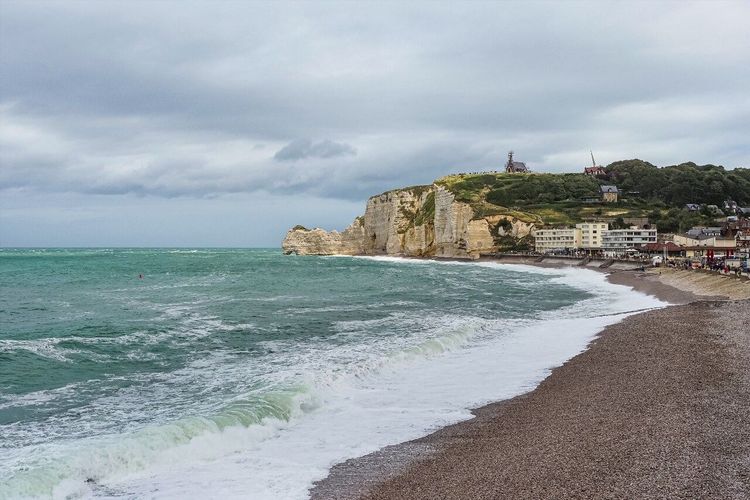
Normandy by Mountain Bike: Royal Forests and Dramatic Coastlines
Normandy is the great surprise of French mountain biking for riders coming from northern Europe. Its state forests — those of Écouves, Lyons and the Perche in particular — offer well-laid circuits on clay terrain, demanding in wet conditions but pleasant in summer. The Norman coastline, for its part, features coastal hiking paths adapted for mountain bikes on certain sections, with views of the chalk cliffs of the Côte d'Albâtre.
The city of Amiens, at the crossroads of Normandy and Picardy, is a first-rate cultural stop. Its Gothic cathedral, the tallest in France at 42.3 meters under the vault, is a must-see for any rider crossing the region. To explore the city easily between rides, the Ryo audio guide of Amiens offers 27 audio stops over 7.4 km — one of the richest walks in the Ryo network in northern France.
The Ardennes and the Meuse Valley
The French Ardennes pack in quality mountain biking terrain that is often overlooked by guidebooks: beech forests on the Ardennes plateau, singles along the Meuse, and climbs toward the Franco-Belgian ridges offer a far more varied relief than you might expect. The Véloroute des Ardennes (VVV) features marked mountain bike variants, and the tourist offices of Charleville-Mézières and Sedan publish free paper guidebooks.
Mountain Biking in Alsace and Lorraine
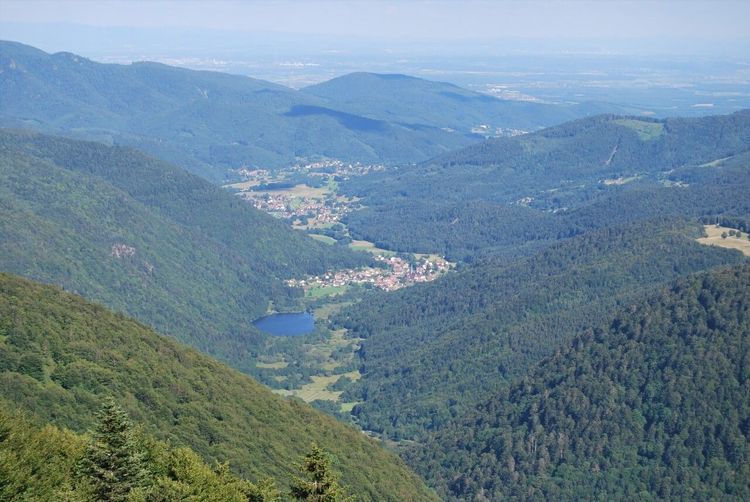
The Trails of the Alsatian Vosges and the Wine Route
Alsace combines two cycling worlds you won't find side by side anywhere else in France: the Vosges summits (wild, wooded, little-visited outside summer) and the foothill vineyard (gourmet roads and tracks, flower-filled villages, gastronomic stops). A mountain bike route combining both over 3 days from Colmar is one of the most enjoyable experiences in the Grand Est region.
The city of Colmar is ideally placed for this combination: you can set out early in the morning toward the Vosges ridges, descend in the afternoon down the eastern slope via forest singles, and end the day in Alsace's Little Venice. Required level: intermediate for the ridges, beginner to intermediate for the vineyard sections.
Lorraine and the Forests of the Grand Est
The Moselle and the Moselle forests offer lesser-known but well-marked trails around Metz and the Forêt domaniale de Haye (near Nancy). These areas are particularly suited to families and mountain bike tourers who want to ride without committing to long crossings.
Before heading back to Paris, a detour to Reims is a must. The cathedral where 33 kings of France were crowned and the champagne cellars carved into the chalk make the city unmissable. The Ryo audio-guided tour of Reims covers the essentials in 1h40 of walking — a perfect way to spend a stopover evening.
How to Prepare Your Mountain Bike Tour in France
Choosing the Right Duration and Route
The first question to ask is not "where" but "how long." A 2-day loop suits intermediate-level riders looking for a physical outing without heavy logistics. A 3 to 5-day crossing requires a well-thought-out bikepacking bag (ideally under 10 kg), a list of lodges booked in advance and a basic knowledge of bike mechanics for minor repairs. Beyond a week, you enter the category of major crossings, with the autonomy and supply logistics that implies.
When it comes to choosing a route, French resources are plentiful: the FFC (French Cycling Federation) website lists labeled routes; VTT Rando, Wikiloc and Komoot allow you to download GPX tracks shared by the community.
Accommodation Logistics
For major crossings, two models dominate. The trail lodge, often run by hiking associations or rural families, is the most economical option (€15–30 per night half board) and the most convivial. The village hotel offers more comfort but less flexibility in timing. In both cases, book well in advance in July–August: the best addresses fill up from May onward.
Alternative for less-frequented routes: wild camping is legal in France as long as it is practiced outside prohibited zones (national parks, certain state forests) and you pitch camp after 8 pm and strike it before 9 am. This gives absolute freedom, but requires extra equipment (ultralight tent, sleeping mat, stove) that adds weight to your load.
Transporting Your Bike
The train is the simplest solution for reaching your starting point. SNCF allows unassembled bikes on most TGV trains (subject to booking a bike space, around €10), and regional TER trains often accept bikes in a dedicated area without prior booking. Check the policy of each line before you go: the rules vary by region.
For Alpine or Pyrenean destinations from Paris, carpooling with a roof rack often remains more flexible than the train for full-suspension bikes whose panniers do not fit easily onto SNCF rails.
Safety and Right of Way
Mountain biking in France is governed by a few simple but essential rules. Mountain bikes are prohibited on hiking trails (classified GR or PR) unless otherwise indicated on the ground or in guidebooks. National parks (Vanoise, Écrins, Cévennes, Pyrénées…) each have their own regulations: check their official websites.
On the safety side, wearing a helmet is legally optional for adults but strongly recommended. On multi-day crossings, a repatriation insurance policy (included in many premium bank cards) can save you from unpleasant surprises in the event of a fall at altitude or in an isolated area.
What Gear to Pack for a Multi-Day Mountain Bike Tour
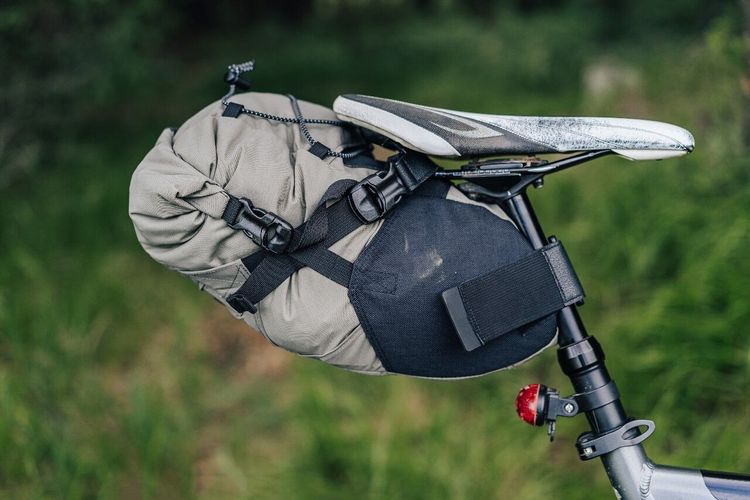
The list varies depending on the duration and technicality of the route, but some items are non-negotiable whatever the outing.
The bike itself: for multi-day crossings in mountain terrain, a full-suspension bike with 120 to 150 mm of travel in 29 inches offers the best compromise between climbing efficiency and descent safety. 29-inch wheels roll better on rocky terrain and clear obstacles more easily. For dry limestone scrubland outings (Lubéron, Corbières), semi-slick tires with a rolling center tread considerably speed up progress.
Water: plan a minimum of 2 liters of capacity (bottle + hydration pack such as a Camelbak), and identify springs and drinking water fountains on your GPX track. In the Cévennes and Corbières in summer, sections without water can exceed 40 km.
Basic toolkit: 11-function multi-tool, two inner tubes (or tubeless repair kit), tire levers, hand pump, two quick links, chain breaker. These items weigh under a kilogram and can save you from calling a taxi from a 2,000-meter pass.
Navigation: a cycling GPS (or a handlebar mount for your smartphone) and a GPX track downloaded in advance to work offline. In mountain areas, 4G coverage is often absent on ridges — always carry a paper map as a backup to your GPS for high-mountain routes.
Which App to Use for Your Mountain Biking Routes?
For real-time navigation on your mountain bike routes, Komoot and Wikiloc are the community references — they aggregate millions of GPX tracks shared by riders from around the world and allow filtering by terrain type, distance and level.
But mountain biking is not only about trails. When evening comes and it's time to explore the stopover town where you're spending the night, Ryo takes over. The Ryo app offers audio-guided tours in dozens of French cities, from Marseille to Reims, from Toulouse to Bourges, with recorded audio content that adapts to your walking pace.
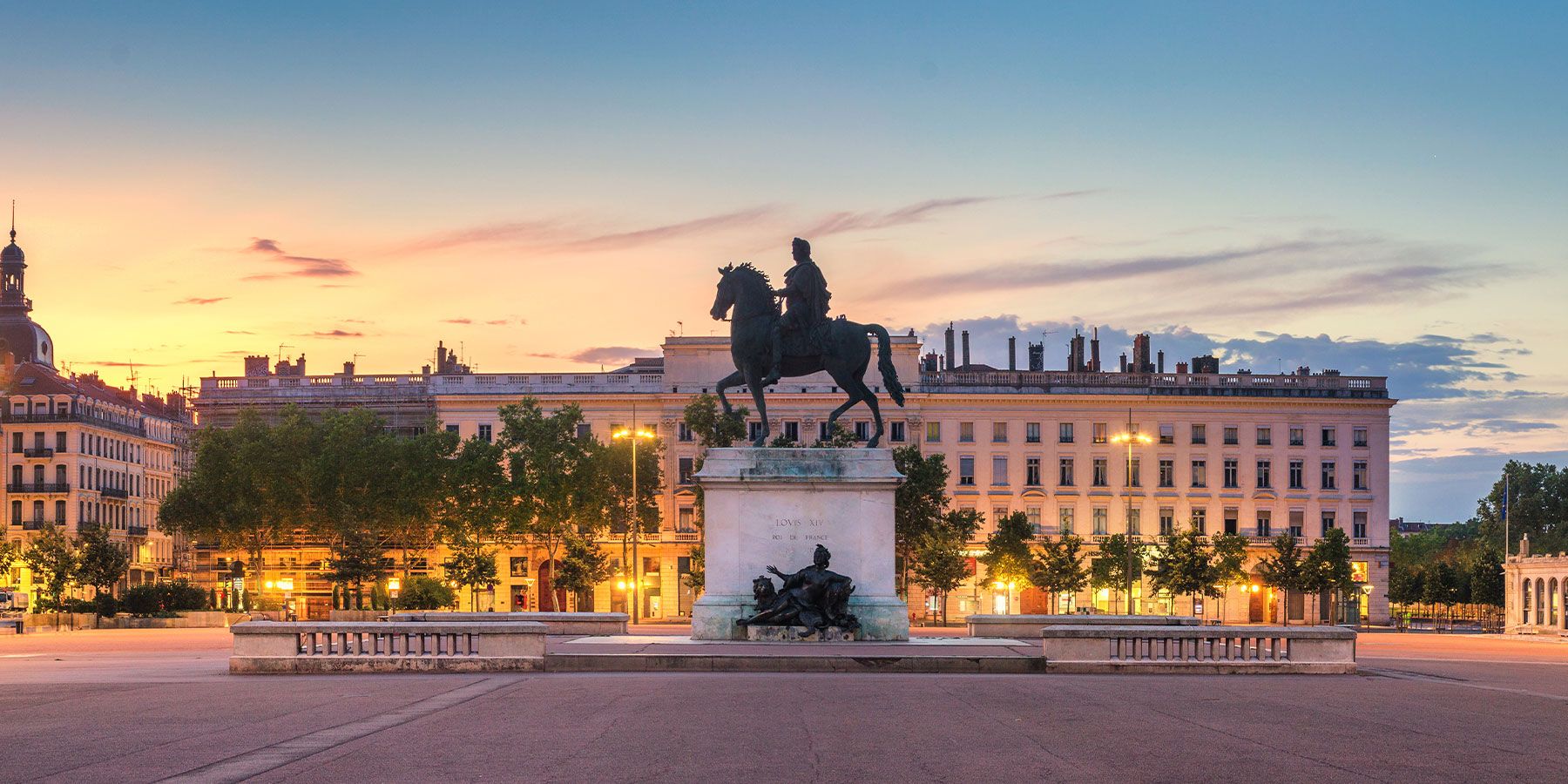
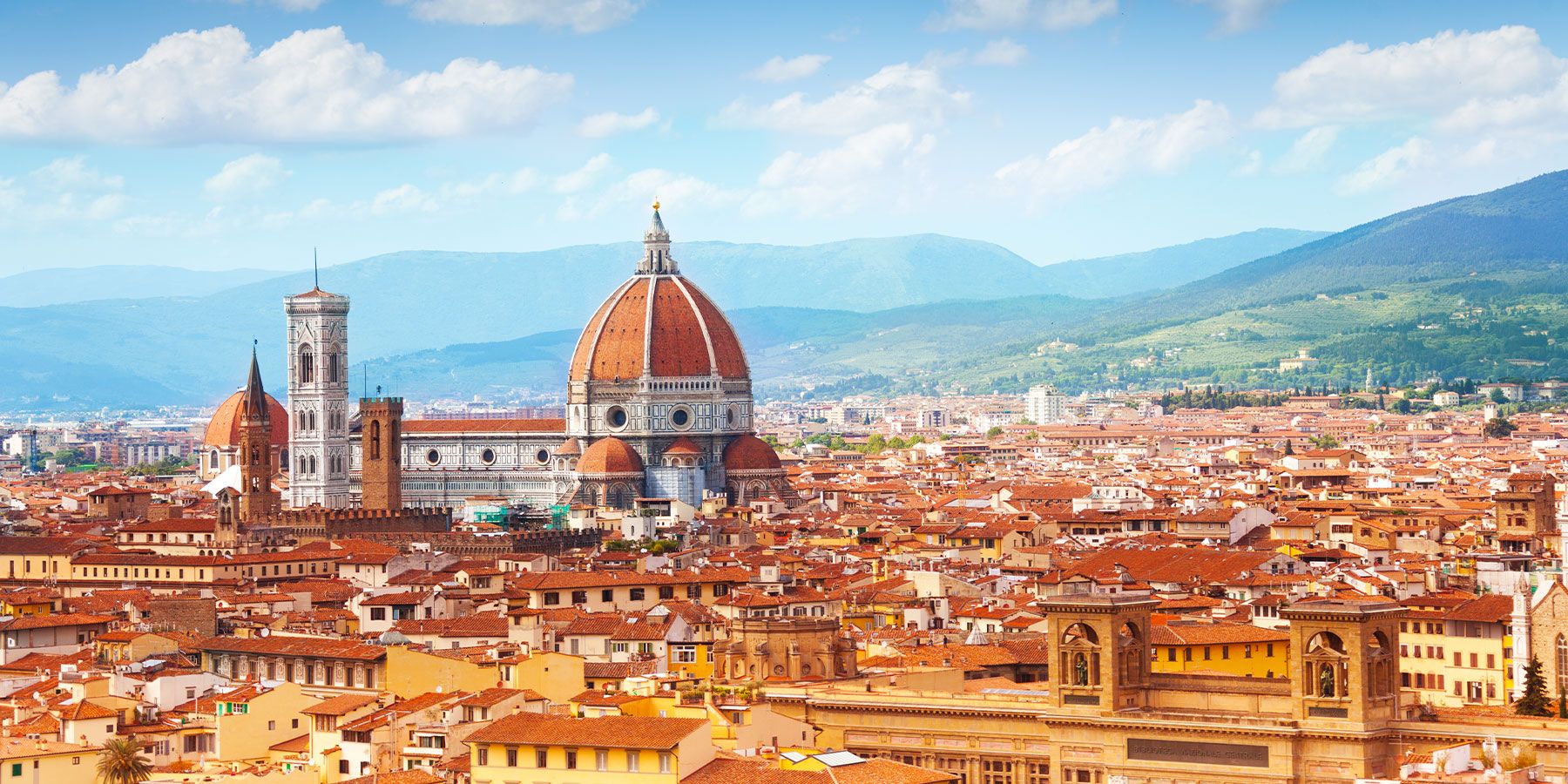
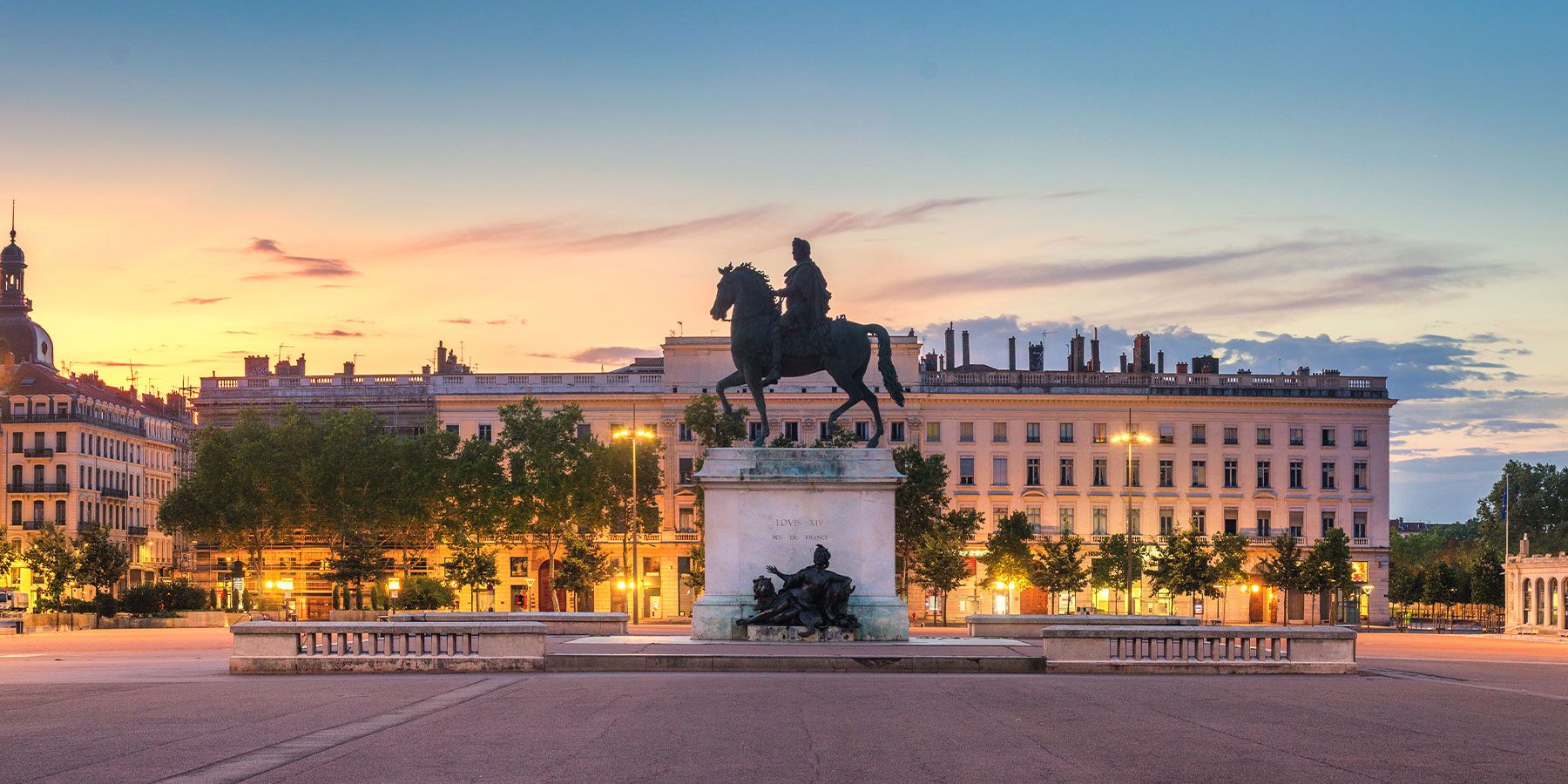
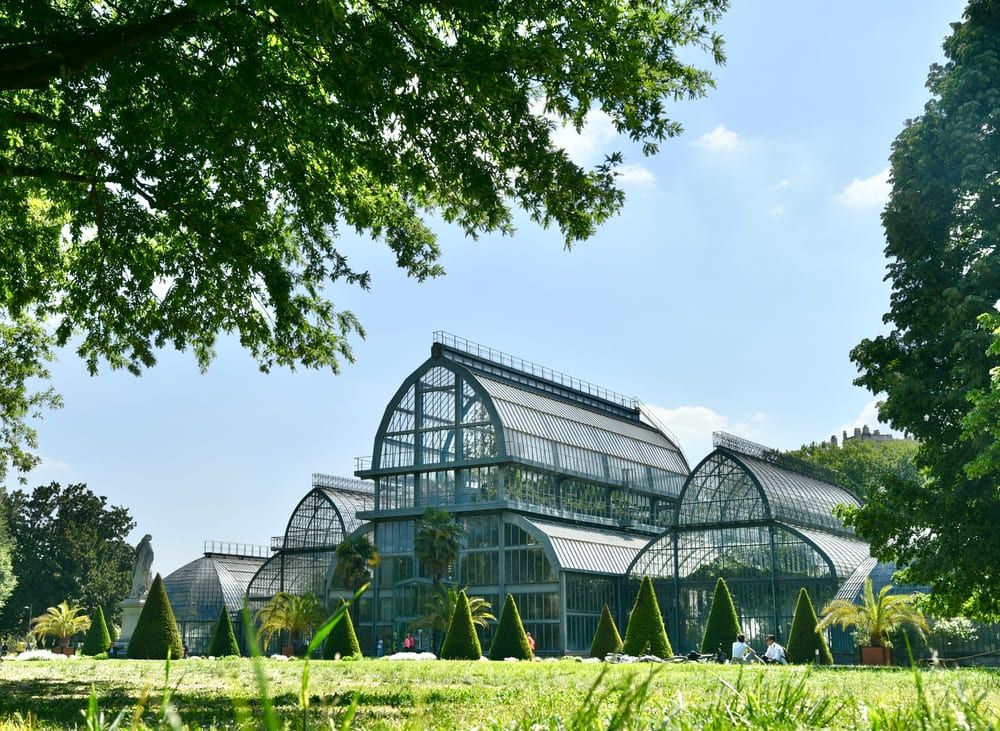
The benefit for touring mountain bikers is obvious: after a demanding day in the saddle, exploring a city on foot with the Ryo audio guide is the lightest way to keep discovering. No prior research, no bulky paper guide — just your earphones and your curiosity. The Ryo tour of Toulouse (23 audio stops in 2h40), the Ryo tour of Bourges (22 audio stops in 1h20) and the Ryo tour of Marseille (24 audio stops in 3h) are all ready-made cultural stops to slip into your mountain biking itinerary.
FAQ
What Is the Best Region in France for Mountain Biking?
It all depends on your level and expectations. For vast high-mountain spaces and advanced multi-day crossings, the Alps (Queyras, Beaufortain) and the Pyrénées are unmatched. For a first major crossing accessible from intermediate level, Brittany and the Jura offer an excellent balance of richness and difficulty. For fans of technical terrain at lower altitude, the Lubéron, the Cévennes and the Pilat are reliable choices. Each massif has its own signature — it's better to choose based on your riding style rather than searching for a universal "best."
What Is the Ideal Duration for a Multi-Day Mountain Bike Tour?
Three days is the minimum to truly feel the spirit of a great crossing — on the second day, muscles are warmed up and a natural rhythm sets in. For routes like the Pyrénées crossing (Font-Romeu to Collioure) or the Tour du Queyras, plan 5 to 7 days to take time visiting the villages along the way. Major crossings such as the Massif Central or the Transjurassienne require 10 to 14 days.
Is It Better to Travel Light or Bring Bivouac Gear?
The answer depends on the route. On marked crossings where trail lodges are close together (Queyras, Cévennes, Brittany), traveling ultralight with only the bare essentials is preferable: you'll ride better and enjoy more. On wilder, less-traveled routes (deep Ardennes, certain sections of the Massif Central), carrying a bivouac tent gives you precious freedom if you couldn't book ahead or an unexpected event extends your stage.
What Type of Mountain Bike Is Recommended for These Crossings?
For multi-day mountain crossings (Alps, Pyrénées, Massif Central), a full-suspension mountain bike with 120 to 150 mm of travel in 29 inches is the most versatile choice. It absorbs the shocks of technical terrain and remains efficient on climbs if you choose a modern geometry frame. For crossings on more rolling terrain (Brittany, low-altitude Jura, Landes), a hardtail (front suspension only) or even a gravel MTB is sufficient and will gain you speed and comfort over long distances.
Are There Specific Rules for Mountain Biking in Natural Parks?
Yes, each national or regional natural park has its own regulations. In national parks (Écrins, Vanoise, Cévennes, Pyrénées), mountain biking is generally permitted only on roads and tracks, not on hiking trails. In regional natural parks (Lubéron, Queyras, Pilat), the rules are often less strict but vary by zone. Always consult the relevant park's website before setting out.
What Time of Year Is Best for Mountain Biking in France?
The ideal season varies by massif. June to September for the Alps and Pyrénées (passes snow-covered before June, frequent storms in autumn). April to October for the Cévennes, Lubéron and Massif Central at low and mid altitude. Year-round or nearly so for Brittany, Normandy and the Landes (frequent winter rain but rideable terrain). Avoid July–August in Mediterranean scrubland: fire risk closes many paths between June and September in the Bouches-du-Rhône and the Var.
Where Can I Find Guidebooks and GPX Tracks for Mountain Bike Routes in France?
Several resources complement each other: the FFC website (ffc.fr) lists labeled routes with levels and distances. The apps Komoot, Wikiloc and Outdooractive offer downloadable GPX tracks. The CDT (Departmental Tourism Committees) publish paper guidebooks available at tourist offices, often free and highly detailed on local specifics (water points, lodges, technical passages). For major crossings, regional associations of the FFRandonnée also publish dedicated mountain biking guides.
Conclusion
France concentrates within a single territory a diversity of mountain biking terrain that few European countries can match: from the Alps to the Breton bocage, from the Cévennes gorges to the Basque beaches, from the Pyrenean passes to the Alsatian vineyards. The most beautiful mountain biking routes in France are not only sporting challenges — they are gateways to territories, cultures and landscapes that deserve to be explored beyond the trails.
After each great riding stage, think about setting the bike aside and discovering your stopover town in a different way. The Ryo audio guide covers dozens of French destinations with ready-to-use audio-guided tours, from the Ryo tour of Toulouse to the shores of the Mediterranean. Download the Ryo app before you leave and turn every stopover evening into a cultural exploration.
À lire également