© Shutterstock
 Votre guide Ryo
Visiting Quimper Without a Car in 2026: On Foot, by Bike and by Bus
Quimper never really needed a car. Its historic centre nestles within a radius of less than a kilometre around Saint-Corentin Cathedral, and the SNCF station drops its passengers a quarter of an hour's walk from the Odet quays. Visiting Quimper without a car is therefore not a constraint to put up with; it is often the most comfortable option: no parking space to hunt for on rue Kéréon on a Saturday afternoon, no tank of petrol to budget for a trip to Concarneau.
This guide explains how to reach the capital of Cornouaille by train from Paris, Nantes or Rennes, how to combine walking, bike hire and the Qub bus network once you are there, and how to go as far as the Pointe du Raz, Bénodet or Pont-Aven without ever touching a steering wheel. You will also come across lesser-known spots, such as the Locmaria Priory garden or the Stangala gorges, reachable by bike in under twenty minutes. Enough to build a complete stay, from the first train to the last stroll by the water, without a minute lost in traffic or a parking ticket at the meter. To get a feel for the historic centre before you even step onto the platform, the Ryo audio-guided tour of Quimper already maps out the route in 23 stops.
Getting to Quimper Without a Car
Everything starts with the outward journey, and on this point Quimper has a clear advantage over many Breton towns: its station is right in the centre, not twenty minutes away on the outskirts.
Train Connections from Paris, Nantes and Rennes
From Paris, the direct TGV from Gare Montparnasse reaches Quimper in about 3h30 to 4h, with several return trips a day and a price that drops below 40 euros if you book early. Journeys with a change at Rennes lengthen the trip slightly but multiply the departure slots, useful on a busy weekend.
From Nantes, allow between 2h30 and 3h30 depending on the service, sometimes with a change, a practical option for anyone linking a tour of the west without going back through Paris. From Rennes, the journey takes about 2h to 2h30, with frequent TER trains if the direct service doesn't suit your timetable. In all three cases, booking a few weeks ahead can often halve the fare, a detail that matters when you build an entire stay without a car and therefore without fuel or toll costs.
Low SNCF fares and discount cards (Avantage, Jeune, Senior) noticeably cut the bill for those who book early and travel light. The SNCF Connect app remains the easiest way to compare timetables and activate an e-ticket, handy when you travel without a car and therefore without a boot to store a paper file.
From the Station to the Town Centre on Foot or by Bus
The Quimper station is about 1.2 km from Saint-Corentin Cathedral, or fifteen to twenty minutes of easy walking along avenue de la Gare then boulevard Dupleix. This is the route most travellers arriving by train follow, and it already crosses part of the modern centre.
If you would rather not walk with your luggage on arrival, several Qub bus lines leave directly from the station forecourt and drop you in a few minutes in the heart of Vieux Quimper, at the Mairie or Saint-Corentin stop depending on the line. A single ticket costs 1.50 euros (valid for one hour with changes), the network becomes entirely free at weekends, and the QUB City shuttle running through the centre is free all week. The Qub app shows real-time timetables, handy when you step off the train with no bearings and no car.
Getting Around Quimper Without a Car
Once you are there, the question is no longer whether you can do without a car, but which mode to choose depending on the weather and the distance to cover.
Exploring the Town Centre on Foot
Vieux Quimper can be explored entirely on foot: from the cathedral to the Odet quays, allow twenty minutes to walk across the whole historic centre from one end to the other. The cobbled streets and half-timbered alleys are not accessible by car anyway, which makes walking the default mode as soon as you pass the old ramparts.
The pavements are generally flat, with no notable slope, which makes the town accessible to families with pushchairs and to people with reduced mobility on the main routes. Only a few cobbled lanes around rue Kéréon need a little more care in the rain, which is frequent in Brittany.
Cycling and the Qub Bus Network in the Urban Area
For more outlying districts such as Locmaria or the Lanniron estate, the bike takes over: the VéloQUB service hires out bikes (including electric models) and several private hire shops offer day rates, without a big-city style self-service station system. Allow 20 to 25 minutes by bike between the centre and the Stangala gorges, compared with more than an hour on foot.
The bus network covers around fifteen urban lines with frequencies of roughly 15 to 20 minutes during the day. To choose between the two, a simple rule: the bike wins on trips of 2 to 5 km without steep hills, while the bus is better on days of pouring rain or with heavy luggage. Many visitors combine the two during the same stay, bus on arrival with the suitcases, then bike for day outings.
The Qub day ticket costs 4 euros on weekdays, paying for itself by the third trip, and you pay nothing at all on Saturday and Sunday: hard to compete with a town-centre car park charged by the hour.
For the centre, you won't even need to choose: the Ryo audio-guided tour of Quimper is meant to be followed on foot, built around 23 stops in the town centre, with no paper map and no car to park between two stops.
Vieux Quimper on Foot: Cathedral, Lanes and Odet Quays
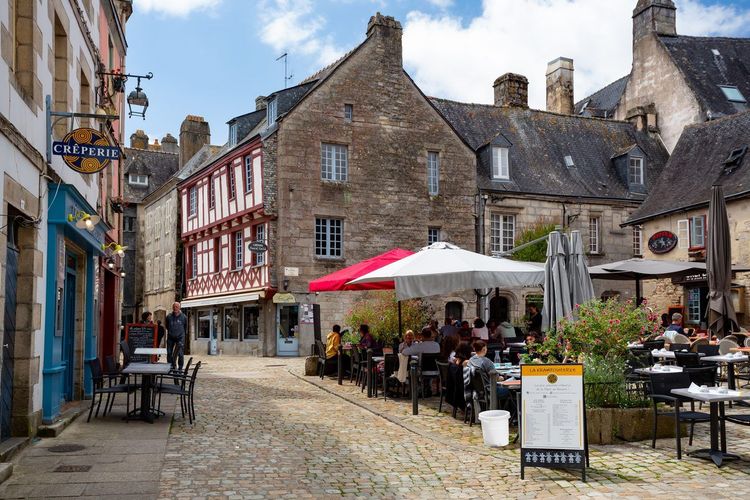
This is where most of what people come to Quimper for is concentrated, and everything can be visited in a little over half a day of walking.
Saint-Corentin Cathedral and Place Saint-Corentin
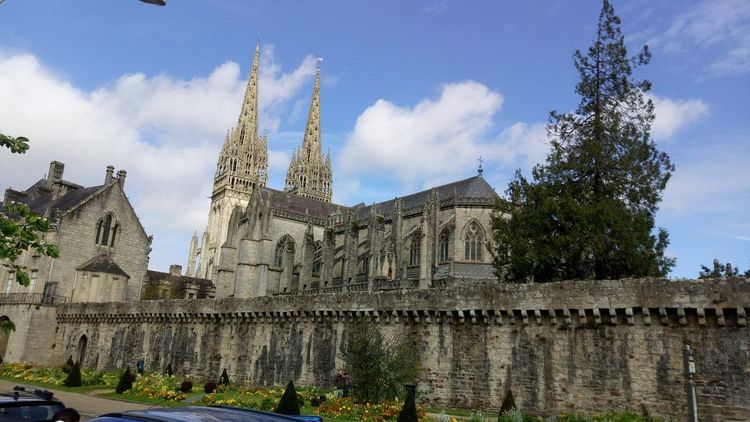
The Saint-Corentin Cathedral dominates the town with its two stone spires rising to more than 75 metres, a building site begun in the 13th century and completed only in the 19th. Inside, the 15th-century stained-glass windows tell the story of the founding bishops, and the choir, slightly off-axis from the nave, has intrigued visitors for generations, with no definitive explanation.
If you are here on a Sunday, book the tourist office's “Quimper from Above” visit: a little over 200 steps up the spiral staircase of the south spire, narrow and sometimes daunting, lead to a 360° panorama over the slate roofs of the centre and the surrounding hills, a viewpoint you won't find anywhere else in town.
Right in front, Place Saint-Corentin hosts a market several mornings a week and serves as a central landmark for finding your way around Vieux Quimper. It is also where most visits begin, whether organised or improvised.
The Half-Timbered Lanes: Rue Kéréon, Rue Saint-Nicolas and Place au Beurre
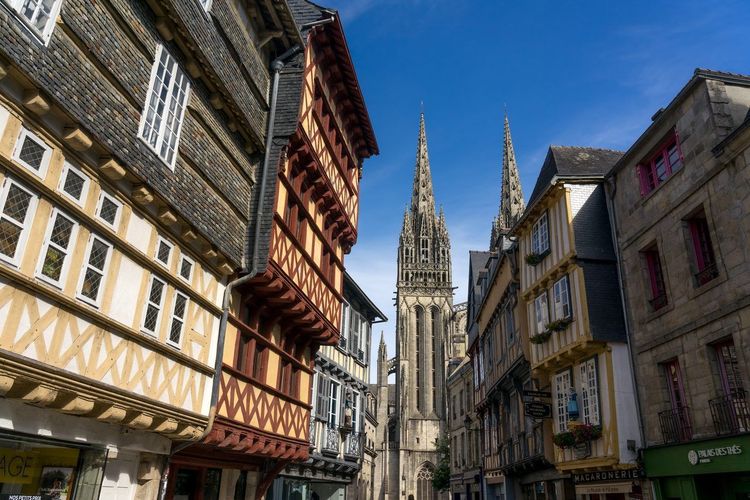
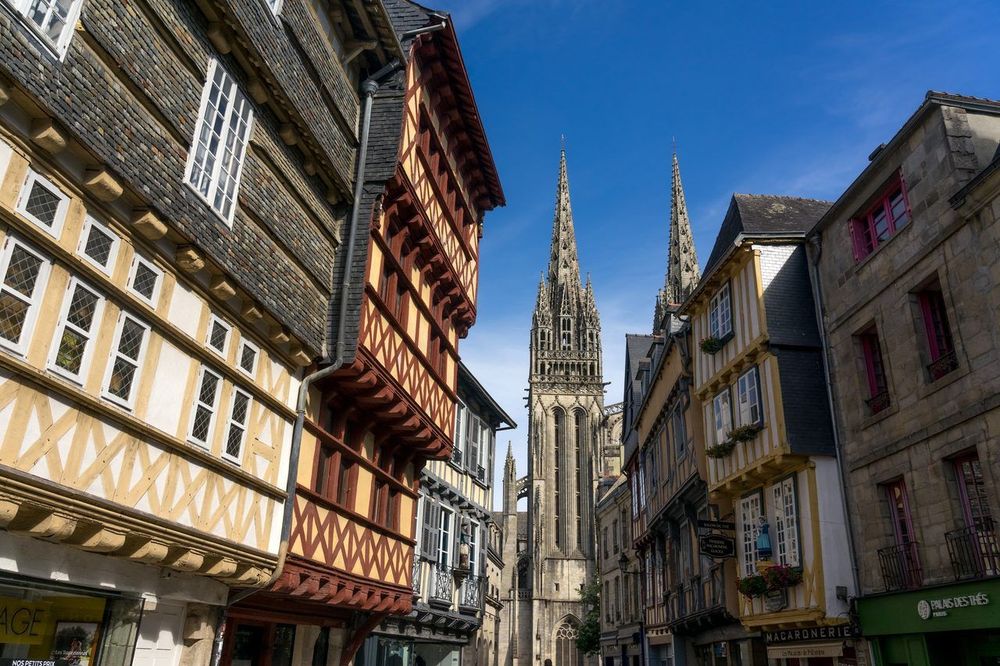
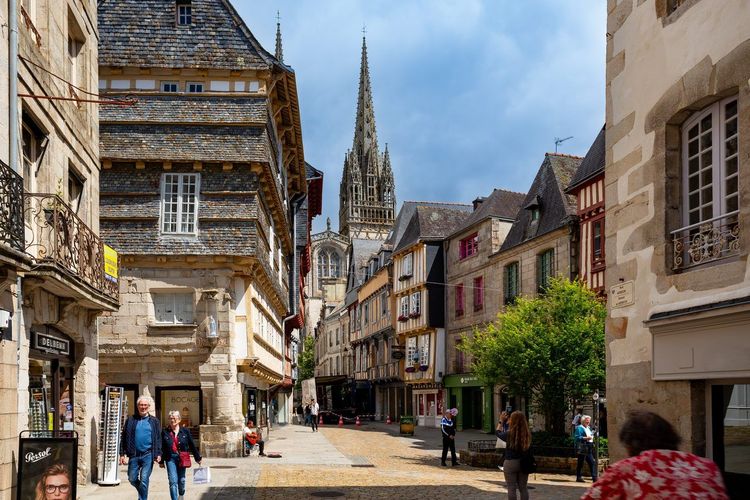
Walking up from the cathedral, rue Kéréon (Rue Kéréon, 29000 Quimper) lines up its half-timbered houses and craft shopfronts over a hundred pedestrian metres, one of the most photographed streets in town. It leads out onto Place au Beurre (Place au Beurre, 29000 Quimper), where the butter market once took place and which today concentrates several crêperies in 16th-century buildings.
Close by, rue Saint-Nicolas and place Mesgloaguen offer a quieter version of the same half-timbered scenery, without the tourist density of Kéréon. Take the time to wander there at the end of the day, when the low light catches the façades: it is often when local photographers come to work.
These three streets form one of the most homogeneous groups of timber-framed houses in Finistère, some dating from the 15th century, a heritage that earned Quimper the Ville d'art et d'histoire label.
The Odet Quays, the Covered Market and the Ramparts
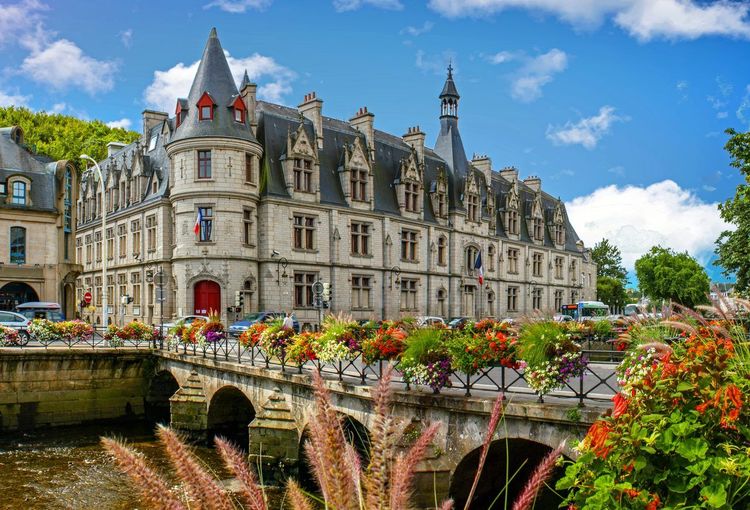
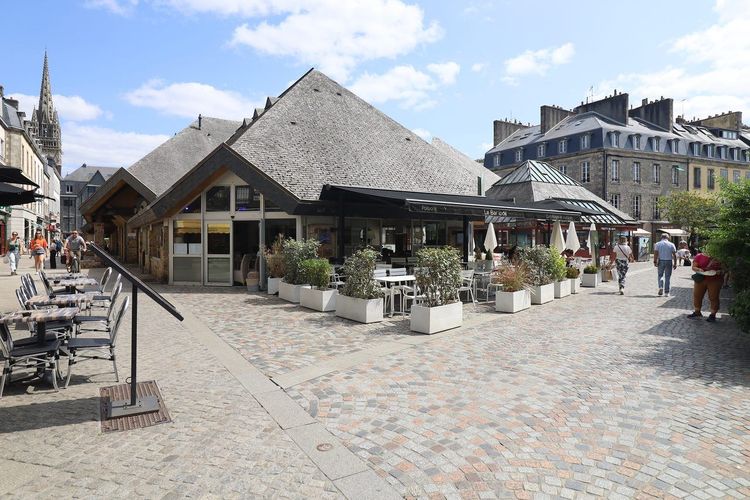
Heading back down towards the river, the Quimper covered market (Place Saint-François, 29000 Quimper, rated 4/5 on Google from 1,100 reviews) brings together around twenty traders under a roof rebuilt after the 1976 fire, a good spot to put together a picnic before heading to the quays. A few metres away, the Médard bridge spans the Odet and offers one of the most classic views of the overhanging houses lining the river.
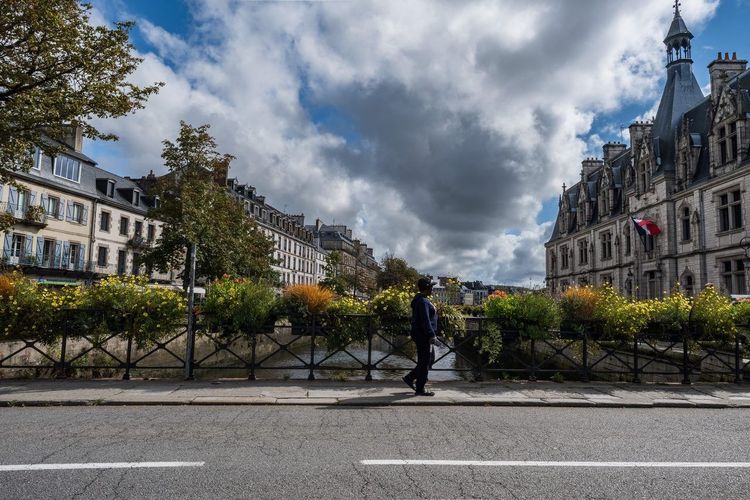
Strolling along the Odet remains one of the simplest and most pleasant things to do in Quimper: a pedestrian path follows the river for several hundred metres, shaded and dotted with benches, as far as the old ramparts preserved in the Bishop's Palace garden. It gives you a sense of the modest size of the historic centre, almost entirely ringed by water and stone. On sunny days, the terraces set up on the quays look out along the whole river, a good moment to catch your breath after the walk from the station.
These three atmospheres, cathedral, shopping lanes and leafy quays, are precisely what the Ryo audio-guided tour of Vieux Quimper crosses over 2.5 km and about an hour of listening, a good way to link the sights without opening a map at every junction.
Quimper's Museums, All Reachable on Foot
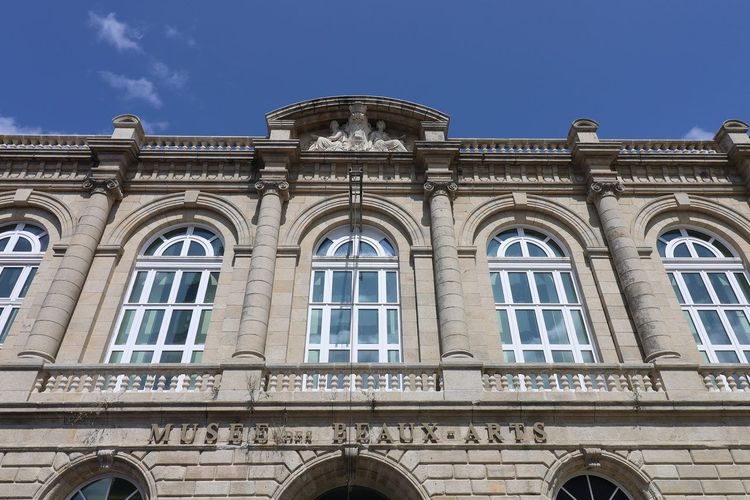
Four museums are enough to fill an entire afternoon without ever leaving the centre or getting back on a bus.
Fine Arts Museum and Breton Departmental Museum
The Quimper Fine Arts Museum occupies a 19th-century building right opposite the cathedral and holds a notable collection of Breton paintings, including several canvases from the Pont-Aven School linked to Gauguin and a room devoted to the Quimper-born poet Max Jacob. Allow one to two hours for the visit, less if you only target the Breton rooms.
Five minutes on foot away, the Breton Departmental Museum traces the history of Finistère from prehistory to the 20th century in the former episcopal palace, a setting that is sometimes worth the trip on its own.
Faience Museum and Pascal Jaouen Art Embroidery
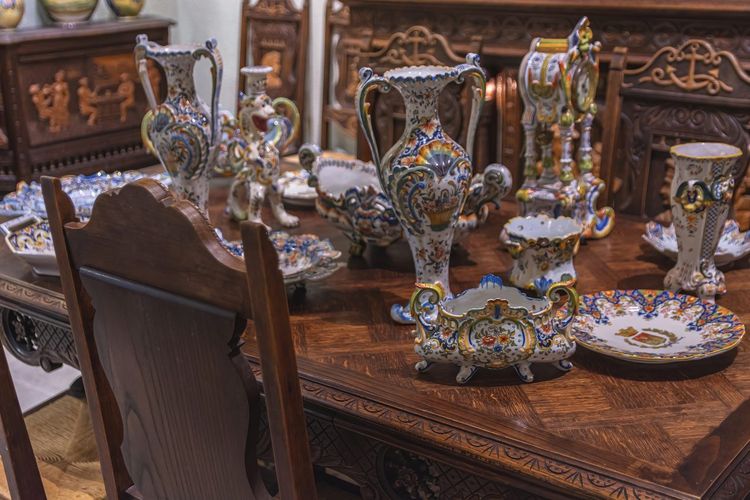
A little further towards Locmaria, about twenty minutes' walk from the centre or five minutes by bus, the Faience Museum (14 Rue Jean-Baptiste Bousquet, 29000 Quimper, rated 4.5/5 on Google from 345 reviews) tells the story of three centuries of local ceramic production, Quimper being one of the historic cradles of French faience. The district's workshops are in fact still producing today, and some can be visited by reservation.
In a more unexpected vein, the Pascal Jaouen art embroidery school regularly exhibits pieces of Breton haute embroidery, somewhere between traditional costume and collaborations with Parisian haute couture. It is a short stop, to be fitted around current exhibitions, but one that makes a change from the usual visits.
A combined ticket, when offered in season, lets you visit several of these museums at a reduced rate, an option worth checking at the tourist office before buying each entry separately.
Gardens and Green Spaces in Quimper Without a Car
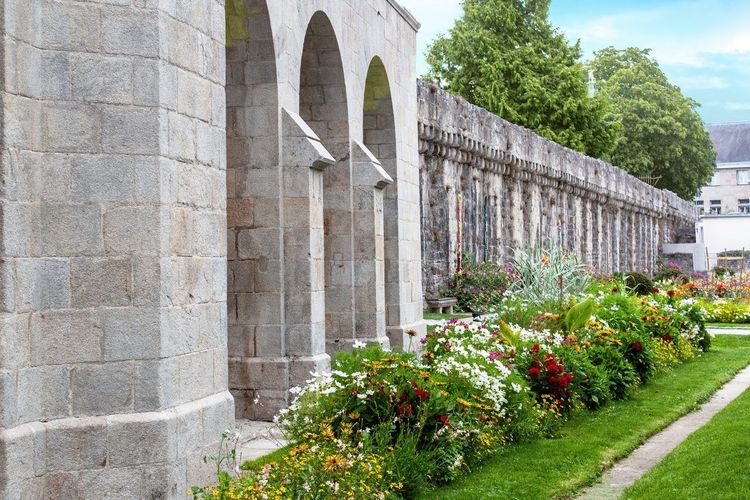
Less talked about than the lanes of the centre, this green side of Quimper nonetheless deserves a good part of a day.
The Jardin de la Paix and the Locmaria Priory Garden
The Jardin de la Paix offers open lawns and a view of the cathedral spires in the background, ten minutes on foot from the centre. It is a good spot for a picnic, especially at midday on weekdays when it stays quiet.
Further towards Locmaria, the Locmaria Priory garden stretches behind the Romanesque church of the same name, a more intimate space planted with local species, reachable on foot by extending the walk as far as the Faience Museum.
The Jardin d'Acclimatation de la Retraite and the Lanniron Château Estate
The Jardin d'Acclimatation de la Retraite gathers exotic species from Asia and America, a few minutes' walk from the cathedral, an unexpected green interlude in the heart of town. Entry is free, which makes it an easy outing to improvise on a sunny afternoon.
A little further on, the château de Lanniron (Route de Bénodet, 29000 Quimper, rated 4.5/5 on Google from 2 reviews), a former summer residence of the bishops of Cornouaille, and its vast estate border the Odet upstream of the town, reachable by bike or by bus depending on the line running in season. The English-style park can be visited freely for part of the year, while the château itself is mostly reserved for camping stays or private events.
Hiking and Treetop Adventure Around Quimper Without a Car
For anyone wanting to leave the tarmac behind for a day, two options exist without ever getting back in a car.
The Stangala Gorges on Foot or by Bike
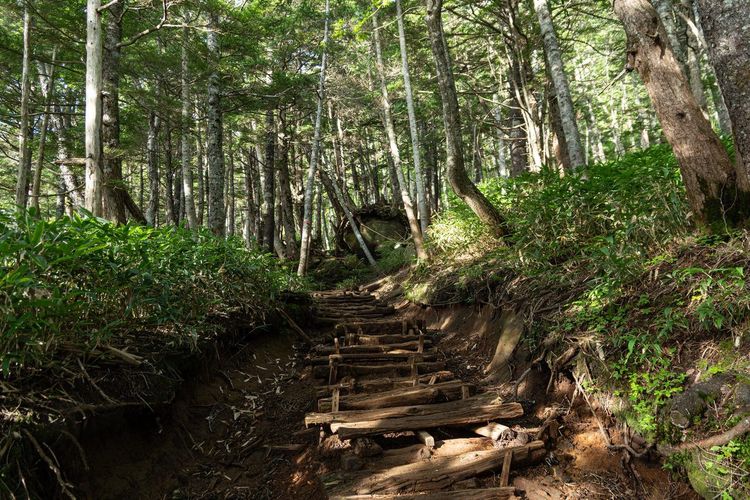
The Stangala gorges form a surprising canyon carved by the Odet, about 6 km from central Quimper, reachable by bike in 20 to 25 minutes or on foot in a little over an hour. The hiking trail runs along the river like a balcony, with several developed viewpoints and a moderate climb that remains accessible to occasional walkers.
Allow two to three hours for the full loop, enough to turn a bike outing into a real hike if you leave your bike at the entrance to the site. A few pebble beaches by the water invite a swim in summer, though the current needs watching after heavy rain.
Bonobo Parc for Families
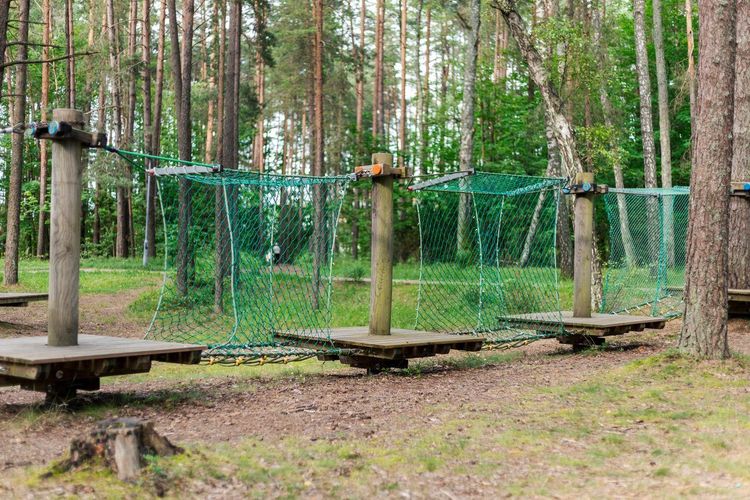
About twenty minutes by road from Quimper, Bonobo Parc (Briec, 29510 Briec-de-l'Odet, rated 4.6/5 on Google from 414 reviews) offers several treetop courses suited to children from 3-4 years old as well as adults looking for more daring zip lines. Without a car, getting there takes a little organisation: check the BreizhGo coach service or plan on cycling, as services are far less frequent than in the town centre.
Still, plan on spending the whole day there: between possible waiting at the activities and the coach journey, it is hard to combine this outing with another visit on the same day.
Day Trips Without a Car: Concarneau, Douarnenez, Pont-Aven
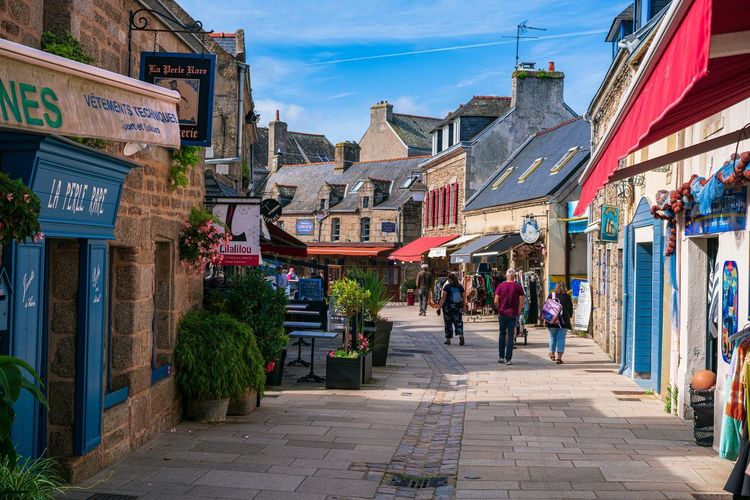
These four stops concentrate most of what people come to see around Quimper, and none requires a car to reach.
Concarneau and Douarnenez by Bus or Train
Concarneau is reached in 30 to 40 minutes by bus from central Quimper, with a departure roughly every hour in season. Its Ville Close, fortified and surrounded by water, can be visited entirely on foot in half a day, between ramparts, shopping lanes and a fish auction still active in the early morning.
Douarnenez, about 45 minutes by bus, plays a different card: the Rosmeur harbour and the Port-Rhu district tell the story of sardine fishing, with a floating boat museum that can be visited right on the quays. The two towns combine poorly in a single day if you want to take your time, but each is more than enough on its own for a full excursion.
Concarneau no longer has a passenger station: if you prefer the train, get off at Rosporden (a quarter of an hour by TER) then finish by coach. As for fares, the BreizhGo network charges a flat fare of around 2.50 euros per trip in Finistère, far below the cost of a tank of petrol and a day's parking in these tourist towns in summer.
Pont-Aven and Locronan, Villages with Character
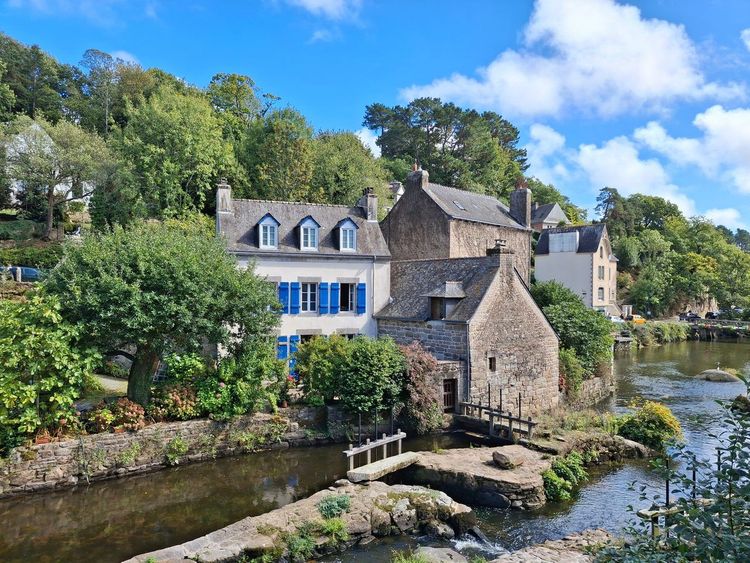
Pont-Aven, reachable in a little under an hour by coach with a change at Concarneau or Rosporden depending on the line, owes its fame to Gauguin and the school of painting that bore its name at the end of the 19th century. The mills on the Aven, the art galleries and the Bois d'Amour path, immortalised by Gauguin himself and walkable all year round even if the ground can become slippery after rain, justify a good half-day on site.
Locronan (Place de l'Église, 29180 Locronan, rated 4.7/5 on Google from 5K reviews), ranked among the most beautiful villages in France, is reached in about 35 minutes by direct coach from Quimper. Its 16th- and 17th-century granite houses, grouped around a Gothic church, have served as the backdrop for several film shoots, including Polanski's Tess. The central square, entirely cobbled and pedestrianised, can be visited in a little under an hour, which makes it an easy excursion to combine with Douarnenez if you set off early.
To make the most of a day without a car, it is better to choose a single distant excursion per day rather than linking two towns with a coach change: connections are less frequent than in urban areas, and a ten-minute delay can mean missing an entire connection on quiet days. If your visit coincides with the Festival des Filets Bleus in Concarneau in mid-August, plan to arrive in early afternoon at the latest: coaches are full from midday in busy periods.
And once you arrive in Pont-Aven or Locronan, the same audio guide principle exists on site, a tour to follow at your own pace with no car and no human guide to book in advance; the Ryo article on the area around Quimper details other possible stops by coach or train to extend your exploration.
The Pointe du Raz, Bénodet and the Beaches Without a Car
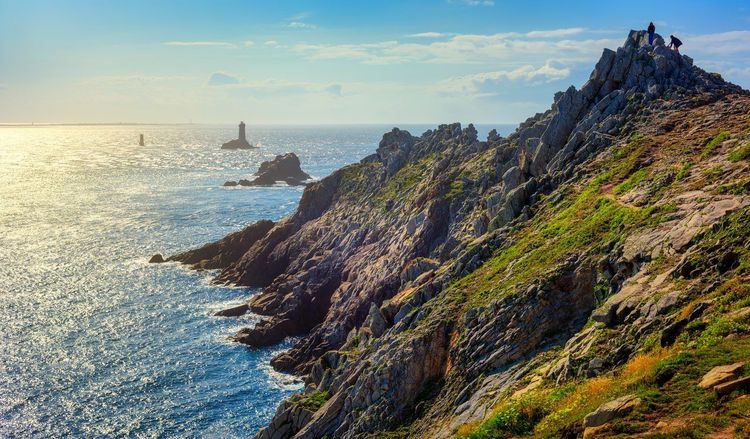
Heading for the coast this time, where two very different faces of the Finistère shoreline can be reached without taking the wheel.
The Pointe du Raz and the Cap Sizun by Coach
The Pointe du Raz, one of the most spectacular natural sites in Brittany, is reached in 1h15 to 1h30 by coach from Quimper bus station, with more frequent services in high season. The site, classified as a Grand Site de France, requires you to leave any vehicle in a car park set well back anyway, which partly cancels out the appeal of going by car rather than by coach.
Allow two to three hours on site to walk to the end of the point and back, a little more if you push on towards the Vieille lighthouse visible offshore. Tide times matter as much as coach times to enjoy it fully: at low tide, some rocky passages are uncovered and let you get closer to the sea, while at high tide it is better to stay on the marked paths higher up. The rest of the Cap Sizun, notably the Goulien nature reserve, lends itself well to a full day by coach if you link several stops on the same line.
Bénodet and the Beaches of the Odet Estuary
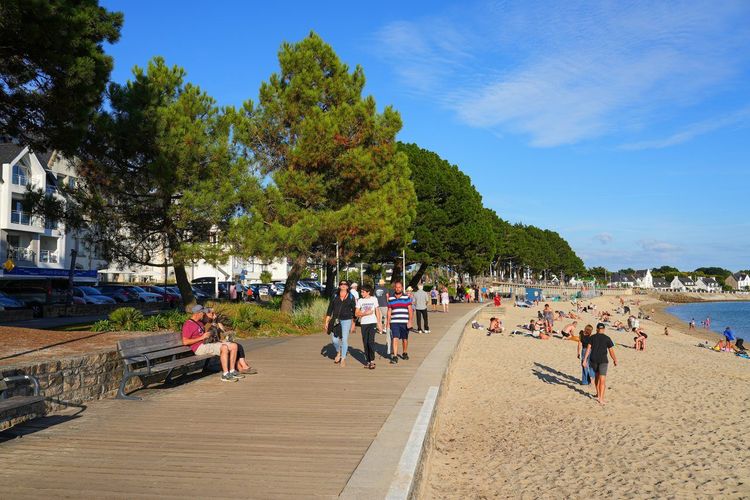
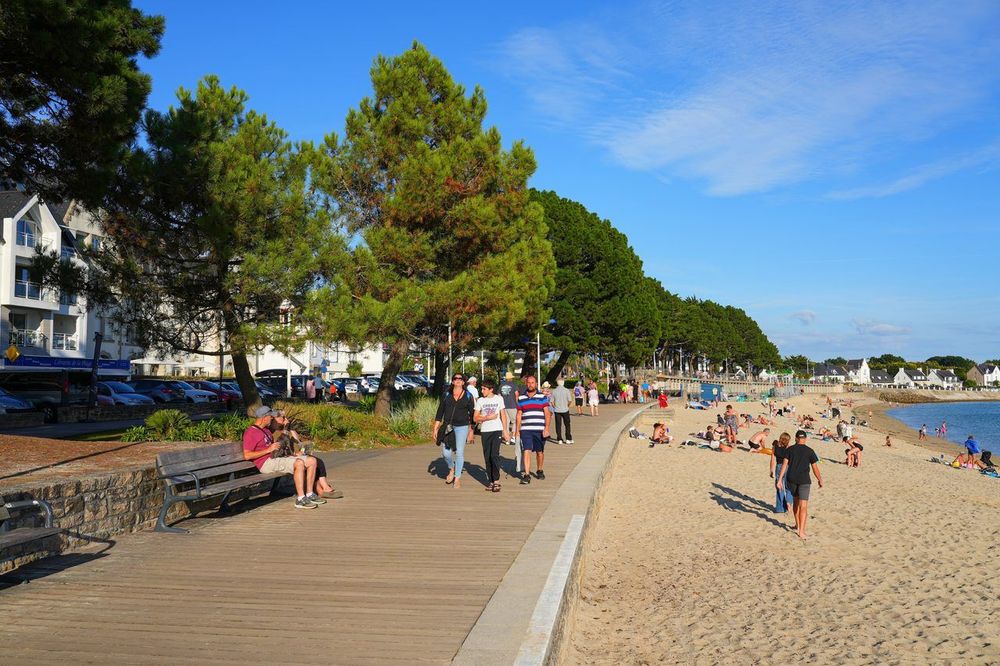
Bénodet (Port de Bénodet, 29950 Bénodet, rated 4.7/5 on Google from 140 reviews) is reached in about half an hour by coach from Quimper, one of the quickest excursions on this list. The seaside resort has several fine-sand beaches at the mouth of the Odet, including the Trez beach and the Letty beach, well equipped in season with lifeguard posts and water sports hire. For families with young children, Letty beach remains the most practical: flat access from the bus stop, shallow water over a large area at low tide, and a few shops right nearby.
In summer, a river service even runs up the Odet between Bénodet and Quimper, a pleasant alternative to the bus for anyone wanting to enjoy the scenery without hurrying. Other, quieter beaches are tucked away along the estuary, reachable by bike from Bénodet for those wanting to get away from the busiest areas in July and August.
Our Ryo article on Quimper's beaches lists these spots in more detail, useful for choosing without losing half a day on site looking for the right patch of sand. Between the Pointe du Raz and Bénodet, it is hard to decide without knowing your priorities: allow a full day for the Pointe du Raz, walking included, against half a day, which is plenty to enjoy the Bénodet beaches and get back to Quimper for dinner. And once you step off the coach at Cap Sizun, the same audio guide principle still works: a tour to follow step by step, with no car to find in a car park at the time of return.
Quimper Without a Car Depending on Your Travel Profile
Needs differ depending on whether you travel as a couple, with family, or simply want to shelter on a rainy day.
As a Family or a Couple, Without a Car
With children, favour a short pace: Vieux Quimper in the morning, the Jardin de la Paix or Bonobo Parc in the afternoon, avoiding two distant excursions on the same day. Museums, notably the Breton Departmental Museum, often offer routes adapted to younger visitors with fun activity materials.
For a getaway for two, the combination of the Odet quays at sunset followed by dinner in a crêperie on Place au Beurre remains a safe bet, with no motorised travel needed between the two. Fans of quieter paths will lean towards the Locmaria Priory garden or the Stangala gorges, less crowded than the historic centre in high season, a good way to get off the beaten track without going far.
Rainy Days and Getaways of Under an Hour
On rainy days, frequent all year round in Brittany, Quimper's museums offer a comfortable refuge: allow a morning for the Fine Arts Museum and the Breton Departmental Museum, both located in the centre and linked in a few minutes on foot under a simple umbrella.
For a getaway of under an hour without a car, Bénodet and its half-hour coach ride remain the quickest choice, on a par with Locronan. Our Ryo article on visiting Quimper with family details other combinations depending on the children's ages. The 23 stops of the Ryo audio tour suit this kind of split-up visit well, with everyone moving at their own pace, with no logistics to organise and no car to find between two stops.
Where to Stay in Quimper Without a Car
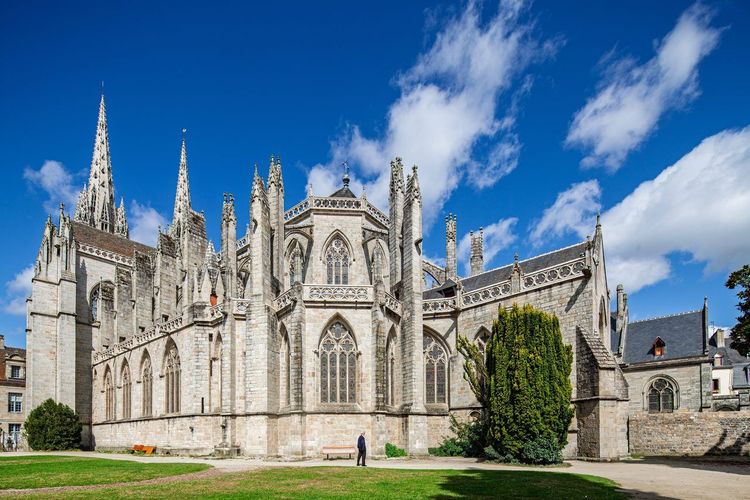
To make the most of a stay without a car, it is better to stay in the historic centre or at most ten minutes' walk from the station. The area around the cathedral and the Odet quays concentrates most of the hotels and guesthouses, within walking distance of nearly everything described in this guide.
The station area, a little less picturesque but practical for an early morning train departure, generally offers slightly lower rates than the historic heart. Avoid, however, accommodation on the outskirts near the shopping zones: it relies on access by car and needlessly complicates a stay planned without one, with bus links often limited in the evening.
For longer stays, the Locmaria district, close to the Faience Museum, offers an interesting compromise between residential calm and proximity to the centre, barely fifteen minutes' walk from the cathedral. Book several weeks ahead if possible during festival periods, notably around the Festival de Cornouaille at the end of July, when available rooms in the centre quickly become scarce.
Practical Tips: Budget, Duration and Organising Your Trip Without a Car
All that remains is to turn all this information into a concrete itinerary, without exceeding your planned budget.
How Long to Allow and How to Build Your Itinerary
For the historic centre alone, a full day is more than enough: a morning for the cathedral, the lanes and the covered market, an afternoon for a museum and a walk along the Odet. To include one or two extra museums as well as an outing to the Stangala gorges, allow two full days instead.
With a day excursion to the Pointe du Raz, Concarneau or Pont-Aven, a stay of three to four days lets you see everything without rushing, leaving a margin for the Breton weather, which changes from one day to the next. Build your itinerary in three stages: the historic centre first, since it remains accessible whatever the weather, then gardens and museums depending on the sun, and finally the distant excursions reserved for the clearest days according to the forecast.
Budget, Parking on the Outskirts and Good Habits
Without a car, the main expense remains local transport: allow 4 euros a day for the bus on weekdays (free at weekends), a bike hire if needed, and about 2.50 euros per trip by BreizhGo coach for excursions. Add accommodation, which varies by season, and a food budget of around 25 to 35 euros a day alternating between crêperie and covered market.
If you arrive by car anyway before leaving it aside for the rest of the stay, several car parks on the edge of the centre, notably near the station and along the Odet, offer daily rates well below the paid spaces in Vieux Quimper. Park there, then reach the centre on foot or by bus: the logic is the same as for the rest of the stay.
Thinking of the stay as a combination of solutions rather than a single choice between walking, cycling, bus and coach remains the best approach: each mode has its place depending on distance, the day's weather and the amount of luggage to carry, and the visitors who manage best are precisely those who don't lock themselves into a single option for the whole stay.
Before setting off, check that your journeys fit together on a map or an app: some excursions combine well on the same day, others don't, depending on the coach times available. Keep realistic expectations about the information available online too, as bus and coach frequencies change with the tourist season and sometimes from one year to the next. Finally, allow a small time margin on distant excursions: a bus delay in an urban area is easily made up, but a delay on a rural line to the Pointe du Raz can make you miss the only return of the evening.



FAQ
Can you visit Quimper entirely on foot?
Yes, Vieux Quimper can be explored entirely on foot in a day: the cathedral, half-timbered lanes, covered market and Odet quays are all within a twenty-minute walk of one another. Only excursions to the Pointe du Raz, Concarneau or Bénodet require a bus, coach or bike. Allow about two hours for a first walking tour of the centre, longer if you go inside the cathedral and the covered market.
How do you get to Quimper from Paris or Rennes without a car?
The direct TGV from Paris Montparnasse takes 3h30 to 4 hours, with several departures a day and lower fares if you book in advance. From Rennes, allow about 2 hours to 2h30, by TGV or TER. In both cases, the SNCF Connect app remains the easiest way to compare timetables.
How long should you allow to visit Quimper without a car?
A full day is enough for the historic centre alone. Allow three to four days to add museums, gardens and at least one day trip to the coast or to a nearby village such as Pont-Aven or Locronan. Travellers in a hurry can make do with a day and a half by focusing only on Vieux Quimper and Bénodet, the quickest excursion by bus.
How do you get to Concarneau or Pont-Aven without a car?
Concarneau is reached by coach in 30 to 40 minutes from central Quimper. Pont-Aven takes about an hour by coach, sometimes with a change at Concarneau or Rosporden depending on the line running that day. It is best to check timetables the day before, as frequencies drop outside the summer season.
Where should you park if you arrive by car anyway?
Several car parks on the edge of the centre, notably near the station and along the Odet, charge lower daily rates than spaces in Vieux Quimper. Leave the car there as soon as you arrive, then continue your stay on foot, by bike or by bus as described in this guide.
What budget should you plan for a stay in Quimper without a car?
Allow 4 euros a day for the Qub bus on weekdays (free at weekends), about 2.50 euros per trip for BreizhGo coach excursions, and 25 to 35 euros a day for meals. Going without a car removes fuel, tolls and parking, often the costliest items of a summer stay in Brittany.
Is it better to take the bus or the bike to get around Quimper?
The bike wins on trips of 2 to 5 km without steep hills, for example to the Stangala gorges or the Lanniron château. The bus is better on rainy days, with heavy luggage, or for more distant excursions such as Bénodet. Many visitors combine the two depending on the day and the weather.
One last point before you finalise this itinerary: Quimper is almost better without a car than with one, as the town was designed for walking long before the arrival of the automobile. Between the train that drops you right in the centre, the bike that opens up the Stangala gorges in about twenty minutes and the coaches heading to the Pointe du Raz or Pont-Aven, all that is left is to put the date in your diary.
For a first warm-up in Vieux Quimper, the Ryo audio-guided tour of Quimper remains the simplest starting point: 23 stops, about an hour of listening, and no car to find at the end of the visit.
À lire également