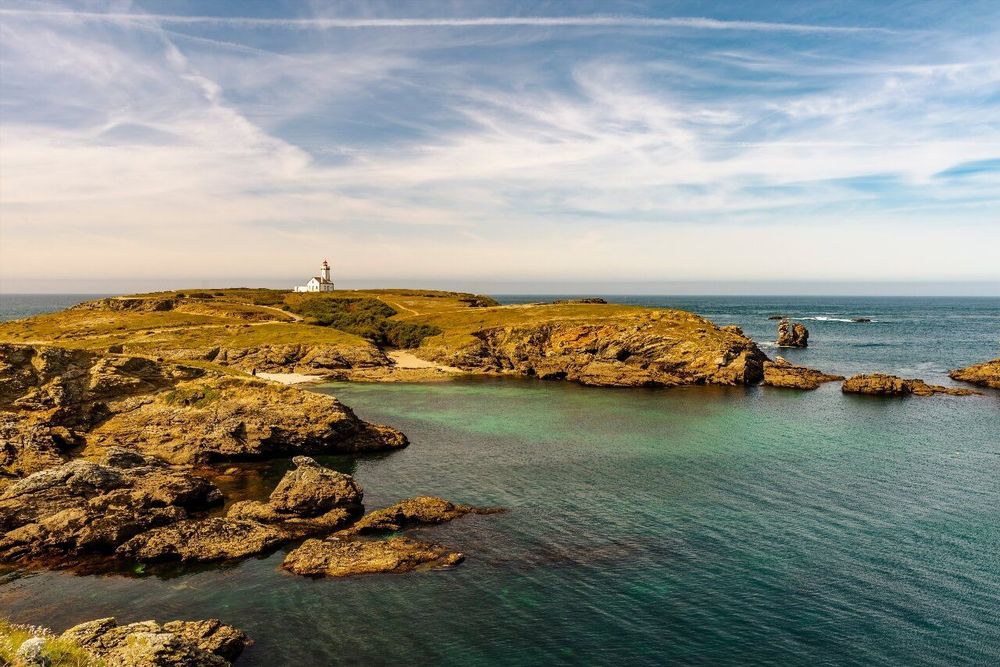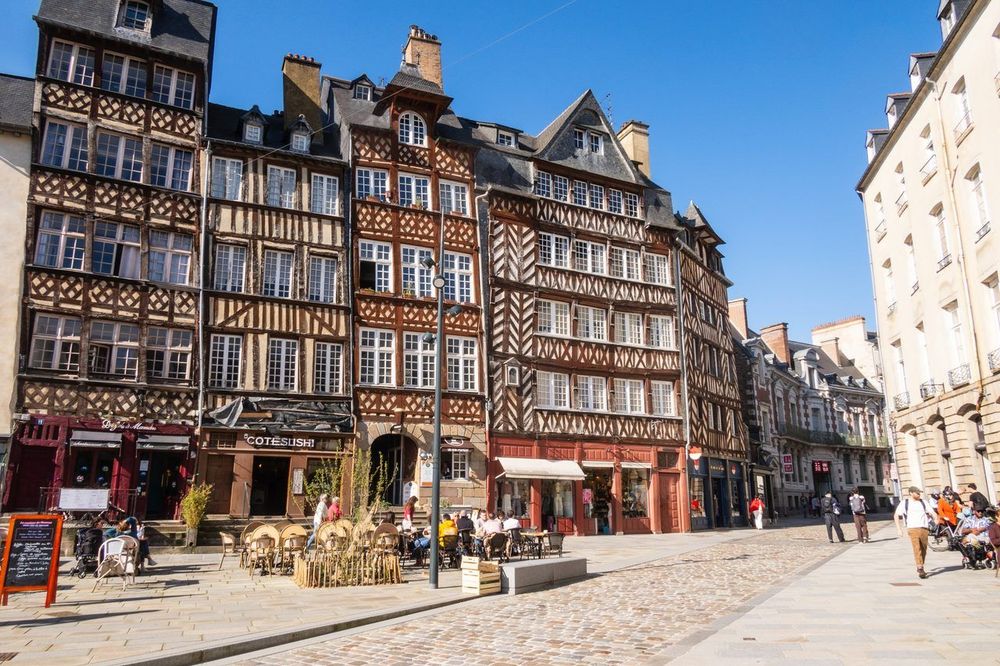
© Shutterstock
 Votre guide Ryo
Visit Rennes in 2 Days: Complete 2026 Itinerary
In Rennes, Saturday mornings begin with joyful noise: the cries of fishmongers at the place des Lices nearly drown out the bells of the cathédrale Saint-Pierre, just a few streets away. It is this double life — between a bustling popular market and princely heritage — that makes visiting Rennes in 2 days surprisingly rich for a city that many people pass through without stopping, on their way to Saint-Malo or the tip of Finistère.
In a well-organized 48 hours, you will see the essentials: more than 200 half-timbered houses from the 15th century packed into the Vieux Rennes, a listed Parlement de Bretagne that survived a major fire in 1994, a fine arts museum spanning ancient Egypt to Picasso, and a ten-hectare formal French garden right in the city center. Add to that Art Deco mosaics scattered throughout the streets, a renowned artisan chocolate shop, and, less than an hour's drive away, the coastal or legendary Brittany. To get a sense of the city before heading out, the Ryo audio guide for Rennes provides a first guiding thread through the historic center, complemented here by a day-by-day itinerary, the best addresses, and practical information to plan a weekend without any unpleasant surprises.
Why Rennes Deserves a 48-Hour Weekend
Rennes does not have the tourist fame of Saint-Malo or its neighbor Nantes, and that is precisely what makes it pleasant to explore: fewer crowds, more local life. The Breton capital has a dual face — that of a red city, marked by the fire of 1720 that devastated its center and shaped its grid of white stone, and that of a metropolis connected to Paris in 1h25 by TGV since 2017, driven by a student population that represents a significant share of its inhabitants.
The brief history of Rennes can be told in a few dates that illuminate everything you will see over two days: a Gallic then Gallo-Roman settlement born at the confluence of the Ille and the Vilaine, a fortified ducal town whose Porte Mordelaise guarded the ceremonial entrance, a Parlement de Bretagne established in the 17th century that earned it its status as the judicial capital of the province, then the fire of December 1720 that ravaged much of the center and imposed a reconstruction in stone on a regular plan. It is this shift from wood to granite that still structures the way the city reads today.
This turbulent history explains the contrast that strikes visitors upon arrival: on one side, the narrow lanes and half-timbered houses of the Vieux Rennes, miraculously spared by the 18th-century flames; on the other, the wide classical squares rebuilt after the fire, with their uniform granite facades. Few French cities offer such a legible architectural contrast within a few hundred meters.
Two days are enough to grasp this duality without rushing: one day for the historic center and the Parlement de Bretagne, another for the museums, the jardin du Thabor, and the more contemporary neighborhoods. You can of course condense the visit or stretch it to three days if you add a trip to the coast, but 48 hours remains the most efficient format to leave with a true sense of the city, without repetition.
How Long to Plan and When to Visit Rennes
One day in Rennes allows you to tick off the essentials: the Vieux Rennes, the place des Lices, and the Parlement de Bretagne, even if the museums have to be skipped. It is a format suited for a stopover on a longer trip through northern Brittany, but one that leaves a sense of incompleteness if you like to take your time.
Two days, on the other hand, offer a genuine balance: one day for heritage and gastronomy, one day for museums and nature. That is the format this article follows, and the one that best matches the compact geography of the center. Three days allow you to add a trip to Saint-Malo, Dinan or the forest of Brocéliande without leaving exhausted — a format worth considering if you are coming from far away and the journey deserves to be made worthwhile.
The best seasons to discover the city remain spring and early autumn: mild temperatures, the jardin du Thabor in bloom from March to June, and tourist crowds still manageable compared to July and August. Summer brings a string of festivals, including the Tombées de la Nuit in early July, but also occasionally heavy heat in the narrow lanes of the historic center, where shade is scarce. Winter, by contrast, offers near-deserted streets and museum visits without queues, offset by short days that limit outdoor walking time. If you had to pick just one window, aim for the second half of May or the first week of September: the light is ideal for the half-timbered facades, and the riverside terraces are still open.
The most notable crowds are weekly rather than seasonal: Saturday morning, the day of the Lices market, draws a dense crowd on the eponymous square and in the surrounding streets until 1 pm. If you prefer peace over market atmosphere, opt for a Saturday afternoon or Sunday for your stroll through the Vieux Rennes.
Breton school holidays, particularly in February and at All Saints' Day, slightly increase attendance at Les Champs Libres and the Thabor, but never reach the levels seen at Saint-Malo or Mont-Saint-Michel. A public holiday falling on a Monday, common in spring, remains a good option for scheduling a 2-day weekend without taking extra leave, provided you check museum opening hours, as many are closed that day.
How to Get to Rennes and Get Around
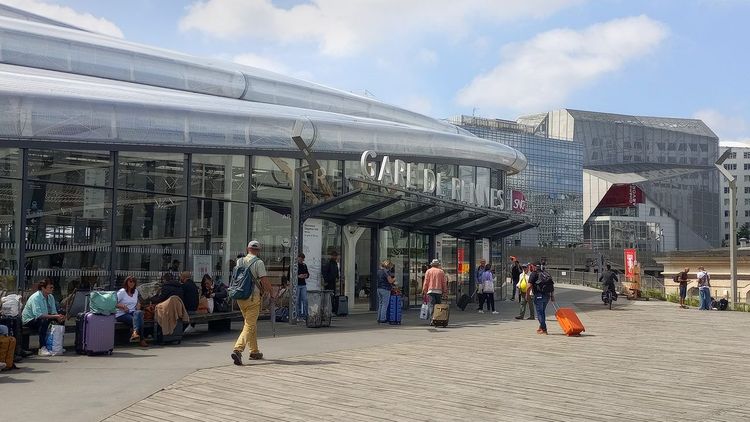
Getting to Rennes by Train, Car, or TER Breizh Go
The train remains by far the most comfortable way to reach Rennes. From Paris Montparnasse, the TGV takes approximately 1h25, with frequent departures throughout the day. Rennes station, fully rebuilt in the late 2010s as part of the EuroRennes project, is a 15-minute walk from the historic center, avoiding any complicated transfer on arrival. To explore Brittany more broadly before or after your stay in Rennes, the TER Breizh Go network serves Saint-Malo, Vannes, Brest, and Quimper at reasonable fares, with advantageous subscription cards if you make multiple round trips.
By car, allow approximately 3h30 from Paris via the A11 then the A81. Rennes is also well connected to Nantes (1h15) and Caen (2h). The downside: the historic center is largely pedestrianized, and a car quickly becomes a hindrance rather than an asset. It is better to park on the immediate outskirts and continue on foot or by public transport.
Getting Around: Metro, Bike, and on Foot
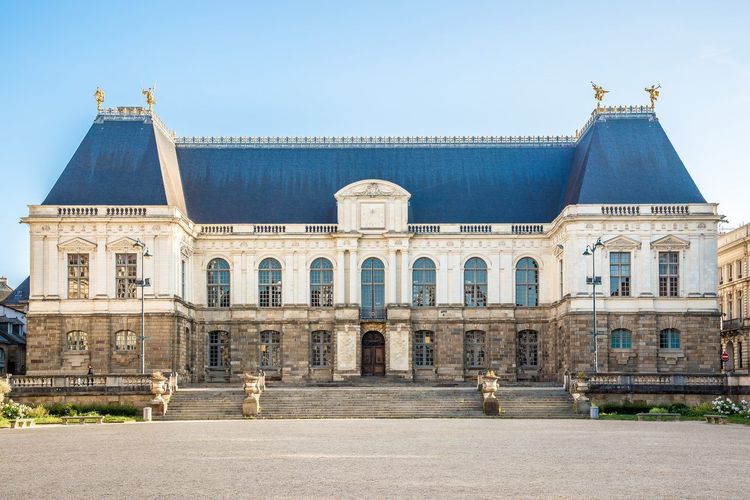
In Rennes, the essential sights of the Vieux Rennes, the Parlement de Bretagne, and the place des Lices are all explored on foot within a radius of less than one kilometer. This is also the best way to spot the half-timbered facades and the lanes that only open to pedestrians. A paper map of Rennes, available free of charge at the tourist office installed in the chapelle Saint-Yves, helps you miss nothing without relying on your phone.
For longer journeys, to Les Champs Libres, the Thabor, or the parc des Gayeulles, the VAL metro — two driverless automated lines — remains fast and reliable, with a single ticket or a day pass if you make several trips. The bike-sharing scheme complements this well, particularly for riding along the banks of the Vilaine or reaching the canal d'Ille-et-Rance, where the cycle paths are pleasant and largely flat.
For parking, several multi-story car parks offer decreasing rates, but there are also areas where parking is free in Rennes, notably the park-and-ride facilities on the outskirts served by the metro: it is better to leave your car there for the day rather than circling the city center looking for a space. For a first walking tour of the historic center, the Ryo audio guide for Rennes acts as a guiding thread, with commentary triggered automatically at each site.
Day 1: Vieux Rennes, Parlement de Bretagne, and a Gourmet Break
Devote your first morning to the historic heart of the city, where Rennes looks least like an administrative prefecture and most like a medieval Breton capital.
The Vieux Rennes and Its Half-Timbered Houses
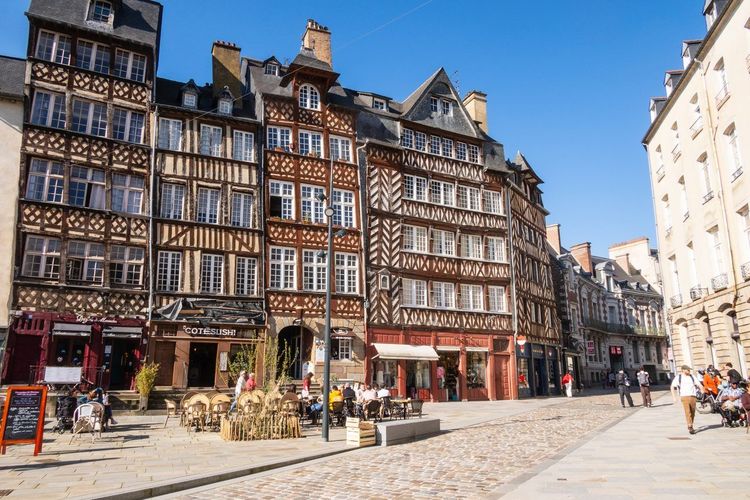
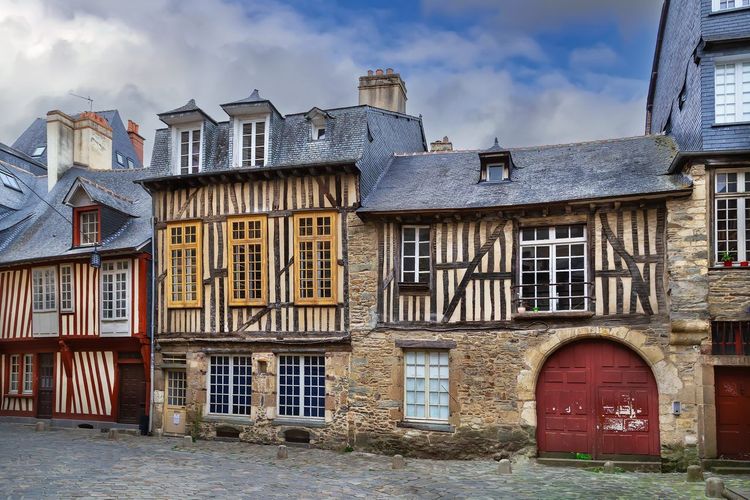
Begin with the remains of the city walls of Rennes, visible notably near the Porte Mordelaise, the former ceremonial entrance through which the Dukes of Brittany entered the city for their coronation. From there, head into the Vieux Rennes: more than 200 half-timbered houses, some dating from the 15th century, line the streets around place Sainte-Anne and along rue Saint-Michel, nicknamed locally the « rue de la Soif » (Street of Thirst) for its concentration of student bars.
Some of these facades seem to defy gravity: the upper floors, built with a corbelled overhang, project progressively above the street, a technique that gained habitable floor space without increasing the ground footprint on which taxes were levied. The neighborhood also contains several private mansions with classical facades, some of which hold quirky city records, such as the oldest dated house in Rennes, bearing a 15th-century millésime carved on a corner beam. Look up at every crossroads: it is at the junction of streets that the wooden carvings, often grimacing figures, have best survived.
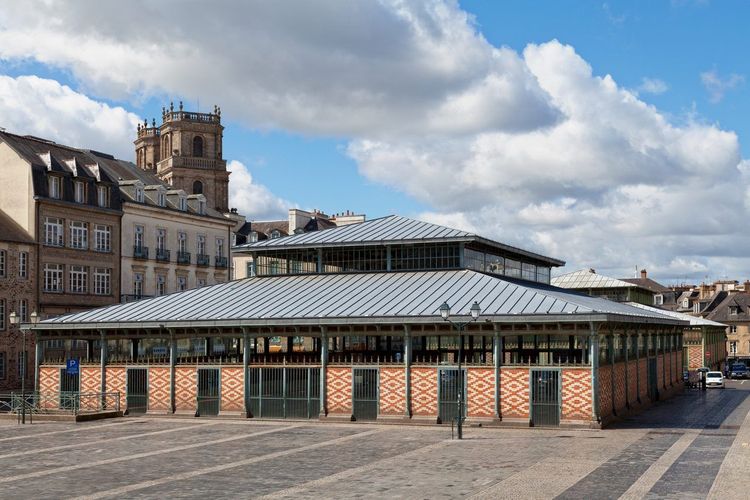
Wandering without a fixed route through this maze of lanes, you will inevitably come across the place des Lices, a vast esplanade that once hosted medieval jousting tournaments, hence its name. Today it is one of the most reliable landmarks in the historic center for getting your bearings.
The Parlement de Bretagne and the Iconic Squares
Heading east out of the Vieux Rennes, you arrive at the Parlement de Bretagne, the former seat of Breton justice built in the 17th century, whose granite facade stands in stark contrast to the timber of the neighboring district. The building nearly disappeared: a fire started in February 1994 on the fringes of a fishermen's protest destroyed the roof and part of the interior decoration, which was then restored over several years. Guided tours allow access to the Grand'Chambre gilded in fine gold, one of the most magnificent ceremonial rooms in Brittany.
Around the place du Parlement stretches a human-scale shopping area, with independent boutiques and Breton brands, pleasant for a window-shopping break between visits. Continue on to the place de l'Hôtel de Ville, where the classical city hall faces the opera house in a deliberately symmetrical urban composition — an architectural face-off conceived after the fire of 1720 to give the city a monumental center worthy of a provincial capital.
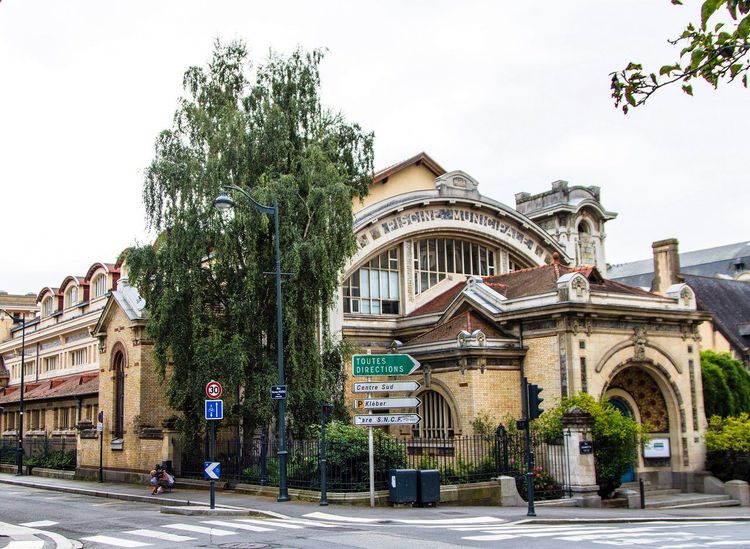
Nearby, the place de la République, dominated by the former Palais du Commerce and bordered by the covered Vilaine, marks the boundary between the old center and the more recent neighborhoods. The palais Saint-Georges, a Benedictine abbey rebuilt in the 17th century and now housing municipal services, rounds off this ensemble with one of the most photographed facades in the city, preceded by a formal French garden. Right next door, the piscine Saint-Georges, opened in the 1920s, conceals an Art Deco pool lined with mosaics: keep it in mind, we return to it later.
The Lices Market and Breton Specialties
If your first day falls on a Saturday, reserve the morning for the Lices market, one of the largest markets in France, with around 300 vendors set up on the eponymous square from early morning. You will find oysters to shuck on the spot, salted butter in a block, galette-saucisses sold straight from the stalls, and enough Breton specialties to improvise an entire lunch without sitting down in a restaurant.
It is then time to taste Rennes in the literal sense: between visits, a crêperie in the Vieux Rennes or a bakery offering warm kouign-amann makes for a fine mid-morning stop. Save room for dinner, however, as the city is full of gourmet addresses detailed later in this article. This first day, rich in heritage and tastings, also corresponds quite well to the 6 must-do activities in Rennes according to Ryo, a useful reference for ordering your visits if time is tight.
Day 2: Museums, Parks, and Art Deco in Rennes
Change pace for this second day, which is more cultural and more green, alternating indoors and outdoors according to the weather.
Les Champs Libres and the Must-See Museums
Head to Les Champs Libres, the city's cultural flagship, which brings together under one roof the musée de Bretagne, the Champs Libres library, and the Espace des sciences with its planetarium. Allow at least two hours for the musée de Bretagne alone, whose collections trace regional history from prehistory to contemporary economic shifts, with particularly refined scenography covering the Revolutionary period and the early days of Breton agri-food industry. The building itself, designed by architect Christian de Portzamparc, is worth a look: the inverted pyramid of the library and the sphere of the planetarium face each other above the hall, and the whole ensemble contrasts sharply with the granite of the historic center.
About ten minutes' walk away, on the banks of the Vilaine, the musée des Beaux-Arts de Rennes offers a journey from ancient Egyptian art to modern painters, via an old masters collection renowned well beyond the region, including a room dedicated to the cabinet of curiosities of Christophe-Paul de Robien. One section shines a light on 19th-century artistic Brittany, with canvases from the Pont-Aven school that echo the landscapes you will encounter if you extend your stay toward the coast. Admission is modest, just a few euros, with free entry for younger visitors: check at the desk on arrival, as pricing changes regularly with temporary exhibitions.
The Jardin du Thabor and the Banks of the Vilaine
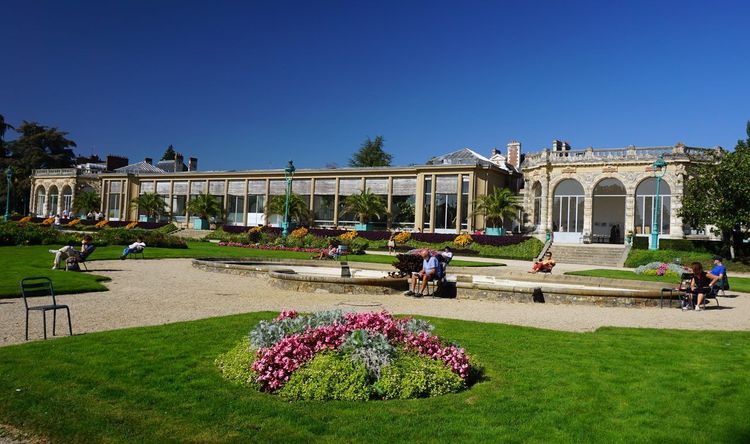
After this museum immersion, get some fresh air in the jardin du Thabor, a ten-hectare park inherited from a Benedictine abbey, where a formal French garden sits alongside an English-style park and a botanical garden. There is a rose garden with several thousand rose bushes, an aviary, an artificial grotto, and enough shaded benches to spend a pleasant hour without noticing the time pass. The people of Rennes themselves come here in numbers on Sundays for a morning jog or an impromptu picnic on the open lawns, a sign that this garden is not merely a tourist postcard.
Walking back down toward the center, a stroll along the banks of the Vilaine offers a different perspective on the city, between contemporary buildings and pontoons set up for fine weather. If you still have energy, push on to the canal d'Ille-et-Rance, which begins to the north of the city and allows for lovely walks or bike rides along the water, lock after lock, far from the bustle of the center.
The Odorico Mosaics: an Art Deco Signature
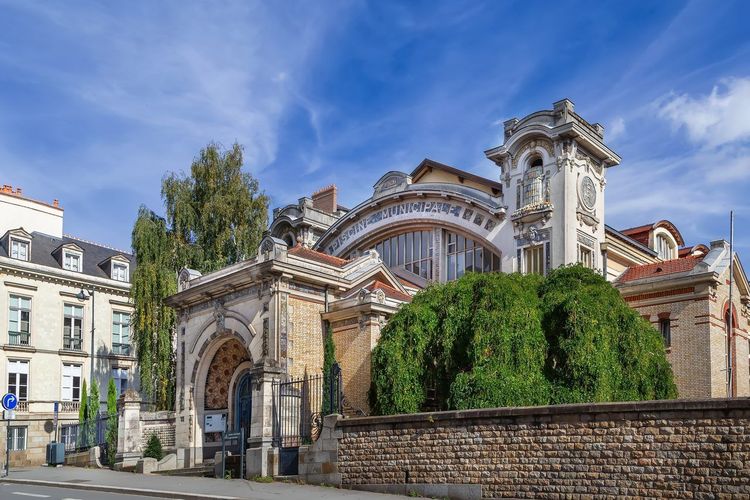
Rennes conceals another, more discreet specialty: the Odorico mosaics, created by a family of mosaic craftsmen of Friulian origin who settled in Brittany at the turn of the 20th century. The Odorico family left a considerable number of decorations across the city over a good half of the 20th century, from simple building thresholds to monumental friezes — a production so dense that it makes Rennes one of France's leading capitals of Art Deco mosaic. Their compositions adorn commercial facades, building entrances, and above all the piscine Saint-Georges, where the mosaics line the pool in shades of blue and green.
To know where to admire the finest mosaics in Rennes without wandering aimlessly, the tourist office offers a dedicated trail between the station district and the city center, where several facades still bear their original decoration. If time allows and you are traveling with children, or simply want a breath of fresh air at the end of the day, the parc des Gayeulles (Rue du Professeur Maurice Audin, 35000 Rennes, rated 4.5/5 on Google with 6,465 reviews), to the east of the city, rounds off this second day nicely: a hundred hectares of wooded space, an urban farm, and a leisure base with ponds, better treated as an optional extra than a must-see if time is short. To make sure you miss none of this scattered heritage, our Ryo audio-guided tour of Rennes features several of these facades along its route, with 26 audio tracks covering the Thabor as well as the banks of the Vilaine.
Churches and Places of Worship Not to Miss
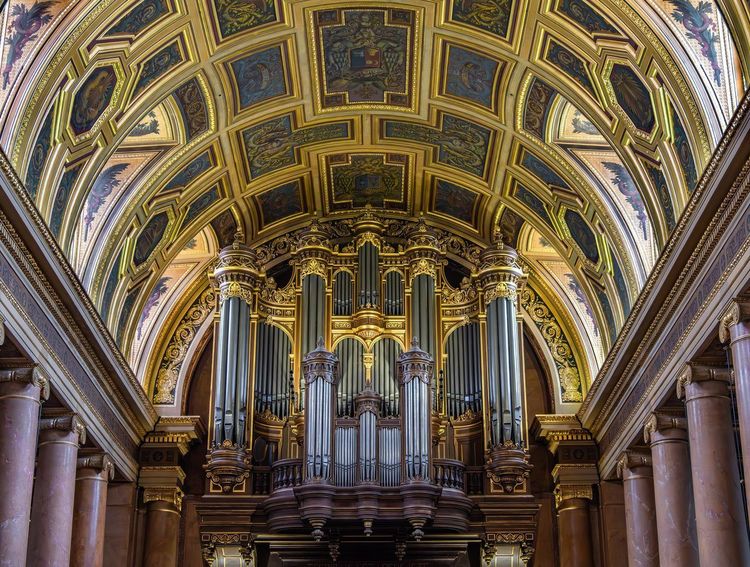
Rennes has a remarkable density of religious buildings for its size, inherited from its status as an ancient episcopal seat.
The Cathédrale Saint-Pierre and the Basilique Saint-Sauveur
The cathédrale Saint-Pierre, with its grey granite bell-tower facade completed in the early 18th century, surprises with its interior: a neoclassical nave with gilded and painted decoration, contrasting with the sobriety of the exterior — rather like a treasure hidden beneath the stone. The current building is the third erected on this site, with the nave rebuilt between the late 18th century and the mid-19th, which explains the mixture of styles that local guides enjoy highlighting. Don't miss the 16th-century Flemish altarpiece in a side chapel, and allow thirty minutes for the visit, bearing in mind the midday closure still observed by many religious buildings in the center.
A few hundred meters away, the basilique Saint-Sauveur is considered a shrine of miracles by the people of Rennes: local tradition attributes to Notre-Dame-des-Miracles, a venerated statue within the building, the protection of the city during the siege by English troops in the mid-14th century. The interior, more intimate than the cathedral, merits a fifteen-minute visit if the doors are open.
The Chapelle Saint-Yves and Other Churches in the Center
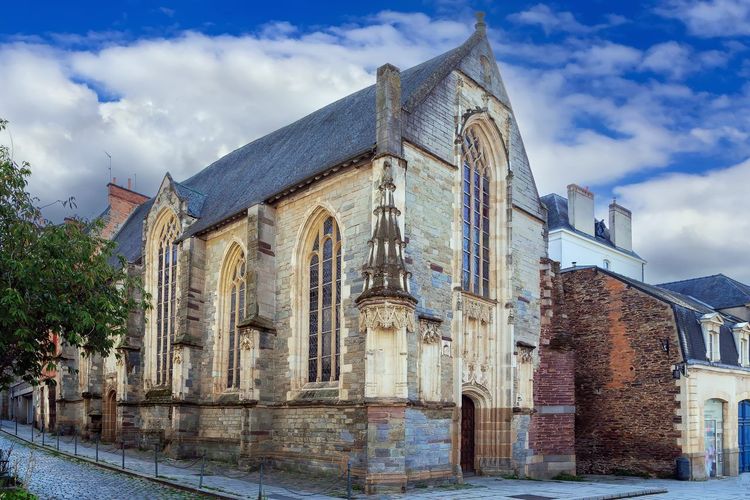
The chapelle Saint-Yves (Place Sainte-Anne, 35000 Rennes, rated 4.2/5 on Google with 21 reviews), recognizable for its flamboyant Gothic architecture, now houses the tourist office and an interpretation space devoted to the city's history — a conversion that lets you enter freely to admire a remarkable timber roof and leave with a map in hand.
Three other buildings complete this religious heritage for visitors who extend their exploration: the église Saint-Germain, one of the oldest parishes in the city, in flamboyant Gothic style; the basilique Notre-Dame de Bonne-Nouvelle in the Saint-Aubin neighborhood, a still-active Marian pilgrimage site; and the église Notre-Dame en Saint-Mélaine, next to the jardin du Thabor, whose Romanesque bell tower contrasts with the rest of the building. A Benedictine abbey cloister survives right alongside, a reminder that the Thabor itself was born from the gardens of this monastery before becoming a public park in the 19th century. None of these three churches demands a dedicated detour, but they integrate naturally into a walk through their respective neighborhoods if you happen to pass by. Ryo's audio-guided tour of Rennes conveniently strings together the city's heritage highlights for those without time to seek them out one by one.
Where to Eat in Rennes: the Lices Market, Crêperies, and Good Addresses

Eating in Rennes often starts with a simple question: galette or crêpe, and in which order. Local tradition calls for a savory buckwheat galette as a starter, followed by a sweet wheat crêpe, the whole accompanied by dry cider served in a stoneware bowl.
The historic center has a high density of crêperies, with addresses that have been established for several generations as well as more contemporary tables that revisit the recipe with local produce: andouille de Guémené, scallops from the bay of Saint-Brieuc, or homemade salted butter caramel. Prices remain reasonable compared to other, more touristy Breton towns, typically between €12 and €20 for a full galette-crêpe meal.
To taste local produce without sitting down in a restaurant, the Saturday morning Lices market remains the best option: farmhouse cheeses, cider to take away, oysters to shuck on the spot, and seasonal vegetables sold directly by producers. The galette-saucisse eaten standing up, without cutlery, optional mustard, is as much a local ritual as it is a meal. During the week, several fine grocery shops in the Vieux Rennes offer a curated selection of these same local delights — handy if your stay does not fall on a Saturday.
One address deserves a special mention: the Chocolaterie Durand (Rue Vasselot, 35000 Rennes, rated 4.8/5 on Google with 152 reviews), a Rennes institution in the city center, where the gourmet experience begins with an impressive window display of chocolates, caramels, and artisan confections. It is the place
For street food, rue Saint-Michel and its surroundings offer a younger and more international scene, reflecting the city's student population: artisan burgers, tapas bars, Asian cuisine. You will find plenty to vary the pleasures if two days of galettes and crêpes begin to weigh on the stomach. For a more leisurely dinner, the banks of the Vilaine and the Colombier neighborhood offer more refined tables, often less frequented by tourists than the pure historic center.
Finally, for lovers of Breton specialties in the broad sense, don't leave without tasting a still-warm kouign-amann, a far breton with prunes, or, in season, Plougastel strawberries sold at the stalls. Rennes gastronomy owes as much to its market as to its restaurants — a balance confirmed by the Ryo article on Rennes culinary specialties, useful for planning a more in-depth gourmet itinerary.
Where to Stay in Rennes for Every Budget
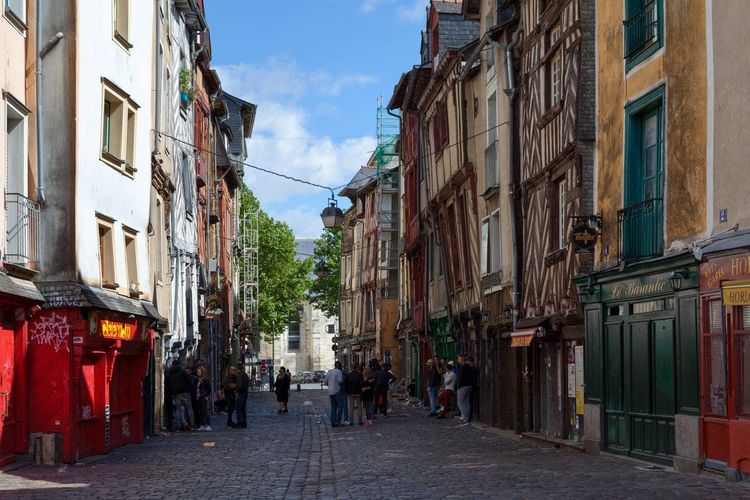
The choice of neighborhood depends above all on your tolerance for nighttime noise, as rue Saint-Michel and its surroundings remain lively late into the evening, weekends included.
For a heritage-focused stay, sleeping in the historic center, around the Vieux Rennes or the place des Lices, allows you to do everything on foot. This is also the most sought-after area, and therefore the most expensive: expect between €90 and €150 per night for a well-located mid-range hotel, more for charming addresses set in renovated historic buildings.
The station and Colombier neighborhood, fifteen minutes' walk from the Vieux Rennes, offers a good compromise: chain hotels at gentler rates, often between €60 and €100, and direct access to the TGV if you are leaving early in the morning. It is also the most practical option if you arrive by train without having booked a taxi.
For tighter budgets, several youth hostels offer dormitory beds from €25 to €35 per night — an option that has the advantage of putting you in contact with other travelers, often a good source of last-minute tips on weekend events.
Ideally book four to six weeks in advance if your visit coincides with a match weekend at the Roazhon Park or with the Tombées de la Nuit in early July — two events that drive up prices and quickly drain city-center availability. Families traveling by car will also find residences with private parking on the immediate outskirts, a real plus if you plan to head straight to the coast on the third day.
Finally, if you are looking for a more unusual place to stay, several quirky accommodations exist less than an hour from Rennes: treehouses, yurts, and caravans scattered across the Breton countryside — an option worth considering if you extend the stay beyond two days in the city. The Ryo article on unusual accommodations in Brittany details several addresses for a night out of the ordinary, to complement a more classic stay in the city center.
What to Do in Rennes with Kids or When It Rains
Breton weather has a bad reputation, often exaggerated but not entirely unfounded: it is worth having a covered backup plan, especially as it complements a family stay nicely.
Les Champs Libres remains the most comprehensive rainy-day option: the musée de Bretagne captivates older visitors, the Espace des sciences offers a planetarium and interactive exhibitions designed for children, and the library provides a comfortable youth area to unwind for an hour without spending a cent. Allow a full half-day if you want to cover all three spaces without rushing.
The musée des Beaux-Arts, less obvious for young children, regularly offers adapted workshops and activity booklets that turn the visit into a treasure hunt rather than a silent, contemplative tour. Ask at the desk when you arrive, as these activities are not always listed online.
For a more physical indoor activity, the piscine Saint-Georges appeals to children and heritage enthusiasts alike, with its Art Deco mosaics visible from the pool — an original way to swim surrounded by a listed setting. On the same playful note, the parc des Gayeulles, already mentioned for the second day, has covered facilities, an urban farm, and play structures that limit the damage of a passing shower.
Finally, for families staying more than one rainy day, the covered shops around the place du Parlement and the Colombier shopping center allow you to keep exploring the city without getting wet, with independent boutiques and cafés aplenty for a dry break between showers. On the subject of opening hours, bear in mind that most museums close on Mondays in Rennes as elsewhere in France: if your 2-day stay includes that day, switch to the Thabor or a stroll under the arcades instead, and save Les Champs Libres for the following morning at opening time, to avoid the Wednesday afternoon rush that is particularly busy with families during term time.
What to Do Around Rennes: Day Trips in Ille-et-Vilaine
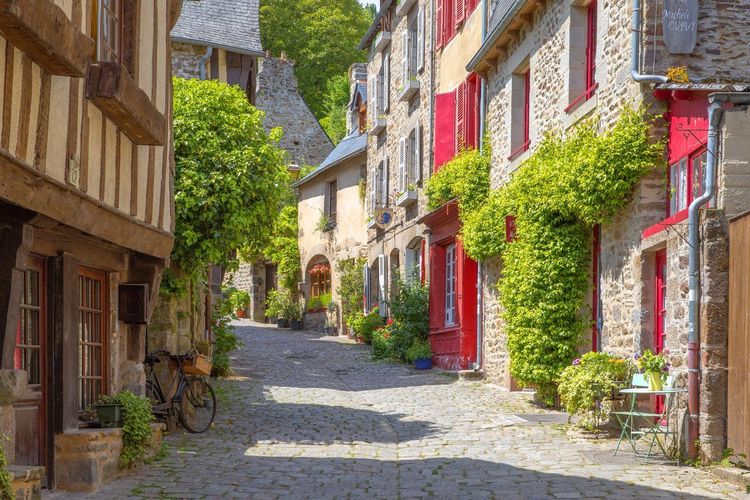
If you extend beyond two days, or prefer to sacrifice a half-day of museums for some fresh air, Rennes is less than an hour from several destinations that in themselves justify a trip to Brittany.
Saint-Malo, Dinard, and Dinan: the Coast in Under an Hour
Saint-Malo, the corsair city encircled by ramparts facing the open sea, is reached in 1 hour by road or approximately 1 hour by direct train from Rennes station. The ramparts can be walked in their entirety in just over an hour, with views that change dramatically with the tide — the Fort National and the Grand Bé are only accessible at low tide. It is the most popular destination for a day trip, so much so that in summer it is better to set off early to avoid the crowds on the ramparts late in the morning.
On the other side of the Rance estuary, Dinard cultivates a Belle Époque elegance inherited from its Anglo-Norman aristocratic clientele at the turn of the 20th century: listed seaside villas along the promenade du Clair de Lune, a casino, and a fine sandy beach, with an atmosphere noticeably more refined than its neighbor Saint-Malo.
A little further south, Dinan merits the detour for its medieval citadel suspended above the Rance: half-timbered houses reminiscent of those in the Vieux Rennes, some of the best-preserved ramparts in Brittany, and a river port accessible via the rue du Jerzual — a steep, cobbled street where several artisan craftspeople have set up shop. These three coastal destinations can be combined in a single day if you have a car, provided you accept not exploring everything in depth.
Fougères, Vitré, and the Roche aux Fées
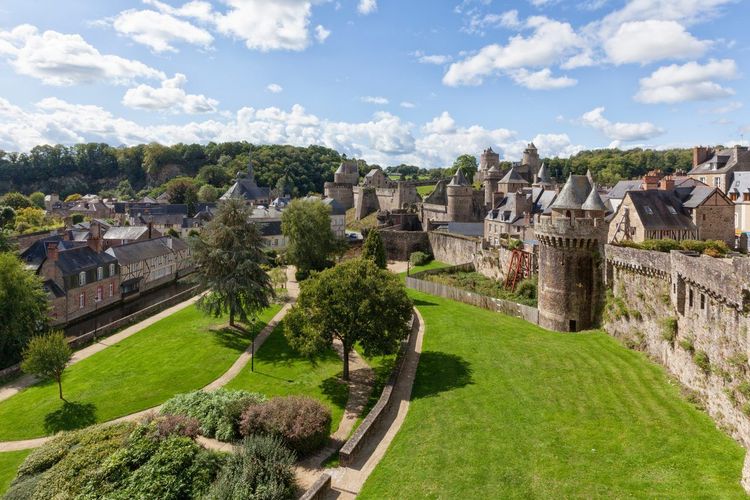
To the east, 45 minutes by road, Fougères impresses with its enormous fortress: one of the largest in Europe with 13 towers and roughly two hectares of enclosure, it dominates the old town from a rocky spur encircled by the Nançon river. The visit pairs well with a walk through the medieval quarter below, where the shoe industry long underpinned the city's economic reputation.
About thirty minutes from Rennes, Vitré preserves an intact medieval charm: a triangular castle with slate-capped towers, half-timbered houses lining cobbled streets, and still largely standing ramparts. Unlike Fougères, Vitré can easily be visited in half a day, making it a good option to pair with a morning devoted to another nearby site.
Finally, for megalith enthusiasts, la Roche aux Fées, 35 minutes southeast of Rennes, remains one of the most impressive covered allées in France: some forty blocks of purple schist, some weighing several dozen tonnes, aligned over roughly twenty meters, built approximately 5,000 years ago. Local legend has it that fairies built it in a single night, and a romantic tradition invites couples to count the stones each from their own side.
The Forest of Brocéliande and the Manoir de l'Automobile de Lohéac
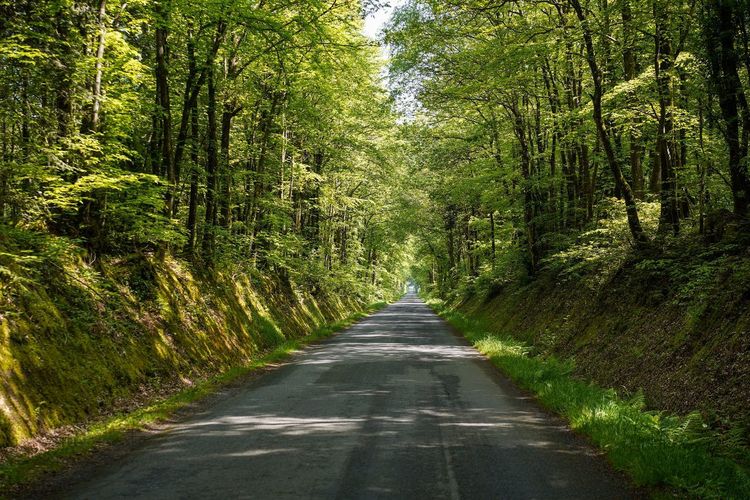
About forty minutes to the west of Rennes, the forest of Brocéliande, traditionally identified with the forest of Paimpont, has for centuries sustained the Arthurian legend: the tomb of Merlin, the fountain of Barenton said to trigger storms according to Celtic tradition, and the Val sans Retour where the fairy Morgane allegedly held faithless knights captive. Several marked trails allow you to visit these emblematic sites in a half-day's walking, map in hand — the forest is vast enough to get lost in without some preparation.
For a completely different experience, the Manoir de l'Automobile de Lohéac (La Ricoquais, 35550 Lohéac, rated 4.8/5 on Google with 4,472 reviews), 45 minutes south of Rennes, houses one of the largest private collections of vintage vehicles in Europe — several hundred cars spread across enormous themed halls, from the earliest automobiles to more recent racing cars. A paradise for lovers of chrome and mechanics, complemented by spaces dedicated to motorcycles and miniatures, and a nearby circuit where vintage models are sometimes driven during special events.
These day trips — whether coastal, medieval, or legendary — confirm what many visitors discover when planning their stay: Rennes works just as well as a destination in its own right as it does as a base for exploring Ille-et-Vilaine. The Ryo article on the most beautiful villages around Rennes and the Ryo article on the most beautiful beaches in Brittany detail each of these options more precisely if you plan to extend your stay.
Budget and Practical Information for Planning Your Stay
For a 2-day weekend in Rennes, the estimated budget ranges from €150 to €350 per person depending on the level of comfort sought, accommodation and meals included, with round-trip transport from Paris on top.
For accommodation, allow €60 to €150 per night depending on the chosen neighborhood. For meals, a budget of €25 to €40 per day comfortably covers a quick lunch, a dinner at a crêperie, and a few gourmet stops at the Lices market or a chocolatier. The visits themselves remain affordable: municipal museums charge just a few euros, with free slots and exemptions for younger visitors, and several major sites (Vieux Rennes, jardin du Thabor, the cathedral, the banks of the Vilaine) are freely accessible all year round. A couple staying in a chain hotel near the station, lunching at the market, and visiting two museums can expect to spend around €200 per person for the weekend.
If you plan to visit several paid sites in succession, ask about the packages offered by the tourist office: a 2-day pass generally bundles access to several sites with discounts on guided tours, while a 7-day pass is aimed more at visitors combining Rennes with a broader exploration of Ille-et-Vilaine. Tickets are available at the tourist office, housed in the chapelle Saint-Yves, or online on its website before you visit: as conditions change from season to season, check the exact content of the pass before purchasing.
On the subject of timing, advance booking is really only essential for three things: the guided tour of the Parlement de Bretagne, accessible only on a reserved time slot with a limited group capacity; your accommodation if your stay falls on a match weekend or festival; and your train tickets, considerably cheaper when booked several weeks in advance. Everything else — museums, walks, the market — can be visited without booking.
On the subject of what to pack, it depends mainly on Breton weather, which is changeable even in summer: a light waterproof jacket is more useful than an umbrella in the narrow lanes of the Vieux Rennes, which are often swept by wind. Comfortable shoes are essential, as the historic center is navigated almost exclusively on cobblestones. Add a foldable bag for market purchases and a portable charger if you are following an audio guide all day.
Among the extras ## FAQ
How Long Does It Take to Visit Rennes?
Two days are enough to cover the essentials: the Vieux Rennes, the Parlement de Bretagne, the museums, and the jardin du Thabor. One day allows you to see the historic center alone, while three days leave room for a trip to the coast or the surrounding countryside — to Saint-Malo or the forest of Brocéliande, for example.
Can You Visit Rennes on Foot in 2 Days?
Yes, almost entirely. The Vieux Rennes, the Parlement de Bretagne, and the place des Lices are all within 15 minutes' walk of each other. Only the parc des Gayeulles and some peripheral neighborhoods require the metro or a bike to stay within a reasonable timeframe.
What to Do in Rennes When It Rains?
Les Champs Libres (musée de Bretagne, Espace des sciences), the musée des Beaux-Arts, and the piscine Saint-Georges with its mosaics offer quality covered options, complemented by the city center's covered shopping passages if the shower does not last.
Is Rennes a Good Destination for Families?
Yes: Les Champs Libres has dedicated spaces for children, the jardin du Thabor offers large outdoor play areas, and the parc des Gayeulles adds an urban farm and leisure base for a more nature-focused day, all without leaving the city.
Where to See the Most Beautiful Half-Timbered Houses in Rennes?
Around place Sainte-Anne, place du Champ-Jacquet, and along rue Saint-Michel, in the Vieux Rennes, where the majority of the protected half-timbered facades are concentrated — some dating from the 15th century and among the best preserved in Brittany.
What to Visit Around Rennes in Ille-et-Vilaine?
Saint-Malo, Dinard, and Dinan for the coast; Fougères and Vitré for medieval towns; or the forest of Brocéliande and the Roche aux Fées for a more legendary detour — all of these destinations are less than an hour's drive from Rennes.
What Budget Should You Plan for a 2-Day Weekend in Rennes?
Allow between €150 and €350 per person, accommodation and meals included, with round-trip transport on top. This budget varies mainly according to the level of comfort of your chosen accommodation and the frequency of gourmet stops.
Rennes is not a city you visit by ticking off a rigid list of monuments: it is a compact format where medieval heritage, classical urbanism, and Art Deco intersect within a few hundred meters, with Breton day trips within easy reach by train. Forty-eight hours is more than enough to leave with an accurate picture of the city, provided you do not try to cram everything into a single afternoon.
If you want to structure your first approach without spending hours planning, the Ryo tour of Rennes offers 25 audio tracks and approximately 1h50 of guided commentary through the historic center — a great starting point to complement with the addresses and day trips detailed in this guide.




À lire également