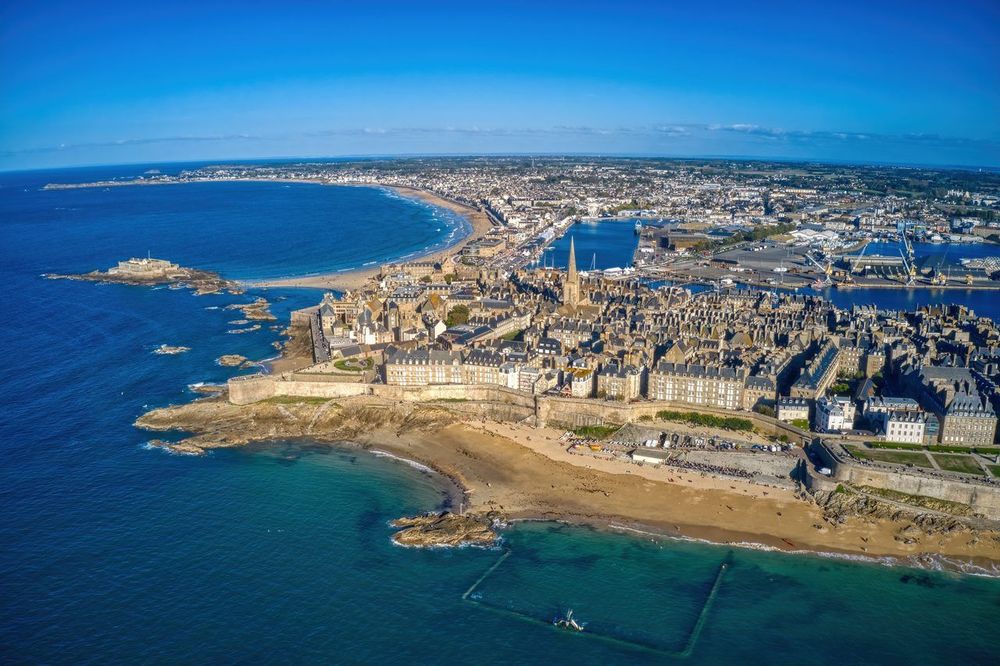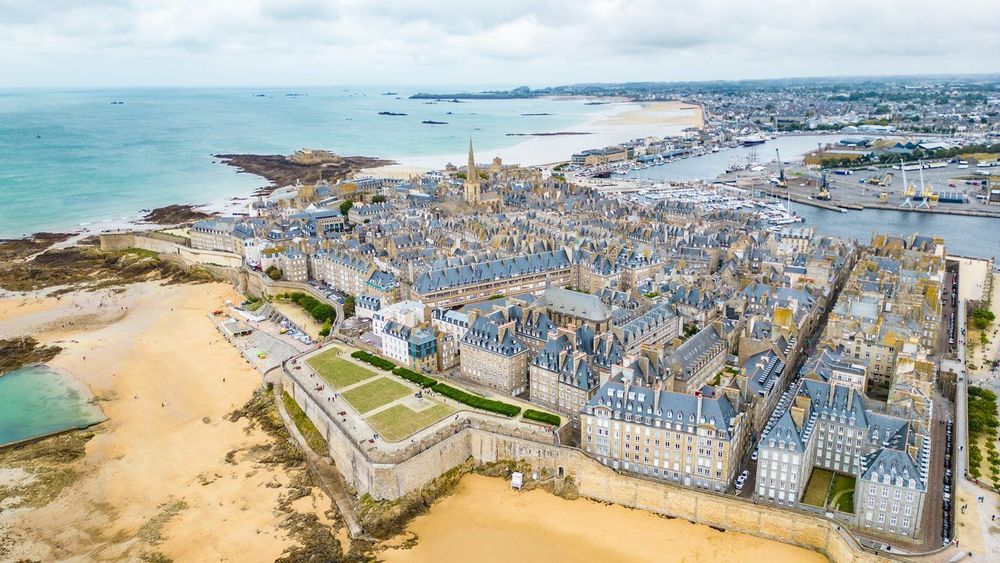
© Shutterstock
 Votre guide Ryo
Visiting Saint-Malo with Family: Ramparts, Beaches and Grand Bé in 2026
At the foot of Saint-Malo's ramparts, the tide can rise thirteen metres in six hours, enough to turn a beach into a sea channel and a walk to a tomb accessible on foot into a timed adventure. It is this rhythm dictated by the ocean that makes visiting Saint-Malo with family so different from a classic city break. On the ramparts and in the cobbled streets of the intra-muros, the Ryo audio guide for Saint-Malo turns this tale of privateers into a life-size treasure hunt, with no booking required.
The programme for a stay in Saint-Malo quickly goes beyond a simple list of monuments. There is L'Étoile du Roy, an eighteenth-century frigate moored in the harbour when not sailing elsewhere. There is the Grand Aquarium with its underwater ring populated by sharks, less than ten minutes from the old town. There is the Sillon beach, often cited as the largest urban beach in Europe, where the sand remains usable even at high tide. And there is the Grand Bé, a tiny islet where Chateaubriand rests, reachable on foot only twice a day between tides. Between these highlights, the villages of the Côte d'Émeraude and rainy-day alternatives, this guide explains how to plan your holiday without being caught off guard — by tide times or by the queue at Mont-Saint-Michel.
Exploring Saint-Malo Intra-Muros
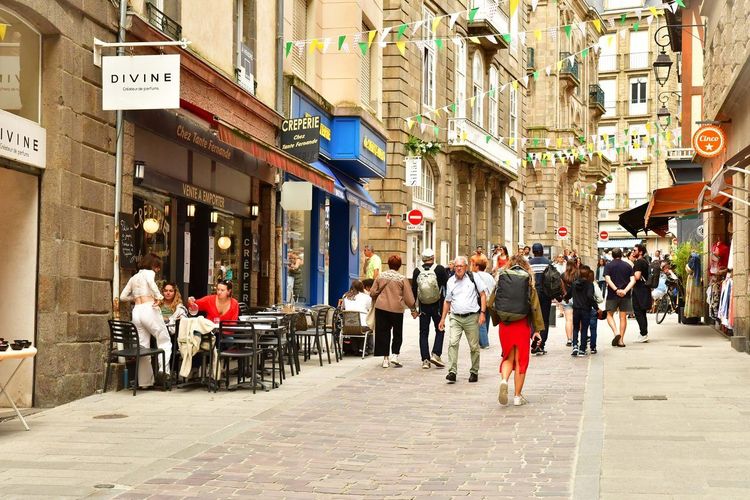
Every stay starts here: the fortified old town, perched on its rock between two beaches, can be explored on foot in a relaxed morning or a full day if your group wants to cover every corner twice.
Walking the Ramparts of the Privateer City
The ramparts of Saint-Malo encircle the intra-muros for nearly 1,754 metres, a route that younger visitors love because it turns into an impromptu race from one tower to the next. Built from the twelfth century onwards and later reinforced by Vauban, they were largely restored after the 1944 bombardments, but the overall appearance — that blend of grey granite and grey sea — has not changed.
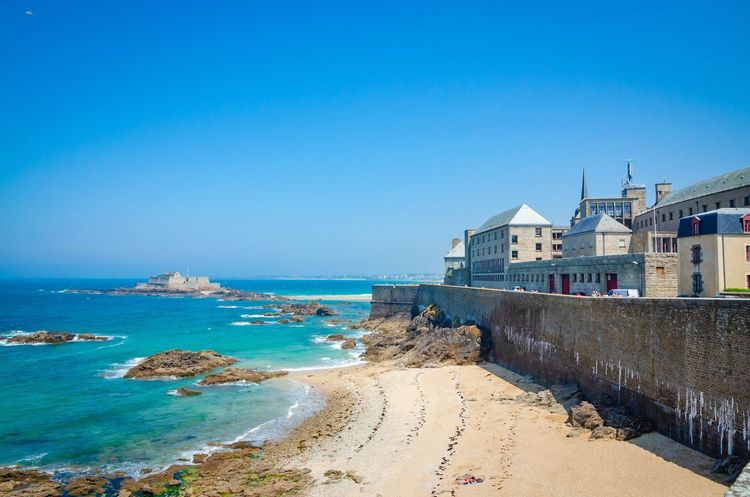
Head up early in the morning: the raking light over the bay is at its most beautiful and tour groups have not yet taken over the walkway. From the bastion de la Hollande, you can easily spot the Fort National, a fortified islet that only fully emerges at low tide. Allow 45 minutes for the full circuit without stopping, double that with photo breaks and a crêpe stop in one of the side streets.
For younger children, a simple tip: turn the walk into a treasure hunt. Spot the names of the bastions together (Bidouane, Saint-Louis, Saint-Philippe) and let them guess which one has the best view over the beaches. The Ryo article on the Cité d'Aleth extends the walk into the Saint-Servan district, if you want to see the fortified city from a different angle.
Privateer Mansions and Manor Houses (Limoëlou, Jacques Cartier)
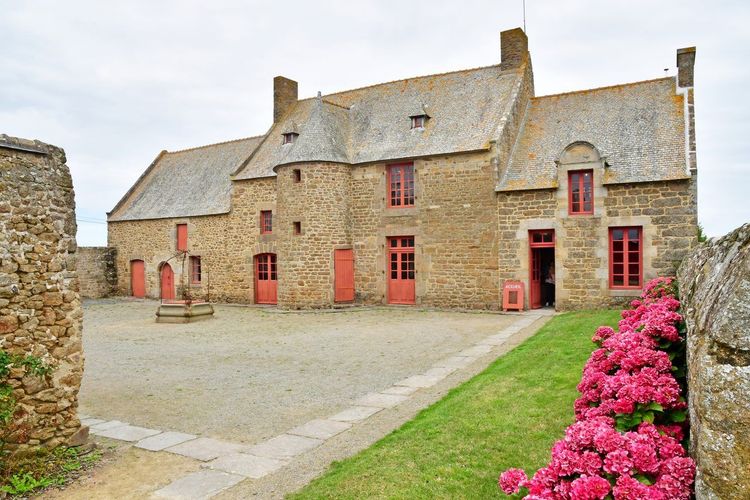
The Manoir de Limoëlou (Rue David MacDonald Stewart, 35400 Saint-Malo, rated 4.6/5 on Google from 541 reviews), in Rothéneuf, was the home of Jacques Cartier after his expeditions to Canada. The guided tour tells the story of the Malouin navigator through ship models and period room reconstructions: the kitchen, the bedroom, the study.
Within the intra-muros, several private mansions bear witness to the fortunes accumulated by Malouin shipowners and privateers in the seventeenth and eighteenth centuries. Their granite façades, often adorned with mascarons, are worth a look even without going inside: spotting the sculpted faces above the doorways can easily fill the end of a morning.
Not far away, the statue of Robert Surcouf, the most famous Malouin privateer, stands above the bastion de la Hollande, one arm outstretched towards the open sea. It is a good opportunity to explain the difference between a privateer and a pirate: the former operated with royal authorisation, a distinction that has shaped the entire identity of the town. The Ryo audio guide covers each of these bastions and mansions in a few minutes of listening, a practical way to hold younger visitors' attention without multiplying the signs to read.
Going on Board L'Étoile du Roy and the Privateer Ships
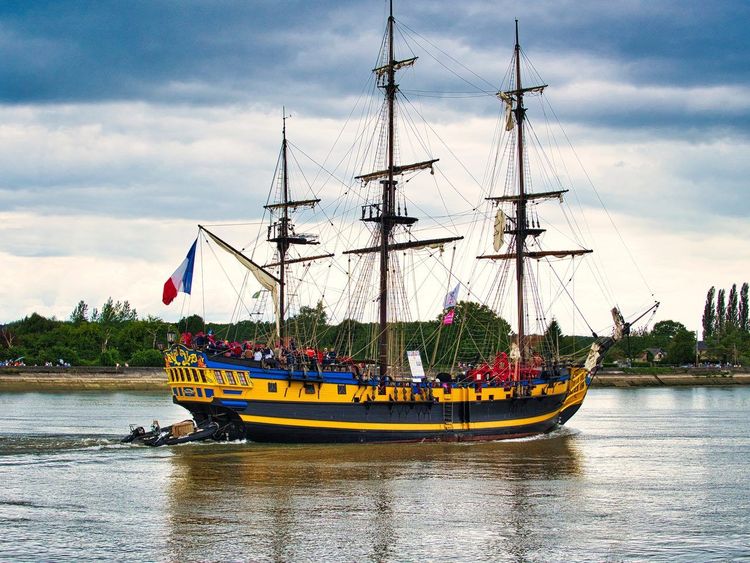
After the ramparts, head to the harbour: several ships can be visited at the quayside, perfectly suited to anyone who dreams of gunports and tall masts.
L'Étoile du Roy, an Eighteenth-Century Frigate to Visit
L'Étoile du Roy (Bassin Vauban, 35400 Saint-Malo, rated 4.3/5 on Google from 202 reviews) is a reconstruction of an eighteenth-century privateer frigate, complete with thirty-two cannons and an upper deck you can walk from stem to stern. Built in the 1990s for film and television, she sailed under several flags before making Saint-Malo her home port.
Check the calendar before planning your visit: the ship is not always in port, as she sails cruises and calls at other harbours. When she is berthed, a self-guided tour of the main deck and lower deck takes around 45 minutes. The cannons and the galley, where the crew's quarters — hammocks included — are reconstructed, tend to draw the most attention.
Spanish Galleons and Pirate Ships
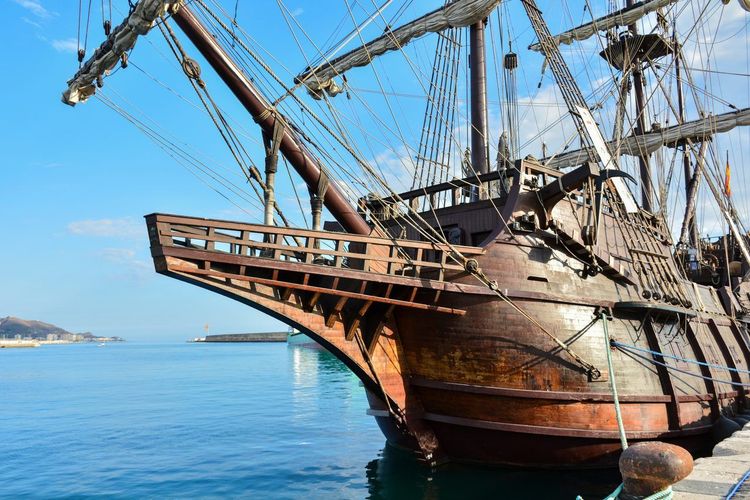
For younger visitors, several Malouin companies offer sea trips aboard replica Spanish galleons or pirate-themed boats, with costumed entertainment, an on-board treasure hunt and sometimes a wooden sword fight for budding captains. These short cruises, often an hour long, depart directly from the Bassin Vauban or the Dinard slipway.
It is also one of the few moments during the stay when you actually get out on the water without swimming or paddling, which is reassuring when travelling with very young children. Book the day before in high season: morning slots sell out quickly. To keep the privateer theme going throughout the city walk, the Ryo audio guide À l'abordage follows this thread across 29 stops and 2 hours 40 minutes, taking in the ramparts, the harbour and the shipowners' mansions.
The Grand Aquarium of Saint-Malo
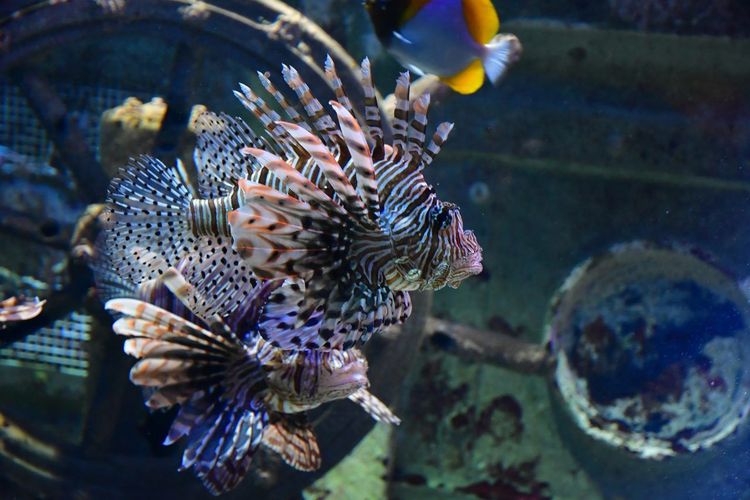
Ten minutes by car or bus from the intra-muros, the Grand Aquarium is often the outing that pleases everyone, from toddlers to unimpressible teenagers.
Tanks, Sharks and the Mini Zoo
The Grand Aquarium de Saint-Malo (Avenue du Général Patton, 35400 Saint-Malo, rated 4.1/5 on Google from 21,330 reviews) leads visitors through a sequence of themed tanks to a 360-degree underwater ring where sharks swim just centimetres away. The Nautibus, a small submarine that slowly descends into a tank filled with shipwrecks, remains the favourite attraction for children under 8.
The mini zoo, a lesser-known section, features insects, reptiles and amphibians in terrariums set at child height. It is often where visitors linger longest, between tarantulas and frogs in improbable colours.
Tickets, Opening Hours and Visiting Tips
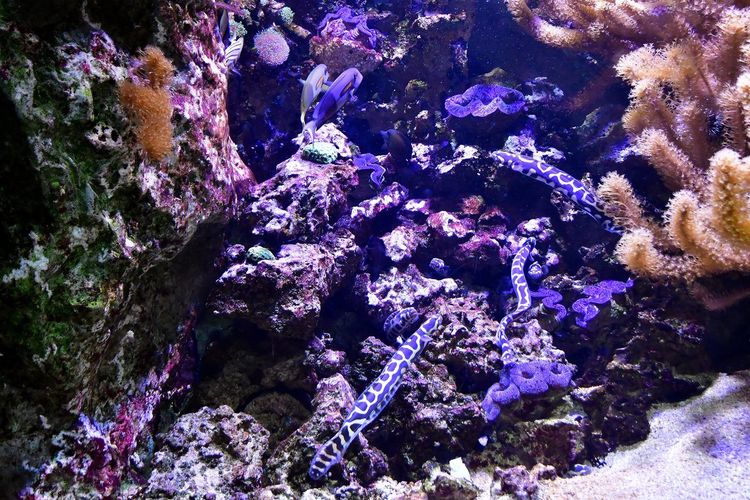
Allow two to three hours for the full visit, more if you linger at every tank. The aquarium is open daily in season, with extended hours in July and August, and reduced pricing generally applies from age 4, with free entry for younger children.
Two practical tips are worth following. First, book tickets online to avoid the ticket office queue, which can be particularly long on rainy days when everyone has the same idea. Second, visit late morning or late afternoon: the morning groups will have already moved through the first tanks, leaving more space to look without jostling. The route is pram-accessible across almost the entire circuit, a real bonus if you have a toddler who falls asleep mid-visit.
One final argument, rarely mentioned: the air-conditioned dimness of the halls offers a welcome break on hot summer days, when the beach becomes hard to manage with a baby.
The Best Beaches of Saint-Malo and the Côte d'Émeraude
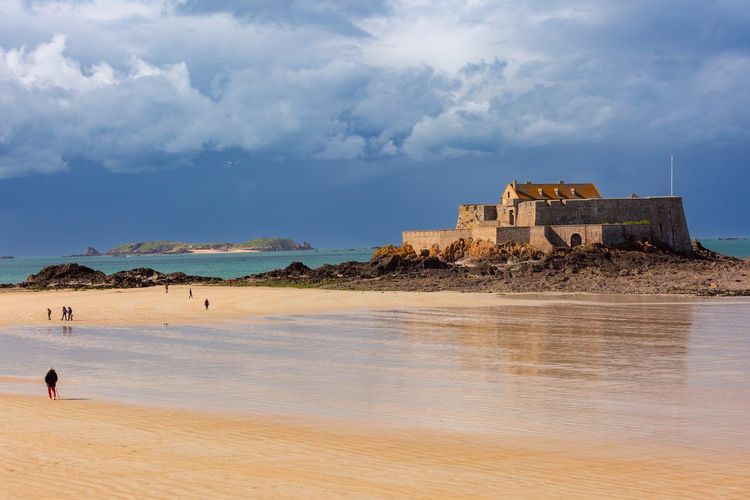
After the aquarium, the day naturally turns towards the sand: Saint-Malo and its surroundings offer around ten beaches, each with its own atmosphere.
The Sillon Beach, the Largest Urban Beach in Europe
The Sillon beach stretches for nearly two kilometres between the old town and the Paramé district, earning its reputation as the largest urban beach in Europe. The sand remains wide and usable even at high tide, unlike many coves along the Côte d'Émeraude that disappear completely under water.
The promenade running alongside it is ideal for an evening cycle or scooter ride while younger children chase the waves. The wooden groynes planted in the sand, which have become the postcard image of the town, also serve as handy landmarks for finding your spot again along two kilometres of beach. Beach clubs, land-sailing schools and lifeguard posts set up along the Sillon in season, making it an easy base for a full day without moving the car.
Beaches Around Saint-Malo: Saint-Coulomb, l'Écluse in Dinard, Saint-Briac
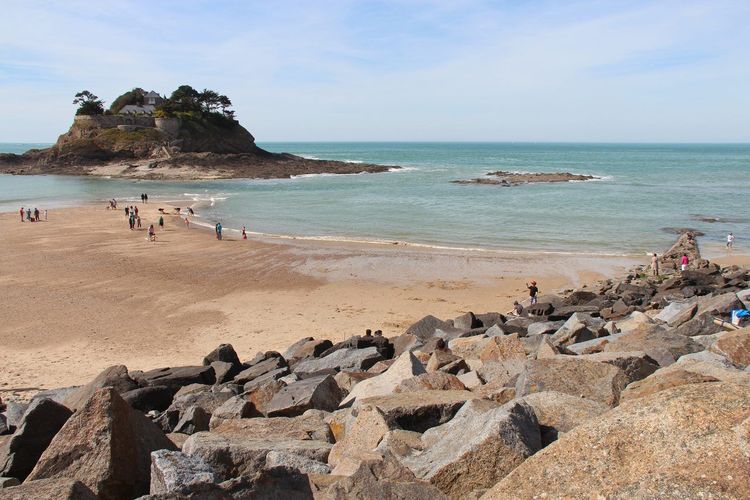
About fifteen minutes by road, the beaches of Saint-Coulomb offer a wilder setting, with rocky coves and rock pools to explore as soon as the tide goes out. The plage du Guesclin, the best-known beach in the commune, retains its charm even at the height of summer thanks to its slightly out-of-the-way access and the fortified islet standing just offshore.
On the Dinard side, the plage de l'Écluse remains the most fully equipped in the area: supervised swimming in season, striped beach cabins lined up facing the sea, and a promenade just behind.
Further west, the beaches of Saint-Briac-sur-Mer appeal to those looking for fewer crowds: the plage de la Salinette (Plage de la Salinette, 35800 Saint-Briac-sur-Mer, rated 4.6/5 on Google from 897 reviews) and the Béchet beach remain noticeably quieter than the heart of Saint-Malo in midsummer, with equally fine sand.
On all these beaches, keep an eye on the tide times posted at tourist offices and at the access points: between high and low tide, the available stretch of sand can vary by several tens of metres, completely changing the size of the play area depending on when you arrive. For facilities, the Sillon and l'Écluse are the best equipped, with showers, toilets, seasonal lifeguards and ice-cream vendors at every access point. Saint-Coulomb and Saint-Briac, more discreet, require you to bring more with you, but offer in return a welcome calm for little ones who dislike crowds. To compare the options without making multiple trips, the Ryo article on the beaches of Saint-Malo details the access and facilities for each one.
Grand Bé and Petit Bé at Low Tide
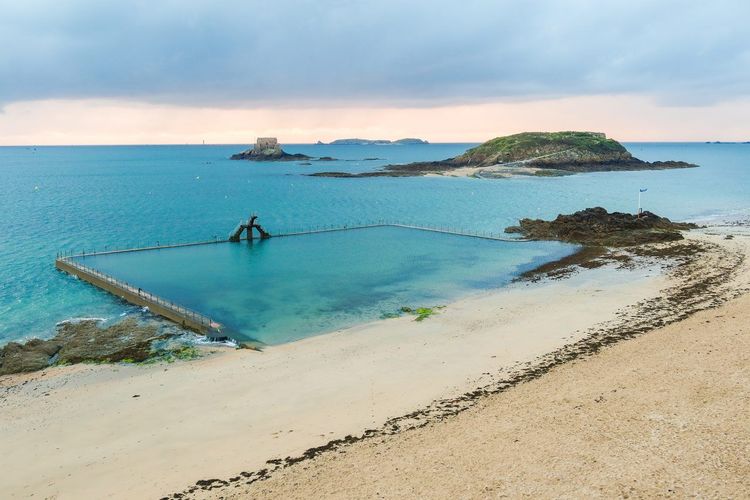
From the ramparts, you can spot a small rocky island a few hundred metres from the shore: that is Grand Bé, reachable on foot only when the sea allows.
Walking to Chateaubriand's Tomb
The Grand Bé is reached through the Porte des Bés at the foot of the ramparts, a fifteen-minute walk along a path of sand and rocks. At the top, a plain granite slab without inscription, topped by a cross, marks the grave of Chateaubriand, who asked to rest facing the open sea rather than be buried with Parisian honours.
The crossing is only possible at low tide, within a two-to-three-hour window around low water: times are posted at the entrance to the passage and change every day. Never linger beyond the posted time, as the returning water cuts off the path back faster than you might expect. Climbing to the top of the island, where the remains of a fort still stand, is often the most memorable moment of a day in the intra-muros.
Rock Pooling, Spring Tides and Exploring the Foreshore
The same tidal mechanism that opens up Grand Bé turns the foreshore into a playground for rock pooling: crabs, cockles and periwinkles hide in the sand and under the rocks uncovered between the Sillon and the tip of the citadel. A simple bucket, a net and a pair of wellies are enough to keep the whole group busy for an hour or two.
The spring tides, particularly around the March and September equinoxes, offer the best conditions: the tidal coefficient, displayed in the local press and on harbour noticeboards, sometimes climbs above 100, uncovering areas that are normally submerged. This is also when guided rock-pooling outings are offered locally, a good option for a first experience. Always check the current regulations, including minimum catch sizes, before keeping what you find.
The Petit Bé, a neighbouring islet with a seventeenth-century fort attributed to Vauban and open to visitors depending on the season, is reached by the same type of low-tide crossing, slightly further south. Both outings can easily be combined in a single low-tide window, provided you keep a close eye on the time.
Water Sports and Thrills on the Côte d'Émeraude
Between monument visits, the Côte d'Émeraude is above all a vast water sports playground, with a well-organised offering for all ages.
Sailing, Kayaking and Land Sailing on the Big Beaches
Several sailing schools based on the Sillon and in Dinard offer week-long courses from age 6 or 7, starting with optimists and moving on to catamarans depending on age. Half-day taster sessions let you try without committing to a full week, a practical option mid-stay.
Sea kayaks can be hired by the hour or half-day, with guided outings towards the Fort National or the Pointe de la Varde for those who want to see the town from the water without taking a group boat. Land sailing takes advantage of the wide, firm sand of the Sillon at low tide: clubs offer introductory sessions from age 8, helmet and harness provided, and a good half-hour is enough to get comfortable with the first turns.
Beach Clubs, Ponies and Horse Riding on the Sand
Want to take a half-day off? The beach club, an institution on the Breton coast, steps in on the Sillon as well as in Dinard: sand games, inflatables, supervised swimming and activities run by qualified instructors, available by the half-day, the full day or the week. It is often here that children first learn about coastal safety: recognising a current, using a buoy, staying calm when you lose your bearings on a busy beach.
Another classic in the area is horse riding on the sand. Several riding centres nearby, particularly around Saint-Coulomb, the Pointe du Meinga and Cancale, organise accompanied outings of one to two hours, with ponies for beginners and larger horses for experienced riders. These rides depend entirely on the tide calendar, as the beach must be uncovered, and should be booked several days in advance in July and August. Discovering Saint-Malo from the foreshore at a gentle walk, with the ramparts as a backdrop, is one of the most lasting memories of a stay on the Côte d'Émeraude.
Cruises and Boat Trips along the Côte d'Émeraude
Seeing Saint-Malo from the sea completely changes your perspective on the ramparts, which you discover all at once, sitting on their rock. Several companies offer short cruises in the bay, as far as Dinard or along the Rance estuary, with on-board commentary.
For a longer outing, a boat trip to Cap Fréhel lets you follow the cliffs from the water, a viewpoint the road never quite delivers. Allow half a day for this excursion, with meals possible on board or on arrival depending on the package. The crossings to Dinard take only about ten minutes and are a far better alternative to the car for a light morning out.
Carousel, Rides and the Little Train for Young Children
For the smallest visitors who are neither old enough nor keen enough to board a boat, the carousel set up near the esplanade Saint-Vincent in season is a reliable favourite, as are the fairground rides that appear around the intra-muros. The tourist little train, which crosses the old town and runs along part of the seafront, offers a restful alternative after a morning on foot, particularly appreciated when legs are starting to tire. These attractions change location from one season to the next: it is better to check the day's schedule at the tourist office rather than counting on them at the end of the day.
The Carved Rocks of Rotheneuf and the Tour Solidor
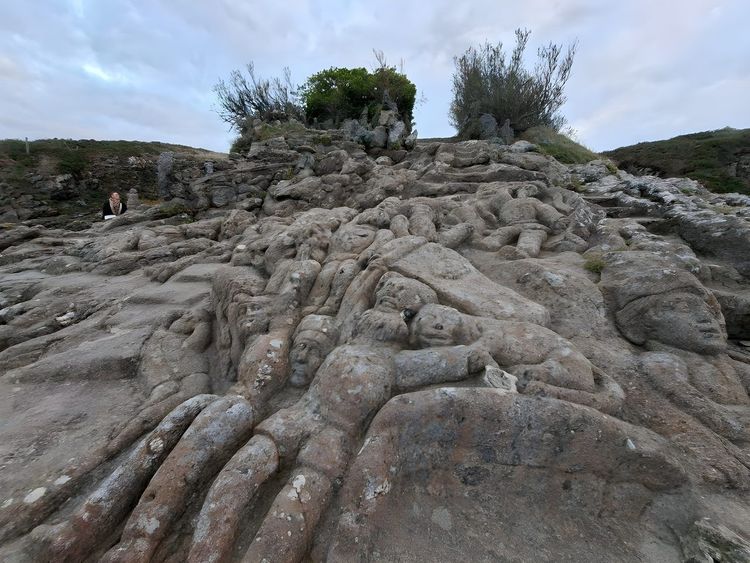
Two sites, slightly away from the historic centre, deserve a dedicated outing rather than a quick detour.
The Carved Rocks of Rotheneuf and the Shell Museum
The carved rocks of Rotheneuf bring together several hundred figures carved directly into the rock by Abbé Fouré at the end of the nineteenth century, a solitary endeavour carried out over around fifteen years across an entire rocky headland: faces, sea monsters, legendary scenes. Erosion has worn away the finest details, but the overall effect remains striking, especially when you realise that one man alone, who had become deaf and mute, chiselled everything by hand facing the sea.
Right next door, the Shell Museum housed in an old mill displays thousands of shells from around the world, including some spectacular specimens displayed at child height.
Allow a good hour for both sites, more if the game is to find every carved figure among the rocks.
The Tour Solidor and the View from the Fort d'Alet
In Saint-Servan, a more residential district to the south of the intra-muros, the Tour Solidor, a fortress of three adjoining towers built in the fourteenth century, guards the entrance to the Rance estuary. It long housed the international museum of Cape Horn sailing, dedicated to sailors who rounded Cape Horn under sail: its opening hours now vary by season and exhibition, so check before making the trip.
Just above, the cité d'Alet and its fort offer a free, stair-free panorama over the entire bay, with a coastal path that circles the headland in just under an hour. The Ryo article on the Tour Solidor details the opening hours and access to the site. The Saint-Malo audio-guided tour is a good way to take in the ramparts themselves before or after this walk.
The Most Beautiful Villages and Sites of the Côte d'Émeraude
Beyond the gates of Saint-Malo, the entire Côte d'Émeraude unfolds in day trips, each with its own character.
Dinard and Its Belle Époque Villas, Saint-Briac-sur-Mer
Dinard, on the other side of the estuary, is reached in ten minutes by boat or around twenty minutes by car via the Rance barrage. The town has kept its Belle Époque villas, built by English and Parisian holidaymakers from the late nineteenth century onwards, the most photogenic of which overlook the Promenade du Clair de Lune.
Park in the outlying car parks in high season: the town centre fills up quickly on sunny afternoons. The best of the walk runs along the seafront to the Pointe du Moulinet, where the path offers several views back across to Saint-Malo. Further along the coast, Saint-Briac-sur-Mer retains the feel of a fishing village, with a sheltered harbour and beaches noticeably less crowded than Dinard in the height of summer.
Cancale and the Oyster Route
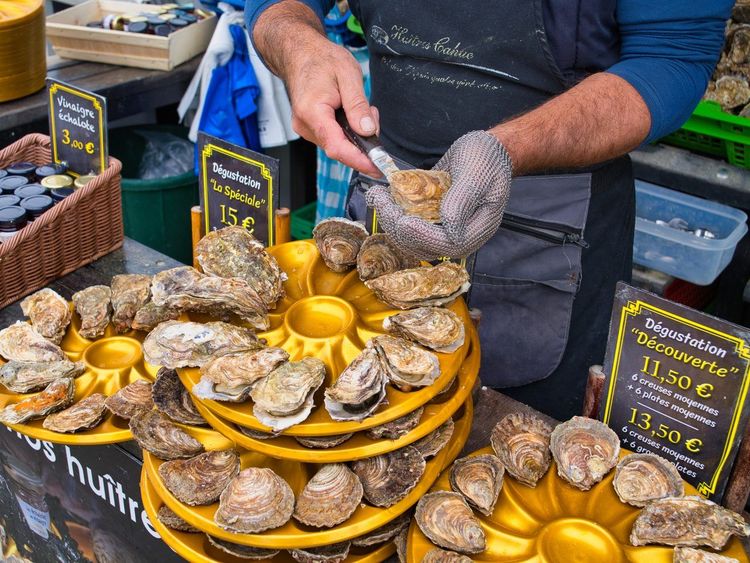
Cancale, half an hour by road, still lives to the rhythm of its oyster market at the Port de la Houle, where the oyster beds stretch as far as the eye can see when the tide goes out.
At the harbour, several stalls sell platters to take away, eaten sitting on the rocks with a view over the bay — a simple experience that even the most reluctant palates tend to ask for a second time. The Sentier des Douaniers running along the coast from the harbour also makes for a short, easy walk with views over the Chausey archipelago on clear days. Watching the oyster farmers sort their bags on the mudflats at low tide often takes longer than the tasting itself.
Medieval Dinan and Saint-Suliac
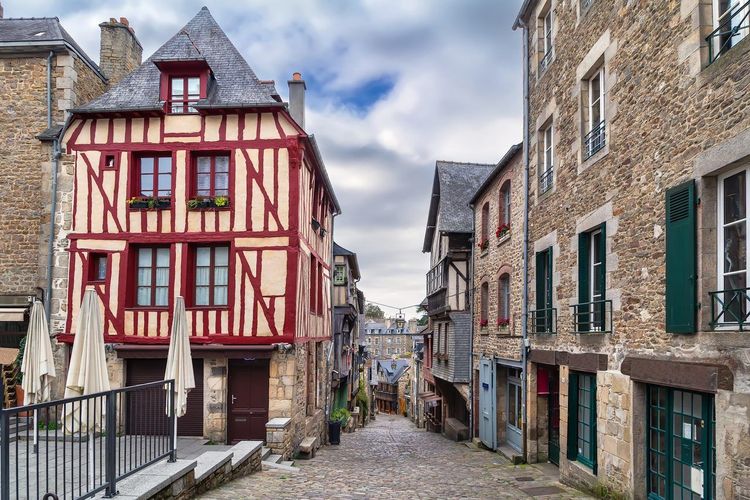
Dinan, three-quarters of an hour from Saint-Malo, packs one of Brittany's finest medieval towns into a compact area: ramparts, half-timbered houses along the rue du Jerzual that winds steeply down to the harbour on the Rance, and a château whose fourteenth-century keep can be visited without any particular difficulty.
More discreet, the village of Saint-Suliac, listed among the most beautiful villages in France, lines its granite houses along the Rance estuary. People come here mainly for a peaceful waterside walk, flower-filled lanes and quiet, far from the summer bustle of the coast.
These two stops combine well in a single day: a morning in Dinan for the ramparts and the rue du Jerzual, a relaxed afternoon in Saint-Suliac to unwind before heading back to Saint-Malo.
Cap Fréhel and Fort la Latte
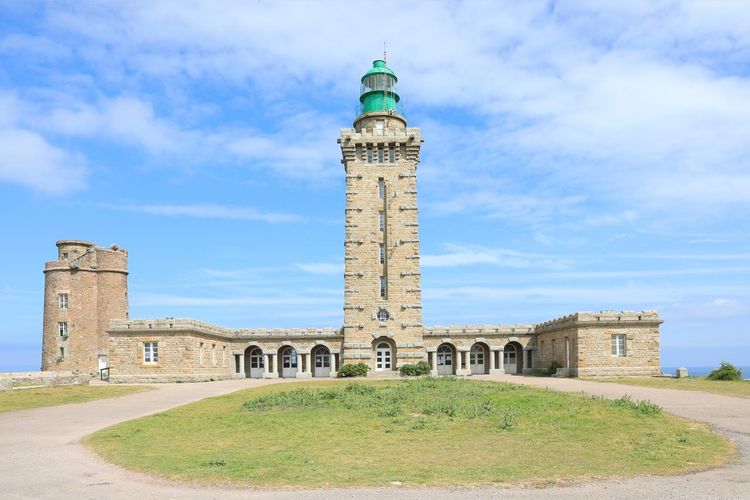
The Cap Fréhel, three-quarters of an hour to the west, unfolds pink sandstone cliffs that plunge more than 60 metres into the sea, covered in heather and gorse at the end of summer. The lighthouse, open to visitors in season, rewards the climb with a panorama that reaches as far as the Channel Islands on a clear day.
A few kilometres away, Fort la Latte (Fort la Latte, 22240 Plévenon, rated 4.8/5 on Google from 98 reviews), a medieval castle perched on a rocky spur and connected to the mainland by two drawbridges, has served as a film set on several occasions and remains one of the favourite spots for a sunset on the Côte d'Émeraude. The Sentier des Douaniers links the two sites in around an hour's walk, one of the finest coastal hikes in the area.
With only two or three days on the ground, it is better to choose: Dinard and Cancale can easily be visited on the same day, while Cap Fréhel, Fort la Latte, Dinan and Saint-Suliac each require a good half-day given the distances involved. To plan these excursions without unnecessary back-and-forth, the Ryo article on the most beautiful villages around Saint-Malo suggests a logical visiting order based on the number of days available.
A Day Trip to Mont-Saint-Michel from Saint-Malo
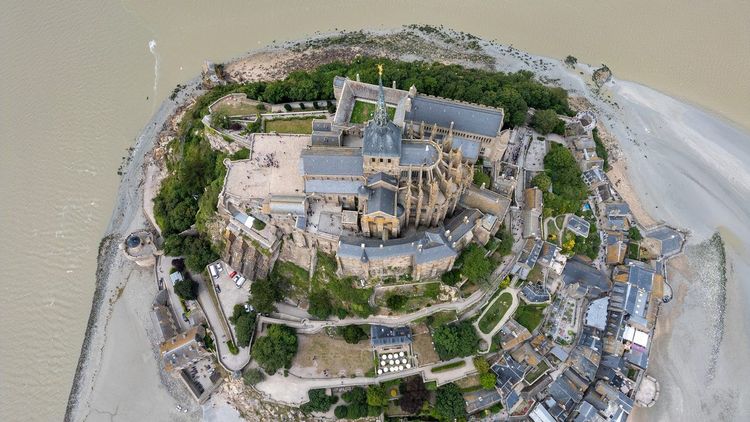
Mont-Saint-Michel (Le Mont-Saint-Michel, 50170 Le Mont-Saint-Michel, rated 4.6/5 on Google from 60K reviews) is not strictly part of the Côte d'Émeraude, but few visitors passing through Saint-Malo leave without making the trip.
Planning the Visit with Young Children
The Mont-Saint-Michel is reached in just under an hour by road from Saint-Malo. Cars must remain on the mainland car parks, connected to the island by shuttles or by a long pedestrian causeway, which is pram-accessible as far as the village ramparts.
Inside, however, the Grande Rue climbs steeply and the abbey is visited via a maze of staircases, making it very difficult to navigate with a pram. Bring a baby carrier for the youngest children if you plan to go all the way up to the abbey, and shoes with a good grip on the slippery cobblestones in wet weather.
How Long to Allow from Saint-Malo
Half a day is enough for the essentials: a walk up through the village, a circuit of the ramparts, an omelette at one of the historic restaurants. To visit the abbey without rushing, it is better to allow a full day, factoring in the necessary breaks on the way up.
Arrive as early as possible, before 10 a.m. if you can: tourist coaches fill the Grande Rue by mid-morning and the crossing becomes much less pleasant in the crowds. The bay itself is worth the detour on spring tide dates, when the sea visibly rises around the rock — a spectacle few visitors think to schedule into their itinerary.
Nature Parks and Rainy-Day Activities
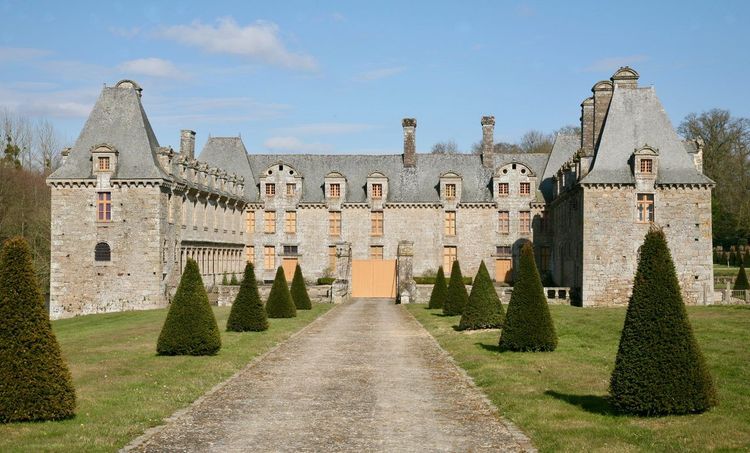
Some days, the Breton rain makes itself at home. Here is how to make sure you are never stuck in the hotel.
Zoo de la Bourbansais and Wildlife Parks Around Saint-Malo
The zoo de la Bourbansais, set in the grounds of a sixteenth-century château at Pleugueneuc, about thirty minutes from Saint-Malo, is home to several hundred animals on a largely shaded circuit — a real plus in strong heat or light rain. The birds of prey display and the pack of hunting hounds, scheduled several times a day in season, are the highlights of the visit.
More modest in scale, the parc animalier du Chemin des Îles, near Saint-Coulomb, offers a manageable introduction to farm animals — a shorter and less expensive option for very young children who cannot sustain a full day out.
Châteaux, Gardens and Geocaching
The château du Rocher Portail, about forty minutes towards Fougères, can be visited freely with period décor and activities, and has a park where you can catch your breath between rooms. The parc botanique de Haute Bretagne, at Le Châtellier, focuses more on themed gardens and landscaped vistas, which are more enjoyable in dry weather than in heavy rain.
In the same vein, the Jardin de l'eau, laid out around ponds, walkways and water features in the hinterland near Saint-Malo, rounds out a mixed rainy day nicely: check its opening hours before making the trip, as they reduce considerably out of season.
For a more active option, several marked geocaching trails in the area turn a simple walk into a GPS treasure hunt at zero cost: local tourist offices share the coordinates and some offer their own puzzle trails. The Récrénature leisure centre (La Massuais, 35270 Meillac, rated 4.3/5 on Google from 83 reviews), near Meillac, rounds out the offer with nature trails and hands-on workshops, even in light rain.
Indoor Activities in Saint-Malo When It Rains
In the town itself, the Grand Aquarium remains the safe bet on rainy days, fully indoors. To that can be added the swimming pool and covered leisure facilities in the Malouin agglomeration, from bowling to laser tag, and the intra-muros museums, starting with the city history museum housed in the château, which can easily fill an hour without setting foot outside. Always keep an indoor option in reserve on your itinerary: Breton weather changes fast, and a plan B saves a lot of negotiation on the hotel doorstep.
Practical Information: Where to Stay, Eat and Get Around
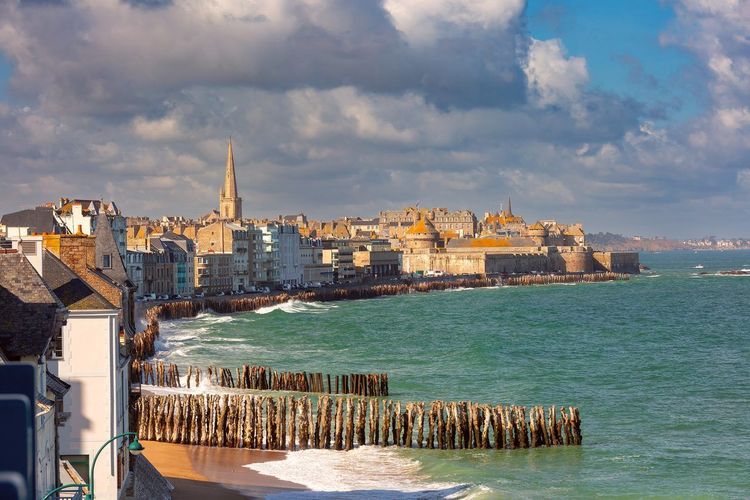
Now for the practical questions that underpin the whole stay.
Where to Stay in and Around Saint-Malo
For a stay centred on intra-muros sightseeing, hotels inside the ramparts offer the advantage of doing everything on foot: interconnecting rooms should be booked several months in advance in summer, and rates rise sharply in July and August. The Paramé district, just behind the Sillon, has more apartment-style accommodation and rentals with kitchens, practical for a full week when nap times dictate the day.
The campsites at Rothéneuf and the Pointe de la Varde, a short walk from the beach, remain the most economical option, with mobile homes and motorhome pitches. Around Saint-Malo, Dinard, Cancale and Saint-Coulomb also make good bases for exploring over several days without returning to the city each evening.
Where to Eat: Crêperies, the Harbour and Markets
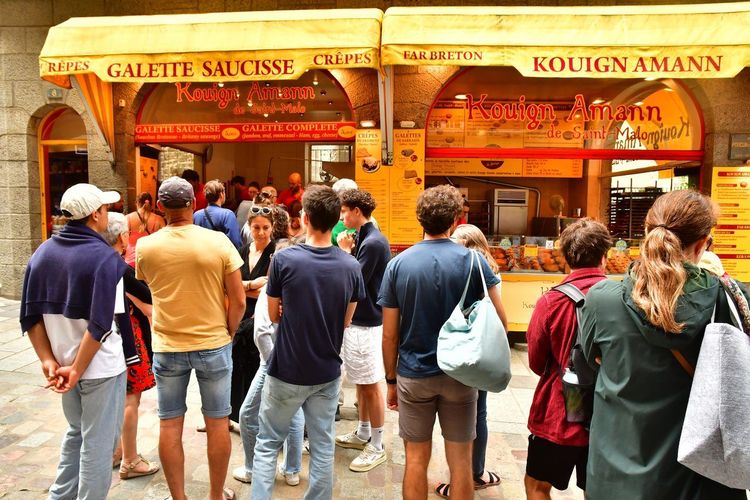
Crêperies are the reliable standby, found on every street corner of the intra-muros: a buckwheat galette complète followed by a salted caramel butter crêpe closes the meal without any argument. At the harbour, several seafood restaurants offer simpler menus with a view over the boats, a good option for a leisurely dinner.
For a quick bite between visits, the galette-saucisse stalls and takeaway crêperies around the place Chateaubriand do the job efficiently, as does the covered market at the Halle au Blé for assembling a picnic to eat on the ramparts. Book ahead for tables with a sea-view terrace, which are in high demand on summer evenings.
Getting Around Saint-Malo Without a Car
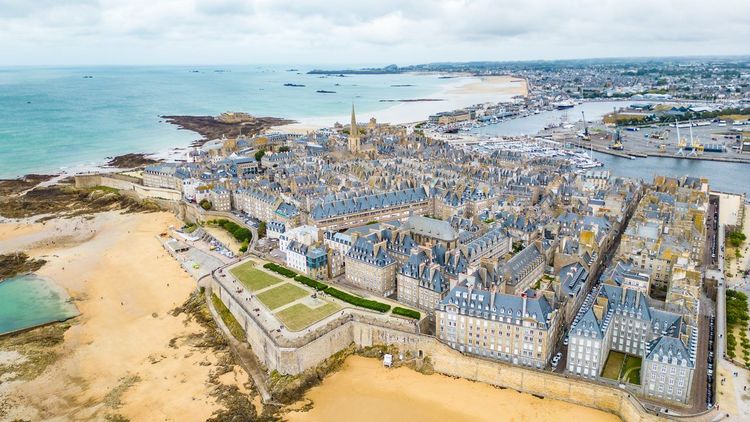
The intra-muros, ramparts included, can be explored entirely on foot without ever needing a vehicle. To reach the Sillon, the aquarium or Rothéneuf, the urban bus network covers most neighbourhoods from the station, with convenient stops near the main tourist sites. The Saint-Malo TGV station, just under three hours from Paris-Montparnasse, makes a completely car-free stay perfectly realistic.
For Dinard, the ferry shuttle linking the two shores in about ten minutes is faster and more enjoyable than driving via the Rance barrage. For excursions to Cancale, Dinan, Cap Fréhel or Mont-Saint-Michel, however, a rental car or an organised tour becomes almost essential given the lack of frequent direct public transport links.
When to Go: the Best Time to Visit
May, June and September offer the best compromise: pleasant temperatures, a sea that is already swimmable by the end of the season, and crowds that are far more manageable than in midsummer. July and August remain the most lively period, with all water activities and events in full swing, but also the longest queues at the Grand Aquarium and Mont-Saint-Michel.
To combine spectacular tides with rock pooling, aim for the equinox spring tides in March or September: the spectacle is well worth cooler water and a few extra layers. Before you leave, take a look at the Ryo audio guide for Saint-Malo to lock in the intra-muros highlights in advance and save time once you arrive.



FAQ
How Many Days Should You Plan to Visit Saint-Malo with Family?
Allow at least three days to cover the intra-muros, the Grand Aquarium and a beach, or four to five days if you want to add a trip to Dinard, Cancale or Dinan at a relaxed pace. To comfortably include Mont-Saint-Michel and Cap Fréhel as well, aim for a full week, which leaves room for a rest day on the sand between sightseeing.
What Is the Best Time to Visit Saint-Malo?
May, June and September remain the most comfortable months, with mild weather and manageable crowds. July and August offer the most water activities and events, but also the most people on the beaches and in the intra-muros. The spring school holidays suit those who prefer to avoid the summer heat while keeping most sites open.
Can You Visit Saint-Malo Without a Car?
Yes for the intra-muros, the Sillon, the aquarium and Rothéneuf, all reachable on foot or by the urban bus network from the TGV station. The ferry shuttle easily connects Dinard. However, excursions to Cancale, Dinan, Cap Fréhel or Mont-Saint-Michel require a rental car or an organised tour, as direct public transport links are infrequent.
What Can You Do in Saint-Malo When It Rains?
The Grand Aquarium is the most comprehensive fully indoor option. The zoo de la Bourbansais and the Récrénature leisure centre round out the nature-based offer, along with the history museum housed in the château, the château du Rocher Portail and the agglomeration's covered leisure facilities (swimming pool, bowling, laser tag).
What Budget Should You Plan for a Stay in Saint-Malo?
Budget around 100 to 150 euros per day for four people in mid-range accommodation, meals at a crêperie and one paid activity per day (aquarium, boat cruise or sailing course). The ramparts, beaches, Grand Bé and rock pooling are all free, making it easy to balance a tight budget with one or two paid visits spread across the stay.
Is Mont-Saint-Michel Accessible by Pram from Saint-Malo?
Yes, as far as the village ramparts, reached in just under an hour by road then by shuttle or pedestrian causeway from the mainland car parks. The climb to the abbey, however, involves stairs and is better suited to a baby carrier. Half a day is enough for the essentials, a full day if you want to visit the abbey without rushing.
Saint-Malo ultimately depends less on a list of monuments than on finding the right pace: that of the tide, which opens and closes access to Grand Bé twice a day, that of the seasons, which completely changes the atmosphere at the Sillon and Mont-Saint-Michel, and the simpler rhythm of the group you are travelling with, which will never keep to a schedule as packed as the one planned before departure.
Between the ramparts, L'Étoile du Roy, the Grand Aquarium and the villages of the Côte d'Émeraude, it is better to plan broadly and trim on the spot depending on the weather and energy levels. To prepare your first steps in the intra-muros without spending hours getting lost, the Ryo audio guide for Saint-Malo is the simplest starting point: one app, a pair of earphones, and the city tells its own story, bastion by bastion.
À lire également