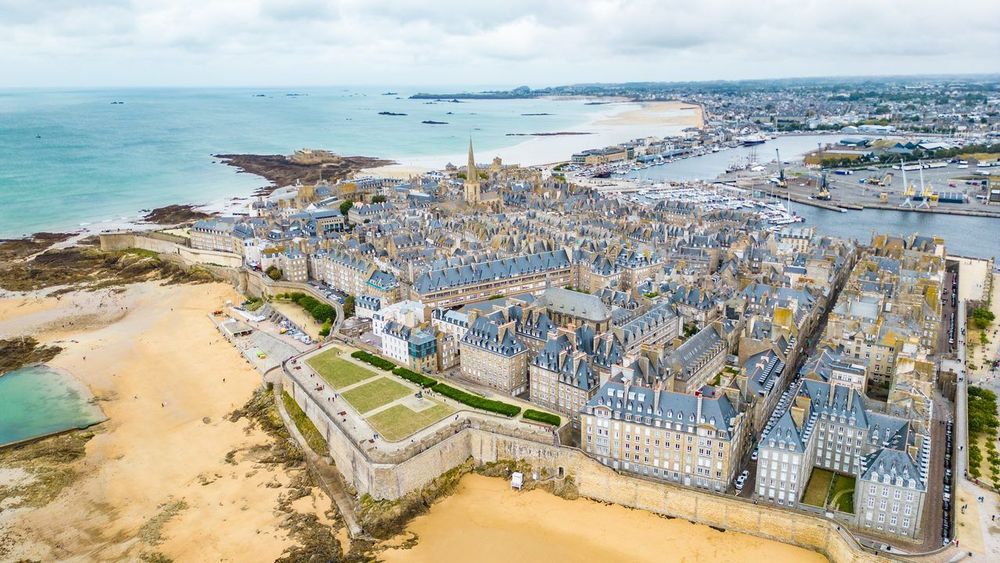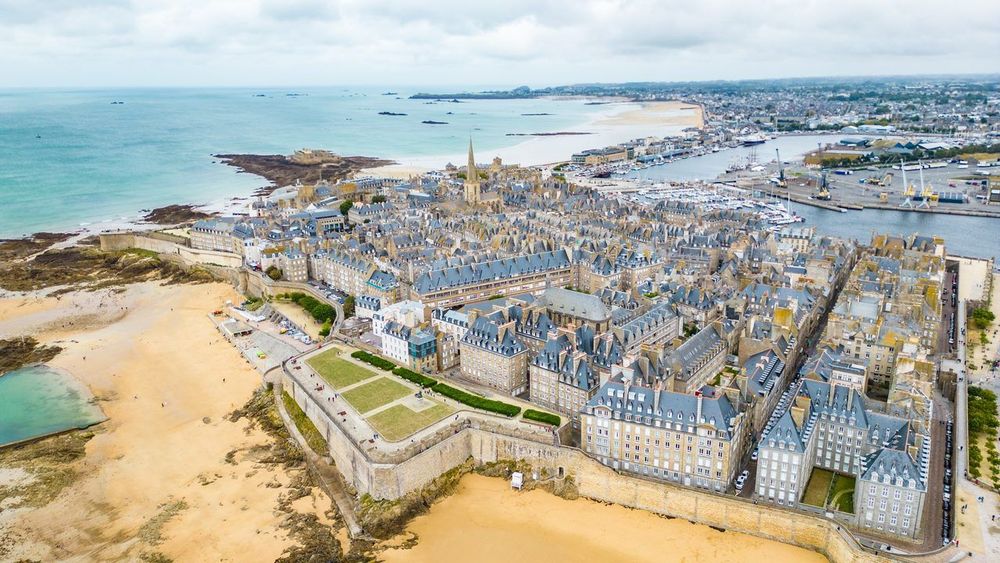
© Shutterstock
 Votre guide Ryo
Weekend in Saint-Malo: Ramparts, Beaches, and Islets for a Perfect Getaway in 2026
At high tide, the sea can rise over thirteen meters before the ramparts — one of the strongest tidal ranges in Europe. At low tide, that same ocean retreats far enough to walk on foot to two fortified islets right in the city centre. It is this permanent shift between land and sea that makes a weekend in Saint-Malo unlike any other Breton getaway: the schedule is shaped as much by the tide tables as by your own wishes. To make the most of it without wasting time, the Ryo audio-guided tour of Saint-Malo already marks out the essentials of the intra-muros on foot, with around thirty commented stops.
In two or three days, you can take a full walk along the granite ramparts, swim on a beach stretching over two kilometres, visit one of Brittany's most popular aquariums, and hike out to a tomb cut off by the sea twice a day. This guide covers the intra-muros and its privateers, the beaches and islets, the Tour Solidor and the cité d'Alet, a day-by-day itinerary, the immediate surroundings (Dinard, Dinan, Cancale, Mont-Saint-Michel), family and rainy-day options, a thalassotherapy break, the budget to plan for, and all the practical information you need to organise your stay without any unpleasant surprises.
Saint-Malo Intra-Muros, the Privateer City
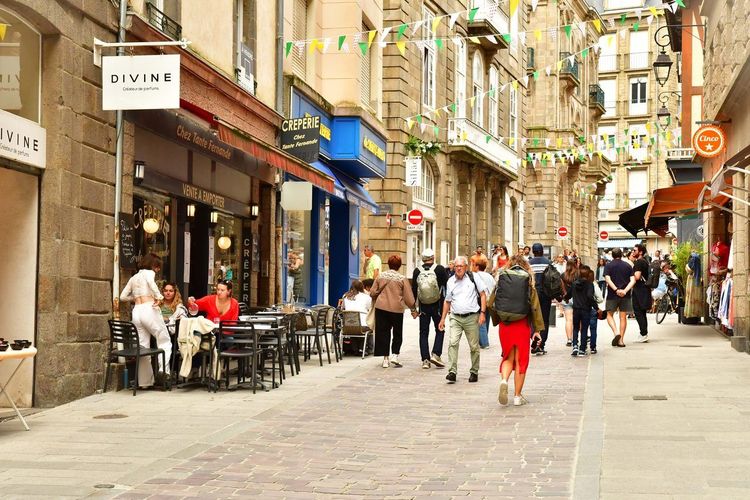
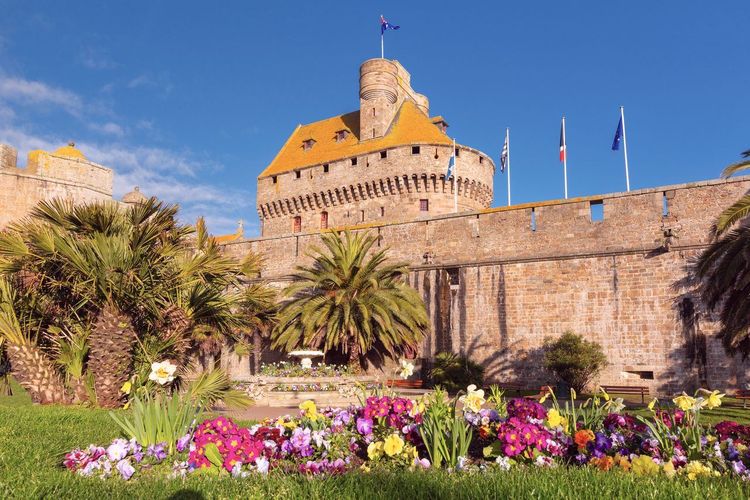
The old town alone has enough to fill a good half of a two-day stay. Entirely enclosed by fortifications, the intra-muros of Saint-Malo was rebuilt to the same design after the bombings of August 1944, which explains its appearance that feels both ancient and surprisingly uniform. You enter through several gates, the most photographed being the porte Saint-Vincent, and from there you can wander through the lanes or climb directly up to the wall walk.
The Ramparts: a Full Walk around the Fortified Old Town
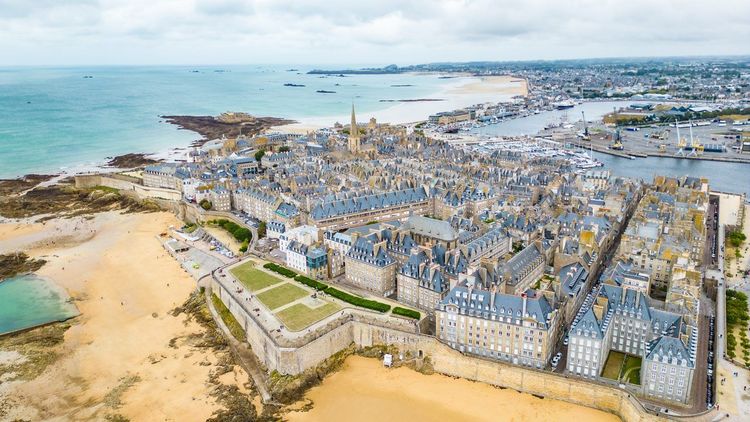
The circuit of the Saint-Malo ramparts (Rempart, 35400 Saint-Malo, rated 4.8/5 on Google with 8,035 reviews) is just under two kilometres and takes about an hour to complete, including the staircase climbs. Access is free at all times, day or night. A first enclosure existed as early as the 12th century, but most of what you see today dates from the 17th and 18th centuries, when engineer Siméon Garangeau, a pupil of Vauban, extended and strengthened the fortifications to protect the city from Anglo-Dutch attacks.
Walking along the wall walk offers a constantly changing view at each bastion: the bay and its islets on one side, the slate rooftops and chimneys of the shipowners' houses on the other. You will pass the statue of Robert Surcouf, arm outstretched toward the open sea, and then, further along, that of Jacques Cartier, the Malouin explorer who sailed up the Saint Lawrence river in the 16th century.
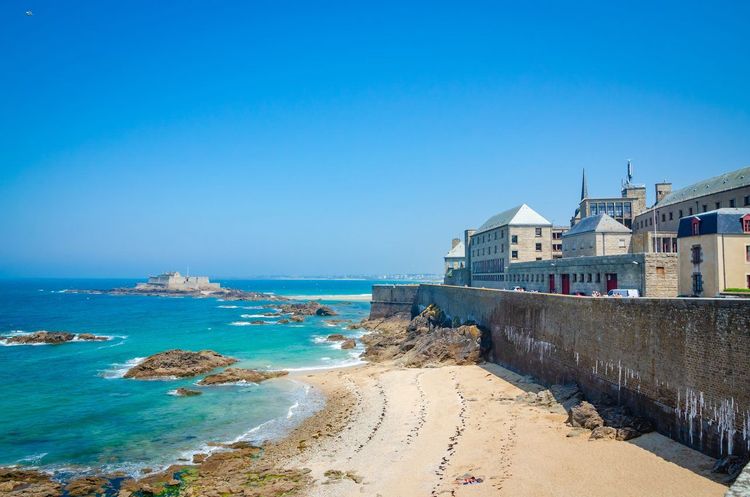
For the best light, head up to the ramparts in the late afternoon, when the low sun grazes the stone and the receding tide exposes the islets at the foot of the fortifications. Allow half a day if you stop at every viewpoint and head down to explore the Fort National, accessible on foot only at low tide.
Lanes, Shipowners' Houses, and the History of Saint-Malo's Privateers
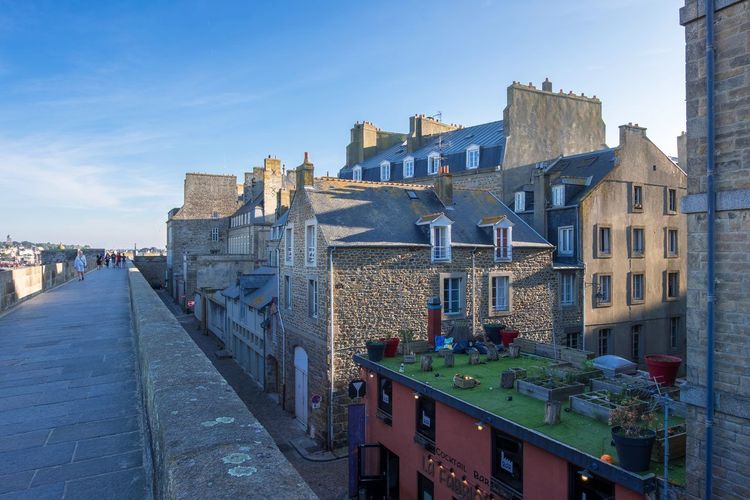
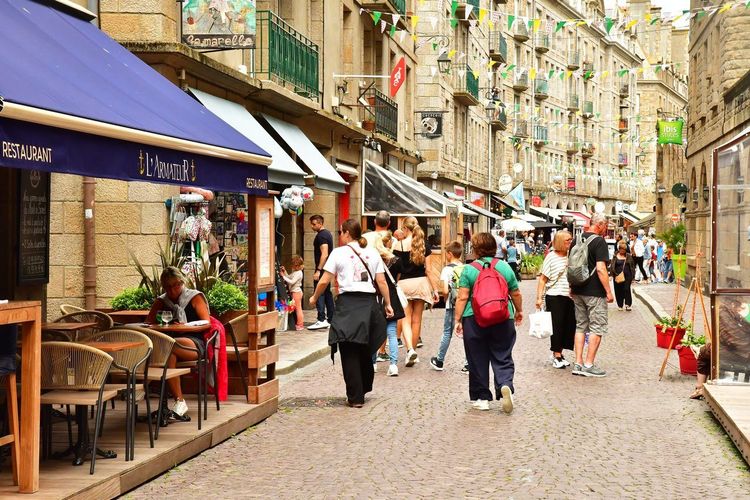
Once back down from the wall walk, lose yourself without any fixed route in the cobbled lanes of the intra-muros. The tall grey granite houses, often built by shipowners enriched by maritime trade, line narrow streets such as the rue Vincent de Gournay and the rue du Pélicot, which were spared in places by the 1944 bombings.
Saint-Malo owes its reputation to three episodes still recounted to visitors. First, the legal practice of privateering: the King of France granted Malouin privateers, including the famous Surcouf, letters of marque authorising them to attack enemy ships, an activity that made the city's fortune for over two centuries. Then, the motto 'Malouin first, Breton perhaps, French if anything remains', which reflects the fierce independence the inhabitants claimed against the crown. Finally, the near-miraculous reconstruction of the city after 1944: destroyed to around 80%, the intra-muros was rebuilt to the plans of architect Louis Arretche, carefully preserving the medieval street layout and original building materials.
If you are looking for a starting point for this walk, the route of the audio-guided tour of Saint-Malo, À l'abordage follows precisely these lanes and places each monument in its historical context, which means you won't accidentally pass through the same square twice without realising it.
The Best Beaches and Islets of Saint-Malo
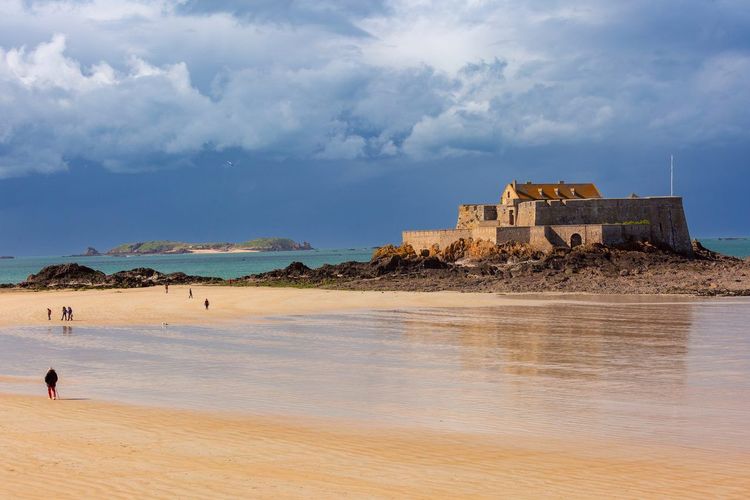
The bay of Saint-Malo alternates between long fine-sand beaches to the east and small coves sheltered by the ramparts. Depending on the wind and the state of the tide, it is worth knowing which one to head for rather than leaving it to chance.
Plage du Sillon, Plage de l'Éventail, and Plage de Bon Secours
The plage du Sillon stretches for over two kilometres between the intra-muros and the Paramé district, making it the city's largest beach. Very wide at low tide, it hosts sand yachts and water sports, with a boulevard lined with oak breakwaters that recalls its 19th-century past as a seaside resort.
Just below the ramparts, the plage de l'Éventail takes its name from its flared shape, tucked between two jetties facing the Fort National. Smaller and more sheltered from the wind, it suits families with young children who want to stay within walking distance of the lanes.
The plage de Bon Secours offers the most iconic view of the ramparts and features a natural seawater pool that fills at high tide and remains swimmable even after the sea has retreated. Its concrete diving board, regularly restored by the city, serves as a playground for local teenagers from the first warm days of spring.
Less crowded, the plage du Môle closes off the bay on the harbour side, near the quai Saint-Louis. It appeals mainly to regulars who come to swim early in the morning, far from the summer crowds of the larger beaches.
Digue de Rochebonne, Grand Bé and Petit Bé Islets
Continuing east from the plage du Sillon, the digue de Rochebonne (Boulevard Hébert, 35400 Saint-Malo, rated 4.6/5 on Google with 480 reviews) runs alongside a row of malouinières and seaside villas built by wealthy shipowners and merchants. The promenade, open and windswept, is well suited to a leisurely evening stroll after dinner.
From the plage de Bon Secours, you can reach on foot — only at low tide — the islet of Grand Bé, where Chateaubriand's tomb faces the open sea: a bare slab topped with a cross, with no name engraved, just as the writer had requested. The crossing takes about ten minutes, but tide times are posted on signs at the entrance to the causeway: check them before setting off so you don't end up stranded on the other side for six hours.
A little further on, Petit Bé is home to a fort designed at the end of the 17th century as part of the defensive system conceived by Vauban. It can be visited during slots timed to coincide with low tide, for a modest entry fee of a few euros per adult. Less well known than its neighbour, it offers an unobstructed view over the entire bay and the other islets scattered along the Malouin coast.
Together, these islets form a playground unique in France: you walk on sand where, just hours earlier, sailing boats were passing. The Ryo guide to the beaches of Saint-Malo details the tide times to check before each outing to these islets.
Tour Solidor, Cité d'Alet, and Must-See Sights
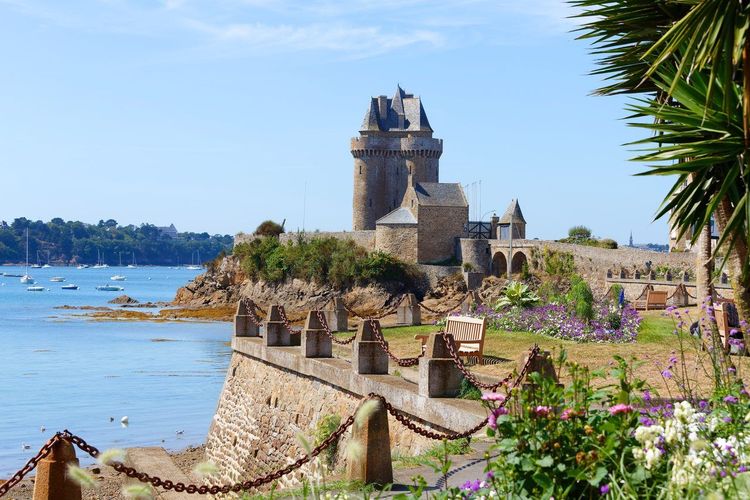
Beyond the intra-muros, two headlands concentrate the bulk of Saint-Malo's historical and natural heritage, each easily reached with a short walk or a few bus stops.
The Tour Solidor and the Cité d'Alet
At the mouth of the Rance river, in the Saint-Servan district, the Tour Solidor has stood with its three adjoining towers since the late 14th century. Duke Jean IV of Brittany had it built around 1369 to control river traffic and assert his authority over the Malouins, who had at the time aligned themselves with the King of France. It long housed the Musée des Cap-Horniers, dedicated to sailors who rounded Cape Horn under sail, and today hosts temporary exhibitions: check opening conditions before making the trip.
Climb to the top: the view takes in the estuary, Dinard on the opposite bank, and the intra-muros in the distance. Allow 45 minutes for the visit, a little more if you stop at each floor. To explore its history further, the Ryo article on the Tour Solidor covers its strategic role against the English.
A few minutes' walk away, the cité d'Alet occupies a wooded peninsula overlooking the bay. This is where the Gallo-Roman town and then the bishopric once stood, long before Saint-Malo settled on its rock. You will find an 18th-century fort and a dense network of German Second World War bunkers, one of which houses a memorial. The path that circles the headland, less frequented than the ramparts, is one of the best spots in the city at sunset. The Ryo page dedicated to the cité d'Alet details the viewpoints not to be missed.
The Grand Aquarium and the Pointe de la Varde
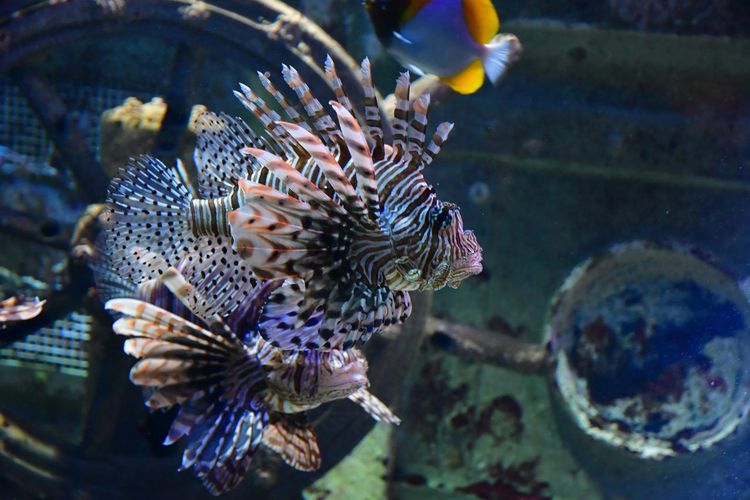
Located on the outskirts, about ten minutes by car or bus from the intra-muros, the Grand Aquarium de Saint-Malo brings together several hundred marine species arranged by habitat, from the English Channel to tropical seas, with a circular ring where sharks glide past and an exploration submarine for children. It is one of the most popular family outings on rainy days: buy your tickets online to avoid the Saturday afternoon queue.
On the opposite side, facing the sea, the pointe de la Varde (Avenue de la Varde, 35400 Saint-Malo, rated 4.7/5 on Google with 112 reviews) offers a far wilder setting: low heathland, bunkers buried in the gorse, a coastal path and views over the Malouin islets. You can combine the aquarium in the morning with a walk along the headland path in the afternoon — a pairing that appeals to families and solo hikers alike.
What to Do around Saint-Malo
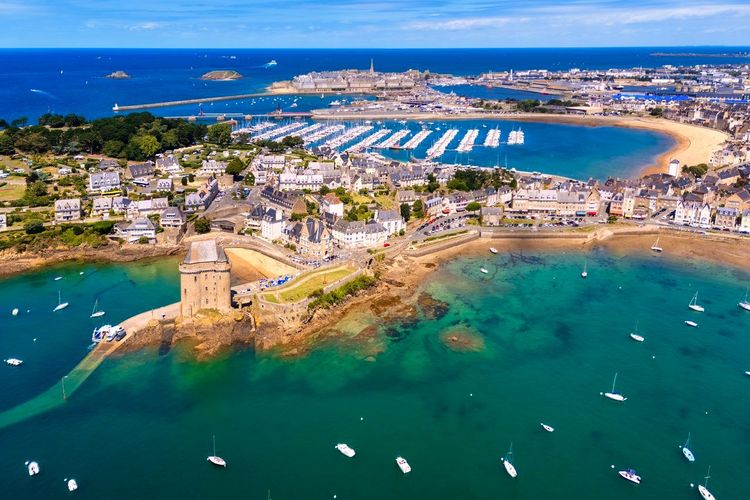
Saint-Malo lends itself particularly well to day trips: several well-known destinations are less than an hour's drive away, or even reachable by boat from the port.
Dinard and Dinan, the Essential Duo along the Rance
Dinard, on the other bank of the estuary, can be reached in about ten minutes by maritime shuttle from the cale de Dinan at the foot of the ramparts. A former seaside resort favoured by the British upper classes in the 19th century, it lines Belle Époque villas along the promenade du Clair de Lune, all the way to the pointe du Moulinet and its panoramic view over the bay.
Dinan, about thirty minutes by car, preserves one of the best-kept medieval enclosures in Brittany. You can walk down the rue du Jerzual, cobbled and lined with half-timbered houses occupied by craftspeople, all the way to the old port on the Rance, then climb back up to the ramparts for a view over the valley. Wear sturdy shoes: the climb back up is steep.
Cancale, the Île de Cézembre, and Mont-Saint-Michel as Day Trips
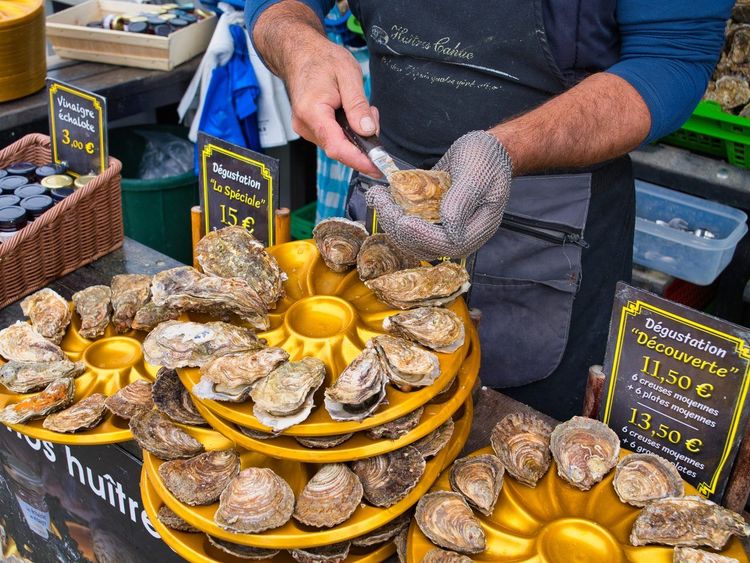
About twenty minutes east by road, Cancale is renowned for its oysters, sold directly at the oyster market at the port de la Houle. They are enjoyed standing up, with a little bread and lemon, looking out over the oyster beds visible at low tide, and local custom has it that you toss the empty shells onto the foreshore.
Out at sea, seasonal shuttles reach the île de Cézembre (Baie de Saint-Malo, 35400 Saint-Malo, rated 4.7/5 on Google with 49 reviews) in about twenty minutes from Saint-Malo. The islet is only accessible on its southern side, where a sheltered sandy beach stretches out from the wind: the rest of the island remains off-limits, still riddled with unexploded munitions from the 1944 bombings. Further west, the Ébihens archipelago, off Saint-Jacut-de-la-Mer, attracts mainly kayakers and those drawn by its preserved marine wildlife.
Finally, Mont-Saint-Michel is around fifty minutes by road. A day trip is perfectly feasible, provided you leave early to avoid the midday crowds and check the calendar of high tides, which are spectacular around the bay. For longer stays, the Pink Granite Coast near Perros-Guirec is nearly two hours' drive away: better to save it for another trip. The Ryo guide to the most beautiful villages around Saint-Malo lists other stops within an hour's drive.
Suggested Itinerary for Two or Three Days in Saint-Malo
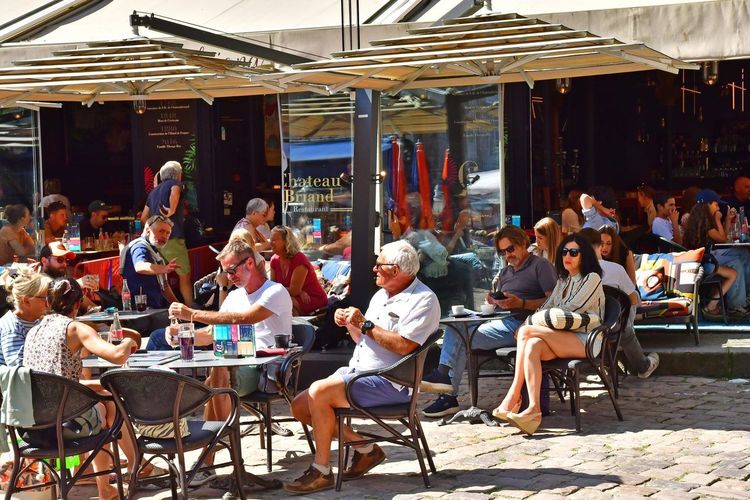
It remains to piece it all together without spending the whole stay in transit. Here is a schedule that works for most visitors, to be adjusted according to your arrival time and, above all, the tide timetable posted at the tourist office.
Day 1: Intra-Muros, Ramparts, and Sunset
Drop off your bags, then start with the walk around the ramparts in the early afternoon, going clockwise from the porte Saint-Vincent. Come back down into the lanes for the Cathédrale Saint-Vincent and its contemporary stained-glass windows, then take a break for a crêpe on a terrace. If the tide allows, end the day at Grand Bé and Chateaubriand's tomb in the late afternoon, when the light falls horizontally across the bay. Seafood dinner near the port, then walk back via the illuminated ramparts.
Day 2: Beaches, Islets, and Saint-Servan
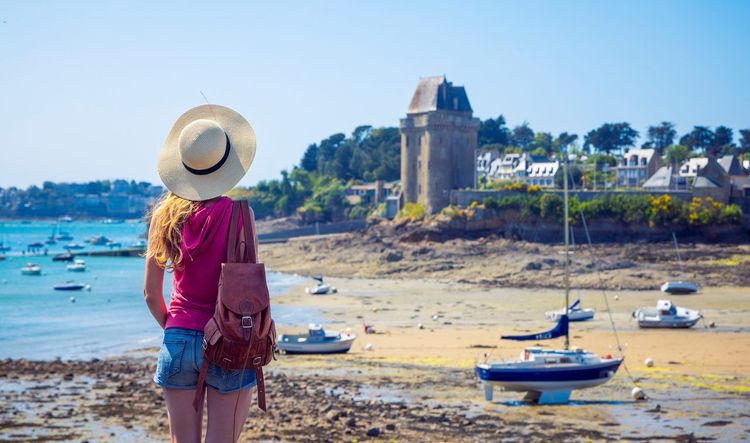
Spend the morning at the beaches: Bon Secours and its seawater pool if you want to swim, the Sillon if you prefer a long walk by the water. In the afternoon, head to Saint-Servan for the Tour Solidor and a circuit of the cité d'Alet, with its views over the Rance estuary. With a family, swap this second block for the Grand Aquarium, better suited to children under ten. End the day with a drink at the port des Sablons or place Chateaubriand.
Day 3: A Day Trip in the Surrounding Area
If you are staying an extra night, pick just one excursion and take your time doing it properly: Dinard by maritime shuttle for the promenade du Clair de Lune, Dinan for its medieval setting, Cancale for the oysters, or Mont-Saint-Michel if you are prepared to dedicate a full day to the road and the crowds. A final stop at the covered market at the place aux Herbes, open on Tuesday, Friday, and Saturday mornings, lets you bring home salted butter, craquelins, and galettes before hitting the road.
Saint-Malo with Families and in Rainy Weather
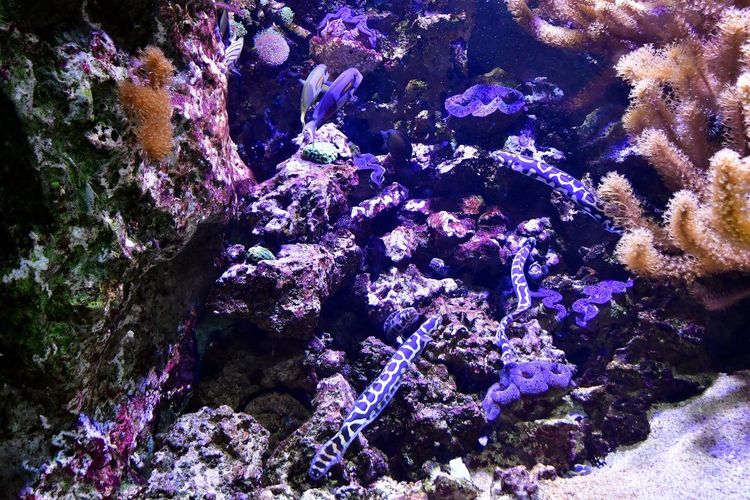
The Breton sky changes quickly, and a stay in Saint-Malo is better planned with a backup option in hand. The Grand Aquarium remains the safe bet for grey days: allow two to three hours for the visit, more with young children who will want to go back on the submarine. The Thermes Marins, the Tour Solidor, and the covered market offer other useful shelters, as do the many bookshops and boutiques of the intra-muros, where an hour can pass without noticing.
In Rothéneuf, to the east of the city, the carved rocks sculpted into the cliff by Abbé Fouré between 1894 and 1907 form a set of around three hundred figures, unique of their kind. The site, vulnerable to erosion, has experienced periods of closure to the public: check before making the journey. The Ryo feature on the carved rocks of Rothéneuf tells the story of this priest who became a sculptor after an accident.
For younger visitors, discovering the city often works better as a game: a statue hunt on the ramparts, counting the chimneys, or spotting the islets from the bastion de la Hollande. The best activities to do in Saint-Malo offer more ideas to fall back on when a shower rolls in, and the audio-guided tour turns the same ramparts walk into a game of its own.
Hikes and Walks along the GR34
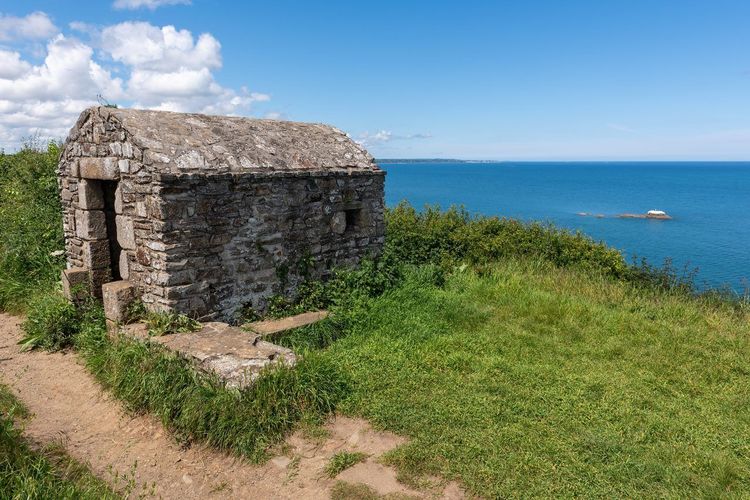
The customs officers' path, or GR34, runs through the entire municipality and lets you link the main sites on foot, never losing sight of the sea. Two sections lend themselves well to a two-day getaway.
To the east, the stretch running from the plage du Sillon to the pointe de la Varde and on to Rothéneuf covers about ten kilometres there and back, through beaches, coves, and heathland. The passage by the pointe du Meinga, a little further along, is among the most beautiful on the Emerald Coast.
To the west, crossing the estuary by shuttle or by the Rance tidal barrage, the path follows the pointe du Moulinet and strings together the beaches of Dinard. Pack a windproof jacket: even in summer, the north-westerly wind makes walking cool on exposed sections. The Ryo guide to the best hikes around Saint-Malo details the distances and starting points.
Taking It Slow: Thalassotherapy, Spa, and Marine Baths
If your stay is also meant as a moment of rest, the city has an asset that few Breton destinations can match: a thalassotherapy centre set directly on the plage du Sillon.
The Thermes Marins de Saint-Malo (Grande Plage du Sillon, 35400 Saint-Malo, rated 4.4/5 on Google with 2,780 reviews) offer treatments using heated seawater, an aquatonic circuit, and day passes as well as two-to-three-day cure packages. It is a popular option after a day's walking on the ramparts, when your legs call for a little rest before heading out to explore the surroundings again.
If the Malouin baths are fully booked, several spa addresses also exist on the Dinard side, ten minutes away by shuttle. Book early: Saturday and Sunday slots fill quickly, especially in high season and during school holidays, when a thalasso break or spa weekend becomes the very reason for the trip.
What Budget to Plan for Two People
Saint-Malo remains an affordable destination outside July and August, provided you book accommodation in advance. For two nights for two people in a mid-range hotel including meals, budget between 250 and 400 euros excluding transport, and double that if you are aiming for the intra-muros in the height of summer.
Attractions add little to the bill: the ramparts, beaches, cité d'Alet, and coastal path are free, and paid sites such as the Petit Bé, Tour Solidor, or Fort National fall in the range of a few euros to around fifteen euros per adult. The main variable expense is parking, which quickly becomes costly right next to the ramparts.
Practical Information for Planning Your Weekend
A few key pointers are enough to plan a stay without any surprises, covering season, accommodation, and getting around on the ground.
When to Go and How Long to Stay
The ideal period for making the most of the beaches runs from May to September, with peak visitor numbers in July and August. To visit the intra-muros and ramparts without the crowds, spring or early autumn is preferable, when temperatures remain mild and the streets are less congested. Those drawn by natural spectacles should aim for the high tides of March and September, when waves wash over the digue du Sillon.
Two days are enough to cover the intra-muros, a beach, and the Tour Solidor. Allow three days if you want to add a day trip to Dinard, Dinan, or Cancale without rushing, and four if Mont-Saint-Michel is part of the plan.
Where to Stay and Where to Eat in Saint-Malo
Staying in the intra-muros puts everything within walking distance, but prices rise quickly in summer. The districts of Paramé and Rothéneuf, slightly further along the Sillon, offer gentler rates while remaining accessible on foot or by bus to the historic centre. Saint-Servan, near the Tour Solidor, makes a good compromise between peace and proximity.
For meals, traditional crêperies line the rue Jean XXIII and the rue de Dinan, while seafood restaurants cluster near the port and the covered market at the place aux Herbes. You can also bring home a few specialities for the journey back: the Ryo guide to Malouin culinary specialities lists the best addresses for kouign-amann and craquelins.
For an evening drink, the terraces around the place Chateaubriand and the quai Saint-Louis stay lively until late, especially on summer evenings.
How to Get There and Get Around

By train, the TGV from Paris-Montparnasse reaches Saint-Malo station in 2h30 to 3 hours depending on the service, with some connections requiring a change in Rennes. By car, allow around four hours from Paris via the A11 then the A84. The station is about fifteen minutes' walk from the intra-muros, making a car-free stay perfectly realistic.
From the Channel Islands or the south of England, ferries sail directly to the port of Saint-Malo — a practical option if you are combining the stay with a stop in Jersey.
Once there, the intra-muros can only be explored on foot, given its lanes and ramparts. To reach the more distant beaches, the aquarium, or the pointe de la Varde, the urban bus network serves most of the city, and bicycle hire allows you to cover more ground in half a day. The maritime shuttle to Dinard usefully completes this setup for the Rance-side excursion. If you come by car, leave it in one of the park-and-ride car parks rather than circling the ramparts in search of a space.

FAQ
How Many Days Do You Need to Visit Saint-Malo?
Two full days are enough to cover the intra-muros, the ramparts, and a beach. Allow three days to add the Tour Solidor, the cité d'Alet, and a day trip to Dinard or Cancale, and four if you want to push as far as Mont-Saint-Michel without rushing.
What Is the Best Time for a Weekend in Saint-Malo?
May to September is the safest window for swimming and water activities. Spring and early autumn offer the best compromise between mild weather and less crowded streets, especially if you want to enjoy the ramparts in peace.
Where Should You Stay in Saint-Malo for Two Nights?
The intra-muros offers the best walking access to all the monuments, but at higher prices in high season. Paramé, Rothéneuf, and Saint-Servan are accessible alternatives by bus, with beaches just a short distance away.
How Do You Get to Saint-Malo by Train or by Car?
The TGV from Paris-Montparnasse takes 2h30 to 3 hours, sometimes with a change in Rennes. By car, allow around four hours via the A11 then the A84 from the Paris region. Ferries also connect Jersey, Guernsey, and the south of England to the port of Saint-Malo.
How Do You Get around Saint-Malo without a Car?
The intra-muros is entirely walkable from the train station, about fifteen minutes away. For more distant beaches, the aquarium, or the pointe de la Varde, the urban bus network and bicycle hire cover most needs, supplemented by the maritime shuttle to Dinard.
What Can You Do in Saint-Malo When It Rains?
The Grand Aquarium, the Tour Solidor, and the Thermes Marins offer good sheltered options. The covered market at the place aux Herbes and the shops of the intra-muros also let you keep exploring without getting too wet, and a Breton shower rarely lasts all day.
What Budget Should You Plan for a Weekend in Saint-Malo?
For two people, budget around 250 to 400 euros for two nights in a mid-range hotel including meals, excluding transport. Attractions remain affordable: entry to the Petit Bé, the Tour Solidor, or the Fort National generally does not exceed around fifteen euros per adult, and the ramparts and beaches are free.
A weekend in Saint-Malo is ultimately quite easy to build around three elements that complement each other: the stone of the ramparts and the shipowners' houses, the sand of the beaches that changes with every tide, and the open sea leading toward the islets, Dinard, or Mont-Saint-Michel depending on your mood. Whether you stay two days or stretch it to four, the city reveals itself without needing a rigid plan.
To prepare your visit or simply explore without overthinking it, the short version of the audio-guided tour of Saint-Malo covers the essentials of the intra-muros in a few commented stops, ideal if your time on-site is limited.
À lire également