© Shutterstock
 Votre guide Ryo
Visiting Saint-Malo in 2 Days: Ramparts, Privateers, and Great Tides (2026)
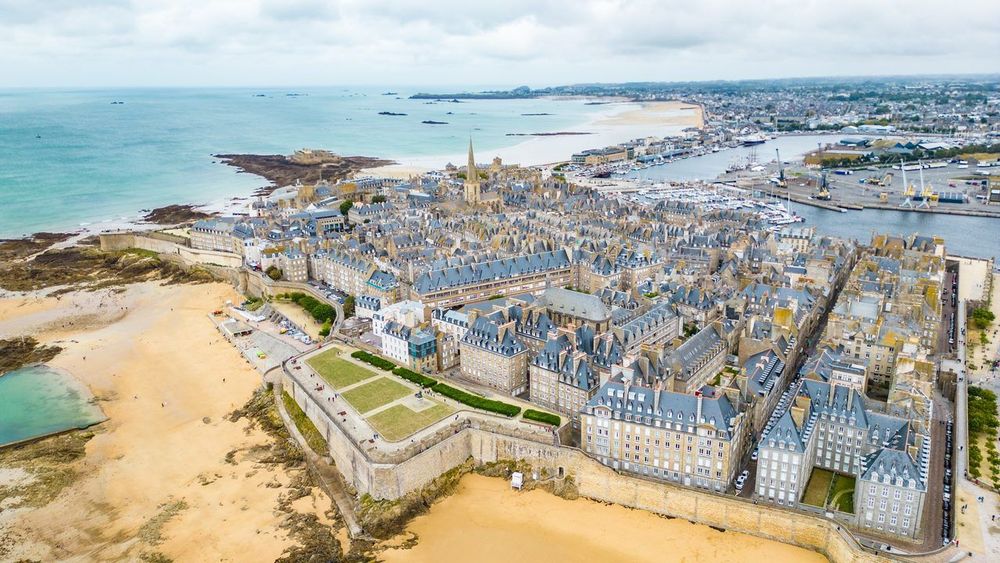
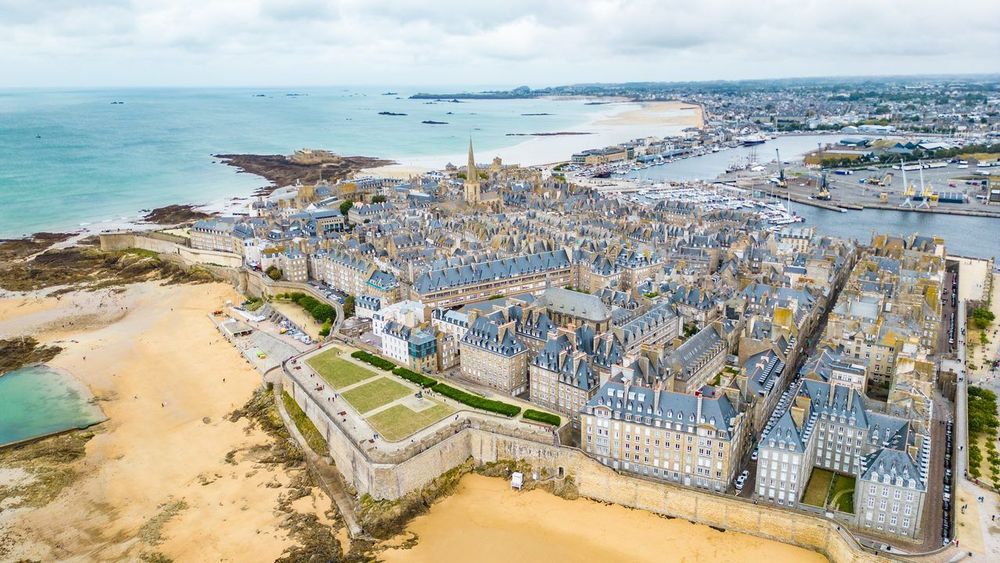
Visiting Saint-Malo in 2 days means accepting one truth: the city closes in on its ramparts at night like a shell, and you need to be inside at the right moment to understand why the Malouins still speak of their privateer city. From the rampart walk, the Emerald Coast changes colour every hour, and at low tide you can literally walk out to islands that, six hours later, become unreachable once more. The Ryo audio guide for Saint-Malo captures this constant back-and-forth between land and sea far better than any paper map, neighbourhood by neighbourhood.
In two well-paced days, you have time to walk the full 1,754 metres of ramparts, to reach Chateaubriand's tomb on the Grand Bé island on foot before the sea closes it off again, and to discover nearly 300 faces carved into the granite by a priest who became deaf and mute and retreated to Rothéneuf at the end of the 19th century. Add beaches that reveal hundreds of metres of sand between two tides, a fort you can only enter on foot for a few hours per tidal cycle, and cobbled alleyways where the wealthiest privateer shipowners in Europe once lived. This guide details hour by hour how to organise this weekend, with the right options if rain sets in or if you are travelling with family.
A Brief History of Saint-Malo, the Privateer City
Before lacing up your shoes for two days of walking, a quick detour through the past helps you understand why every stone in the intra-muros seems to tell the story of a naval battle. The 'À l'abordage' audio-guided tour brings this story to life, site by site, with headphones on while you walk.
From Privateers to the Great Discoveries
Saint-Malo was born in the 6th century around a hermitage founded by the Welsh monk Maclow, who later became the bishop of Maclow and gave the city its name. But it was in the 16th and 17th centuries that the city changed its status: its inhabitants, sailors hardened by the storms of the English Channel, obtained letters of marque from the king authorising them to attack enemy ships with full legal sanction. Duguay-Trouin and Robert Surcouf became its most celebrated figures, amassing fortunes that still account for the bourgeois appearance of certain intra-muros residences today.
This same city also looked westward without cannons. It was from Saint-Malo that Jacques Cartier set sail in 1534 to explore the St. Lawrence River, laying the foundations for what would become French Canada. Privateers and explorers share at heart the same audacity: to travel far, for a long time, with the idea of returning rich in stories or cargo.
Destruction and Reconstruction of the Walled City
In August 1944, the fighting of the Liberation razed nearly 80% of the intra-muros. Photographs from the time show a field of smouldering ruins where 17th-century mansions once stood. The reconstruction, entrusted to architect Louis Arretche, took a rare approach for the era: rebuilding to an identical design, with the same granite proportions and the same slate roofs, rather than modernising.
The construction project spanned nearly twenty-five years. The result you see today: a city that looks four centuries old, even though a large portion of its walls dates from the 1950s and 1960s. This detail changes the way you look at the façades during your first-day walk.
Your 2-Day Itinerary at a Glance
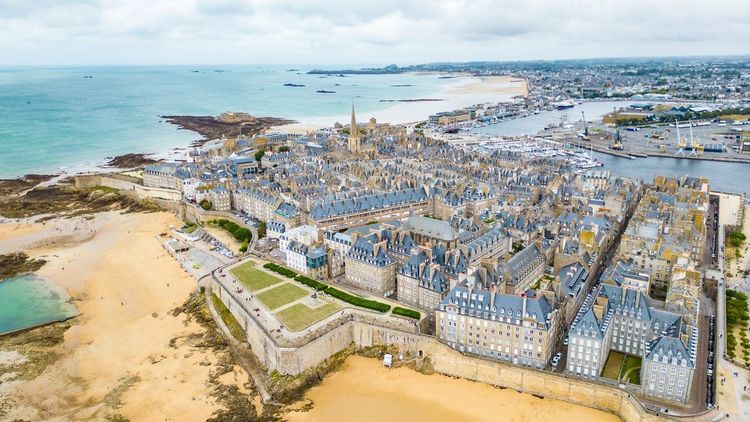
Before going into detail, here is the framework this guide follows, built around realistic days rather than a marathon of sightseeing.
Day 1, intra-muros and the islands: a walk along the ramparts in the morning, Saint-Vincent Cathedral and the Maison des Corsaires around midday, the castle and alleyways in the early afternoon, then the Fort National and the Grand Bé island at the end of the day, depending on the low tide time.
Day 2, the Malouin neighbourhoods: Saint-Servan, the Aleth district, and the Tour Solidor in the morning; the sculpted rocks of Rothéneuf and the Pointe de la Varde in the afternoon, with a beach or the Thermes Marins to close out the stay.
One piece of advice that applies to both days: check the tide times before finalising your schedule. It is the only truly non-negotiable constraint in Saint-Malo; everything else can be adjusted. If you are travelling without a car, keep Rothéneuf for the middle of the day, when the urban buses run most frequently. Ryo's audio-guided tour follows this same rhythm, with a stop at Saint-Vincent Cathedral you can visit whatever the tide.
Day 1: The Ramparts and the Intra-Muros of Saint-Malo
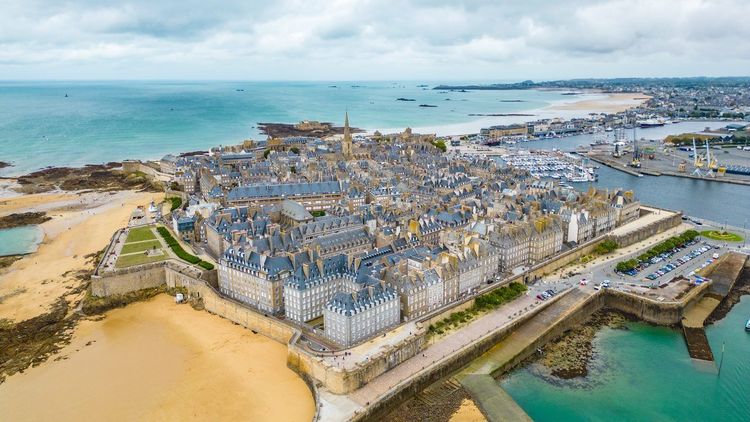
This first day is played out almost entirely on foot within a compact area. Allow a morning for the ramparts and a good part of the afternoon to stroll through the alleyways, alternating between monuments and culinary stops.
The Rampart Walk and Its Viewpoints
The logical starting point is the Ramparts of Saint-Malo, free to access and open at all times.
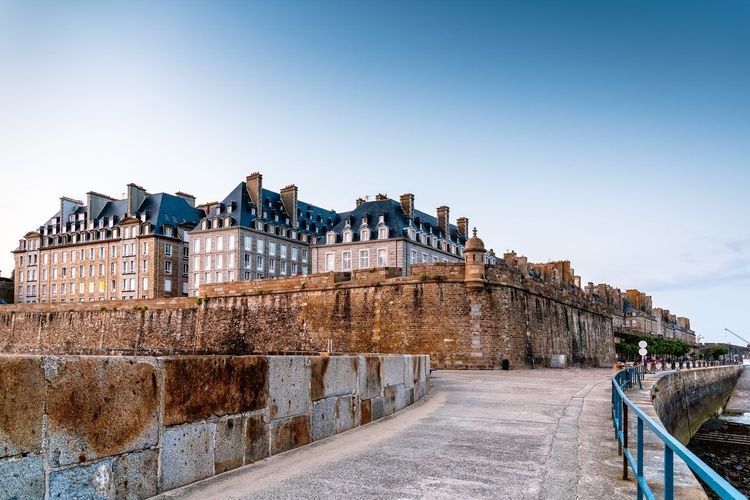
The full circuit is 1,754 metres and takes about an hour to walk, not counting photo stops. Head up preferably in late morning or late afternoon: the raking light over the Emerald Coast reveals the granite's textures far better than at midday. From the bastion de la Hollande to the Porte Saint-Vincent, each section offers a different angle — sometimes over the bay and its islets, sometimes over the slate rooftops of the walled city.
Several staircases lead up to the rampart walk, notably at the Porte Saint-Vincent, closest to the castle, and at the Grande Porte on the harbour side. Note that all these access points involve granite steps: with a pushchair or wheelchair, the flat, continuous Sillon promenade is a better option. The circuit can be walked in either direction, costs nothing, and is open at any hour, including at night when floodlights illuminate the façades.
As you approach the Tour Bidouane, slow down: it is one of the best sunset viewpoints, with the Môle des Noires lighthouse silhouetted against the sky. Wear shoes with a good grip — the rampart walk can be slippery in wet weather, which happens more often than you might think on the Emerald Coast.
Saint-Vincent Cathedral and the Maison des Corsaires
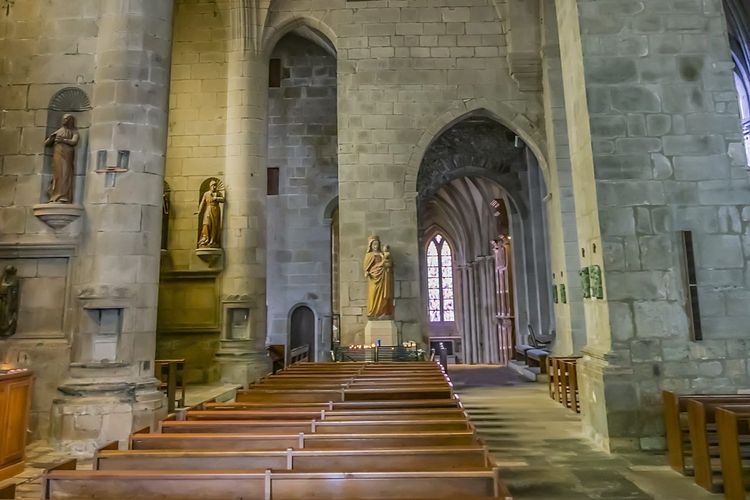
Heading back down into the heart of the city, Saint-Vincent Cathedral dominates the Place Jean-de-Châtillon with its partially post-war reconstructed silhouette.
Its contemporary stained-glass windows, installed in the 1970s, deliberately contrast with the ancient stone: this is one of the rare places where the reconstruction openly acknowledges its era rather than concealing it. You will also find the tomb of Jacques Cartier, discreet in a side chapel, as well as a plaque recalling Chateaubriand's connection to the city.
A few streets away, the Maison des Corsaires puts a concrete face on the privateering economy that made the city's fortune. The interiors, complete with period furniture and nautical charts, recount the daily life of a privateer shipowner between two campaigns at sea.
The Castle and the Town Hall
The Château de Saint-Malo (Place Chateaubriand, 35400 Saint-Malo, rated 4.6/5 on Google from 57 reviews), often called the Château de la Duchesse Anne, closes the walled city on the landward side and today houses the town hall as well as a local history museum.
Its massive towers, including the great keep built in the 15th century, stand in contrast to the lighter elegance of the ramparts. You can be content with admiring the inner courtyard for free, or climb up to the museum for an additional view over the rooftops and the bay. Allow 45 minutes if you go inside, less if you stay in the courtyard.
Wandering the Alleyways of the Walled City
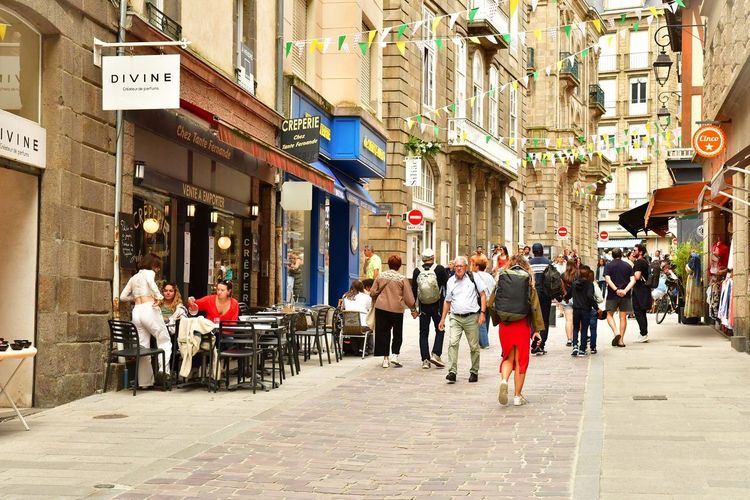
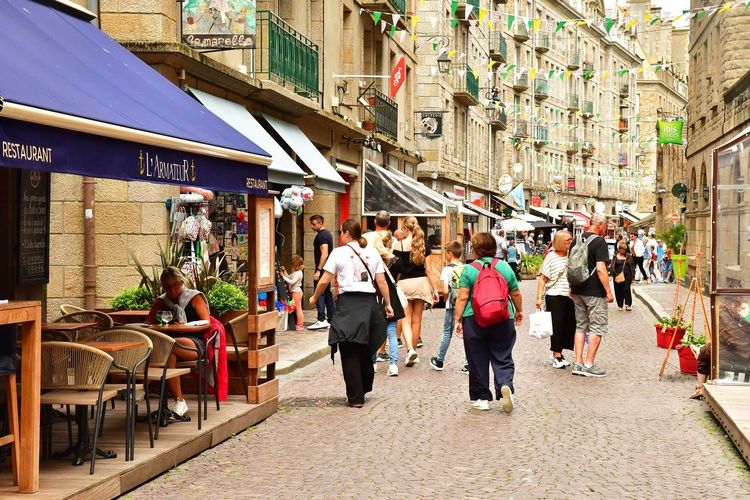
The rest of the afternoon lends itself to an unplanned wander. The narrow alleyways around the Rue de Dinan and the Rue du Pélicot are packed with artisan shops, crêperies, and biscuit makers, with a soft background soundtrack of seagulls and conversations in Breton, English, and sometimes pure Malouin dialect.
This is the moment to try your first kouign-amann or a few craquelins, local specialities you will find in almost every shop window. Getting deliberately lost in this grid of cobbled streets remains one of the simplest ways to feel the city without looking at your phone.
The Saint-Malo audio-guided tour (variant 'À l'abordage', 30 audio stops, 2h45, 6.6 km) follows precisely this intra-muros route and lets you listen to the anecdotes without taking your eyes off the façades.
Day 1 (Continued): Fort National and the Grand Bé Island
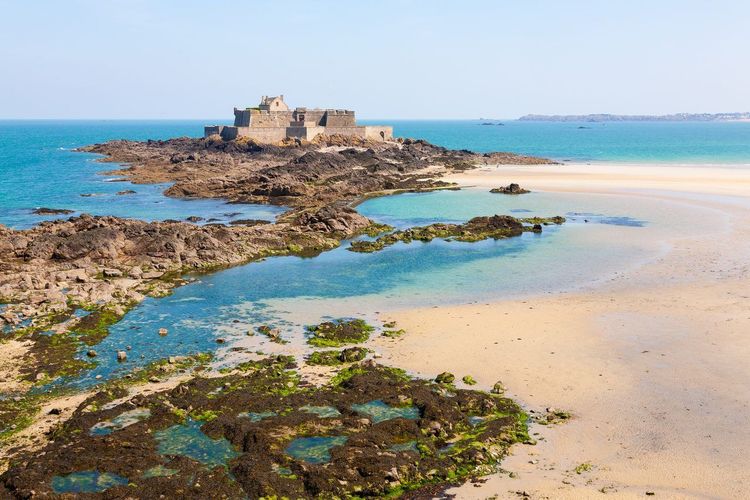
In the late afternoon, head back down towards the Sillon beach: two low-tide excursions close out this first day, provided you keep a close eye on the tide times.
Fort National at Low Tide
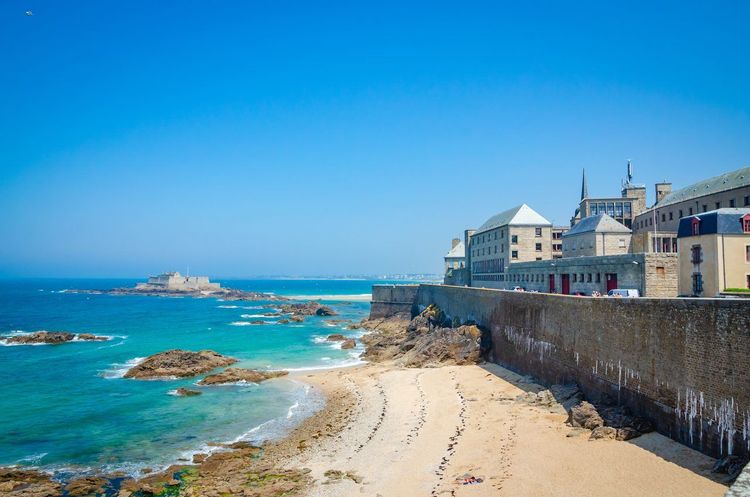
Designed by Vauban and built at the end of the 17th century on a rocky islet under the direction of engineer Siméon Garangeau, Fort National can only be reached at low tide, on foot and dry-shod from the beach.
Guided tours, offered in season when the tide allows, trace its defensive role against Anglo-Dutch fleets and then its use as a place of detention for hundreds of Malouins during the fighting of 1944. A flag raised at the top signals that the fort is open — it is the simplest indicator from the beach. Check the tide times before you set off; it is the kind of detail that can turn a pleasant outing into a race against the clock.
The Grand Bé Island and Chateaubriand's Tomb
A few hundred metres away, a sandy causeway connects the Sillon beach to the Grand Bé Island, where the writer Chateaubriand, a native of Saint-Malo, has rested since 1848.
The tomb, deliberately bare of inscription in accordance with the writer's wishes, stands at the far end of the island, facing the open sea. The crossing on foot takes only ten minutes, but access closes as soon as the tide begins to rise: do not linger once high tide has been announced, as the water climbs faster than it appears on this stretch of the bay.
The Petit Bé Island
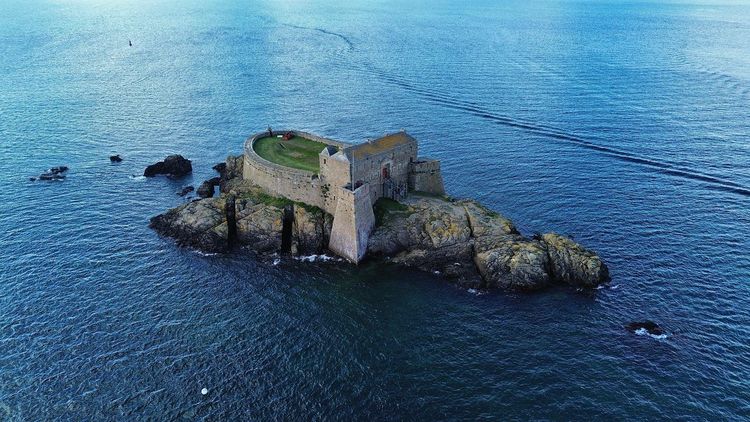
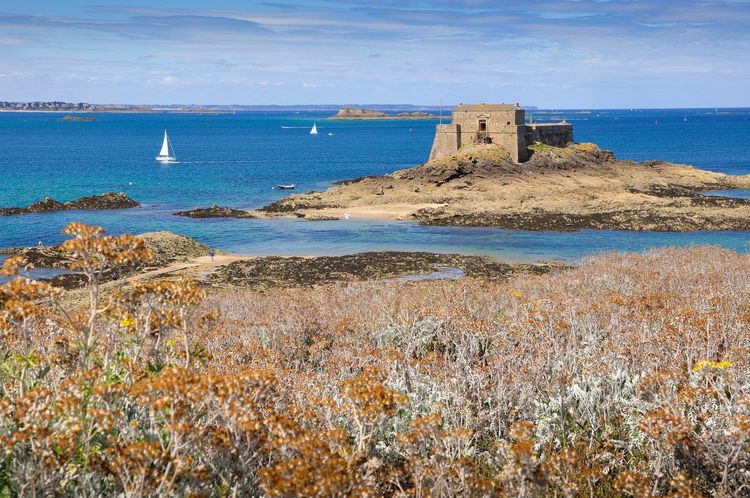
Less crowded, the Petit Bé Island (35400 Saint-Malo, rated 4.5/5 on Google from 336 reviews) and its fort, restored since the 2000s, can also be reached on foot at low tide, a little further along the same causeway.
When it is open, a visit to the fort offers a rare perspective on the ramparts as seen from the sea. It is a good option if the Grand Bé is too crowded at the time you pass.
Day 2: Saint-Servan, the Aleth District, and the Tour Solidor
The second day shifts pace. Head to the Saint-Servan neighbourhood, about twenty minutes on foot or a few minutes by bus from the intra-muros — noticeably less trampled by hurried visitors.
The Aleth District and the Tour Solidor
The Aleth District, a fortified promontory that predates the Saint-Malo intra-muros by several centuries, is worth the detour for its 360-degree panorama over the Rance estuary and the bay.
A German bunker converted into a memorial museum tells the story of the occupation and the 1944 fighting from the Saint-Servan side. The corniche path that circles the promontory takes just under an hour of easy walking, with views that change every hundred metres: on one side the walled city and its ramparts, on the other Dinard and the mouth of the Rance. Go early in the morning — the light is softer and you will mostly encounter Malouins walking their dogs.
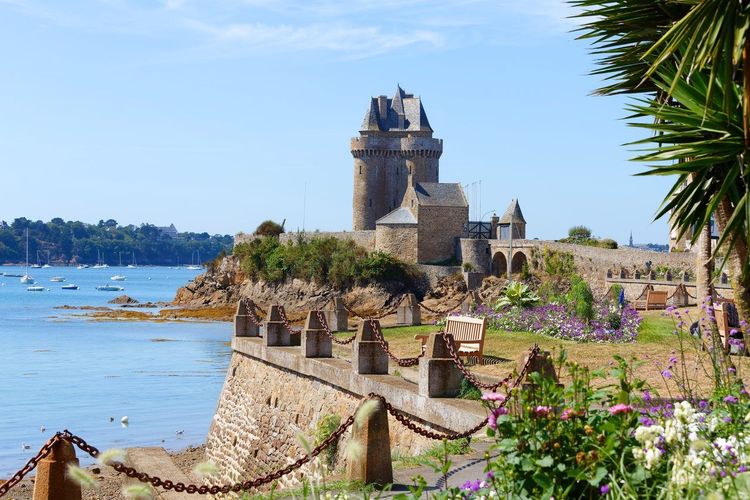
Just below, the Tour Solidor, a cluster of three 14th-century towers built to watch over the estuary, long housed a museum dedicated to sailors who rounded Cape Horn under sail. Its opening to visitors today depends on scheduled exhibitions: check before heading up if you want to see the interior, as the silhouette from the quayside is already worth the trip.
The Ryo article dedicated to the Tour Solidor covers the full history of this small museum, often skipped by visitors eager to get to the beach.
The Beaches of the Rance Estuary
Saint-Servan has its own beaches, quieter than those of the Sillon: the Bas-Sablons beach, backed by the marina, and small sheltered coves on either side of the Aleth promontory. The water is often calmer there, protected by the estuary, making it a good option with young children who want to splash about without the swell of the open sea.
The Bas-Sablons marina, with its rows of masts and terraces facing Dinard, also offers one of the most pleasant lunch stops of the stay, generally at lower prices than intra-muros. If you have time, continue to the Parc des Corbières, upstream along the Rance, for a view of the tidal barrage that harnesses these extraordinary tides.
Day 2 (Continued): Rothéneuf and Its Sculpted Rocks
Late morning or early afternoon on the second day, head east towards the Rothéneuf neighbourhood, about twenty minutes by car or bus from the intra-muros.
The Sculpted Rocks of Abbé Fouré
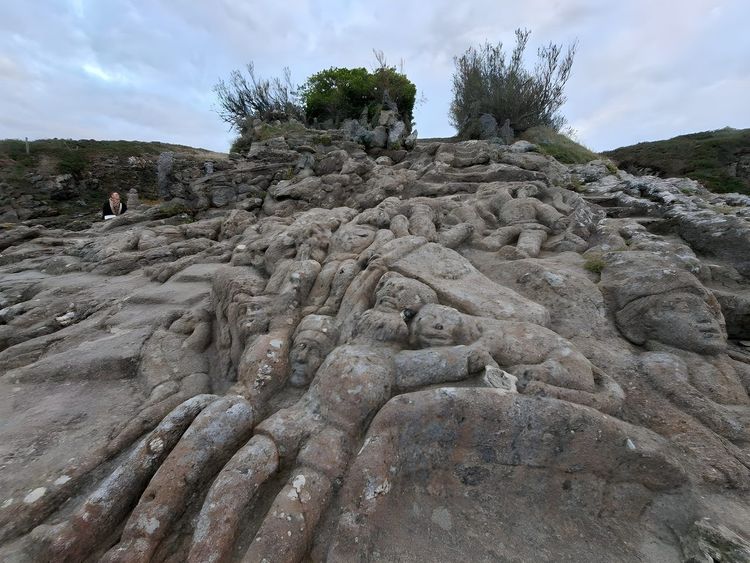
From 1894 onwards, Abbé Adolphe Julien Fouré, a priest who had retired to Rothéneuf after a stroke left him deaf and mute, spent years chiselling nearly 300 figures into the coastal granite rocks: mermaids, sea monsters, historical characters, and scenes from Breton legends make up these Sculpted Rocks of Rothéneuf.
Sea erosion has worn away some of the figures over the past century, giving the site an almost ghostly charm. The entrance fee is modest, and the visit takes about thirty minutes; since visiting conditions have changed in recent years, a quick check of the day's opening hours avoids a wasted trip. The Ryo article dedicated to the sculpted rocks of Rothéneuf tells the remarkable story of their creator, alone with the rock for more than ten years.
The Coves of Rothéneuf and Saint-Ideuc
A short distance from the sculpted rocks, the Coves of Rothéneuf and Saint-Ideuc offer a completely different face of the Malouin coastline: fine sand, jagged rocks, and far fewer people than the Sillon in high season.
These are great spots for a picnic or a peaceful swim at the end of the day, especially if you are travelling outside July and August. The Havre beach, at the back of the enclosed inlet at Rothéneuf, empties almost completely at low tide and takes on the feel of a lagoon.
The Pointe de la Varde
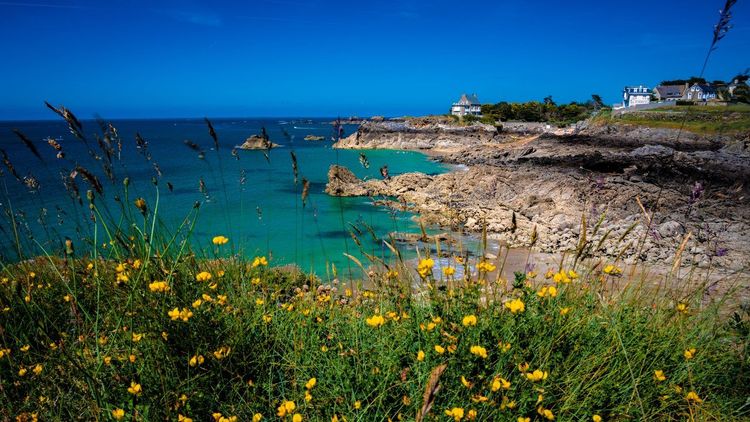
Continuing eastward, the Pointe de la Varde (35400 Saint-Malo, rated 4.6/5 on Google from 540 reviews) opens onto a protected natural area of wind-beaten dunes and heathland, with an unobstructed view of the open sea.
It is a good addition if you enjoy walking a little further: allow three-quarters of an hour for a there-and-back stroll from Rothéneuf, with no particular difficulty. The path here follows the GR34, the old customs officers' trail, which you can extend to Rochebonne beach and walk back towards the centre.
The Most Beautiful Beaches in Saint-Malo
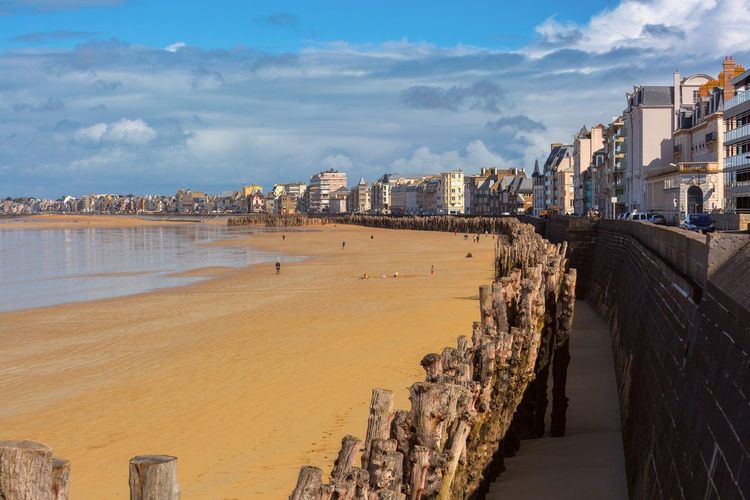
Between the two days of the itinerary, the city lines up some very different beaches, all worth knowing so you can choose according to the time of day and the atmosphere you are after.
The Grande Plage du Sillon and the Rochebonne Seawall
The Plage du Sillon, the vast stretch of sand linking the intra-muros to Paramé, remains the most frequented and most convenient, right beneath the ramparts.
It runs alongside the Rochebonne Seawall, a promenade lined with 19th-century seaside villas recalling Saint-Malo's golden age as a bathing resort.
At low tide, the beach extends several hundred metres — more than enough room to set up a beach volleyball game well away from the rampart crowds. The oak-trunk breakwaters planted in the sand, which have become the city's most photographed image, break the swell and are fully exposed when the sea retreats.
The Plage de l'Éventail and the Plage de Bon Secours
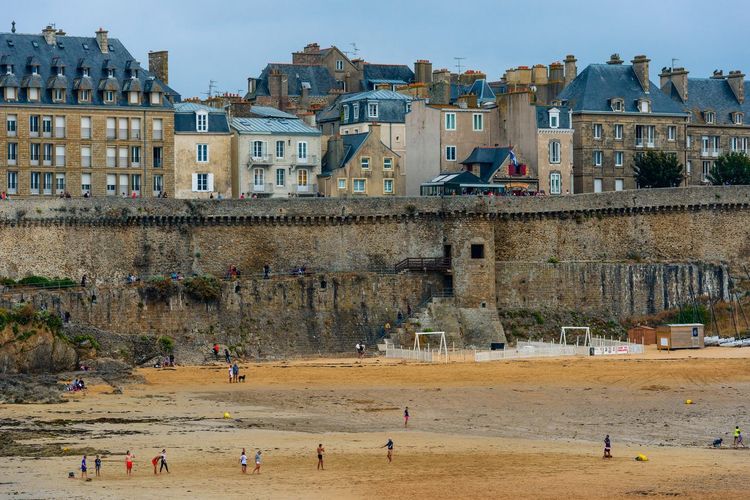
Sitting right against the ramparts on the walled city side, the Plage de l'Éventail and the Plage de Bon Secours offer the most spectacular view, with the ramparts on one side and the islets on the other.
A seawater pool is revealed at low tide at Bon Secours, filled by the waves at high tide and then retained by its concrete wall — very popular with families for current-free swimming, complete with a diving board. A little further along, the Plage du Môle (35400 Saint-Malo, rated 4.6/5 on Google from 2,535 reviews) completes this trio of small urban beaches, more tucked away and often quieter.
The Great Tides: A Spectacle Not to Be Missed
Saint-Malo has one of the greatest tidal ranges in Europe: more than 13 metres between high and low tide during peak coefficients, compared with an average of 4 to 5 metres for the rest of the year. These extreme tides occur mainly around the equinoxes, in March and September, when the coefficient exceeds 100.
On these dates, waves sometimes splash over the top of the ramparts on the Bon Secours side and the Sillon seawall is cordoned off as a precaution — a spectacle the Malouins look forward to every year and one you can plan for using the tide calendars published by the port. If your stay falls on these days, set aside at least an hour to watch the sea rise from the rampart walk, and keep your distance from the parapet: waves sometimes break right over the top.
Activities and Alternative Things to Do in Saint-Malo
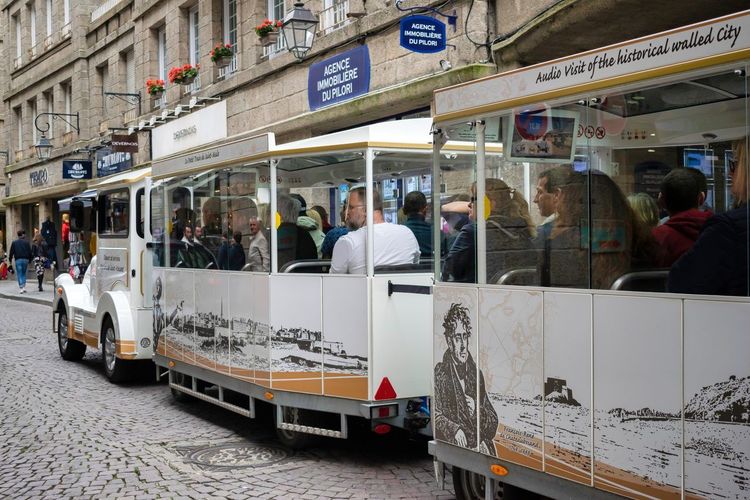
If the weather turns or if you are travelling with children who need a break between rampart visits, several options offer a complete change of pace. The tourist train, which connects the intra-muros, the Sillon, and Paramé with an audio commentary, is a relaxing alternative for a quick overview of the city without walking.
The Grand Aquarium and the Micro Zoo
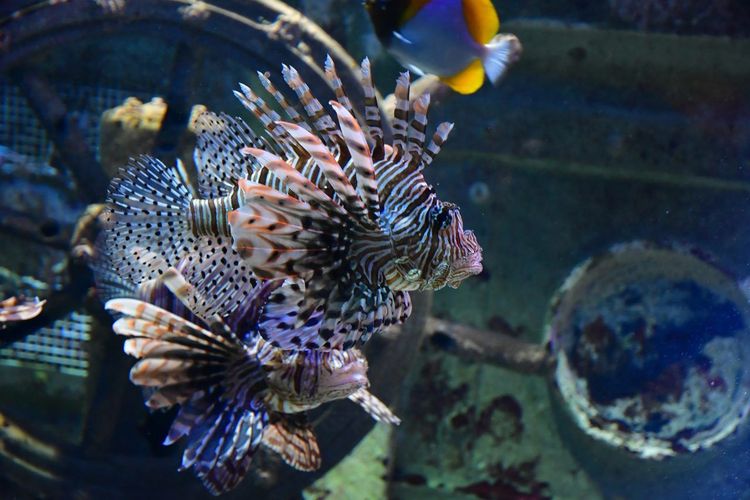
Located about 4 km from the intra-muros, the Grand Aquarium de Saint-Malo features several dozen themed tanks, including a circular ocean ring where sharks and rays glide past.
Allow a good two hours for the visit, more with young children who will want to linger at every tank, and around twenty euros per adult, slightly less for children. The Micro Zoo, located nearby, showcases small animals and insects from around the world in terrariums — a shorter and complementary format that often makes a great late rainy afternoon.
A Boat Trip across the Bay
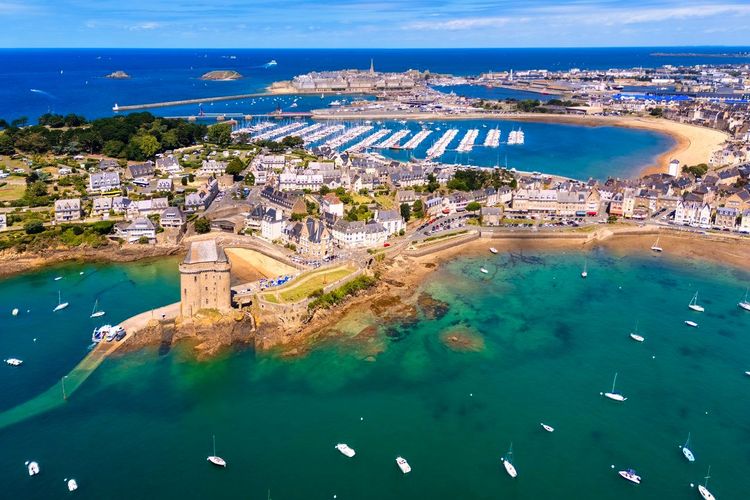
Several companies offer boat trips from the harbour, ranging from the simple ten-minute crossing to Dinard to half-day excursions to the Chausey Islands or along the coast. Seeing Saint-Malo from the water — ramparts and steeples aligned on the horizon — completely changes the impression you take away after two days spent inside its walls. The trip up the Rance to Dinan by passenger ferry, when tide times allow, is the longer, more contemplative version of the experience.
Thermes Marins and Thalassotherapy
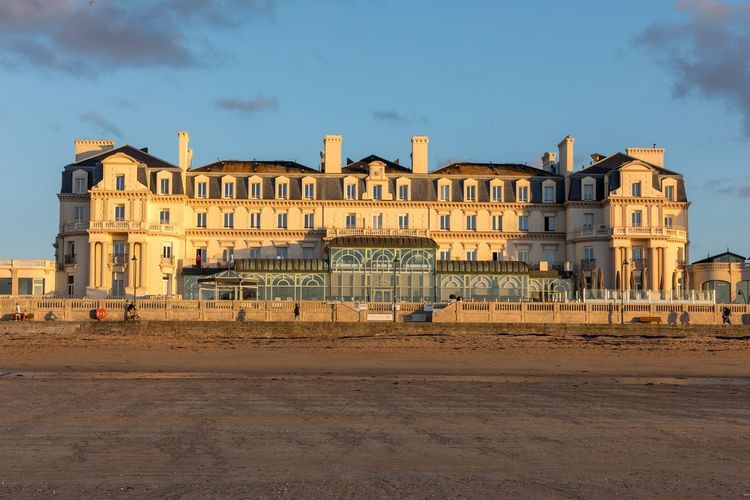
Located directly on the Sillon beach, the Thermes Marins de Saint-Malo (Avenue du Commandant Charcot, 35400 Saint-Malo, rated 4.4/5 on Google from 2,779 reviews) offer thalassotherapy treatments by the day or by the hour, without necessarily booking a full residential stay.
An afternoon session in the heated seawater circuit is a great way to rest legs tired from the ramparts, especially at the end of the second day before heading home. Book a few days in advance in summer — slots fill up quickly. Find more ideas in the Ryo article on the best activities to do in Saint-Malo.
What to Do around Saint-Malo
If you extend beyond these two days, or if you have hired a car, the area around Saint-Malo concentrates several sites each worth half a day to a full day.
Dinard and Dinan: Two Essential Day Trips
On the other side of the estuary, Dinard can be reached in ten minutes by ferry from the harbour or in about twenty minutes by car via the tidal barrage. This chic seaside resort from the early 20th century, a favourite among the British since the Victorian era, lines up eccentric villas and the Promenade du Clair de Lune along the coast.
About thirty kilometres to the south, Dinan offers a completely different setting: a medieval town perched above the Rance, with well-preserved ramparts, half-timbered houses, and a Château de Dinan whose keep is open to visitors.
The descent of the Rue du Jerzual towards the port of Dinan, below the ramparts, remains one of the finest urban walks in the region, on cobblestones that sometimes date back to the Middle Ages. Plan for the return: the climb back up is considerably steeper than it looks.
Cancale, the Pointe du Grouin, and Mont-Saint-Michel
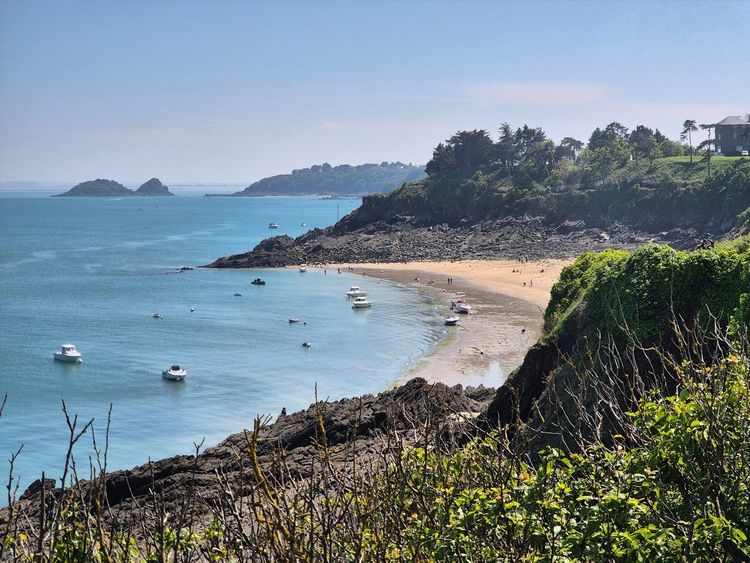
Cancale, Brittany's oyster capital, can be visited in a half-day combining a tasting at the Houle harbour and a walk out to the Pointe du Grouin, a few kilometres to the north.
On a clear day, the view stretches to the Chausey Islands and sometimes to Mont-Saint-Michel, visible on the south-east horizon of the bay.
Mont-Saint-Michel itself is about fifty kilometres and roughly one hour's drive from Saint-Malo — a feasible excursion over a full day if you add a third day to your stay, but harder to fit into a simple two-day weekend. In summer, shuttles and coaches connect the two sites, avoiding the parking question on arrival.
The Château de Combourg and the Rance Valley
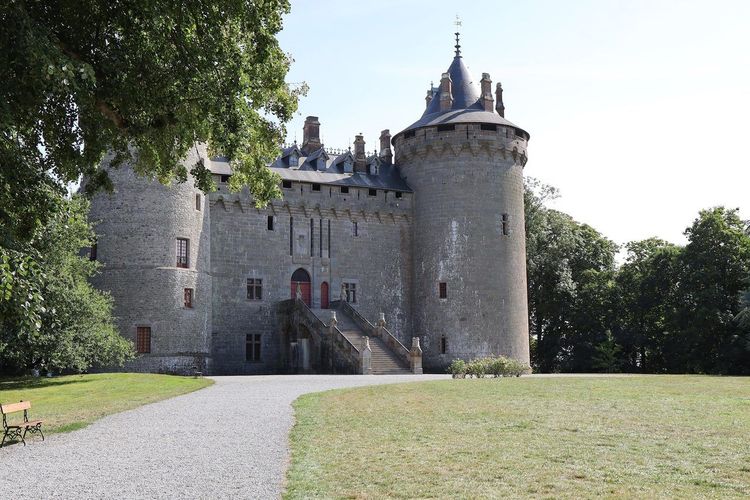
About forty minutes' drive away, the Château de Combourg shaped Chateaubriand's childhood; he spent several solitary years there, recounted in his memoirs.
Its dark towers and pond-edged parkland are worth the detour alone for lovers of Romantic literature. Travelling up the Rance valley towards Dinan, several charming villages such as Léhon or Pleudihen-sur-Rance dot the route, with their quaysides and old tidal mills. Dol-de-Bretagne and the small Mont Dol that overlooks it round out this itinerary for those who enjoy flat landscapes punctuated by isolated heights. Further west along the Emerald Coast, Cap Fréhel and Fort la Latte (22240 Plévenon, rated 4.7/5 on Google from 10,192 reviews), linked by a spectacular stretch of the GR34 coastal path, are also well worth the trip if you have an extra day.
The Ryo article on the most beautiful villages around Saint-Malo sets out a complete itinerary for those who wish to extend their stay in this direction.
Practical Information: Getting Here, Getting Around, Where to Stay
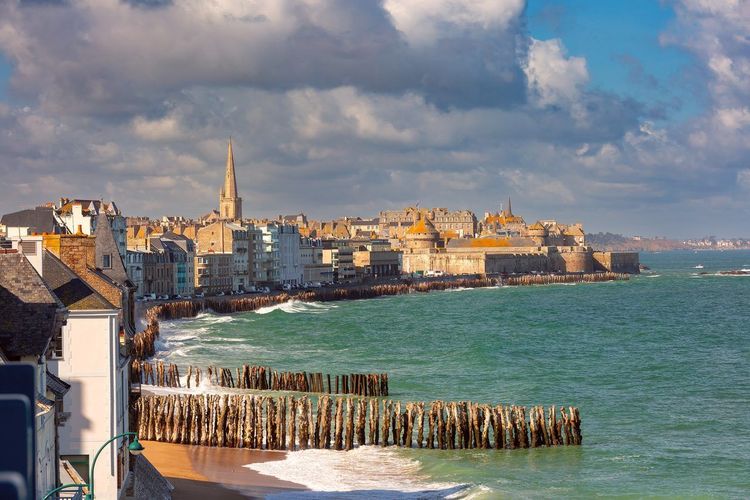
This section covers the logistical questions that come up most often before a trip to Saint-Malo.
How to Get to and around Saint-Malo
By train, Saint-Malo station is connected to Paris-Montparnasse in just over two hours, either by direct TGV or via a connection at Rennes depending on the timetable. By car, allow about four hours from Paris via the A11 then the A84, and one hour from Rennes. Once there, can you visit Saint-Malo without a car? Absolutely: the intra-muros is entirely walkable, the station is about twenty minutes on foot from the ramparts, and an urban bus network serves Saint-Servan, Paramé, and Rothéneuf for longer journeys. If you are only visiting the intra-muros and the Sillon, walking is more than sufficient for both days.
Where to Park for Free
The car parks closest to the ramparts, starting with the Naye car park, are paid and often full in high season. To park for free in Saint-Malo, aim for the outskirts of the walled city: the area around the Aleth district in Saint-Servan and the residential streets of Paramé still have free spaces, a fifteen-to-twenty-minute walk from the ramparts. In summer, arriving before 9 a.m. remains the best guarantee of finding a spot without circling the neighbourhood for half an hour. Another option: leave the car at the hotel for both days and do everything on foot — the most relaxing approach of all.
Where to Stay: Neighbourhoods and Tips
Staying intra-muros puts everything within walking distance but costs more — often between 130 and 220 euros per night in high season for a charming hotel within the ramparts. The Sillon and Paramé neighbourhood, ten minutes on foot, offers lower prices with sea views at some establishments. Saint-Servan, more residential, suits a calm stay with easier parking, at the cost of a fifteen-to-twenty-minute walk to the ramparts.
For food, eating and drinking in Saint-Malo revolves largely around seafood: moules-frites at the harbour, fish restaurants in the intra-muros, more affordable tables around the Bas-Sablons, and the famous biscuit shops selling kouign-amann, craquelins, and Breton galettes to take away. The intra-muros market, on the Place de la Halle au Blé, brings together producers and fishmongers several mornings a week and is the best place to put together a beach picnic. These local delicacies are just as good as an end-of-day treat as they are as souvenirs to take home.
The Ryo audio guide for Saint-Malo remains the best way to fit these practical addresses into your daily route without straying from your itinerary.
When to Go, Budget, and Tips for Every Type of Traveller
Beyond the itinerary itself, a few pointers help you choose the right time and set a realistic budget for your stay.
When to Visit Saint-Malo: Seasons and Weather
May, June, and September offer the best compromise between mild weather and manageable crowds. July and August guarantee a lively atmosphere but also packed ramparts and queues for the Grand Bé at low tide. Winter remains viable for those who enjoy dramatic storms over the ramparts, provided you accept shorter days and frequent showers driven in by the westerly wind. One detail worth noting: whatever the season, pack a windbreaker — the sea breeze knocks several degrees off the perceived temperature on the rampart walk.
Estimated Budget for a 2-Day Weekend
For two days for two people, including accommodation, budget roughly 250 to 400 euros in high season, more if you stay intra-muros. Add 15 to 25 euros per person for entrance tickets if you combine Fort National, the castle museum, and the sculpted rocks, and around 25 euros per person for the Grand Aquarium. The ramparts, the islands at low tide, and most of the beaches are free, which keeps the overall bill well below that of many other Breton destinations.
With Kids, as a Couple, or in the Rain
With children, focus on the Grand Aquarium, the sheltered beaches of Saint-Servan, the Bon Secours pool, and the tourist train — all better suited than extended walks along the ramparts. For a romantic weekend in Saint-Malo, make the most of the sunset from the Tour Bidouane and a seafood dinner facing the harbour, away from the daytime bustle of the Sillon.
What to do in Saint-Malo when it rains? Head to the cathedral, the castle museum, the Maison des Corsaires, and the Grand Aquarium — all under cover and enough to fill a half-day without getting wet. For visiting Saint-Malo with reduced mobility, note that the rampart walk involves steps in places and is not fully accessible by wheelchair, while the Sillon promenade and the Rochebonne seawall offer a flat, obstacle-free path for several kilometres.

FAQ
How Many Days Do You Need to Visit Saint-Malo?
Two days are enough to cover the intra-muros, Fort National, the Grand Bé and Petit Bé islands, and one or two beaches. A third day allows you to add Rothéneuf and an excursion to nearby sites such as Dinan or Mont-Saint-Michel.
How Do You Get around Saint-Malo without a Car?
The intra-muros and the Sillon can be explored entirely on foot. For Saint-Servan and Rothéneuf, an urban bus network connects these districts in fifteen to twenty minutes from the city centre.
Where Can You Park for Free in Saint-Malo?
Free parking can be found on the outskirts of the walled city, near the Aleth district in Saint-Servan or in the residential streets of Paramé, a fifteen-to-twenty-minute walk from the ramparts. The closest car parks, including the Naye car park, are paid year-round.
What Is the Best Time to Visit Saint-Malo?
May, June, and September offer the best balance between pleasant weather and manageable crowds. July and August remain the busiest months, with queues at the main sites.
When Are the Great Tides in Saint-Malo?
The highest tidal coefficients generally occur around the March and September equinoxes, with a tidal range exceeding 13 metres. The tide calendars published by the port of Saint-Malo indicate the precise dates each year.
What Can You Do in Saint-Malo When It Rains?
Saint-Vincent Cathedral, the castle museum, the Maison des Corsaires, and the Grand Aquarium offer enough indoor options to fill an entire half-day out of the rain.
Where Should You Stay in Saint-Malo for a 2-Day Trip?
Intra-muros puts everything within walking distance, the Sillon or Paramé offers better value with sea views, and Saint-Servan suits a quieter stay with easier parking.
Two days in Saint-Malo are more than enough to understand what makes this city special: a geography that transforms every six hours, ramparts that have survived centuries despite war, and islands you can only visit by respecting the rhythm of the sea. Whether you walk along the ramparts, seek out Chateaubriand's tomb, or wander the alleyways in search of the next kouign-amann, always keep an eye on the tide times — they are the true thread running through any stay here.
If you could take away just one thing from this weekend, it would be this contrast: a mineral city, closed in on itself, set in the middle of a landscape in constant motion. To plan your itinerary site by site and hear the story of the privateers where it unfolded, the Saint-Malo audio-guided tour remains the most practical companion — launch it as soon as you take your first steps along the rampart walk.
À lire également