© Shutterstock
 Votre guide Ryo
The 10 Most Beautiful Villages to Discover Around Saint-Malo (2026)
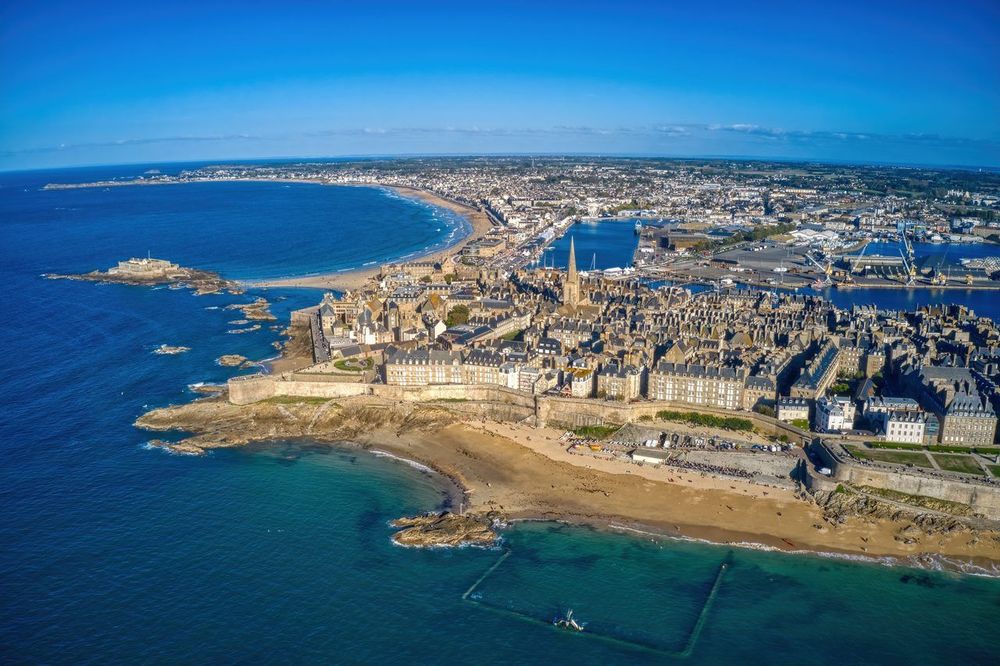
There's something strange about Saint-Malo: you arrive for the corsair city, its ramparts and its great tides, and every village around Saint-Malo that you visit afterwards reveals a different world, within a 50 km radius. The villages around Saint-Malo don't just extend your stay — they transform it. A granite fishing village labelled "Most Beautiful Village of France" on the banks of the Rance, a seaside resort with 400 Belle Époque villas facing the ramparts, an oyster port with a direct view over the bay of Mont-Saint-Michel, a 12th-century episcopal city flanked by one of the tallest standing menhirs in Brittany: the hinterland around Saint-Malo reveals itself at every turn in the road. To start with the city itself before venturing out to the surrounding area, the Ryo audio guide of Saint-Malo, À l'abordage offers 29 stops within the ramparts and alleyways of the walled city, a 2h40 walk to understand why this city has fascinated visitors for centuries. Here are the ten villages and towns that are truly worth the detour.
1. Saint-Suliac: The Only "Most Beautiful Village of France" in the Area
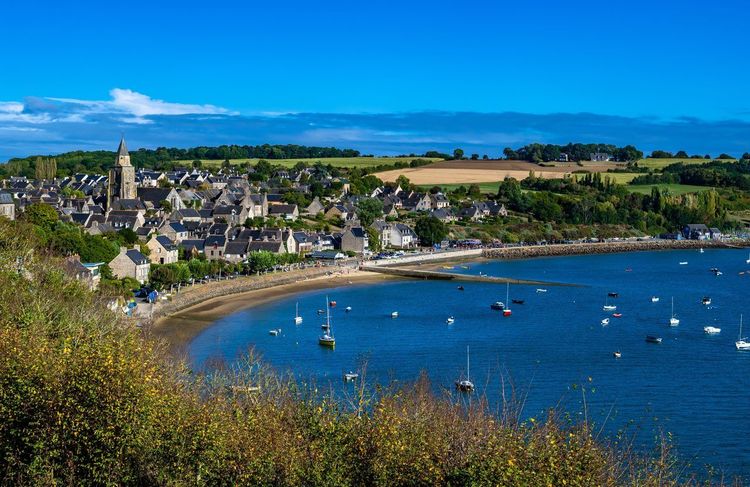
Some 15 km south of Saint-Malo, heading down towards the Rance via the D117 and then the D407, Saint-Suliac (Village de Saint-Suliac, 35430 Saint-Suliac) appears without warning: a main street of grey schist and granite, houses pressed tightly together, and the river spreading out below like a lake depending on the tides. This fishing village is the only one in Ille-et-Vilaine to carry the "Most Beautiful Villages of France" label, a well-deserved distinction awarded for the overall quality of its architecture and its preserved character.
The history of the place dates back to the 6th century, when the Welsh monk Suliau settled on these banks to evangelise the region. But it was in the 17th and 18th centuries that Saint-Suliac experienced its true prosperity, thanks to the Terre-Neuvas: these Breton fishermen who set out every spring for Newfoundland in search of cod, returning in autumn with full holds. The granite houses on the rue de la Grève still bear witness to the wealth acquired far from home. The salt storehouses, small squat dry-stone buildings scattered throughout the village, were used to store the salt needed to preserve the fish; now listed, they can still be seen from the street.
Two viewpoints structure the visit. The Butte Bénest, accessible on foot from the village centre in about ten minutes of gentle climbing, offers a panoramic view over the entire Rance estuary and, on a clear day, the church spires of Saint-Malo in the distance. The église Saint-Suliau (11th–15th century), with its stocky bell tower and rubble granite walls, is open during the day; the interior is simple, the atmosphere weighty and beautiful at the same time.
About 2 km from the village in the direction of La Ville-ès-Nonais, the menhir de la Roche aux Fées de la Tremblais stands in a field, one of the many megaliths that dot this part of Brittany, often overlooked by guides but freely accessible. For outdoor enthusiasts, kayak outings are organised from the port of Saint-Suliac in summer, making it possible to explore the meanders of the Rance at high tide and see the village from the water.
In practical terms, Saint-Suliac can be visited on foot in 1h30, with a climb up to the butte and a stop at the maison de la Grève (café-grocery, open in season). The village is a dead end on the southern side, so you must return the same way you came. Allow half a day to enjoy the place at a leisurely pace, especially if you arrive in the late afternoon when the raking light brings out the textures of the granite.
Distance: 15 km, about 20 minutes by car.
2. Dinard: Belle Époque Elegance Ten Minutes by Boat
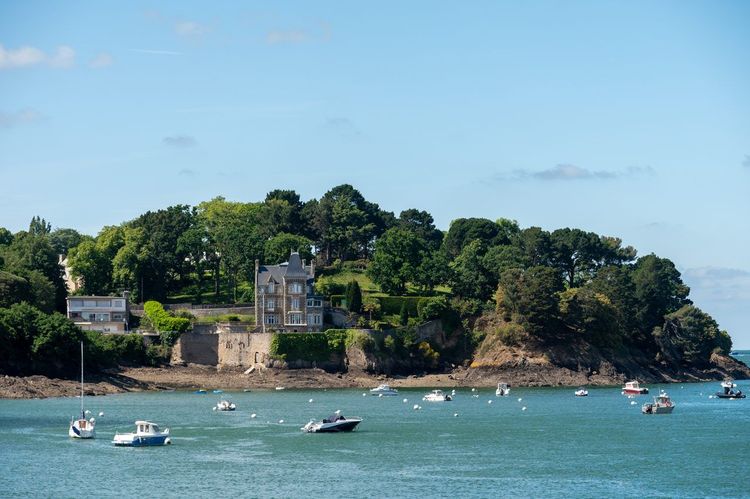
You can reach it by water shuttle from the Saint-Malo embarcadero in 10 minutes, or by car via the Rance barrage in 20 minutes. However you arrive, Dinard immediately strikes you with its contrast to its neighbour: where Saint-Malo is military and austere, Dinard is extravagant and charming.
The town has more than 400 listed Belle Époque villas, relics of a golden age when the English aristocracy and the French upper bourgeoisie came to bathe in striped linen outfits. This Anglophile fashion explains everything: the manicured lawns, the glazed verandas, the villa names in English on ceramic plaques. The promenade du Clair de Lune, which runs along the sea from the plage du Prieuré to the plage de l'Écluse, remains one of the most photogenic coastal walks in Brittany; on summer evenings, a sound-and-light show is projected onto the villa facades from the seafront promenade.
The plage de l'Écluse, sandy and framed by the casino (1912) and the Grand Hôtel, is the most popular. For a little more peace, the plage du Prieuré to the south or the plage de Saint-Enogat to the west are better options. Each October, Dinard hosts the British film festival, paying tribute to this Anglophile heritage with premieres and retrospectives. The musée du Site Balnéaire, housed in a 1900s villa, traces this era with collections of period swimwear, vintage photographs and seaside resort objects — allow about 1 hour for the visit.
Distance: 10 minutes by water shuttle (quai Saint-Vincent), 12 km by road.
3. Cancale: The Oyster Port Overlooking the Bay of Mont-Saint-Michel
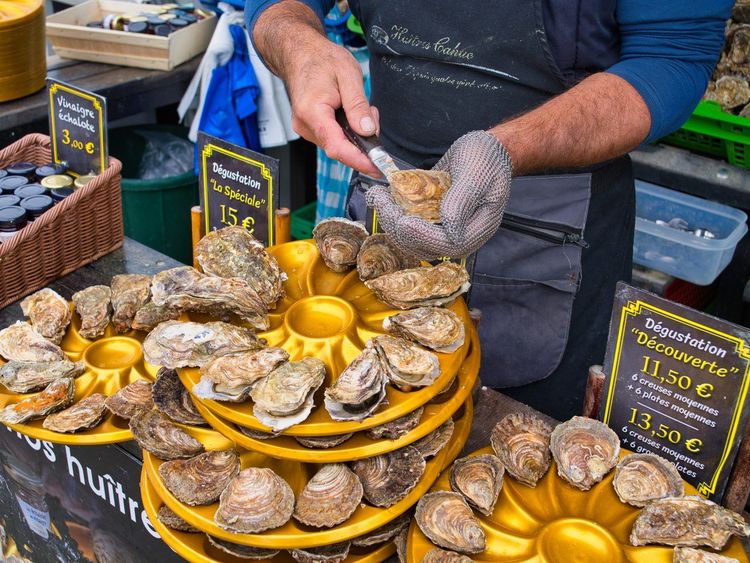
14 km east of Saint-Malo, Cancale is the place where locals from Saint-Malo come on Sunday mornings to buy oysters straight from the quay. This is no figure of speech: the oyster market at the port de la Houle (Port de la Houle, 35260 Cancale, rated 4.8/5 on Google from 10 reviews) operates every day, including in winter, with open-air stalls where you can buy a dozen from around 2 euros and toss the shells straight onto the beach.
The oyster beds of Cancale stretch for several kilometres across the bay. The town produces mainly flat oysters (Ostrea edulis, the true Breton oyster) and Pacific oysters (Crassostrea gigas). The difference is apparent at the first bite: the flat oyster is stronger, more iodine-rich, with a nutty finish that connoisseurs consider the pinnacle. To understand the whole production process, the Ferme Marine offers guided tours of the oyster beds with tasting included — an experience you must book well in advance during high season, as groups arrive early.
But Cancale is not just about seafood. From the pointe du Grouin, 8 km north of the port and accessible on foot via the coastguard path GR34, the panorama takes in the entire bay of Mont-Saint-Michel, the Chausey Islands and, on very clear days, the Normandy coast. It is one of the most striking coastal viewpoints in the region, especially at high tide when the water floods the salt marshes below. The low-lying vegetation of the headland, swept by the wind, gives the spot an end-of-the-world feel despite its proximity to the tourist routes.
The upper town of Cancale is home to the église Saint-Méen and quieter shopping streets than the port. But the real life of Cancale is down below, on the quai Thomas: the fish auctions, the fishing boats and the seafood restaurants lined up along the harbour. Book ahead if you come in July or August — the best tables fill up several days in advance.
Distance: 14 km, about 20 minutes by car.
4. Combourg: In the Footsteps of Chateaubriand
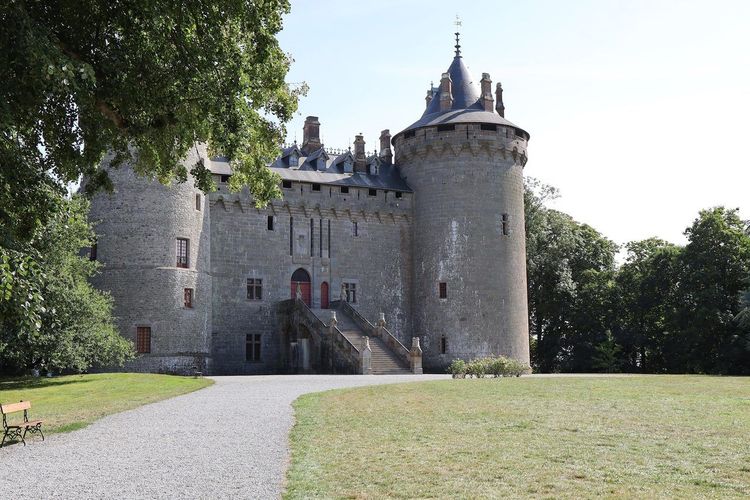
Combourg, 45 km south of Saint-Malo, is a small town of around 6,000 inhabitants that owes most of its fame to a melancholic 18th-century adolescent: François-René de Chateaubriand. The author of Mémoires d'outre-tombe spent two years of his childhood in the family castle and immortalised it in his writings, notably in the famous chapter on "the heathlands" and his nocturnal walks around the lake.
The château de Combourg (Place Chateaubriand, 35270 Combourg, rated 4.2/5 on Google from 3,005 reviews) (11th–15th century) can be visited in summer, including the apartments of the Count of Chateaubriand, the writer's father, and the Tour du Chat, where the young François-René slept alone and claimed to hear the ghost of a former lord prowling about. The visit lasts about 1 hour. The terraced gardens offer a view over the lake, whose reflections in the autumn light are worth the trip in themselves.
The lac de Combourg, freely accessible all around the château, makes for a pleasant 3 km walk through the woods. The town has a few good restaurants and a Monday morning market. If you are there from mid-July to mid-August, the festival "Les Contes du Château" puts on open-air performances blending storytelling and music inspired by the world of Chateaubriand — atmosphere guaranteed, even in cool weather.
Distance: 45 km, about 45 minutes by car.
5. Saint-Briac-sur-Mer: Painters, Golf and Secret Coves
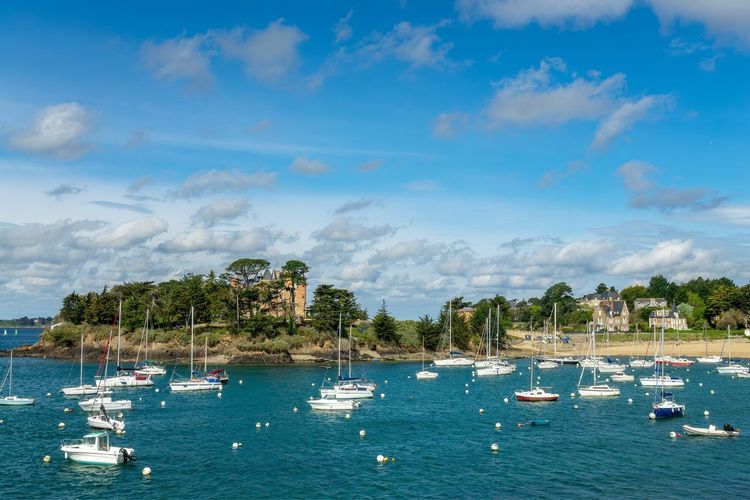
Some 17 km west of Saint-Malo, on the Côte d'Émeraude, Saint-Briac-sur-Mer (Place de l'Église, 35800 Saint-Briac-sur-Mer, rated 4.4/5 on Google from 74 reviews) is the kind of village you drive through without stopping, and then regret. The painter Paul Signac stayed here in 1885 and produced several canvases, including Saint-Briac. Les Balises and Saint-Briac. D'une fenêtre, Breton sojourns that marked the turning point in his career towards neo-impressionism. The light of the Côte d'Émeraude, neither Mediterranean nor fully Atlantic, also attracted other painters at the turn of the 20th century.
The golf de Dinard, whose fairways have stretched between the village and the sea since 1887, is one of the oldest golf courses in France. Non-members can play on a green fee basis without a reservation outside high season. As for nature, Saint-Briac's beaches need to be sought out: the plage de la Salinette, the plage du Béchet and the plage des Demoiselles are small, often far less crowded than those in Dinard, and surrounded by reddish rocks that warm up in the afternoon sun. Ideal for a crowd-free swim, especially on weekdays outside July and August.
Distance: 17 km, about 20 minutes by car.
6. Dol-de-Bretagne: Episcopal City and Stone Giant
Dol-de-Bretagne, 25 km south-east of Saint-Malo, is one of the most underrated towns for visitors passing through the region. This former episcopal city, founded in the 6th century by the Welsh monk Samson, is home to a cathedral that rivals the finest in Brittany, and a menhir that dwarfs all its regional competitors.
The cathédrale Saint-Samson (12th–14th century) is built in the austere Gothic style typical of Breton architecture: no superfluous ornamentation, but an impressively high vaulted ceiling for a town of 5,000 inhabitants. The Romanesque apse, the 13th-century stained glass windows and the rare Flamboyant Gothic north porch are all worth lingering over. The rue des Stuarts, just next door, preserves medieval half-timbered houses some of which date from the 12th century — one of the best-preserved medieval streets in Brittany.
About 2 km from the centre, the menhir de Champ-Dolent is one of the tallest standing menhirs in Brittany: 9.5 metres tall, planted in a field for around 6,000 years. Legend has it that it sinks an inch every hundred years and that when it disappears entirely, the world will end. Access is free. From the mont Dol (65 m in altitude, 3 km away), the view over the Marais de Dol and the bay of Mont-Saint-Michel on a clear day is remarkable.
Distance: 25 km, about 25 minutes by car.
7. Léhon: The Medieval Abbey in the Rance Valley
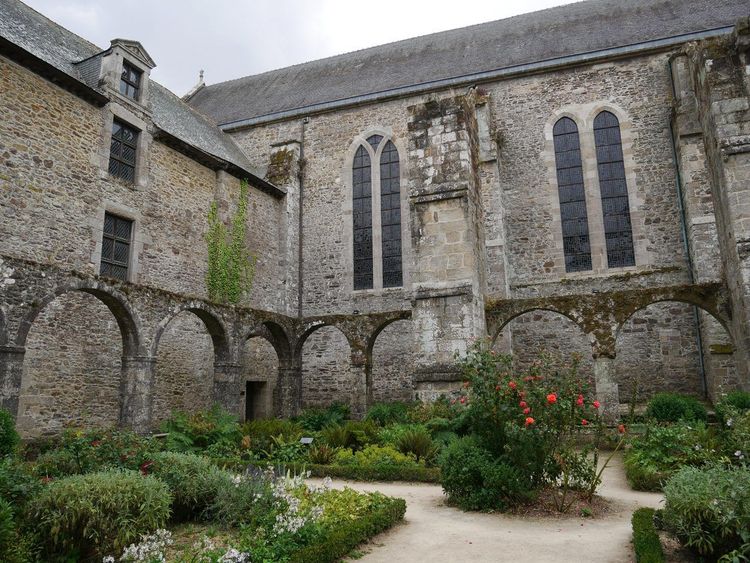
Léhon, 35 km south of Saint-Malo via Dinan, is a medieval village nestled in the hollow of the Rance valley. Administratively part of Dinan, it nonetheless deserves a stop in its own right — or rather, for its two monuments, which are among the most discreet and most beautiful in the region.
The abbaye Saint-Magloire was founded in the 9th century by monks fleeing Viking raids — an unsettled beginning for a place that today radiates complete tranquillity. The current buildings date mainly from the 11th and 13th centuries. The cloister, the reconstructed kitchen garden and the abbey church (with the alabaster recumbent effigies of the Beaumanoir family, a great Breton family of the Middle Ages) can be visited on a 45-minute guided tour in July and August. The gardens are freely accessible year-round.
About 200 metres from the abbey, the ruins of the château de Léhon (12th century) overlook the Rance from a rocky spur. Access is free, and the partially restored rampart walk allows you to see the river below and the rooftops of Dinan on the opposite bank. A marked path connects the two sites in about ten minutes on foot. Allow half a day for Léhon, possibly combined with Dinan for a full day in the Rance valley. And for the corsair city itself, allow 6.6 km inside the ramparts with our audio-guided tour, from the Grande-Porte to Chateaubriand's birthplace.
Distance: 35 km, about 35 minutes by car.
8. Pleudihen-sur-Rance: Cider, a Secret Port and a Gentle Way of Life
Pleudihen-sur-Rance is the village that never appears in tourist guides, and that is precisely why it is worth the detour. Some 25 km south of Saint-Malo, on the banks of the Rance, this agricultural village has retained an authenticity that more well-known villages have largely lost.
The port de Mordreuc (Port de Mordreuc, 22690 Pleudihen-sur-Rance, rated 4.5/5 on Google from 72 reviews), reached via a narrow lane that winds down between fields, is one of the most picturesque river ports in the region: a few rowing boats, herons fishing along the banks, and the silence of the river at high tide. It is one of the best fishing spots on the Rance according to regulars, though nobody shares that information willingly. The Maison de la Pomme et du Cidre (open from April to September, 4 euros entry) traces the history of Breton cider production with pressing demonstrations and tastings — well designed for families, suitable for children aged 6 and over.
Distance: 25 km, about 25 minutes by car.
9. Saint-Lunaire: The Forgotten Headland of the Côte d'Émeraude
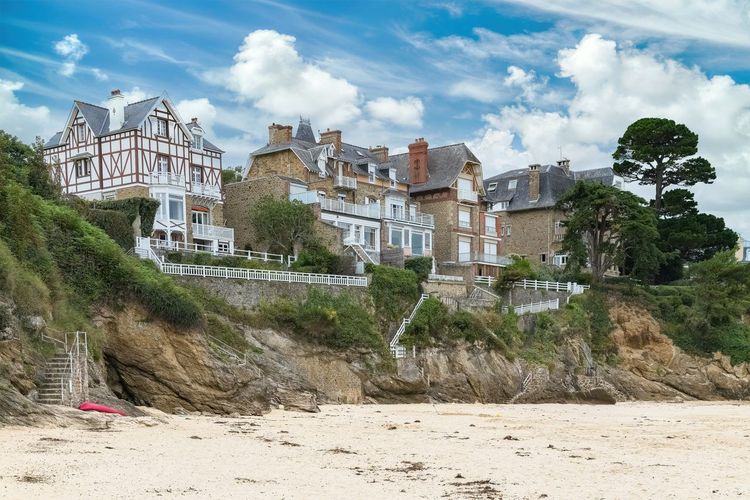
Between Saint-Malo and Saint-Briac, Saint-Lunaire slots in discreetly 11 km west of Saint-Malo. The seaside resort, more modest than Dinard, has retained the genuine charm of an early 20th-century holiday retreat, with its villas set back from the sea and its quiet lanes.
The highlight of Saint-Lunaire is the pointe du Décollé (Pointe du Décollé, 35800 Saint-Lunaire, rated 4.7/5 on Google from 1,340 reviews): a rocky promontory jutting out into the sea, connected to the shore by a narrow natural causeway (a sand isthmus that the tide partially covers). In stormy autumn or winter weather, the waves crash against it with impressive force. In fine weather, the view from the top takes in the coast from Saint-Malo to Saint-Briac, and the sunset over the red rocks is of undeniable photographic quality.
The église Saint-Lunaire (11th century) houses a recumbent effigy of the eponymous Breton saint, dated to the 11th century — one of the best-preserved Romanesque sculptures in Ille-et-Vilaine. The large beach at Saint-Lunaire, sandy and well-exposed to the south-west, is perfect for a swim after visiting the headland.
Distance: 11 km, about 15 minutes by car.
10. Le Minihic-sur-Rance: Preserved Maritime Authenticity
You really have to want to go there to find Le Minihic-sur-Rance (Place de l'Église, 35430 Le Minihic-sur-Rance). This village of fewer than 2,000 inhabitants, 12 km south of Saint-Malo heading up the Rance inland, has no listed attractions, no registered monuments. That is precisely what makes it one of the most peaceful spots in the region.
The port du Minihic amounts to a few pontoons on the Rance, where pleasure boats coexist with the last net fishermen. The riverbank is accessible on foot from the village centre in about ten minutes, and the river landscapes at high tide — when the water rises up to the weed beds and covers the rocks — are very different from those at low tide. For cyclists, Le Minihic lies on the Rance cycle route (which runs along both banks between Saint-Malo and Dinan), making it an ideal way to connect several Rance villages in a single car-free day.
Distance: 12 km, about 15 minutes by car.
How to Organise Your Day Trip from Saint-Malo
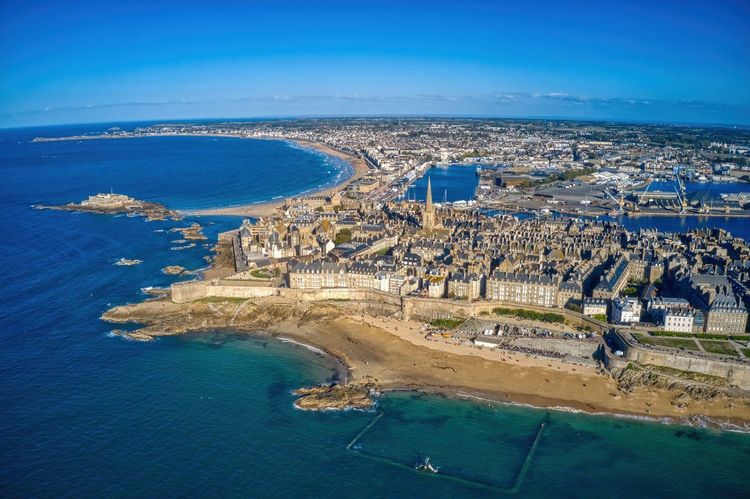
Ten villages in a single stay is doable over two to three days, as long as you accept that you can't do everything at once. Here is how to structure your outings depending on the time available.
In one day, choose one axis. The Côte d'Émeraude heading west (Dinard, Saint-Lunaire, Saint-Briac-sur-Mer) can be strung together by car along 50 km of coastal road with natural stops at each beach. The Rance riverbank heading south (Saint-Suliac, Le Minihic, Pleudihen-sur-Rance) makes for a more inland, greener and considerably less touristy itinerary.
In two days, add Cancale on the morning of the first day — at the port market before 11am, before the crowds arrive — then Dol-de-Bretagne in the afternoon (cathedral and menhir de Champ-Dolent). Dedicate the second day to the Rance valley with Léhon, the castle ruins and Dinan.
The Ryo app also offers a way to start your stay with the walled city itself: the Ryo audio guide À l'abordage covers 6.6 km through the ramparts and fortifications in 2h40 — a useful introduction before venturing out to the surrounding area.
By car: essential for the majority of these villages. Public transport connects Saint-Malo to Cancale, Dinard and Dol-de-Bretagne via Keolis Emeraude, but services are infrequent outside peak hours. The Illico 35 service covers certain routes.
Best season: spring (April–May) and early autumn (September–October) offer the best combination of light, reasonable crowds and open facilities. In July and August, Cancale and Dinard are particularly busy at weekends — prefer weekday visits or early mornings.



FAQ
Which is the most beautiful village around Saint-Malo?
Saint-Suliac regularly wins this title, and for good reason: it is the only village in Ille-et-Vilaine to hold the "Most Beautiful Villages of France" label. Its granite architecture, its position on the Rance and its end-of-the-world atmosphere give it a charm that its more touristy neighbours lack. Léhon, in the Rance valley, is a more low-key alternative that is much appreciated by lovers of medieval history.
Can these villages be visited without a car?
Partially. Cancale is accessible from Saint-Malo by bus (line 2, about 30 minutes). Dinard is connected by water shuttle from the quai Saint-Vincent (10 minutes, every 30 minutes in season, from March to November). The Rance cycle route allows cyclists to link Saint-Malo to several Rance villages (Saint-Suliac, Le Minihic, Pleudihen-sur-Rance, Léhon) along both banks. For Combourg, Dol-de-Bretagne and Saint-Briac, a car remains necessary due to the lack of regular connections.
How far is Saint-Suliac from Saint-Malo?
Saint-Suliac is 14–15 km south of Saint-Malo, about 20 minutes by car via the D117 and D407. The road first skirts the outskirts of Saint-Malo before heading into the Breton countryside. Note: the village is a dead end on the southern side, with no passage further south, so you must return by the same road. There is no direct public transport from Saint-Malo.
What is the best time to visit Cancale?
Cancale's oysters can be enjoyed year-round — they have no bad season, contrary to the popular belief about months containing the letter "r". That said, the market at the port de la Houle is particularly lively on Sunday mornings. Avoid Saturdays and Sundays in July and August between 11am and 2pm: queues at the stalls can last up to 30 minutes. For the Ferme Marine, guided tours of the oyster beds run from April to September and advance booking is recommended. The pointe du Grouin is spectacular in any season, but particularly striking during stormy autumn weather.
Are there interesting medieval villages around Saint-Malo?
Yes, it is one of the region's great strengths. Dol-de-Bretagne has a 12th-century Romanesque cathedral and the rue des Stuarts with its half-timbered houses. Léhon has a Benedictine abbey founded in the 9th century and castle ruins perched on a cliff above the Rance. Combourg and its medieval castle (11th century) were made famous by Chateaubriand. For religious curiosities, the church of Saint-Lunaire (11th century) and its Romanesque sculptures, as well as the historic centre of Saint-Suliac, make two additional stops.
Conclusion
The area around Saint-Malo works like a sounding board: each village amplifies a different facet of coastal and inland Brittany. Saint-Suliac for the granite and the Rance, Cancale for the oysters and the bay, Dol-de-Bretagne for Breton medieval history, Dinard for Belle Époque extravagance, Léhon for medieval tranquillity. All good reasons to extend your stay in the Saint-Malo area by several days.
Before heading out to explore the surrounding area, or on your return, consider spending a few hours in the walled city itself. The Ryo audio guide of Saint-Malo offers 29 stops through the ramparts, fortifications and alleyways of the walled city, to understand how this corsair city shaped the entire region around it. If you are planning other escapes in Brittany, the most beautiful villages to visit around Rennes and the most beautiful villages around Brest naturally round out this tour of the region.
À lire également