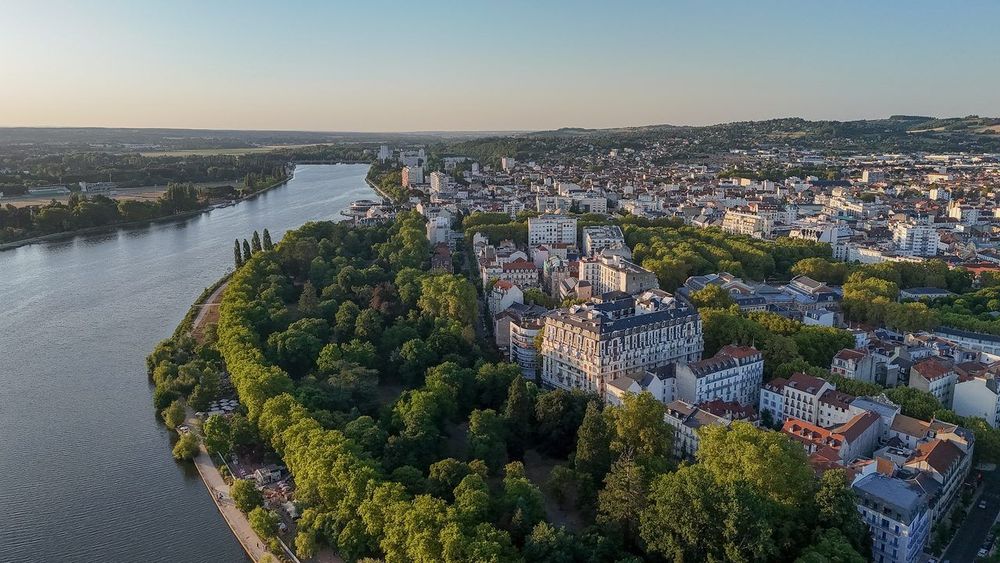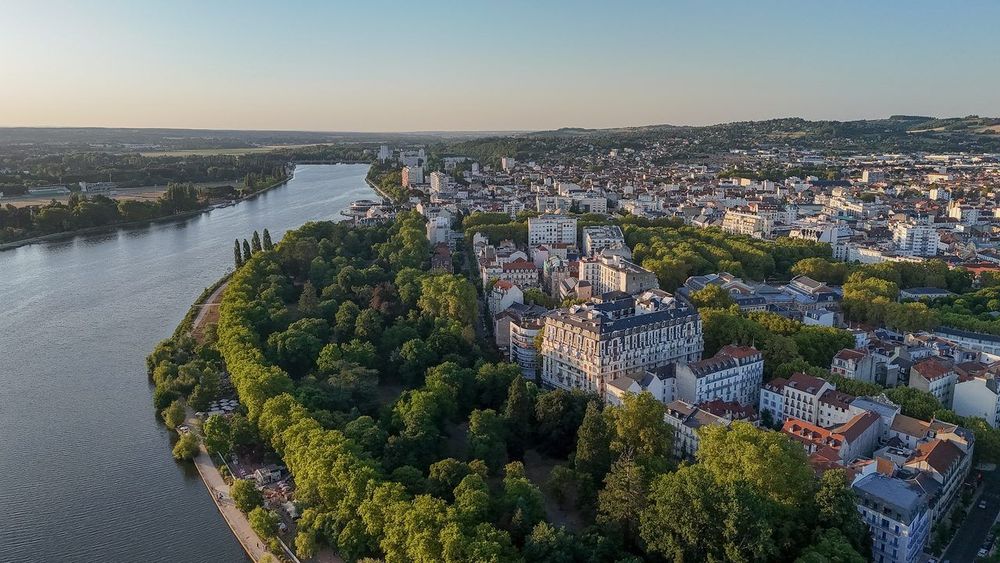
© Shutterstock
 Votre guide Ryo
Vichy Without a Car in 2026: The Complete Guide on Foot, by Bike and by Train
Vichy train station is about a ten-minute walk from the Parc des Sources. That fact sums up almost everything about the appeal of visiting Vichy without a car: the queen of spa towns was designed in the 19th century for guests who arrived by train and moved around on foot between their hotel, the springs and the casino. From Paris, Lyon or Clermont-Ferrand, a rail connection drops you right in the centre, a stone's throw from the Opéra. On site, an almost entirely flat landscape, 27 km of greenway along the Allier, a bus network and self-service electric bikes make a car unnecessary, even counterproductive as parking becomes scarcer around the spa district. This guide covers trains from major cities, ways to get around on site, the UNESCO-listed heritage, the Bourbonnais villages accessible without a vehicle (Moulins, Souvigny, Billy), a day trip to Clermont-Ferrand and the best food addresses in the centre. To explore the spa heart without opening a map at every street corner, the Ryo audio-guided tour of Vichy offers a complete walking itinerary, from the Hall des Sources to the Napoléon III chalets.
How to Get to Vichy Without a Car
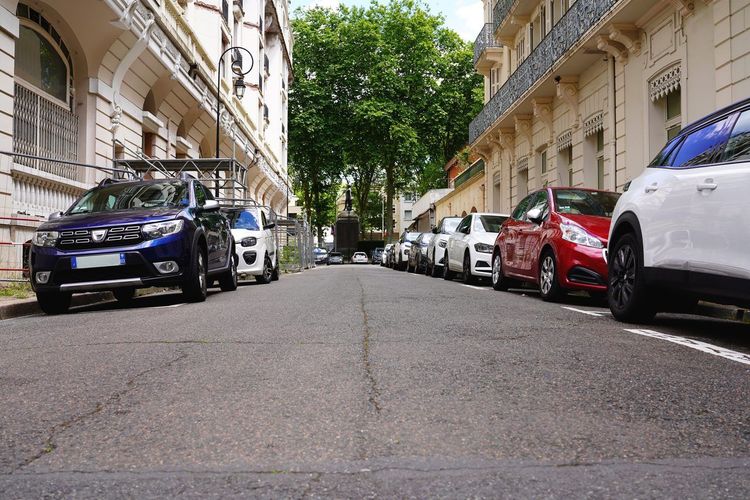
Vichy has the rare advantage, for a town of 25,000 inhabitants, of having kept its SNCF station in the town centre rather than on the outskirts. That makes all the difference: you step off the train and you are already in the setting.
From Paris by Direct Train
From Paris, Intercités trains on the Paris-Clermont line leave from Paris-Bercy station and reach Vichy without a change in about 2h50 to 3h, with up to eight services a day depending on the period. It is the simplest route: no connection to watch, and fares are often better than driving once you count fuel, tolls and parking. Book a few weeks ahead if you are aiming for a July or August weekend, as cheap seats go quickly. A small tip: Bercy is not Gare de Lyon, even though the two are neighbours, so allow ten minutes' walk between them if you arrive by metro line 14.
From Lyon and Clermont-Ferrand
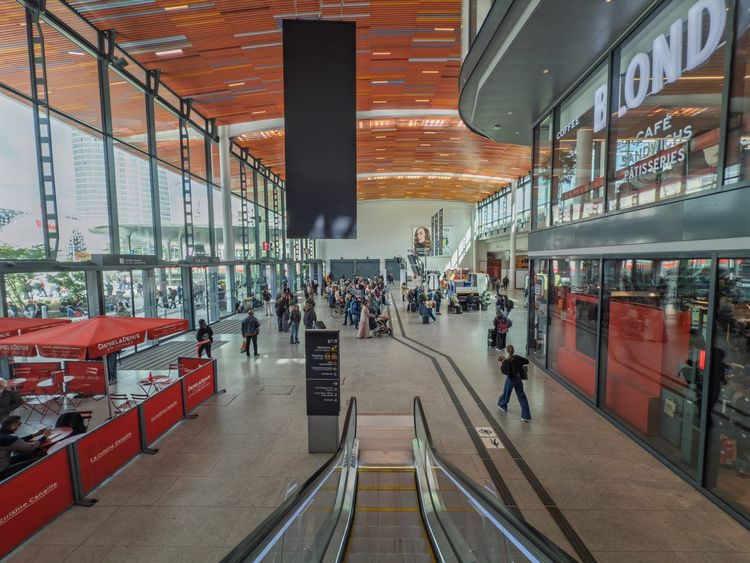
From Lyon Part-Dieu, allow about two hours by TER, direct via Roanne or with a change at Saint-Germain-des-Fossés depending on the timetable. From Clermont-Ferrand, the link is almost a commuter journey: TER trains run all day and connect the two towns in 35 to 45 minutes, which makes a day return trip possible in the other direction, detailed further below.
By Bus, Carpooling or TER from Neighbouring Towns
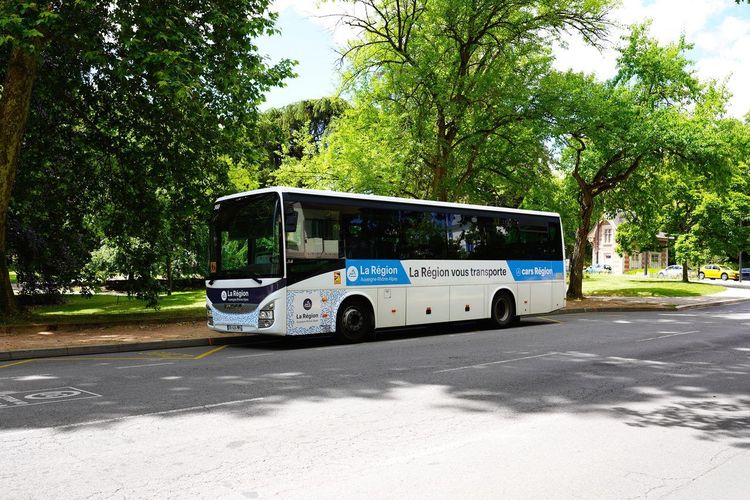
For the smaller towns of the Allier, the TER network remains the backbone of car-free travel: Moulins, Saint-Germain-des-Fossés, Gannat or Riom are linked to Vichy in 15 to 40 minutes. Carpooling usefully fills the gaps in the rail network, particularly for reaching small villages at weekends. If you are arriving from a town without a direct line, look at connections via Saint-Germain-des-Fossés, a rail hub ten minutes to the north that serves both the Paris-Clermont line and the line to Roanne and Lyon.
Getting Around Vichy Without a Car: On Foot, by Bike and by Bus
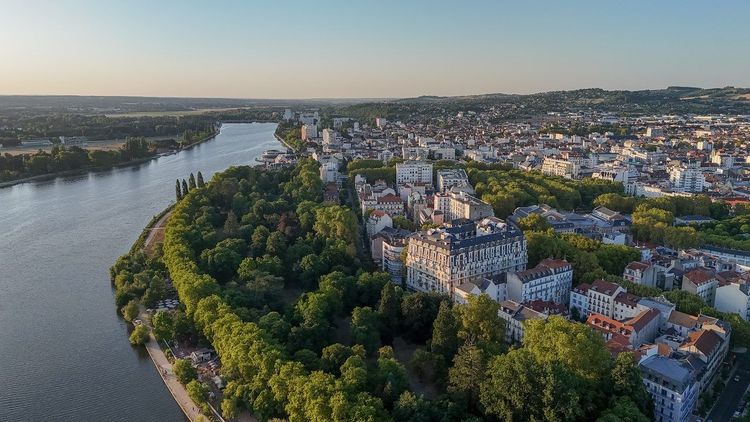
Once on site, getting around without a car is not a constraint but almost a comfort: the spa district was designed for strolling, with wide pavements, covered galleries and tree-lined avenues.
On Foot in the Spa Town Centre
From the Parc des Sources to Saint-Blaise church, it takes no more than twenty minutes' walk to cross most of the spa district. Hotels, thermal baths, restaurants and pedestrian streets are concentrated in this compact area. A bonus for rainy days: the metal galleries of the Parc des Sources let you walk from the Hall des Sources to the Palais des Congrès-Opéra almost entirely under cover.
The MobiVie Bus and Vivélo Bikes
The MobiVie network run by Vichy Communauté has eight regular lines linking the centre to Cusset, Bellerive-sur-Allier, Abrest or the lake. The sales office is at 1 place de la Gare, right outside the train station: you can buy your tickets there and rent a Vivélo bike for a day, a week or up to a month (classic, electric, folding or children's bikes). For occasional use, self-service electric bikes are available at eight stations spread across Vichy, Cusset, Bellerive and Abrest.
Cycling on the Via Allier Greenway
The Via Allier greenway stretches 27 kilometres reserved for pedestrians and cyclists between Billy, to the north, and Saint-Yorre, to the south, passing through Saint-Germain-des-Fossés and the banks of Vichy. Three complementary loops (the Lake loop, the Isles loop and the Springs loop) bring the total to 58 km. It is the ideal option for a day out, with family or solo, along the Allier, often described as the last wild river in France.
Practical Information at the Tourist Office
The Vichy Destinations Tourist Office, housed in the former Hôtel du Parc, centralises maps, timetables and guided tours. Drop in when you arrive: the staff hand out Via Allier maps and know car-free routes better than any website.
It is also the ideal starting point for the Ryo audio-guided tour La Fièvre de l'eau: 27 audio stops, 3.6 km and a 1h35 stroll, entirely on foot through the spa district, without ever needing a vehicle from one end to the other.
The Parc des Sources and the Hall des Sources, the Spa Heart of Vichy
It all begins here. The Parc des Sources has been the green and social lung of Vichy for two centuries, a tree-lined promenade bordered by covered galleries where spa guests and strollers cross paths beneath the same plane trees as in Napoléon III's day.
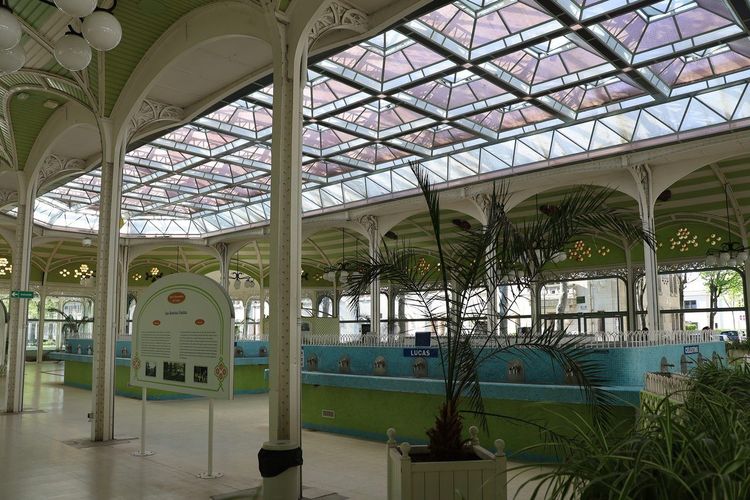
At the north of the park, the Hall des Sources, a large metal glass hall, houses the drinking fountains where people still come to drink the thermal water during opening hours. The atmosphere is special: an almost solemn silence, punctuated by the sound of cups being filled. Taste with caution: these bicarbonate waters, hot in some cases, have a salty, mineral taste that surprises.
In the middle of the alley, the Bandstand still hosts concerts in summer, a tradition going back to the golden age of spa towns. A little apart, at the end of the park, the Hôpital spring (Parc des Sources, 03200 Vichy, rated 4.5/5 on Google from 3,467 reviews) flows beneath its rotunda, less well known than the Célestins but just as steeped in history. Before leaving, look at the cast-iron covered galleries that encircle the park: they allowed spa guests to go from one spring to another without ever getting wet, and still do so on rainy days.
If you were to walk only one kilometre in Vichy, this would be it. The Ryo audio-guided tour passes right through this area and tells, between two fountains, how the composition of this water built the town's European reputation in the 19th century.
The Spa District and the Vichy Opéra
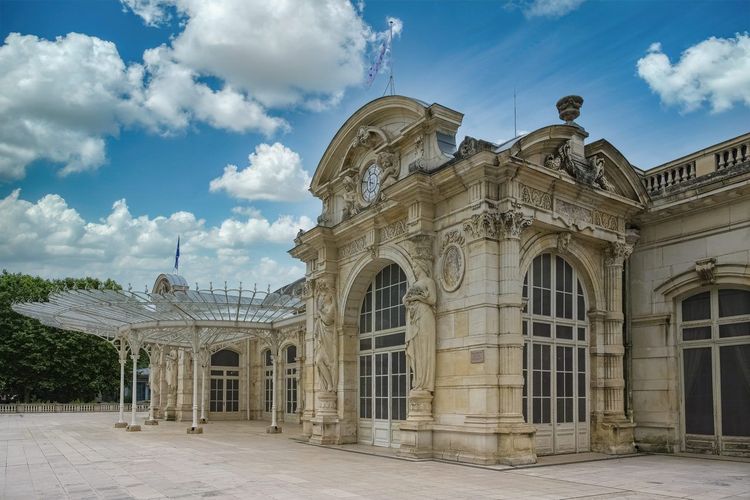
Around the park, in just a few decades, one of the densest concentrations of resort heritage in France was built.
The Grand Casino and the Palais des Congrès
The Grand Casino of 1865, commissioned under the Second Empire, now forms with the Opéra the Palais des Congrès-Opéra. Its monumental façade recalls the time when Vichy rivalled the great European resorts for social life and gambling. The salons can be discovered during shows, conferences or occasional guided tours.
The Vichy Opéra and Its Art Nouveau Architecture
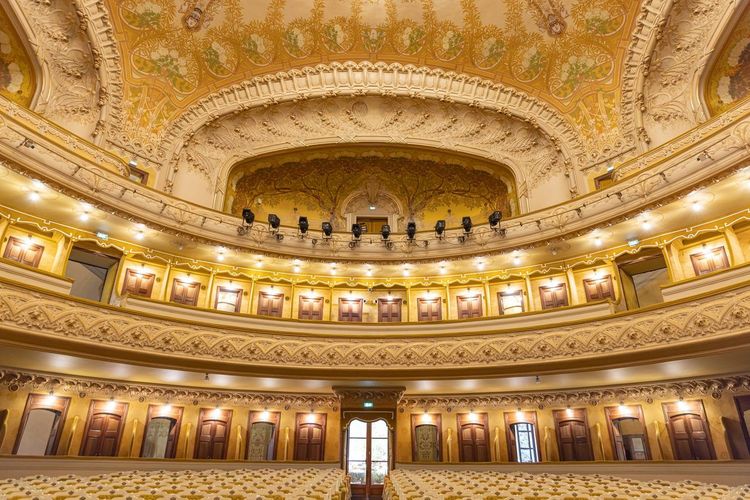
Adjoining the casino, the Vichy Opéra is presented as the only Art Nouveau theatre in France. The work of architects Charles Le Cœur and Lucien Woog, it opened in 1901 with Aïda. Its auditorium of about 1,480 seats, free of pillars thanks to its metal framework, was at the time the largest in France after the Opéra Garnier. Take the time to look up: floral motifs, musical emblems and a gold-and-ivory harmony cover every surface. If you are not coming for a show, ask at the Tourist Office about guided tours.
The Grand Établissement Thermal and the Célestins Spring
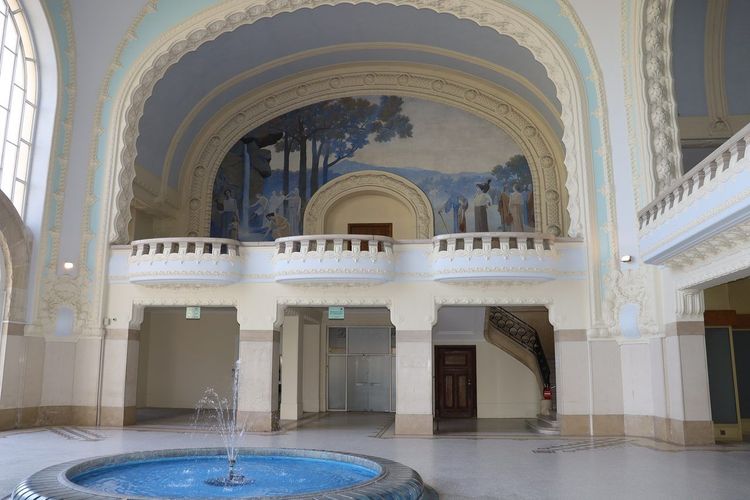
A few minutes' walk away, the Grand Établissement Thermal, also designed by Charles Le Cœur in the early 20th century, shows off its domes and its Oriental-inspired façade. It now houses the Thermes des Dômes. Further south, on boulevard Kennedy, the Célestins spring (Boulevard Kennedy, 03200 Vichy, rated 4.5/5 on Google from 1,931 reviews) flows in a small pavilion at the foot of a rock: it is the one that gave its name to Vichy Célestins water sold throughout France.
Saint-Blaise Church and Belle Époque Heritage, on Foot in the Centre
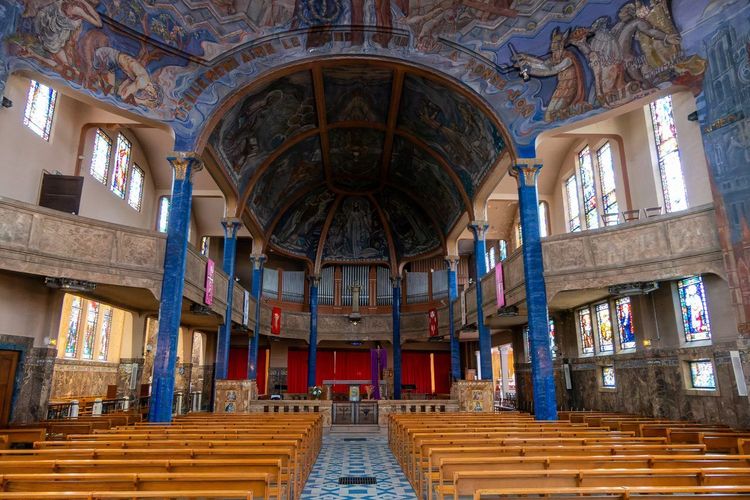
Moving a little away from the park, the centre of Vichy reveals other layers of heritage, from late Gothic to Art Deco. It can all be crossed on foot in under half an hour.
Saint-Blaise Church and Notre-Dame-des-Malades
The Saint-Blaise church actually brings together two buildings. The old church, begun in 1672 and completed in 1714, has become a chapel. It is attached to Notre-Dame-des-Malades, built between 1925 and 1931 in reinforced concrete to accommodate ever more numerous spa guests. The result is one of the most remarkable examples of religious Art Deco in France: stained glass, mosaics and frescoes alone are worth the detour, and the contrast between the two eras is visible from the entrance. The campanile was only completed in 1956.
The Town Hall, the Castel Franc and the Passage Giboin
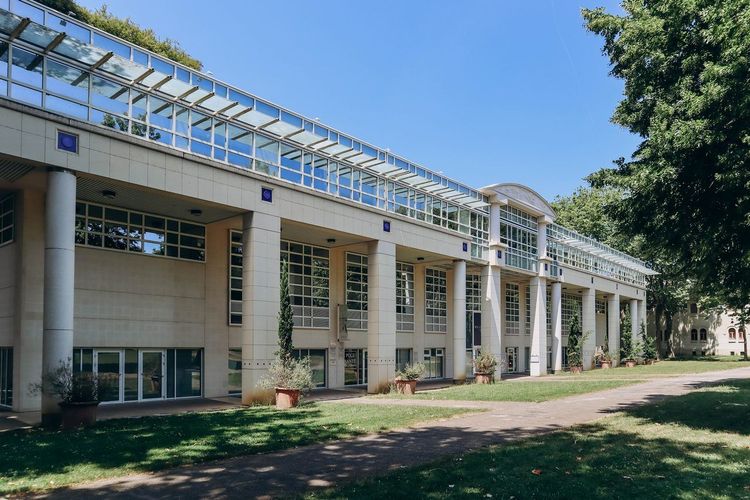
The neoclassical Town Hall was built between 1913 and 1925, with work interrupted by the First World War, then inaugurated in 1928. Not far away, in old Vichy, the Castel Franc, also called the Bailiwick House, is one of the oldest buildings in the town: its oldest part dates back to 1482, and its neo-Gothic façades covered in coats of arms date from the remodelling of the 1880s. It even served as the town hall in the early 19th century. To reach the shopping streets, the Passage Giboin, a covered glass-roofed arcade, offers a pleasant shortcut when it rains.
The Napoléon III Chalets
Between 1861 and 1866, Napoléon III came five times for a cure at Vichy and transformed the town: parks along the Allier, boulevards, a casino. He had a series of holiday chalets built at the edge of the park, at 101 to 109 bis boulevard des États-Unis, designed by architect Jean Lefaure between 1861 and 1864. The Chalet Marie-Louise (109 Boulevard des États-Unis, 03200 Vichy, rated 5/5 on Google from 1 review), at no. 109, was the first; the Emperor, who disliked its balconies overlooking the street, then had the Emperor's Chalet and the Eugénie chalet built, with balconies facing the park, inaugurated in July 1864. Their style blends English colonial influences and Swiss chalet, a mix unique in France.
The audio sub-tour "La Fièvre de l'eau" passes in front of these façades, with commentary on the imperial court's stays: a reason to look at these openwork balconies with fresh eyes.
Vichy, a Spa Town on the UNESCO World Heritage List
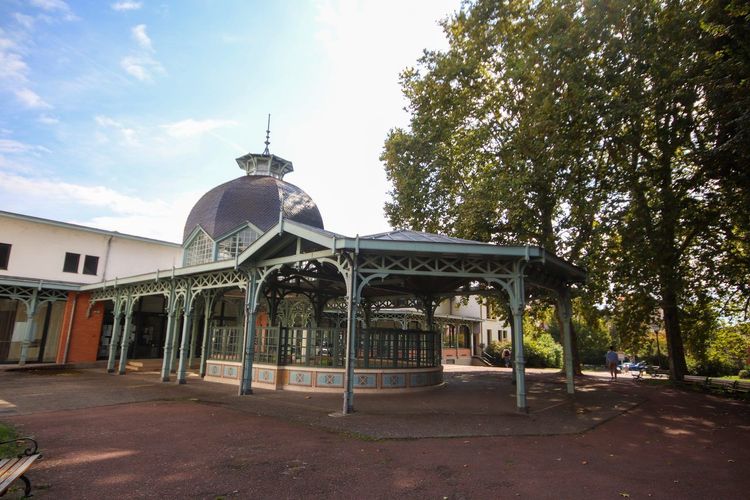
Since 2021, Vichy has been one of the eleven European spa towns inscribed on the UNESCO World Heritage List under the name "The Great Spa Towns of Europe", alongside Baden-Baden in Germany, Bath in the United Kingdom and Spa in Belgium. This recognition rewards an urban plan specifically designed around thermalism: parks, covered galleries, bathing establishments and leisure architecture form an ensemble rarely preserved with such unity.
For you, the car-free visitor, this unity is experienced very concretely: the listed area can be covered entirely on foot, from the station to the Allier parks.
In practice, the listed property includes the Parc des Sources and its galleries, the thermal establishments, the Opéra and the casino, but also the Napoléon III parks laid out along the Allier and the villa districts that border them. Look up as you walk: chalets with openwork balconies, neo-Gothic or neo-Renaissance villas, Art Nouveau façades and Art Deco buildings sometimes follow one another on the same street. This juxtaposition of styles, from the Second Empire to the 1930s, makes Vichy unique among European spa towns. The Tourist Office offers several guided walking tours on this theme, a good way to understand the link between thermalism and urban planning without moving a car from one district to another.
Vichy 1939-1945: In the Footsteps of the Vichy Regime
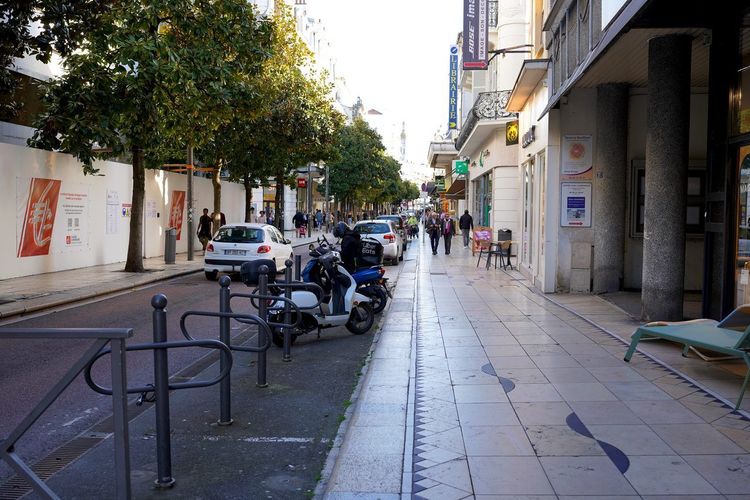
From July 1940 to August 1944, Vichy played a very different role: that of seat of the government of the French State led by Marshal Pétain. The choice of the town was due first to its immense hotel capacity, inherited from its spa past, and to its modern telephone network.
The Hôtel du Parc (Rue du Parc, 03200 Vichy, rated 5/5 on Google from 1 review), requisitioned in June 1940, became the nerve centre of the regime: it housed Pétain's apartment and office, several ministries and then, from 1942, the offices of Pierre Laval. The building now houses the Tourist Office and apartments. Opposite the entrance, a plaque commemorates the victims of the roundups of 26 August 1942 in the southern zone.
This period remains discreet in classic itineraries, but you can approach it through the guided tour "Vichy, capital of the French State 40/44" offered by Vichy Destinations. On foot and in a small group, it passes in particular through the Grand Casino, the Petit Casino, the Sévigné pavilion, the Hôtel du Portugal and the Hôtel du Parc. An hour and a half of walking is enough to understand how a spa resort became a capital for four years.
Taking the Waters Today in Vichy: Thermal Baths and Spas Accessible Without a Car
Vichy has never really stopped doing what it was born for. Two establishments welcome spa guests: the Thermes Callou and the Thermes des Dômes. The 18-day state-approved cures, covered by health insurance on prescription, focus there on two areas: rheumatology, and digestive disorders and metabolic diseases (type 2 diabetes, overweight, reflux). The dual focus, unique to Vichy, is particularly suitable for people suffering from both rheumatism and digestive problems.
If you are looking instead for a wellness break, Les Célestins Spa Thermal (111 Boulevard des États-Unis, 03200 Vichy, rated 4.1/5 on Google from 2,666 reviews), beside the Allier parks, offers baths, hammam and treatments based on Vichy water, available by the day with no commitment to a cure. The Dômes spa offers an alternative in the town centre.
There is no need to plan for a vehicle: all these establishments are less than twenty minutes' walk from the station, which greatly simplifies organising a spa stay by train.
Clermont-Ferrand, the Car-Free Day Trip from Vichy
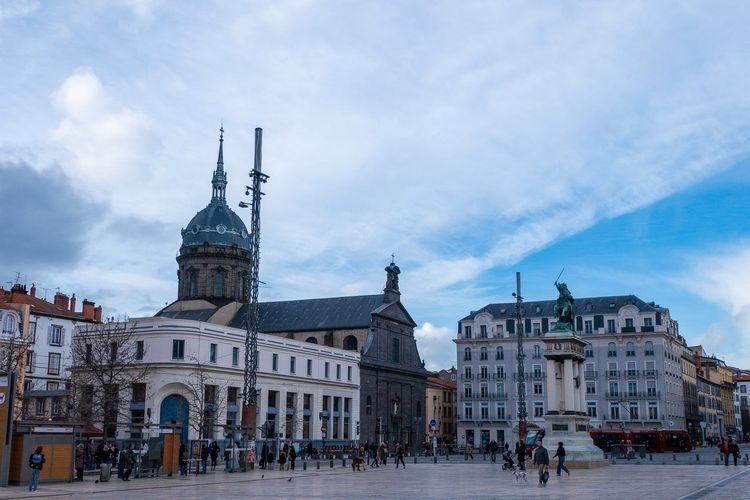
With less than three quarters of an hour by TER, Clermont-Ferrand is the most obvious day trip from Vichy. The city is easily visited on foot and by tram, and the station is only about twenty minutes' walk from the historic centre.
The Cathedral of Notre-Dame-de-l'Assomption, built in characteristically black Volvic stone, dominates the hill of old Clermont. Begun in the 13th century, it only received its two spires at the end of the 19th century, based on plans by Viollet-le-Duc. Climb the Bayette tower if it is open: the view takes in the Chaîne des Puys.
A few kilometres away, the Puy de Dôme (63870 Orcines, rated 4.7/5 on Google from 2,100 reviews) can be climbed by cog railway, the Panoramique des Dômes, from its departure station at Orcines. Depending on the season, a shuttle or bus line lets you go up from Clermont without a car: check the timetable before setting out. On a clear day the summit offers a view of the Chaîne des Puys, also a UNESCO World Heritage Site since 2018.
For a full day, combine the cathedral, the Notre-Dame-du-Port basilica and the streets of old Clermont in the morning, then the Puy de Dôme in the afternoon, keeping a margin for the last comfortable TER back to Vichy. The tram links the station to the centre in a few stops if your legs tire, and a day ticket is enough for all your urban travel.
Around Vichy Without a Car: Moulins, Souvigny and the Villages of the Bourbonnais
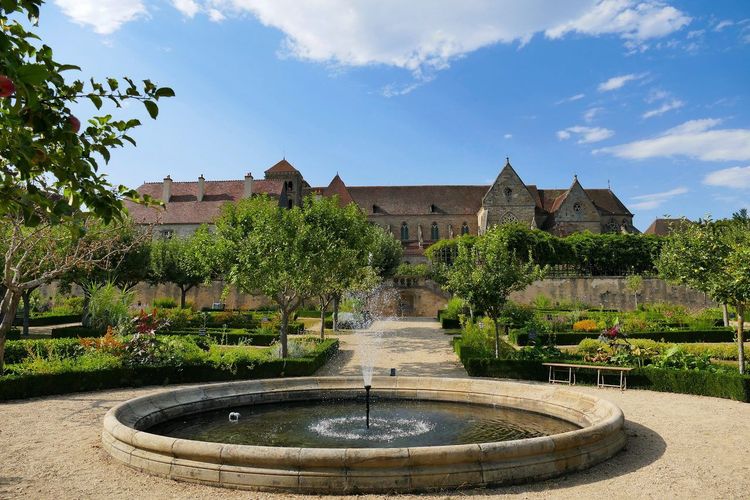
The Bourbonnais is full of heritage villages, and several can be reached without a car, provided you organise your journeys by mode of transport rather than village by village. For more ideas, our article what to do around Vichy complements this selection.
Moulins and Souvigny
Moulins, former capital of the Dukes of Bourbon, can be reached by TER in about half an hour, and its centre is visited on foot from the station. The Notre-Dame cathedral houses the famous triptych by the Master of Moulins, a masterpiece of the late 15th century, and the streets of old Moulins line up half-timbered houses and mansions. Add the National Centre for Stage Costume if you stay for the day: it occupies the former Villars cavalry barracks, on the other side of the Allier, twenty minutes' walk from the centre. The return to Vichy is easy on the late-afternoon TER trains.
About twelve kilometres away, Souvigny is home to a major Cluniac priory, the necropolis of the Dukes of Bourbon. With no train, reach it by regional coach, taxi or carpool from Moulins.
Bourbon-l'Archambault, Saint-Menoux, Le Montet and Noyant-d'Allier
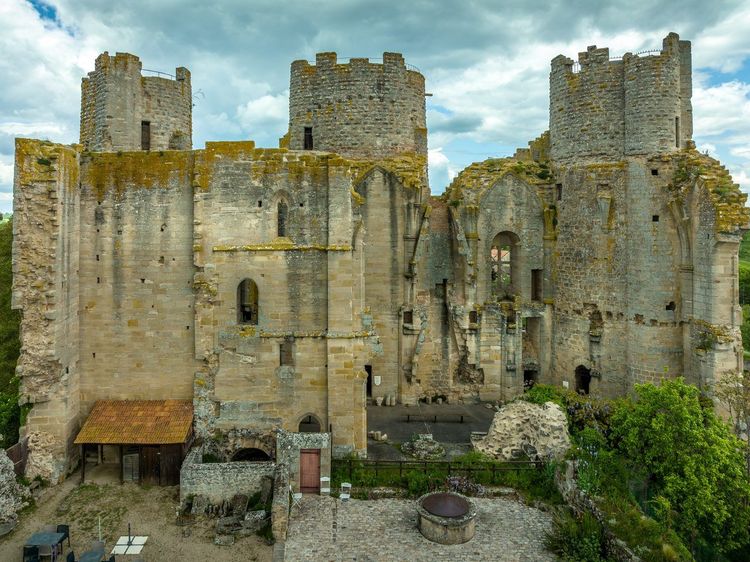
Bourbon-l'Archambault, cradle of the Bourbon dynasty, combines the towers of a medieval castle with thermal baths still in operation. Nearby, Saint-Menoux has a Romanesque abbey church famous for its apse, while Le Montet and Noyant-d'Allier, a former mining village known for its Buddhist pagoda, complete a string of rural villages. Let's be honest: without a car, they are mostly visited by carpool or organised excursion, as public transport there is scarce.
Charroux, Billy, Lapalisse and the Greenway
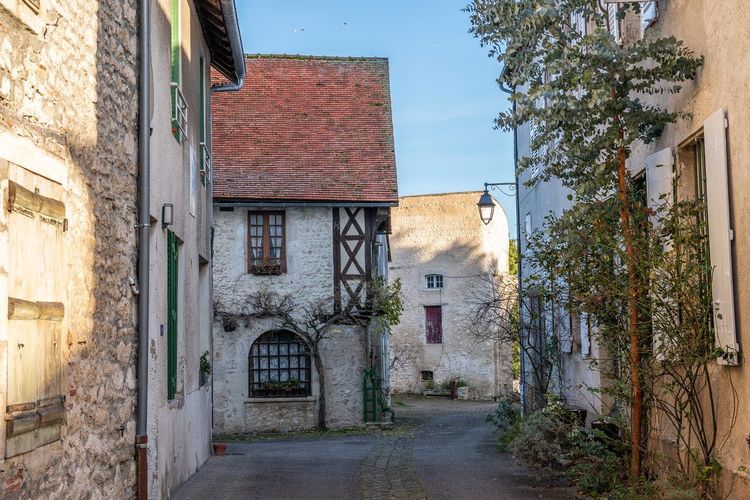
Billy and its medieval castle, overlooking the Allier, mark the northern end of the Via Allier: from Vichy you are there in an hour of easy cycling, without meeting any traffic. Charroux, ranked among the most beautiful villages of France, charms with its old houses and its artisan mustard. Lapalisse and its castle, made famous by the Lord of La Palice, complete the trio, but these last two require a carpool or a day excursion.
Hikes and Nature Walks Without a Car Around Vichy
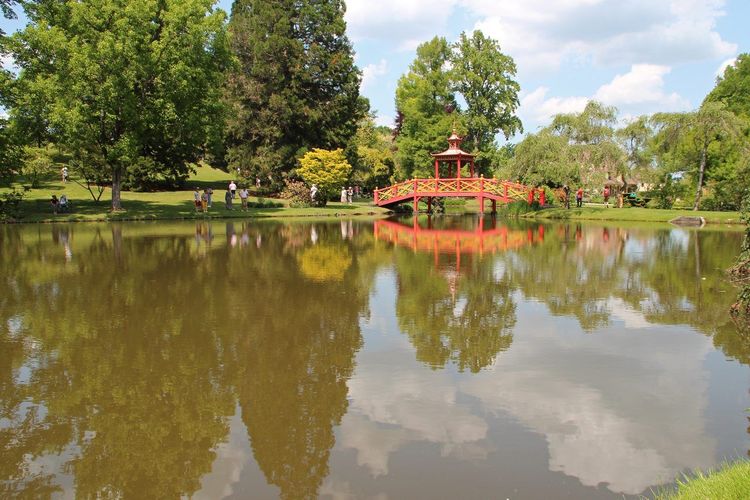
For lovers of the outdoors, several routes start directly from the centre, on foot or by bike. The banks of the Allier, developed on both the Vichy and Bellerive sides, and the Lac d'Allier already offer lovely walks just outside the town centre.
The waymarked trails of the urban area, including several short hiking circuits accessible by MobiVie bus from Cusset or Abrest, allow loops of half a day to a day depending on your fitness. Further west, the Sioule gorges, accessible by carpool, offer a wilder setting, between deep meanders and dense forests, popular with hikers and kayakers. To the east, the Montagne bourbonnaise peaks modestly but is enough for a day hike with open views over the Allier plain.
For families, Paléopolis, a park devoted to paleontology and dinosaurs near Gannat, and Le PAL (03290 Saint-Pourçain-sur-Besbre, rated 4.6/5 on Google from 27,071 reviews), an amusement park and zoo at Saint-Pourçain-sur-Besbre, remain very popular. Access without a car is limited, however: aim for a carpool or an organised excursion from Vichy.
Where to Eat, Drink and Shop in Vichy Without a Car
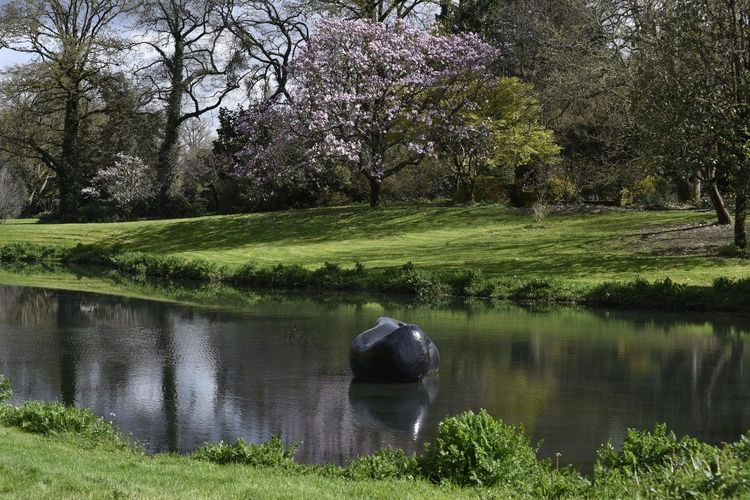
All the addresses that follow are within walking distance of the Parc des Sources. For a wider selection, see our guide to the restaurants of Vichy.
Where to Eat in Vichy
La Rotonde, set on the edge of the Lac d'Allier, reopened in June 2025 under the Maisons Bocuse banner: pike quenelle, sole meunière and a view over the water, fifteen minutes' walk from the centre. In the pedestrian streets, several restaurants offer market menus at reasonable prices, ideal between two visits. Remember to try local products: Bourbonnais pâté, Charolais beef, Auvergne cheeses.
Where to Have a Drink in the Evening
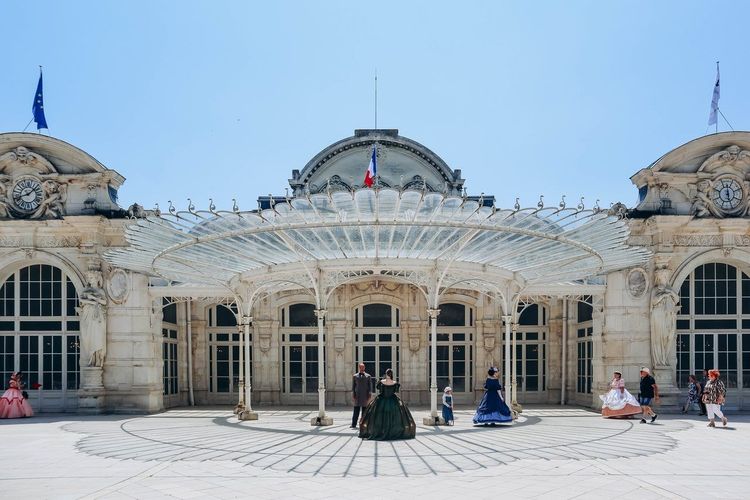
The area around the Casino and the Opéra concentrates most of the bars, from the intimate wine bar to the brasserie terrace. The atmosphere stays calm on weekdays, livelier at weekends, especially in summer when terraces spill onto the pavements. An advantage of a car-free stay: nobody has to play designated driver. On performance evenings, the Opéra and its surroundings come especially alive: a drink before the show, a plate afterwards, all done on foot in a few minutes.
Food Shopping and Town Centre Boutiques
Les Halles de Vichy (Rue du Marché, 03200 Vichy, rated 4.2/5 on Google from 2,475 reviews), the covered market in the centre, brings together greengrocers, cheesemongers and delicatessens: enough to put together a picnic before a ride on the Via Allier. For a local sweet treat, Confiserie Moinet, founded in 1852 and still run by the same family, has made the Pastilles du Bassin de Vichy since 1932. The other culinary specialities of Vichy can be found in the pedestrian streets around the Town Hall, where designer boutiques and concept stores are also concentrated.
An idea to whet your appetite: start the Ryo audio guide to Vichy before lunch; its stops naturally lead you back to the shopping streets.
Where to Stay in Vichy Without a Car: Neighbourhoods Near the Station and the Centre
For a successful car-free stay, the choice of accommodation matters almost as much as the choice of transport. Aim for a hotel within fifteen minutes' walk of the station and the Parc des Sources: this radius covers practically the whole historic centre.
The Hôtel Aletti Palace (3 Place Joseph Aletti, 03200 Vichy, rated 4/5 on Google from 619 reviews), the former Thermal Palace built in the early 20th century, is the last Belle Époque palace hotel in Vichy still in operation, the others having been converted into apartments. It remains the reference for a high-end stay in the heart of the spa district.
Simpler options, chains or independent hotels, can be found around the station, convenient for a late arrival or an early departure. Long-stay spa guests often prefer holiday rentals in the spa district, a stone's throw from the baths. On the other hand, avoid Bellerive or the outlying towns if you do not plan to use the bus: crossing the Allier quickly adds twenty to thirty minutes of walking to each trip.
How Long to Plan and Which Season to Choose for Visiting Vichy Without a Car
Two full days are enough for the essentials. On the first, devote the morning to the Parc des Sources, the Hall des Sources and the Opéra, then the afternoon to Saint-Blaise church, old Vichy and the Napoléon III chalets. On the second, rent a bike at the station for half a day on the Via Allier towards Billy, and keep the end of the day for a spa or the 1940-1944 guided tour. Our itinerary visiting Vichy in 2 days details this programme hour by hour. Three to four days allow you to add Clermont-Ferrand and Moulins without rushing.
As for the season, spring and early autumn offer the best conditions for walking and cycling, with more reasonable crowds. Summer remains the liveliest season, with concerts at the Bandstand and the Opéra season. Whatever the period, the centre can be explored on foot all year round; only the intense heat of July and August suggests moving outdoor visits to the morning.
A few habits make the stay even simpler. Travel light: a backpack and comfortable shoes are better than a big suitcase on the cobblestones of old Vichy. Download your train tickets and audio files before departure so you do not depend on the network. Finally, check the calendar: major sporting events or conference weekends quickly fill the hotels in the centre, and booking early guarantees a room within walking distance of the station.


FAQ
How many days do you need to visit Vichy without a car?
Two days cover the spa district, the Parc des Sources and the Belle Époque heritage. Allow three to four days to add Clermont-Ferrand and Moulins by train.
How do you get to Vichy without a car?
Direct Intercités trains link Paris-Bercy to Vichy in 2h50 to 3h. From Lyon, allow about two hours by TER. From Clermont-Ferrand, the TER takes 35 to 45 minutes.
Can you visit the whole centre of Vichy on foot?
Yes. The Parc des Sources, the spa district, the Opéra, Saint-Blaise church and the Napoléon III chalets are all at most twenty or thirty minutes' walk apart.
Where can you rent a bike in Vichy?
The Vivélo service run by Vichy Communauté rents classic and electric bikes at the MobiVie agency, 1 place de la Gare, and offers self-service electric bikes at eight stations.
How do you get from Vichy to Clermont-Ferrand without a car?
TER trains run all day between the two cities, with a journey of 35 to 45 minutes, which is enough for a day trip.
What is the best season to visit Vichy without a car?
Spring and early autumn offer the most comfortable conditions for walking and cycling. Summer is busier but livelier, with concerts and the opera season.
At heart, Vichy belongs to that rare category of towns where going without a car is never a sacrifice. With the train dropping you in the heart of the historic district, the Via Allier opening onto the villages of the Bourbonnais and a centre that can be fully explored on foot, the town has kept the layout designed for its 19th-century spa visitors. To enjoy this heritage without wasting time finding your way, the Ryo audio-guided tour of Vichy links the Hall des Sources, the Opéra and the imperial façades on foot, telling you their stories step by step.
À lire également