© Shutterstock
 Votre guide Ryo
Budapest with Kids: The Complete Guide to Visiting as a Family in 2026
In Budapest, a seven-year-old can drive a real train on real tracks, a teenager can float in 38°C water in the snow, and the whole family can sleep less than 500 metres from the Danube without ever taking a taxi. Visiting Budapest with children means navigating a compact city where the castle, the zoo, and the thermal baths are all within 25 minutes of each other by public transport. The Ryo audio-guided tour of Budapest is designed to connect these places without getting lost, headphones on and pushchair in hand.
This guide details fifteen tried-and-tested experiences across both banks of the river: an underground labyrinth beneath Buda Castle where the temperature never exceeds 10°C, a miniature railway entirely run by children aged 10 to 14, two thermal baths with very different age rules, an open-air park with zebras and elephants in the heart of the city, and limestone caves you can visit as a family just a few metro stops from the centre. You will also learn how much a day for four in Budapest really costs, from what age you can take your children to the Széchenyi Baths, and why some tourist districts turn into rather noisy areas for young children in the evening.
Why Budapest Appeals to Families
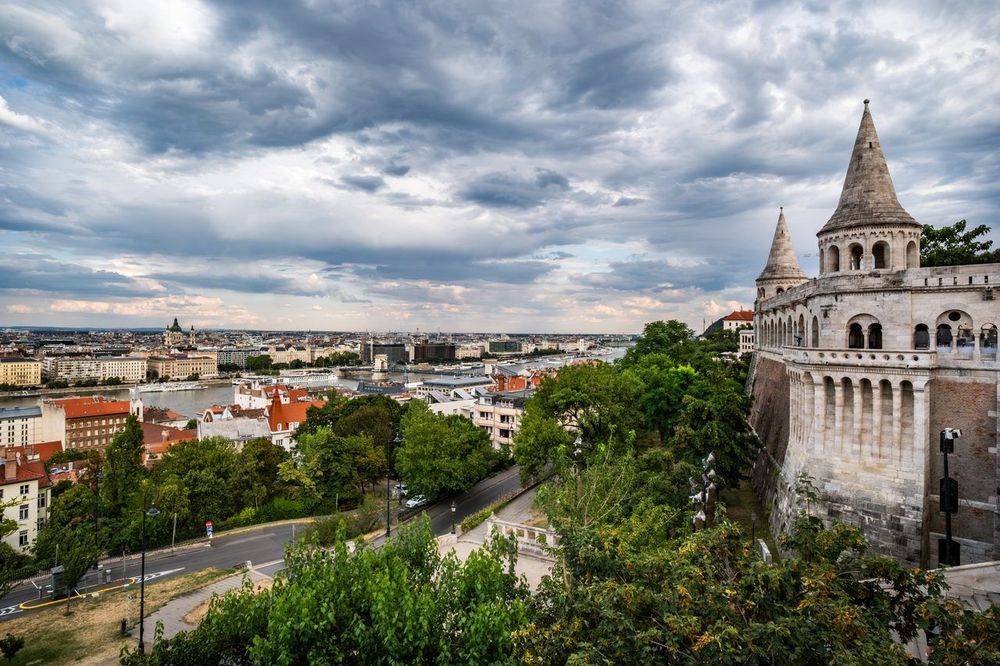
Budapest fits almost entirely within a 6-kilometre radius around the Danube. From Fisherman's Bastion on the Buda side to the Városliget on the Pest side, you never need more than 25 minutes by tram, metro, or bus to reach the next stop. This compactness changes everything when travelling with young children: fewer tiring journeys, less wasted time, and more room to improvise an ice-cream break or an unplanned nap in a park.
The city also has the rare quality of combining heritage, water, and nature with no effort at all. A child can visit a castle in the morning, splash in a heated outdoor pool in the afternoon, and chase pygmy goats at the end of the day on a river island — all without leaving the capital. Public transport is safe, frequent, and affordable, and most of the major family attractions, from the zoo to the baths, accept pushchairs without any particular difficulty. You therefore have no need to rent a car to enjoy the city.
Buda Castle and Its Historic Quarter
Castle Hill on the Buda side concentrates three experiences that children love for very different reasons: an underground passage to explore by lamplight, white turrets to climb, and a vertiginous panorama accessible by funicular. The Ryo audio-guided tour of Budapest devotes a large part of its route to this historic quarter, with anecdotes that keep even reluctant museum-goers engaged. Allow half a day for all three sites.
Buda Castle and Its Underground Labyrinth

Buda Castle (Budavári Palota) has dominated the western bank of the Danube since the 13th century, rebuilt after the Second World War and now home to national museums. Children do not necessarily need to enter the collections to be captivated: beneath the hill stretches a network of natural caves transformed into the Castle Labyrinth, an underground route lit by lanterns that winds for several hundred metres. The temperature remains cool year-round, around 10°C, making it a welcome respite during stifling summer days.
The entrance is at Úri utca 9, three minutes from the palace, and the site is open every day from 11am to 6pm: allow 45 minutes to an hour for the visit, a little longer if your children enjoy finding the exit on their own. The Sikló funicular, which climbs from the Chain Bridge, remains the most fun option for reaching the top with young children rather than tackling the stairs.
Fisherman's Bastion and Its Panorama over the Danube
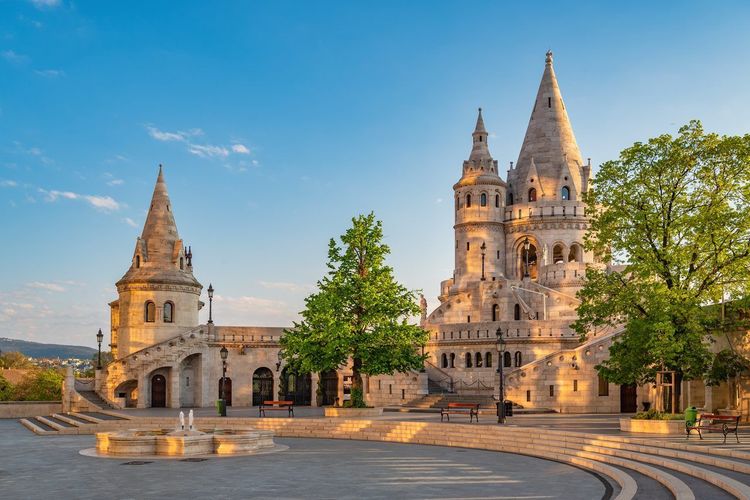
A few minutes' walk away, Fisherman's Bastion (Szentháromság tér, 1014 Budapest, rated 4.8/5 on Google based on 117,232 reviews) (Halászbástya) looks like a fairytale set with its seven white turrets, one for each of the founding Magyar tribes. Built at the beginning of the 20th century, it never served a defensive purpose, which does not stop children from playing at being knights as they climb the spiral staircases of the turrets. The lower terraces are free and already offer a sweeping view of Parliament and the Danube; only the upper terrace, which is paid, adds a few extra metres of height. Right next door, Matthias Church is worth a glance for its colourful glazed-tile roof, easily recognisable even to the youngest visitors.
The Summit of Gellért-hegy and Its Citadel
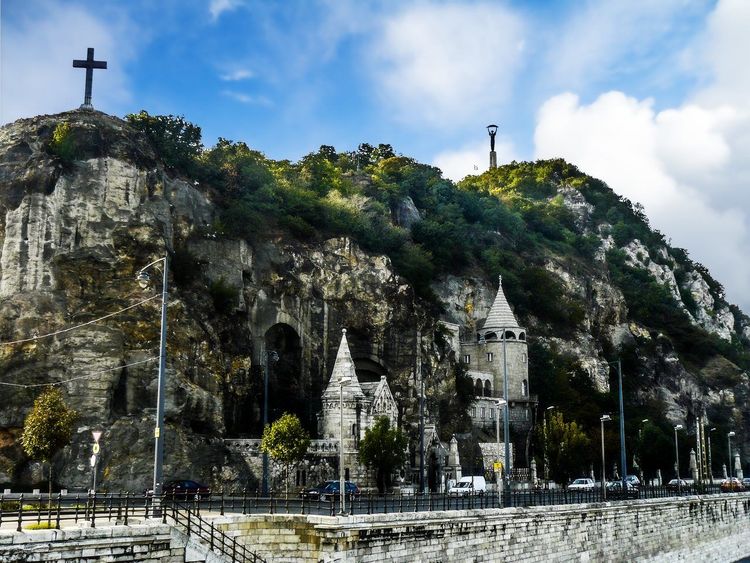
On the other slope of Buda, Gellért-hegy rises to 235 metres and is topped by the Citadel, a 19th-century Austrian fort crowned by the Liberty Statue visible from almost everywhere in Budapest. The walk up from Elisabeth Bridge takes about twenty minutes along shaded paths, which suits children over 6–7 better than pushchairs; bus 27 stops directly near the summit if you are pushing a pram or have tired legs. The panorama takes in both banks, the bridges, and the islands of the Danube, and remains one of the few viewpoints in Budapest where you can picnic on the grass while admiring the city. Ryo's audio-guided tour of Budapest stops at the Fisherman's Bastion and Matthias Church nearby, a handy link back to the rest of the walk.
Parliament, the Chain Bridge, and a Danube Cruise

Budapest Parliament and St. Stephen's Basilica on the Pest Side
On the Pest bank, Budapest Parliament has 691 rooms and a neo-Gothic façade 268 metres long, making it the largest building in the country. The interior can only be visited on a guided group tour booked in advance, which is often fully booked weeks ahead in high season: if you have not reserved, the best option with children is to walk along the embankments on the Buda side at sunset, when the façade lights up and reflects in the Danube. Our Ryo article on visiting Budapest Parliament details the quietest time slots to book for a family visit.
Ten minutes' walk away, St. Stephen's Basilica also rises to 96 metres — a height that is no coincidence: it equals exactly that of Parliament, since no building was meant to symbolically surpass either the State or the Church. Older children enjoy climbing to the top of the dome, by lift and then on foot, for a 360° panorama over the city. Our Ryo guide to St. Stephen's Basilica specifies the times when the queue remains short.
The Chain Bridge and a Stroll along the Embankments
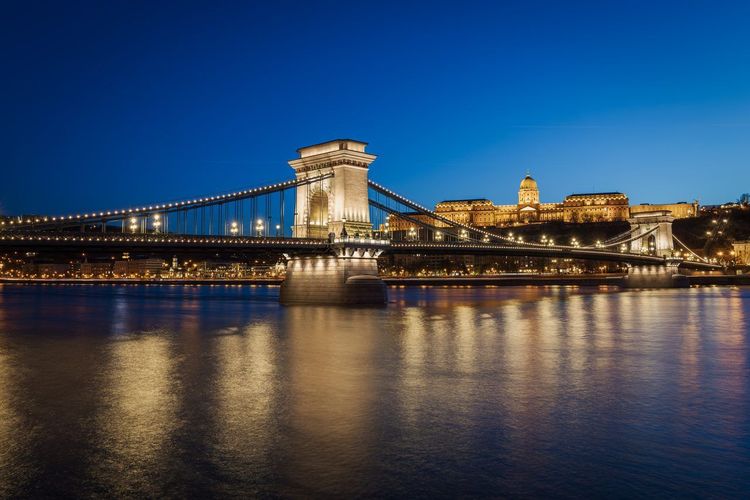
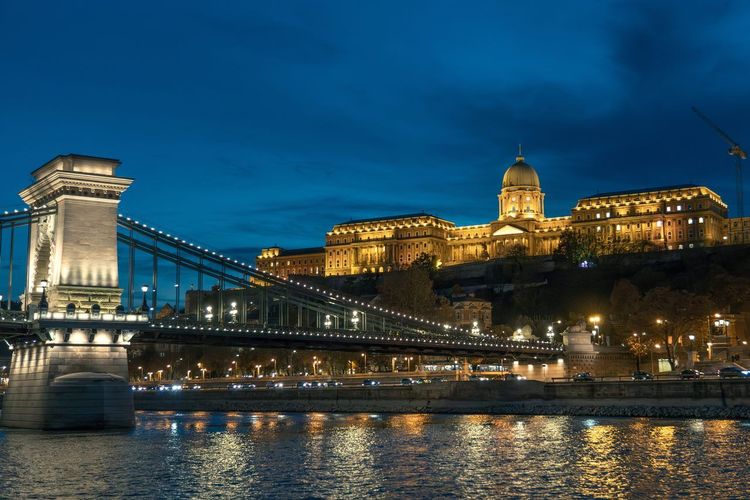
The Chain Bridge has linked Buda and Pest since 1849 and remains the most photogenic of Budapest's nine bridges, guarded at each end by stone lions. Local legend has it that the sculptor forgot to give them a tongue — an anecdote that always amuses children once it is told to them on the spot. The pedestrian promenade along the Danube on the Pest side, between the Chain Bridge and Parliament, is flat, wide, and traffic-free: a perfect setting for letting younger children run or scoot along while keeping an eye on the illuminated castle opposite.
A Family Cruise on the Danube

After a day of walking, a Danube cruise offers a welcome break while providing a fresh perspective on the same landmarks. Late-afternoon one-hour cruises, when Parliament and the castle are lit up, remain the most spectacular option for children who have already seen these buildings from dry land. Most companies offer reduced children's fares and some include a hot drink, which is very welcome in winter. There is no need to book the longest or most expensive circuit: one hour is more than enough to hold the attention of a child under 10, especially at the end of a day of sightseeing.
The Jewish Quarter and Ruin Bars during the Day
The Jewish Quarter: Architecture and Memory
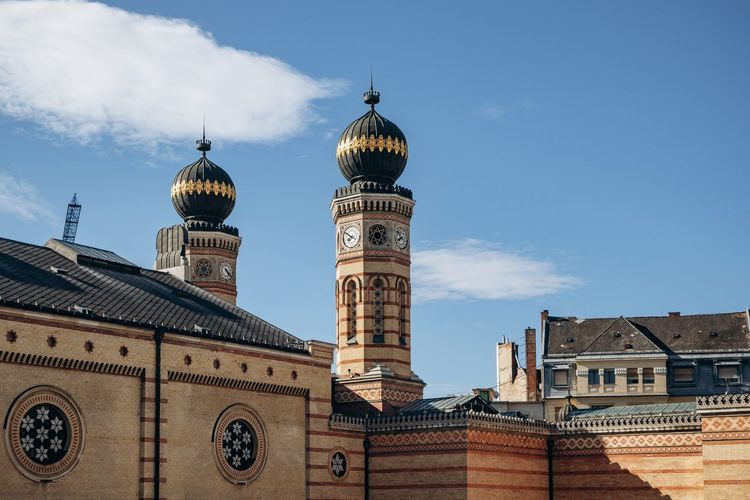
Budapest's Jewish Quarter, in the 7th district, blends monumental synagogues, restored inner courtyards, and crumbling façades transformed into street art. The Great Synagogue on Dohány Street, the largest in Europe, imposes its Moorish architecture even when viewed from the outside. The Tree of Life memorial in the adjoining garden addresses the tragic history of the Hungarian Jewish community during the Second World War — a subject to adapt according to the age of the children, but one that many families choose to introduce here, on the spot, rather than through a history book. For younger children, simply wandering through the cobbled lanes, between flowering inner courtyards and giant murals, is enough to fill a good hour without them realising they are visiting a historic quarter.
Ruin Bars for Families (Szimpla Kert by Day)
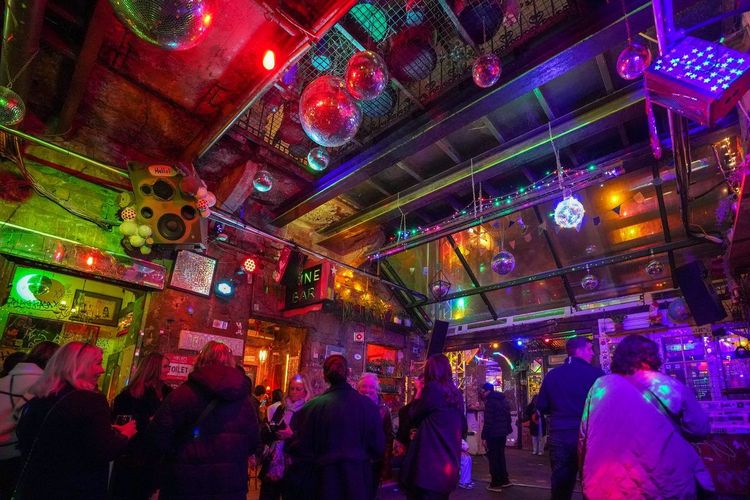
Ruin bars — bars set up in dilapidated buildings in the Jewish Quarter — have built Budapest's nocturnal reputation, but the picture changes completely during the day. The most famous of them, Szimpla Kert (Kazinczy u. 14, 1075 Budapest, rated 4.6/5 on Google based on 74,554 reviews), opens its doors from the morning and transforms on Sundays into a flea market and farmers' market, with street food and live music in the late afternoon. The décor — made up of salvaged furniture, bathtubs turned into sofas, and plants hanging everywhere — fascinates curious children who love exploring every nook and cranny. The key practical tip: always visit with children before 6pm, as the atmosphere changes drastically once night falls and the place becomes loud and packed with adults. Budapest's audio-guided tour weaves through the Jewish Quarter past the Great Synagogue, a good way to link the history in before the bars open.
Budapest Zoo: A Must-See with Children
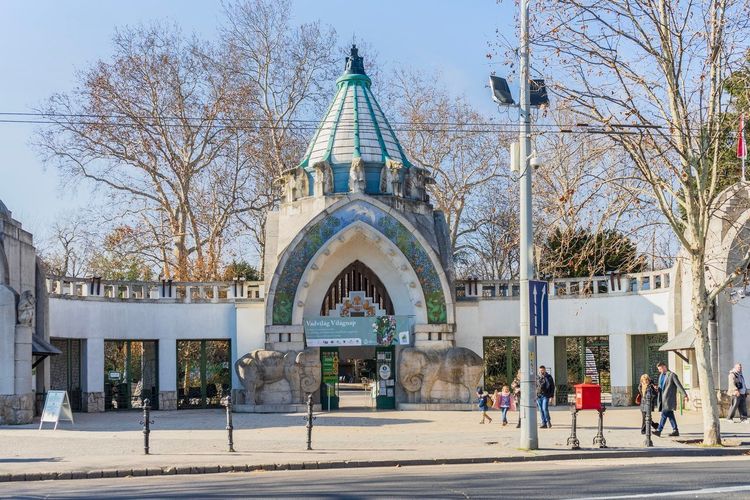
Budapest Zoo (Állatkerti krt. 6-12, 1146 Budapest, rated 4.5/5 on Google based on 49,368 reviews) (Fővárosi Állat- és Növénykert), open since 1866, is one of the oldest zoos in the world still in operation, today home to more than 1,000 animal species across approximately 11 hectares in the heart of the Városliget. Its appeal lies as much in its animals as in its architecture: several pavilions, such as the elephant house and the monkey palace, were built in the early 20th century in a richly decorated Art Nouveau style featuring colourful ceramic tiles — a setting that impresses children before they have even spotted an animal.
Giraffes, white rhinoceroses, and polar bears are among the most requested attractions, but it is often the children's farm — with its goats and pygmy pigs to pet — that holds the attention of under-6s the longest. In summer, a small sandy beach area allows visitors to cool their feet between enclosures, a detail that makes all the difference on hot July days.
Allow a full half-day to explore the whole site without rushing, and plan to arrive at opening time in high season: school groups and families pour in mid-morning. The zoo is open 365 days a year, including public holidays, making it a reliable fallback option if the weather turns elsewhere.
In summer, the zoo also programmes a few special evening events that extend opening hours beyond the usual schedule, with outdoor shows and concerts — a format that often wins over teenagers who find the standard visit a little too young for them.
The zoo features on the Ryo audio-guided tour of Budapest, which places its architecture in the broader context of the 1896 World's Fair, of which it is one of the last surviving witnesses.
The Városliget: Playgrounds, Circus, and Interactive Museums
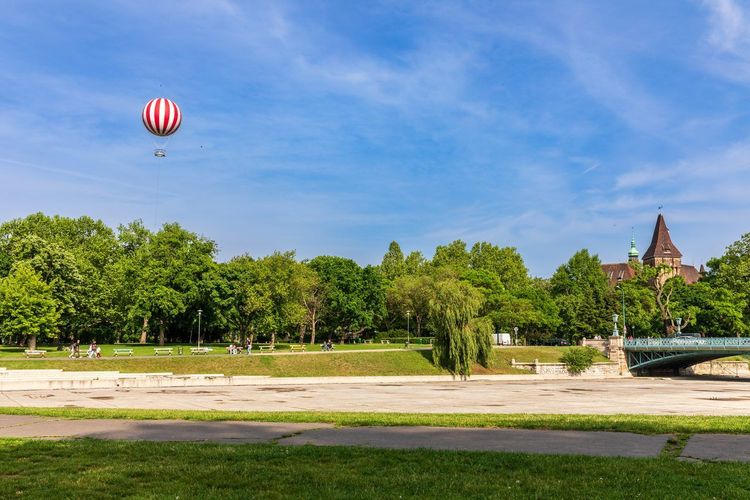
The Városliget, the large City Park adjoining the zoo, concentrates enough to fill a full day of games, shows, and interactive museums. Our Ryo article on the best things to do in Budapest covers several addresses in this area in detail.
The Palace of Wonders and the Giant Playground
The Palace of Wonders (Csodák Palotája, often shortened to Csopa) is a science museum entirely designed to be touched, operated, and tested: distorting mirrors, giant musical instruments, fun physics experiments. Do not look for it in the park — that is the most common mistake: since 2017, it has occupied 5,000 m² in Óbuda, on the Buda side, about twenty minutes from the Városliget by public transport. You will find more than 250 hands-on installations, a laboratory, projection rooms, and four escape rooms all under one roof — enough to engage a 3-year-old curious about everything as well as a pre-teen dissecting the scientific principles behind each machine. In the Városliget itself, the playground — one of the largest in the city — offers structures for all ages, from roundabouts for toddlers to more technical balance courses for older children, all freely accessible.
The Budapest Great Circus and the House of Music
The Budapest Great Circus (Fővárosi Nagycirkusz) is one of the only permanent big tops in Central Europe, with year-round performances featuring acrobats and sometimes animal acts. Weekend morning shows are particularly well suited to children who tend to fall asleep in the evening. A few minutes' walk away, the Hungarian House of Music (Magyar Zene Háza), recognisable by its roof pierced with hundreds of holes imitating a forest canopy, offers interactive sound exhibitions where children can handle instruments and trigger sensory installations — a playful approach to music that works even without understanding Hungarian.
Transport Museum, Pinball Museum, and Escape Rooms
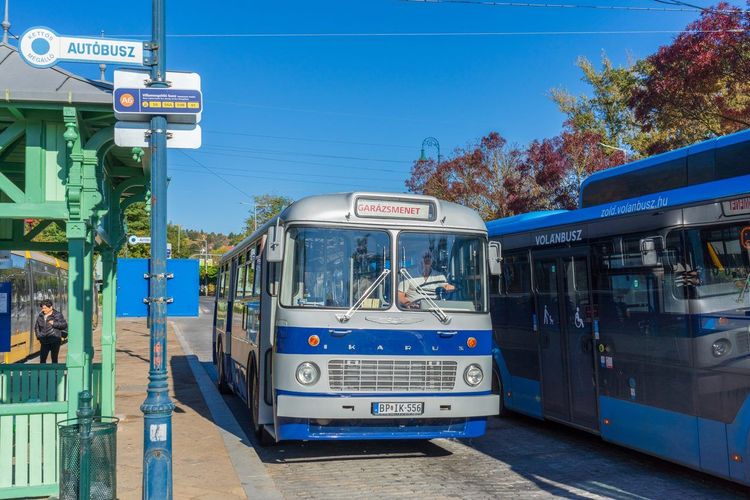
The Budapest Transport Museum (Magyar Műszaki és Közlekedési Múzeum) has left its historic Városliget building, closed since 2015 pending the construction of a brand-new museum: its locomotives, vintage cars, and railway models are now on display in the former Északi Járműjavító railway workshop, a monumental industrial hall in the 10th district where exhibitions change regularly. Check the current programme before crossing the city, as not all collections are permanently on view. Nearby, the Pinball Museum (Radnóti Miklós u. 18, 1137 Budapest, rated 4.9/5 on Google based on 7,656 reviews) (Flippermúzeum) operates on a simple and devastatingly effective principle: admission gives unlimited play on around a hundred vintage pinball machines and arcade cabinets — a formula that appeals equally to children and nostalgic parents. For families with teenagers seeking thrills, several escape rooms in the city centre now offer scenarios suitable from age 10–12, providing an hour of team puzzle-solving that makes a refreshing change from the usual pace of sightseeing. Madame Tussauds, right in the city centre, rounds out this list usefully for a rainy afternoon.
Budapest Thermal Baths with Children: Széchenyi, Palatinus, and Lukács
Our Ryo guide to the Budapest baths covers each establishment in the city in detail; here is what you specifically need to know when travelling with children.
The Széchenyi Baths: the Iconic Experience for Teenagers and Older Children
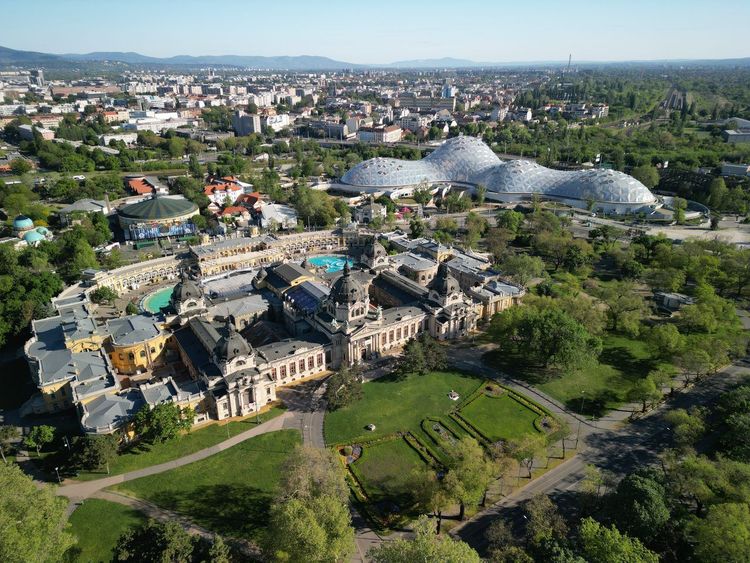
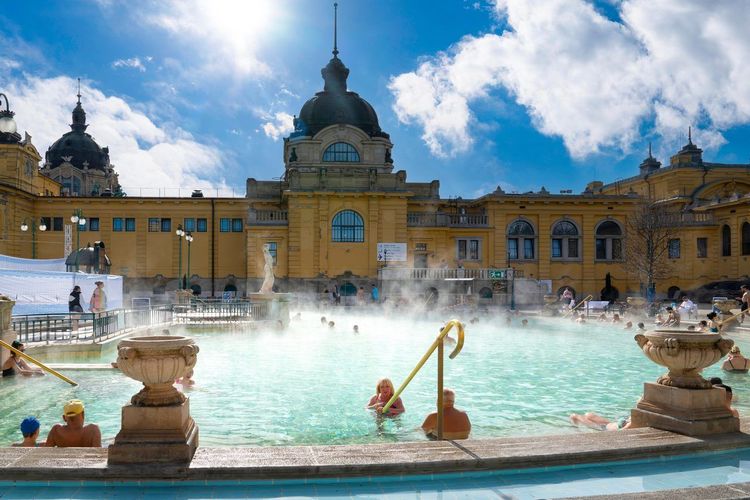
The Széchenyi Baths, with their neo-Baroque yellow façade and three outdoor pools, form the largest thermal complex in Europe and the most recognisable image of Budapest — that of chess players submerged up to their shoulders in 38°C water. The atmosphere, which is fairly festive and sometimes noisy at weekends, suits teenagers and older children who can swim independently: the outdoor pools have no dedicated shallow area for toddlers, and tourist footfall is dense year-round. Allow half a day to enjoy them properly, avoiding Saturday afternoons if possible, as that is the busiest time of the week.
The Palatinus Baths: the Family Alternative with Water Slides
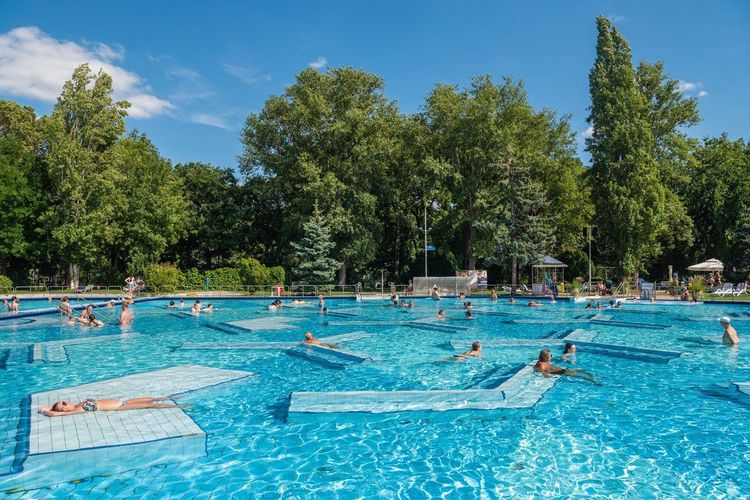
On Margaret Island, the Palatinus Baths (Soó Rezső sétány 1, 1007 Budapest, rated 4.4/5 on Google based on 10,573 reviews) are a completely different proposition: eleven open-air pools, including a wave pool and several water slides, make it more of a proper water park than a traditional thermal establishment. This is the address most Budapest locals recommend for families with young children, thanks to dedicated shallow pools and a noticeably more relaxed atmosphere than Széchenyi. Do bear in mind, however, that Palatinus's outdoor pools and water slides only operate during the summer season — from early May to the end of August or early September depending on the weather — unlike the indoor baths, which are open year-round. Bring sunscreen and hats, as the pools are exposed to full sun for much of the day.
What You Need to Know before Taking Children to the Baths
There is no legal minimum age for entering Hungarian thermal baths, but the key rule to know concerns temperature: hot pools at 38–40°C are not recommended for babies under 2–3 years old, whose thermoregulatory systems are still immature. Beyond that age, it is better to limit sessions to 15–20 minutes in the hottest water and alternate with breaks. One point to check before building your programme: the Gellért Baths, long cited for their more refined Art Nouveau setting, have been closed since 1 October 2025 for a major renovation, with the operator announcing a reopening in 2028. If you are looking for a peaceful atmosphere rather than a water park, turn to the Lukács Baths on the Buda side, frequented by locals and considerably calmer than Széchenyi on a Sunday afternoon. And if the desire for a moment to yourselves arises, know that nothing stops you from leaving the children with the hotel's childcare for an evening: an evening at a thermal bath without the children remains one of Budapest's accessible little luxuries.
Aquaworld and Tropicarium: Water Parks and Tropical Worlds
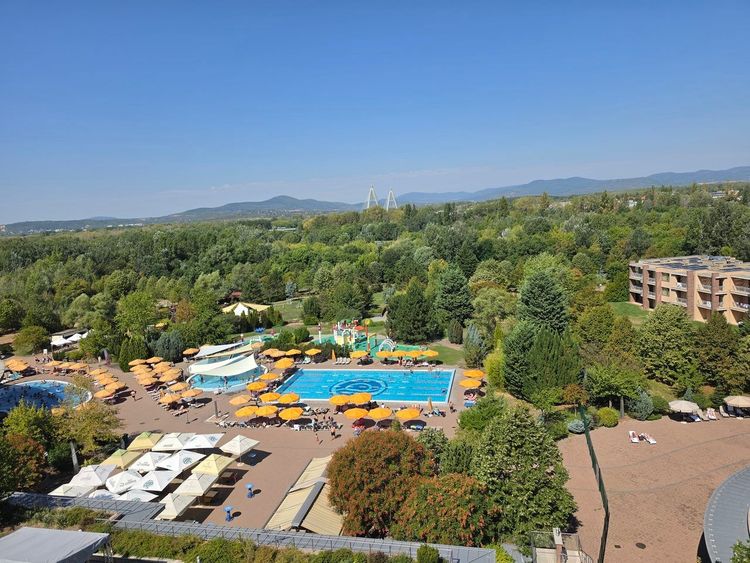
For rainy days or if you want a change from traditional thermal baths, two addresses on the outskirts of Budapest are worth the trip. Aquaworld, about twenty minutes from the centre, is one of the largest indoor water parks in Europe: slides, a lazy river, a wave pool, and an outdoor thermal zone all operate year-round regardless of the weather. It is a costly option compared to traditional baths, but it fills an entire day without needing to monitor the depth of every pool as you would at Széchenyi.
The Tropicarium, housed in a shopping centre in the south of the city, offers a shorter but equally transporting experience: sharks, piranhas, monkeys, and a humid tropical vivarium can all be visited in barely an hour — the ideal duration for an afternoon between two longer visits. Both sites are rarely mentioned in standard Budapest guidebooks, making them good alternatives when the city centre is at its most crowded.
Margaret Island (Margitsziget): Budapest's Green Lung

Between Buda and Pest, Margaret Island (Margitsziget, 1138 Budapest, rated 4.7/5 on Google based on 7,273 reviews) stretches 2.5 kilometres in the middle of the Danube, completely closed to motor traffic except for buses. It is arguably the place in Budapest where children burn the most energy without an adult needing to plan anything at all: hire family bicycles, multi-seat quadricycles, or electric scooters, enjoy wide flat cycle paths, and find playgrounds scattered every 500 metres or so.
The musical fountain at the centre of the island performs several times a day, synchronising jets of water to classical or pop music depending on the time slot — a free show that fascinates young children for surprisingly long stretches. A mini-zoo, also free, lets visitors observe pygmy goats, peacocks, and farmyard poultry in a setting far more intimate than the large Városliget zoo.
For a picnic, the shaded lawns around the ruins of a 13th-century Dominican convent offer a peaceful setting, away from the bustle of the rest of the island in high season. In winter, part of the island becomes a temporary ice rink, while the early-20th-century water tower, open in summer, provides an unusual viewpoint over the treetops for those who have already climbed all of Buda's hills.
Allow at least two hours on site, half a day if you add bicycle hire: the island lends itself equally well to a one-hour break between visits and a full summer's day, Palatinus Baths included since they are located at the northern tip of the island. The Ryo audio-guided tour of Budapest even includes a dedicated loop around the island, useful for identifying the best stopping points without unnecessary back-and-forth.
The Children's Railway (Gyermekvasút) and the Buda Hills
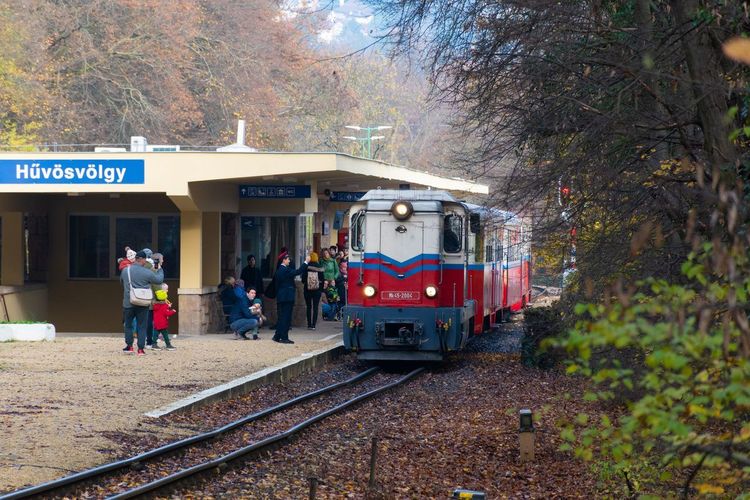
The Children's Railway (Gyermekvasút) is one of Budapest's most singular experiences: an 11-kilometre railway line through the wooded Buda Hills, entirely staffed by children aged 10 to 14, who volunteer as ticket inspectors, stationmasters, and announcers under adult supervision for the driving itself. Created in 1948, the line still operates on this same educational principle — a rarity dating back to the communist era that fascinates child passengers and parents alike.
To reach the departure station at Széchenyi-hegy, the simplest option is to first take the cog railway (fogaskerekű) from the Buda neighbourhood — an attraction in its own right with its wooden carriages. On the return journey, the Libegő chairlift allows you to descend from the hills while admiring the canopy from above, an alternative to the train for varying the perspectives on the way back.
Train enthusiasts will happily extend the day with a visit to the Magyar Vasúttörténeti Park open-air museum (Tatai út 95, 1142 Budapest, rated 4.7/5 on Google based on 12,350 reviews), where steam locomotives, historic carriages, and driving simulators can be explored outdoors, with the possibility of boarding several engines. Allow a full day to combine the children's railway, the cog railway, the chairlift, and the museum, or half a day if you keep only the train journey.
No reservation is needed: trains run every 45 minutes to an hour depending on the season, less frequently in winter when some services are reduced. Tickets remain among the cheapest of all Budapest attractions — a compelling argument for an activity that nonetheless fills half a day.
Budapest Central Market Hall: A Foodie Stop
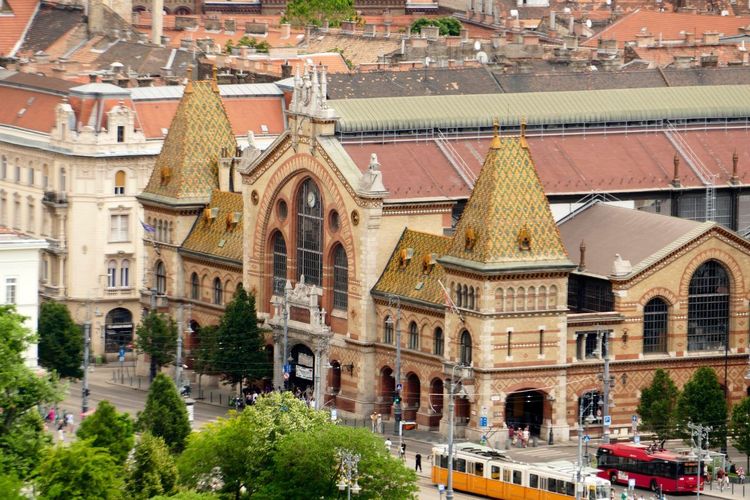
Budapest Central Market Hall (Vámház krt. 1-3, 1093 Budapest, rated 4.3/5 on Google based on 123,425 reviews) (Nagyvásárcsarnok), near Liberty Bridge, occupies a vast 1897 iron-framed hall spread across three levels. On the ground floor, stalls of fruit, vegetables, ground paprika, and Hungarian sausages compose a colourful scene that makes for a pleasant change from monument-visiting. On the upper floor, a row of fast-food stalls and souvenir shops offers a chance to take a food break without leaving the building, with portions of lángos (fried dough with toppings) generous enough to share between two children.
The quieter basement holds surprises for curious children: jars of pickled vegetables, Danube fish, and a few traditional craft stalls. Allow 45 minutes to an hour for the visit, longer if you stop to eat; the market closes relatively early, around 5pm on weekdays and earlier on Saturdays, and is closed on Sundays. Avoid arriving hungry in late morning on a Saturday, when locals are doing their weekly shopping and the aisles fill up quickly.
Where to Eat in Budapest with Children
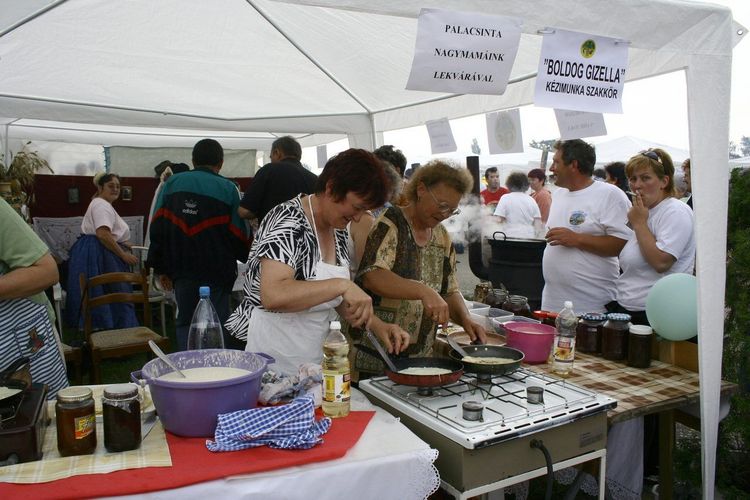
Hungarian cuisine is full of dishes that children naturally enjoy, provided you choose wisely. Goulash soup, often perceived as spicy, is generally served in a mild version in tourist restaurants and makes a good entry point into local cooking. Palacsinta — thin crêpes filled with jam or chocolate — and kürtőskalács, a spiral pastry cooked on a spit and rolled in sugar or cinnamon, win over the youngest diners almost without exception. Our Ryo top Budapest culinary specialities details where to find them at their best.
For a full meal, restaurants around the Városliget and the zoo often offer children's menus and terraces with space to move between courses, unlike the more formal addresses in the historic centre. Lángos sold from street stalls, topped with sour cream and cheese, also make a complete and inexpensive meal or snack at any time of day. If a child is sensitive to spices, learning the phrase nem csípős — meaning not spicy — is generally enough to get an adapted version, as most tourist restaurants are well used to the request.
Caves and Nature Escapes around Budapest
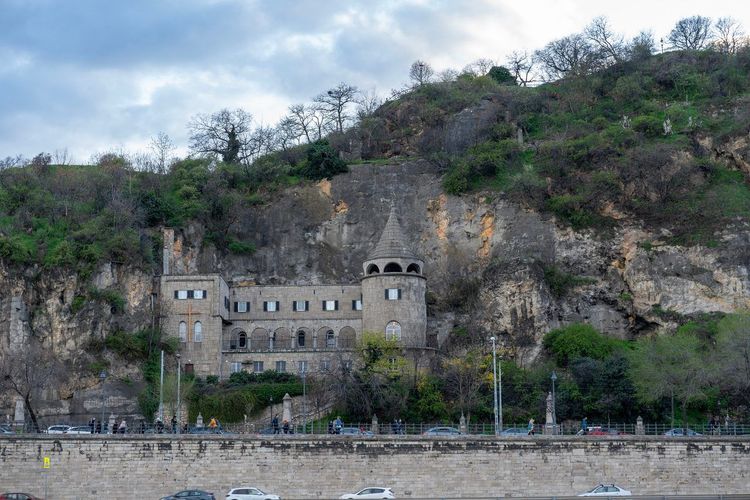
Few visitors think of caving when planning a trip to Budapest, yet the city and its surroundings are among the most active karst zones in Europe. Our Ryo article on things to do in and around Budapest lists several day-trip excursions if you are staying for more than a week.
Family-Friendly Caves in Budapest
Two limestone caves can be visited directly from the city centre, without an organised excursion. Pálvölgy Cave (Szépvölgyi út 162, 1025 Budapest, rated 4.8/5 on Google based on 5,653 reviews), part of Hungary's longest underground network — more than 30 kilometres of explored passages including the neighbouring Mátyás-hegy cave — with 500 metres open to visitors, is explored on a guided tour of about an hour, with a few narrow sections and metal staircases that amuse children more than they worry them. Nearby, Szemlőhegy Cave, nicknamed the underground bouquet for its unusual mineral formations, offers a shorter and more accessible route suitable from age 5–6. In both cases, bring a jumper even in summer: the temperature remains stable at around 10–12°C year-round, a welcome coolness after a morning in full sun.
Day Trips: Lake Balaton and Eger
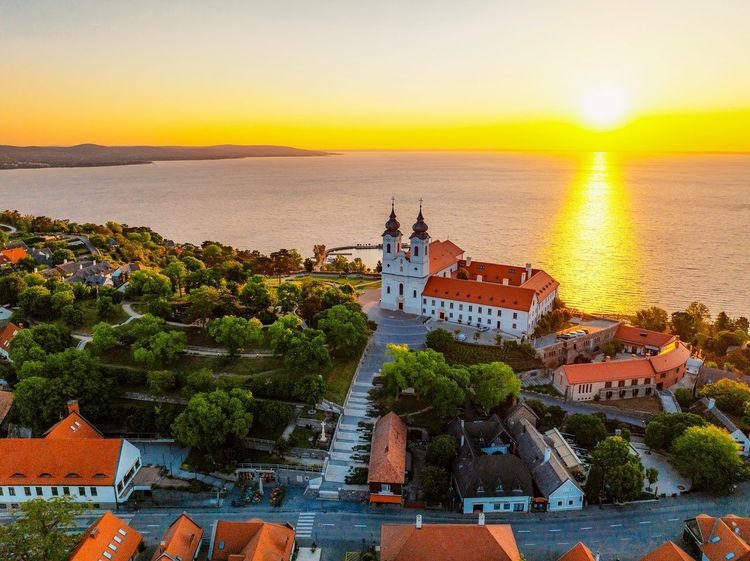
If your stay exceeds five or six days, two day trips are worth making. Lake Balaton, dubbed the Hungarian Sea for lack of a coastline, is reachable in around 1.5 hours by train or car from Budapest; its shallow northern shores around Balatonfüred are particularly well suited to young children who want to swim without worrying about unpredictable depths. Eger, to the east, combines a 16th-century fortress where children can climb the ramparts, thermal baths less crowded than those in Budapest, and an accessible vineyard that will appeal more to the parents. Both excursions can be done by train from Budapest's main stations, with no need to rent a car.
Practical Information: Transport, Accommodation, and Budget
How to Get There and Get Around with Children
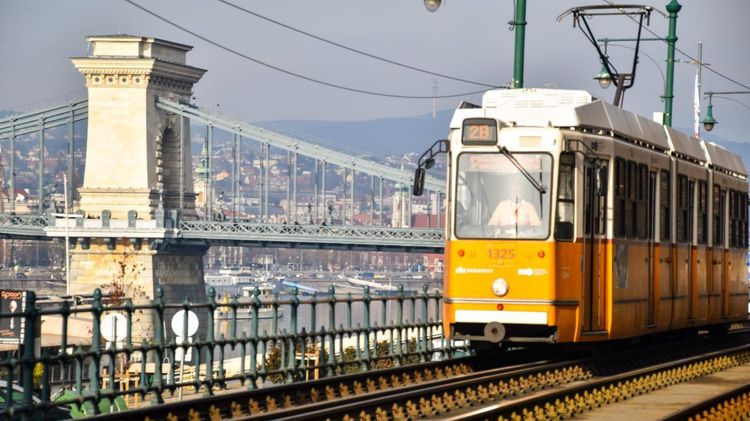
From Paris, allow around 2 hours 15 minutes of direct flight to reach Budapest Ferenc Liszt Airport; from Brussels or Geneva, direct connections also exist in high season with comparable flight times. The 100E shuttle bus links the airport to the city centre in 30 to 40 minutes for a fixed fare — a simpler option with luggage and a pushchair than negotiating a taxi on the spot. Within the city, the network combines three metro lines, an extensive tram network, and buses: line M1, inaugurated in 1896 and the first electric metro line on the continent, does not always have lifts in its historic stations, unlike lines M2, M3, and M4, which are more recent and broadly accessible for pushchairs. A single ticket or a day pass covers the entire network, and children under 6 travel free on all public transport. The most useful route for families to remember is tram 2, which runs along the Danube on the Pest side for almost its entire length and serves most of the major landmarks without having to go underground with a pushchair.
Where to Stay in Budapest as a Family
The 5th district, in the centre of Pest, remains the most practical compromise: within walking distance of Parliament, the Chain Bridge, and the Danube embankments, and well connected by public transport to the rest of the city. If your programme revolves around the zoo, the Széchenyi Baths, and the Városliget, you would do better to stay in the 6th or 14th district, closer to this cluster of attractions but slightly less central for the historic landmarks. Apartment-hotels with kitchenettes, plentiful in Budapest and often offered by familiar international chains, allow you to prepare simple meals for young children and are often cheaper than a conventional hotel of equivalent size. One point to watch when booking: avoid addresses in the heart of the Jewish Quarter near Szimpla Kert, where the nightly activity of the ruin bars can make for noisy nights even on upper floors.
Budget, Pushchairs, and Tourist Pass
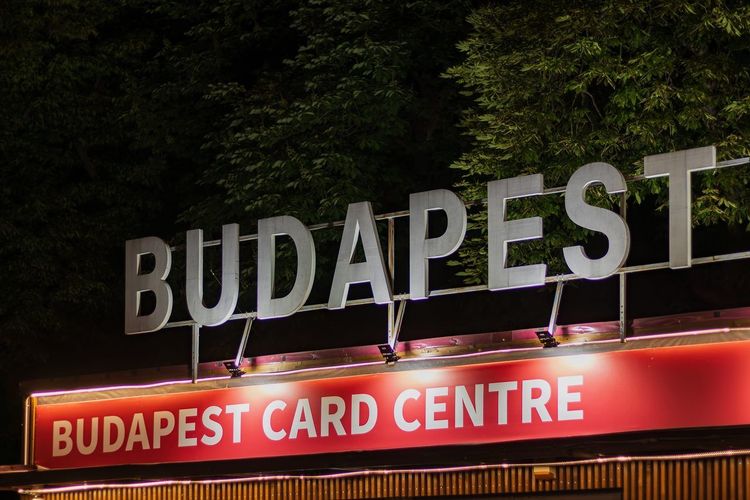
Budget on average €40 to €60 per day per adult for a family of four, including apartment-hotel accommodation, meals, transport, and one or two paid attractions — a significantly lower budget than an equivalent Western European capital. Budapest is generally very manageable with a pushchair: the main avenues and embankments are flat and wide, with only the cobblestones of Castle Hill and some lanes in the Jewish Quarter requiring a little more effort or a supplementary baby carrier. The Budapest Card, valid from 24 to 120 hours, includes unlimited public transport and discounts at several museums and excursions — worth calculating based on the number of paid attractions you have planned. On the currency front, Hungary uses the forint (HUF) and not the euro despite being an EU member: it is best to exchange a small sum on arrival and pay the rest by card, which is widely accepted even at ice-cream kiosks.
When to Visit Budapest with Children
Spring (April–May) and early autumn (September) remain the most comfortable periods for walking with children: mild temperatures, shorter queues at the castle and baths, and still enough evening light for a Danube cruise after dinner. Summer (June to August) is better suited if you are targeting Margaret Island, the outdoor Palatinus Baths, and long days — at the cost of sometimes oppressive midday heat and peak crowds at the most popular sites.
Winter, often underestimated, offers a very different experience: indoor thermal baths like Széchenyi become even more spectacular in the snow, and the Christmas market on Vörösmarty Square, with its wooden chalets and alcohol-free mulled wine for children, transforms the city centre into a fairytale setting from late November to early January. The only downside is that the Palatinus Baths and the outdoor activities on Margaret Island are closed during this period. Whatever season you choose, one thing never changes: the most popular museums and baths are always best visited early in the morning, before the tour groups arrive.
FAQ
Is Budapest a suitable destination for families with children?
Yes, without reservation. The city is compact, public transport is safe and frequent, and the range of activities covers all ages — from the underground labyrinth beneath the castle to the outdoor thermal bath pools and a century-old zoo. Tourist infrastructure, such as restaurants with high chairs and museums with baby-changing facilities, is broadly on a par with other Central European capitals.
How many days should you plan to visit Budapest as a family?
Four to five days are enough to cover the must-sees (castle, Parliament, zoo, a thermal bath, the Városliget) without leaving exhausted. A week leaves time to add Margaret Island, the children's railway, and a day trip to Lake Balaton or Eger.
At what age can you take children to the Budapest thermal baths?
There is no legal minimum age, but the water temperature — between 38 and 40°C in some pools — makes it inadvisable for babies under 2–3 years old. Beyond that age, opt for the Palatinus Baths, which have dedicated shallow pools, rather than Széchenyi, which is more geared toward adults and older teenagers.
Is Budapest manageable with a pushchair?
Generally yes. The main avenues, the Danube embankments, and Margaret Island are flat and wide. Only the cobblestones on Castle Hill and some narrow lanes in the Jewish Quarter require a little more effort, though they are not impassable with an all-terrain pushchair.
How much does a day in Budapest cost for a family?
Budget around €40 to €60 per adult per day for a family of four, including apartment-hotel accommodation, meals, and one paid attraction — a significantly more affordable budget than a comparable Western European capital of the same size.
Is there a tourist pass for Budapest?
Yes, the Budapest Card, available from 24 to 120 hours, includes unlimited public transport as well as discounts at several museums, baths, and excursions. It becomes worthwhile as soon as your day's programme includes three or more paid attractions.
Which museums are free for children in Budapest?
Several sites offer free admission or a heavily reduced rate for children depending on their age — generally up to 6 years old and sometimes up to 14 for certain permanent collections. The lower terraces of Fisherman's Bastion and the mini-zoo on Margaret Island remain free for all ages year-round.
Visiting Budapest with children ultimately requires no particular compromise: the city can be explored on foot or by tram, effortlessly blending heritage, water, and nature, and offers enough low-cost or free options — such as the mini-zoo on Margaret Island, the terraces of Fisherman's Bastion, or the Christmas market — to balance a tight budget against a few pricier treats like Aquaworld or a Danube cruise.
To plan your route without endless research, the Ryo audio-guided tour of Budapest connects most of the places mentioned in this guide, from Buda Castle to Parliament via the Chain Bridge, with commentary designed to keep both young children and adults engaged. A great way to turn the journeys between visits into learning moments rather than dead time.
À lire également