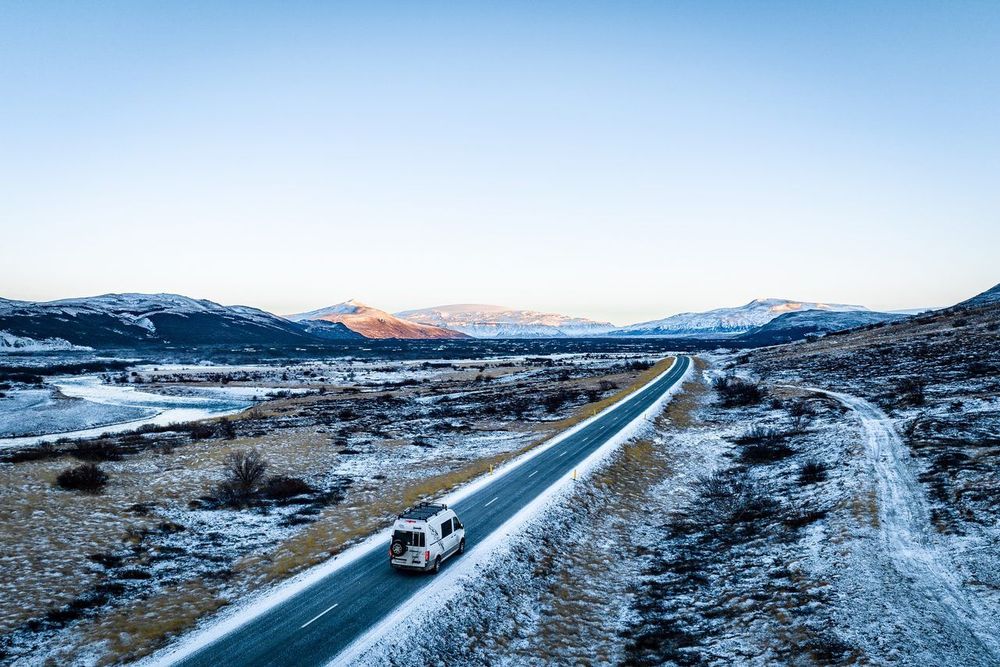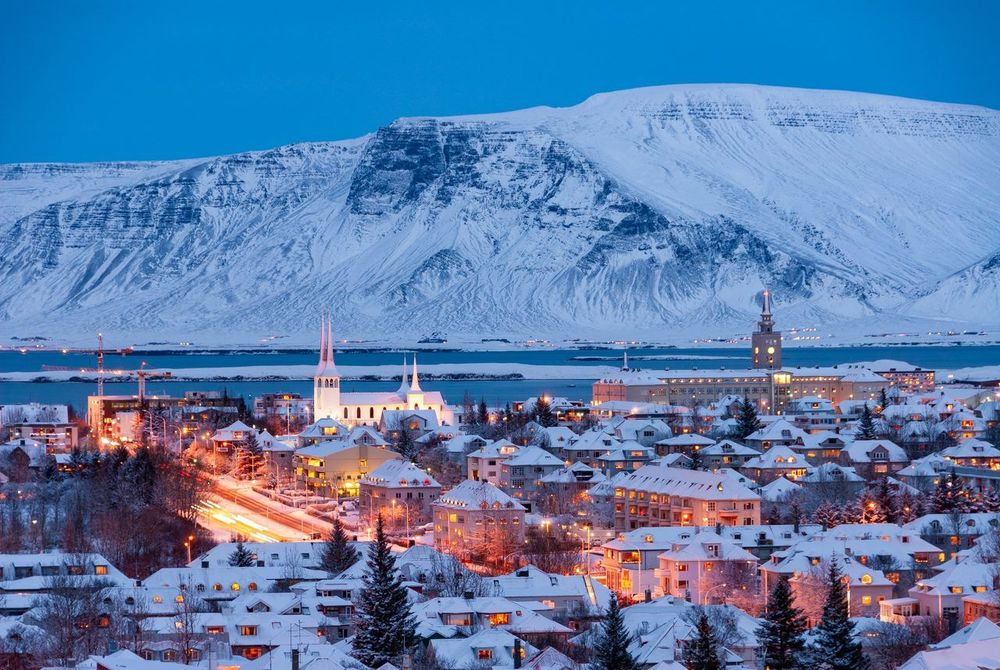
© Shutterstock
 Votre guide Ryo
Christmas Markets in Reykjavik: The Complete Guide to Experiencing the Holidays the Icelandic Way in 2026
Night falls around 3 p.m. and that is precisely when Reykjavik lights up. Between mid-November and December 23, the Christmas markets in Reykjavik cover the squares of the historic center with garlands, wooden chalets and steam from hot chocolate, turning this tiny capital into a showcase of the Icelandic winter. You will come across sellers of hand-knitted wool sweaters, steaming sausage grills and, if you follow the Ryo audio-guided tour of Reykjavik, the story of what these squares witnessed long before the first chalets arrived.
Four locations anchor the season: Ingólfstorg square and its ice rink, Austurvöllur beneath the windows of Parliament, the wooden village of Jólaþorpið in Hafnarfjörður, and the forest market of Elliðavatnsbær, in the Heiðmörk nature reserve, where you can leave with a freshly cut fir tree. Beyond these four markets, the whole city joins in the festivities: thirteen mischievous Yule Lads arrive one by one from December 12, a giant cat threatens poorly dressed children, and on December 24 at 6 p.m., the bells ring in the true start of Christmas. This guide details each market, its dates and opening hours, the traditions that surround them and the practical information you need to plan a successful end-of-year trip.
The Must-See Christmas Markets in Reykjavik
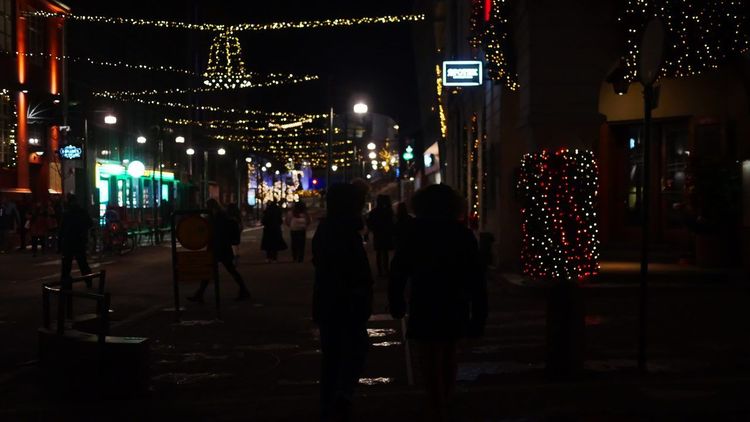
Four places carry the whole Christmas market season in Reykjavik, and none of them is really alike. Two are in the heart of the historic center, two or three minutes' walk from each other. The other two require leaving the city slightly, in the neighboring town of Hafnarfjörður and in the Heiðmörk nature reserve. There is no real hierarchy among them: each has its own atmosphere, its own crowd and its own hours, and you can easily combine two in the same day.
In the Heart of Downtown: Ingólfstorg and Austurvöllur
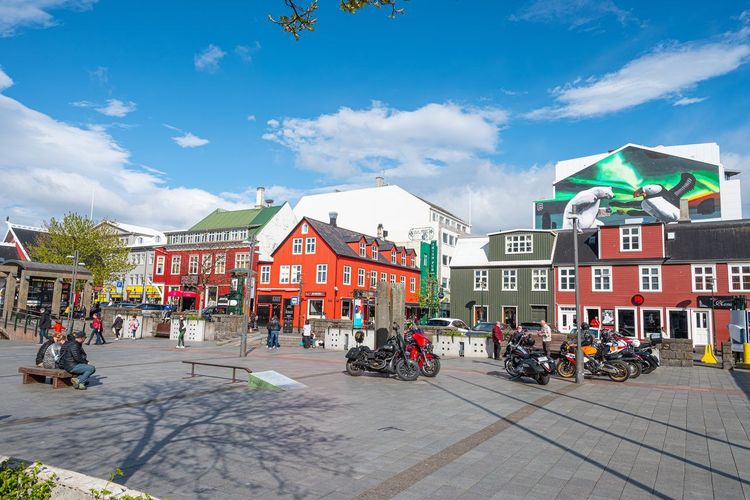
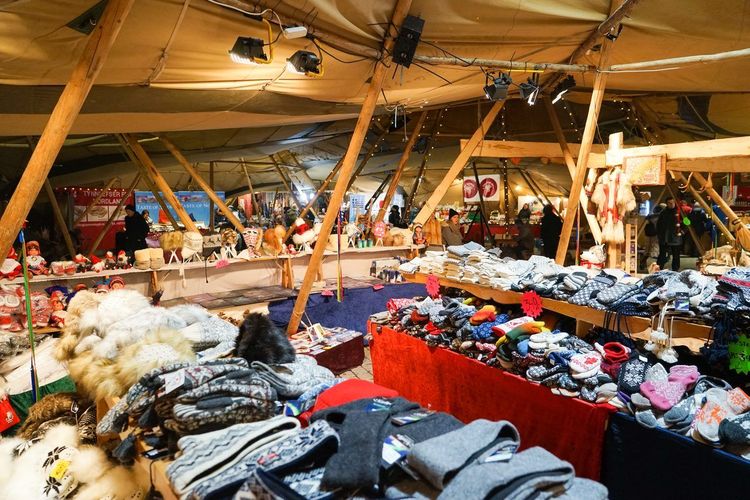
Every winter, Ingólfstorg square hosts the Nova ice rink, surrounded by a small illuminated Christmas village and garlands strung between the facades. The smell of gingerbread and grilled sausages drifts into the neighboring shopping streets and attracts Icelandic families as much as visitors who come for the season. You will find local crafts, wool hats and mittens, and spiced mulled wine.
The ice rink runs throughout Advent, with hours published as the season goes on. Access to the square is free; only the rink and skate rental are paid. Allow a little under an hour on site if you want to skate, sample the stalls and take in the decorations, a bit more if you go in the evening, when the lights come into their own in the early darkness of December.
The downtown chalets also sell plenty of lopapeysa, the traditional Icelandic sweater knitted from unwashed wool, recognizable by its circular yoke around the neck. It is one of the most popular souvenirs at the Christmas markets in Reykjavik, often more affordable when bought directly from the knitters than in tourist shops.
Right next door, Austurvöllur square offers a more intimate atmosphere. In front of the Icelandic Parliament (the Alþingi), the Dómkirkjan cathedral and the statue of Jón Sigurðsson, the Austurvöllur Christmas market gathers chalets selling crafts, jólaglögg (spiced mulled wine) and Christmas cookies, at the foot of the large tree donated by the city of Oslo. In 2025, it opened on November 29 and ran every weekend in December, then daily from December 18 to 23. Good news if you like to understand what you are looking at: the Ryo audio-guided tour of Reykjavik recommends starting on this very square. Its 21 stops, spread over 6.3 km and about 2.5 hours, take you through Ingólfstorg and tell you, among other things, about the arrival of Ingólfur Arnarson, the island's first settler around 874, who gave his name to the neighboring square.
Hafnarfjörður and Heiðmörk, the Gems Outside the Center
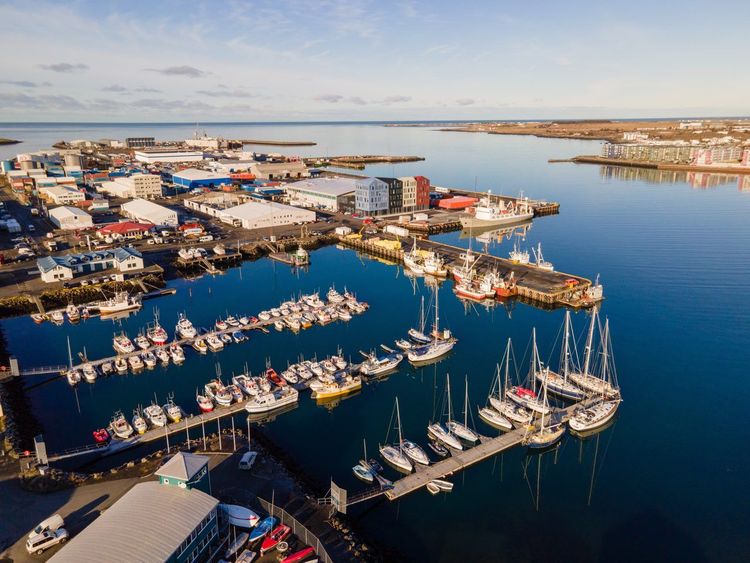
Half an hour by bus from the center, the town of Hafnarfjörður hosts Jólaþorpið, the Christmas village, set up on Thorsplan square. Its red and white wooden huts bring together crafts, treats, concerts and activities for children, sometimes with a visit from a few of the thirteen Icelandic Yule Lads. On opening night, the tree donated by Cuxhaven, a twin town in Germany, is lit. Hafnarfjörður is also famous for its elf legends, and the neighboring Hellisgerði park, illuminated for the occasion, extends the stroll in a fairy-tale atmosphere.
In 2025, the village opened as early as November 14, every weekend until Christmas: Friday from 5 p.m. to 8 p.m., Saturday from 1 p.m. to 8 p.m. and Sunday from 1 p.m. to 6 p.m., with a late opening on December 23. Strætó bus number 1 connects central Reykjavik to Hafnarfjörður. On weekdays, there is no point making the trip: the huts stay closed.
A total change of scenery awaits at Elliðavatnsbær (Heiðmörk, 110 Reykjavik, rated 4.8/5 on Google from 36 reviews), in the Heiðmörk nature reserve, about fifteen minutes by car from the center. Here, there are no cobblestones or old facades: just a farm by Lake Elliðavatn, surrounded by forests planted in the volcanic heathland. The market, organized by the Reykjavik Forestry Association (Skógræktarfélag Reykjavíkur) on Advent weekends, from late morning and through the afternoon, offers local crafts, readings by Icelandic authors, music, horse-drawn carriage rides and freshly cut fir trees. For every tree sold, the association replants around fifty. It is the most unusual of the four markets, and the one that most clearly requires a car or a taxi, as the reserve is not served by regular city buses.
The Illuminated Forests and Fir Valleys Around the City
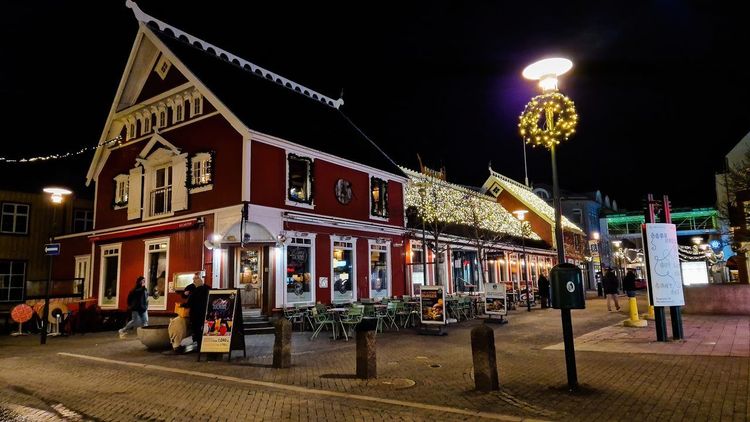
Between the four markets, Reykjavik lights up a growing number of forests and valleys for the season. Less commercial and more contemplative, they complement a day of stalls well and are ideal for a late-afternoon walk, when the lights stand out against a sky that darkens as early as 3:30 p.m.
Laugardalur and the City Hall Forest
At Laugardalur, Reykjavik's largest park, the Family Park and Zoo (Fjölskyldu- og húsdýragarðurinn) becomes a true Christmas valley in December, decorated with hundreds of thousands of lights. Admission is charged, and the park stays open until 8 p.m. on weekends during Advent, with a carousel in the evening. The neighborhood also houses an open-air thermal pool and a botanical garden, which lets you combine several winter activities without leaving the area.
The valley's name also has a story that the Ryo audio-guided tour of Reykjavik tells as you walk up Laugavegur, the main shopping street: before becoming the artery of boutiques and Christmas window displays, this road was used by women heading to wash laundry in the hot springs of Laugardalur. You will never look at the street's garlands in quite the same way again.
The Laugardalur pool lets you follow a stroll under the lights with an outdoor soak, a combination typical of winter evenings, when you go straight from dry cold to hot water.
On the opposite side, on the shore of Lake Tjörnin, Reykjavik City Hall (Ráðhús) sets up an enchanted Christmas forest indoors, in its Tjarnarsalur hall, open from early December (December 3 in 2025) and free to enter during the day, including on weekends. It is a quick detour, ideal in bad weather, between two visits to Austurvöllur and Ingólfstorg, since all three spots are within a five- to ten-minute walk.
Hólmsheiði and the Christmas Atmosphere at the Árbær Open-Air Museum
In the hills east of the city, the Hólmsheiði forest (Hólmsheiðarvegur, 110 Reykjavik) is the place to cut your own fir tree. Saws are lent on site, although the organizers encourage you to bring your own. Mostly frequented by locals, it is reached by car via the Nesjavellir road, usually on a December weekend, to leave with your own tree rather than to stroll among stalls.
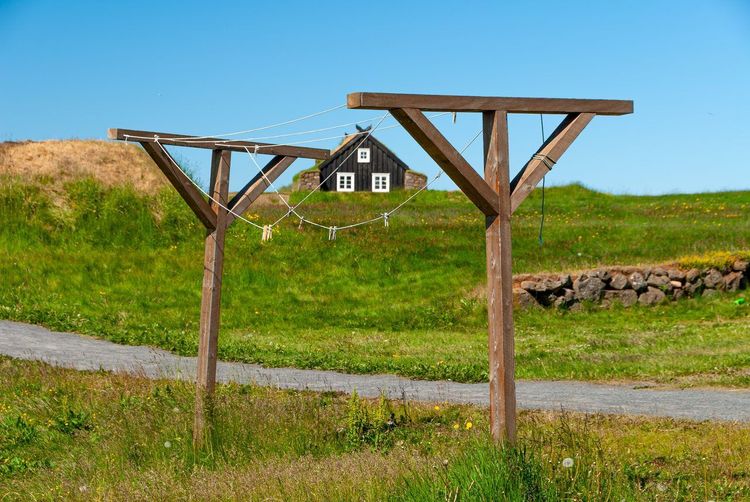
The Árbæjarsafn open-air museum (Kistuhylur 4, 110 Reykjavik, rated 4.6/5 on Google from 1,298 reviews) offers a completely different Christmas atmosphere. In this village-museum made up of old Icelandic houses that have been moved and reconstructed, a special program brings an old-fashioned Christmas back to life on certain Advent Sundays (December 7 and 14 in 2025): laufabrauð making, candle making, traditional songs and sometimes a visit from one of the thirteen Yule Lads. You will understand what an Icelandic Christmas looked like before electricity, in turf houses lit by candlelight. Allow a good hour and a half on site, more if you stop at every workshop.
Icelandic Christmas Creatures and Characters
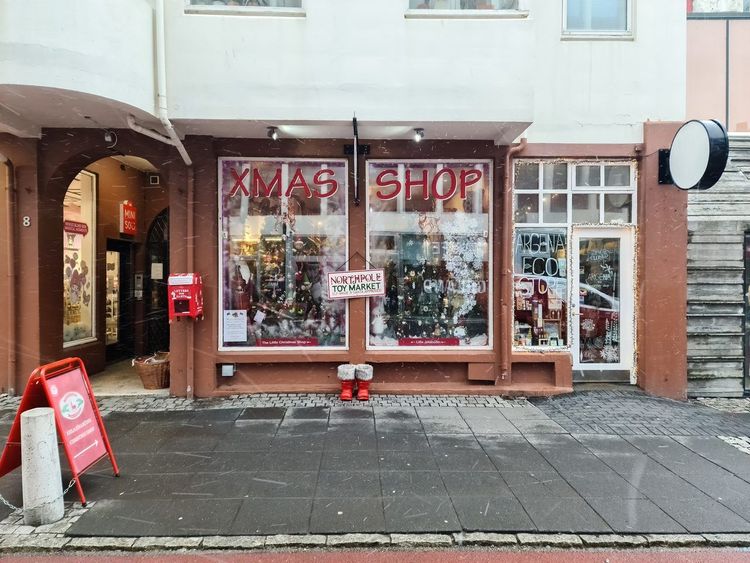
The decorations at Icelandic markets are not mere imported garlands: they tell a very specific folklore, populated by creatures found in no other European Christmas tradition. Knowing who these characters are changes the way you look at the craft stalls.
The 13 Yule Lads (Jólasveinar)
In Iceland, there is not one Santa Claus but thirteen. Each night, from December 12 to 24, a different Yule Lad, a Jólasveinn, comes down from the mountains to visit children who have left a shoe on their windowsill. The best-behaved receive a small gift or a sweet, the others find a potato. Each Yule Lad has a name describing his favorite mischief: Stekkjastaur harasses sheep, Þvörusleikir licks wooden spoons, Hurðaskellir slams doors all night long. Once described as trolls meant to frighten disobedient children, they have become, over time, more playful than menacing.
And why thirteen days of Christmas rather than twelve? After December 24, the Yule Lads head back to their mountains one by one, from December 25 to January 6. That last day, Þrettándinn (the "thirteenth"), officially closes the festivities with bonfires and final fireworks. At the markets, you will find them in costume or as wooden figurines carved by local craftspeople.
Among the thirteen, Gáttaþefur, with his oversized nose drawn to the smell of laufabrauð, and Ketkrókur, who steals meat with a hook, are among the most popular with children. Their silhouettes adorn a good share of the postcards sold at the markets.
The Yule Cat and the Ogress Grýla
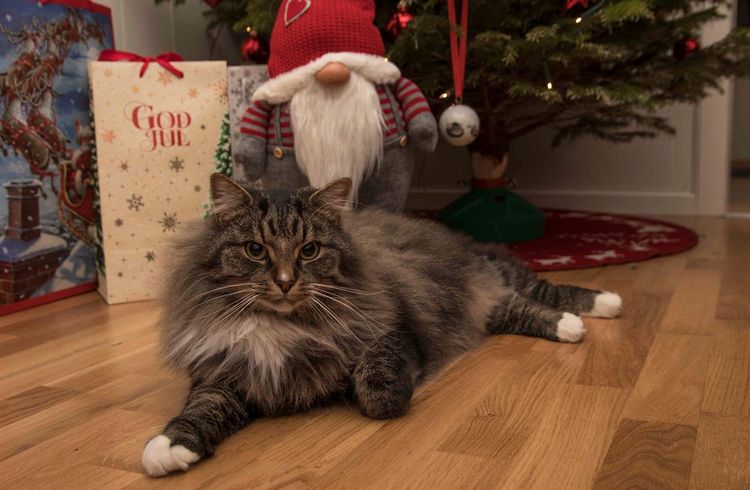
The thirteen Yule Lads have rather difficult parents. Grýla, a mountain ogress, and her husband Leppalúði are said to make a habit of catching disobedient children to cook them in a stew, a legend used for centuries to calm the most unruly as the holidays approach. The household also includes a cat, the Jólakötturinn or Yule Cat, said to devour anyone who has not received new clothes before Christmas. This legend explains a very real tradition: giving new clothes at Christmas, to symbolically escape the cat's appetite. For some years now, a huge illuminated sculpture of the Yule Cat has stood in the center, on Lækjartorg, attracting photographers as much as children.
On the stalls, these figures appear as wooden decorations, plush toys or illustrations on greeting cards. Recognizing them gives you a different reading of local crafts, which are often more narrative than they appear.
It is not unusual to come across, on a December weekend, a Yule Lad wandering among the downtown stalls or a more theatrical performance at Jólaþorpið. These appearances depend on local associations and the weather, which makes them a pleasant surprise rather than a scheduled event.
Christmas Traditions and the Christmas Meal in Iceland
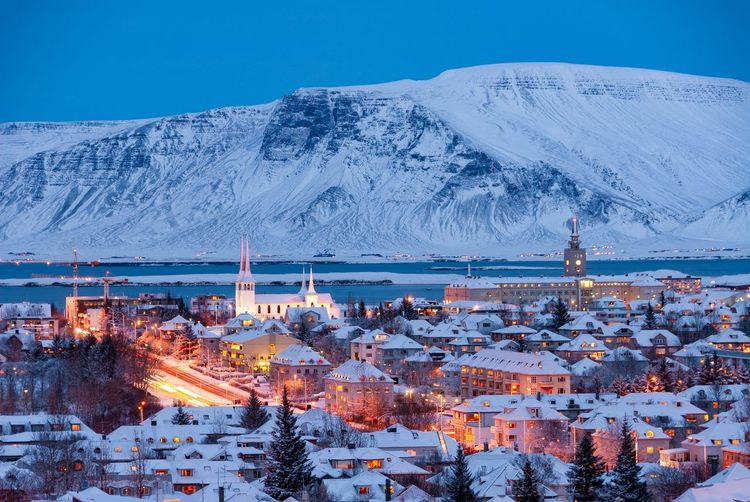
Beyond the Yule Lads, Christmas in Iceland follows a precise calendar. Advent begins on the fourth Sunday before Christmas, around the time the markets open. On December 23, Þorláksmessa, Icelanders traditionally eat fermented skate (kæst skata), a dish with a formidable smell that even some locals appreciate only reluctantly. It is also the big night for last-minute shopping: the downtown streets stay lively late, and it is often on this day that people finish decorating the tree.
What makes Christmas in Iceland special is first of all its timing. A legacy of the ancient Nordic custom whereby the day began at sunset, the celebration starts on the evening of December 24, not on the 25th. At exactly 6 p.m., the bells of Reykjavik Cathedral are broadcast on the radio throughout the country: it is the signal for the official start of the festivities, followed by the meal and the opening of gifts.
Many families attend a service in the late afternoon of December 24. If you wish to attend, arrive early: the Dómkirkjan, on Austurvöllur, and Hallgrímskirkja church, which towers over the city, fill up quickly that day.
Icelanders call the holiday period jól, a term inherited from the ancient winter solstice celebrations that predate the country's Christianization. The jólabókaflóð, literally the "Christmas book flood", is a very current illustration of it: every autumn, publishers release most of their new titles, families give each other books on the evening of December 24, then spend the night reading, with a cup of hot chocolate or malt og appelsín, a mix of non-alcoholic malt drink and orange soda.
The December 24 meal varies from family to family but often follows a common pattern: hangikjöt (smoked lamb) or rjúpa (ptarmigan, the "snow partridge") as the main course, served with laufabrauð, a thin flatbread cut into decorative patterns before being fried. Dinner begins around 6 p.m., just after the bells, and runs late with dessert, often an almond rice pudding, and the gifts.
Christmas Food and Drinks to Enjoy at the Markets
At the markets, you don't eat the same meal as on the evening of December 24, but the street food remains distinctive. The stalls mainly offer Icelandic hot dogs (pylsur), thin pancakes, ginger cookies (piparkökur) and cardamom pastries, a spice that is ubiquitous in Nordic December baking. The jólaglögg comes with or without alcohol, often served with roasted almonds.
For something more substantial without leaving the center, several restaurants around Laugavegur and the Old Harbour offer seasonal menus with hangikjöt or a Christmas buffet throughout December. Book if you are aiming for a Friday or Saturday evening: tables fill up quickly between 7 p.m. and 9 p.m.
As for drinks, Christmas beers (jólabjór) are released every year in limited editions in mid-November, a tradition closely followed by locals who compare breweries from one year to the next. Note that in Iceland, take-away alcohol is only sold in the state-run Vínbúðin stores.
Downtown bakeries also offer many versions of vínarterta, a layered cake with cardamom and plum jam, taken in the 19th century by Icelandic emigrants to Canada, where it remains a symbol of Christmas. You will find individual slices, handy for snacking while walking between two chalets.
What to Do in Reykjavik Besides the Markets During the Holidays
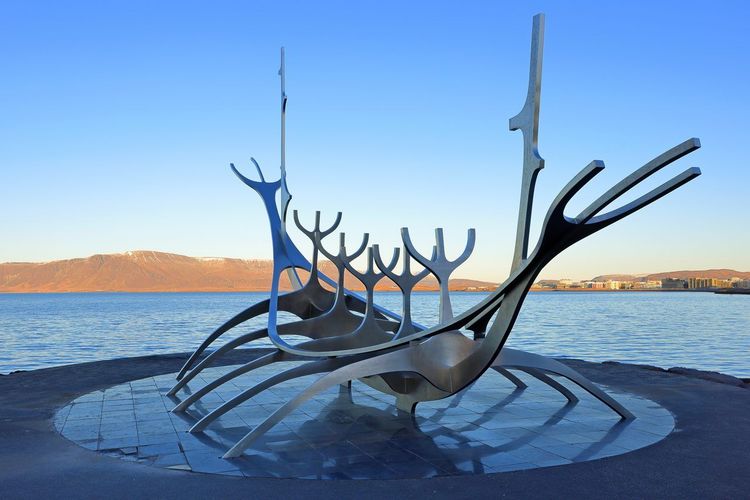
Christmas markets fill only part of a winter stay in Reykjavik. Most visitors combine the city with at least one glacier excursion. Ice climbing and glacier hiking outings, departing from Reykjavik or Skaftafell, should be booked several weeks ahead during the holiday period, as demand is higher than during the rest of the winter.
If you are considering extending your trip beyond the capital, our Ryo article on the road trip in Iceland details possible stops, and our Ryo guide to glaciers and ice caves explains how to visit an ice cave safely, most of them being accessible only between November and March.
December is also a good month for the Northern Lights, as the nights are very long. Our Ryo article on watching the Northern Lights in Iceland gives the best time slots and the spots accessible without a car from the center, useful if your stay is focused on the markets and the old town.
Between two excursions, take the time to understand the neighborhood you leave from. The Ryo audio-guided tour of Reykjavik passes through the Old Harbour, Harpa and Hallgrímskirkja, the very area from which most buses to the glaciers or Northern Lights viewing spots depart: it provides context that excursions don't have time to tell.
Geothermal baths remain a must in winter: the municipal pools, much cheaper than the Blue Lagoon, are open almost all year, with reduced hours on December 24 and 31 and a few days of holiday closures. Bathing outdoors in the snow, surrounded by steam, changes your perception of the December cold.
The Best Christmas Markets in Europe Compared to Reykjavik
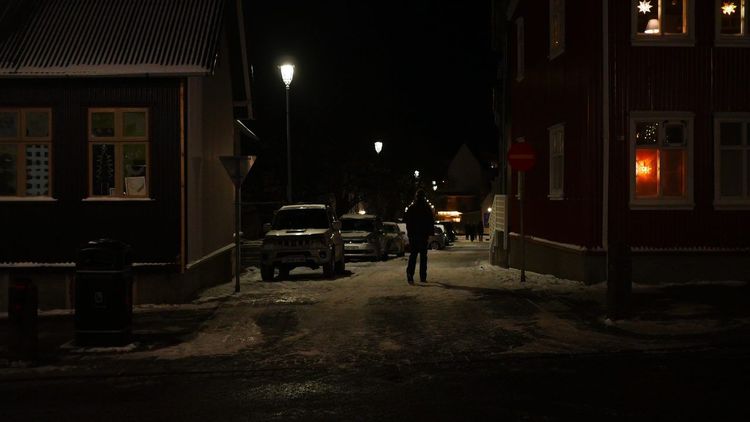
Compared to the big European Christmas markets, those of Reykjavik play in a different category. Strasbourg, the oldest of the French markets with origins dating back to 1570, lines up some 300 chalets spread over about ten squares. Vienna and its historic markets (Rathausplatz, Schönbrunn) attract several million visitors every winter. Next to them, the four Icelandic markets look modest: a few dozen stalls in total, in a capital of around 140,000 inhabitants.
But it is precisely this small size that changes the experience. No dense crowds, no queues to reach the stalls, and days so short that the lights shine from mid-afternoon. Reykjavik doesn't rival Strasbourg or Vienna in volume, but it offers its own folklore, the Yule Lads and the Yule Cat, and a natural setting between sea and snow-covered mountains.
Reykjavik in December: Weather, Daylight and Winter Atmosphere
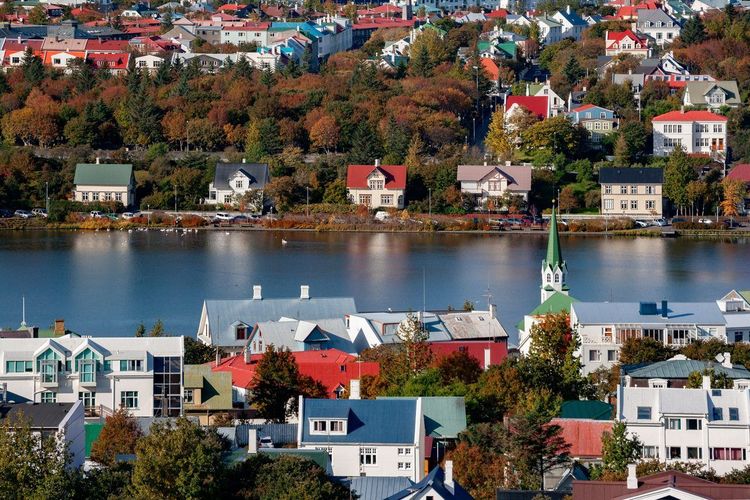
In December, Reykjavik gets only four to five hours of daylight around the solstice, with sunrise around 11:20 a.m. and sunset around 3:30 p.m. Temperatures most often hover between -3°C and 3°C, softened by the Gulf Stream despite the latitude close to the Arctic Circle. Snow is not guaranteed in the city, where rain and wind remain frequent.
This early darkness is not a drawback for visiting the Christmas markets in Reykjavik: the lights make the most sense from 4 p.m. To find out whether December matches the kind of trip you are looking for, our Ryo article on the best time to visit Iceland compares the different seasons, Northern Lights included.
Market evenings combine well with a Northern Lights outing: excursions generally depart between 8 p.m. and 10 p.m. from the center, after the stalls close, which leaves time for a leisurely dinner.
As for wind, bring a windbreaker rather than just a coat: coastal gusts make it feel much colder than the thermometer suggests. Downtown sidewalks are often heated by geothermal energy or salted, but the cobblestones around Ingólfstorg and Austurvöllur can become slippery when the frost returns at the end of the day.
Practical Information: Dates, Hours and Prices of the Christmas Markets
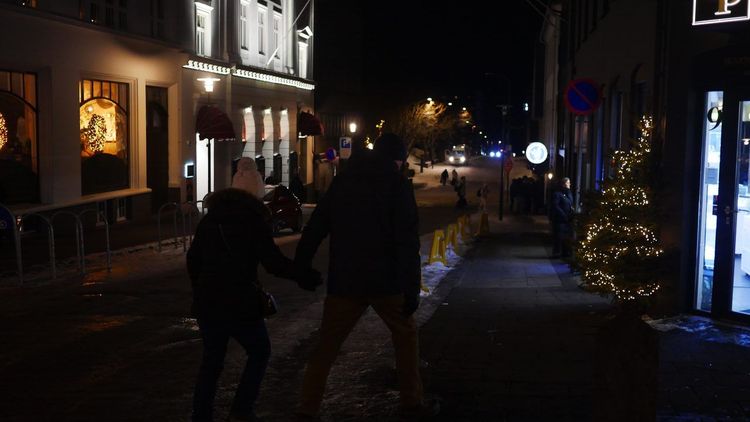
The Christmas markets in Reykjavik generally open between mid-November and December 23. Jólaþorpið in Hafnarfjörður is the earliest (mid-November, Friday to Sunday). Austurvöllur opens in late November, on weekends and then daily in the final stretch (December 18-23). Elliðavatnsbær is limited to Advent weekends, during the day. The Ingólfstorg ice rink runs throughout Advent. As hours are published from year to year, check them on the websites of the city of Reykjavik or Hafnarfjörður before you go.
Admission to all four sites is free. Expenses relate to what you buy on site: food, crafts, mulled wine, or skate rental. Allow 2,000 to 5,000 ISK per person for a few food stalls and a hot drink, not including souvenirs.
Good to know: bank cards are accepted almost everywhere in Iceland, even at the smallest stalls, as cash is used less and less. Favor a card with no foreign transaction fees, as charges can add up over many small purchases.
Check the Icelandic weather the day before rather than several days in advance: forecasts change quickly in winter. For photos, the lights look best just after sunset, when the sky keeps a bluish tint.
What to bring: layering remains the most effective approach, with a thermal base layer and a waterproof windbreaker. Shoes with a studded sole, or even light crampons, prevent slips on frozen cobblestones. Gloves, hat and scarf are not optional: with the wind, even -2°C feels noticeably colder.
Where to Stay in Reykjavik to Visit the Christmas Markets
To enjoy the Christmas markets in Reykjavik without a car, stay in the historic center, between Laugavegur and the Old Harbour. Ingólfstorg and Austurvöllur are then less than ten minutes' walk away, and the BSÍ bus terminal, the departure point for many excursions, is about fifteen minutes on foot.
Downtown hotels charge higher prices during the holidays, often 20 to 30% above low season, and availability melts away from early December. Apartments around Hlemmur or Grandi offer an alternative with a equipped kitchen, handy for a light meal between outings, bearing in mind that many restaurants close on the evening of the 24th.
On booking platforms, filter by walking distance from Ingólfstorg or Austurvöllur: in December, this criterion matters more than the simple mention "center", given the sometimes slippery sidewalks in the evening. The postal code 101 Reykjavik covers most of the historic center and remains the simplest reference to search for.
For a tighter budget, the residential neighborhoods around Laugardalur are about twenty minutes by bus from the center, with the advantage of being close to the thermal pool and the Christmas valley of the family park. A good option for a stay of several days combining markets and relaxation.
How to Get Around and Reach the Christmas Markets
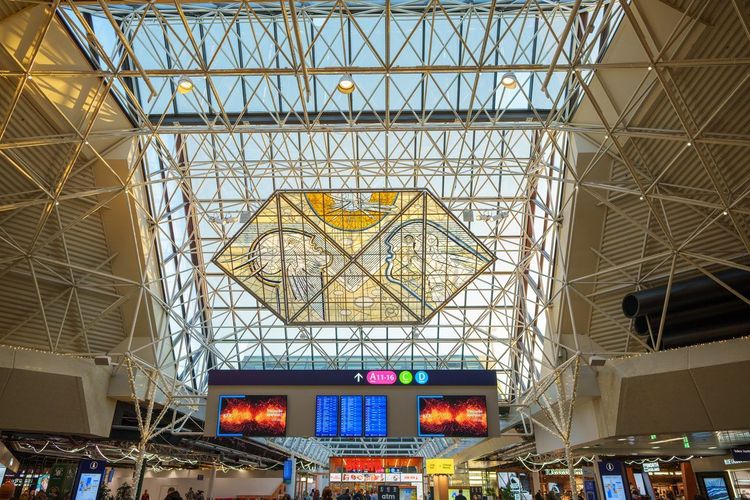
Keflavík Airport is about 45 minutes by road from central Reykjavik. Shuttles (Flybus, Airport Direct) leave after each flight arrival and serve the bus terminal or your hotel depending on the option. Renting a car is not necessary for the downtown markets, but becomes useful to reach Elliðavatnsbær in Heiðmörk or the Hólmsheiði forest, which are not served by city buses.
In the city, Strætó buses connect the center to Hafnarfjörður (line 1) and to Laugardalur. Between Ingólfstorg, Austurvöllur and City Hall, walking remains the fastest option. If you prefer a guided discovery of the historic center, the short version of the Ryo audio-guided tour of Reykjavik can be followed entirely on foot from your phone and links the two squares without a car or taxi.
Taxis remain expensive in Reykjavik: allow roughly 2,000 to 3,000 ISK for a short downtown ride. Renting a car becomes useful again as soon as you combine the markets with an excursion to the south of the island; in winter, opt for a 4x4 vehicle and check road conditions before each departure.
To plan the rest of your stay, our Ryo guide to visiting Reykjavik in two days offers an itinerary combining downtown and realistic travel times, useful for fitting the Christmas markets into a broader program.
New Year's Eve and New Year's Day in Reykjavik
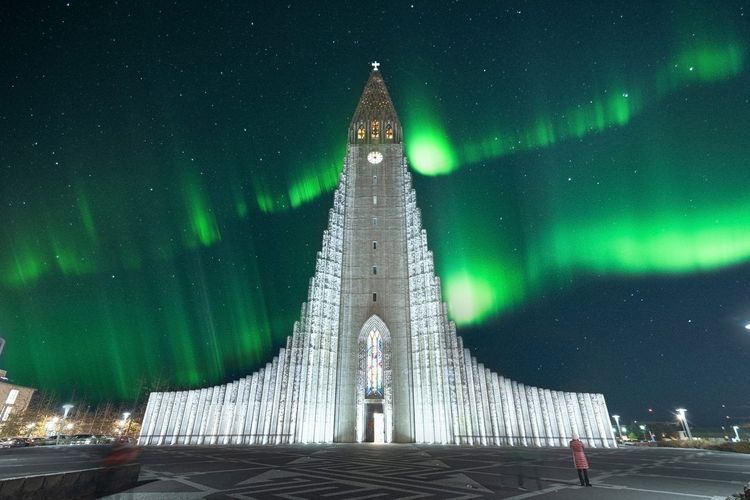
New Year's Eve in Reykjavik follows a very particular ritual: neighborhood bonfires (brennur) gather residents in the early evening, then, at midnight, the sky ignites with fireworks set off from gardens and streets rather than from a single official site. Seen from the hill of Hallgrímskirkja or Perlan, the spectacle is one of the most impressive in Europe.
Fireworks set off by private individuals make the streets noisy and smoky around midnight: wear clothes that you don't mind getting dirty and keep your distance from amateur displays.
Before midnight, a very large majority of households stop in front of the television to watch the Áramótaskaup, an annual satirical show that pokes fun at the events of the past year. The streets empty for an hour, before filling up all at once for the countdown.
On December 25 and 26, public holidays, most shops stay closed, except for a few cafés, convenience stores and gas stations. It is a quiet period, ideal for walks around the harbor. The Christmas markets generally close on the evening of December 23 and do not reopen until the following year.
If you are aiming for New Year's Eve, book accommodation and restaurants several months in advance: the night of December 31 is, along with Christmas, one of the busiest times of the year in Reykjavik.



FAQ
When do the Christmas markets take place in Reykjavik?
The main markets open between mid-November and December 23: Jólaþorpið in Hafnarfjörður from mid-November on weekends, Austurvöllur from late November, and Elliðavatnsbær on Advent weekends. The Ingólfstorg ice rink runs throughout Advent.
Is Reykjavik a good Christmas destination in December?
Yes, as long as you accept nights lasting almost twenty hours. The markets, the lights and the creatures of Icelandic folklore more than make up for the lack of daylight, and flights are often cheaper than in the high summer season, except during New Year's week.
Is it worth visiting Reykjavik in winter?
Absolutely, as long as you equip yourself well against the wind and cold. Winter lets you combine Christmas markets, geothermal baths and, weather permitting, Northern Lights viewing, three experiences that are impossible to combine in summer.
What is the traditional Christmas food in Iceland?
The December 24 meal most often features hangikjöt (smoked lamb) or rjúpa (ptarmigan) served with laufabrauð, a thin flatbread cut into decorative patterns. On December 23, many families also eat fermented skate, a dish with a very pungent smell.
What are the most popular Christmas gifts in Iceland?
Books come out well ahead, driven by the jólabókaflóð tradition that leads families to give each other books on the evening of December 24. New clothes follow closely, in reference to the legend of the Yule Cat.
How much time should I plan to visit the Christmas markets in Reykjavik?
Half a day is enough for Ingólfstorg, Austurvöllur and the City Hall forest, all on foot. Add a full day, ideally a Saturday, if you also want to see Jólaþorpið in Hafnarfjörður and the Elliðavatnsbær market in Heiðmörk.
Do I need to book accommodation far in advance for Christmas in Reykjavik?
Yes, ideally several months ahead, especially for a stay that covers New Year's Eve. Prices rise and availability in the city center drops sharply from the beginning of December.
Between the four markets, the illuminated forests and the creatures that populate local folklore, Reykjavik in December offers a Christmas experience unlike that of any other European capital. The city is small enough to explore entirely on foot in a few days, with warm breaks in a thermal pool or a café on Laugavegur.
To extend your visit beyond the stalls and garlands, the Ryo audio-guided tour of Reykjavik tells you in 21 stops what the facades around Ingólfstorg and Austurvöllur hide once the chalets have been dismantled. Whether you come for a weekend or for the full New Year's Eve, the Christmas markets in Reykjavik clearly deserve a place in your Icelandic winter itinerary.
À lire également