© Shutterstock
 Votre guide Ryo
When to Visit Morocco: the Complete Guide by Season and Region (2026)
In January, skiers are hitting the slopes of Oukaïmeden in the High Atlas while surfers slip on a simple shorty wetsuit in Taghazout, barely 200 kilometers to the south. This climatic split personality perfectly encapsulates the search query "when to visit Morocco" typed by thousands of travelers every winter: there is no single best season to visit Morocco, but a best season for each region and activity. The country stretches from the Mediterranean to the Sahara, crossing a mountain range that peaks above 4,000 meters, and each zone has its own calendar. For exploring the ochre alleyways of Marrakech in comfort, the Ryo audio guide of Marrakech is available year-round, but the comfort of the visit changes completely depending on the month you choose.
A few benchmarks are enough to be convinced. In Marrakech, temperatures regularly exceed 38°C in July and August, while they cap at 18°C in the middle of winter. Along the Atlantic coast, in Essaouira or Agadir, the trade wind maintains a temperate climate almost year-round, which explains why the surf spots of Taghazout and Tamraght run at full capacity twelve months a year. In the desert, the gap between day and night temperatures can reach 20°C in a single winter day. And in Fès as in Meknès, Ramadan reshapes the rhythm of the souks and restaurants every year without following the solar calendar. This guide breaks down, season by season, region by region, and activity by activity, the period that best matches your travel project.
Understanding the Seasons in Morocco: Climate and Key Trends
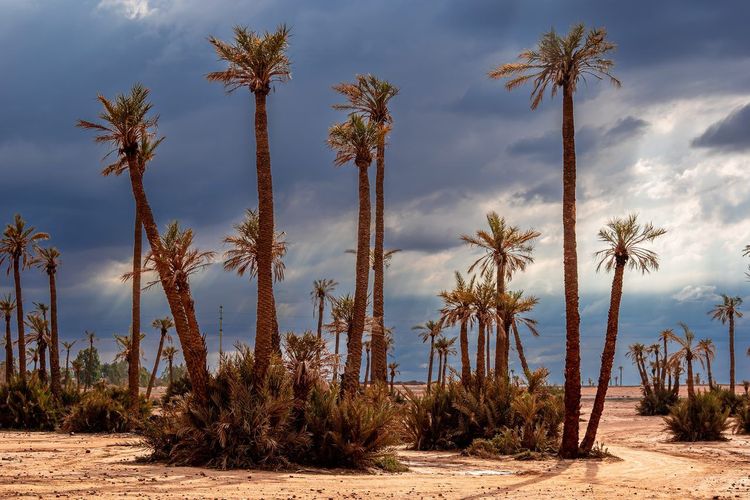
Morocco, a land of a thousand faces, does not have a uniform climate but an interlocking set of microclimates governed by the Atlantic Ocean, the Mediterranean Sea, the Atlas mountain range, and the Saharan desert. Understanding the kingdom's four seasons allows you to align a trip with the right weather window rather than relying on a national average that means very little. The best periods for a first trip almost always fall in the shoulder seasons, but every season has its devotees and its specific uses.
Spring (March to May): the Most Versatile Season
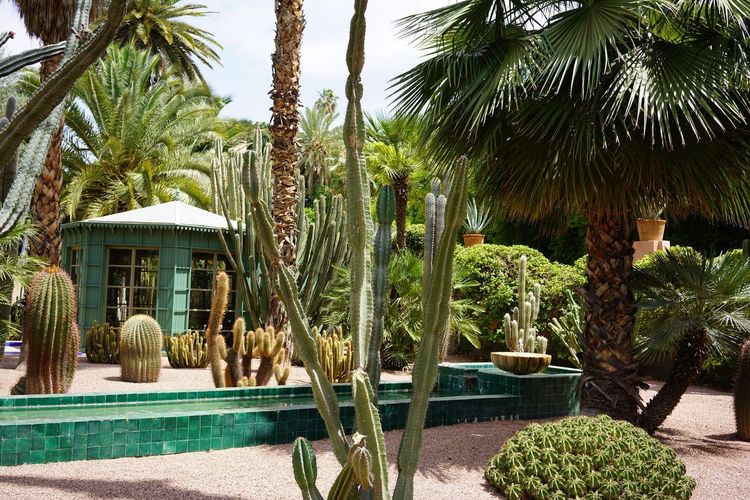
Moroccan spring, between March and May, is unanimously cited as the most versatile season by experienced travelers. Temperatures climb gradually from 20°C in March to 29°C in May in Marrakech, without ever reaching the excesses of summer. This is the period when almond trees blossom on the foothills of the Atlas and the peaks of the range still wear a snowy mantle visible from the Red City.
This window suits almost every type of travel: imperial cities, Atlas trekking, coastal road trips, or beach stays. The days grow longer, the light remains gentle in the late afternoon, and showers, when they occur, tend to be brief and fairly localized in the north of the country.
The downside is that spring naturally draws crowds. Around Easter in particular, flight and riad prices climb noticeably — a point to anticipate if you are traveling at that specific time.
Summer (June to August): Intense Heat Inland
When does summer begin in Morocco? Well before the astronomical calendar: in the interior of the country, the shift happens as early as mid-June, and the heat often persists until mid-September. Moroccan summer, from June to August, effectively imposes a very different travel geography. Inland, Marrakech, Fès, and Ouarzazate regularly exceed 38°C during the day, with peaks above 45°C during episodes of the chergui, the hot wind blowing in from the Sahara. Visiting the souks or imperial cities in the peak heat requires strict organization: outings early in the morning, a mandatory siesta, and constant hydration.
Conversely, the Atlantic coast remains surprisingly cool thanks to the trade wind and the cold Canary Current. Essaouira rarely exceeds 24°C in August, making it a sought-after escape by Moroccans themselves during the hot months. It is also the ideal time for high-altitude trekking in the Atlas, where the air stays breathable even when the plains are sweltering.
Autumn (September to November): Mildness and Golden Light
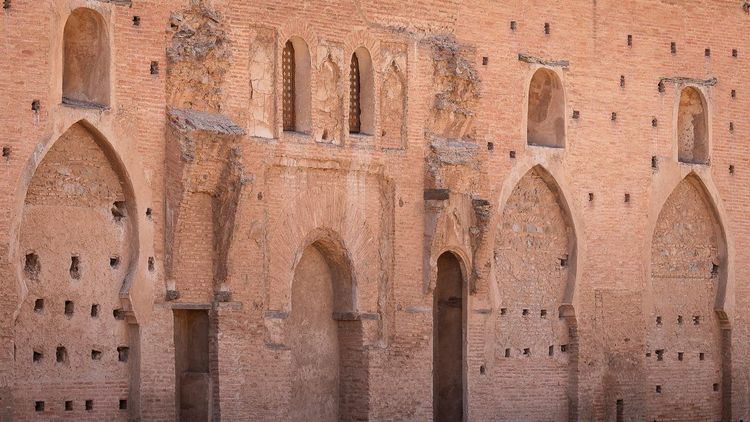
Autumn, from September to November, recaptures the mildness of spring without its popularity, making it one of the best periods to travel to Morocco on a budget. September still extends the summer heat inland, but October and November bring days around 22 to 28°C in Marrakech, with a golden light that is particularly photogenic on the pisé ramparts.
It is also the grape harvest season in the Meknès region and the time when the sea, still warmed by summer, remains pleasant along the Atlantic coast through late October. Where to go in Morocco in November? Head south and inland — Marrakech, the Drâa valley, or the desert — where nights are just beginning to cool without becoming uncomfortable.
Winter (December to February): Contrasts Between Coast and Mountains
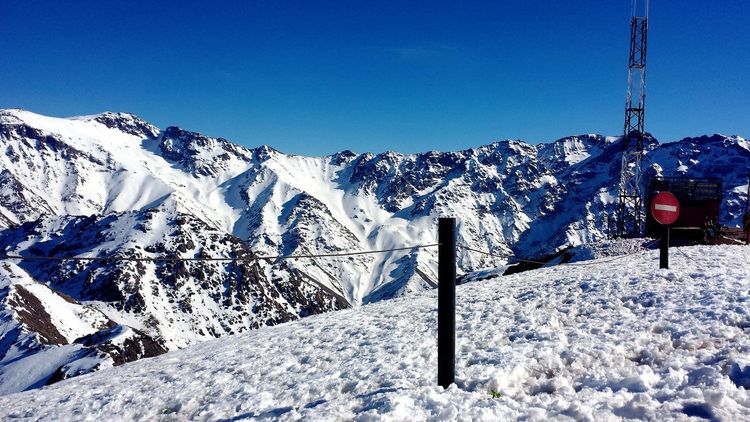
Moroccan winter often surprises travelers who picture a uniformly warm country. In Marrakech, December and January nights frequently drop below 8°C, and old riads, poorly insulated, can sometimes feel colder inside than outside. In the High Atlas, snow covers the summits from November onward and even makes skiing possible at Oukaïmeden, where snow cover is most reliable from January through late March, sometimes into April.
When does winter begin in Morocco? Meteorologically, December marks the true turning point, with days that nonetheless remain mild — between 17 and 19°C in Marrakech — as long as the sun is shining. The desert experiences the country's most pronounced thermal swings: after a day at 20°C, the thermometer can drop below 0°C overnight in Merzouga.
Yet this season has its ardent supporters. The imperial cities can be visited without crowds or heat, flight and accommodation prices drop noticeably outside the end-of-year holidays, and the southern coast around Agadir retains an almost spring-like climate year-round thanks to its sheltered position.
Weather and Temperatures Month by Month (Marrakech as Reference)
Beyond the four main seasons, the month-by-month weather in Marrakech gives a more precise picture for pinning down travel dates. As the reference city for the majority of visitors and an almost obligatory stop, Marrakech is a good illustration of the semi-arid climate of the country's center: scorching summers, days mild in winter with cool nights, and particularly pleasant shoulder seasons. The following table gives the average minimum and maximum temperatures observed in Marrakech, the city used as a benchmark in most travel guides.
| Month | Min (°C) | Max (°C) | Key Note | |---|---|---|---| | January | 8 | 18 | Cool nights, sunny days | | February | 9 | 20 | Good alternative away from spring crowds | | March | 11 | 23 | Start of high season | | April | 13 | 25 | Ideal for cities and Atlas | | May | 16 | 29 | Last month before the heat | | June | 19 | 33 | Heat setting in | | July | 21 | 38 | Heatwave inland | | August | 21 | 38 | Chergui possible | | September | 19 | 33 | Heat gradually easing | | October | 15 | 28 | Golden light, sea still warm | | November | 11 | 22 | Shift toward winter | | December | 8 | 18 | Cold nights, mild days |
February deserves special attention, as it already concentrates most of the advantages of spring without the price tag. Where to go in Morocco in February? The south — Marrakech, Ouarzazate, or even the desert in the middle of the day — offers generous sunshine with mid-season temperatures, while the north can still experience showers. Nights remain cool: a warm layer is still essential after sunset.
Where to go in Morocco in November follows a similar logic, with one extra advantage: the sea stays warm along the Atlantic coast until mid-November, a month when the southern beach resorts, Agadir above all, maintain comfortable conditions. Conversely, the Atlas becomes trickier from mid-November onward, with the first snows complicating access to mountain passes.
This calendar confirms a simple rule: between July and August, it is better to favor the coast or high altitude rather than the inland plains. Conversely, December and January are perfectly suited to the southern cities and the desert during the day, provided you accept cool evenings. The months from March to May and from September to early November remain the most versatile, equally suited to a circuit through the imperial cities, a trek in the Atlas, or a beach stay in Essaouira.
Climate by Region: From the Coast to the Atlas
Beyond the calendar, the climate in Morocco is best understood through its geography. Between sea and mountain, the country combines a Mediterranean climate in the north, a temperate oceanic climate along the Atlantic coast, a semi-arid climate around Marrakech, and a genuinely desert climate south of the Atlas. The same month can thus offer radically different conditions depending on whether you stay on the coast or push all the way to the Sahara.
The Atlantic and Mediterranean Coast: Agadir, Essaouira
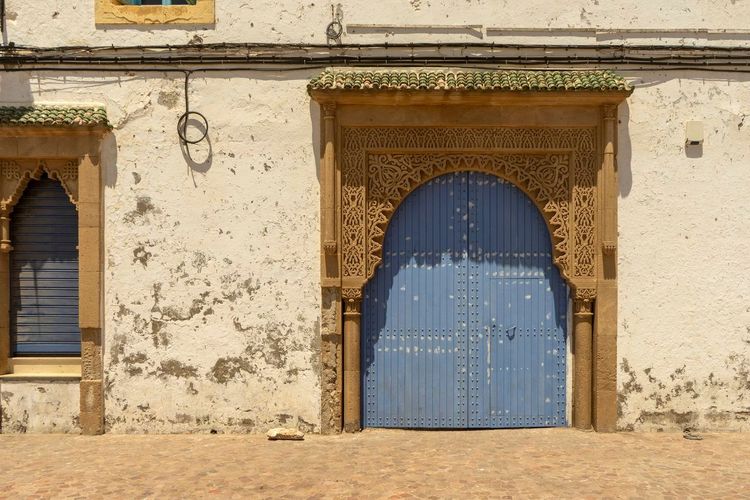
The Atlantic and Mediterranean coast enjoys a Mediterranean climate tempered by the ocean, with low thermal ranges throughout the year. In Agadir, temperatures average between 12°C and 25°C, summer and winter alike — a rare phenomenon at this latitude that earns the city its reputation as an all-season destination. A little further north, the medina of Essaouira bears the full brunt of the trade wind: summer afternoons there are cool, sometimes windy, which explains why the city has established itself as a world-class windsurfing and kitesurfing spot.
This relative coolness makes the coast the best option for escaping the summer heatwave inland. In winter, however, the Atlantic swell strengthens and swimming requires more caution, particularly around Essaouira.
Marrakech and the South: Heat and Traditions Year-Round
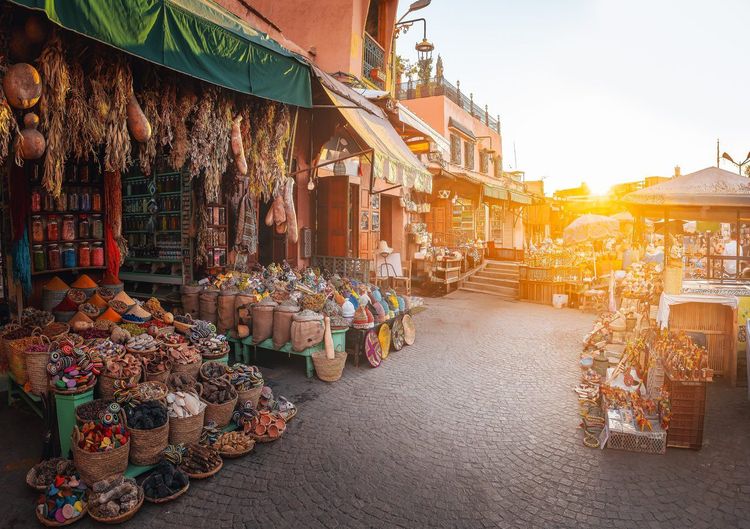
Marrakech and the south experience a semi-arid climate marked by large gaps between seasons and, even more so, between day and night. The Red City illustrates well why it often features among the answers to the question of the warmest city in Morocco during the day in winter: its December and January afternoons can reach 19°C in the sun, while nights plunge below 8°C. Further south, toward Ouarzazate and Zagora, aridity intensifies further and Berber traditions — moussems and weekly markets — shape a social calendar largely independent of the weather.
To make the most of these contrasts right in the medina, head out on the Ryo audio guide to Marrakech, designed to be followed during the coolest hours of the day — a detail that matters especially between June and August.
The Atlas Mountains: Cool Air, Snow, and Trekking
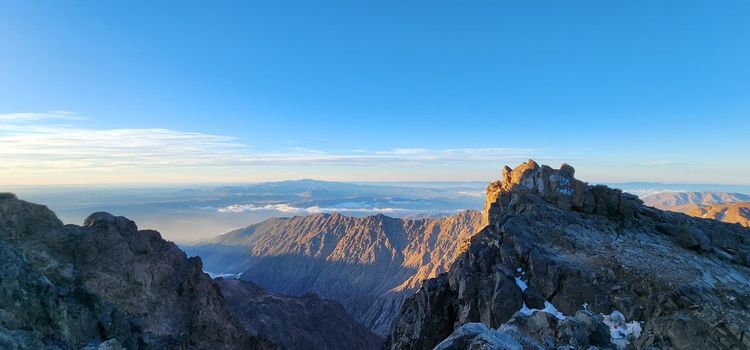
The Atlas Mountains offer the country's most contrasted climate over very short distances. Just 1.5 hours by road from Marrakech, the Ourika valley already gains several degrees of coolness, and the Toubkal summits, above 4,000 meters, are blanketed in snow from November through April.
This altitude coolness makes it a natural refuge during the hot months and, conversely, a winter destination for skiing enthusiasts — a niche but very real practice on the slopes of Oukaïmeden. The resort, about 80 kilometers from Marrakech, rises from 2,600 to 3,268 meters and boasts the highest ski lift in Africa: enough to combine, in a single winter day, a morning on the slopes and a late afternoon on a terrace in the medina.
The Desert and the Sahara: Cold Nights, Scorching Days
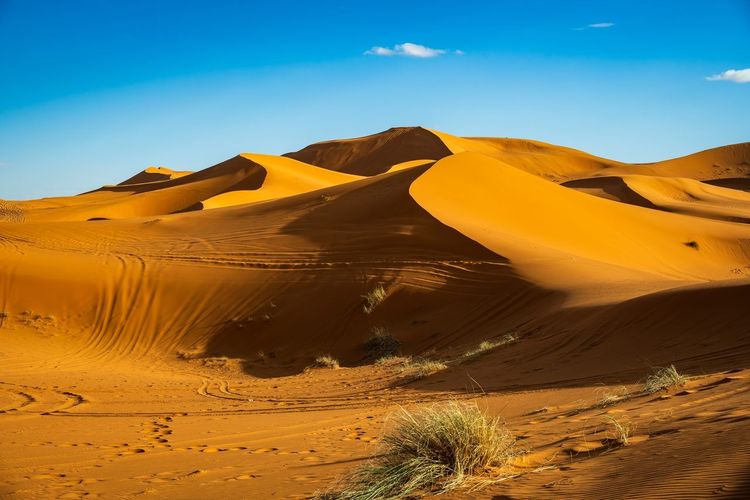
The desert and the Sahara display the kingdom's most extreme climate: days exceeding 45°C in summer and winter nights that brush the freezing point. Around the dunes of Erg Chebbi (52202 Merzouga, Morocco, rated 4.6/5 on Google based on 144 reviews), near Merzouga, the daily temperature swing can exceed 20°C in the middle of winter, making a down jacket essential even for a January bivouac.
Conversely, between June and August, the heat becomes barely tolerable during the day and turns excursions into ordeals rather than strolls — a point to factor in if you are planning a trek in the southern Saharan region.
When to Go for Beach Time and Surfing
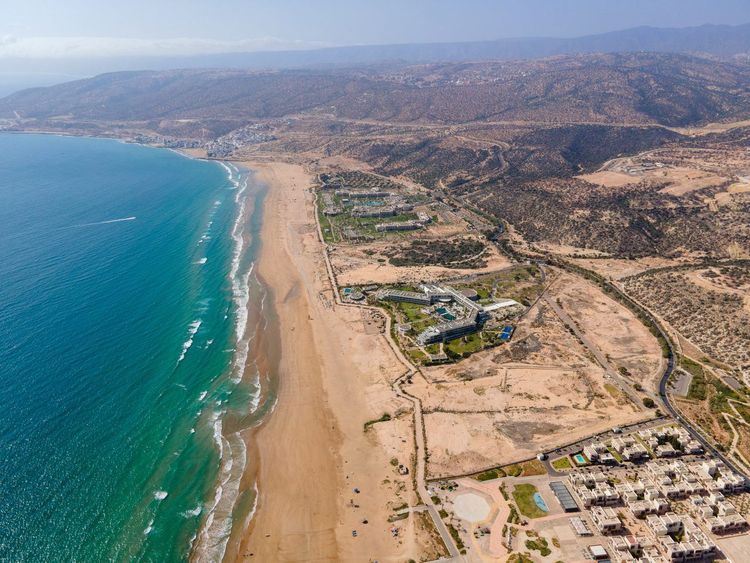
The Moroccan Atlantic coast has established itself as a surf and leisure destination accessible almost year-round — a rarity that changes the game for anyone wanting to enjoy the beaches without worrying about the calendar. The question is knowing when to make the most of Morocco's beaches depending on the type of stay you are after: relaxed swimming, high-level surfing, or simply strolling along the shore.
The Best Spots: Taghazout, Tamraght, Essaouira, Agadir
Where to surf in Morocco without getting the season wrong? The triangle of Taghazout, Tamraght (80750 Agadir, Morocco, rated 4.4/5 on Google based on 2K reviews) and Agadir, in the south of the country, concentrates the bulk of Morocco's surf scene. What is there to do in Taghazout? This small fishing village turned international surf spot offers waves suited to all levels, from the beginner-friendly Banana Beach to the demanding reef of Anchor Point, in an atmosphere that has remained surprisingly laid-back despite its success.
A few kilometers away, Tamraght retains a more Berber character, with its steep alleyways, terrace cafés, and family-run surf schools. The village particularly appeals to travelers looking for a balance between local life and surf culture.
Agadir, more urban, offers the widest and most developed beach in the area, with a complete hotel infrastructure that makes it a practical base for day trips to the surrounding spots.
Further north, the distance between Essaouira and Agadir — about 175 kilometers, roughly 2.5 hours by the coastal road — makes it easy to combine both atmospheres in a single trip: Essaouira's constant wind for kitesurfing, Agadir's more stable warmth for swimming.
Can You Swim in Morocco in Winter?
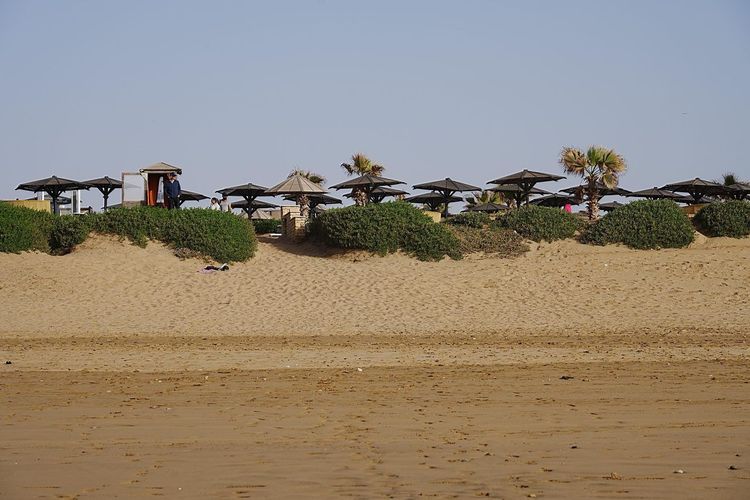
Can you swim in Morocco in winter? The honest answer depends on each person's cold tolerance. The Atlantic water hovers around 18°C between December and February off Agadir — manageable for a short swim but far from Mediterranean summer standards. Further north, off Essaouira, the water drops another degree or two and the swell picks up, making swimming less appealing than a simple walk along the sand.
Surfing and Kitesurfing: the Best Season for Waves and Wind
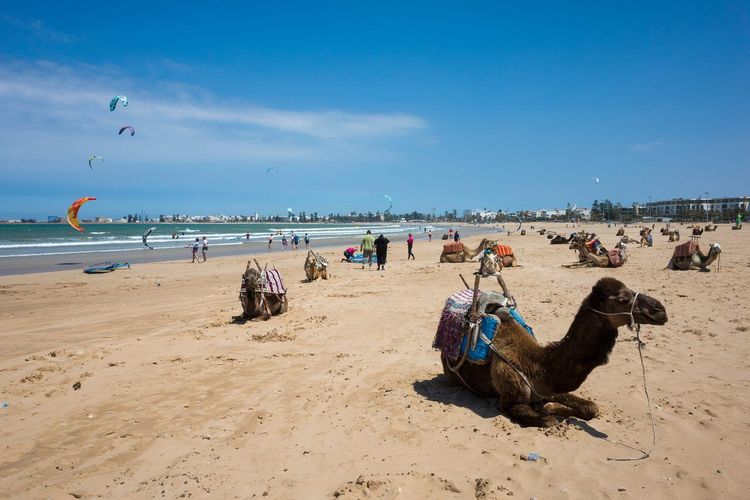
For surfing proper, autumn and winter — from October to March — deliver the most consistent swells and the best conditions for all levels along the southern coast. Kitesurfing follows a different calendar: Essaouira benefits from a particularly reliable thermal trade wind between April and September, with sustained winds almost daily by late morning, making it one of the finest kitesurfing spots in Morocco.
To reach the coast from Spain, our Ryo article on the ferry to Morocco from Spain details the crossings and their frequencies by season.
When to Go for Hiking in the Atlas and Trekking in the Sahara
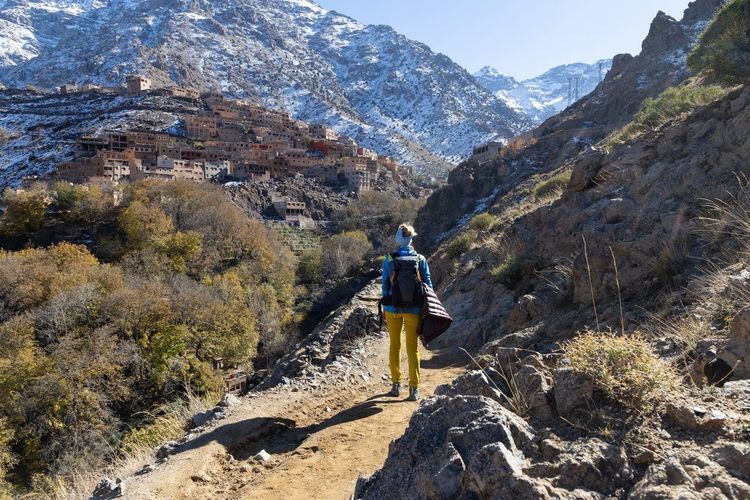
Active Morocco plays out on two radically opposite terrains — the altitude of the Atlas and the aridity of the Sahara — each with its own weather window. Confusing the two calendars remains the most common mistake among those who plan a relaxing trip that unwittingly turns into a demanding physical adventure.
Trekking and Hiking in the Atlas Mountains
When is the best time to hike in Morocco's High Atlas? The safest window remains spring and autumn — between April and June, then between September and October — when temperatures at altitude stay pleasant without snow on the trails. Climbing Toubkal, North Africa's highest peak at 4,167 meters, is ideally done outside winter, a period when snow and ice make the route technical and require specific equipment.
Summer, on the other hand, remains feasible at very high altitude, where the heat of the plains does not reach — which explains why some multi-day routes like the Atlas Trail schedule their crossings between July and August despite the heatwave in Marrakech. In winter, the same trails transform into snowshoeing or ski touring itineraries, a niche practice followed by a core of local and international enthusiasts.
To extend the experience beyond a single day, our Ryo guide to an unforgettable Atlas trek in Morocco details a complete itinerary with overnight stays in Berber guesthouses and seasonal advice.
Bivouac and Trekking in the Sahara Desert
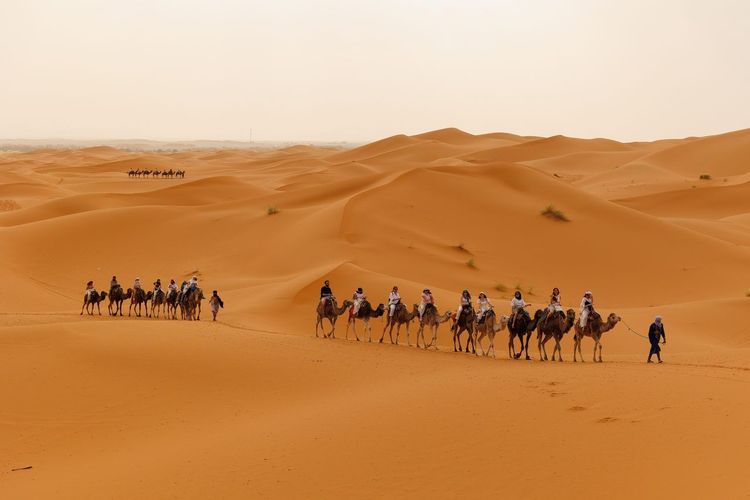
When to trek in the Moroccan Sahara follows the opposite logic to that of the Atlas. The ideal window falls between October and April, when days remain warm without becoming oppressive and nights, cool but not glacial, allow a comfortable bivouac under the stars near Erg Chebbi. Between June and September, daytime temperatures that regularly exceed 45°C make any hike in full sun risky, even for experienced trekkers.
December and January remain feasible during the day but require warm gear for the night, as the thermal gap can approach 25°C over 24 hours. For travelers searching for hiking in the Moroccan desert, this winter window is in fact the most documented and most frequented by local agencies, with a peak around the Christmas holidays.
When to Go to Visit the Imperial Cities and Take a Road Trip
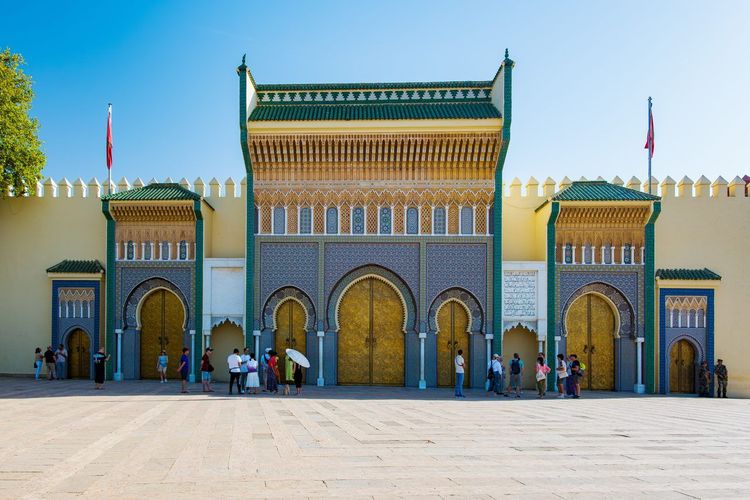
Exploring Morocco's imperial cities — Marrakech, Fès, Meknès, and Rabat — is possible year-round, but the comfort of the visit varies greatly depending on the season chosen. A road trip linking several of these stops benefits particularly from the shoulder seasons, which avoid both the urban heatwave of summer and the too-cool nights of winter.
Marrakech, Fès, Meknès, and Rabat: the Best Season
When is the best time to visit Marrakech specifically? This remains one of the most frequently asked questions, and the answer leans clearly toward March–May and September–November, when the heat stays manageable for walking through the medina and Place Jemaa el-Fna on foot all day.
Fès, with its UNESCO-listed medina and its maze of narrow, poorly ventilated alleyways, suffers particularly in the summer heat; spring and autumn offer a far more comfortable walking experience.
Meknès, more shaded thanks to its vast squares and ramparts — including the famous Bab Mansour gate — remains accessible a little later into the season, while Rabat, the capital, benefits year-round from a temperate Atlantic climate that noticeably softens the excesses of both summer and winter.
The Hassan Tower (10000 Rabat, Morocco, rated 4.6/5 on Google based on 13,021 reviews), in Rabat, can in fact be visited comfortably almost all year thanks to this Atlantic mildness.
When should you visit Morocco to get good deals in the souks? Shopkeepers are generally more open to negotiation in the low season, outside July–August and outside European school holidays, when tourist footfall drops.
A Road Trip Across the Country
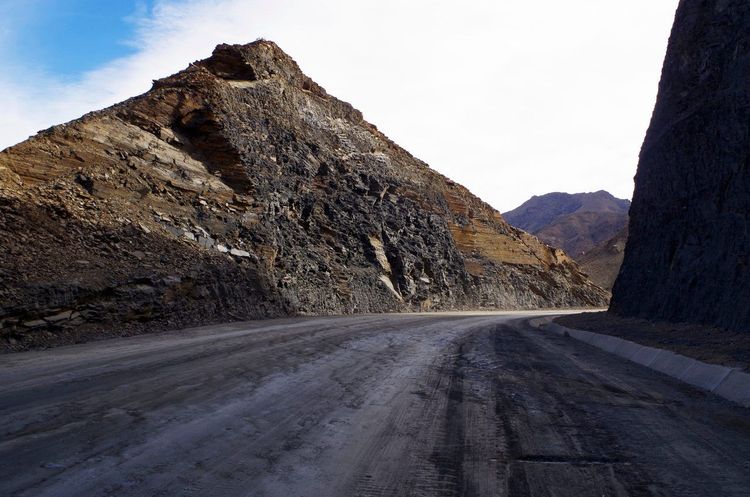
An unforgettable road trip across Morocco, linking imperial cities, the Atlantic coast, and the desert gateway, is best planned in spring or autumn to limit driving in extreme heat. Our Ryo article: Visiting Morocco — 10 Must-Sees details a sample itinerary combining Marrakech, Essaouira, and the Atlas foothills over about ten days.
For travelers who want to broaden the scope of possibilities even further, our Ryo selection of the 13 most beautiful cities in Morocco makes it possible to tailor a personalized itinerary by season, favoring coastal cities in summer and imperial cities in the shoulder seasons. A simple principle to keep in mind: the more different climatic regions your route covers, the more it pays to travel outside the extreme months — December–January for the night cold, July–August for the daytime heat. In Marrakech itself, the Ryo audio-guided tour is a good primer before setting off toward the other imperial cities.
Events and Festivals Not to Miss by Season
Morocco's events calendar is worth cross-referencing with the seasons, as certain dates radically change the atmosphere and logistics of a trip. Ramadan comes first: its dates shift back approximately ten days each year on the Gregorian calendar, so it is expected to run from February 8 to March 8, 2027, pending the announcement of the lunar crescent sighting by the Ministry of Habous. During this month, shops and restaurants operate at a reduced pace during the day before coming alive late in the evening, often until the middle of the night in major cities. The experience is fascinating, provided you accept disrupted schedules and plan your midday meals in advance.
On the music side, two events dominate the beginning of summer. The Gnaoua and World Music Festival in Essaouira traditionally takes place in late June — June 25 to 27 for the 2026 edition — transforming the medina into an open-air stage with a large share of concerts available free of charge. Mawazine, in Rabat and Salé, also occupies June — June 19 to 27 in 2026 — and lines up nine days of international and Arab headliners: it is one of the biggest music festivals on the African continent. In both cases, booking accommodation several months in advance is far from excessive.
Spring has its own highlights. The Rose Festival of Kelaat M'Gouna, in the Valley of Roses, is tied to the Damask rose harvest and generally falls in early May, with final dates only announced a few weeks in advance depending on the state of the blooms. In April, the Marathon des Sables takes its runners across approximately 250 kilometers of desert in the south of the country, with a logistics hub near Ouarzazate: accommodation in the region fills up for about ten days. In the countryside, moussems — traditional gatherings that blend religious pilgrimage with popular celebration — punctuate the calendar from May to September depending on the region, with the most spectacular being the Moussem of Tan-Tan, inscribed on UNESCO's Intangible Cultural Heritage list.
The rule is therefore simple: if you want to time your stay with one of these highlights, lock in your dates well in advance. If you are looking for calm and reasonable prices, shift your trip by a fortnight.
Budget and Flight Prices by Period
Average flight prices to Morocco follow a fairly classic supply-and-demand logic, with sometimes significant gaps between high and low season. July, August, and European school holiday periods — Christmas, Easter — concentrate the strongest demand and therefore the highest fares: a round-trip Paris–Marrakech ticket can easily double in price compared to a quiet period.
In practical terms, a round-trip Paris–Marrakech can be found for around €50 to €100 on low-cost carriers during the off-peak season, averages closer to €150 to €200 across the year, and frequently exceeds €250 to €350 in July–August or over the Christmas holidays. September and November consistently come out as the most affordable months when departing from France.
So when is the best time to visit Morocco on a budget? January, February, June, September, and November generally offer the best value on both flights and accommodation, once the end-of-year holiday period is behind you. These months often combine perfectly acceptable weather conditions — especially on the southern coast — with prices noticeably lower than those of spring or summer.
Another factor weighs on the overall trip budget: visitor numbers. In high season, riads in Marrakech and Fès charge rates that can climb 30 to 50% above low-season levels, and spots on desert or Atlas excursions sometimes need to be booked several weeks in advance. Conversely, outside the peaks of visitor traffic, real room for negotiation returns — on accommodation as well as on some locally organized excursions.
For travelers with flexible dates, monitoring fares several weeks before departure remains the most effective strategy: the low-cost carriers serving Marrakech, Agadir, and Fès from France adjust their prices continuously, with sometimes very attractive windows mid-week.
Practical Tips for Planning Your Trip
Beyond weather and budget, a few practical tips for planning your trip will help avoid unpleasant surprises once you arrive. Is there a rainy season in Morocco? Not in the tropical sense, but the north and the Mediterranean coast experience more pronounced rainfall between November and March, with sometimes intense episodes around Tanger and Chefchaouen. The south and the desert, on the other hand, remain dry almost year-round, with rare but violent thunderstorms at the end of summer.
Is it possible to visit Morocco in summer? Yes, provided you adapt your itinerary. Favoring the Atlantic coast — Essaouira, Agadir, and Casablanca — or the high altitude of the Atlas allows you to avoid the most difficult heat peaks in the interior. In cities such as Marrakech or Fès, scheduling visits early in the morning and late in the afternoon, and reserving the hottest hours for the pool or the hammam, remains the best strategy.
When is the best time for a relaxing trip to Morocco rather than an intensive circuit? April–May and September–October remain the most comfortable months for a wellness stay combining nights in a riad and spa treatments, complemented by short excursions, without the thermal extremes of either end of the year.
When is the best time for an active trip to Morocco rather than a contemplative stay? Two windows stand out, and they only partially overlap: April–June then September–October for the Atlas, October–April for the desert. April in particular concentrates most of the major endurance events, the Marathon des Sables above all, which tightens accommodation availability in the south at that time.
A few practical items to pack depending on the season: a fleece for winter evenings, even in the desert, and light but covering clothing for summer. A lightweight rain layer usefully completes the luggage for a winter trip to the north. Tourist crowds peak around Easter, in July–August, and during the Christmas holidays, with longer queues at the main monuments and the most sought-after riads needing to be booked several months in advance.
Finally, remember to check the Ramadan dates for the year of your trip: some tourist restaurants remain open during the day, but the general atmosphere — particularly in smaller towns — changes noticeably during this month.
Our Verdict: the Best Time to Visit Morocco
After this season-by-season and region-by-region overview, a summary is in order. The best periods to visit Morocco remain, for the vast majority of traveler profiles, spring (April–May) and autumn (September–October). These two windows combine mild temperatures across the entire territory, a particularly flattering light for photography, and reasonable tourist numbers outside school holidays.
| Traveler Profile | Recommended Period | Avoid | |---|---|---| | Imperial cities and culture | March–May, Sept–Nov | July–August | | Beach and surf (south) | Year-round | — | | Atlas trekking | April–June, Sept–Oct | December–February (snow) | | Sahara trekking | October–April | June–September (extreme heat) | | Tight budget | January–February, June, November | July–August, Easter, Christmas | | Full road trip | April–May, Sept–Oct | July–August |
In a nutshell: Morocco's four seasons break down into two blocks — two comfortable shoulder seasons that work almost everywhere, and two extreme seasons that require choosing your terrain: the coast or high altitude in summer, the south and the desert in winter. Traveling against the grain is an option worth considering for anyone wanting to avoid the crowds. Visiting in January or June, outside the main school holidays, often means enjoying the same sites with half the footfall, at the cost of some concessions on thermal comfort. A trekker will clearly prefer spring or autumn for the Atlas, winter for the desert. A beach and surf enthusiast can literally go at any time — the southern coast smooths out most of the seasonal extremes.
For a first trip that wants to tick all the boxes — imperial cities, mountains, and a glimpse of the desert — April–May and September–October remain the safest compromise. To plan your visit to the Red City around the coolest hours of the day, our Ryo app remains a valuable companion, whatever the season you choose for discovering its souks, gardens, and palaces.
FAQ
What Is the Best Time to Visit Marrakech?
April, May, September, and October offer the best balance between pleasant daytime temperatures, not-too-cool nights, and manageable crowds. In summer, with temperatures exceeding 38°C during the day, visits require strict scheduling, while winter remains pleasant during the day but genuinely chilly at night.
Can You Swim in Morocco in Winter?
Yes, but the water hovers around 17–18°C between December and February along the southern coast, which is cool for extended swimming. Agadir, more sheltered, offers slightly milder conditions than Essaouira, which is more exposed to winter wind and swell.
Is There a Rainy Season in Morocco?
The country does not experience a monsoon, but the north and the Mediterranean coast receive most of their rainfall between November and March. The south and the desert remain dry almost year-round, with rare stormy episodes at the end of summer.
Is It Possible to Visit Morocco in Summer?
Yes, by tailoring your itinerary toward the Atlantic coast or the high altitude of the Atlas and by scheduling urban visits early in the morning or late in the afternoon. Inland cities, Marrakech and Fès above all, become difficult to explore during the hottest hours.
Which Is the Warmest City in Morocco in Winter?
Marrakech and the southern cities, Ouarzazate and Zagora, rank among the warmest during the day in winter, with afternoons regularly exceeding 18–20°C in the sun. Agadir, on the coast, remains more temperate thanks to oceanic influence, with more stable but slightly lower daytime temperatures.
When Does Summer Start and When Does Winter Start in Morocco?
Meteorologically, summer sets in as early as June in the interior of the country and stretches through to the end of August, sometimes into early September in some years. Winter truly begins in December and lasts until the end of February, with nights noticeably cooler than the country's sunny reputation might suggest.
When Should You Visit Morocco to Get Good Deals in the Souks?
The low season, outside July–August and outside European school holidays, generally offers more room to negotiate, as shopkeepers are less busy. January, February, and June remain good months to bargain comfortably in the souks of Marrakech, Fès, or Meknès.
At the end of this overview, one conclusion stands out: there is no single right answer to the question of when to visit Morocco, but one answer per travel profile. Spring and autumn remain the safest choices for a first trip that wants to combine urban exploration and the great outdoors. Summer suits lovers of the coast and high altitude, while winter appeals to travelers who favor the south, daytime sunshine, and softer prices.
Whatever season you choose, taking the time to prepare your itinerary avoids unpleasant surprises — whether that means excessive heat in Marrakech in the middle of August or a poorly anticipated freezing night in the desert in January. To lay the groundwork for your stay in the Red City, the Ryo audio guide to Marrakech remains a practical resource, whatever the period you choose for discovering its souks, gardens, and palaces.
À lire également