© Shutterstock
 Votre guide Ryo
Visiting Porto in 2 Days: Complete Itinerary for 2026
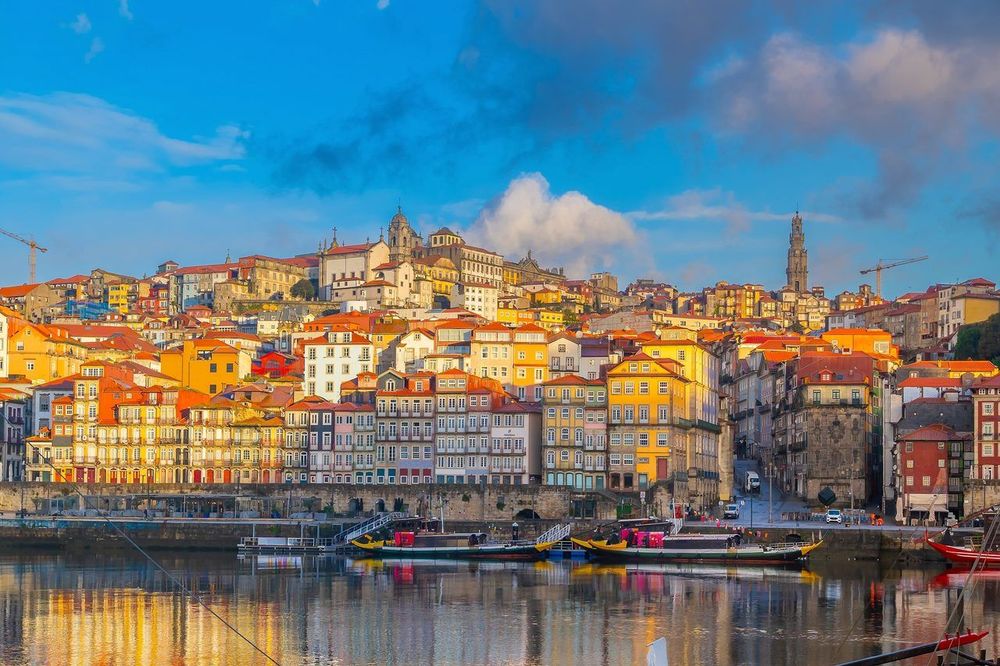
Two days are barely enough in Porto to take in its scenery. The azulejo facades turn deep blue in the rain, the smell of grilled sardines drifts up from the Ribeira at sunset, and the Douro river splits the city into two worlds linked by a metal bridge designed by Théophile Seyrig, a former associate of Gustave Eiffel. Visiting Porto in 2 days calls for careful choices, but no real sacrifices: the Ryo audio guide for Porto maps out the most efficient route between the old town, the wine cellars, and the viewpoints: a 7.2 km loop with 29 audio stops, to follow at your own pace in around three hours, earphones in.
In two full days, you can walk through the Sé do Porto cathedral and its tiled cloister, descend six flights of stairs from the Ribeira down to the river, taste a tawny in a centuries-old cellar in Vila Nova de Gaia, and watch the sun set from the upper deck of the Dom Luís I bridge, some 45 metres above the water. This guide details that programme hour by hour, along with possible extensions towards Guimarães, Braga, or the Douro Valley for those who can stay an extra day.
Porto in 2 Days: the Ideal Itinerary at a Glance
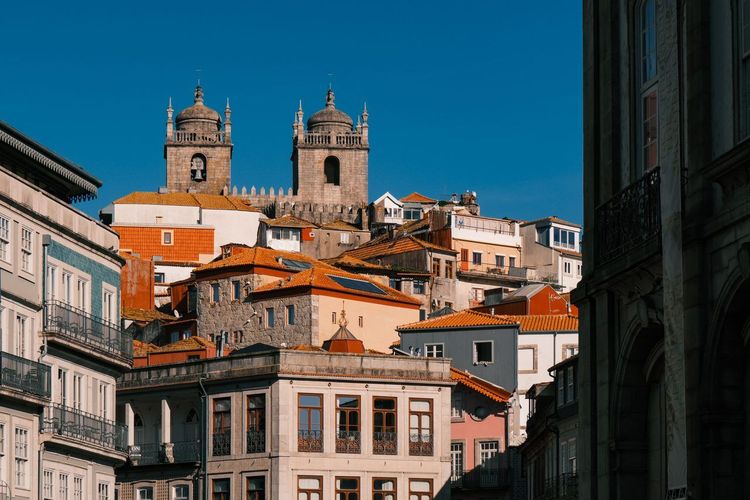
Porto resembles no other Portuguese city. The unofficial capital of the north, set against the gorges of the Douro, it grew around the wine trade and stonework, giving it a mineral, rather austere character far removed from the pastel softness of Lisbon. The historic centre, UNESCO-listed since 1996, fits almost entirely within a small area: barely a kilometre separates the Ribeira from the Torre dos Clérigos.
Two full days are enough to cover the essentials, as long as you stay focused: the old town on the north bank on day one, the wine cellars and a Douro cruise on day two. That's the realistic minimum for doing it all justice. With fewer than two days, you have to sacrifice either a cellar or a viewpoint; three days let you add one of the excursions detailed later in this article without rushing.
The programme breaks down as follows:
- Day 1: the Ribeira neighbourhood, the Sé cathedral, the Torre dos Clérigos, São Bento station, then crossing the Dom Luís I bridge to Vila Nova de Gaia in the late afternoon.
- Day 2: a tasting at a port wine cellar, the six bridges cruise on the Douro, the Bolhão market, then one or two viewpoints for sunset.
- Optional day: the Douro Valley, Guimarães, Braga, or an afternoon by the ocean near Matosinhos.
This schedule deliberately leaves some breathing room: the walking distances are short, but the uneven cobblestones and steep hills of the old town slow you down more than you'd expect before arriving. It's better to plan generously on day one and keep day two more flexible, even if that means improvising a terrace break by the river.
Arrival Day: Getting to Porto and Finding Your Bearings in the Centre
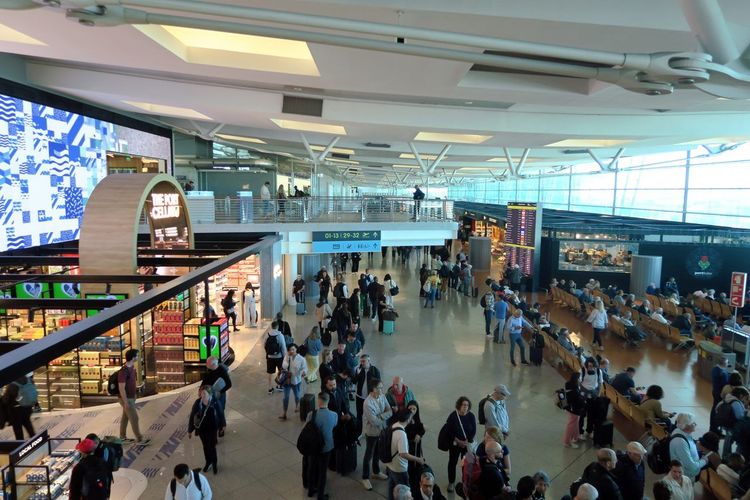
Francisco Sá Carneiro Airport is about fifteen kilometres northwest of the centre, and this is actually one of Porto's strengths: the metro runs directly from the terminal to the historic heart of the city. The purple line (E) reaches Trindade station in around thirty minutes, with connections to Aliados, São Bento, or Casa da Música. A zone Z4 journey on the Andante card costs just over €2, plus €0.60 for the rechargeable card itself. For a group or with heavy luggage, a taxi or ride-share comes to €25–30 and takes 20 to 25 minutes depending on traffic.
Once you've settled in, don't rush straight to a monument: the first evening lends itself better to getting your bearings than to ticking off a list of sights. Drop off your bags, then walk down to the river if your accommodation is in the historic centre. The walk from Aliados to the Ribeira takes about twenty minutes, mostly downhill, and offers a first glimpse of the orange rooftops tumbling down towards the Douro.
If you arrive late morning rather than in the evening, an alternative is to spend the afternoon wandering with no particular goal around the Aliados neighbourhood, the central avenue lined with Art Nouveau buildings and dominated by the town hall and its tall tower, before picking up the day one programme properly the following morning. This works well for flights landing before noon, which are common from France.
For that first dinner, skip the most-reviewed spots online, which are often packed from 8pm onwards. The small tascas around Rua de Cimo de Vila or in the Miragaia neighbourhood serve simple, honest cooking without the queues outside the most-photographed terraces in the Ribeira. Expect to pay €12 to €18 for a main dish with a glass of vinho verde.
If you arrive early in the day, this free time can also be used to check opening hours: the Sé cathedral generally closes around 6:30pm in summer, the Torre dos Clérigos stops admitting visitors 30 minutes before closing, and the cellars in Vila Nova de Gaia offer tasting slots that are worth booking the day before in high season. Doing this logistical groundwork calmly on the first evening avoids having to rush the next morning.
Day 1: the Old Town, Ribeira, and the Sé Cathedral
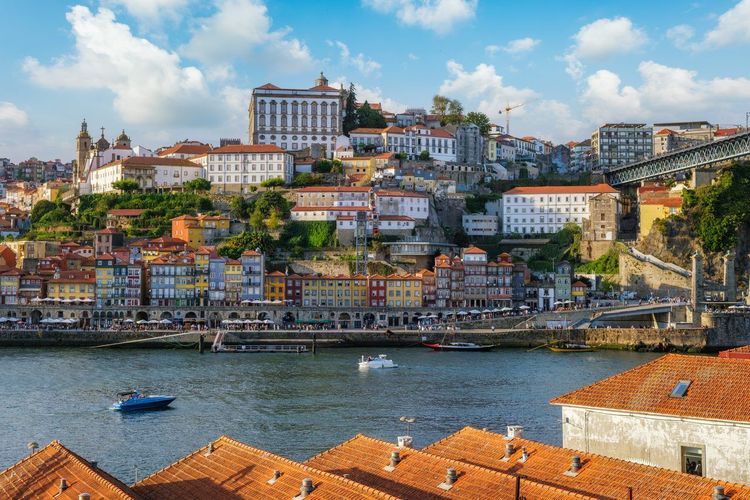
Day one focuses entirely on the north bank, the side where Porto's identity was shaped long before Vila Nova de Gaia began hosting port wine cellars in the 18th century. Set aside a full day, from breakfast to sunset on the bridge, and save your legs for the steep streets.
The Ribeira, the Sé do Porto Cathedral, and the Muralha Fernandina
Start at the highest point of the route and work your way down – your knees will thank you. The Sé do Porto, a fortified 12th-century cathedral, dominates the old town from its terrace. The interior is relatively plain, in stark contrast to the Gothic cloister entirely covered in blue-and-white 18th-century azulejos depicting scenes from the Song of Songs. Entry to the cloister costs around €3; the nave is free.
On the way out, a section of the Muralha Fernandina still stands along Rua Escadas do Codeçal: a fragment of the 14th-century medieval wall that once protected the entire lower city. You can walk along this wall and descend directly to the river via steep steps, a less-frequented alternative to the main street.
The descent brings you to the Ribeira, Porto's most photographed neighbourhood: narrow facades in faded colours, laundry drying at windows, the smell of grilled fish from midday onwards. The ground floors, long occupied by fishermen's workshops, now house craft shops and natural wine bars, signs of a gentrification that began in the 2010s without entirely erasing the neighbourhood's working-class character. The quayside itself, the Cais da Ribeira, comes alive in the late afternoon with terraces facing the Dom Luís I bridge.
The terraces lining the quay charge noticeably higher prices than the tascas elsewhere in the neighbourhood – a premium that's mainly worthwhile at sunset, when the view over Vila Nova de Gaia justifies the bill. During the day, it's better to save that budget for dinner and settle for a coffee on a terrace. A first wander over the cobblestones, with no fixed route, remains the best way to understand why this area, along with the Dom Luís I bridge and the Serra do Pilar monastery on the opposite bank, has been a UNESCO World Heritage Site since 1996.
The Torre dos Clérigos, Azulejos, and São Bento Station
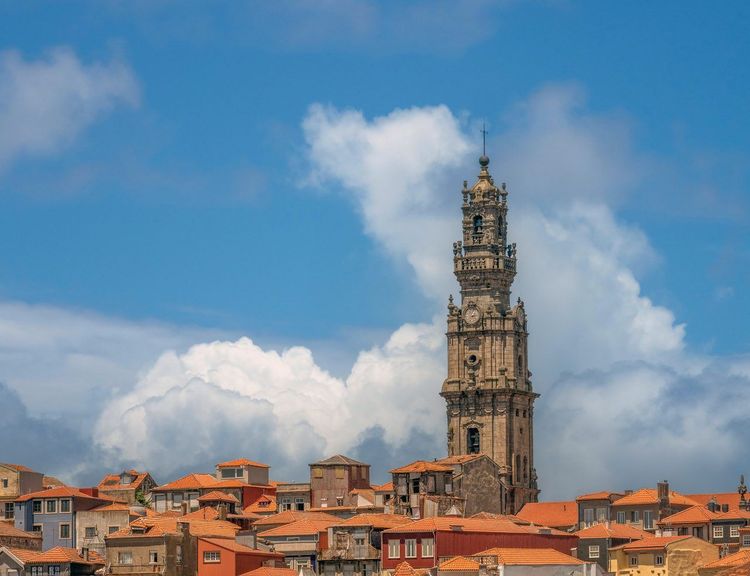
Heading back up towards the centre along Rua das Flores, a renovated shopping street lined with boutiques and cafés, you reach the Torre dos Clérigos, a Baroque tower of around 75 metres built in the 18th century by Italian architect Nicolau Nasoni. The roughly 240 steps to the top are worth the effort: the view takes in the entire old town, the river, and on a clear day, the mouth of the ocean. Book a time slot online in high season – queues on site can exceed 45 minutes.
Two azulejo facades are worth a detour: the Igreja do Carmo, a short walk from the tower, whose entire side wall is tiled in blue and tells the story of the founding of the Carmelite order, and, further east near the Bolhão market, the Capela das Almas, a more modest chapel on Rua de Santa Catarina whose panels, installed in 1929, depict the lives of Saint Francis of Assisi and Saint Catherine. Both facades can be admired for free from the street, taking about five minutes each, making them easy stops to fit in between longer visits.
Round off this first part of the day at São Bento station (Praça de Almeida Garrett, 4000-069 Porto, rated 4.7/5 on Google with 6,314 reviews), a ten-minute walk away. The entrance hall, decorated with 20,000 azulejos installed between 1905 and 1916, traces the military and railway history of Portugal across its four walls. The station is still in service: regional trains to Guimarães depart roughly every hour, those to Braga slightly more frequently. A quick glance at the departure board in passing is enough to check times if you're considering one of those excursions for an extra day.
It's no coincidence that the Ryo audio guide for Porto connects São Bento station, the Igreja dos Carmelitas, the Torre dos Clérigos, the Ribeira, and the cathedral in a single loop, with each azulejo facade narrated with its precise history – so you're never photographing a wall without knowing what it depicts. Following the Ryo audio guide for Porto lets you move through these stops, and around twenty more, across 7.2 km on foot without retracing your steps.
Day 1, Late Afternoon: Crossing the Ponte Dom Luís I and Heading to Vila Nova de Gaia
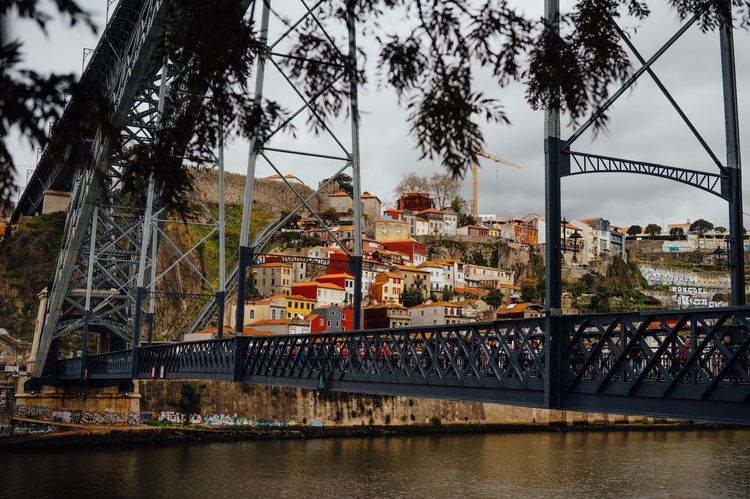
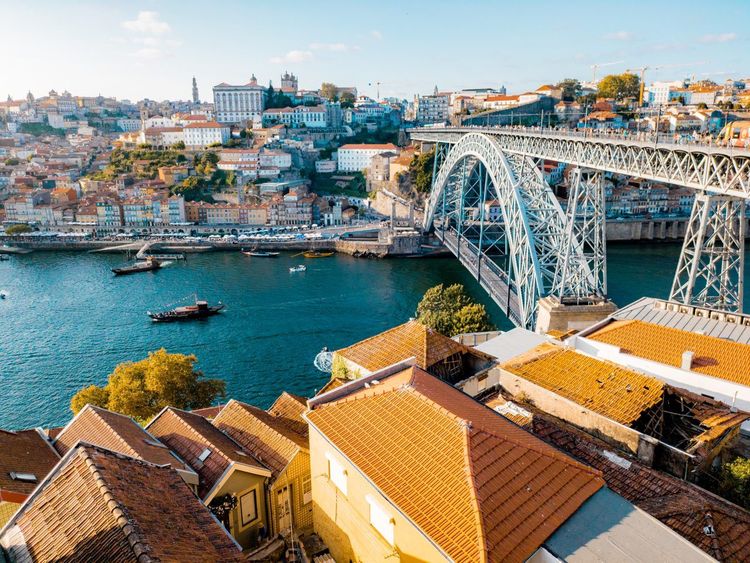
The Dom Luís I bridge (Ponte Luiz I, 4050 Porto, rated 4.8/5 on Google with 98,147 reviews) should be crossed from the top, not the bottom. This is the most common mistake made by visitors in a hurry: the lower deck, closer to the river, is used by cars and some pedestrians, but it's the upper deck – reserved for the metro and pedestrians – that offers the real view. Inaugurated in 1886 and designed by Théophile Seyrig, a former associate of Gustave Eiffel, the bridge carries its upper deck about 45 metres above the Douro, with a metal arch spanning 172 metres, a record for its time.
The crossing on foot takes about ten minutes, not counting the obligatory photo stops in the middle of the bridge, where the view opens simultaneously onto the Ribeira on one side and the cellars of Vila Nova de Gaia on the other. For the most sought-after shot, the one that frames both banks at once, position yourself a third of the way along the deck on the Ribeira side rather than dead centre: the perspective on the coloured houses gains more depth from there. Keep an eye on the metro, though, which crosses the same deck every few minutes; it doesn't travel fast, but the space reserved for pedestrians is narrow in places.
On the other side, Vila Nova de Gaia shifts to a completely different register. The steep lanes give way to long flat quays lined with the illuminated signs of the great port wine houses – Graham's, Ferreira, Ramos Pinto, Sandeman – arranged along the riverfront. This is where wine, once transported from the Douro Valley aboard flat-bottomed barcos rabelos, was stored in hillside cellars before being exported.
If time allows, end the day with a simple stroll along the quay, without necessarily entering a cellar – save that for the following morning, when you're fresher for tasting. The sunset over the Ribeira, seen from Gaia, is one of the best free moments of the trip. A bar terrace on the heights of Gaia is a good spot to extend the evening with a glass of white port as an aperitif – less well known than tawny but more refreshing in summer.
That same upper deck of the bridge features in the Ryo audio guide route, with an audio stop dedicated to the Dom Luís I bridge followed by a commented viewpoint over the Gaia cellars: a useful complement for those who like to understand what they're looking at before taking the photo.
Day 2: Wine Cellars in Vila Nova de Gaia and a Douro River Cruise
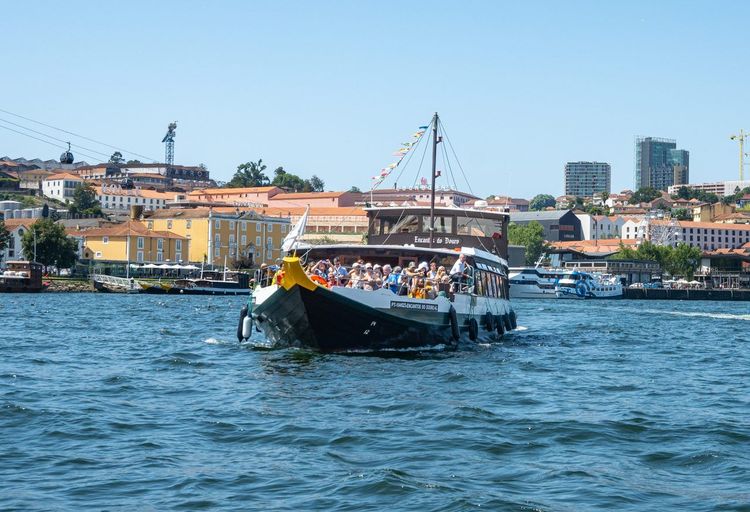
Day two starts on the south bank, where the bridge left you the previous evening, before heading out onto the water itself.
Vila Nova de Gaia Wine Cellars and Port Wine Tasting
The cellars generally open at 10am, a good time to avoid the groups that arrive late morning from river cruise ships. Three houses stand out for the quality of both their visit and their wine: Graham's, perched at the top of the hill with the best view over the river from its terrace; Ferreira, founded in 1751 and one of the few major houses of Portuguese origin among the British merchants; and Taylor's, founded in 1692 and renowned for its vintages. Sandeman, recognisable by its caped silhouette made famous from the 1920s onwards, places more emphasis on the theatrical side of the visit than on educational depth: a good choice for a first, lively introduction to the world of port wine, less so for exploring the differences between appellations.
Allow 45 minutes to an hour for a standard guided visit, with two to three tastings included depending on the package chosen. Prices generally start at around €20 to €30 per person depending on the house, and climb quickly if older vintages are added. Book online at least the day before in July–August: morning slots, the most pleasant for tasting before the afternoon heat sets in, are the first to go.
If you can only visit one cellar for lack of time, choose one that offers a tasting with explanations of the differences between tawny, ruby, and vintage rather than a purely technical tour of the warehouses. That's often what distinguishes a memorable tasting from a box simply ticked on a visitor's list. To compare the houses one by one, our selection of the best Porto cellars covers formats and atmospheres in detail.
A shorter version of the Ryo audio guide, called the Grand Vintage of the Douro, focuses specifically on the riverbank and the cellars district, for those who only have half a day. Following this Ryo sub-route dedicated to the cellars lets you move between several houses without backtracking between tastings.
The Six Bridges Cruise and the Bolhão Market
In the early afternoon, board the so-called six bridges cruise (seis pontes), which follows the Douro for around 50 minutes, passing under each of the six structures linking the two banks – from the Arrábida in the west to the Freixo in the east, via the Dom Luís I, the Infante, Gustave Eiffel's Maria Pia, and the São João. Tickets, sold along the Gaia quay, generally cost around €15 to €20 and can easily be bought on the spot outside peak season, with no advance booking needed. Some companies also offer a combined cellar and cruise package sold directly on the quays, often slightly cheaper than buying the two separately.
The cruise doesn't replace an upstream excursion into the Douro Valley, but it gives an overall reading of the city that's impossible to get on foot: the gorges that contain the river, the true height of the cellars clinging to the hillside, and the full silhouette of the bridge seen from below.
Back on the north bank, head to the Mercado do Bolhão (Rua Formosa, 4000-241 Porto, rated 4.5/5 on Google with 36,109 reviews), reopened in September 2022 after four years of renovation. The building, completed in 1917 on a market that had been active since the 19th century, now houses fruit, fish, and cheese stalls on the ground floor, and food counters upstairs. It's the ideal spot for a quick lunch on the go or to put together a picnic to take to one of the afternoon viewpoints.
Allow a good hour if you enjoy browsing the stalls: some cheesemakers and charcutiers are happy to offer samples before you buy – don't hesitate to ask. This lighter second half of the day is the perfect lead-in to what follows: the sunset viewpoints, detailed in the next section.
The Best Viewpoints in Porto
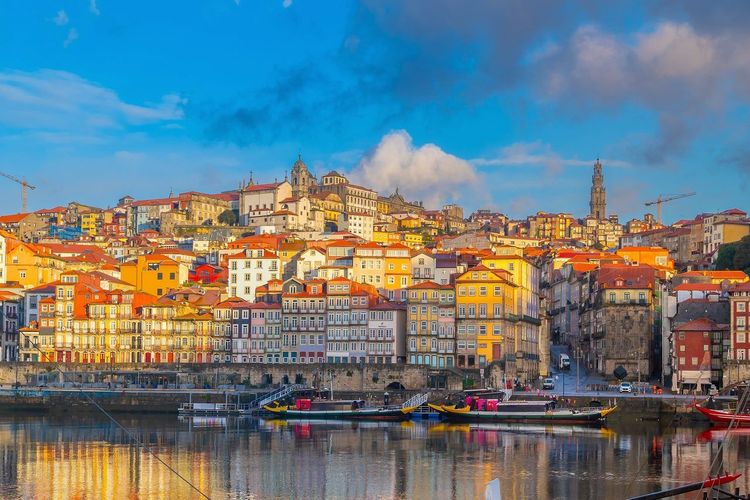
Porto is as much a city to look down on as to walk through, and it offers a string of free viewpoints within twenty minutes' walk of each other. Here are the four most worth visiting, ordered to end on the best one at sunset.
In the morning, before the crowds arrive, the Jardim das Virtudes offers an open view over the Douro from terraced gardens set into the hillside. It's also one of the few viewpoints where you can sit on the grass, away from the railings crowded with cameras. Bring a takeaway coffee – there's no kiosk on site.
To spare your legs between the river and the heights, two mechanical options exist. The Funicular dos Guindais, inaugurated in 1891, closed two years later after an accident and rebuilt in 2004, connects the Ribeira to the Batalha neighbourhood near the Sé in under three minutes for a few euros. On the Gaia side, the cable car glides over the cellars between the riverside quay and the Jardim do Morro in five minutes, with a bird's-eye view over the rooftops, for around €7 one way.
In the late afternoon, the Miradouro da Vitória (Rua da Vitória, 4050-593 Porto, rated 4.5/5 on Google with 6,975 reviews), tucked into the lanes of the former Jewish quarter between São Bento and the Torre dos Clérigos, frames the cathedral, the Ribeira rooftops, and the Gaia cellars without the crowds that usually cluster at the better-known viewpoints.
Save the best for last, though: the upper deck of the Dom Luís I bridge, already crossed on day one, remains the most spectacular viewpoint at sunset, when the low light turns the Ribeira facades orange. For the reverse view, the Jardim do Morro and the Serra do Pilar monastery belvedere, at the Gaia end of the upper deck, also draw crowds at that hour. Between June and August, sunset falls roughly between 8:30pm and 9:10pm, leaving plenty of time to dine afterwards at one of the neighbourhood tascas. In winter it drops as early as 5:30pm, a detail worth factoring in when planning the day one schedule outside high season.
The Ryo audio guide links the Miradouro da Vitória, the Saint Lawrence belvedere near the cathedral, and two commented viewpoints over the Ribeira and the Gaia cellars in a single coherent walk, without having to work out the shortest path between each viewpoint yourself – which saves precious time on an already full day.
If You Have an Extra Day: the Douro Valley, Guimarães, or Braga
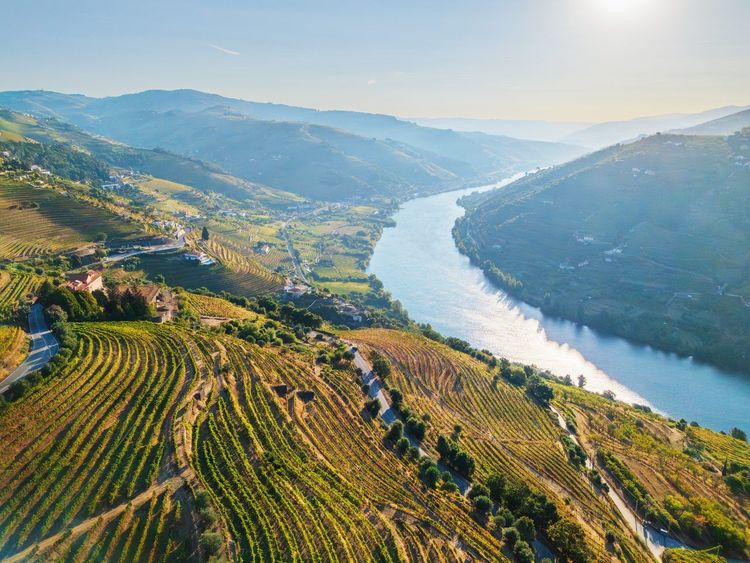
Two days cover the essentials of Porto, but the surrounding region offers more than enough to justify a third day, or even a fourth depending on your interests.
A Day Trip to the Douro Valley
The Douro Valley, UNESCO-listed since 2001 for its terraced vineyard landscape, begins in earnest around Peso da Régua, about two hours by train from São Bento station. The line follows the river for much of the journey, making it one of the most photogenic train rides in Europe, at no extra cost over a standard ticket. Peso da Régua, often cited as the gateway to the valley, is quicker to reach but offers a less spectacular landscape than Pinhão, situated about thirty minutes further along the same line.
On arrival, two options are available depending on how much time you have. For a day trip from Porto, it's better to book an organised excursion that includes transport, a visit to a quinta (wine estate) with tasting, and often a short cruise on the river between Pinhão and Peso da Régua – budget €90 to €130 per person. For more independence, the train alone to Pinhão, the historic heart of the vineyard, allows you to visit one or two quintas on foot or by local taxi at a much lower cost.
Plan for the full day if you're going without an organised excursion: train connections limit the number of return trips possible in a single day, and the beauty of the landscape deserves not to be rushed in any case. For an unguided return trip, aim for a train leaving São Bento before 9am, as return connections become sparse after 5pm.
Guimarães and Braga, Birthplaces of Portugal
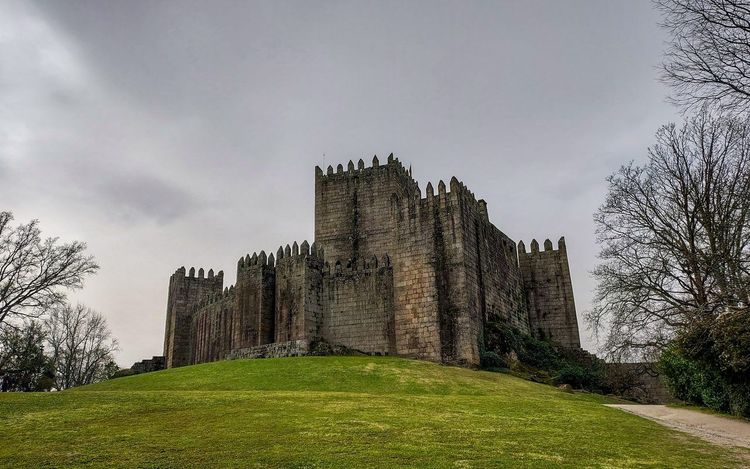
Two cities, roughly one hour to one hour fifteen minutes by train from São Bento, tell the story of the country's birth in ways that Porto's northern capital cannot.
Guimarães, often called the cradle of Portugal, is associated with Afonso Henriques, the country's first king, who is said to have been born there in the early 12th century. Its castle, founded in the 10th century by Countess Mumadona Dias, its ramparts, and its UNESCO-listed historic centre (since 2001) can be comfortably visited in half a day. The Praça de Santiago, lined with half-timbered houses, is the best starting point for a free-form stroll.
Braga, served by another rail branch, plays a different role: Portugal's religious capital for centuries, it is home to the Bom Jesus do Monte sanctuary (Estrada do Bom Jesus, 4715-056 Braga, rated 4.8/5 on Google with 38,909 reviews), famous for its 116-metre Baroque staircase that zigzags between fountains symbolising the five senses. You can climb on foot in about twenty minutes or take the funicular that has been running since 1882, considered the oldest water-counterbalanced funicular still in operation in the world. The sanctuary has been UNESCO-listed since 2019.
Combining both excursions in a single day with a return to Porto in the late afternoon is difficult: it's better to choose one or the other, or stay a night if your schedule allows. The two cities are not connected by a direct rail line, but buses make the journey in about thirty minutes, meaning that with an early start, the most organised travellers can do both in a single day – at the cost of a more demanding pace. Our dedicated article on Guimarães and our article on Braga each outline a full day's programme.
For those who'd rather stay in Porto than head out on an excursion, the ocean is a quick alternative: the beach at Matosinhos, reachable by metro (blue line A to Matosinhos Sul, about thirty minutes from the centre), makes for an easy afternoon with your feet in the sand and a grilled fish lunch at one of the seafront restaurants, among the best in the region. The historic tram number 1 runs along the Douro from the Ribeira to Foz do Douro, where the river meets the ocean, and our guide to Porto's beaches covers the best swimming options.
And if you'd rather stay in the city after all, an extra day is the perfect opportunity to follow the Ryo audio guide for Porto in its entirety at your own pace: 29 stops over 7.2 km, including the Palácio da Bolsa, the Igreja de São Francisco, and the Café Majestic, which the two-day programme leaves aside.
What to Eat in Porto: Specialities and Good Addresses
Porto's cuisine doesn't deal in subtlety. Historically a working-class and port city, it developed a hearty gastronomy designed to feed dock workers rather than impress visitors, which is why its most iconic dishes remain just as substantial today.
The francesinha is the best-known example: a sandwich stacked with ham, linguiça, steak, and sausage, covered in melted cheese and drowned in a spicy beer-and-tomato sauce. Born in the 1950s, inspired by the croque-monsieur by an emigrant who had returned from France, it now comes in dozens of variations across the city, more or less spicy depending on the restaurant. Expect to pay €8 to €14, with a fried egg often offered as an extra.
Less well known but just as typical, tripas à moda do Porto gives the city's inhabitants their nickname: tripeiros, literally tripe-eaters. This dish of tripe slow-cooked with white beans, chorizo, and rice dates back, according to tradition, to 1415, when the city is said to have handed over its finest cuts of meat to the fleet setting off to conquer Ceuta, keeping only the offal for itself. It's found mainly in family-run tascas rather than in tourist restaurants.
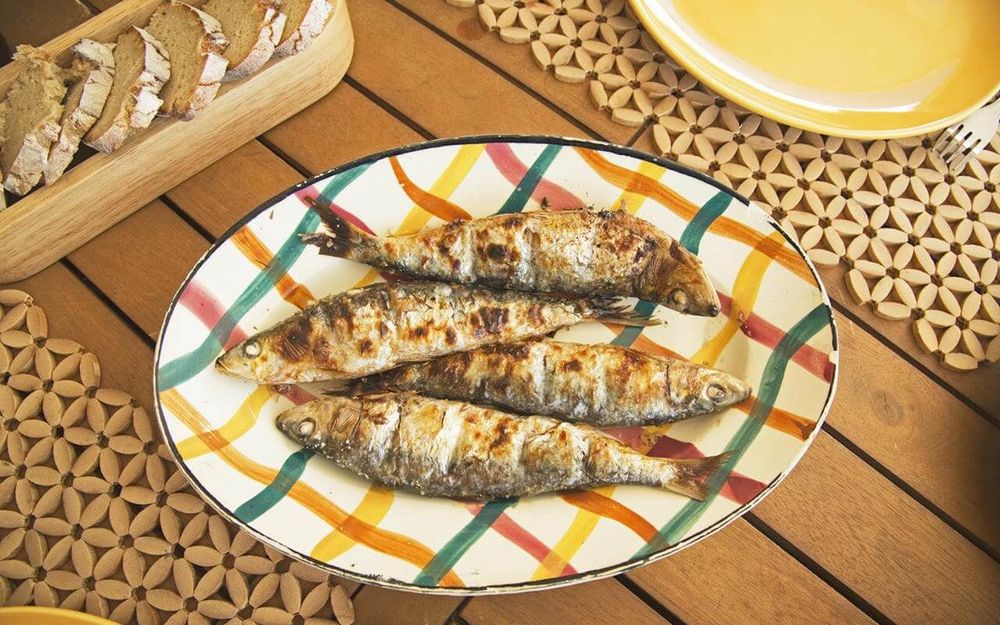
For a lighter meal, fish is a safe choice across the city: bacalhau in all its forms, grilled sardines in summer, or poulbo à lagareiro drizzled with olive oil. The tascas around the Bolhão market generally charge lower prices than those in the Ribeira, at comparable quality. Wine is the natural companion to these hearty dishes: a light, slightly sparkling vinho verde pairs well with grilled fish, while a fuller-bodied Douro red holds its own comfortably against a francesinha. In most tascas, house wine is served by the glass for €2 to €3, without always appearing on a written menu.
On the sweet side, pastéis de nata are available in every bakery, and two well-known Lisbon brands have opened outlets in Porto: Manteigaria, a short walk from the Bolhão market, and Fábrica da Nata on Rua de Santa Catarina. Several pastry shops compete for the title of best address in the city, with queues that vary by the hour: go mid-morning, between two visits, rather than in the early afternoon when demand peaks. A pastel is best eaten warm, dusted with cinnamon, with a short espresso – never cold.
Finally, for putting together a takeaway lunch to enjoy at one of the afternoon viewpoints, the Mercado do Bolhão is the most practical option: sheep's cheese, charcuterie, seasonal fruit, and fresh bread are all available at reasonable prices, far from the fixed-price tourist menus lining the busiest streets. Several other specialities and addresses are worth seeking out if you're staying more than two days, particularly around the Bonfim neighbourhood, more residential and less touristy: our top 10 Porto culinary specialities rounds out this overview.
Where to Stay in Porto: Neighbourhoods and Good Addresses
The choice of neighbourhood depends mostly on the pace you want to set for these two days: staying in the heart of the scenery, or stepping back a little for a quieter night's sleep.
The Ribeira and the historic centre put everything within walking distance: the cathedral, the Torre dos Clérigos, and the Dom Luís I bridge are all reachable in ten to twenty minutes on foot. The drawback is the ubiquitous steps, which are not well suited to heavy luggage or reduced mobility, and a sometimes noisy atmosphere on summer evenings. Expect to pay from €80–100 per night for a decent hotel in high season, more for a river view.
Vila Nova de Gaia, on the south bank, offers an interesting compromise: prices there are generally a little lower than in the historic centre, often with a better view of the Ribeira itself – which you obviously can't admire while sleeping inside it. Crossing the Dom Luís I bridge, on foot or by metro, takes under ten minutes to reach the heart of the city. For families, Gaia also offers apartments that are often more spacious than the typical accommodation in the historic centre, where old buildings limit room size; families with young children will also appreciate the relative absence of steps along the quays, in contrast to the steep lanes of the Ribeira.
For a more affordable or quieter stay, the Boavista neighbourhood, around the Casa da Música, suits those who prioritise value for money and don't mind fifteen minutes by metro to reach the historic centre each morning. It's also where the city's most contemporary addresses are concentrated, including design hotels.
Whatever neighbourhood you choose, check for a lift or the absence of exterior staircases before booking: many of Porto's old buildings, converted into tourist accommodation, have kept neither, a detail that weighs heavily after a full day's walking on uneven cobblestones.
In high season, between June and September, book at least six weeks in advance: supply in the historic centre, made up largely of small old buildings, is limited, and the best addresses fill up well before summer.
Practical Information for Visiting Porto in 2 Days
A few key figures to help finalise the organisation of this short trip.
How to Arrive and Get Around in Porto
Porto is largely explored on foot: the UNESCO-listed historic centre effectively limits intensive traffic, and the distances between the main sights rarely exceed 20 minutes' walk. For longer journeys, such as returning from Matosinhos or the airport, the metro remains the most reliable option, with a multi-line network covering the wider city.
The Andante card, rechargeable and valid on all networks (metro, bus, funicular), costs €0.60 to purchase and works by zone: Z2 for the city centre, Z4 for the airport. The Andante 24 pass, valid for 24 hours in the chosen zone, becomes worthwhile from three or four journeys in a day. Tickets are bought at automatic machines in the stations, by cash or card.
For crossing between the two banks, always consider the Dom Luís I bridge over the funicular or cable car if you're not in a hurry: it's free, panoramic, and barely longer than the paid alternatives.
Budget and Best Time to Visit Porto
Porto remains one of the least expensive cities in Western Europe for the level of heritage it offers. A daily budget of €60 to €90 per person comfortably covers mid-range accommodation, two meals at tascas, a cellar visit with tasting, and public transport. Budget travellers, in a dorm and eating at neighbourhood tascas, can get by on around €40–50 per day.
In terms of seasonality, May, June, and September offer the best compromise: temperatures around 20–25°C, moderate crowds, and prices still reasonable before the summer peak. July and August bring sometimes oppressive heat (30°C and above) and maximum crowds, particularly at the viewpoints and in cellar queues. Winter, from November to March, is mild compared to the rest of Europe but rainy: expect rain almost every other day, which can complicate a visit packed into just two days.
Portugal uses the euro, which simplifies things for visitors from France, Belgium, or Spain, with no currency exchange needed. Bank cards are accepted almost everywhere, including for small amounts at the most modest tascas, though keeping some cash is useful for markets and certain ATMs. Porto is one of Europe's safest cities for visitors, with petty crime largely limited to pickpocketing in the most touristy areas such as the Ribeira in high season – a risk easily managed by staying aware of your belongings in crowds.
If your dates are flexible, opt for a weekday stay rather than a weekend: accommodation prices rise noticeably on Friday and Saturday nights, and the most in-demand cellars fill up faster for Saturday morning slots.
FAQ
How Many Days Do You Need to Visit Porto?
Two full days cover the essentials: the old town on the north bank on the first day, the wine cellars and a Douro cruise on the second. That's a realistic minimum, not an extreme rush. Three days allow you to add a trip to the Douro Valley, Guimarães, or Braga without feeling hurried. With fewer than two days, you'll have to skip either a cellar visit or one of the most iconic viewpoints, which is a shame for a first visit to the city.
How Do You Get Around Porto Without a Car?
Walking is the main way to get around, as the historic centre can be explored entirely on foot. For longer journeys, the metro and bus network covers the city well, with the rechargeable Andante card serving as a single travel pass. The Dom Luís I bridge can be crossed on foot for free between the two banks, a free alternative to the funicular or cable car. A car offers no advantage in the city and mainly creates parking headaches in the narrow lanes of the old town.
What Is the Best Neighbourhood to Stay in Porto?
The historic centre and the Ribeira suit those who want everything within walking distance, despite the many steps. Vila Nova de Gaia offers lower prices and a direct view of the Ribeira, ten minutes on foot from the centre via the Dom Luís I bridge. Boavista, further out, suits tighter budgets or those who prefer contemporary accommodation, at the cost of an extra fifteen minutes by metro each day to reach the main sights.
Do You Need to Book the Douro Cruise in Advance?
Outside peak season, the six bridges cruise can easily be bought on the spot along the quays of Vila Nova de Gaia, with no advance booking required. In July–August or on Portuguese public holidays, it's better to book online the day before to avoid long queues at the ticket booths. Longer excursions into the Douro Valley, including transport and a quinta visit, do require advance booking, as places are limited to a few dozen participants per departure.
What Budget Should You Plan for 2 Days in Porto?
Budget between €60 and €90 per person per day for a comfortable stay, including mid-range accommodation, two meals at a tasca, a cellar visit with tasting, and public transport. A tighter budget of around €40–50 per day is possible in a dorm and by favouring neighbourhood spots over those in the Ribeira, where prices rise noticeably due to tourist footfall. The most variable expense is accommodation, which can double between low and high season.
What Is the Best Time of Year to Visit Porto?
May, June, and September offer the best balance between pleasant weather, moderate crowds, and still-reasonable prices. July and August bring intense heat and peak crowds at the most popular sites. Winter is mild compared to the rest of Europe but rainy almost every other day, which can disrupt a programme packed into just two days. Avoiding weekends, whatever the season, also noticeably reduces crowds at the busiest sites.
Porto or Lisbon: Which City Should You Visit First?
The two cities complement rather than compete with each other: Lisbon spreads its hills and trams across a much larger area, while Porto concentrates its heritage in a compact historic centre that can be explored on foot in two days. For a first trip to Portugal with limited time, Porto lets you see everything without feeling scattered; for a longer stay, combining both cities, about three hours apart by train, remains the best option.
Two days in Porto require choices, but rarely regrets: the city lends itself particularly well to a short format, with its major sites clustered close together. Between the UNESCO-listed old town, the centuries-old cellars of Vila Nova de Gaia, and the free viewpoints over the Douro, this condensed itinerary gives a faithful picture of what makes Porto different from the rest of Portugal: rougher than Lisbon, more rooted in its relationship with work and wine.
To make the most of every moment across just two days, the Ryo audio guide for Porto is the most practical companion: 29 audio stops on a 7.2 km loop, where each halt is listened to at walking pace, without having to check a map at every corner or memorise the history of every azulejo facade. Everything you need to fully enjoy the stay, one earphone at a time.
À lire également