© Shutterstock
 Votre guide Ryo
15 Free Things to Do in Seoul in 2026: Palaces, Hikes and Hidden Alleys
Seoul carries a reputation as one of Asia's pricier capitals, yet most of what makes the city unforgettable costs nothing at all. Free things to do in Seoul start the moment you step outside a subway exit: a six-century-old palace guarded by soldiers in full armor, a mural-covered hillside village stacked above the old town, a concrete stream bed that somehow turned into the prettiest walk in the financial district. Ryo's Seoul audio-guided tour threads a good number of these stops into a single route you can follow at your own pace, so watch for it below whenever a neighborhood lines up naturally with your day.
A few teasers before the full list: rent a hanbok for the afternoon and the entrance fee at the grand palaces disappears entirely. The last Wednesday of every month is Culture Day, when palaces open their gates without a ticket. After sunset, Banpo Bridge becomes the world's longest bridge fountain, a choreographed water-and-light show set to music that costs nothing to watch from the riverbank. And a granite ridge inside Bukhansan National Park delivers a skyline view that rivals the paid deck at N Seoul Tower, minus the admission price. That is the shape of this guide: palaces, temples, museums, hikes, markets and neighborhoods, organized so you can build a no-cost itinerary without missing the things locals actually recommend.
1. Explore Seoul's Royal Palaces for Free
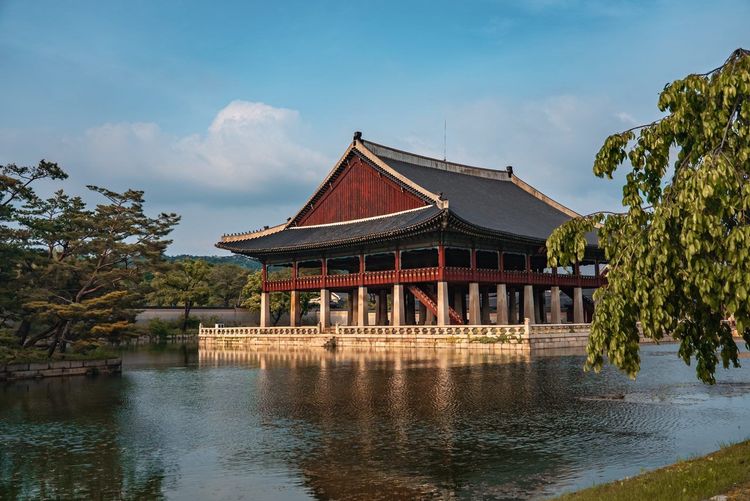
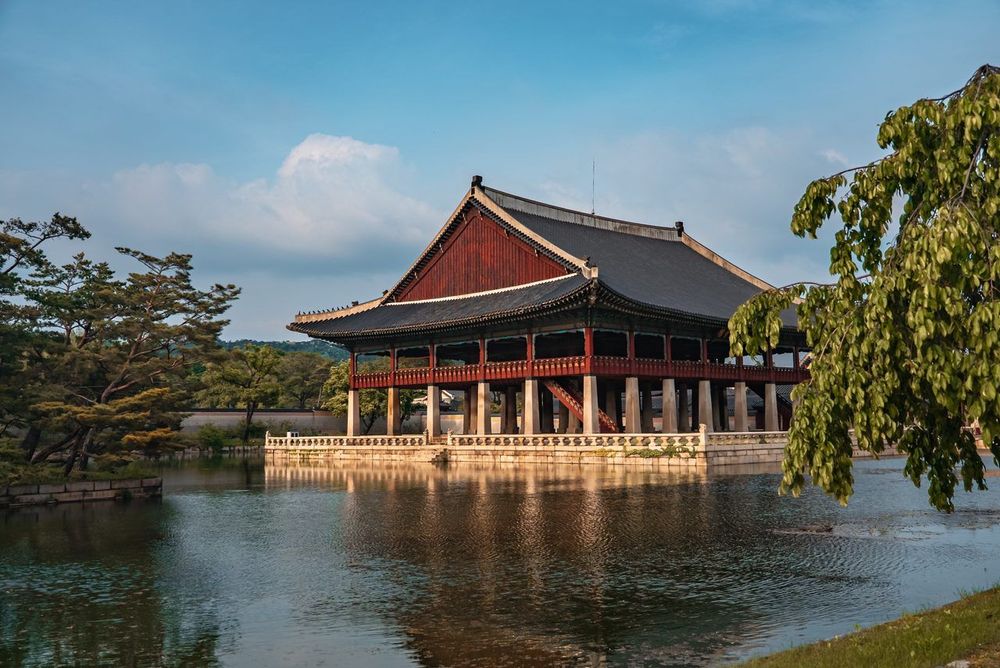
Seoul's Joseon-dynasty palaces anchor almost every list of things to do in the city, and three separate tricks let you see the best of them without paying full admission. Start with the biggest, then work outward to the quieter second palace and the hanbok rental shops that make the others free regardless of the calendar.
Gyeongbokgung Palace and the Changing of the Guard ceremony
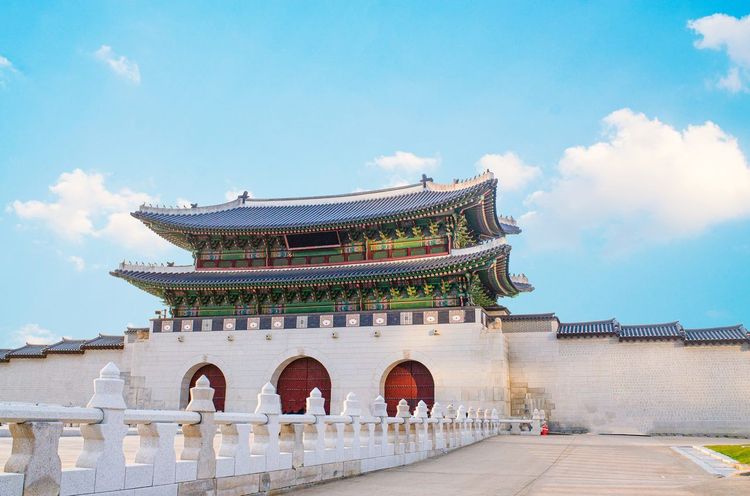
Gyeongbokgung Palace (161 Sajik-ro, Jongno-gu, Seoul, rated 4.6/5 on Google (46 918 avis)) is the largest of Seoul's five grand palaces and the most photographed, with a throne hall, a lotus pond pavilion and mountain ridgelines rising directly behind the roofline. Built in 1395 and rebuilt in the 1860s after centuries in ruins, it still stages a full Changing of the Guard ceremony at 10am and 2pm at the Gwanghwamun main gate, with soldiers in period armor rotating sentry duty to the sound of traditional drums and horns. You do not need a ticket to watch this part; the ceremony happens on the plaza in front of the gate, visible from the street.
Arrive fifteen minutes early if you want photos without a crowd of tour groups pressing against the barrier rope. One detail trips up a lot of visitors: Gyeongbokgung closes on Tuesdays, while the other palaces close on Mondays, so check the day before you plan your morning around it. If you miss the Gwanghwamun ceremony, Deoksugung across City Hall plaza runs its own royal guard changing outside Daehanmun gate several times a day, equally free and usually less crowded.
Gyeonghuigung Palace and free admission days
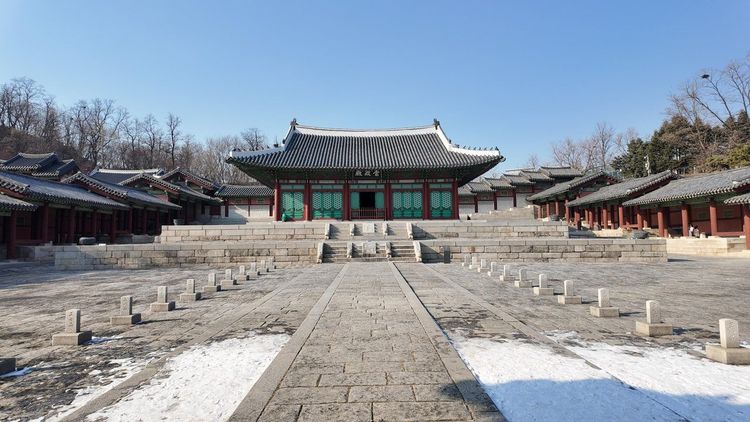
A fifteen-minute walk from Gyeongbokgung sits Gyeonghuigung Palace, the quietest of the five grand palaces and, unlike its larger neighbor, free to enter year-round. Begun as a secondary royal residence in 1617, most of its halls were dismantled during the colonial period, which means what remains today is a compact handful of reconstructed buildings climbing a slope behind a wide courtyard. Few tourists make the detour, which is exactly the point: you get the architecture and the layout of a Joseon palace without the paid-entry crowds.
The Seoul Museum of History sits right beside the Gyeonghuigung grounds, so pairing the two costs nothing beyond the walk between them. If you only have a short window in the Jongno district, this pairing covers palace architecture and a museum stop in under two hours. For the paying palaces, keep two dates in mind: the last Wednesday of each month (Culture Day) and the Seollal and Chuseok holidays, when Gyeongbokgung, Changdeokgung, Changgyeonggung, Deoksugung and Jongmyo Shrine all waive their fees.
Renting a hanbok for free palace entry
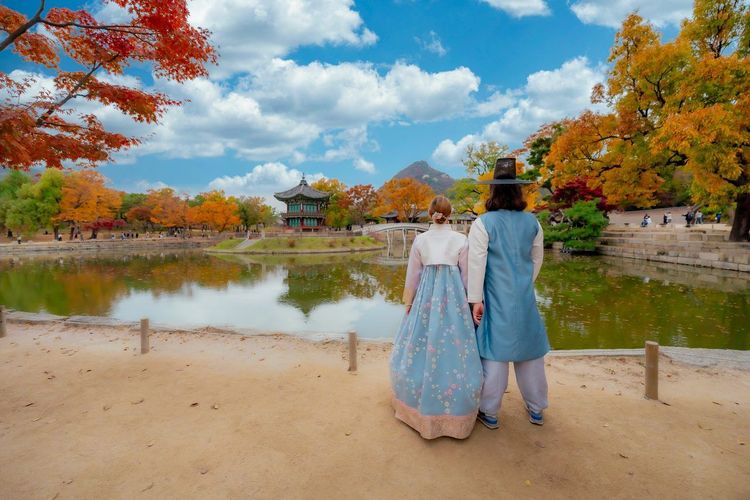
Here is the trick locals actually use: wear a hanbok, the traditional Korean dress, and Gyeongbokgung, Changdeokgung, Deoksugung and Changgyeonggung all waive the entrance fee completely, as does Jongmyo Shrine. Rental shops cluster around the palace walls and typically charge between 15,000 and 30,000 won for a few hours, which still works out cheaper than several separate palace tickets for a group, and the photos are half the reason people do it. Staff will help with the sash and hairpins, and most shops include simple hair accessories in the base price.
The free-entry policy applies on the day you wear it, and most shops want the hanbok back by early evening, so plan your palace order before you change. Ryo's audio-guided route through the palace quarter times its stops around the Changing of the Guard and points out where the hanbok-for-free-entry trick works, which saves you from guessing at the gate.
2. Wander Bukchon Hanok Village and Seoul's Historic Hanok Alleys
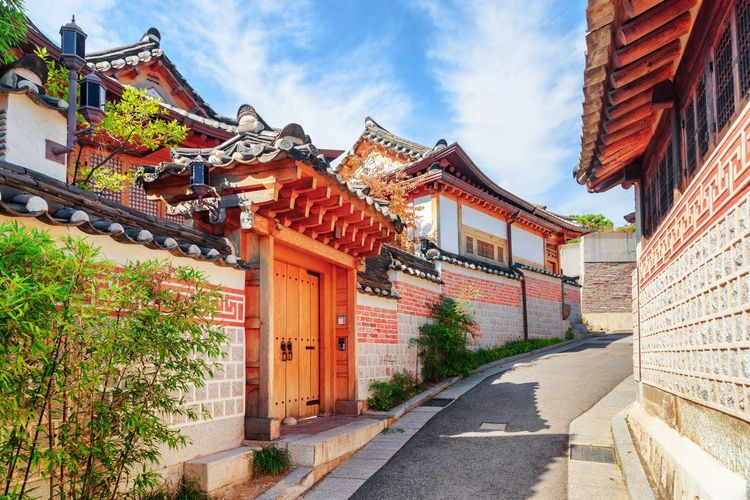
Between Gyeongbokgung and Changdeokgung, a hillside neighborhood of traditional wooden houses survives almost intact, and it connects directly to three more character-filled alleys that rarely make it past the second page of most Seoul guides.
Bukchon Hanok Village's photogenic alleyways
Bukchon Hanok Village) is a working residential neighborhood of roughly 900 hanok houses arranged along steep lanes between the two biggest palaces. People actually live here, and the district now enforces visiting hours in its busiest lanes: tourists may walk the red-zone streets only between 10am and 5pm, and fines apply outside that window. Keep your voice down, skip the doorsteps and never photograph through windows. The best viewpoint sits near Gahoe-dong, where the curved tile roofs stack downhill in a wave pattern with the downtown towers behind them.
Wear flat shoes. The lanes are steep, and several of the best photo points involve climbing a set of narrow stairs wedged between two houses. Before you start, stop by the small Bukchon tourist information booth near Anguk station for a free neighborhood map that marks the eight classic viewpoints.
Ihwa Mural Village, Insa-dong and Ikseon-dong
Fifteen minutes east of Bukchon, Ihwa Mural Village (Ihwa-dong, Jongno-gu, Seoul, rated 4.1/5 on Google (4 821 avis)) climbs a hillside once slated for redevelopment; artists painted the stairwells and retaining walls with murals in 2006, and the neighborhood has stayed a quiet, color-saturated walk ever since, even after some famous murals were painted over following complaints from residents. Downhill toward the palace, Insa-dong runs a single pedestrian street lined with hanji paper shops, tea houses and calligraphy stalls, worth a browse even if you buy nothing; duck into the Ssamziegil spiral courtyard for free craft displays. Ikseon-dong, a few minutes further south, packs dozens of renovated hanok into a few blocks now filled with cafes and small galleries, busiest after dark when the lanes light up.
For a neighborhood this dense with small alleys, having audio cues pointed at the right turn helps more than a paper map. Ryo's shorter audio-guided walk, Land of the Morning Calm, covers the hanok district at an easy pace, with stories about the houses, hanbok etiquette and the best photo angles cued in as you reach each turn.
3. Visit Jogyesa and Bongeunsa Temples
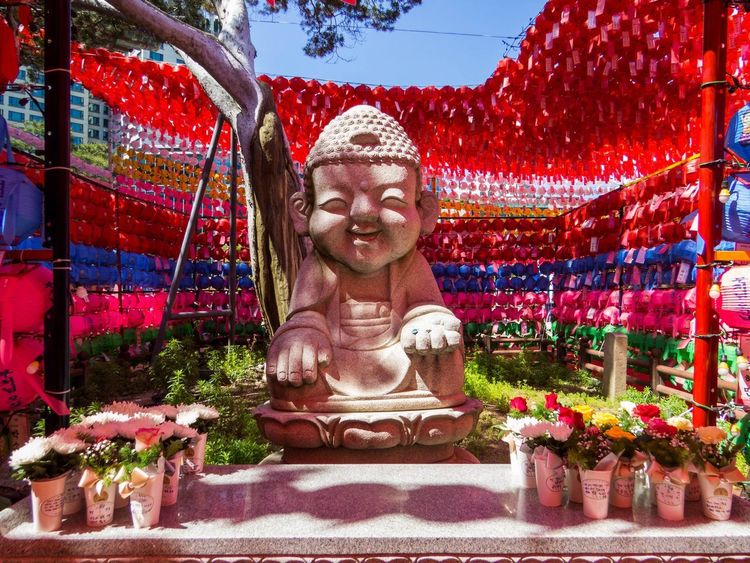
Seoul's two most visited working Buddhist temples sit on opposite sides of the river, and both welcome you free of charge, with no dress code beyond covering shoulders and knees.
Jogyesa Temple in the city center
Jogyesa Temple), tucked a block off Insa-dong, is the head temple of the Jogye Order and the center of the city's biggest Buddhist celebration, Buddha's Birthday, when thousands of paper lanterns fill the courtyard in late spring. The main hall holds three large gilded Buddha statues, and a white pine roughly five centuries old stands in the courtyard, a protected natural monument and one of the oldest living things in central Seoul.
You are welcome to sit quietly at the back of the hall during services, though photography is discouraged while monks are chanting. Visit in the week before Buddha's Birthday and you will also catch the Lotus Lantern Festival parade, which fills Jongno with illuminated floats on a Saturday evening and costs nothing to watch from the sidewalk. Across the street, the Templestay information center has a small free exhibition on monastic life and a cafe where you can ask about short programs.
Bongeunsa Temple near COEX
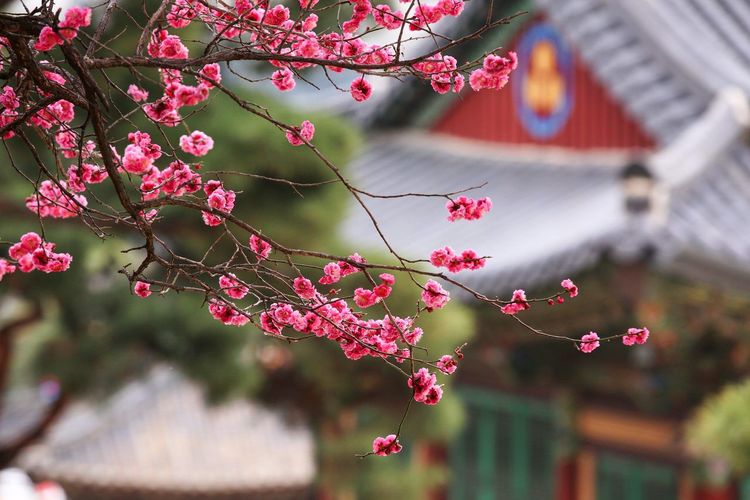
Across the river, Bongeunsa Temple (531 Bongeunsa-ro, Gangnam-gu, Seoul, rated 4.6/5 on Google (8 797 avis)) sits oddly wedged between Gangnam's glass towers and the COEX convention center, a complex founded in 794 that survived the district's entire redevelopment. The contrast is the appeal: a 23-meter stone Maitreya Buddha on one side of the wall, the Trade Tower and the COEX skyscrapers on the other. Jongmyo Shrine, the Joseon royal ancestral shrine back north of the river, rounds out the circuit for anyone curious about Confucian ritual architecture, though it charges a small fee outside free days.
Both temples also run paid temple-stay programs for travelers who want the monastic schedule and a shared meal, typically 50,000 to 100,000 won, but none of that is required to walk through during the day at no cost. At Bongeunsa, the lantern-lit courtyard in May and the quiet hillside path behind the main hall are the two moments worth timing your visit for.
4. Discover Seoul's Free National Museums
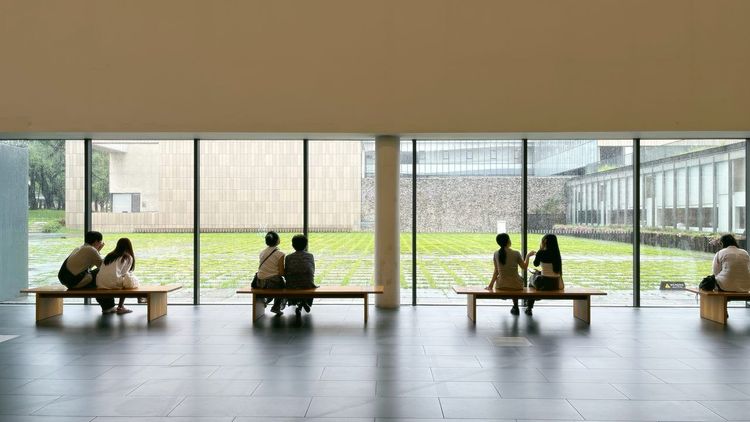
Seoul's museum network is unusually generous: five major collections charge no entry fee for their permanent galleries, covering everything from Silla gold crowns to the invention of the Korean alphabet.
National Museum of Korea's galleries
The National Museum of Korea) in Yongsan is one of the largest museums in the world by floor area and holds more than 400,000 artifacts, though only a fraction sits on display at any time. The permanent collection runs chronologically from prehistoric pottery through Joseon-era painting, and you should not leave without stepping into the Room of Quiet Contemplation, a dimly lit gallery built around two gilt-bronze pensive bodhisattvas, both national treasures.
The grounds deserve time too: a reflecting pond, a stone pagoda garden and a walking path toward Yongsan Family Park, all free to wander after the galleries close. Late openings on Wednesday and Saturday evenings make this a good rainy-night option when the rest of the city has shut.
National Folk Museum and National Hangeul Museum
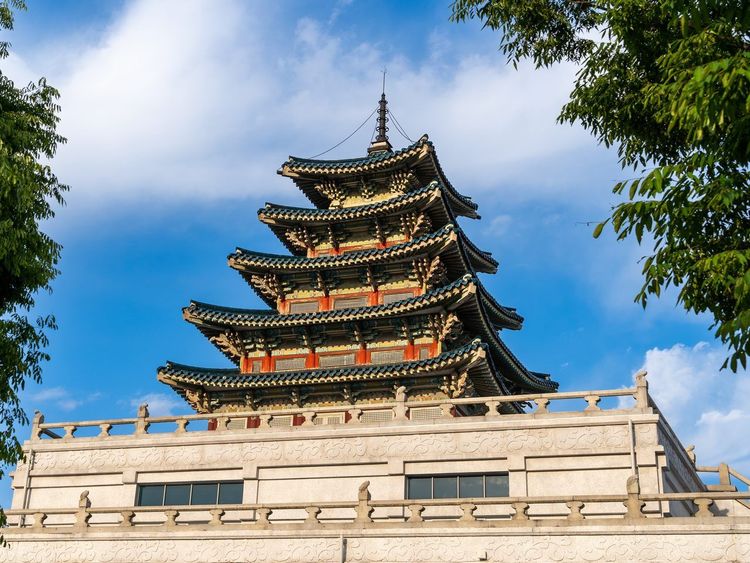
On the Gyeongbokgung palace grounds, the National Folk Museum of Korea recreates a full year of traditional Korean daily life, from farming calendars to wedding customs, and its outdoor street of reconstructed shops is a favorite with families. A short walk from the National Museum of Korea, the National Hangeul Museum) tells the story of the Korean alphabet's creation under King Sejong in 1443, with interactive stations that let you write your own name in hangeul.
Seoul Museum of History and Seoul Museum of Craft Art
The Seoul Museum of History (55 Saemunan-ro, Jongno-gu, Seoul, rated 4.5/5 on Google (5 409 avis)), beside Gyeonghuigung, tracks the capital's growth from a walled Joseon city to a megacity of nearly ten million through a giant scale model, old tram cars and recreated street scenes. Near Bukchon, the Seoul Museum of Craft Art fills the converted buildings of a former girls' high school with exhibitions on ceramics, textiles and metalwork, and it is rarely crowded even on weekends.
Watch the calendar here: the national museums open daily except New Year's Day, Seollal and Chuseok, while the two city-run museums close on Mondays. Budget roughly ninety minutes for each if you want more than a walkthrough, and note that special exhibitions often carry a separate ticket.
5. Hike Namsan Mountain for Skyline Views Near N Seoul Tower
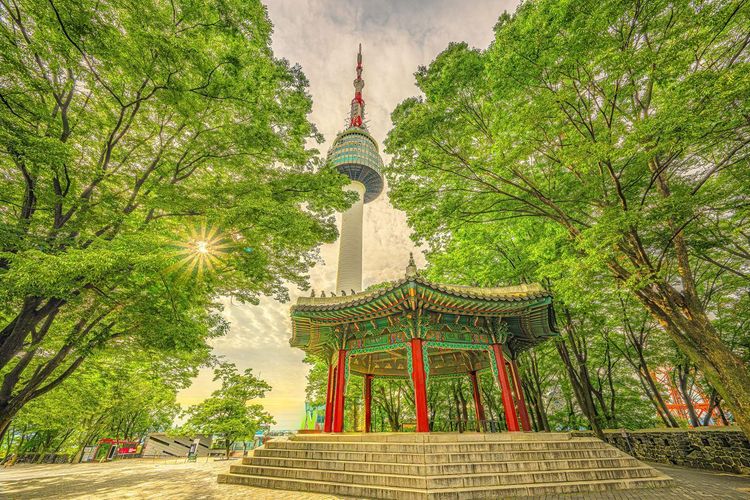
A 262-meter hill in the middle of the city gives Seoul its best free skyline views, no ticket required for the climb itself.
Namsan's hiking trails and the base of N Seoul Tower
Namsan Mountain has marked trails from several sides of the city, and the climb from Myeongdong or the Namsan Library side takes about forty minutes at an easy pace, passing sections of the fortress wall dating to the 1396 construction of Seoul's original city walls. At the summit, N Seoul Tower (105 Namsangongwon-gil, Yongsan-gu, Seoul, rated 4.5/5 on Google (68 395 avis)) marks the high point visually, though the observation deck charges admission; the base plaza, the love-lock fences and the Namsan beacon mounds around it are all free to wander.
If you prefer flat ground, the Namsan Northern Circuit Road is closed to most traffic and loops gently through the forest for about three kilometers, popular with joggers early in the morning and lined with cherry trees in April.
Best free sunset and skyline viewpoints
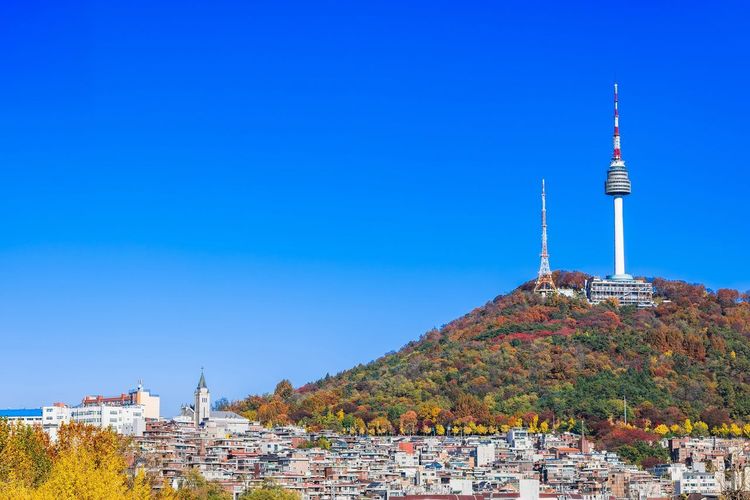
For the sunset itself, skip the crowded terrace in front of the tower and walk a few minutes along the wall trail to a quieter railing, where the Han River catches the last light below the skyline. If you would rather save your legs, the Namsan circulation buses (lines 01A and 01B) climb to the tower base for a standard bus fare, and plenty of visitors walk up and ride down.
Bring a light jacket even in warmer months. Namsan's summit runs several degrees cooler than street level once the sun drops, and the wind picks up noticeably along the open ridge sections.
6. Relax Along the Han River and Catch the Banpo Bridge Fountain Show
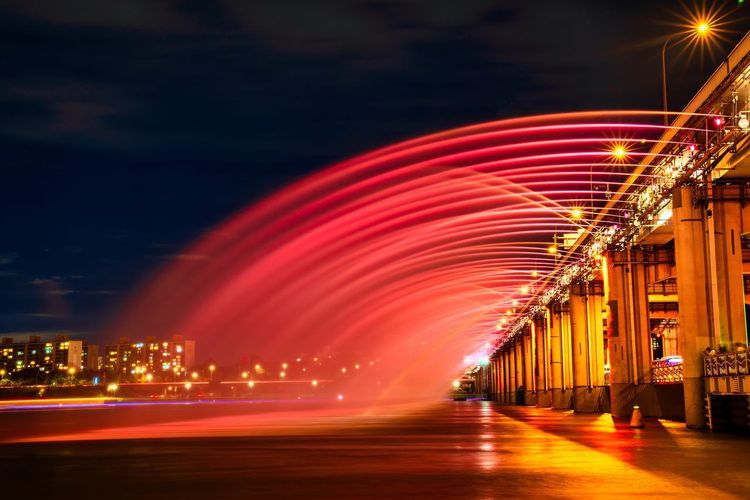
Seoul's river parks turn into the city's living room most evenings, free of charge and open around the clock, culminating after dark in one of the most elaborate public light shows in Asia.
Han River parks for picnics and cycling
The Han River is lined by eleven Hangang parks, and Banpo Hangang Park) is the most popular for an evening picnic, with convenience stores on site selling the instant ramen that has become something of a river-park ritual. Public Ttareungyi bikes and private rentals line the riverside paths, and the cycle route along the water stretches for dozens of kilometers if you want to cover more ground than a walk allows. Families cluster near the fountain; students spread out toward the quieter lawns further from the bridge.
Yeouido Hangang Park, a few stops west, is the other big favorite, especially in early April when the cherry trees along Yunjung-ro behind the National Assembly bloom and the road closes to cars for the spring flower festival.
Banpo Bridge's Moonlight Rainbow Fountain at night
After dark, Banpo Bridge (Banpodaero, Seocho-gu, Seoul, rated 4.4/5 on Google (1 188 avis)) turns on the Moonlight Rainbow Fountain, the Guinness-certified longest bridge fountain in the world, spraying river water in choreographed patterns timed to music and lit in shifting colors. Shows run several times an evening from spring to autumn, each lasting around twenty minutes, and the best unobstructed view is from the Banpo side rather than directly under the bridge.
Arrive thirty minutes early to claim a spot on the steps facing the water; the crowd fills in fast once the sky starts to darken. If you are building an evening around the river, Ryo's Seoul route gives you the city's backstory in audio form before you settle in for the show, so the wait on the steps feels like part of the visit.
7. Stroll Cheonggyecheon Stream and Seoul Forest
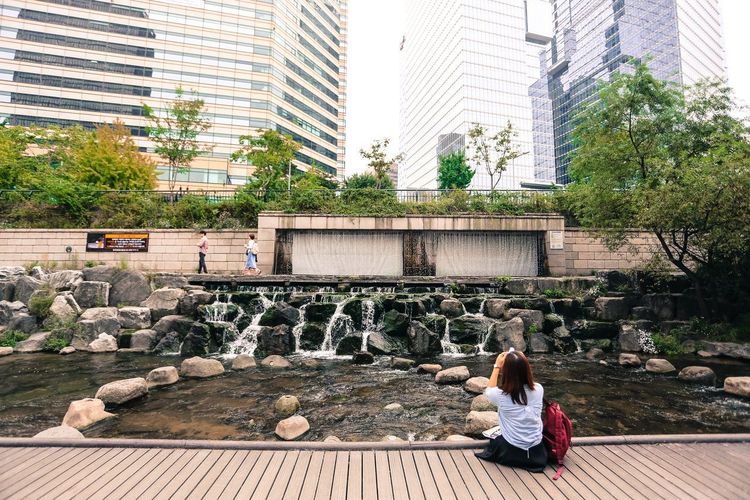
Two green corridors cut through otherwise dense parts of the city, both free, both easy to combine with a half-day downtown.
Cheonggyecheon Stream's urban walkway
Cheonggyecheon Stream) runs for nearly eleven kilometers through downtown Seoul, buried under an elevated highway until a 2005 restoration project tore the road out and brought the water back into daylight. Stepping stones cross the stream every few hundred meters, and the walkway sits a full level below street traffic, which cuts the noise down to almost nothing despite the office towers overhead.
Start at Cheonggye Plaza near Gwanghwamun, where the spiral sculpture marks the source, and you can follow the water east to Gwangjang Market in about forty minutes. In late autumn the upper stretch hosts the Seoul Lantern Festival, when giant illuminated figures float on the stream, free to visit every evening.
Seoul Forest's riverside park
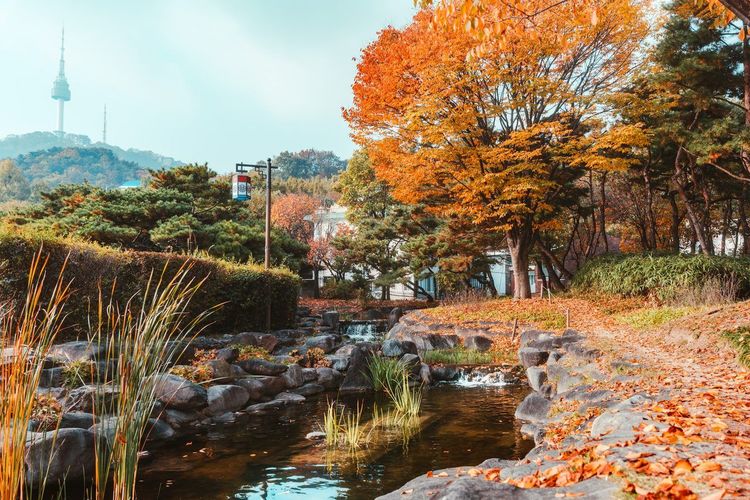
Further east, Seoul Forest (273 Ttukseom-ro, Seongdong-gu, Seoul, rated 4.6/5 on Google (10 949 avis)) spreads across a former racetrack and water-treatment site near the Han River, with a deer enclosure, an insect garden and wide lawns that fill with picnic blankets on weekend afternoons. It borders the Seongsu district directly, which makes it an easy add-on to a cafe-hopping afternoon rather than a standalone trip. You will want to come in April for the cherry blossoms or in late October, when the ginkgo trees along the paths turn bright yellow.
8. Hike Bukhansan and Seoul's Urban Trails
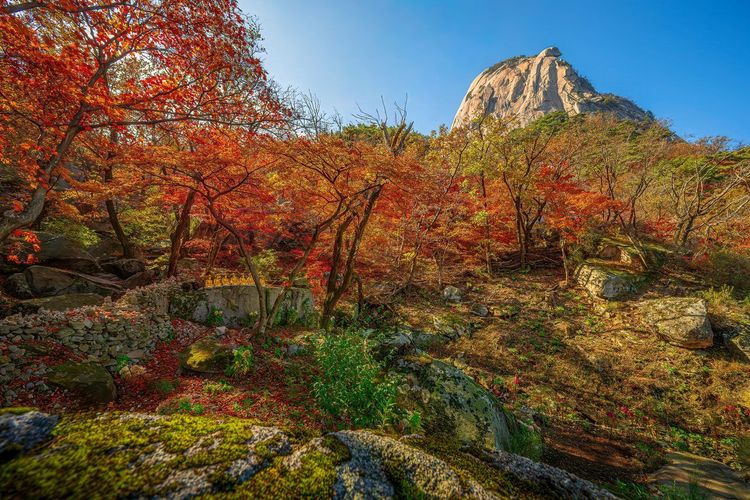
For a city of nearly ten million people, Seoul backs directly onto genuine mountain hiking, with trailheads reachable by subway and no entrance fee at the park gates.
Bukhansan National Park's granite peaks
Bukhansan National Park (262 Bukhansandul-gil, Seongbuk-gu, Seoul, rated 4.6/5 on Google (2 933 avis)) once earned a Guinness listing for the most visitors per square foot of any national park, thanks to granite peaks rising straight out of the northern edge of the city. Baegundae Peak, the highest point at 836 meters, requires a scramble up metal handrails near the summit, rewarded with a 360-degree view across the whole metropolitan area on a clear day.
Start early. The main trailheads get crowded on autumn weekends, when foliage season turns the whole ridge into a slow-moving line of hikers in matching outdoor jackets. Pack water and snacks before you leave the subway, since shops thin out quickly once you pass the trailhead restaurants.
Shorter hiking routes near downtown
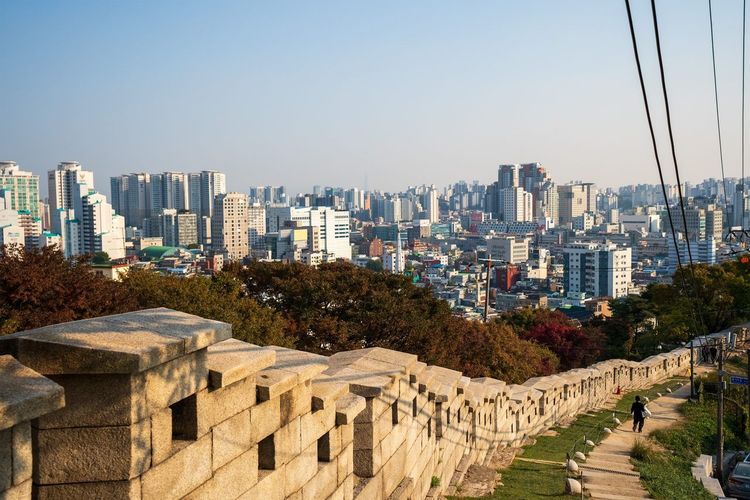
If a full Bukhansan day feels like too much, Inwangsan and Ansan offer two- or three-hour loops closer to the city center, each with rock formations and a fortress wall section, better suited to an afternoon between other sightseeing. The Seoul City Wall trail, the Hanyangdoseong, links Inwangsan, Bugaksan, Naksan and Namsan along roughly 18 kilometers of restored Joseon ramparts; you can walk any segment free of charge, and the Naksan stretch above Ihwa Mural Village is the easiest sunset walk in the city.
9. Browse COEX Mall and Modern Gangnam for Free
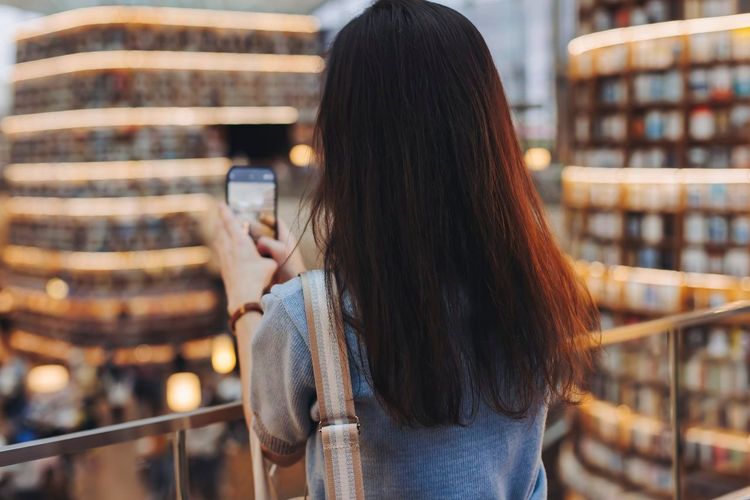
Gangnam's reputation runs toward expensive brunches and department stores, but its best-known indoor landmark costs nothing to wander.
COEX Mall and the Starfield Library
COEX Mall is one of Asia's largest underground shopping complexes, and its centerpiece, the Starfield Library, stacks 13-meter-tall bookshelves under a glass skylight, open to anyone who wants to sit and read regardless of whether they buy anything. The aquarium and casino inside COEX charge separate admission, but the library, the plaza and most of the mall's public space do not.
Come on a weekday morning if you want a seat; by mid-afternoon on weekends the benches fill with people photographing each other in front of the shelves. Outside, the bronze Gangnam Style hands sculpture on the COEX plaza is a free photo stop most visitors find by accident.
Gangnam's free public spaces
Outside COEX, Gangnam's plazas double as informal galleries. The giant digital billboard on the corner of the K-POP Square plays wave and waterfall animations that went viral, and you can watch them from the street for free. Department store window displays along the main avenues, especially around the holidays, draw their own crowd of people simply walking past to look, no purchase required.
10. Soak Up Seoul's Trendy Districts: Hongdae, Myeongdong and Seongsu
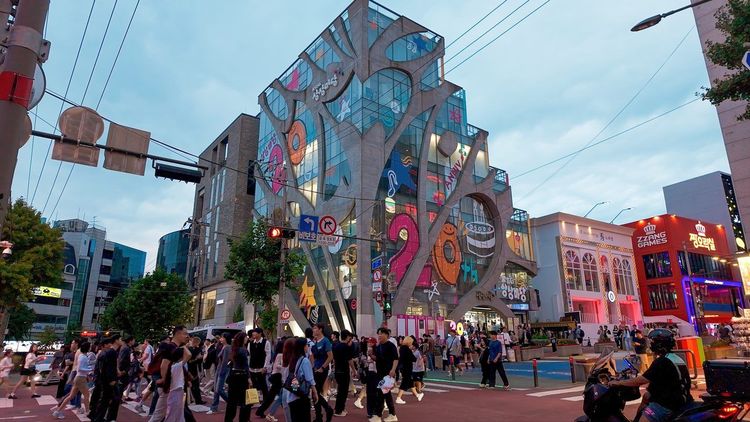
Three neighborhoods carry most of Seoul's youth culture reputation, and all three reward an aimless afternoon walk more than a planned itinerary.
Hongdae's street performances and busking
Hongdae, the area around Hongik University, turns into an open-air stage most weekend evenings, with buskers, dance crews and sometimes full bands setting up along Eoulmadang-ro and in the small park near the subway exit. None of it requires a ticket, and the crowd tips what it wants rather than paying a cover charge. Nearby Yeonnam-dong, along the Gyeongui Line Forest Park, carries a calmer version of the same scene, with locals picnicking on the grass strip after work.
Myeongdong's window shopping and people-watching
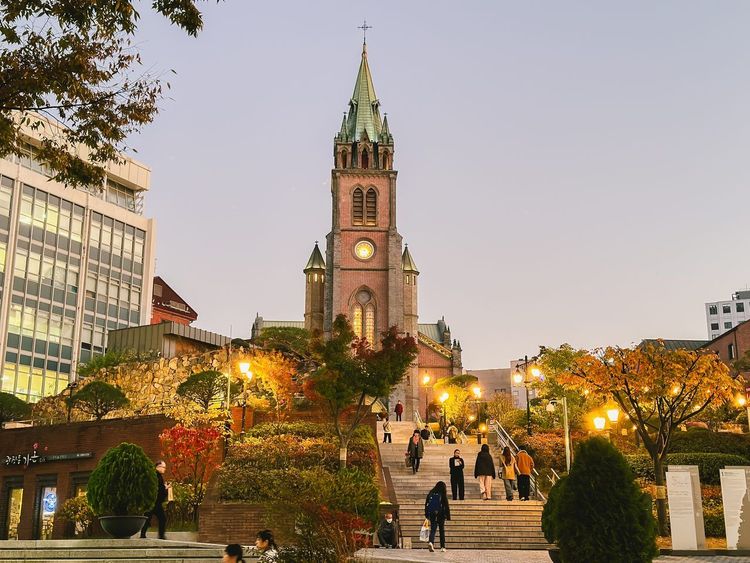
Myeongdong (Myeongdong-gil, Jung-gu, Seoul, rated 4.3/5 on Google (60K reviews)), Seoul's best-known shopping district, turns its main pedestrian street into a food-stall and cosmetics-sample gauntlet every evening, and simply walking its length without buying anything counts as a reasonable Seoul activity in its own right. Cosmetics shops hand out samples freely, and the crowd itself, a mix of tourists, students and shop staff calling out promotions, is most of the entertainment. At the top of the hill, Myeongdong Cathedral, Korea's first Gothic-style church, opens its doors to quiet visitors at no charge.
Seongsu's converted-warehouse cafes and galleries
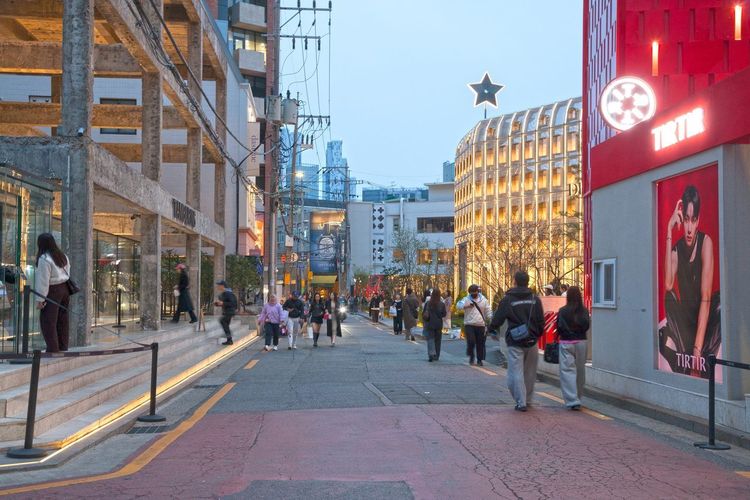
Seongsu, once a shoe-manufacturing district, has spent the last decade converting its brick warehouses into design studios, flagship stores and cafes, and many of them run ground-floor galleries as marketing spaces you can walk through freely. International fashion and beauty brands use the neighborhood for pop-up installations that are free to enter and photograph, changing every few weeks.
These three districts sit far apart, so you will save energy by giving them separate evenings. Ryo's audio-guided route stays in the historic core instead, which makes it a good daytime counterpart: history and palaces with the guide in your ears by day, buskers and pop-ups on your own after dark.
11. Step Into Seoul's History at Seodaemun Prison and Donuimun Museum Village
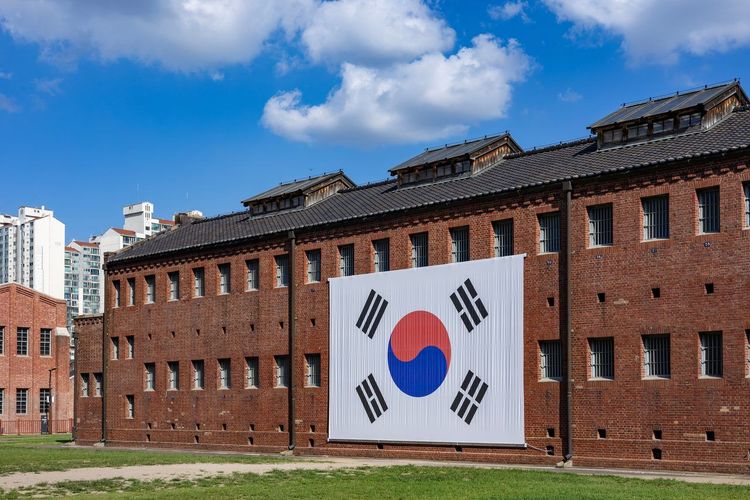
Two sites a short walk apart cover a chapter of Seoul's history that most free-things lists skip entirely.
Seodaemun Prison History Hall
Seodaemun Prison History Hall) preserves the colonial-era prison where Japan held and executed Korean independence activists between 1908 and 1945. Original cell blocks, interrogation rooms and the execution building are open to walk through, with English-language panels explaining each space. Entry to the halls costs only about 3,000 won (closed Mondays), but the surrounding Seodaemun Independence Park, with Independence Gate and a memorial tower, is free even if you decide the prison itself is too heavy for that day.
Donuimun Museum Village's recreated streets
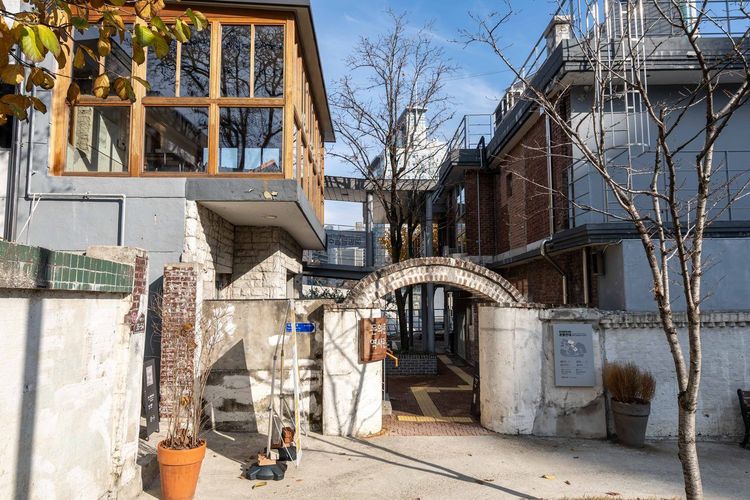
A short walk east, Donuimun Museum Village (29 Saemunan-ro 2-gil, Jongno-gu, Seoul, rated 4.4/5 on Google (2 376 avis)) recreates Seoul streetscapes from the 1960s through the 1980s across dozens of small buildings, now used for pop-up exhibitions, a retro arcade and the occasional film shoot. Admission is free, and the contrast with the modern towers surrounding the site makes for an easy, low-effort stop on the way back toward Gyeonghuigung.
12. Browse Korean Markets and Sample Street Food Culture
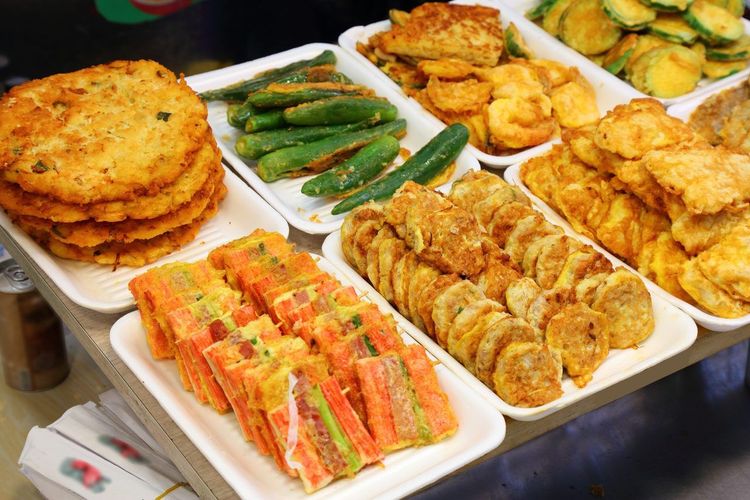
Seoul's traditional markets double as free entertainment, even on a day when you are not buying anything beyond a snack.
Gwangjang and Namdaemun markets
Gwangjang Market (88 Changgyeonggung-ro, Jongno-gu, Seoul, rated 4.2/5 on Google (44 374 avis)), open since 1905, is best known for bindaetteok mung-bean pancakes and the rows of silk and fabric stalls that gave the market its original purpose. Namdaemun Market, beside the Sungnyemun gate, spreads across dozens of alleys selling everything from kitchenware to ginseng, loudest in the early morning when wholesale buyers arrive.
Walking either market without spending a won is entirely possible; vendors expect browsers, and the smell of grilling food alone is most of the experience. If you do want a bite, a plate of mayak gimbap or a single bindaetteok rarely tops a few thousand won. On summer weekends, keep an eye out for the night markets that pop up along the Han River and at Cheonggyecheon, where you can browse craft stalls and food trucks without an entrance fee.
Convenience store and university dining budget hacks
For actual meals on a tight budget, Korea's convenience stores run surprisingly good hot-food shelves, triangle gimbap and instant noodle stations with free hot water, usually under 5,000 won for something filling. University neighborhoods near Hongik, Yonsei and Ewha run student-priced cafeterias, some of them open to the public, and the streets around them are full of cheap set-meal restaurants. Budget coffee chains such as Mega Coffee or Compose Coffee sell an americano for well under 2,000 won if you need a break between stops.
13. Join a Free Walking Tour or Catch a Guard Ceremony
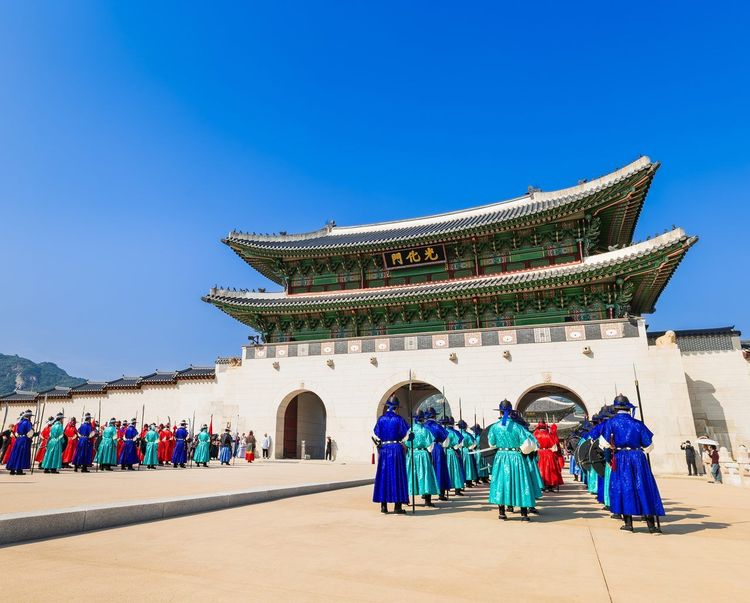
The Seoul city government runs free walking tours led by trained English-speaking guides, covering routes such as the palace district, Bukchon, the city wall and Namsan. There is no fee and no tipping expected; you simply reserve online a few days ahead, because places are limited and popular dates fill quickly. If you prefer to explore on your own, Gwanghwamun Square is a good starting point: the statues of King Sejong and Admiral Yi Sun-sin stand on the plaza, and an underground exhibition hall beneath the Sejong statue tells their stories free of charge. From there, the Changing of the Guard at Gwanghwamun and the royal guard ritual at Deoksugung are a few minutes apart, two of the few photogenic events in Seoul that run almost every day regardless of the weather. A practical note: palaces and city museums mostly close on Mondays, and Gyeongbokgung on Tuesdays, so check before you lock in a schedule.
14. Budget Tips: Getting Around Seoul for Less
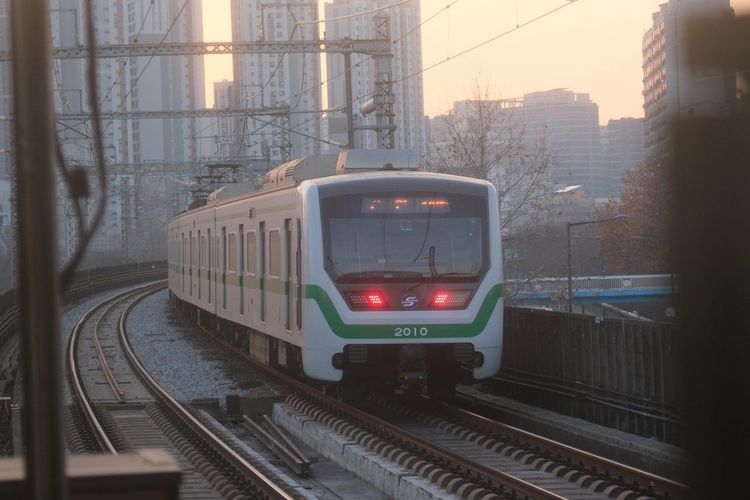
Seoul's transit system is cheap enough on its own that getting around rarely dents a free-things budget, provided you set it up correctly on day one.
Subway and bus apps, plus the T-money card
Download the subway and bus apps before you land; Naver Map and Kakao Map both handle routing in English far better than Google Maps does inside Korea. A T-money card, available at any convenience store, covers subway, bus and many taxis with automatic transfer discounts, and costs a few thousand won before you load it with fare credit. Because most of this guide's stops sit within walking distance of a subway station, a single card easily strings together three or four free attractions in one day without a taxi.
Jjimjilbang overnight stays and other low-cost extras
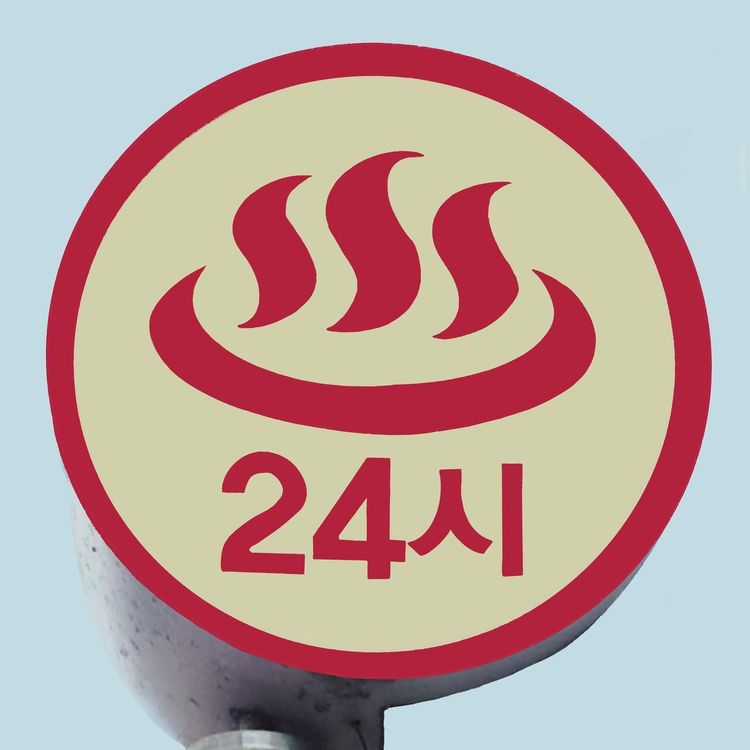
For a genuinely local budget experience, staying at a jjimjilbang overnight (a Korean bathhouse with communal sleeping areas) runs roughly 12,000 to 20,000 won, cheaper than most hostel beds and open around the clock if you miss the last train home. A few other budget tips for Seoul: carry a reusable cup for the discount some cafes offer, keep small bills for market stalls, and check whether your accommodation includes bikes before booking somewhere pricier. Public Wi-Fi covers most subway stations, parks and city squares, and the tourist information centers in Myeongdong and Insa-dong hand out free maps and event calendars in English. Where to stay for a free-things trip usually comes down to proximity to the palace district or a subway interchange, since both put most of this list within a short ride.
15. Best Times for Free Perks: Culture Days and Festivals
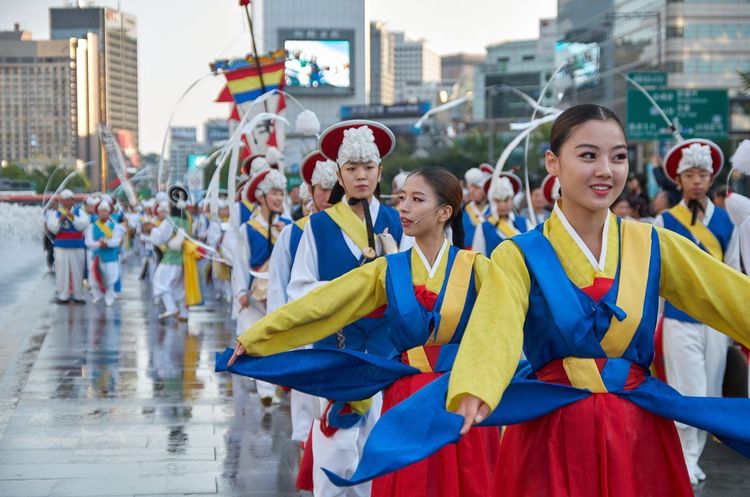
Timing your Seoul trip around a handful of recurring dates multiplies how much you see for nothing. The last Wednesday of each month is Culture Day, when the palaces and Jongmyo Shrine drop their admission fees and many cultural venues offer discounts or extended evening hours. Seollal (Lunar New Year) and Chuseok (harvest festival) also open the grand palaces free to the public, though expect heavy local crowds since many Koreans visit in hanbok as a family outing.
Spring brings the Lotus Lantern Festival around Buddha's Birthday, with its night parade through Jongno. Early October usually means the Seoul International Fireworks Festival over Yeouido Hangang Park, a free show that draws around a million spectators, so bring a mat and arrive by early afternoon. From late autumn, the Seoul Lantern Festival lights up Cheonggyecheon, and in summer the Han River parks host free outdoor concerts and night markets. As for the best time to visit Seoul for free things, aim for April to early June or September to early November: mild weather, open-air festivals and the longest fountain season on the river.



FAQ
Is Seoul expensive to visit?
Seoul can be expensive if you stick to hotel restaurants and taxis, but daily costs drop fast once you lean on the subway, street food and the free sites in this guide. Many visitors cover palaces, temples, museums and hikes for an entire week while spending mainly on accommodation and transit.
Is visiting Seoul worth it on a tight budget?
Yes. Free national museums, free palace days, hiking trails and riverside parks cover a full itinerary without an entrance ticket, and markets and convenience stores keep meals affordable even on a strict daily budget.
What are some unique free things to do in Seoul?
Beyond the obvious palaces, Donuimun Museum Village's recreated retro streets, the Starfield Library inside COEX Mall and the Naksan section of the city wall all stand out as less-covered stops that cost nothing to visit.
What free things can teens and young adults do in Seoul?
Hongdae's weekend busking scene, Seongsu's gallery pop-ups and the Han River parks all skew toward a younger crowd, and none of them require an entrance fee, just transit fare and a willingness to wander.
How many days do you need to see Seoul's best free attractions?
Four to five days covers the palaces, temples, museums, Namsan and the Han River comfortably, with a sixth day if you want to add Bukhansan hiking and outer neighborhoods like Seongsu or Seodaemun.
What are common dos and don'ts for budget travelers in South Korea?
Do carry some cash for market stalls; don't assume every attraction opens on Mondays, since many close that day. Do book the free walking tours ahead and respect Bukchon's visiting hours; don't eat while walking through crowded markets or talk loudly on the subway.
What free things to do in Seoul do locals recommend (Reddit favorites)?
Travel forums consistently point toward hanbok palace visits, the Banpo Bridge fountain show and early-morning Bukhansan hikes as the most repeated recommendations, alongside the free walking tours as a low-effort way to get oriented in the first day or two.
Conclusion
Between the palace quarter, the river parks and the hillside neighborhoods, Seoul turns out to reward patience more than budget. Most of what travelers pay to see elsewhere, from a guarded royal gate to a 360-degree mountain view, sits here without an entrance fee attached, provided you know which door to walk through and which Wednesday to show up.
If you would rather not stitch the order together yourself, the Ryo audio-guided walk through Seoul leads you through the palace district, the hanok alleys and the old city center, narrating the history at each stop as you reach it, so the only real planning left is picking which morning you start.
À lire également