

Créé par Camille, le 22 nov. 2026
Votre guide Ryo
Corfu, Greece
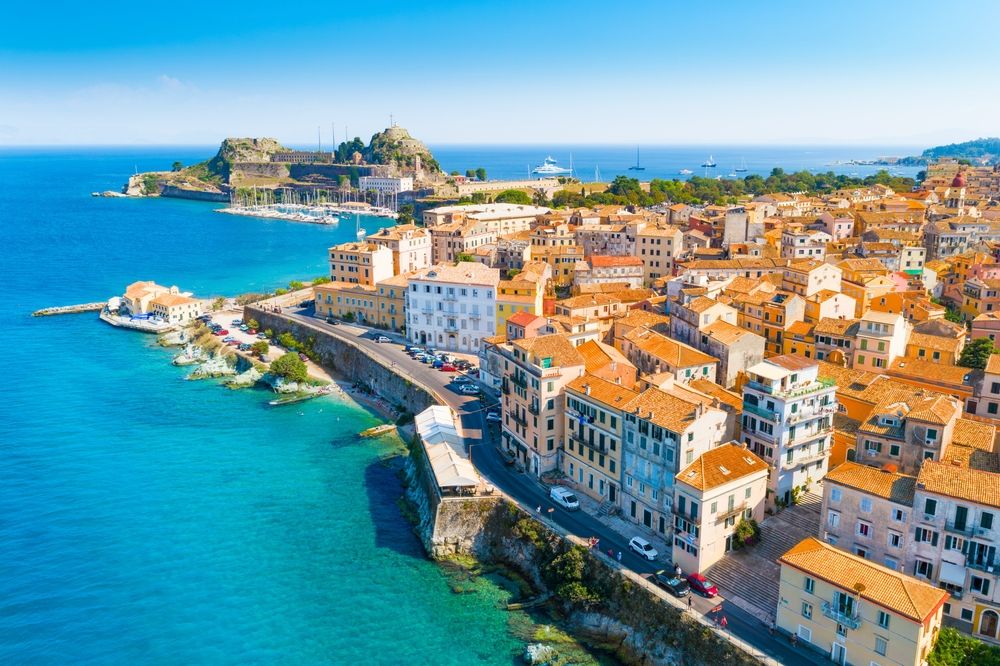
Greece with a Venetian twist
Shutterstock
Parcours audioguidé pour visiter Kerkira en 1 jour
A UNESCO World Heritage Site, this historic fortified city is known for its elegant maze of pedestrian streets, its two imposing Venetian fortresses, and a unique cosmopolitan atmosphere shaped by centuries of Italian, French, and British influence.
Quand partir à Kerkira ?
Jan.
13°
16
Feb.
14°
15
March
16°
15
April
19°
13
May
24°
8
June
29°
5
July
33°
2
Aug.
34°
3
Sept.
29°
7
Oct.
24°
12
Nov.
19°
16
Dec.
15°
18
Corfu enjoys a pleasant Mediterranean climate, with hot, sunny summers and mild but very rainy winters. That generous winter rainfall is also what keeps the island exceptionally green and lush throughout the year.
Départ conseillé
Our routes are designed as loops, so you can easily begin your visit at whichever point is closest to you, and the navigation will adjust automatically. If you’re nearby, we recommend starting here, on Spianada Square.
Parking à proximité
Parking 89 — Δονάτου Δημουλίτσα 89, EO Lefkimis, Corfu 491 00, Greece Parking Corfu 2 — Ioannou Theotoki 59, Corfu 491 00, Greece
If you’re renting a car to explore the island, Parking 89 is a good budget-friendly option. If you’d rather park closer to the city centre, Parking Corfu 2 is more convenient, with a daily rate of around €10. It’s best to avoid driving into the city centre itself, as you could be fined. Corfu’s Old Town is a restricted traffic zone, or ZTL, and access is strictly limited to residents.
À savoir
Credit cards are accepted almost everywhere, but it’s still worth carrying some cash for small purchases or for leaving the customary 5 to 10% tip in tavernas. For your comfort, stick to bottled water rather than tap water, and if you’re taking the bus, buy your ticket from a kiosk before boarding, as it will cost less. One last practical point: toilet paper should be placed in the bin provided rather than flushed down the toilet.
Découvrez 15 lieux d'intérêt pour visiter Kerkira
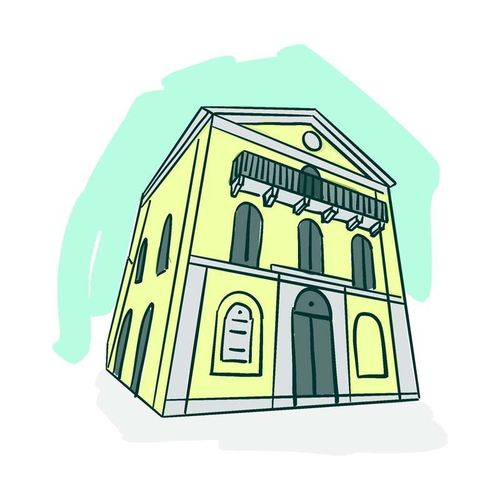
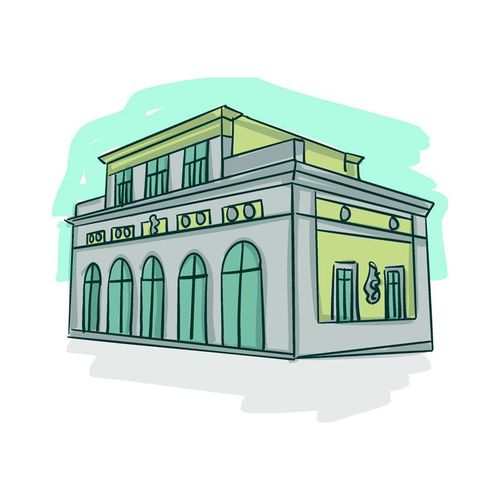

What to see in Kerkira on your 1h20 tour?
This 3.2 km loop takes about 1 hour 20 minutes and links 15 stops. Starting at Spianada Square, it follows the Liston and the shopping lanes to the Church of Saint Spyridon, climbs up to the Museum of Asian Art, drops down to Faliraki, then winds through the Kantounia toward the Old Port, the New Fortress, the Central Market and the Synagogue, before finishing at the Bell Tower. With the app in your ears, every stone reveals Corfu's Venetian, French, British and Greek layers.
Information checked in November 2026 and subject to change.
1 - Spianada Square
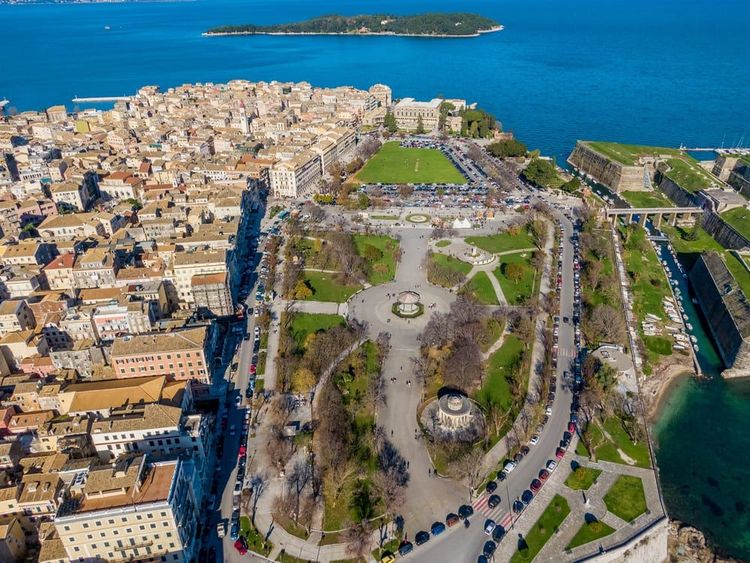
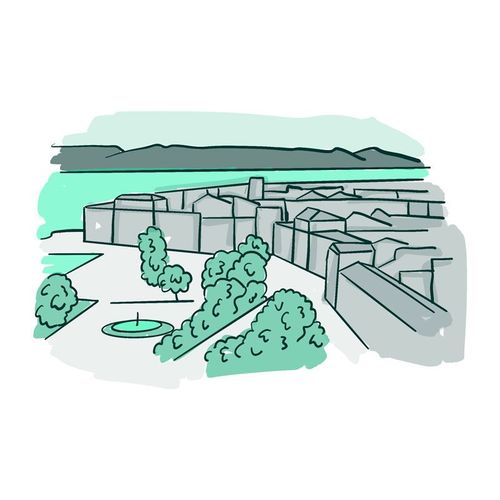
This sweeping square takes its name from the Italian word for flattening: after a 16th-century Ottoman raid, Venice tore down more than 2,500 buildings here to clear a line of fire for its fortress cannons. Arriving in the 19th century, the British brought a very different pastime: cricket, whose first official match took place in 1823. Locals embraced the sport for good, even borrowing its English vocabulary, and Corfu remains Greece's only spot where matches are still played.
Free entry
2 - The Old Fortress
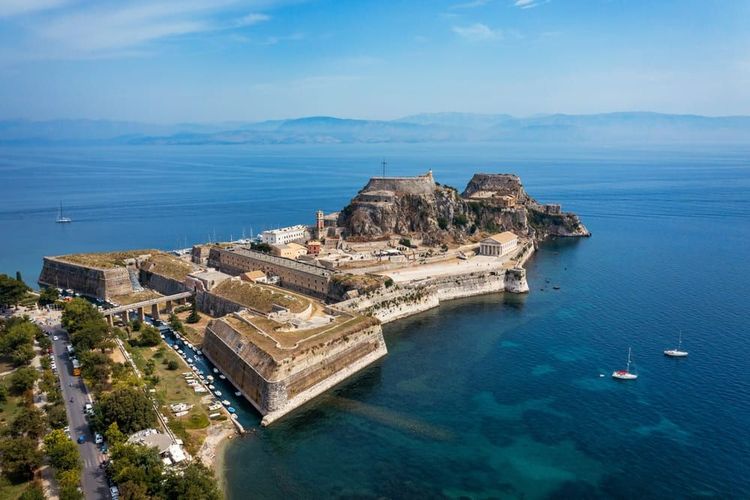
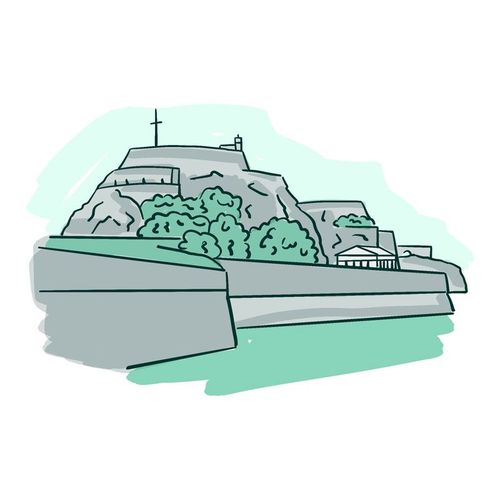
A marble statue of Count Schulenburg stands guard in front of the Old Fortress, honoring the German commander who led Corfu's defense during the 1716 Ottoman siege, when a small garrison held off a far larger invading force. An August storm sank part of the enemy fleet, a twist locals read as divine help. Venice had the statue carved while Schulenburg still lived, an unusual honor, and legend claims it survived a lightning strike unharmed soon after.
Paid entry (about €10)
3 - The Liston
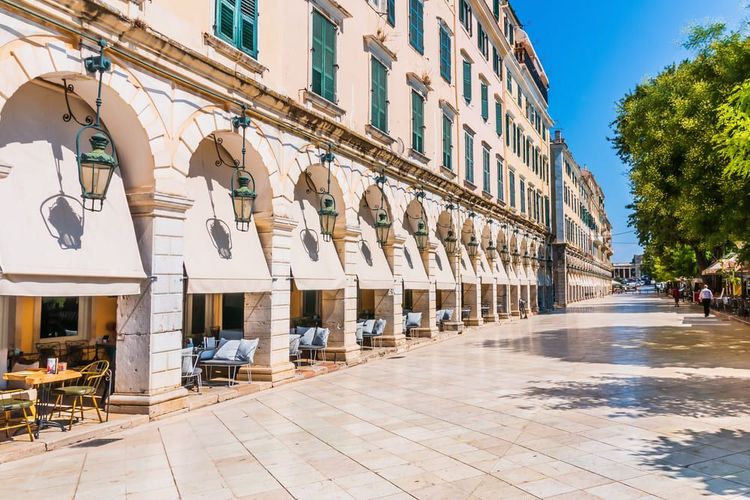
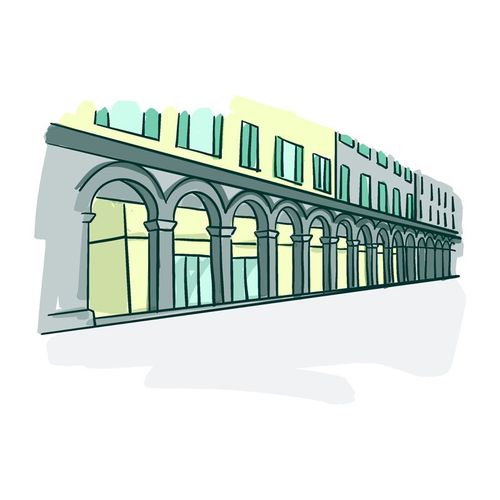
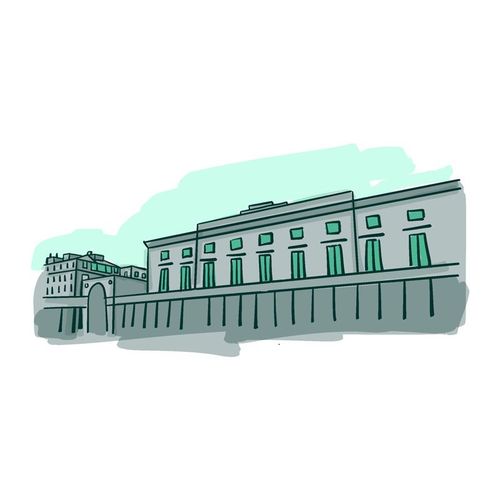
This long arcaded gallery echoes Paris's Rue de Rivoli, and with reason: French troops built it between 1807 and 1814 to quarter their soldiers while giving the town an elegant place to stroll. Their grander plan stalled when the British arrived, who later finished the upper floors. Once home to hotels and cafes favored by poets, the gallery supposedly takes its name from a roster of aristocrats once alone permitted to walk here.
Free entry
4 - Souvenirs from Corfu
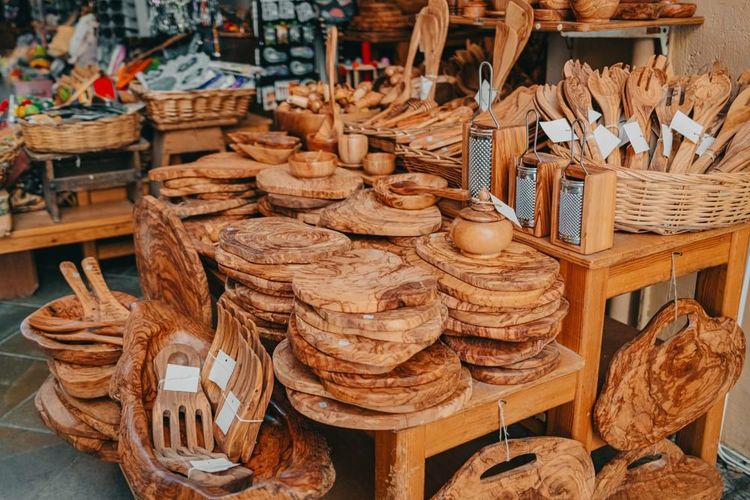
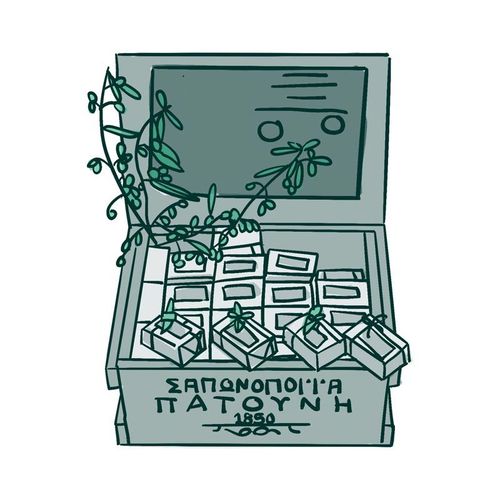
Along this shopping street, two genuinely local finds stand apart from imported trinkets: olive wood carved by island craftsmen, and traditional soap from a family workshop running since 1850, a method now listed as national cultural heritage, blending nothing but olive oil, water, salt and lye. Look out, too, for small bright-orange bottles of kumquat liqueur, an Asian citrus the British once planted here that Corfu alone still grows in Europe.
Free entry
5 - Holy Church of Saint Spyridon
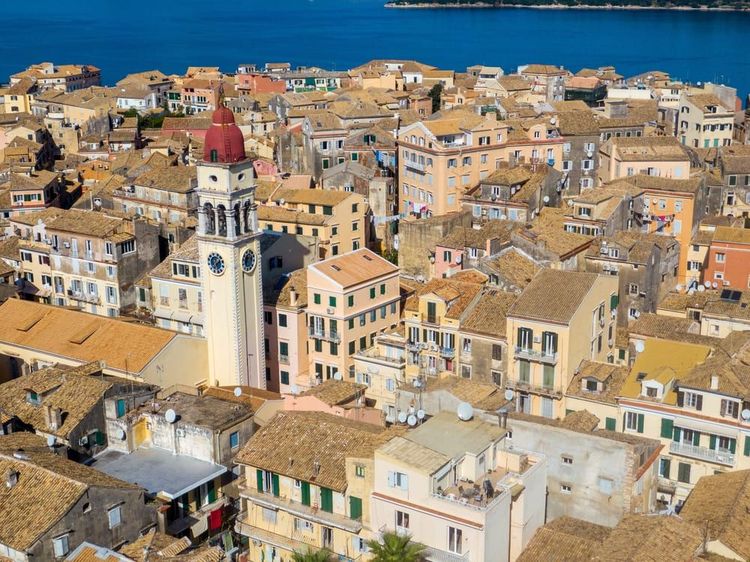
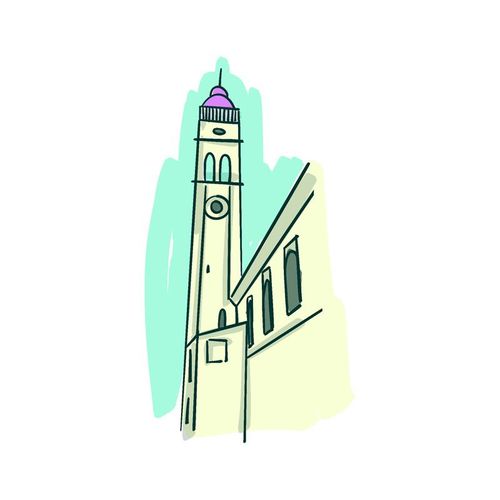
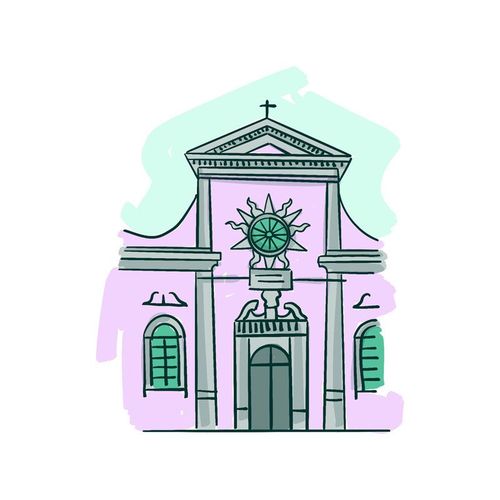
A red 40-meter bell tower marks the church dedicated to Corfu's patron saint, whose relics only reached the island in 1456, long after his 4th-century death, following a lengthy journey from Constantinople. Folded in 1512 into a wealthy heiress's dowry, they stayed private family property until that family built this church in the 1580s, skipping a grand entrance since their own house stood against it. Four yearly processions mark not his birth but miraculous rescues of the island.
Free entry
6 - Museum of Asian Art of Corfu
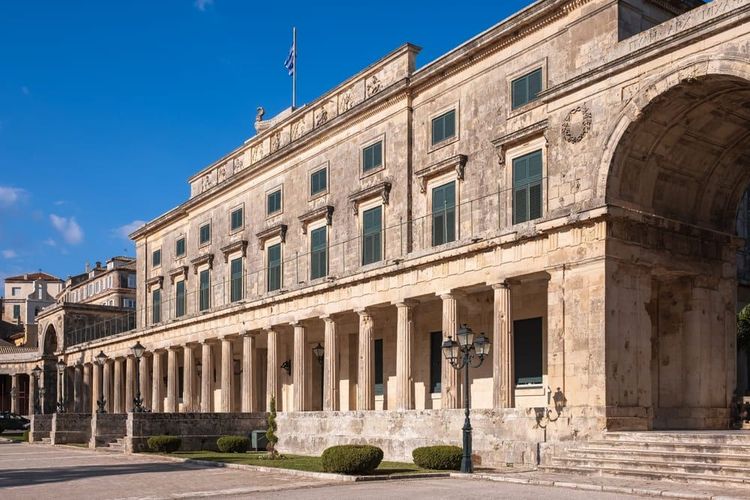
Finding this English-style neoclassical palace in the Mediterranean can feel odd: it rose after 1815, when the Congress of Vienna handed the Ionian Islands to the British Crown and made Corfu capital of a protectorate. The first high commissioner shipped in limestone from Malta for this residence, which also housed the Ionian Senate and a British order of chivalry. In 1864 London handed the islands to Greece as a diplomatic gift, and the palace turned into a royal summer home.
Paid entry
7 - Faliraki
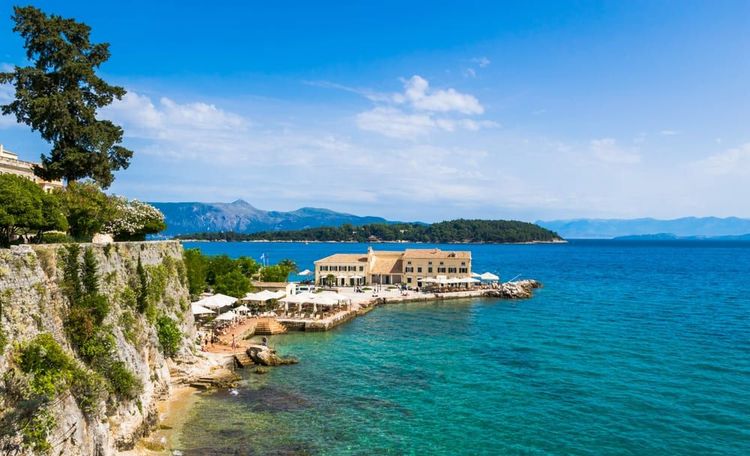
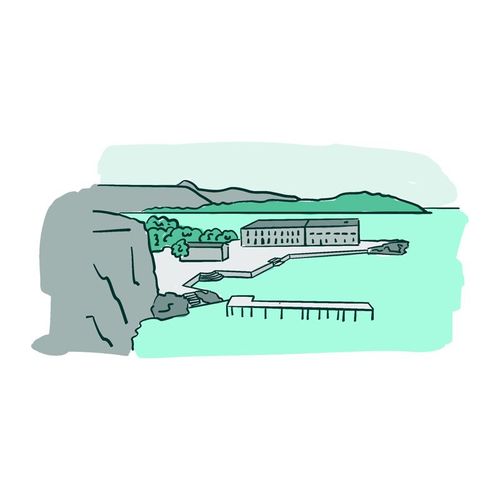
Reaching this seafront terrace below means passing through the Saint Nicholas Gate, once the sole Venetian passage linking the ramparts to the water. In the 19th century this was high society's chosen beach, governed by strict etiquette: from 1833, rowboats patrolled to keep men and women apart in the water and guard modesty. That stiff, guarded mood has long since given way to a far more relaxed seaside atmosphere.
Free entry
8 - The Kantounia – Corfu's Narrow Streets
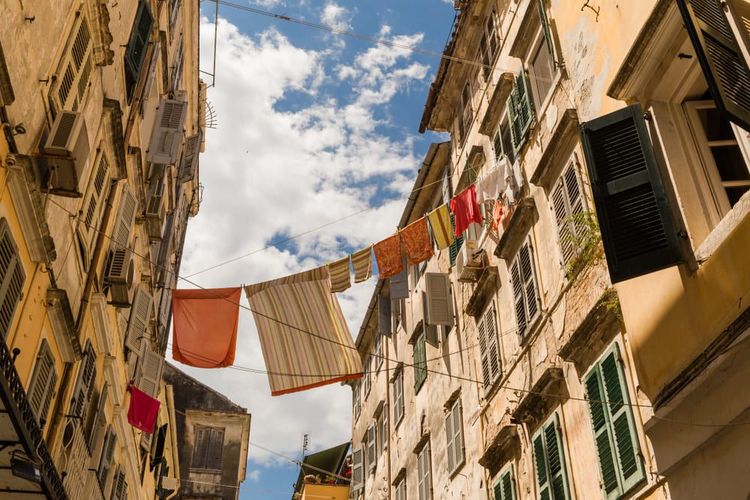
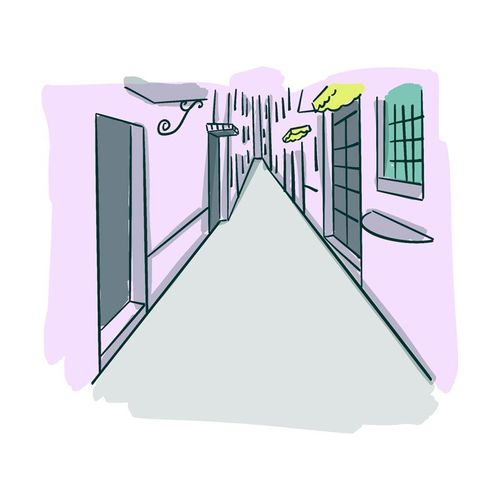
Squeezed between ramparts and fortresses with nowhere to spread, Corfu had to grow upward instead, giving rise to these tight lanes known as the Kantounia. At ground level, vaulted openings and wide bays once held workshops and stalls; on some doorframes a carved coat of arms still hints at a noble Venetian-era family. Higher up, salt-faded pastel walls carry wooden shutters, wrought-iron balconies and, under the rooftops, laundry strung between facing windows.
Free entry
9 - Metropolitan Cathedral of Panagia Spiliotissa
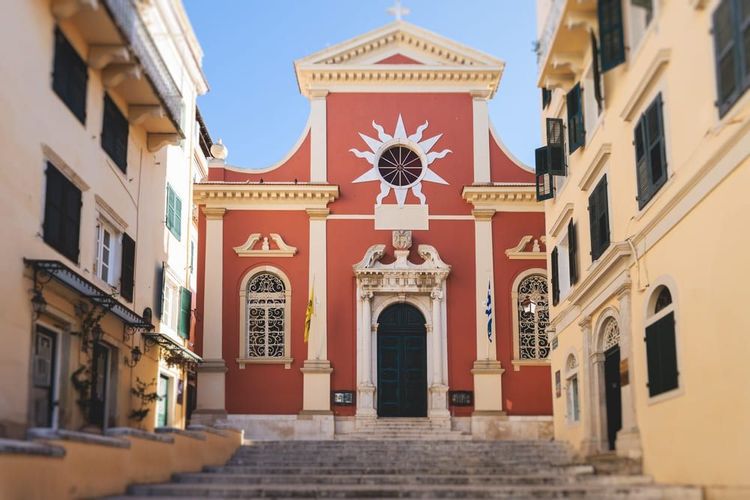
This ochre, three-aisled cathedral, raised at the very end of the 16th century over an older shrine, keeps the body of Empress Theodora inside a silver coffin. In the 9th century, while her own husband persecuted sacred icons during Byzantium's iconoclastic crisis, she secretly kept venerating them, until becoming regent at his death in 842 and formally restoring their worship the next year, ending a century of destruction and giving the icon back its central place in Orthodox faith.
Free entry
10 - Old Port Square
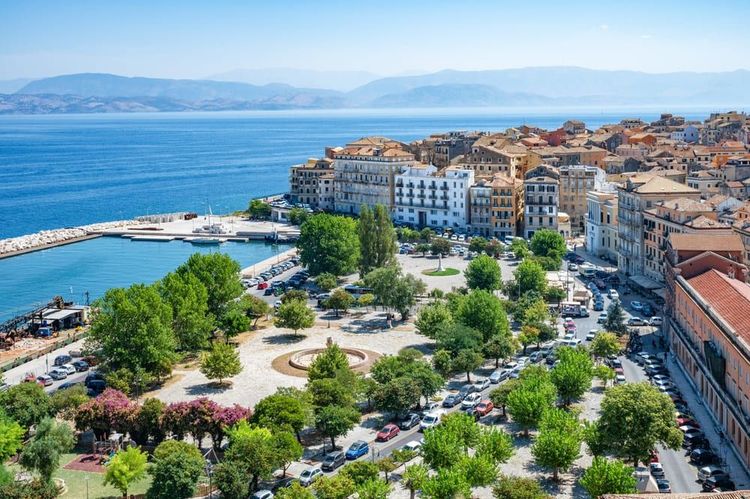
The green islet of Vido offshore ties Corfu to Serbian history: in 1916, after the Serbian army's retreat across snowbound mountains, the Allied fleet evacuated roughly 150,000 starving soldiers here, turning the islet into a quarantine hospital. With no ground left to bury the dead, many victims were lowered into the strait instead, a channel the surviving poet Milutin Bojic later called the Blue Tomb. Corfu even served as a government in exile, signing in 1917 the declaration that founded future Yugoslavia.
Free entry
11 - The New Fortress
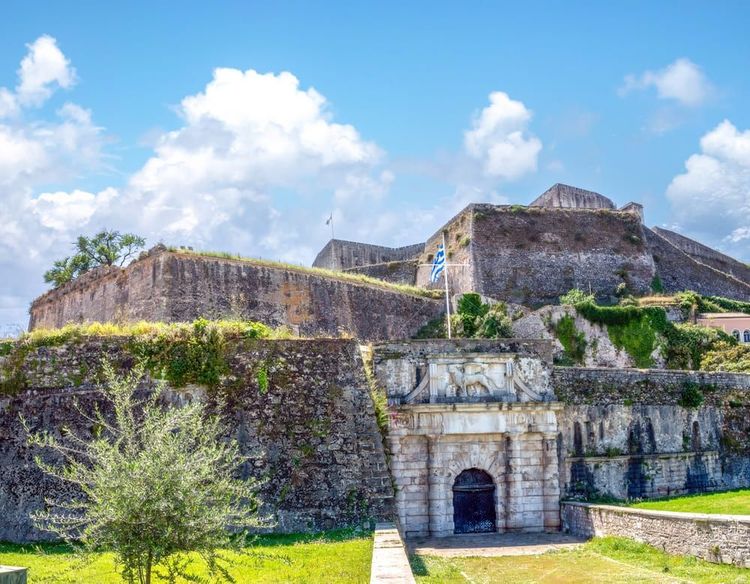
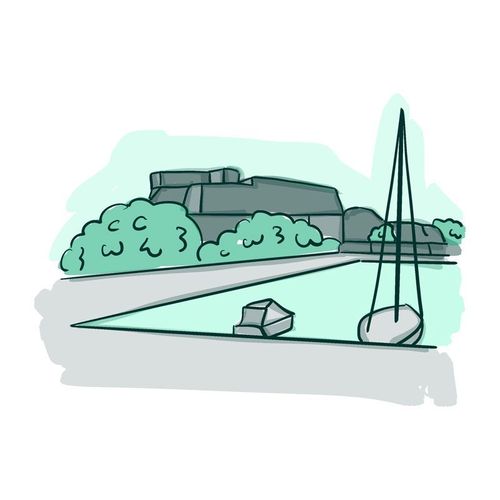
This massive fort rose after two Ottoman raids flattened the town in 1537 and 1571, pushing Venice to reinforce its defenses: Italian engineer Ferrante Vitelli had more than 2,000 houses torn down to raise, from 1576, a star-shaped fortress with low bastions designed to cross their fire and leave no blind spot. At its peak the site carried 700 cannons, and Venice strictly barred any contact between its commanders and those of the Old Fortress, fearing betrayal.
Free to see from outside
12 - Corfu Central Market
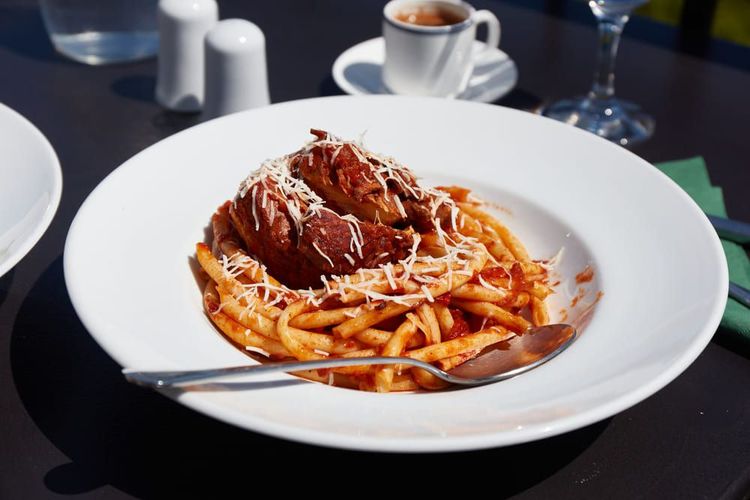
The stalls of this market smell more Italian than Greek, and for good reason: while the mainland endured four centuries of Ottoman rule, Corfu stayed under Venetian influence, picking up tomato, thick pasta and slow braising. From that blend came three signature dishes: pastitsada, beef or rooster simmered in a red-wine tomato sauce with local spices; sofrito, thin floured veal braised with garlic and white wine; and bourdeto, fish in a fiery vinegar-spiked red sauce.
Free entry
13 - Corfu Synagogue
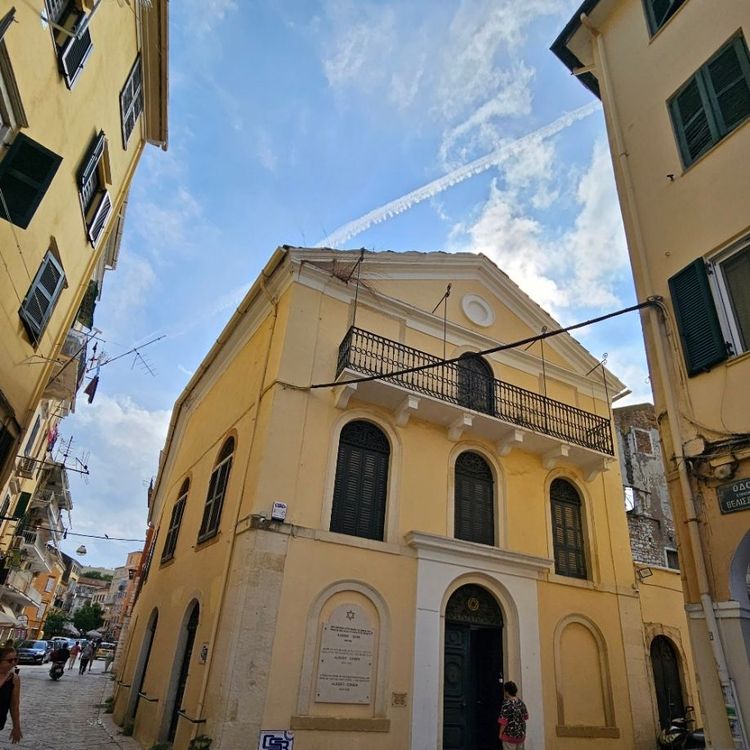
This synagogue recalls a Jewish presence on Corfu reaching back to antiquity, swelled in the Middle Ages by refugees from Italy and Spain, who built a lively quarter alongside the local Greek community and raised several houses of worship, including the Scuola Greca. That long history turned tragic in 1943, when German occupation followed Italian rule and anti-Jewish laws took hold. On June 9, 1944, some 1,800 islanders of every age were gathered and locked for days behind the Old Fortress walls before being sent onward to deportation.
Free entry
14 - The Bell Tower and Town Hall Square
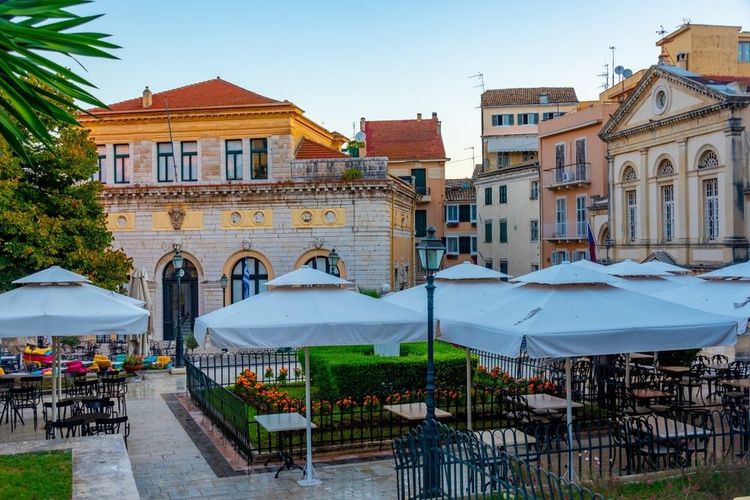
This lone bell tower is the only trace left of a 14th-century Catholic church, made famous after a major naval battle in 1571 when it received the graves of fallen Corfiot heroes; legend even claims Cervantes was treated here after being wounded in combat. German bombing in 1943 left only the tower standing. Nearby, the adjoining square centers on a 17th-century baroque building, turned into an opera house in 1720 before becoming the town hall in 1903.
Free entry
Which neighbourhoods does the tour cross?
In 3.2 km, the route links several faces of Kerkira, from the great Venetian square to the lanes marked by past communities.
The walk opens on the vast Spianada Square, cleared by the Venetians to give their cannons a clean field of fire and the only place in Greece where cricket is played every Sunday. It passes the Old Fortress, follows the Liston, the arcade built under French rule and finished by the British, then the shopping street where the olive tree turns into soap and carved souvenirs (stops 1 to 4).
Next comes the religious heart of town, between the Church of Saint Spyridon with its red-domed bell tower and the palace turned Museum of Asian Art, before dropping down to the seaside stop of Faliraki and slipping into the Kantounia, the maze of lanes squeezed between fortresses that pushed houses skyward, up to the Metropolitan Cathedral of Panagia Spiliotissa (stops 5 to 9).
The last stretch turns toward the sea: Old Port Square, facing the island of Vido, the New Fortress designed to cross cannon fire, the Central Market with its fish stalls, the Synagogue in the former Evraiki ghetto, and finally the Bell Tower of the Annunziata, the only survivor of a church destroyed in 1943 (stops 10 to 14).
How much does it cost to visit Kerkira?
Most of the route's stops cost nothing to visit: eleven are freely accessible, and one, the New Fortress, can be seen from the outside without a ticket. Only two call for an entry fee:
- the Old Fortress, where entry runs around €10;
- the Museum of Asian Art, housed in the former Palace of Saint Michael and Saint George.
By car, Parking Corfu 2, close to the centre, costs around €10 a day; Parking 89, further out, is cheaper.
Information checked in November 2026 and subject to change.
Where to stop for a bite along the tour?
The Central Market, near the end of the route (stop 12), is the best spot to see what Corfu actually eats before sitting down to a meal.
Three dishes sum up the local kitchen, shaped by centuries under Venetian rather than Ottoman rule: Pastitsada, beef or rooster slow-cooked in a tomato and red wine sauce with spices, served over thick pasta; Sofrito, thin veal slices simmered in a tangy garlic and white wine sauce; and Bourdeto, scorpionfish or cod simmered in a sauce sharp with chilli and vinegar.
For something sweet, the stalls also sell mandoles, caramelised almonds, and mantolata, a local nougat, worth grabbing before walking on to the Synagogue.
What should you know before visiting Kerkira?
A few pointers make the visit easier, on payment, transport and local customs.
Cards are accepted almost everywhere, but keep some cash for small purchases and for the customary 5 to 10% tip in tavernas. Stick to bottled water rather than tap water, and if you take the bus, buy your ticket from a kiosk before boarding: it costs less than buying it on board.
If you are visiting by car, it is best to avoid the old town itself, a restricted traffic zone open only to residents: breaking the rule means a fine.
One last practical point, in the bathroom: toilet paper goes in the bin provided rather than down the toilet.
As for climate, summers are hot and sunny while winters stay mild but noticeably rainy, which is what keeps the island so green all year round.
What to see around Kerkira?
Corfu makes a good base for venturing further afield, between spectacular sights on the island itself and a historic town across the water, in Albania.
On the west coast, Paleokastritsa lines up turquoise bays below a cliffside monastery, while at Gastouri, the Achilleion Palace, the former summer home of Empress Sisi, looks out over the sea from its hanging gardens. Perched over 300 metres above sea level, the Byzantine fortress of Angelokastro offers a view over the whole coastline, and further north, the Canal d'Amour at Sidari is lined with sandstone cliffs shaped by the sea.
In Albania, 53 km away as the crow flies, Gjirokastër is worth the detour: its steep, cobbled lanes, its fortified Ottoman-era houses and its imposing citadel tell a different story, the one followed by our Gjirokastër audio-guided walk.
Le plein d'inspirations
Explorez le monde en totale liberté, à pied au cœur des villes ou au fil des routes. Nos guides audios transforment chaque destination en une découverte culturelle immersive et unique.
Vos commentaires, idées et suggestions
Aucun avis pour le moment