© Shutterstock
 Votre guide Ryo
Visiting Tirana in 3 Days: Complete 2026 Itinerary
Visiting Tirana in 3 days means discovering a capital of colorful facades and buried bunkers that was still closed to the world thirty-five years ago. Tirana is unlike any other capital in the Balkans: its facades were repainted in yellow, pink and electric blue in the 2000s on the initiative of Edi Rama, a painter turned mayor of the city, then Prime Minister of the country since 2013. Yet just a few streets from these bright colors, the city still holds nuclear bunkers, a former elite neighborhood closed to the public until 1991 and a boulevard designed by Italian urban planners between the wars. So you don't get lost in this dense history, the Ryo audio-guided tour of Tirana starts exactly where everything is best told: on Skanderbeg Square.
In three days, you will go from an 18th-century Ottoman mosque, whose interior frescoes depict landscapes forbidden by the religious tradition of the time, to a five-story nuclear bunker dug under a hill for Enver Hoxha and his entourage. You will walk along a boulevard laid out to host military parades and which today serves as an improvised bike path on Sundays. Allow a morning for the fortress of Krujë, birthplace of the national hero Skanderbeg, and an evening in the Blloku district, once off-limits to the public and now packed with cocktail bars and shops by local designers. Add a cable car that lifts you up the slopes of Mount Dajti in a quarter of an hour, and a daily budget that remains among the lowest in Europe. The word that keeps coming back to describe Tirana: contrast.
How Many Days Do You Need to Visit Tirana?
Three days are enough to see the essentials of Tirana without rushing: the major sites of the historic center, the communist heritage between Bunk'Art, the Pyramid and the House of Leaves, then the Blloku district with, as an option, a trip to Mount Dajti or Krujë. It is the length most often recommended by travelers who have tried several formats, and the one followed by the detailed itinerary below.
If you only have one day, focus on Skanderbeg Square, the Et'hem Bey Mosque, the National History Museum and Bunk'Art 2: the four are grouped within fifteen minutes' walk of each other, which lets you link them without losing time on transport. You will then have to sacrifice the outlying bunkers, Blloku in depth and any excursion outside the city, a frustrating but realistic choice for a single day.
Two days let you add Blloku and either Bunk'Art 1 or Mount Dajti, but rarely both: the road to Enver Hoxha's bunkers in Linzë easily takes forty minutes round trip by taxi, and the Dajti Express cable car alone requires a good half-day once the hike at the summit is counted. Many travelers in a hurry then choose according to their interests: the country's recent history for some, fresh air for others.
Beyond three days, four days open up the possibility of a full excursion to the fortress town of Krujë or to the seaside resort of Durrës, forty minutes away by road, without sacrificing any site in the center. It is also the ideal format if you prefer to visit the city at a slower pace, without squeezing in two museums per half-day or rushing from one bunker to another.
Tirana nevertheless remains a compact capital: the distance between Skanderbeg Square and Blloku can be covered in twenty minutes on foot, which changes things compared with more sprawling capitals like Belgrade or Sofia. You therefore lose little time on internal travel, and each extra half-day translates directly into one more site on the schedule rather than transport time. For a first stay, three days remain the most balanced format: enough to understand the city in depth, not enough to get bored once the major sites are ticked off.
Day 1: Skanderbeg Square and the Historic Center of Tirana
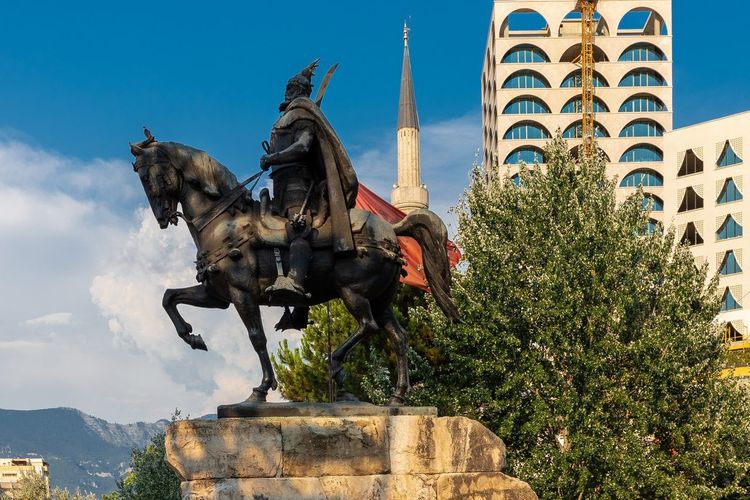
Always start with Skanderbeg Square: it is the city's zero point, the one from which all distances and all the major boulevards start. At 8:30 a.m., before the organized groups arrive, the square still belongs to the pigeons and the first sellers of takeaway coffee, an ideal moment to get a sense of the place before the crowds.
Skanderbeg Square, the Clock Tower and the Et'hem Bey Mosque
The Skanderbeg Square extends over nearly 40,000 m², fully pedestrianized since 2017 after years of work that transformed a congested roundabout into a vast esplanade. At its center stands the equestrian statue of the national hero, erected in 1968 for the fifth centenary of his death, a figure who resisted the Ottomans in the 15th century and remains the absolute identity reference of the country. Around it, the facades mix Ottoman architecture, Italian fascist style and communist blocks from the 1960s, an urban summary of the country's history in a single panoramic glance.
A few steps away, the Clock Tower (Kulla e Sahatit) was erected around 1822 on the initiative of Haxhi Et'hem Bey, the builder of the neighboring mosque. Its 35 meters can be climbed for a small entrance fee, for a clear view of the neighboring mosque and the mountains closing the horizon to the north. Climb it preferably in late morning, as the low light particularly highlights the tiled roofs of the historic center.
Just behind, the Et'hem Bey Mosque surprises with its interior frescoes depicting trees, bridges and landscapes, a rare boldness in the Ottoman religious art of the time when figurative depiction was generally prohibited. Built between 1789 and 1823, it escaped demolition under the communist regime thanks to its classification as a cultural monument, one of the few religious buildings spared during the anti-religious campaigns of the 1960s and 1970s. In 1991, ten thousand Albanians gathered there without official authorization to attend prayer, a founding moment in the return of religious freedom that the country still commemorates today. Entry is free, but dress appropriately and remove your shoes before entering.
This is exactly the route followed by the Ryo audio-guided tour of Tirana at its start: departure from Skanderbeg Square, then a walk to the museum and the mosque, with a different anecdote told at each stop, headphones on, without booking a time slot or following a human guide who imposes their own pace.
National History Museum and the City's Cathedrals
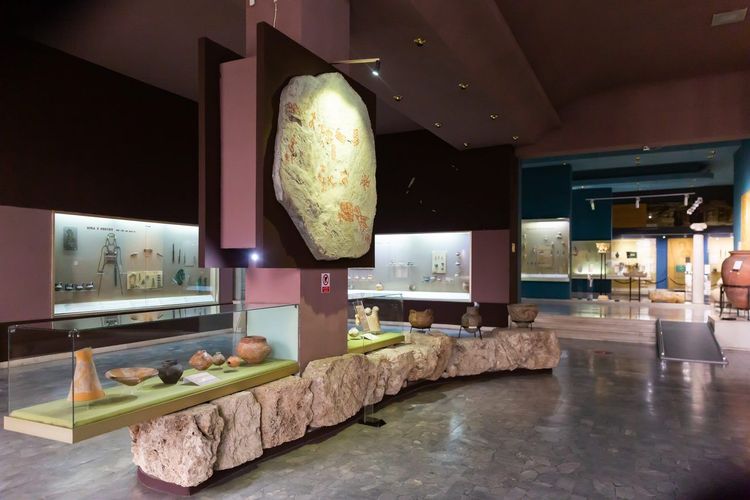
The National History Museum occupies one side of the square, recognizable by its facade adorned with a mosaic titled The Albanians, a work of communist propaganda preserved as it is despite the fall of the regime. It is the largest museum in the country, with rooms covering Illyrian Antiquity up to the fall of the regime in 1991, via the Ottoman occupation and the independence of 1912. Allow a good hour and a half to go through it all without rushing, more if Balkan history interests you. The building has had partial closures for renovation in recent years: check that it is open before organizing your morning around it.
Ten minutes away on foot, the Resurrection of Christ Cathedral impresses with its size: completed in 2012, it is among the largest Orthodox cathedrals in the Balkans, with a capacity of several thousand worshippers. In a country that proclaimed itself the world's first atheist state in 1967, its construction has become a strong symbol of religious rebuilding after decades of prohibition.
The St. Paul's Cathedral, Catholic in rite and consecrated in 2002, pays tribute to Mother Teresa, Albanian by origin and the country's best-known religious figure internationally. You can follow with the National Art Gallery, which holds one of the richest collections of socialist-realist art still visible in Europe: portraits of heroic workers, scenes of agricultural collectivization and pictorial tributes to the regime, an entire chapter of the cultural history of the Eastern Bloc often overlooked elsewhere.
Pazari i Ri, Rinia Park and the Murat Toptani Promenade
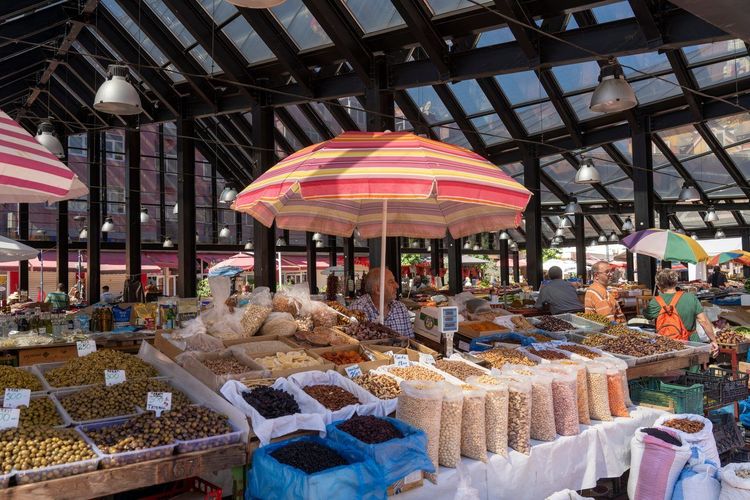
For lunch, head to Pazari i Ri, the central market renovated in 2017: stalls of fruit, sheep's cheese and Albanian street-food stands share a paved square lined with cafés and small craft shops. This is where locals still do their daily shopping, not a market recreated for tourists, and prices remain much lower than in the immediate city center. Take the time to try a hot byrek for less than one euro, an institution of the Albanian breakfast.
The Rinia Park, just across from the main boulevard, serves as an urban living room: fountains, café terraces and shaded benches, stormed in the late afternoon by families and groups of friends who gather there after work. It's a good break before resuming your walk, especially if the summer heat is felt from early afternoon.
End the day with the Shëtitorja Murat Toptani, a pedestrian promenade laid out along the city's former ramparts, lined with cafés and small bookshops, which leads to the Tirana Castle (Rruga Murat Toptani, 1001 Tiranë, rated 4.4/5 on Google from 4,866 reviews) (Kalaja e Tiranës), the remains of Byzantine fortifications converted into open-air restaurants and cafés. It's an excellent spot for a drink at sunset, sheltered by old stones and away from traffic, before heading back leisurely to your accommodation to close the first day.
Day 2: Bunk'Art, the Pyramid and the Communist History of Tirana
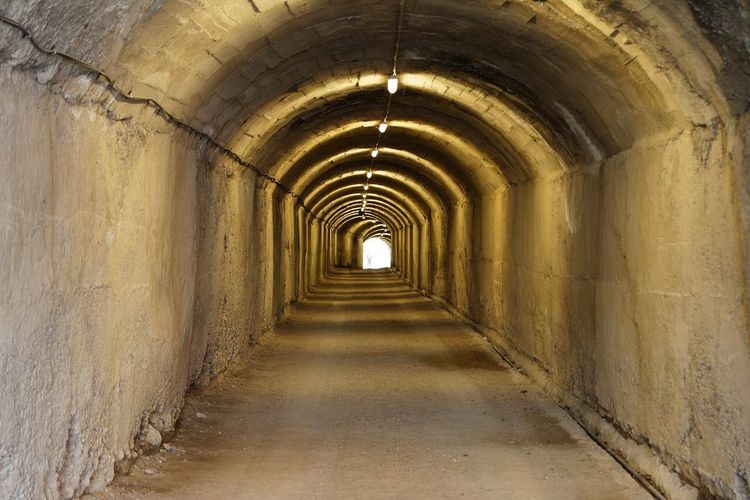
The second day changes register completely: head to the remnants of the regime of Enver Hoxha, who ruled Albania with an iron fist for forty years, from 1944 to 1985, and had more than 170,000 bunkers built across the territory, roughly one bunker for fewer than twenty inhabitants, out of an obsessive fear of a foreign invasion that never came.
Bunk'Art 1 and Bunk'Art 2, Inside Enver Hoxha's Bunkers
Bunk'Art 1, located in Linzë on the road to Mount Dajti, about twenty minutes by taxi from the center, spans five floors and 106 rooms built to shelter Hoxha and his inner circle in case of nuclear attack. The construction site, kept secret throughout its building in the 1970s, mobilized teams who often did not know the exact nature of the project they were taking part in. The tour alternates period furniture, propaganda rooms and contemporary art installations, a contrast that strikes as much as the places themselves, with entire rooms devoted to daily life under permanent surveillance.
Bunk'Art 2, smaller and more central, is hidden beneath the Ministry of the Interior a few steps from Skanderbeg Square. It is entirely devoted to the Sigurimi, the regime's secret police, through dark corridors and surveillance recordings of ordinary citizens, often denounced by neighbors or relatives under duress. The deliberately oppressive atmosphere, reinforced by minimal lighting and sober signage, makes the visit even more striking than that of Bunk'Art 1 for many travelers.
If time is short, choose according to your schedule: Bunk'Art 1 is larger but outlying, so allow half a day round trip including the taxi ride; Bunk'Art 2 can be visited in 45 minutes to an hour without leaving the city center, which makes it the most realistic option if your schedule is tight on this second day.
The House of Leaves, Museum of Espionage
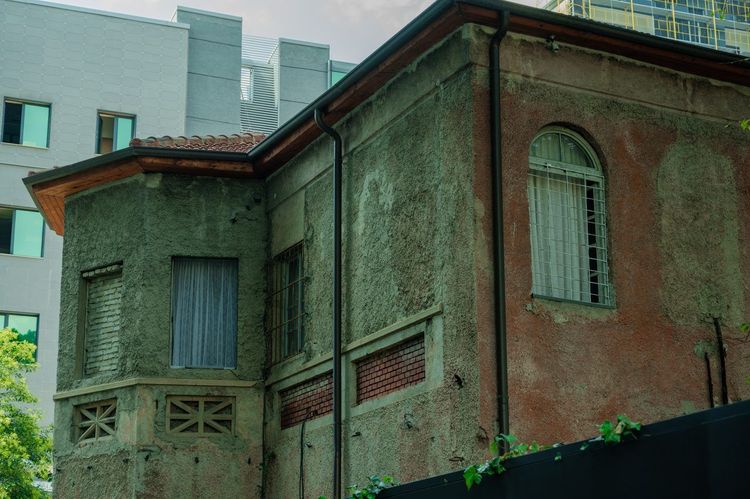
The House of Leaves (Shtëpia me Gjethe) occupies a villa built in the 1930s, used by the Gestapo during the Italian-German occupation, then taken over by the Sigurimi after the war to become one of the nerve centers of the regime's domestic surveillance. Turned into a museum in 2017, it displays period listening equipment, individual surveillance files and reconstructions of the domestic espionage that affected tens of thousands of Albanian families during the Cold War, sometimes on a mere anonymous denunciation. Some rooms recreate the interrogation offices as they were found, with listening devices concealed in everyday objects.
One stop of the Ryo audio-guided tour is precisely dedicated to the bunkers and the Sigurimi, with anecdotes about the regime's paranoia that few visitors know before arriving on site, notably about the informant system that organized surveillance between neighbors in the same building.
The Pyramid of Tirana and the Martyrs of the Nation Boulevard
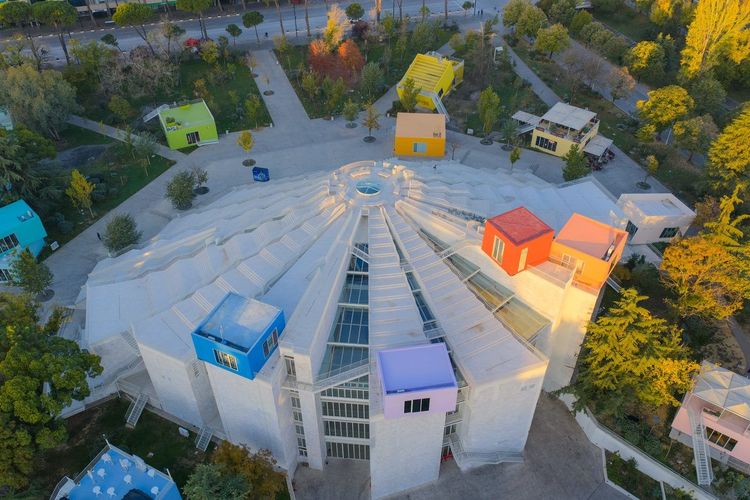
The Pyramid of Tirana was built in 1988 as a museum dedicated to the glory of Enver Hoxha, three years after his death, on plans designed notably by his daughter Pranvera. Abandoned after 1991, it went through improbable uses: a nightclub in the 1990s, a television broadcasting site, a NATO logistics base during the Kosovo war in 1999. Renovated and reopened in 2023 after years of debate over a possible demolition, it now houses the TUMO center, which trains teenagers in coding, design and robotics, as well as cafés and start-ups, while its sloping sides have become a playground for skaters and an unmissable photo spot on social media.
It stands on the Martyrs of the Nation Boulevard, laid out in the 1930s by Italian urban planners to link the train station to the university, in a monumental style inherited directly from the fascist architecture of the time. It is the widest and most tree-lined artery in the city, effortlessly linking the Pyramid district to Skanderbeg Square and still hosting official parades and large public gatherings today.
Day 3: Blloku, Street Art and Fresh Air in Tirana
The third day is the most flexible of the itinerary: you can replace the trip to Mount Dajti with a morning of shopping and coffee in Blloku if the weather isn't suitable, without losing anything essential from the program of this final day.
Blloku, the Trendy District with Colorful Facades
Blloku was, until 1991, a closed residential district reserved for the communist party elite, protected by armed guards who forbade access to the rest of the population. The former Enver Hoxha's house is still there, today just a villa among others on a residential street. Opened to the public when the regime fell, it became in one generation the liveliest district of the capital: cocktail bars, local designer boutiques and terraces packed from 6 p.m., a complete reversal of use in barely thirty years.
Another signature of the district: the facades repainted in vivid shades from the early 2000s, on the impulse of the then-mayor, an artist by training, convinced that color could heal a city traumatized by decades of uniform communist grey. The project, initially mocked by some residents, ended up becoming an international symbol of Tirana's urban renaissance, since taken up in several other Albanian cities. Street art then spread well beyond Blloku, to residential buildings in the city center and school facades.
The Ryo audio-guided tour of Tirana tells precisely this shift, from the most surveilled district in the country to the most photographed today, with the addresses that really matter for a coffee or a drink, far from the tourist traps that have multiplied in recent years.
The Grand Park and the Artificial Lake of Tirana
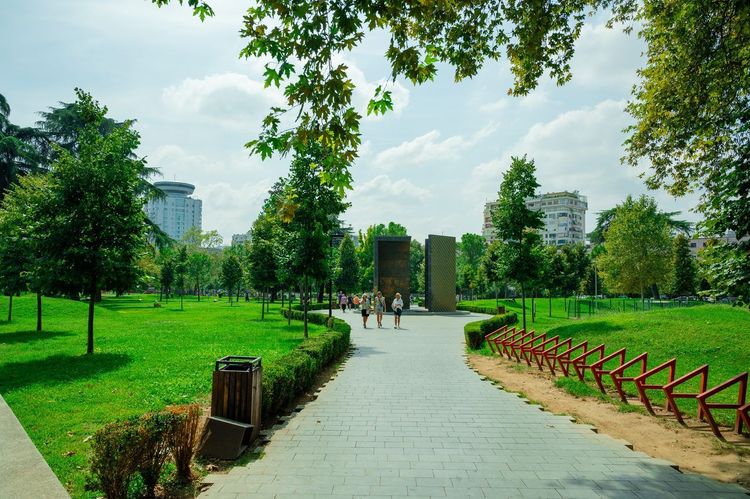
The Grand Park of Tirana (Rruga e Elbasanit, 1016 Tiranë, rated 4.5/5 on Google from 9K reviews) (Parku i Madh), developed in the mid-1950s, largely by work brigades mobilized by the regime, surrounds an artificial lake bordered by a 5-kilometer path very popular with local joggers from the early hours of the morning. A botanical garden and several shaded areas complete the site, which also serves as a green lung for the whole capital.
Rent a pedal boat or simply sit at one of the lakeside cafés: it's a welcome break after two days of museums and intense urban walking, and a good place to observe the daily life of Tirana's residents far from the busiest tourist sites. Albanian families come in large numbers on weekends, a good time to feel the real pulse of the city.
Mount Dajti and the Dajti Express Cable Car
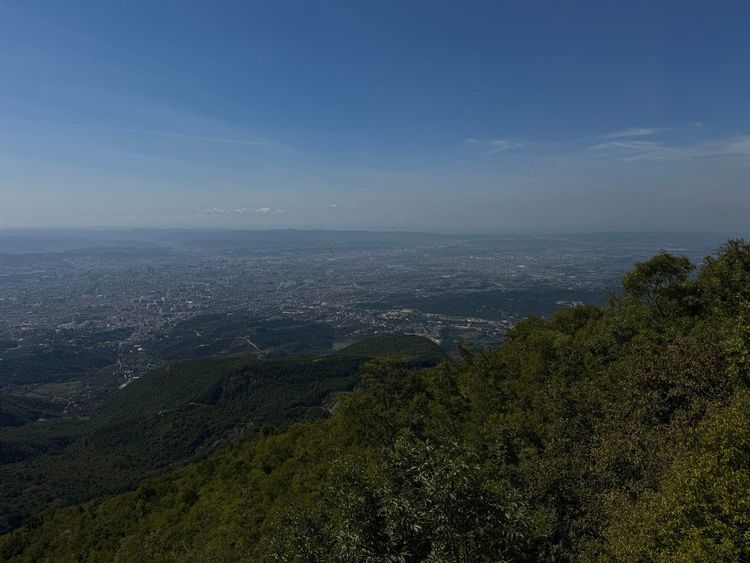
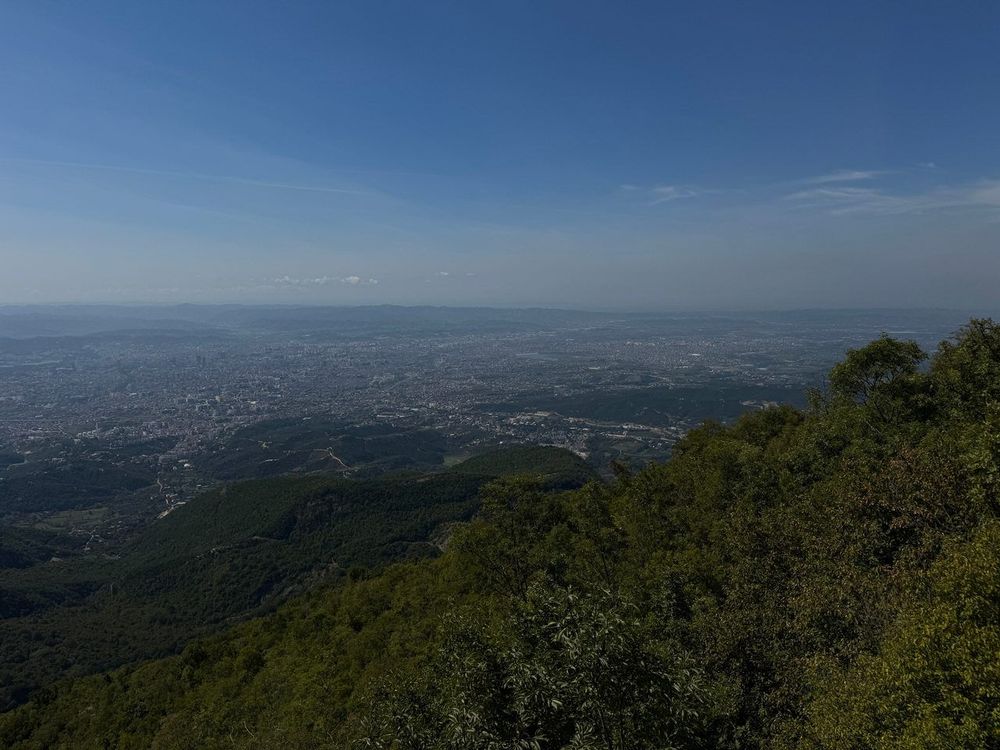
To finish at altitude, the Dajti Express cable car runs over 4 kilometers, the longest in the Balkans, to a station perched at about 1,050 meters on the slopes of Mount Dajti, whose summit peaks at around 1,610 meters. The ascent takes fifteen to twenty minutes and offers an overview of the whole capital, sometimes as far as the Adriatic on a clear day, a panorama few European capitals can offer so close to the city center.
The national park surrounding the station offers easy hiking trails, accessible even for families, and a panoramic restaurant for lunch up high with a view over the valley. Book your tickets in advance on weekends, as the crowds sometimes push the wait to over an hour in high season, especially in late afternoon when Tirana residents also come up to enjoy the cool air.
Two Day Trips to Extend Your Stay
If your stay exceeds three days, or if you prefer a half-day outside the capital rather than a trip up high, two options are available within one hour's drive at most, each with a very different atmosphere.
The fortress town of Krujë, 45 minutes from Tirana, is the birthplace of the national hero Skanderbeg, who resisted Ottoman assaults there in the 15th century from the fortress that still overlooks the town. Its reconstructed Ottoman bazaar sells hand-woven rugs, hammered copper items and local spices, one of the last authentic craft markets in the country still run by real artisans. The museum dedicated to the hero, built in 1982 with bold architectural lines typical of the last communist decade, overlooks the surrounding plain and offers a view that alone justifies the trip.
The Bovilla Lake (Bovillë, 1046 Tiranë, rated 4.6/5 on Google from 523 reviews), a drinking water reservoir surrounded by wooded hills about an hour's drive away, part of it on a dirt track, offers a more nature-oriented and far less crowded alternative: marked hiking trails, lakeside picnic spots and almost total silence, far from the bustle of the city center. It's the option to choose if you've already walked a lot in the city and simply want to breathe different air for a few hours. Both excursions can easily be booked by taxi for a half-day, negotiable at around €25 to €35 round trip with waiting time, or through a local agency if you prefer an organized format with an English-speaking driver.
Where to Stay in Tirana: Recommended Neighborhoods and Hotels
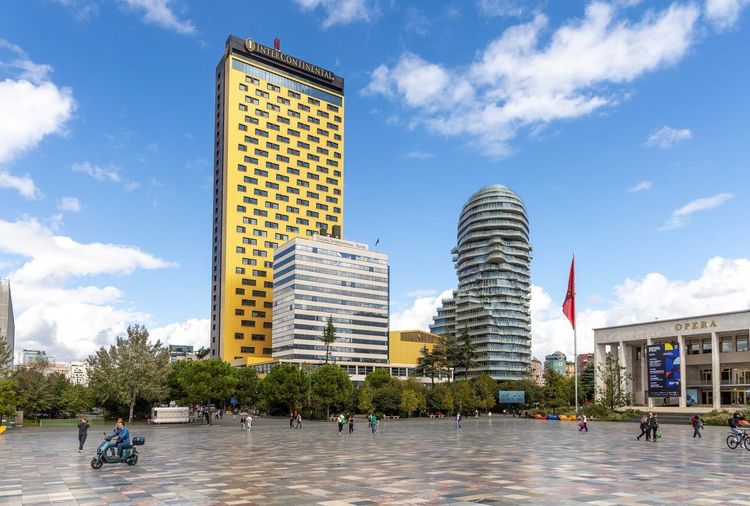
Two neighborhoods compete for visitors' favor, depending on whether you prefer nightlife or immediate proximity to the first day's tourist sites.
Blloku suits travelers who want to walk home after a drink and have breakfast in a trendy café before starting the day, without depending on a taxi late in the evening. The Xheko Imperial Hotel (Rruga Reshit Çollaku 1, 1001 Tiranë, rated 4.8/5 on Google from 2,912 reviews), a boutique hotel with refined decor, illustrates well this mid-range offer typical of the district, a few minutes' walk from the best bars in the area. The atmosphere there is much livelier after 8 p.m., a point to consider if you are looking for quiet to sleep.
The city center, around Skanderbeg Square, puts all the first-day sites within ten minutes' walk and suits you better if you prefer to go to bed early or are traveling with children. You'll find both budget guesthouses, allow €25 to €35 per night for a clean, well-located single room, and international establishments such as the Tirana Marriott or the Rogner Hotel Europapark, more like €90 to €150 per night depending on the season and demand.
In between, allow for a mid-range hotel at around €50 to €80 per night in high season, often noticeably less in winter when tourist demand drops sharply. For a three-day stay, the choice of neighborhood matters at least as much as the specific establishment: it determines how many trips you'll make each evening and what time you're likely to go to bed. If you're hesitating, favor the city center for a first stay and keep Blloku for a later visit more focused on nightlife.
Where to Eat in Tirana: Our Favorite Spots
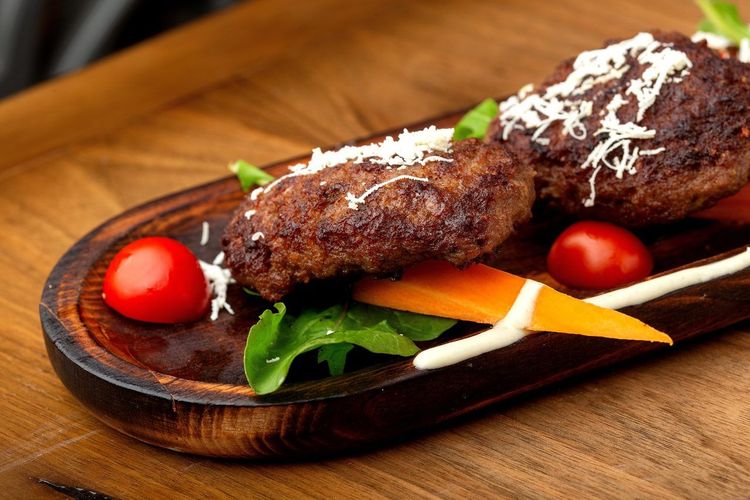
Albanian cuisine blends Ottoman, Italian and Balkan influences: flaky byrek with cheese or spinach, tavë kosi, a lamb stewed with yogurt and egg, grilled qofte made from spiced minced meat and craft raki made from grapes or plums form the foundation of local gastronomy, served in generous portions.
For a quick, traditional lunch, Oda Restaurant, decorated like an old-fashioned Albanian home with traditional weavings on the walls, serves byrek and tavë kosi in a friendly atmosphere at low prices, away from the bustle of the main tourist arteries. It's a gentle introduction to local cuisine before trying more distinctive dishes.
For a more refined dinner, Mullixhiu, nestled near the Grand Park, revisits Albanian peasant recipes with seasonal produce from local producers, led by a chef trained in Western Europe who came back to work with the flavors of his home country. The menu changes depending on what is available, a concept still rare in Tirana ten years ago and since become a reference for contemporary Albanian gastronomy.
For an afternoon coffee, the Komiteti Kafe Muzeum (Rruga Fatmir Haxhiu 101, 1019 Tiranë, rated 4.5/5 on Google from 1,610 reviews) plays the nostalgia card with a decor made entirely of objects from the communist era, including official portraits, archive furniture and old rotary phones, a singular setting for an espresso or a raki in the middle of the day. Allow on average €5 to €8 for a full meal with a drink in a local restaurant, and barely €1 for a coffee or a street byrek bought on the go.
How to Get to Tirana and Get Around
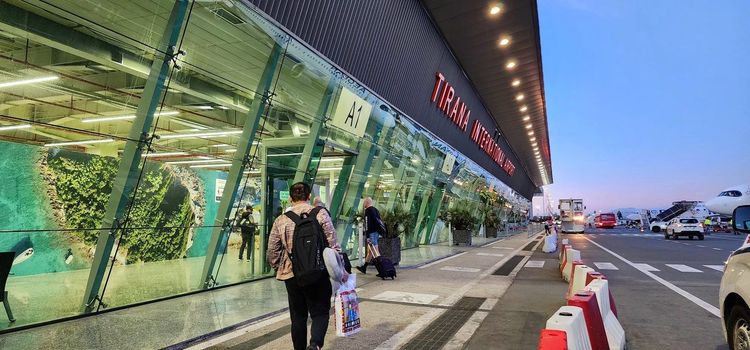
The Nënë Tereza International Airport (Rinas, 1512 Tiranë, rated 3.7/5 on Google from 8,472 reviews) is the country's main air gateway, 17 kilometers north of the capital. It is served from most major European cities, with low-cost carriers such as Wizz Air or Ryanair that have sharply lowered ticket prices in recent years and multiplied direct connections from France.
To reach the center, the Rinas Express bus links the airport to Skanderbeg Square in 30 to 40 minutes for about 400 lek (€4), with a departure roughly every hour. The taxi costs more, around €20 to €25, but drops you directly at your hotel in 25 to 30 minutes, a good compromise if you arrive late in the evening with luggage or with family.
Once in town, Tirana is explored mostly on foot: the historic center, Blloku and the Grand Park can all be reached in under twenty-five minutes of walking, which makes renting a car pointless for a three-day stay limited to the capital. There is no metro, but city buses cost about 40 lek per ride, less than €0.40, and taxis remain very affordable for more outlying trips such as Bunk'Art 1 or Mount Dajti, rarely more than €5 to €8 per ride in town.
Once you arrive, there's no need to book a human guide or a time slot: the Ryo audio-guided tour of Tirana launches directly from your phone, at the time and pace that suit you, with no internet connection needed once the content is downloaded before departure, handy if your data plan is limited on site.
When to Go to Tirana and What Budget to Plan
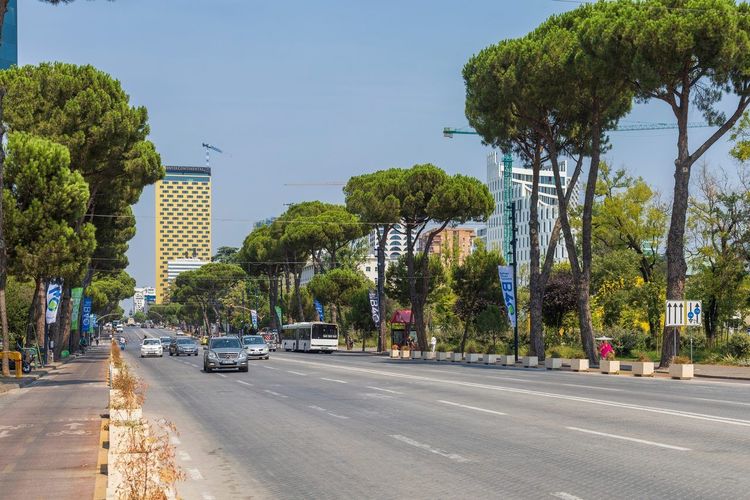
The best periods to visit Tirana run from April to June and from September to October, when temperatures hover around 20-25°C without the stifling heat of summer or the frequent rains of winter. July and August easily climb above 35°C during the day, making the long urban walks planned in this itinerary particularly exhausting, especially on the shadeless Martyrs of the Nation Boulevard. Winter remains mild compared with the rest of the inland Balkans, but rainy, with averages around 8-10°C and sometimes sustained showers in November and December.
In terms of budget, Albania is among the cheapest destinations in Europe, far ahead of most Western European capitals and even below prices in some other Balkan capitals. The local currency is the lek, although the euro is accepted in some tourist businesses at a sometimes unfavorable rate: it's better to withdraw lek directly on site from city-center ATMs, widely available around Skanderbeg Square.
Allow €25 to €35 per day as a backpacker, including hostel, local meals and public transport, €50 to €80 mid-range with a comfortable hotel and a few more refined restaurants, and over €100 per day for a comfortable stay with an international hotel and regular dinners at the city's best tables.
Museums remain accessible on every budget: Bunk'Art costs about 1,000 lek, around ten euros, the National History Museum a few euros, and the Dajti Express cable car about ten euros round trip depending on the season. Enough to fund three days of full visits, excursions included, without blowing the overall budget of the trip.
Is Tirana a Dangerous City? Safety and Formalities
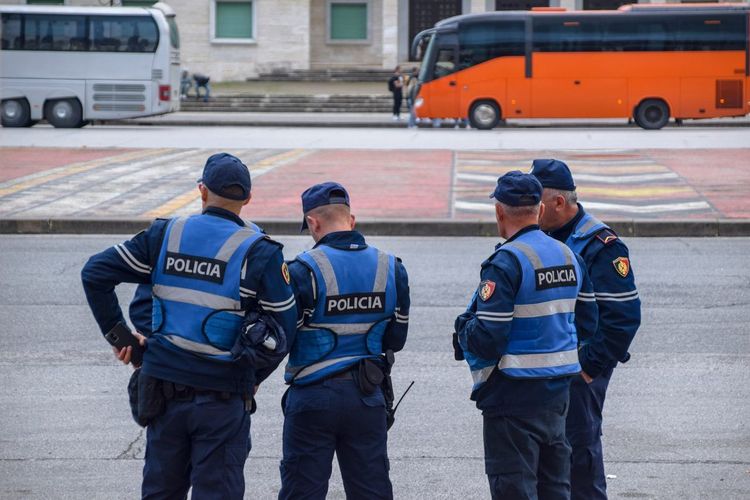
Tirana has a very low level of violent crime for a European capital, well below what some clichés dating from the chaotic transition period of the 1990s might suggest. The most frequent incidents reported by travelers remain pickpocketing in very busy areas such as Pazari i Ri or during rush hour on crowded buses, nothing that justifies particular concern beyond the usual precautions of urban travel.
The main point of vigilance concerns traffic instead: traffic rules are applied loosely, pedestrian crossings don't always guarantee real priority to pedestrians, and it's best to watch the traffic carefully before crossing rather than relying solely on the color of the light. The country's political legacy, heavy during the communist period and the transition years that followed, clearly belongs to the past today: no particular tension affects visitors, and the nightlife of Blloku is the best everyday illustration of this.
As for formalities, citizens of the European Union, the United Kingdom, the United States and many other countries do not need a visa for a tourist stay of up to 90 days within a 180-day period, an exemption scheme renewed by the Albanian authorities in recent years to support tourism. Albania is not yet part of the Schengen area, so your passport will be stamped upon entering and leaving the territory: simply check that it remains valid for at least three months after your planned return date, a standard requirement but sometimes forgotten when packing.



FAQ
Can you visit Tirana in 1 day, or should you plan more time?
One day is enough to see Skanderbeg Square, the Et'hem Bey Mosque, the National History Museum and Bunk'Art 2, all grouped in the city center and accessible on foot. To add the outlying bunkers, Blloku in depth and a trip up Mount Dajti, plan at least three full days.
Do you need a visa to visit Tirana and Albania?
No, for most Western nationalities, including the European Union, the United Kingdom, the United States and Canada, a tourist stay of less than 90 days requires no prior visa. A passport valid for at least three months after your return date is enough, and it will simply be stamped upon entering and leaving the country.
Is Tirana a dangerous city for tourists?
No, Tirana is among the safest capitals in the Balkans for foreign visitors, with a very low violent crime rate. The main risks remain pickpocketing in crowded places such as markets or buses, and fairly chaotic road traffic, not a threat linked to organized crime or political insecurity.
What budget should you plan for 3 days in Tirana?
Plan on €75 to €105 as a backpacker for three days, and €150 to €240 mid-range, excluding the international flight. Local meals cost on average €5 to €8 and museums €3 to €10 per entry, which makes the trip very affordable compared with most other European capitals.
What is the best time to visit Tirana?
April to June and September to October offer the most pleasant conditions, with mild temperatures around 20-25°C and plenty of sunshine. Avoid July-August if you plan to walk a lot on this itinerary, as the heat often exceeds 35°C in the middle of the day on the main boulevard.
Can you visit the center of Tirana on foot?
Yes, almost all the first-day sites are within fifteen minutes' walk of Skanderbeg Square, and Blloku can be reached in about twenty minutes on foot from the historic center. Only Bunk'Art 1, Mount Dajti and the excursions to Krujë or Bovilla require a taxi, a bus or a rental car.
Our Verdict: Three Full Days in Tirana
Three days in Tirana are enough to understand why this still little-known capital fascinates so many travelers who stop there without expecting much at first. Between the communist mosaics of the national museum, Enver Hoxha's underground bunkers and the colorful terraces of Blloku, the city condenses a century of turbulent Albanian history into a few square kilometers easy to cover on foot from end to end.
To explore each stop in depth without multiplying research before departure or depending on a human guide with fixed schedules, the Ryo audio-guided tour of Tirana remains the simplest way to connect all these places, with the anecdotes that give meaning to every facade, every boulevard and every bunker you pass over these three days.