© Shutterstock
 Votre guide Ryo
Visiting Caen in 3 Days: Complete Itinerary Between the Ducal City and the D-Day Beaches (2026)
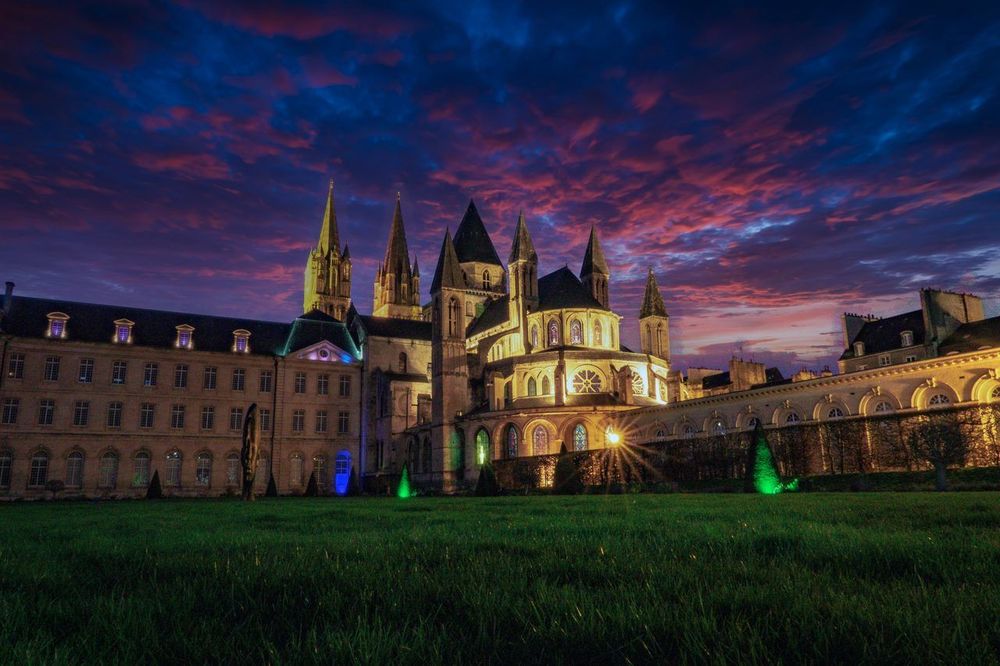
Visiting Caen in 3 days means moving between two histories that almost contradict each other. On one side, the Romanesque towers of the Château de Caen and the ducal abbeys are a reminder that the city was the capital of William the Conqueror. On the other, the rebuilt facades of the city center bear witness to the summer of 1944, when Caen was among the most heavily destroyed cities in France. This double memory, medieval and contemporary, is what makes a stay here so rich: you go from an 11th-century cloister to a Second World War memorial in barely half an hour. To get your bearings as soon as you arrive, the Ryo audio-guided tour of Caen links the castle, the two abbeys and the Vaugueux district in 22 stops.
Three days are enough to see the essentials of the city and venture out to the D-Day beaches. On the program: a fortress that witnessed the birth of the Norman dynasty, a hill that was a public dump before becoming one of the best viewpoints in the city, Bayeux and its cathedral (the famous tapestry is on display in London until July 2027), and military cemeteries stretching as far as the eye can see facing the English Channel. We also include good places to sleep, to taste tripes à la mode de Caen, and to work out the budget for your stay.
Day 1: The Château de Caen and the Historic Heart
Morning: The Château de Caen and the Abbaye aux Hommes
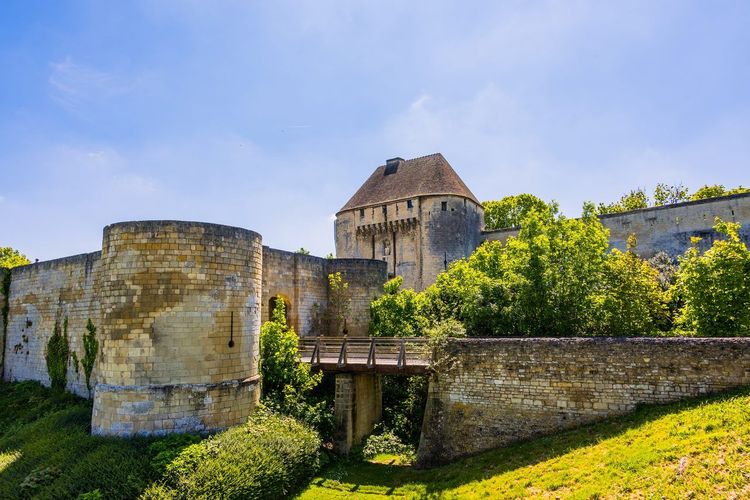
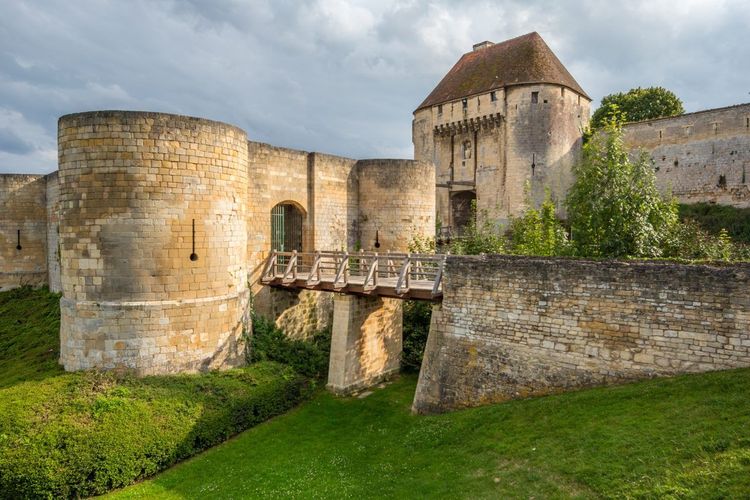
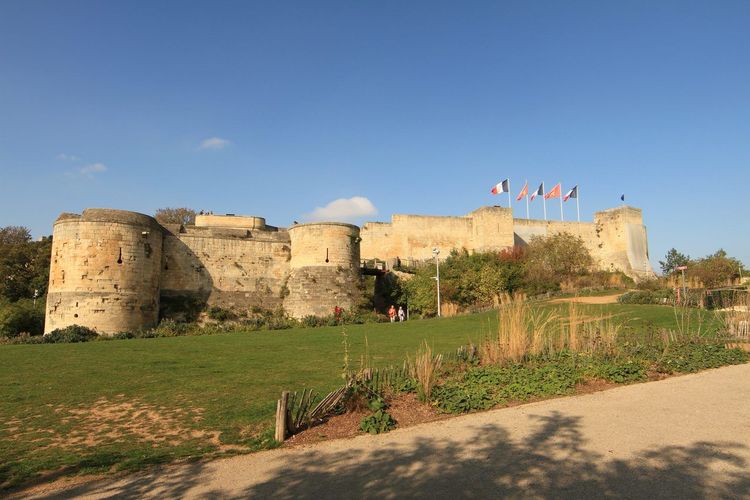
The Château de Caen starts the day off right: founded around 1060 by William the Conqueror, it is one of the largest fortified enclosures in Europe, with nearly 5 hectares inside the ramparts. You can enter freely (the ramparts and gardens are free to access, only the museums charge admission), and it is from the wall walk that the city is best seen: on one side the bell tower of the Abbaye aux Hommes, on the other the towers of the Abbaye aux Dames.
Inside the enclosure, the Musée de Normandie and the Musée des Beaux-Arts each take about an hour if you want to dig deeper, but most visitors are content with the walk along the ramparts, which is free and enough to grasp the scale of the site. Depending on the calendar, the castle also hosts temporary exhibitions in the inner courtyard: check the program before you come, as it may be worth setting aside an extra hour.
Leaving through the gate onto the city, allow about fifteen minutes on foot to reach the Abbaye aux Hommes, founded by William the Conqueror to atone for his marriage to Matilda of Flanders, contracted without the Pope's consent. William has been buried there since 1087, although his tomb was looted several times over the centuries and today contains only a femur. The abbey church of Saint-Étienne, in Norman Romanesque style, directly inspired the architecture of the great English churches after the conquest of 1066.
Set aside a good hour to visit the abbey church and the adjoining conventual buildings, now occupied by the City Hall. The garden behind the building is a good spot for a break before the afternoon.
Afternoon: The Abbaye aux Dames and the Vaugueux District
The Abbaye aux Dames is the female counterpart of the previous one, founded by Matilda of Flanders. Matilda has rested there since 1083, beneath a black marble slab that has remained in place, unlike William's tomb. The abbey church of La Trinité can be visited for free, and the Romanesque crypt is worth a five-minute detour even if you are not the type to linger in churches.
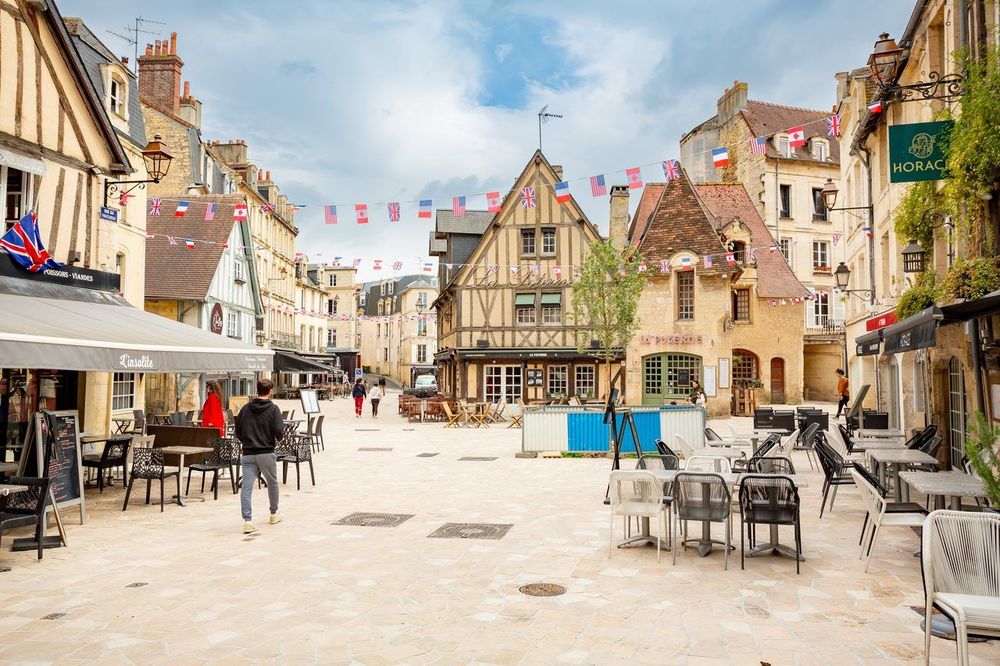
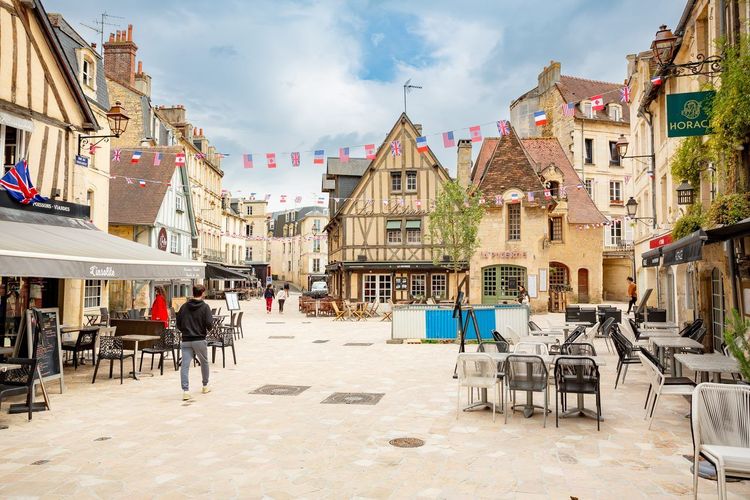
From the abbey, head back down toward the center: you come straight to the Vaugueux district (Rue du Vaugueux, 14000 Caen, rated 4.7/5 on Google from 931 reviews), a former suburb of half-timbered houses partly spared by the bombings of 1944. Today it is the most photogenic district of Caen, with a handful of restaurants and bars set in old facades, from classic Norman bistros to more creative tables. If you are here on a Friday morning, the big market on place Saint-Sauveur (about 150 vendors) is the occasion to taste Pays d'Auge cheeses and farmhouse cider; on Sunday morning, the liveliest market in the city takes place along quai Vendeuvre, at the port.
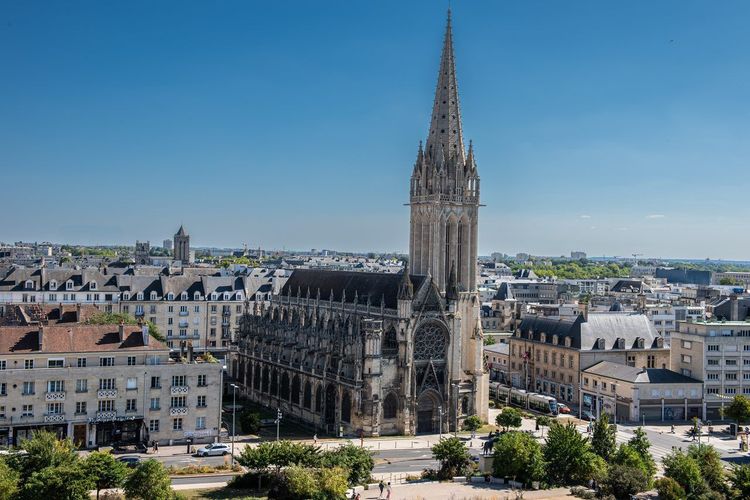
The terraces of Vaugueux fill up quickly in summer from 7 p.m.: book ahead if you plan to dine there on the first evening, or simply stop by in the late afternoon for the atmosphere before heading to the Saint-Pierre church, a central landmark for finding your way around the rest of the city.
The Ryo audio-guided tour of Caen passes through exactly these places, the castle, the ducal abbeys and Vaugueux, in 22 audio stops and 1h50 of walking: handy for getting through the day without pulling out the paper guide at every crossroads, and for catching details that are easily missed when skimming a sign.
Day 2: Remembrance, Gardens and Nature in the City
Morning: The Mémorial de Caen and the Saint-Julien District
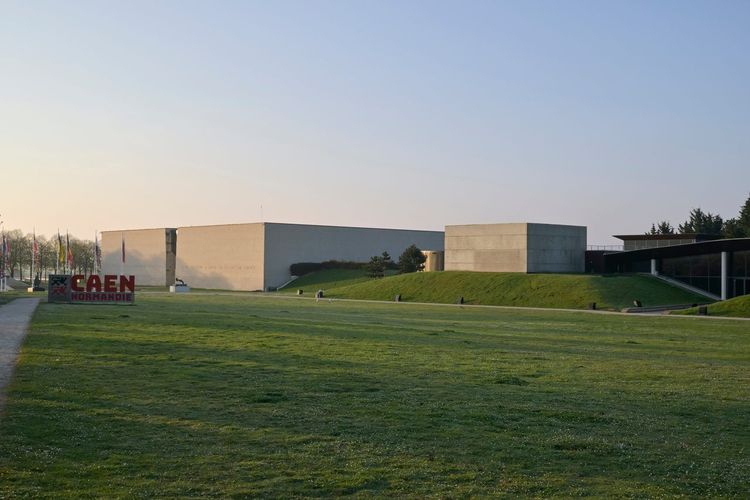
The Mémorial de Caen requires a whole morning, no less. Opened in 1988 above a former German command post, the museum traces the Second World War from the rise of totalitarianism to the Battle of Normandy, then the Cold War. Allow 2.5 to 3 hours for the visit if you read the panels, about €21 at full price (free for children under 10), and book your ticket online in high season to avoid the queue.
Just behind the main building, the memorial gardens, American, British and Canadian, complete the visit outdoors: another half hour of walking if the weather allows, far from the heavier atmosphere of the exhibition halls.
The museum is located in the Folie-Couvrechef district, north of the center. On the way back, the Saint-Julien district, between the Mémorial and the city center, holds part of the post-war reconstructed heritage, with its Caen stone buildings typical of the 1950s. If the emotion of the Mémorial took you some time, a lunch break in this area is no luxury: the museum is hard to rush through.
Afternoon: The Jardin des Plantes and the Colline aux Oiseaux
The Jardin des Plantes in Caen, whose origins go back to 1689, is one of the oldest botanical gardens in France. Its 3.5 hectares and exotic greenhouses, free like the rest of the garden, house collections that contrast with the more heritage-focused rest of the visit. In spring, the flower beds and rose bushes deserve a little more time than planned. It is also, quite simply, a good place to sit on a bench after a packed morning.
Next to the Mémorial, the Colline aux Oiseaux (Avenue Amiral Wietzel, 14000 Caen, rated 4.6/5 on Google from 6,649 reviews) has a less glorious past than its name suggests: for fifty years, it was Caen's municipal dump. Made redundant by the commissioning of an incinerator in 1973, it was converted into a 17-hectare landscaped park, inaugurated in 1994 for the 50th anniversary of D-Day. From the summit, you look out over Caen and the Orne valley, and the rose garden, one of the richest in Normandy, is worth the detour from May to July.
With children, the Festyland park (Bretteville-sur-Odon), 10 minutes by car from the center, remains an option to end the day on a more playful note: Norman and Viking-themed attractions, with a budget of around €25 to €30 per entry. It is not a must, more a pressure valve if the heritage rhythm of the first two days needs breaking up.
To link the Mémorial, gardens and old town without losing the thread, the Ryo audio guide fits in your pocket: you listen to the history of the places as you walk, without fitting a human guide into your schedule or rereading a leaflet between stops.
Day 3: The D-Day Beaches and the American Cemetery at Colleville-sur-Mer
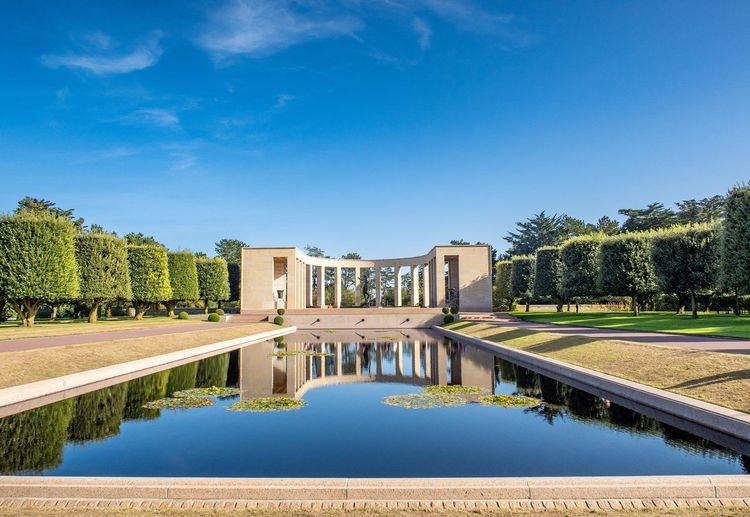
Morning: Sword, Juno and Omaha Beach
The D-Day beaches stretch for about 80 kilometers of coastline, from Ouistreham to the Cotentin peninsula, and no day trip lets you see them all properly. The most common compromise from Caen is to link three emblematic sectors, each associated with a different Allied nation.
Sword Beach, at Colleville-Montgomery, about fifteen kilometers from Caen, was the British troops' sector on June 6, 1944. It is the closest beach and the quickest to visit.
Juno Beach, at Courseulles-sur-Mer (about thirty kilometers away), was taken by Canadian forces. The Juno Beach Centre, a museum dedicated to the Canadian contribution, is a useful addition if you have an hour to spare.
Omaha Beach, at Saint-Laurent-sur-Mer (about 50 minutes by road), remains the best known to the general public, popularized by cinema. It is also the sector where American losses were the heaviest on June 6, with more than 2,000 soldiers killed or wounded in a single day. The beach, wide and flat at low tide, surprises with its present-day calm.
If these beaches are so famous today, it is also because they hold the visual memory of D-Day, period photos and then films, which fixed their code names in the collective imagination. For those with a little more time, Pegasus Bridge and the artificial harbor at Arromanches complete the list without fitting into the strict three-day format in Caen.
Afternoon: The American Cemetery at Colleville-sur-Mer
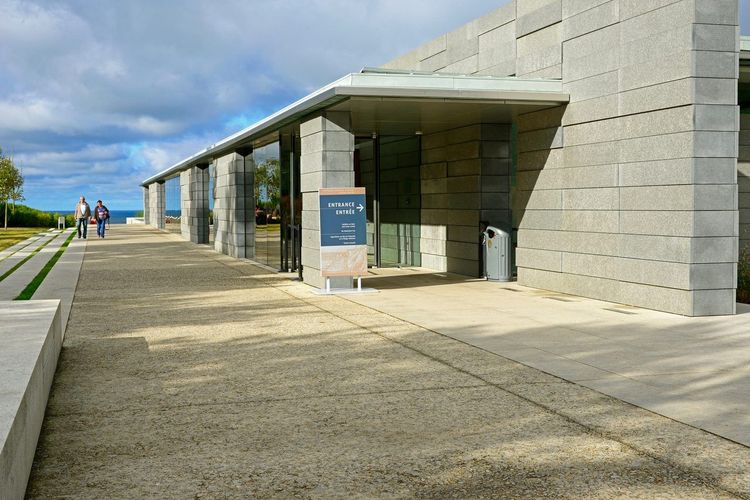
The American cemetery at Colleville-sur-Mer (Avenue de la Liberation, 14710 Colleville-sur-Mer, rated 4.8/5 on Google from 4,954 reviews) overlooks Omaha Beach from the cliff, with 9,388 crosses and Stars of David lined up on a lawn maintained with an almost unsettling precision. The site, managed by the American Battle Monuments Commission, welcomes more than a million visitors each year, and entry is free. The visitor center, opened in 2007, helps place each grave within the broader story of the battle.
To pay less at the museums in the area, download the Explore Normandy Pass: launched in 2024 for the 80th anniversary of D-Day, this web app (free, or €1 for the premium version) gives access to discounts at more than 80 partner sites, D-Day museums but also medieval sites, simply by showing a QR code. If you prefer not to drive between the different sectors, several organized excursions leave Caen for the day, with a guide included.
Even far from the city center, the Ryo audio-guided tour of Caen gives you the background to understand why the city was a strategic objective in 1944: a chance to relisten to a passage before heading to the beaches, or on your way back in the evening to piece the day together.
Bayeux, the Tapestry Town

Notre-Dame Cathedral and the Historic Center
Half an hour's drive from Caen, Bayeux has the rare distinction of having come through the summer of 1944 almost intact, liberated as early as June 7, while Caen was three-quarters destroyed. The Notre-Dame Cathedral of Bayeux (Rue du Bienvenu, 14400 Bayeux, rated 4.7/5 on Google from 8,479 reviews) still dominates the town: its two western towers and its crypt date back to the 11th century, the rest of the building being Norman Gothic.
The historic center, with its half-timbered houses and the Aure river running through it, can be explored on foot in an hour or two, with no complicated route: just follow the riverbanks from the cathedral. The old mills and wash houses on the Aure complete the stroll.
The Bayeux Tapestry
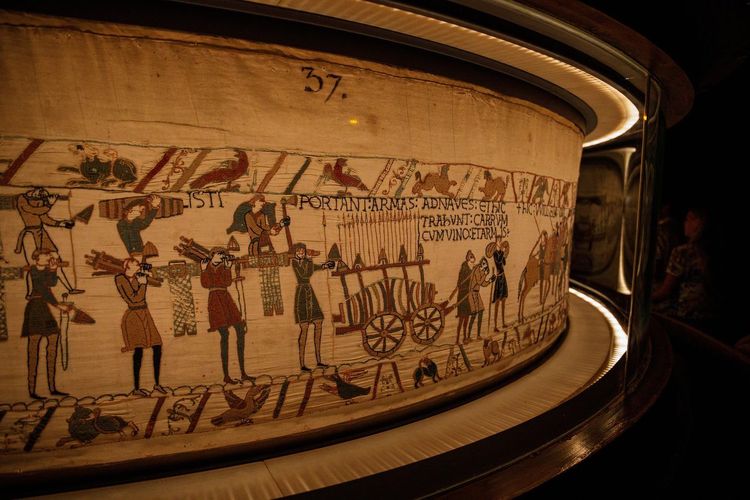
The Bayeux Tapestry is an embroidery about 70 meters long made in the late 11th century, probably in England, commissioned by Odo, Bishop of Bayeux and William's half-brother. In 58 scenes it tells the story of the conquest of England, from Harold's intrigues to the Battle of Hastings. Its survival owes something to chance: during the Revolution, it nearly ended up as a cover for a military wagon.
Mind your calendar: the Tapestry Museum has been closed since September 1, 2025 for a complete renovation, and the work is on display at the British Museum in London from September 10, 2026 to July 11, 2027. Its return to Bayeux, in an expanded museum, is planned for October 2027. In the meantime, the cathedral and the old town fully justify the trip, and Ryo's article on the history of Bayeux details the context of the embroidery and the other sites not to be missed.
Caen Differently: Vaucelles, the Canal and Offbeat Districts
The Vaucelles District and Its Secret Passages
On the other side of the Orne, ten minutes on foot from the center, the Vaucelles district (Rue de Vaucelles, 14000 Caen, rated 4.5/5 on Google from 2 reviews) remains largely ignored by visitors. Yet it is one of the oldest suburbs of Caen, on the former road to Falaise. The district hides passages and inner courtyards between buildings, which some locals happily call traboules, a nod to Lyon, even though the Caen network is far more modest.
To find your way through these poorly signposted passages, ask at the tourist office: greeters, volunteer residents, offer free walks off the beaten track depending on their availability. It is a different way of approaching Caen, less monumental, more attuned to everyday details: an old shopfront, a craftsman's workshop, a flower-filled courtyard.
Caen also has several independent bookshops and secondhand booksellers that have been established for decades, a good excuse to wander aimlessly between more structured visits.
A Walk Along the Orne and the Historic Cemeteries
From Vaucelles, the banks of the Orne and the Saint-Pierre basin offer a flat walk, much quieter than the city center in summer. In good weather, you can rent a small electric boat that requires no license and navigate at your own pace, an activity little known to passing visitors but appreciated by the people of Caen on Sundays.
On the west side, not far from the Abbaye aux Hommes, Caen's "sleeping cemeteries", including the Quatre-Nations cemetery and the Saint-Nicolas cemetery, have not received burials for a long time: old paths overgrown with vegetation, where local figures of the 19th century rest. It is not a must-see stop, but if you enjoy heritage walks away from the crowds, it is an angle rarely offered in standard guidebooks.
An audio anecdote about the old districts punctuates this very section of the Ryo audio-guided tour, away from the crowds of the center: a way to explore this lesser-visited Caen without fear of missing the essentials.
Ouistreham and the Coast
Fifteen kilometers north of Caen, Ouistreham serves both as a ferry port to England and as a family seaside resort, with its long Riva-Bella beach. It is also the eastern end of Sword Beach, which makes it a logical stop to combine with Day 3 if you prefer to stay near the sea.
Ouistreham's water activities attract families and occasional sports enthusiasts: sand yachting on the beach at low tide, when the exposed sand offers enough space, and canoe-kayaking in the Orne estuary. Several clubs offer hourly introductory sessions.
On the other side of the estuary, at Sallenelles, the Maison de la Nature et de l'Estuaire is under renovation: it is due to reopen in 2027 under the name Maison départementale de la nature. The trails around the Orne estuary, one of the largest protected natural areas in Calvados, remain accessible for observing egrets, gulls and waders.
The coastal cycle route, which follows the Côte de Nacre westward to the D-Day beaches, can be ridden on an electric bike in half a day for the most motivated. To prepare a water outing, the 9 best places to go canoe-kayaking in Normandy and the guide to sand yachting in Normandy detail the clubs and tide conditions.
The port of Ouistreham, operated by Brittany Ferries, connects the town to Portsmouth: a useful detail if your Norman stay is part of a trip to England. Without a car, the Twisto bus line 12 serves Ouistreham, connecting with tram line T1, which makes it an easy excursion even without a vehicle.
The Suisse Normande, a Nature Break
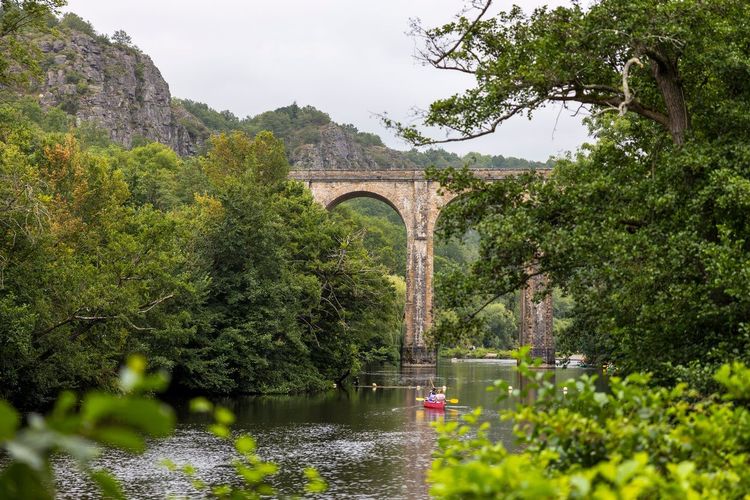
Despite its name, the Suisse Normande has nothing alpine about it: it is a region of hills and gorges carved by the Orne, 35 to 40 minutes' drive south of Caen, around Clécy and Thury-Harcourt. The nickname comes from the terrain, unusual for Normandy.
The most spectacular viewpoint remains the Roche d'Oëtre (Route de la Roche d'Oëtre, 61430 Saint-Philbert-sur-Orne, rated 4.6/5 on Google from 2,516 reviews), a rocky spur overlooking the Rouvre gorges from about a hundred meters up, reached by a short walk from the parking lot. The profile of the rock, seen from the side, resembles a human face: look for it from the viewing platform.
Clécy, considered the capital of the Suisse Normande, has most of the canoe rental companies and the starting points for marked hiking trails. Allow about thirty minutes by car from Clécy to reach the Roche d'Oëtre.
It is not a compulsory detour if you are coming for the heritage, but if your stay goes beyond three days or you need to catch your breath, it is the most restful option on the itinerary. Without a car, the region remains difficult to reach.
Honfleur, Deauville and the Côte Fleurie
About an hour's drive from Caen, the Côte Fleurie extends the stay eastward, to the Seine estuary. It is an extension worth considering if your stay in Normandy goes beyond the three days in Caen.
Honfleur is the most photogenic, with its Vieux Bassin lined with tall, narrow houses, which Boudin, Jongkind and Monet painted at the dawn of Impressionism. The quays are best explored by strolling, among art galleries and fish restaurants.
Deauville, about twenty minutes away, plays a different register: the Planches boardwalk along the beach, a historic casino and Norman villas built for the Parisian bourgeoisie. The town remains associated with its American Film Festival, held every year in early September.
Between the two, Trouville and Villers-sur-Mer are good choices if you prefer to avoid Deauville's summer crowds. Plan a full day rather than a quick round trip: the road invites stops along the way.
Where to Stay in Caen
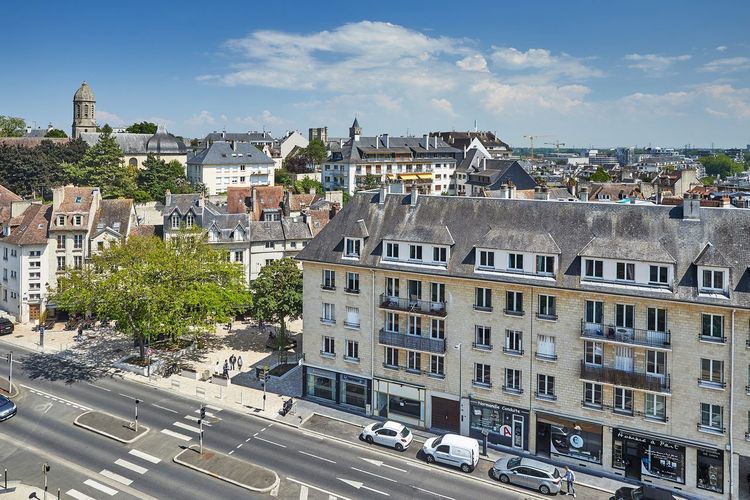
Caen is easy to visit without a car, which makes the choice of district more important than the choice of hotel. Three areas stand out for a three-day stay.
The city center, around the castle and the Saint-Pierre church, puts everything essential within walking distance: castle, abbeys, shops and restaurants. It is the most practical choice for doing everything on foot, at the price of higher noise levels on weekends.
The Vaugueux district, just below the castle, offers a more intimate atmosphere, with a few charming places to stay. A good compromise between relative calm and proximity to the historic center.
The train station area, about a twenty-minute walk from the castle or a few tram stops away, suits a stay that starts late or leads into an early-morning excursion to Bayeux: options there are generally more affordable. For a beach-oriented stay, staying in Ouistreham lets you combine coastal walks and Sword Beach, at the cost of a bus ride to the center of Caen.
Budget-wise, a decent double room in the city center costs around €90 to €130 per night in high season, with rates dropping outside July and August. Book early if your stay falls around June 6, the anniversary of D-Day: hotels in Caen and Bayeux fill up several weeks in advance.
Where to Eat in Caen: Good Addresses and Local Specialties

Caen's cuisine stays true to Norman recipes, built around butter, cream, cider and seafood from the Côte de Nacre. Two dishes sum up the city.
The tripes à la mode de Caen are the local signature dish: beef tripe simmered for many hours with calf's feet, carrots, onions, cider and calvados. Tradition attributes the recipe to Sidoine Benoît, a monk of the Abbaye aux Hommes. It is a dense dish, far from easy tourist gastronomy, which you will find mostly in the traditional brasseries of the center.
The teurgoule, a cinnamon rice pudding cooked very slowly in the oven until it caramelizes on the surface, often completes the meal. It can also be found at bakery-pastry shops, sold by the slice.
To take home a tasty souvenir rather than a magnet, the Biscuiterie Jeannette (23 Avenue du Pays de Caen, 14460 Colombelles, rated 4.4/5 on Google from 740 reviews), founded in Caen in 1850 and specializing in madeleines since 1951, has set up its factory-shop in Colombelles, on the edge of the city (23 avenue du Pays de Caen).
As for places to eat, Vaugueux has the highest density of charming restaurants, often full on weekends without a reservation. The area around the Saint-Pierre basin and place Courtonne offers a more varied and affordable choice for a quick lunch. The Friday-morning Saint-Sauveur market and the Sunday quai Vendeuvre market remain the best options for putting together a picnic (camembert, cider, apples).
As for drinks, cider and calvados naturally accompany the tripes. Allow €15 to €25 for a traditional dish in a brasserie, and rather €30 to €45 for a full menu at a more refined address. If your stay falls on a market day, save some room: between the tripes, the cheeses and the teurgoule, the three days can quickly turn into a culinary marathon.
How to Get to and Around Caen
Getting to Caen: Train, Car, Plane
By train, Caen can be reached from Paris Saint-Lazare in 1h50 to 2h, with regular direct services. The Caen train station (Place de la Gare, 14000 Caen) is on the right bank of the Orne, within reasonable walking distance of the historic center.
By car from Paris, allow about 2h15 to 2h30 via the A13, with a toll to expect. It is the most practical option for continuing on to the D-Day beaches, Bayeux or the Suisse Normande, as public transport covers these excursions poorly.
Caen-Carpiquet airport, 7 km from the center, remains modest: it mainly serves a few domestic and seasonal routes.
Getting Around Caen: Bus, Bike, On Foot
The historic center can be covered entirely on foot: castle, abbeys and Vaugueux fit within a small perimeter, which makes a car useless once you are there, even counterproductive given the limited parking.
The Twisto network (three tram lines and buses) covers the rest of the urban area, useful for reaching Ouistreham or the Mémorial without walking for an hour. Single tickets or day passes can be bought at stations or via the network's app.
If you arrive by car, the park-and-ride lots on the outskirts, linked to the center by tram, cost significantly less than those in the city center.
From the moment you arrive, the Ryo audio-guided tour of Caen helps you find your way on foot around the historic center without a paper map: just follow the 22 stops in order to cover the essentials of the first day.
Budget, Tips and Best Time to Visit Caen
Budget for 3 Days in Caen
For a 3-day stay in Caen with an excursion to the D-Day beaches and Bayeux, allow €90 to €150 per day per person, accommodation included, when traveling as a couple. This figure varies considerably depending on the comfort level you want and the season.
Accommodation is the most variable item, from €70 a night off-season to more than €150 in June and in midsummer. Meals, €15 to €25 for a simple lunch and €30 to €45 for a refined dinner, weigh less than in big cities.
As for sightseeing, the Mémorial de Caen costs around €21, the castle ramparts and the abbey churches are free, and so is the American cemetery at Colleville. Renting a car for the day at the beaches generally adds €40 to €60 plus fuel.
City Pass Caen la Mer and Other Tips
The City Pass Caen la Mer bundles access to several sites in the urban area (museums, sometimes transport) over 24, 48 or 72 hours, handy if your itinerary covers the castle, museums and the Mémorial. Check the list of included sites at the time of purchase, as it changes from year to year.
For the day at the beaches, the Explore Normandy Pass works differently: it is not a combined ticket but an app that entitles you to discounts at partner museums. The two combine well depending on your itinerary.
The market days in Caen, Friday morning at place Saint-Sauveur and Sunday morning at quai Vendeuvre, are also a good tip for eating on the go at low cost.
As for the season, the best time to visit Caen runs from May to September to enjoy the gardens and beaches, avoiding if possible the week of June 6 if the commemorations do not interest you: hotels are full, roads around the D-Day sites are busy and prices climb.



FAQ
Is Caen worth visiting?
Yes, especially if you are interested in Norman history in the broad sense: in one extended weekend, Caen combines the medieval ducal heritage (castle, abbeys) with the memory of the Second World War, with easy access to the D-Day beaches and Bayeux. At first glance it is less spectacular than Rouen or Honfleur, but it is richer in historical content.
What are the must-see sights in Caen?
The Château de Caen, the Abbaye aux Hommes and Abbaye aux Dames, the Mémorial de Caen and the Colline aux Oiseaux form the core of a 2- to 3-day visit. The Vaugueux district rounds off this list nicely for its atmosphere and its restaurants.
What are the best places to visit in Caen on foot?
The historic center, between the castle, the two abbeys and the Vaugueux district, can be explored entirely on foot. The banks of the Orne, the Saint-Pierre basin and the Vaucelles district offer a quieter, complementary walk.
What is the nicest district in Caen?
Vaugueux generally wins, with its half-timbered houses and its concentration of restaurants. Vaucelles, less well known, appeals to visitors looking for a more authentic Caen.
How many days do you need to visit Caen and the surrounding area?
Three days cover the essentials of the historic center, the Mémorial and an excursion to the D-Day beaches with Bayeux. To add the Suisse Normande or the Côte Fleurie without rushing, plan on 4 to 5 days.
Do you need a car to visit Caen in 3 days?
Not for the city center, which is fully accessible on foot or by tram. However, the D-Day beaches, Bayeux and the Suisse Normande are easier to reach by car, as public transport to these sites is infrequent.
Conclusion
Three days in Caen are enough to understand why the city holds a special place in Normandy: nowhere else do the ducal memory of the 11th century and that of 1944 overlap so closely, just a few hundred meters apart. Between the castle, the abbeys, the Mémorial and the excursion to the beaches and Bayeux, the essentials of the regional heritage are covered without scattering your time.
To structure the first two days without constantly pulling out a map, the Ryo audio-guided tour of Caen remains the simplest starting point: 22 stops, 1h50 of walking and 4.6 km linking the castle, the two ducal abbeys and the Vaugueux district, at your own pace and without depending on a guided-tour time slot.
À lire également