© Shutterstock
 Votre guide Ryo
Visit Clermont-Ferrand in 2 Days: Complete 2026 Itinerary
Between the roar of the stadium on an ASM match night and the shadow of the Michelin headquarters that shaped its industrial identity, Clermont-Ferrand hides a historic centre built of Volvic stone, so dark that it is nicknamed the Black Diamond. Many visitors give it only a stopover before Vulcania or the Puy-de-Dôme, and that is a shame: visiting Clermont-Ferrand in 2 days lets you pair this dense, black heritage with a real volcanic day. The Ryo audio-guided tour of Clermont-Ferrand covers this city centre in about twenty commented stops, over 2h10 and 5.3 km, a good starting point before heading up to the summits.
In two well-paced days, you can fit in a black Gothic cathedral, a Romanesque basilica listed by UNESCO, a medieval town with a grid plan, a summit reachable by rack railway and a theme park buried in a landscape of volcanoes. You can also climb a little-known green hill to watch the Chaîne des Puys stand out against the setting sun, or understand how a tyre maker turned this mid-sized city into an industrial capital. This guide details a day 1 / day 2 itinerary (Clermont and Montferrand on the first day, the Auvergne volcanoes on the second), then the locals' viewpoints, the best season and all the practical information to plan your weekend.
Day 1: Clermont and Montferrand, the Historic Heart of the City
The first day is built as a walking tour, from the Gothic heart of Clermont to the lanes of Montferrand. Allow a morning for the old town and an afternoon for Montferrand, with a lunch break somewhere in between.
Notre-Dame-de-l'Assomption Cathedral and Place de la Victoire
The Notre-Dame-de-l'Assomption Cathedral dominates the city with its Gothic silhouette in Volvic stone, the black lava extracted from the neighbouring volcanoes that gives the building its distinctive hue. Begun in 1248 under Bishop Hugues de la Tour, it was only completed in the 19th century by Viollet-le-Duc, who added its façade and its two spires. If you have good legs, the Bayette tower offers a plunging view over the rooftops.
Right next door, Place de la Victoire offers the best angle for photographing the black towers. You will also find the statue of Pope Urban II, who preached the First Crusade in Clermont in 1095, a founding episode that few visitors associate with the city today.
As you walk up Rue Pascal, take a look at the Hôtel de Chazerat, an 18th-century mansion that now houses the regional cultural affairs department. Its oval courtyard, elegant and discreet, gives an idea of the aristocratic Clermont before the Revolution.
Notre-Dame-du-Port Basilica, Rue des Gras and the Terrail Fountain
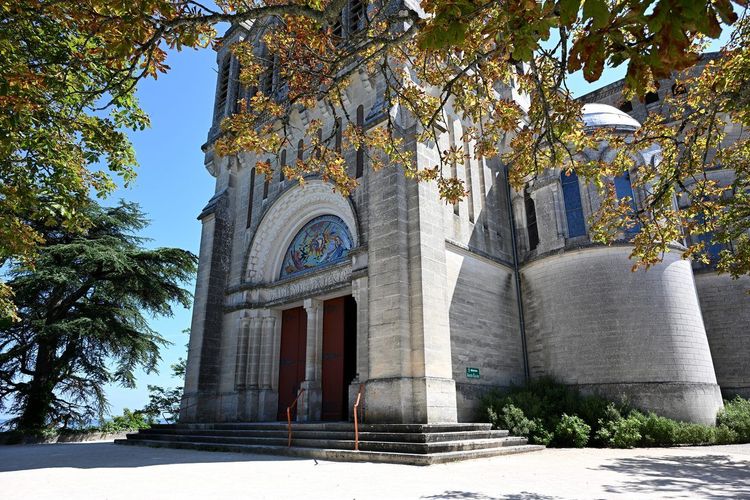
Ten minutes on foot away, the Notre-Dame-du-Port Basilica contrasts radically with the cathedral: built in pale arkose in the 12th century, it is one of the five major Romanesque churches of Auvergne, listed as a UNESCO World Heritage Site as part of the Routes of Santiago de Compostela. Its chevet decorated with polychrome stone mosaics, its carved capitals and its crypt housing a Black Madonna make it a far livelier place than its status as a listed monument suggests.
On the way back towards the centre, Rue des Gras, pedestrian and lively, runs straight to the cathedral between shops and terraces. A little further on, the Terrail Fountain decorates a small sloping square, a good landmark if you are looking for somewhere to catch your breath between two visits.
If time allows, continue to the Jardin Lecoq, a 19th-century landscaped park with its lake, tall trees and the nearby Henri-Lecoq Museum. This is where Clermont families picnic on Sundays, far from the bustle of the centre.
Want to link these places without losing the thread of their history? The Ryo audio guide passes through the cathedral, Notre-Dame-du-Port, the Amboise Fountain, Place de la Victoire and the Jardin Lecoq, with an anecdote at every stop and no booking required.
Old Montferrand and Its Street Art
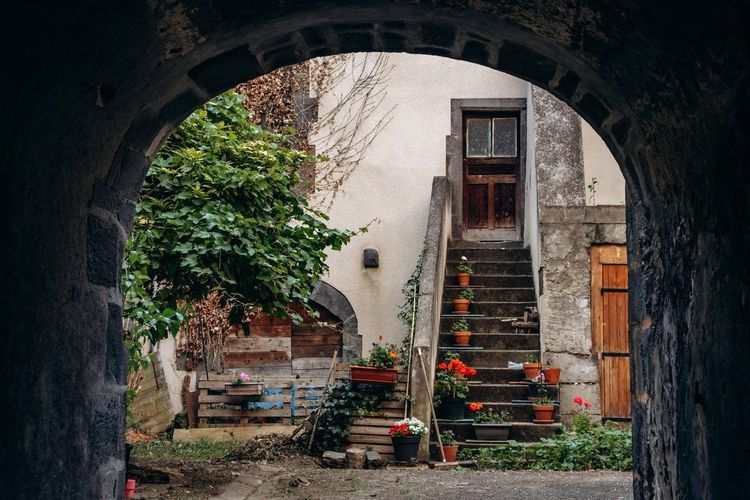
In the afternoon, take tram A to Old Montferrand (Place du Rabanesse, 63100 Clermont-Ferrand, rated 3.9/5 on Google from 45 reviews), a former rival town joined to Clermont by the Edict of Troyes in 1630, under Louis XIII. Its half-timbered houses, its Renaissance mansions with carved inner courtyards and its grid plan almost unchanged since the Middle Ages make it a district apart, far less crowded than the centre of Clermont.
What is also surprising is the contrast between these old façades and the street art: keep your eyes open, murals and paste-ups punctuate some walls between the tram stop and the old town. The mix of medieval stone and contemporary paint gives the district the feel of a lived-in place rather than an open-air museum.
Day 2: The Puy-de-Dôme, Vulcania and the Auvergne Volcanoes
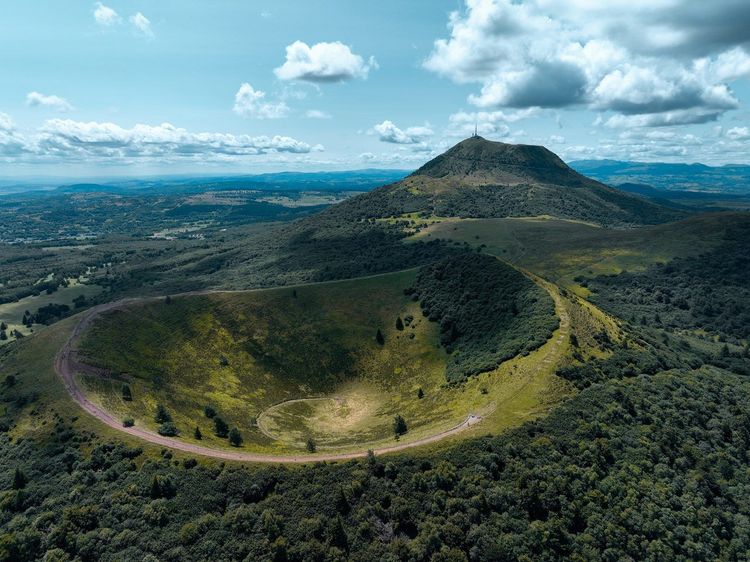
If one French city deserves the title of gateway to the Auvergne volcanoes, it is Clermont-Ferrand: the Chaîne des Puys literally begins at its doorstep, about fifteen kilometres from the centre. The second day therefore changes register completely, from urban black stone to volcanic landscapes as far as the eye can see.
The Summit of the Puy-de-Dôme and Its UNESCO-Listed Panorama
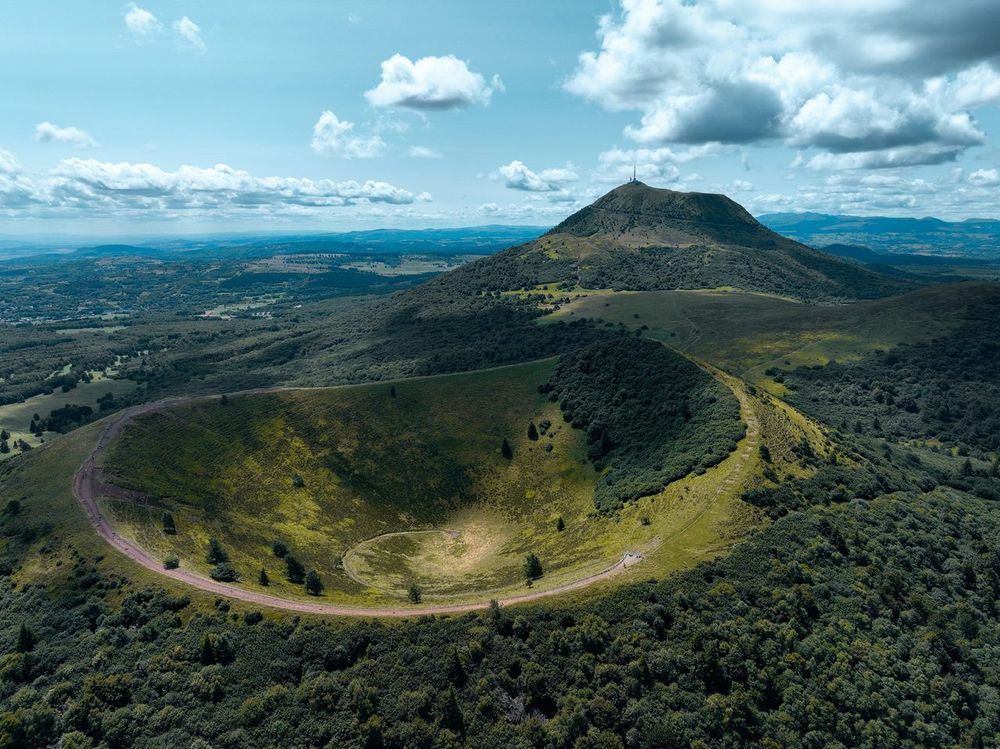
The Puy-de-Dôme rises to 1,465 metres and can be climbed in two ways: on foot via the Chemin des Muletiers, from the Col de Ceyssat (about an hour of steady climbing), or by the Panoramique des Dômes, an electric rack railway that reaches the summit in 15 minutes from its Orcines station. The site, listed as a UNESCO World Heritage Site in 2018 along with the Chaîne des Puys and the Limagne fault, can be visited without particular difficulty, even without exceptional fitness.
At the top, the remains of a Gallo-Roman temple dedicated to Mercury sit alongside the broadcasting antenna, an atmospheric research station and above all a panorama that, on very clear days, stretches to the peaks of the Massif Central. Paragliders taking off from the slopes add a free show, and you will probably meet trail runners who have come up along the Chemin des Muletiers before the first train.
Vulcania, the Auvergne Volcano Theme Park
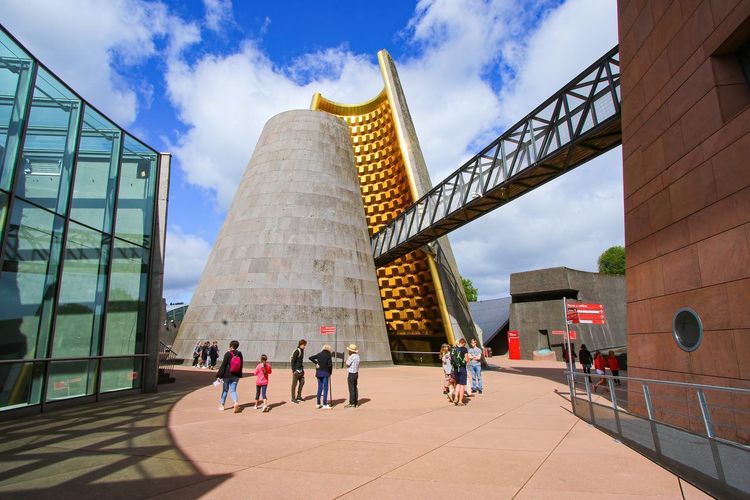
About twenty minutes away by road, Vulcania (Route de Mazayes, 63230 Saint-Ours-les-Roches, rated 4.2/5 on Google from 21,515 reviews) easily takes up half a day, more if you are travelling with children. This theme park centred on volcanism was designed by the Austrian architect Hans Hollein and partly buried in the landscape to limit its visual impact, a choice that still surprises first-time visitors.
With its dynamic films simulating an eruption, its planetarium and its seismology exhibits, the park appeals as much to families as to those curious about Earth sciences. The simplest plan: the Puy-de-Dôme in the morning, when the light is sharpest, then Vulcania in the afternoon. The park closes for part of the winter, so check its opening dates before booking your weekend.
The Chaîne des Puys and the Limagne Fault
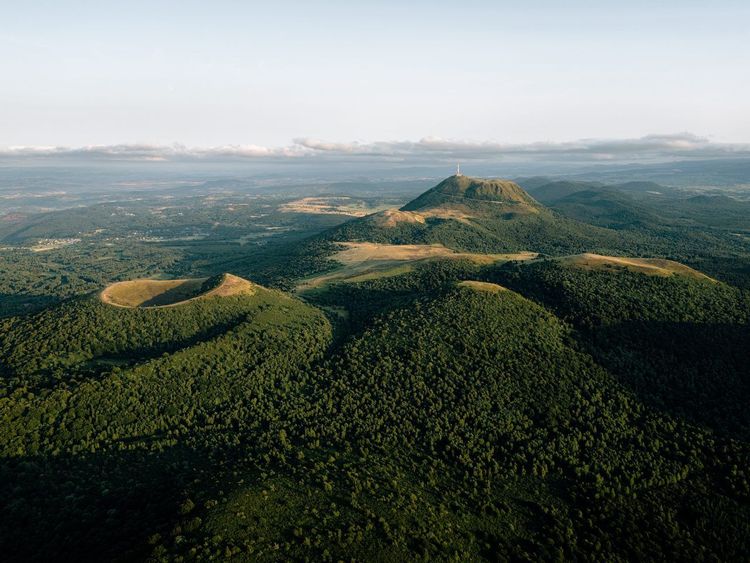
Beyond the Puy-de-Dôme itself, it is a line of about 80 dormant volcanoes that makes up the Chaîne des Puys, from the Puy de Pariou with its perfect crater to the Puy de Côme. Combined with the Limagne fault running further east, this formation tells the story of the continental rift that shaped Auvergne, which earned it its UNESCO listing.
If you have a car, the small roads running along the chain let you string together several viewpoints in under two hours, in addition to the climb to the summit. The Ryo guide to the must-see volcanoes in Auvergne details the spots to add to this volcanic day depending on how much time you have. Back in town at the end of the day, keep an hour for the audio stops in the centre that you may have skipped the day before: the tour picks up right where you left it.
The Best Viewpoints and Neighbourhoods Not to Miss
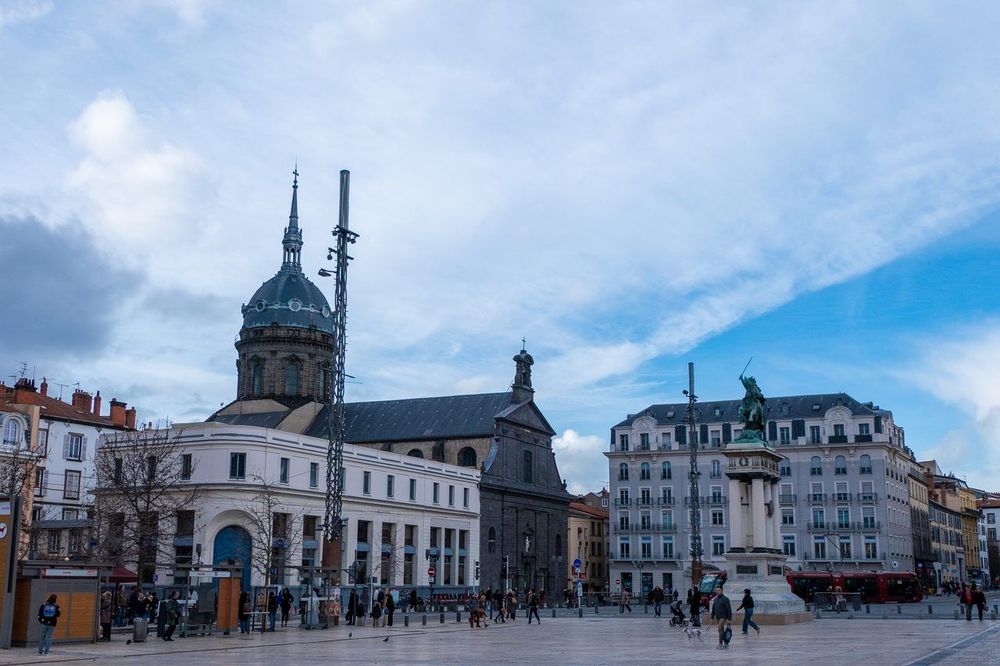
If you have an extra half-day, or simply want to gain some height at the end of your stay, two viewpoints and a spa district usefully complete the itinerary. Add a stop at Place de Jaude, the city's shopping heart, dominated by the equestrian statue of Vercingetorix by Bartholdi, where a big wheel is set up every winter during the festive season.
Parc Montjuzet and the Pierre Carrée, Two Viewpoints over the City
The Parc Montjuzet occupies a green hill north of Clermont, largely unknown to passing visitors. People come for the rose garden in June, but above all for the panorama that opens over the rooftops with the Chaîne des Puys in the background.
More discreet, the Pierre Carrée is a viewpoint overlooking the urban area, appreciated at nightfall when the lights of Clermont and Chamalières spread out below. It is the kind of spot locals keep to themselves, far from the classic tourist routes.
The Spa District of Royat and Its Belle Époque Atmosphere
On the edge of Clermont, Royat (63130 Royat) preserves the hushed atmosphere of a Belle Époque spa town: a casino, villas with turrets and a bathing establishment that attracted spa-goers and crowned heads in the 19th century. Often cited as the most beautiful district around Clermont-Ferrand, it can be visited in an hour or two during a stroll.
To compare the atmospheres before choosing where to wander, the Ryo guide to the neighbourhoods of Clermont-Ferrand reviews the centre, Montferrand, Jaude and the neighbouring towns. Around Place de Jaude, it is the Ryo audio guide to the city centre that tells you, at the foot of Vercingetorix, why the statue took decades to reach its place.
The Michelin Adventure and the ASM: Clermont's Industrial and Sporting Soul
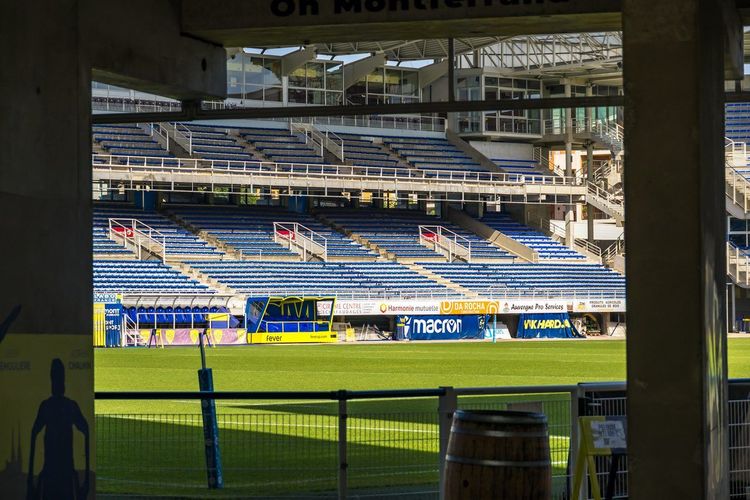
People often forget that Clermont-Ferrand is also the Michelin city: the company was born here in 1889 and still has its headquarters here, and this dual identity, industrial and sporting, deserves a few hours.
The Michelin Adventure Museum
The Michelin Adventure Museum traces over a century of the group's history through old tyres, advertising posters, maps and guides, not forgetting Bibendum, the mascot created in 1898 that has survived every fashion. You also discover the Michelin family's forays into aviation and rail, long before the tyre became synonymous with the city.
The museum is a stone's throw from the tram stop and the stadium, so it is easy to slot in between Old Montferrand and the centre on the first afternoon.
Experiencing ASM Rugby
It is impossible to talk about Clermont without mentioning ASM Clermont Auvergne, a historic French rugby club that plays at the Stade Marcel-Michelin (Avenue de la République, 63100 Clermont-Ferrand, rated 4.7/5 on Google from 6,457 reviews). On a match night, the whole city seems to converge on the stadium, and the yellow-and-blue atmosphere in the stands is worth the trip even for the uninitiated.
If your stay coincides with a match, book early: tickets go fast for Top 14 or European Cup fixtures, and the experience completely changes how you see the city.
2-Day Clermont-Ferrand Itinerary at a Glance
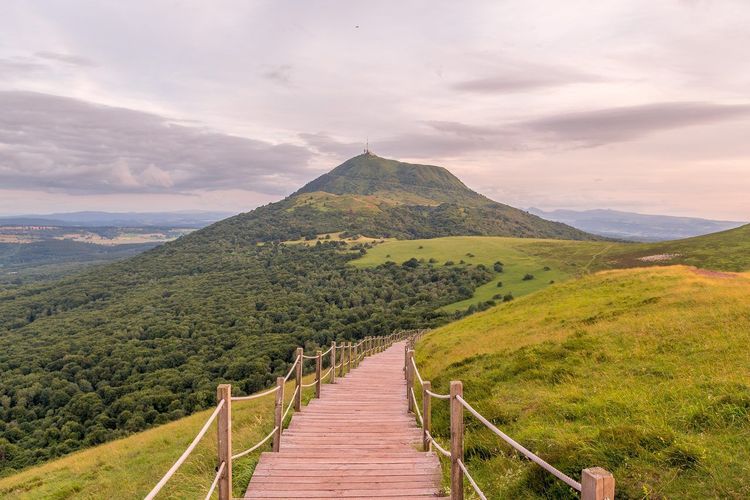
Here is the recommended schedule, to adapt according to the weather (save the Puy-de-Dôme for the clearest day):
- Day 1, morning: cathedral, Place de la Victoire, Rue des Gras, Notre-Dame-du-Port Basilica, Terrail Fountain
- Day 1, midday: lunch around the Saint-Pierre market or Place de Jaude
- Day 1, afternoon: tram A to Old Montferrand, Michelin Adventure Museum, return via the Jardin Lecoq
- Day 1, evening: sunset from Parc Montjuzet or an ASM match depending on the calendar
- Day 2, morning: climb the Puy-de-Dôme via the Panoramique des Dômes or the Chemin des Muletiers
- Day 2, afternoon: Vulcania or a walk in the Chaîne des Puys, then Royat at the end of the day
The first morning follows almost exactly the route of the Ryo audio-guided tour: 2h10 of walking and a 5.3 km loop, which you can split between the morning and the evening.
When to Visit Clermont-Ferrand for a Weekend?
Spring and Summer, the Best Season for the Volcanoes
From May to September, the long days and the summer shuttles to the Puy-de-Dôme make day 2 much easier to organise. June is often the best compromise: the Montjuzet rose garden in bloom, clear summits and fewer people than in August. Keep in mind that the weather changes quickly at altitude, so pack a jacket even in midsummer.
Autumn, Winter and Major Events
In autumn, the Chaîne des Puys turns russet and the city returns to a more local rhythm. In early February, the International Short Film Festival fills the cinemas and hotels: book early if your dates coincide. In December, the Christmas market and the big wheel on Place de Jaude give the centre a different feel, even if the weather at the summit becomes unpredictable.
Getting to and Around Clermont-Ferrand
Train, Car or Plane
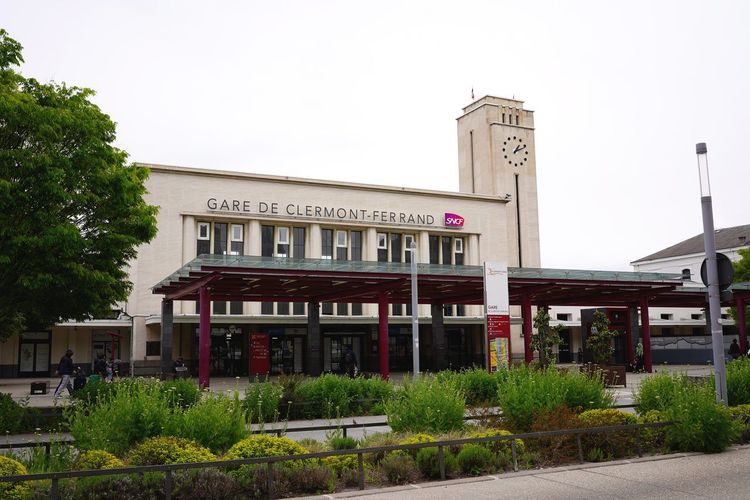
Clermont-Ferrand can be reached by Intercités train from Paris-Bercy (about 3h30, via Vichy and Riom), by car on the A71 from Paris or the A75 from the south, and by plane via Clermont-Ferrand Auvergne Airport, served by a few direct routes. The station is about a fifteen-minute walk from Place de Jaude.
Tram, Bus and Shuttles to the Sites
Once there, the historic centre can be explored entirely on foot: distances between the cathedral, the basilica and Place de Jaude are measured in minutes. For Montferrand, tram line A links the centre to the old town in about a quarter of an hour.
For the Puy-de-Dôme, a seasonal shuttle links the city centre to the Panoramique des Dômes station. Vulcania, however, remains easier to reach by car, as public transport service is limited. You can therefore visit Clermont-Ferrand without a car, provided you check the shuttle timetables before setting off, especially out of season.
Where to Stay to Visit Clermont in Two Days?
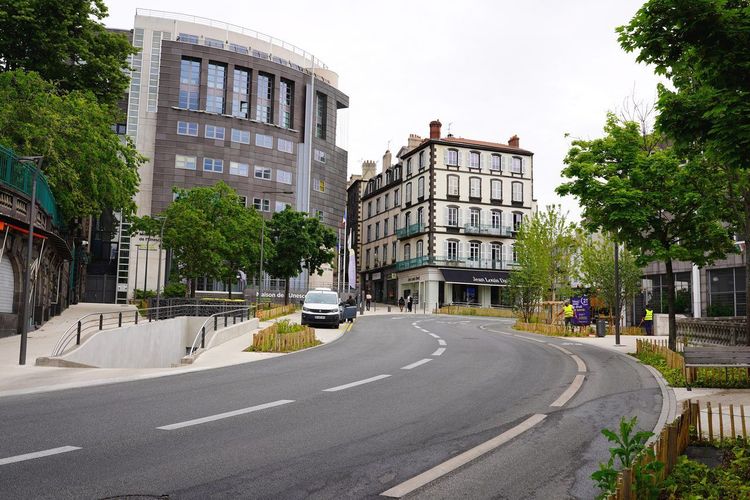
Three areas stand out depending on your priorities:
- Historic centre (around the cathedral) to do everything on foot from the moment you wake up
- Place de Jaude for shops, restaurants and the tram
- Royat for a calmer, spa-town atmosphere, ten minutes from the centre and closer to the volcanoes
If you arrive by train and are not renting a car, favour the centre or Jaude: you will save precious time on a two-day stay.
Local Specialities and Products to Bring Back

On the plate, truffade (potatoes, fresh tome cheese and garlic) and Auvergne potée go with any successful visit. For your basket, go for the local PDO cheeses, saint-nectaire, fourme d'Ambert or bleu d'Auvergne, and for fruit pastes, a Clermont speciality for centuries.
The Saint-Pierre market, a covered hall in the heart of the centre, remains the best place to buy these products directly from the vendors, ideally on Saturday morning before hitting the road.



FAQ
How many days do you need to visit Clermont-Ferrand?
Two days are enough for the essentials: one day for Clermont's heritage and Montferrand, and one day for the Puy-de-Dôme and Vulcania. With three days, you can add Royat, the secondary viewpoints and a wider excursion into the Chaîne des Puys.
Is it easy to visit Clermont-Ferrand without a car?
Yes for the city centre, which is walkable, and for Montferrand thanks to tram line A. For the Puy-de-Dôme, a seasonal shuttle exists, but frequencies remain limited outside summer: check the timetables if you are relying on public transport.
Is the Puy-de-Dôme accessible to everyone, including without a car?
The Panoramique des Dômes, an electric rack railway, makes the summit accessible without effort in 15 minutes from its Orcines station. Hikers can also climb via the Chemin des Muletiers in about an hour.
What is the most beautiful neighbourhood in Clermont-Ferrand?
Old Montferrand often wins for its preserved architecture, while Royat, with its Belle Époque spa atmosphere, appeals to those looking for more calm. The choice mainly depends on the atmosphere you are after.
Where should you stay for a weekend in Clermont-Ferrand?
The historic centre is ideal for walking everywhere, Place de Jaude for shops and the tram, and Royat for a more relaxed atmosphere ten minutes from the centre.
What local products should you bring back from Clermont-Ferrand?
Saint-nectaire, fourme d'Ambert, bleu d'Auvergne and Clermont fruit pastes are among the must-haves, as is a bottle of Velay verbena liqueur.
Two days in Clermont-Ferrand are therefore enough to understand why this city, too often treated as a mere stopover, deserves a real visit: a unique black architecture in France, a surprisingly well-preserved medieval town and volcanoes reachable within minutes of the centre. Headphones on, let the Ryo audio-guided tour lead you from the cathedral to Place de Jaude, at your own pace and with no schedule constraints.
À lire également