© Shutterstock
 Votre guide Ryo
Clermont-Ferrand Neighborhoods: Complete Guide 2026
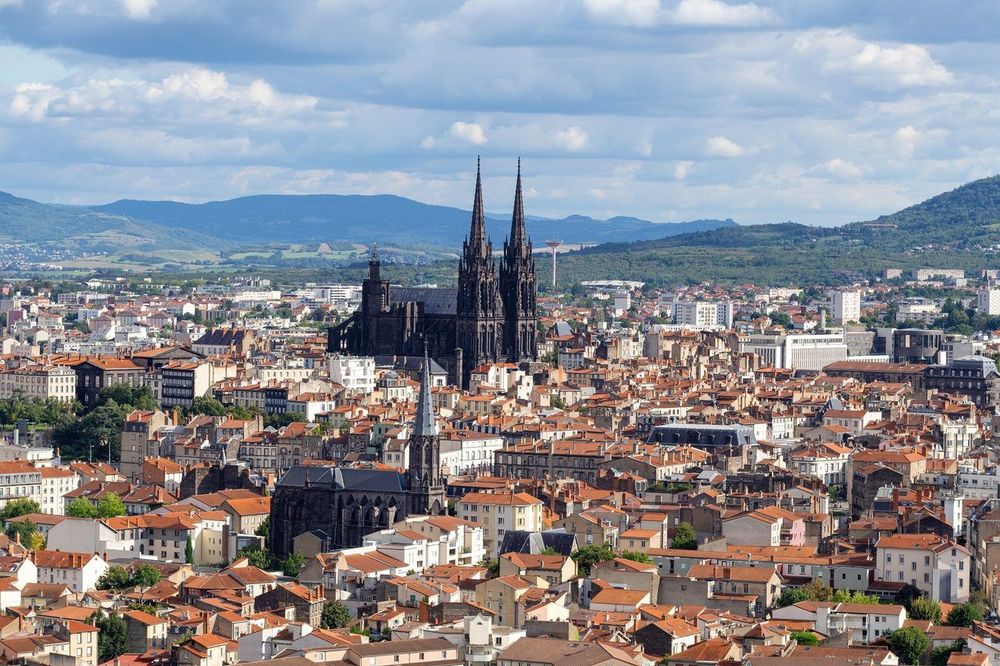
Seven in the morning, place de Jaude: the terraces are still empty, but the spires of the Volvic stone cathedral already cut through the skyline above the "black city." Three kilometers further northeast, near Montferrand, the scenery changes completely: ruler-straight streets, half-timbered medieval houses, an almost village-like silence — yet you are still within the same commune. This is the singular character of Clermont-Ferrand's neighborhoods: a mid-sized city that condenses, over just a few kilometers, a historic center perched on a volcanic hill, a booming student district, industrial zones shaped by Michelin, and residential fringes set between the puys and the Limagne plain. Perfect for getting your bearings, the Ryo audio-guided tour of Clermont-Ferrand loops through the main sites of the historic heart over 5.3 km and 2h10 of walking.
In this guide: what sets the cathedral district apart from place de Jaude, why Montferrand has kept its medieval layout nearly four centuries after the Edict of Troyes that united it with Clermont, where the fastest-growing student neighborhood is, how la Gauthière and Croix-de-Neyrat are reinventing themselves, which northern and southern districts to choose for peace and nature, where to go for a night out, and finally which neighborhood to pick based on your profile.
The Historic Heart: Cathedral, Jaude, and Vieux Clermont
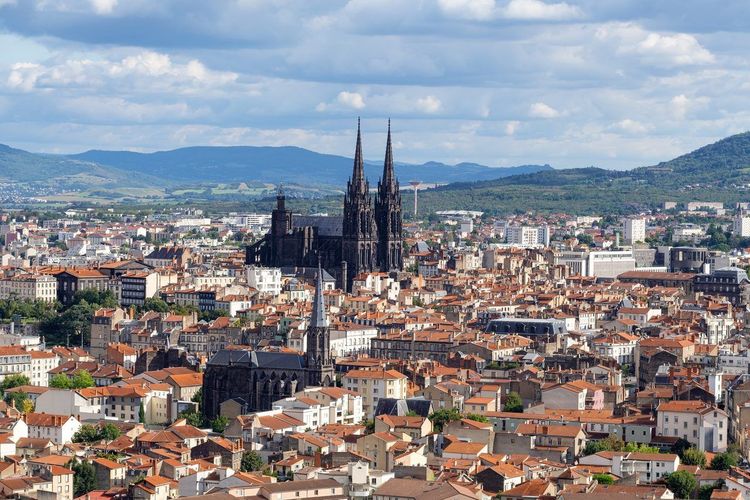
Every visitor eventually ends up in this compact triangle between the cathedral, place de Jaude, and the alleyways of Vieux Clermont. The old center occupies the top of a hill, which explains its sloping streets and sudden views over the Chaîne des Puys. It is no coincidence that the Ryo audio-guided tour concentrates almost all its stops here, from the fontaine d'Amboise to the statue de Vercingétorix: this is Clermont's center of gravity.
The Cathedral and the Delille Neighborhood
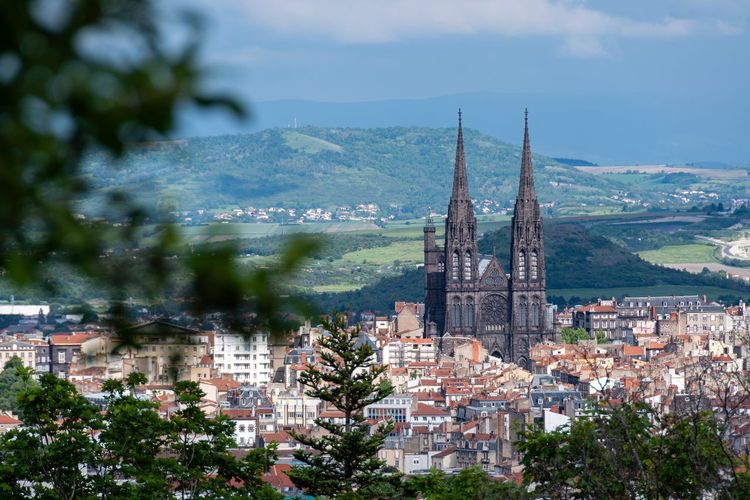
The Cathédrale Notre-Dame-de-l'Assomption dominates the city from the highest point of the hill, visible from almost every elevated spot in the metropolitan area. Begun in 1248 in Volvic stone — a dark and extremely resistant lava — it earned Clermont its nickname of the "black city" and stands in sharp contrast to the pale blond Gothic cathedrals of northern France. Its two spires, however, are far more recent: they were completed in the 19th century following plans by Viollet-le-Duc. At the foot of the building, place de la Victoire hosts a statue of Pope Urban II, who preached the First Crusade in Clermont in 1095.
Heading east downhill, you reach place Delille and the neighborhood that bears its name: a more residential area blending 19th-century bourgeois apartment buildings with quiet side streets. Just next door lies the basilique Notre-Dame-du-Port, a jewel of Auvergnat Romanesque art inscribed on the UNESCO World Heritage List as part of the routes to Santiago de Compostela. Many visitors miss it because it sits below street level, hidden behind the façades: walk down a few steps — the crypt and the chevet are well worth it.
On the north side of the cathedral, the fontaine d'Amboise, gifted to the city in 1515 by Bishop Jacques d'Amboise, is one of the finest Renaissance ensembles in the city. The square surrounding it also offers a clear view of the puy de Dôme on a fine day.
Place de Jaude, the Cultural and Commercial Heart
If Clermont-Ferrand has an undisputed center, it is place de Jaude. This vast esplanade, dominated by Bartholdi's equestrian statue of Vercingétorix, brings together major retailers, cinemas, café terraces, and the bulk of the city's daytime activity. Tram line A runs straight through it, making it the natural interchange point for all other neighborhoods.
The Centre Jaude shopping mall draws the crowds on one side, while the Opéra-Théâtre on the nearby boulevard Desaix adds a more classical touch. Looking for evening entertainment without leaving the center? Bars and restaurants cluster between the square, rue Saint-Dominique, and the streets climbing toward the cathedral.
The square also serves as the backdrop for the city's major events: the Christmas market in December, summer activities, and gatherings on big match nights. If you want to see it at its quietest, come early in the morning, when delivery drivers cross paths with the first joggers and the low light grazes the apartment façades. In the evening, on the other hand, this is where Clermont residents meet before heading off to the surrounding streets.
Vieux Clermont and Its Alleyways
Leaving Jaude toward the hill, you plunge into Vieux Clermont: a maze of narrow alleyways lined with private mansions in black stone, inner courtyards, and spiral staircases. Rue des Gras (63000 Clermont-Ferrand) climbs in a straight line toward the cathedral, lined with shops, cafés, and historic façades; its pavements are sometimes overrun on Saturdays.
Many tourists rush from the cathedral to place de Jaude without lingering in the side streets. Take the time to push open the open carriage gates and look up: the finest details are tucked away in these passages. The covered market Saint-Pierre, right in the center, is the ideal spot to taste saint-nectaire, fourme d'Ambert, and Auvergnat charcuterie.
To the south of this core, jardin Lecoq (Boulevard Jean-Baptiste Dumas, 63000 Clermont-Ferrand, rated 4.6/5 on Google from 8,409 reviews) provides a genuine breath of fresh air: a large English-style park with a lake, century-old trees, and, just next door, the muséum Henri-Lecoq and the musée Bargoin. Allow about ten minutes on foot from Jaude.
Montferrand, the Train Station, and the Eastern Neighborhoods
To the east of the historic center stretches a set of neighborhoods with very distinct identities: the former town of Montferrand on one side, and the train station area along with the business zones of le Brézet and La Pardieu on the other. The Ryo audio-guided tour does not extend as far as Montferrand, but its stops on the cathedral and medieval Clermont provide the keys to understanding the rivalry between the two towns before taking the tram to see the other half of the story.
Vieux Montferrand and les Bughes
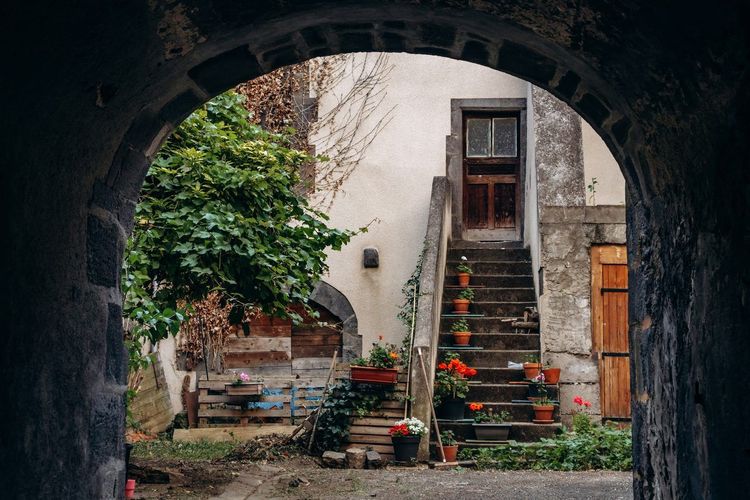
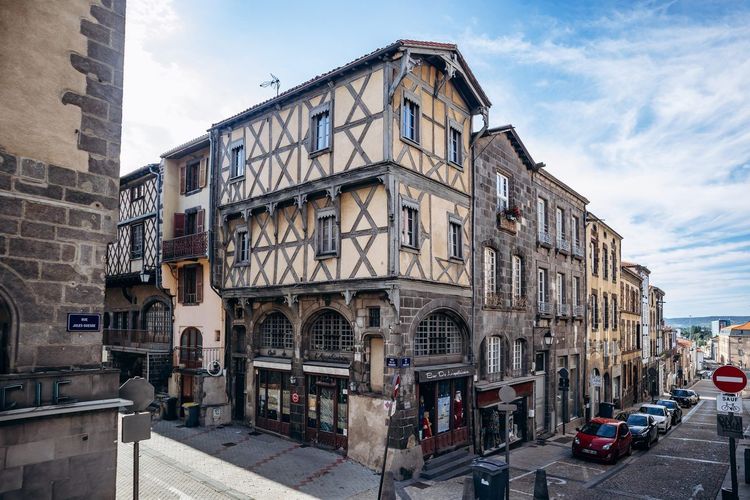
Founded around 1120 by the Count of Auvergne, Guillaume VI, Montferrand was united with Clermont by the Edict of Troyes in 1630, a union confirmed in 1731 under Louis XV. The neighborhood has nonetheless preserved a layout very different from the rest of the city: a regular grid organized around two axes — rue des Cordeliers and rue Jules-Guesde running north to south, and rue de la Rodade and rue du Séminaire running east to west. Montferrand is often compared to a bastide, though historians tend to see it more as a medieval new town.
Stroll between place Marcel-Sembat, the maison de l'Éléphant, the maison d'Adam et Ève, and the hôtel d'Albiat with its "Porte des Centaures": few neighborhoods in France preserve so many medieval and Renaissance residences within such a small area. The église Notre-Dame-de-Prospérité and the musée d'art Roger-Quilliot, housed in a former convent at the foot of the neighborhood, round out the visit.
The Bughes sector, which adjoins Vieux Montferrand, has a more residential and working-class character, with terraced houses and local shops. It appeals to those who want the tranquility of Montferrand while staying connected to the center by the tram, which serves the neighborhood's stops.
Around the Train Station and Stade Marcel-Michelin
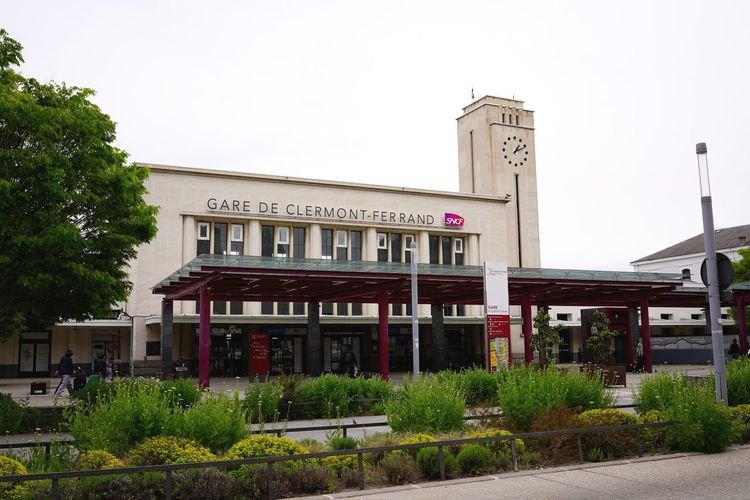
Between the city center and Montferrand, the area around Clermont-Ferrand train station plays a linking role. Long seen as a simple transit district, it is evolving with the renovation of its surroundings and new housing developments.
Note if you are arriving by train: tram line A does not serve the SNCF station directly. Allow about twenty minutes on foot to Jaude, or take a T2C bus. Convenient if you are staying nearby for an early departure, but less ideal if your priority is to be right by the cathedral.
A little further north, in the République neighborhood, stands stade Marcel-Michelin (35 Rue du Clos-Four, 63100 Clermont-Ferrand, rated 4.7/5 on Google from 6,451 reviews), the home of ASM Clermont Auvergne with nearly 19,400 seats. On rugby match nights, the entire area shifts gear: bars are full, the streets ring with the chants of the yellow-and-blue "jaunard" supporters, and the tram fills up with jerseys.
Le Brézet and La Pardieu, Business Districts
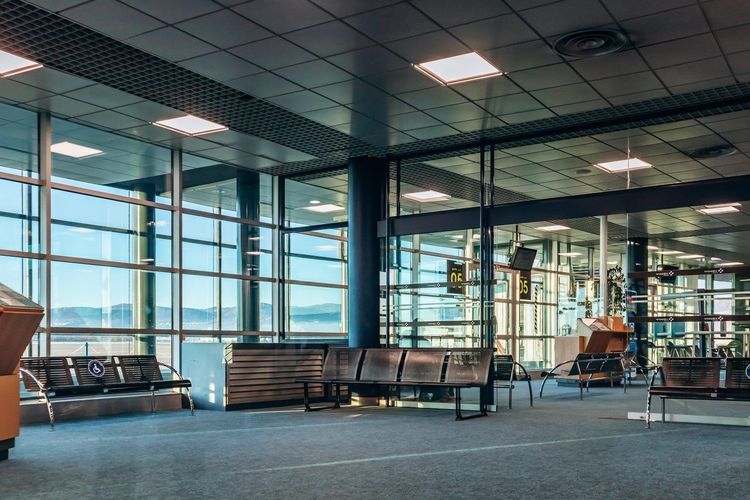
To the east, le Brézet is the main industrial and logistics zone of the metropolitan area, characterized by large business and warehouse premises. Clermont-Ferrand Auvergne Airport, located in the neighboring commune of Aulnat, sits in its direct extension, making this a practical area for business travelers.
To the southeast, La Pardieu concentrates office space: regional headquarters, service companies, and a technology park that hosts part of Clermont's digital ecosystem. As the southern terminus of tram line A (La Pardieu Gare stop), the neighborhood is well connected to the center. Two faces of the same economic vocation, separated by just a few kilometers.
Les Salins, Poncillon, and les Carmes: Student and Lively Neighborhoods
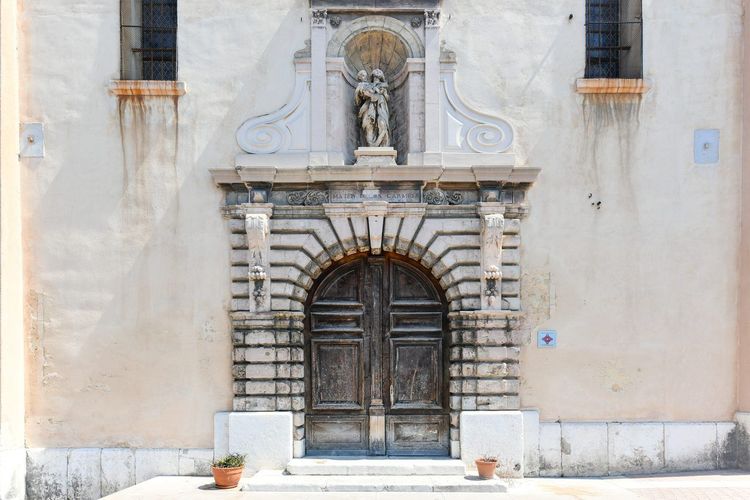
More than 40,000 students live in Clermont-Ferrand, and a large proportion of them gravitate around the neighborhoods to the south and east of the center. On foot, about fifteen minutes is enough to walk from place de Jaude into this younger atmosphere. Along its 5.3 km loop, the Ryo audio-guided tour of Clermont-Ferrand passes by the église Saint-Genès-des-Carmes before reaching jardin Lecoq — handy for getting a feel for these areas before spending more time in them.
Les Salins, Vallières, and Poncillon
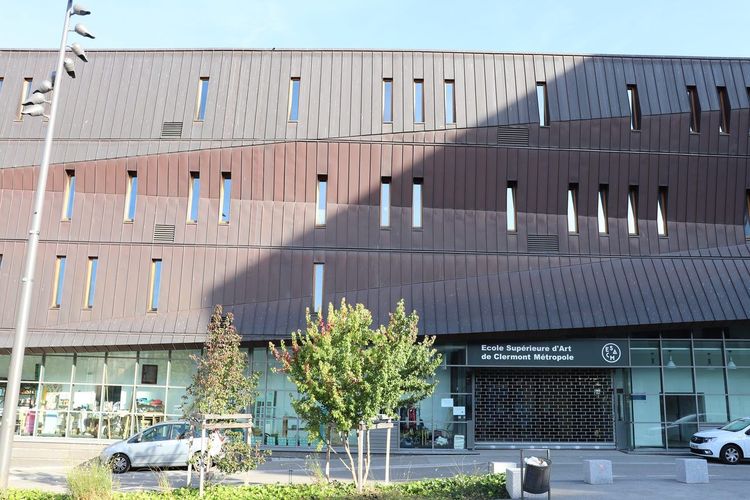
Les Salins, together with the neighboring sectors of Vallières and Poncillon, is arguably the student neighborhood that has transformed the most in recent years. New student residences, housing developments targeting young professionals, and a growing rental supply mean the area is densifying quickly, while remaining within walking distance of the center and well connected to the campuses.
In terms of atmosphere, it is far from the calm of Delille. Bars, budget restaurants, gyms, and laundromats punctuate a daily life designed for a young population. If you are looking to live near the faculties without paying city-center rents, this is one of the first areas to consider. For the science campus at Cézeaux in Aubière, tram line A remains the most direct option.
Les Carmes
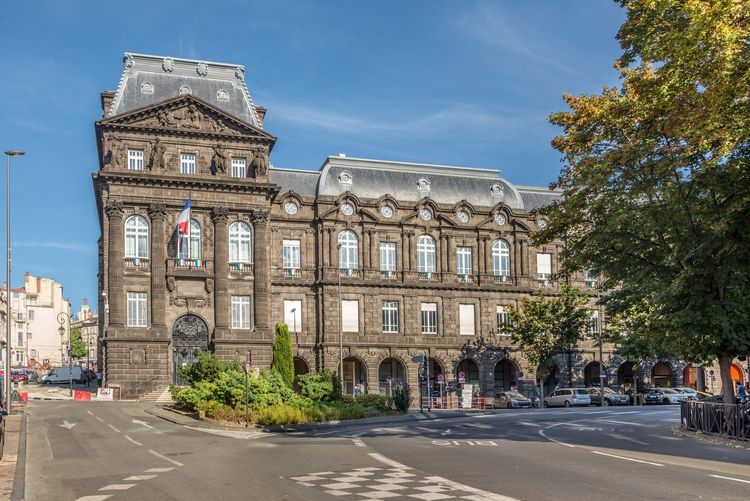
To the east of the center, the Carmes neighborhood is intimately linked to the history of Michelin: it was here, at place des Carmes, that the company was born in the late 19th century, and the group still has its historic facilities here. Today the neighborhood blends an inherited working-class identity with students and young professionals attracted by lower rents than in Jaude.
The atmosphere is more everyday than touristy: small shops, local cafés, and community venues. You do not come here for a specific monument — even if the église Saint-Genès-des-Carmes is worth a glance — but to experience the daily rhythm of Clermont, ideally in the late afternoon.
La Gauthière and Croix-de-Neyrat: a Neighborhood in Full Urban Transformation
In the north of the city, La Gauthière and Croix-de-Neyrat form an area little known to visitors, but one that Clermont-Ferrand is deeply transforming. The sector is among the neighborhoods selected under the New National Urban Renewal Program: demolition of old tower blocks, reconstruction of higher-quality housing, and upgrading of public spaces and local amenities.
The Croix-de-Neyrat stop on tram line A serves as an anchor for this transformation, with a revamped commercial hub and services. The neighborhood remains primarily residential and has no tourist vocation. It nonetheless illustrates how the city is reshaping its fringes, and you will find some of the most affordable rents in the metropolitan area here, about twenty minutes by tram from Jaude.
The Northern Neighborhoods: Côtes de Clermont, Chanteranne, and la Glacière
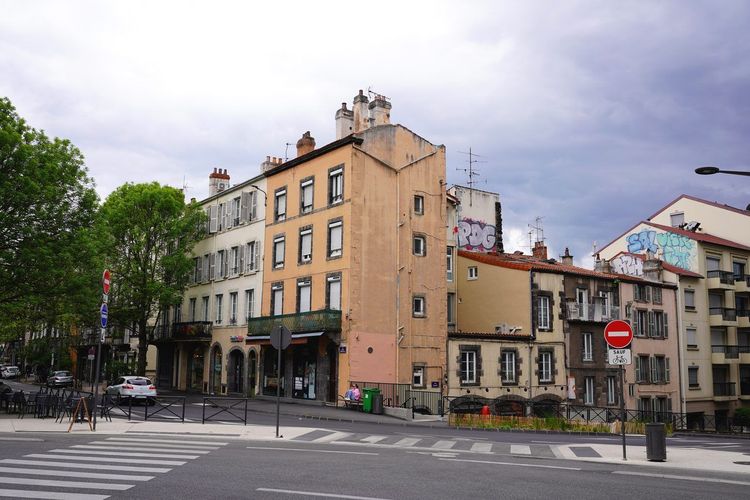
The north of Clermont-Ferrand is the area where the city rubs most directly against nature. Between the main roads and the terrain, the residential neighborhoods here benefit from a greener setting than the center, with one major asset: the Côtes de Clermont (63100 Clermont-Ferrand, rated 4.7/5 on Google from 19 reviews).
Les Côtes de Clermont, a Balcony over the City
This volcanic plateau, which rises about 200 meters above the city, is an inverted relief: an ancient lava flow, more resistant than the surrounding terrain, left standing when erosion carved out the plain below. Gaulish remains have been found at its summit, and some have long sought the site of the Battle of Gergovia here.
Today it is above all a walking area much loved by the people of Clermont. Several trails climb to the top in under an hour, and the reward is well worth it: a plunging view over the cathedral and the Limagne on one side, and over the Chaîne des Puys on the other. If you enjoy sweeping panoramas, our selection of must-see volcanoes in Auvergne will extend the excursion.
Chanteranne, la Glacière, and the Residential Neighborhoods
In this residential north, the sectors of Chanteranne and la Glacière offer a more open residential setting: houses with gardens, small apartment buildings, neighborhood schools. Life here is set apart from the bustle of the center while remaining just a few minutes by bus or tram from Jaude. This is the typical profile for families looking for space without leaving the city.
Further west, the area of Fontgiève and Saint-Alyre bridges the gap with the old center, with denser streets and a few curiosities, including the famous petrifying springs of Saint-Alyre, where calcium-rich water coats objects with a mineral layer.
Saint-Jacques, Beaumont, and the Southern Residential Neighborhoods
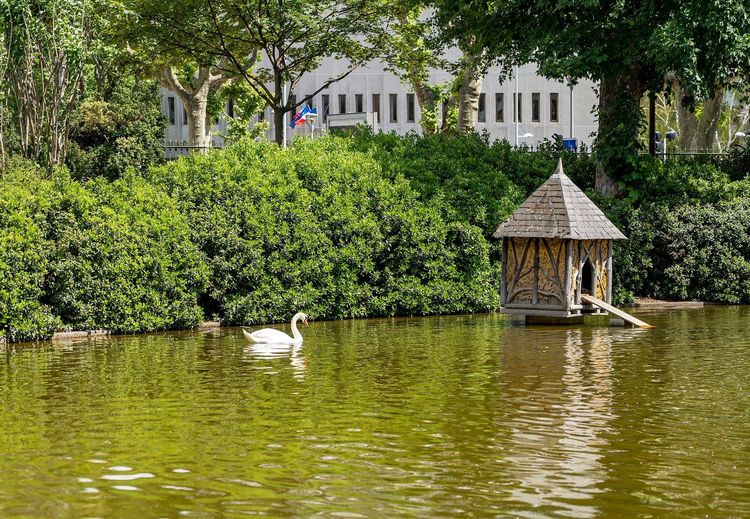
To the south of the city, you leave the tourist register behind and enter everyday Clermont-Ferrand — the city of families and healthcare workers. If you followed the Ryo audio-guided tour all the way to jardin Lecoq, you are already at the edge of these neighborhoods: simply continue southeast to watch the city change scale.
Saint-Jacques and Clermont Sud
Saint-Jacques was urbanized mainly in the second half of the 20th century, with large housing estates built to accommodate the metropolitan area's population growth. Perched on the heights to the southeast of the center, the neighborhood also hosts the hôpital Gabriel-Montpied, one of the major sites of the CHU, making it a very busy area for healthcare staff and medical students.
Like la Gauthière, Saint-Jacques is the subject of a major urban renewal program. Less spectacular than Montferrand, it remains a well-served and functional neighborhood where housing costs are more accessible than in the city core, with fine views over the city thrown in.
Beaumont, Tranquility and Family Life
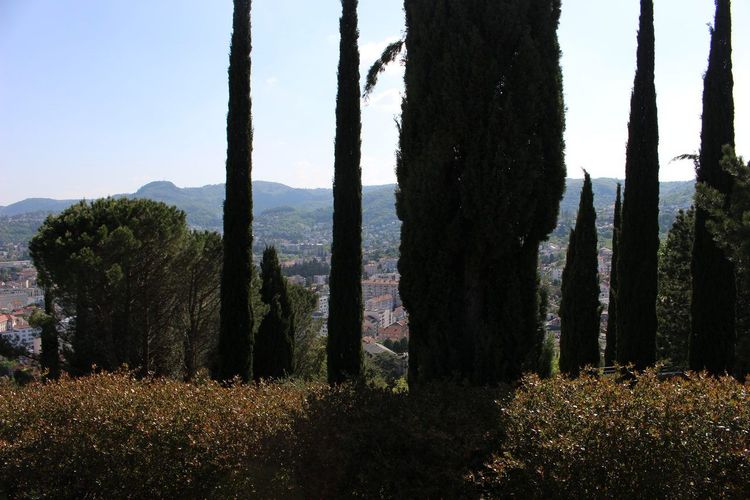
Beaumont is not strictly a neighborhood but an independent commune of just over 10,000 inhabitants, bordering Clermont-Ferrand to the south. For many families, however, it forms part of "residential Clermont": its old village core, local shops, and schools give it a village character, less than three kilometers from the center.
It is typically the kind of place where people settle for quality of life rather than proximity to monuments. Those who value calm will find exactly what they are looking for, even if it means sacrificing a little spontaneity for evenings out.
The Southeast, between City and Campus
Toward the southeast, the urban fabric extends to Aubière and the Cézeaux campus, which concentrates a large share of the science programs at Université Clermont Auvergne. This area blends student residences, business zones, and housing developments, and remains well connected to the center by tram line A.
A Natural Environment between Puys and Plain
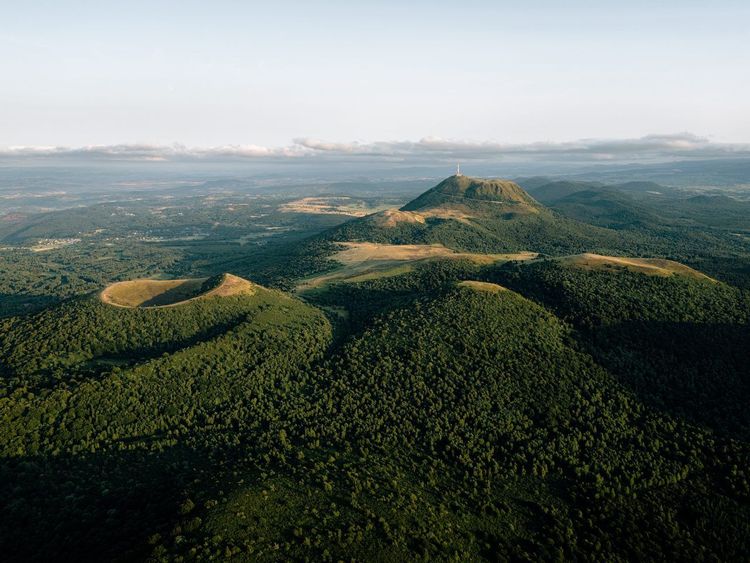
Whatever neighborhood you choose, Clermont-Ferrand retains an advantage that few cities of its size can claim: nature begins at the end of the street. To the west, the Chaîne des Puys, inscribed on the UNESCO World Heritage List in 2018 together with the Limagne fault, lines the horizon; to the east, the agricultural plain of the Limagne stretches as far as the eye can see.
This setting concretely changes neighborhood life. From the heights of Saint-Jacques, the old center, or les Côtes, the silhouette of the puy de Dôme serves as a permanent landmark, and it takes just twenty minutes by car to reach the first volcanic trails. The western neighborhoods, such as Fontgiève or the areas around Chamalières, are actually the most popular with those who head out hiking at weekends.
If you are staying without a car, keep in mind that urban parks take over: jardin Lecoq to the south of the center, les Côtes de Clermont to the north, and the landscaped banks of the Tiretaine all offer accessible green spaces on foot or by bus. For swimming on fine days, our guide to places to swim near Clermont-Ferrand lists the closest volcanic lakes.
Cultural Life and Nights Out: Where to Feel the Pulse of Clermont-Ferrand
Beyond the neighborhoods themselves, knowing where nightlife and culture concentrate will help you choose your base. Clermont-Ferrand has a cultural scene far richer than its size might suggest.
Theaters, Festivals, and Music Venues
The Comédie de Clermont-Ferrand, the national theater, moved in 2020 into the former bus station rehabilitated by Portuguese architect Eduardo Souto de Moura, just steps from jardin Lecoq. Every winter, in February, the International Short Film Festival transforms the city into the world capital of the short format, with the Maison de la culture as its epicenter. For contemporary music, the Coopérative de Mai programs concerts and DJ sets throughout the year.
Where to Go Out at Night
For a drink on a terrace, place de Jaude and the streets climbing toward the cathedral remain the simplest choice. For a more student-oriented atmosphere and lower prices, head to les Salins or les Carmes. On match nights, however, everything happens around stade Marcel-Michelin. And for a quieter evening, the restaurants of Vieux Montferrand offer a rare medieval setting.
Getting around Clermont-Ferrand's Neighborhoods
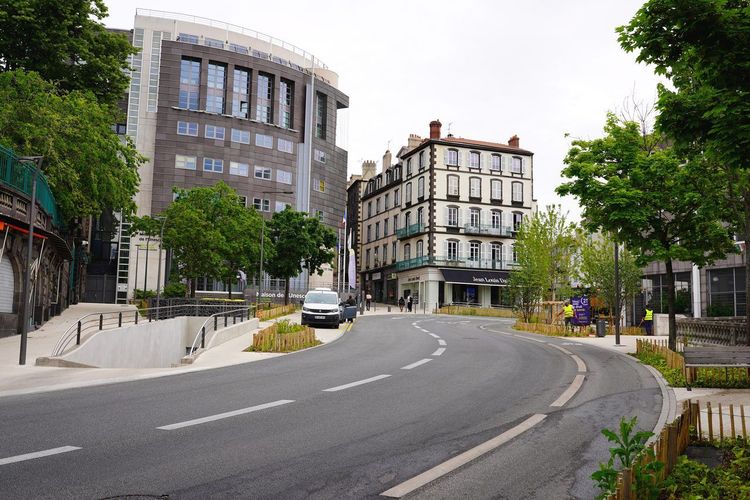
Clermont-Ferrand remains a mid-sized city, which makes getting from one neighborhood to another straightforward. Here is what you need to know to get organized.
The Tram, the City's Backbone
The T2C network is built around a rubber-tyred tramway line, line A, which runs from Les Vergnes in the north to La Pardieu Gare in the south, passing through Croix-de-Neyrat, Montferrand, Jaude, and the university area. Since 20 December 2025, it has been supplemented by lines B and C of the InspiRe project, electric high-level bus rapid transit services covering other corridors across the metropolitan area.
On Foot and by Bike in the Center
Between the cathedral, Jaude, Vieux Clermont, and the first student neighborhoods, everything is easily done on foot: rarely more than twenty minutes between two points in the center, bearing in mind that the hill involves some climbs. The C.vélo bike-sharing service complements this for slightly longer journeys.
Buses to Outlying Neighborhoods
For areas away from the tram, such as parts of Saint-Jacques, le Brézet, or the SNCF station, the bus network takes over. Generally allow fifteen to thirty minutes from the center depending on the destination, and check evening and Sunday timetables, which run less frequently.
Which Neighborhood Should You Choose?
One question remains: which neighborhood best suits what you are looking for? Here are some concrete pointers.
For a Tourist Stay at the Heart of the Action
For a few days of sightseeing, the triangle formed by the cathedral, place de Jaude, and Vieux Clermont is unbeatable. You are within walking distance of heritage sites, restaurants, and the tram, maximizing the time actually spent visiting. The Delille neighborhood is a quieter alternative, ten minutes on foot from Jaude.
A tip: if you are traveling by car, avoid staying in the narrow streets of Vieux Clermont, where parking is scarce and often paid. Better to aim for accommodation near a tram park-and-ride and reach the center in a few minutes. Conversely, if you arrive by train, a hotel between the station and Jaude will save you from lugging your suitcase up the hill. And book early during the Short Film Festival or major rugby matches: central rooms fill up fast.
For a Student and Lively Atmosphere
If your priority is bars, a young atmosphere, and lower prices, les Salins, Vallières, Poncillon, and les Carmes tick all the boxes. These neighborhoods regularly see new venues opening: the offering evolves faster here than anywhere else in the city.
For Peace and Nature
If above all you want calm and quick access to green spaces, look to Chanteranne, la Glacière, and the slopes of les Côtes de Clermont to the north, or to Beaumont to the south. Less practical for a short stay, they are better suited to a longer visit or a permanent move.
To make up your mind, start with a day in the center: the Ryo audio-guided tour of Clermont-Ferrand strings together around twenty audio stops in 2h10, from basilique Notre-Dame-du-Port to place Delille via Jaude and jardin Lecoq — enough to get a real feel for the atmosphere of each area before deciding where to unpack your bags. For more ideas, our article on the top 5 things to do in Clermont-Ferrand suggests further activities.
FAQ
How many neighborhoods are there in Clermont-Ferrand?
The city is divided into several large sectors, themselves subdivided into finer neighborhoods for statistical and local democracy purposes. In practice, residents distinguish about ten major areas: the historic center and Jaude, Delille, Montferrand, la République, les Salins, les Carmes, la Gauthière and Croix-de-Neyrat, le Brézet, La Pardieu, and Saint-Jacques.
What is the best neighborhood to visit in Clermont-Ferrand?
For a first visit, the triangle formed by the cathedral, place de Jaude, and Vieux Clermont concentrates the bulk of the heritage sites and amenities. It is also where the Ryo audio-guided tour takes place, making it a logical base for exploring the city on foot.
Where should I stay in Clermont-Ferrand to be close to the city center?
The Delille neighborhood and the immediate surroundings of Vieux Clermont offer the best compromise between peace and proximity: you are about ten minutes on foot from place de Jaude while avoiding the nighttime bustle.
Which neighborhood is best for a night out in Clermont-Ferrand?
Place de Jaude and the streets leading toward the cathedral are packed with bars and restaurants, while les Salins and les Carmes offer a more student-oriented atmosphere and lower prices. On match nights, the area around stade Marcel-Michelin comes alive.
How do you get around between Clermont-Ferrand's neighborhoods?
Tram line A connects most of the major neighborhoods from north to south, complemented since late 2025 by lines B and C (high-level bus rapid transit) and the T2C bus network. The city center is very easy to explore on foot or by bike.
Which is the student neighborhood of Clermont-Ferrand?
Les Salins, together with Vallières and Poncillon, form the most dynamic student hub near the center. Les Carmes and the Cézeaux campus area in Aubière also host a large student population.
Walking through these neighborhoods, you begin to understand why Clermont-Ferrand both puzzles and captivates: the city does not reveal itself in a single image, but through a succession of areas with distinct identities, from the medieval houses of Montferrand to the dark alleyways of Vieux Clermont, from the green Côtes to the student buzz of les Salins. Before setting out to explore these different faces, let the Ryo audio-guided tour of Clermont-Ferrand guide you, step by step, through the history of the "black city" and its historic heart.
À lire également