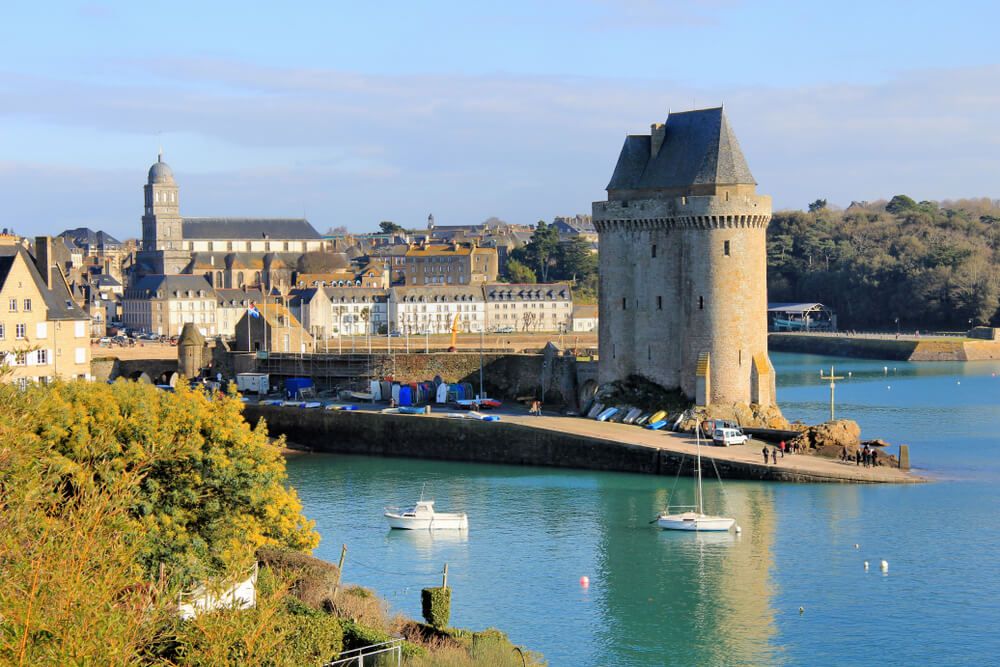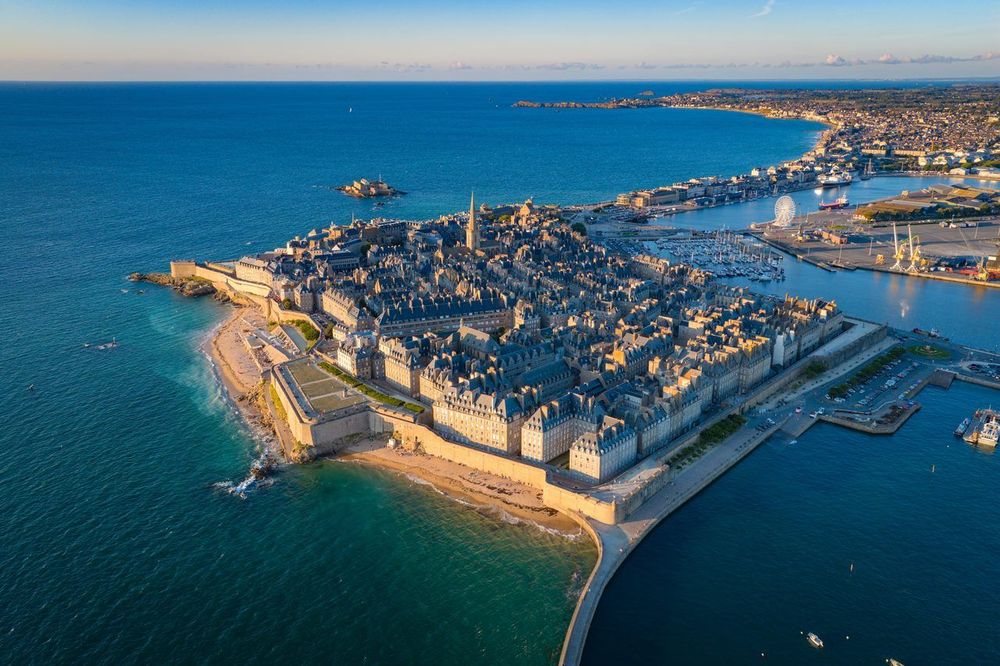
© Shutterstock
 Votre guide Ryo
Unusual Saint-Malo: Sculpted Rocks, Bunkers, and Thrills in 2026
At low tide, a causeway appears between Bon-Secours beach and an islet where a writer rests, and the whole city seems to wait for the sea to close the passage again. If you are looking for an unusual visit to Saint-Malo, this constant back-and-forth between land and sea will be your greatest ally, far beyond the postcard images of the corsair city. You will encounter more than 300 creatures carved into the cliffs of Rothéneuf by a sculptor-priest, a German blockhouse turned museum in the Cité d'Alet, and a marine cemetery gazing out over the Rance. Further afield, microlights fly over the bay as far as Mont-Saint-Michel, e-foils glide across the Rance, and Finnish kotas welcome nature lovers seeking overnight stays near Dinan. To connect the historic centre's sites on foot, the Ryo audio guide of Saint-Malo serves as a guiding thread, headphones on. From hidden heritage to thrilling experiences, here are more than 30 ways to see the city differently, with tide times to keep in mind.
The Sculpted Rocks of Rothéneuf, a Mysterious Site Facing the Sea
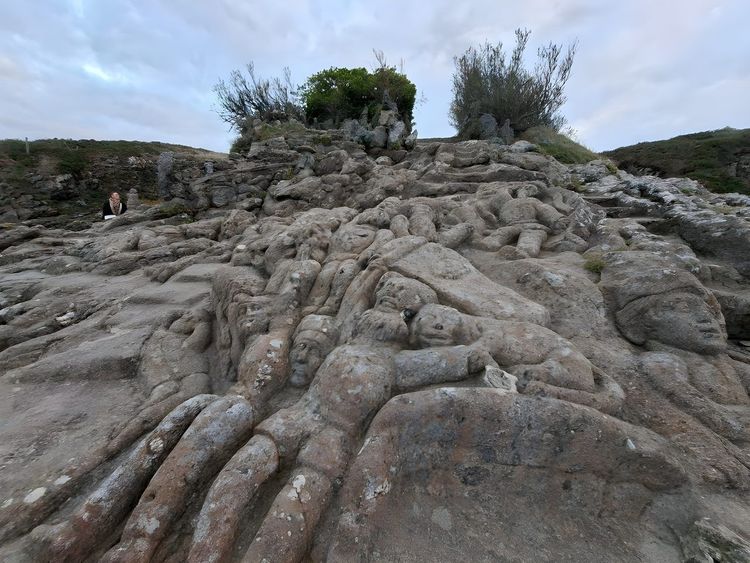
Between late 1894 and 1907, Abbé Adolphe Julien Fouré, a priest who had retired to Rothéneuf, carved more than 300 figures into the granite of the coastline, a few kilometres from the historic centre. He did not stop until 1907, when he was struck by paralysis. Sea monsters, grimacing faces, Breton saints, and human figures still emerge from the rock, eroded by more than a century of sea spray.
Local tradition reads in them the saga of the Rothéneuf family, a clan of pirates and smugglers punished by the sea. Historians remain more cautious: the abbé also drew inspiration from the events of his time, from the Boer War to Breton saints such as Saint Budoc. Whatever interpretation you choose, the ensemble ranks among the rare major examples of outsider art in the open air in France.
The Sculpted Rocks of Rothéneuf (Chemin des Rochers Sculptés, 35400 Saint-Malo, rated 3.7/5 on Google from 5,375 reviews) are privately owned and admission is charged, at a modest fee of a few euros. An association of friends of Abbé Fouré's work, founded in 2010, campaigns for their restoration.
Allow 30 to 45 minutes to walk the pathways and spot the most expressive silhouettes. Try to visit in the late afternoon: the low-angle light deepens the relief and the car park empties out. You can then walk to the Rothéneuf harbour, a vast lagoon that empties almost entirely at low tide, and then to the nearby Manoir de Jacques Cartier.
The Bunker of the Cité d'Alet, a Remnant of the Atlantic Wall
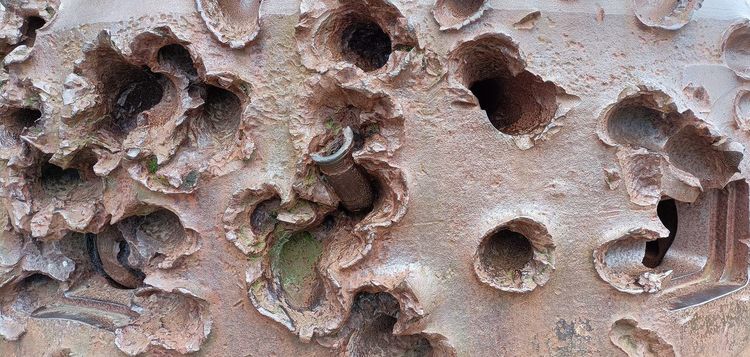
At the tip of the Alet peninsula, on the Saint-Servan side, the Bunker of the Cité d'Alet (Cité d'Alet, 35400 Saint-Malo, rated 4.6/5 on Google from 213 reviews) is a reminder that Saint-Malo was one of the German strongholds on the Atlantic Wall. In August 1944, the garrison entrenched in the Cité d'Alet held out for several days against the American army, while the intra-muros city was largely burning. One of the blockhouses now houses the 39-45 Memorial, a museum dedicated to the Occupation, the siege, and the Liberation, featuring uniforms, weapons, and period documents.
The appeal of the site goes beyond the museum. The promontory, traversed by the GR 34, offers one of the finest panoramic views over the Rance estuary, the ramparts, and Dinard, and around every bend in the path you will come across other casemates, trenches, and remains of Vauban's fortifications. The Memorial opens mainly in the summer season, with limited visiting days outside peak season: check the schedule before making the trip. The walk around the peninsula, however, remains open year-round.
Headphones on, the Saint-Malo audio guide helps you place this bunker within a broader story — that of a city rebuilt stone by stone after 1944.
The Grand Bé Island and the Tomb of Chateaubriand
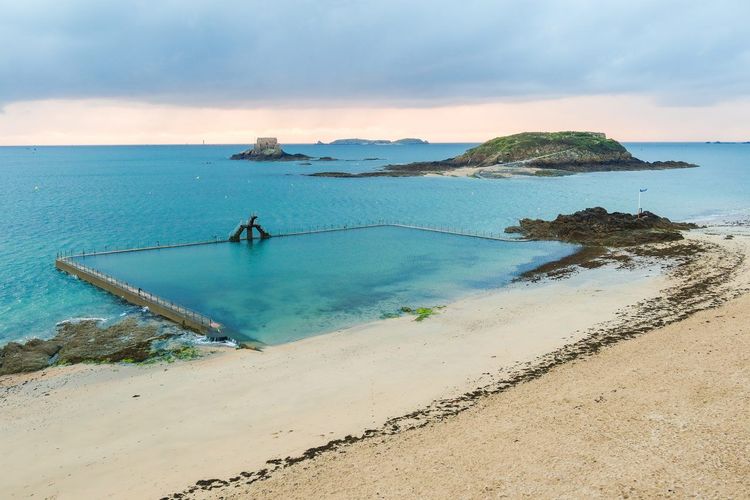
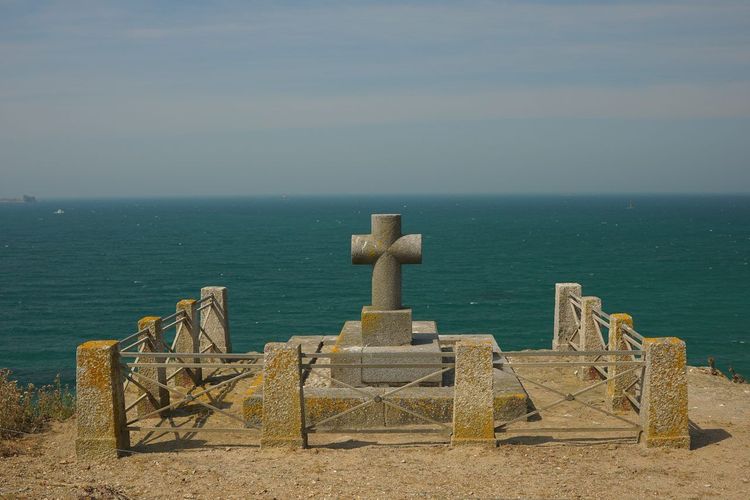
Twice a day, the sea uncovers a causeway linking Bon-Secours beach to the Grand Bé island (Porte des Bés, 35400 Saint-Malo, rated 4.6/5 on Google from 15 reviews). This is where Chateaubriand has rested since 18 July 1848. The writer, born in Saint-Malo, had chosen this small islet facing the open sea and demanded the utmost simplicity: "No inscription, no name, no date — the cross will say that the man resting at its feet was a Christian." A simple granite cross therefore marks the tomb. A plaque has since been added: "A great French writer wished to rest here, to hear nothing but the sea and the wind."
Access is only possible around low tide, generally within a window of about two hours on either side: the day's times are posted near the Porte des Bés. Since 2011, during spring tides, a "Bés bell-ringer" alerts walkers with a foghorn before the water rises. Every year, however, some visitors are caught out. On the island, you will also discover the remains of fortifications, including German artillery positions. Allow a good hour for the full round trip.
The Ryo audio guide runs along the ramparts to the Porte des Bés: its stories about Chateaubriand are perfect for passing the time while waiting for low tide.
The Marine Cemetery of Rosais, a Quiet Retreat Facing the Rance
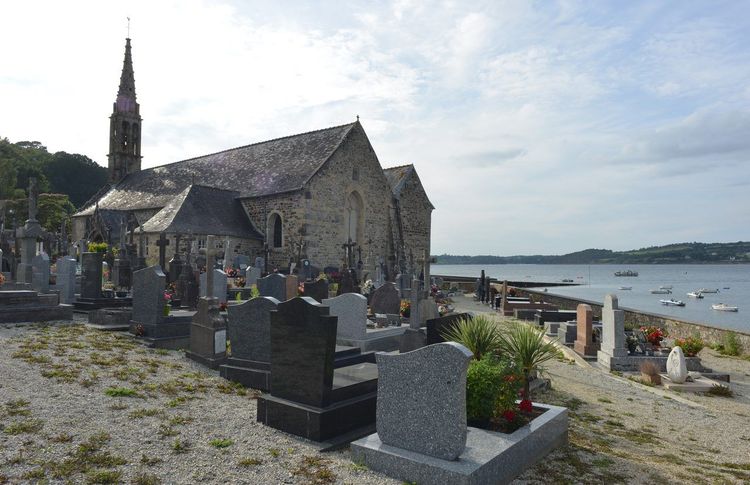
On the Saint-Servan side, in the Rosais neighbourhood, a small marine cemetery (Le Rosais, 35400 Saint-Malo, rated 4.7/5 on Google from 3 reviews) clings above the Rance estuary. Less famous than the one in Sète, celebrated by Paul Valéry, it almost entirely escapes the tourist circuits. Yet it offers one of the most peaceful views over the river and the Dinard shore. The historian Mgr Louis Duchesne, a member of the Académie française, is buried here.
A few minutes are enough, but the spot combines wonderfully with the Cité d'Alet and the Tour Solidor, a short walk away. A tip: come in the late afternoon, when the sun sets over the Rance.
Fort National, Malouinières, and the Manoir de Jacques Cartier: the Hidden Heritage of the Malouins
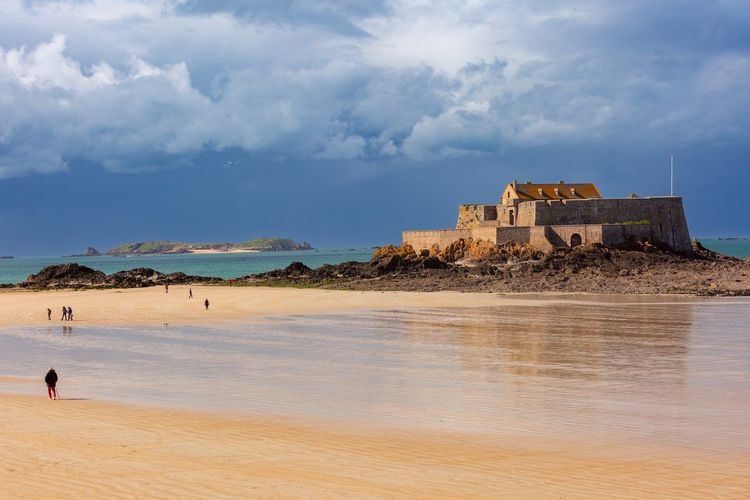
Facing the Grande Plage du Sillon, Fort National rises on a granite islet accessible on foot at low tide. Designed by Vauban and built under the direction of Siméon Garangeau between 1689 and 1693, on the orders of Louis XIV, it was intended to protect the city from an English attack. Its darkest chapter dates from 1944: the Germans imprisoned more than 300 local residents and foreigners there, and 18 of them were killed on the night of 9 to 10 August by American shells.
The fort is today owned by a Breton family, who organise visits during the season when the tides permit. From the rampart walk, you will enjoy a 360° panorama over the bay and the Emerald Coast. Allow around 30 minutes on site, not counting the walk across the sand.
The Malouin countryside hides another treasure: the malouinières. These country houses were built mainly between 1680 and 1730 by the shipowners, captains, and merchants enriched by maritime trade, who sought refuge from the cramped conditions of the walled city. Around 200 were built and about a hundred still remain in the region, recognisable by their sober granite facades and steep roofs. La Ville Bague, in Saint-Coulomb, can be visited with its park, chapel, and dovecote. La Chipaudière in Paramé, Le Puits Sauvage in Saint-Malo, and La Plussinais in Saint-Jouan-des-Guérets are listed as historic monuments. Many remain privately owned, but several open their doors during the Journées du Patrimoine heritage weekend in September.
The Manoir de Jacques Cartier (Rue David MacDonald Stewart, 35400 Saint-Malo, rated 4.4/5 on Google from 310 reviews), also known as the Manoir de Limoëlou, is located in Rothéneuf. The Malouin explorer, who reached Canada in 1534, had his country home here. Now a museum, the manor tells the story of his voyages and the life of a 16th-century sailor through a reconstructed interior, maps, and documents.
This corsair and explorer heritage continues in the short version of the Ryo audio tour À l'abordage, focused on the shipowners and privateers who built the city's fortune — sometimes by questionable means.
A Costumed Guided Tour in the Footsteps of the Malouin Corsairs
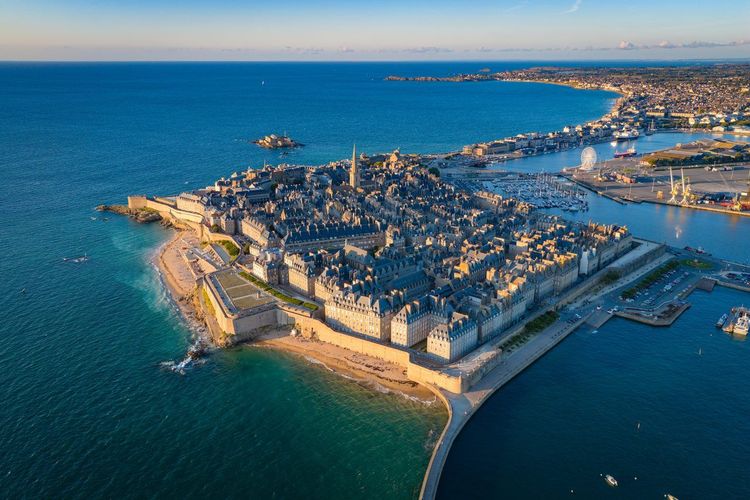
Fancy a more theatrical experience? Costumed guided tours plunge you into the Saint-Malo of the Revolution and the First Empire. A guide in period costume recounts the English blockade, the last great corsairs such as Robert Surcouf, and daily life within the fortified city.
The treasure hunt, meanwhile, turns the stroll into a full-scale investigation through the intra-muros alleyways. Depending on the format, you will solve riddles on paper, via QR codes, or on a smartphone, with family or friends. Allow around 1.5 to 2 hours of play.
Would you rather explore at your own pace, with no booking or fixed schedule? The Ryo app offers the À l'abordage tour, ready to launch whenever suits you.
Taking to the Skies: Microlight, Helicopter, and Parachute over the Bay
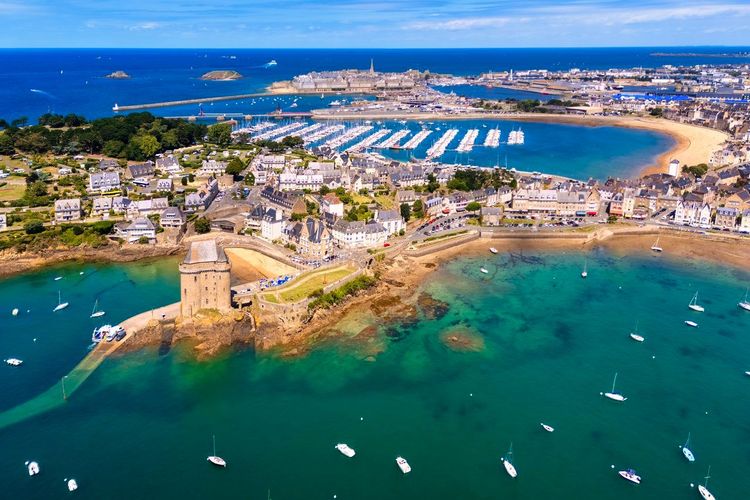
Nothing makes the bay of Saint-Malo more spectacular than an aerial view. Several clubs in the area offer an introductory flight in a biplane microlight: you fly over the corsair city and its ramparts, and on a clear day you can make out the silhouette of Mont-Saint-Michel. Allow 20 to 30 minutes of flight for a discovery package.
In Dinard, on the other side of the estuary, a multi-axis microlight flight takes off from the Dinard-Pleurtuit aerodrome. You then swoop over both banks of the Rance and the malouinières scattered across the countryside.
A helicopter flight departing from Saint-Malo covers the bay in just a few minutes. The longer options push as far as Mont-Saint-Michel and offer an angle on the abbey that is impossible to achieve from the ground. The microlight flight over Mont-Saint-Michel offers a slower alternative, ideal for watching the sea flood the bay on days of great tides.
Want more adrenaline? A tandem skydive over the bay of Mont-Saint-Michel begins with 30 to 50 seconds of freefall depending on the drop altitude, then the canopy opens onto a sweeping panorama. For all these flights, booking in spring or autumn is advisable, and keep a backup date in mind: the weather often decides at the last moment.
Water Sports and Leisure on the Rance and in the Bay
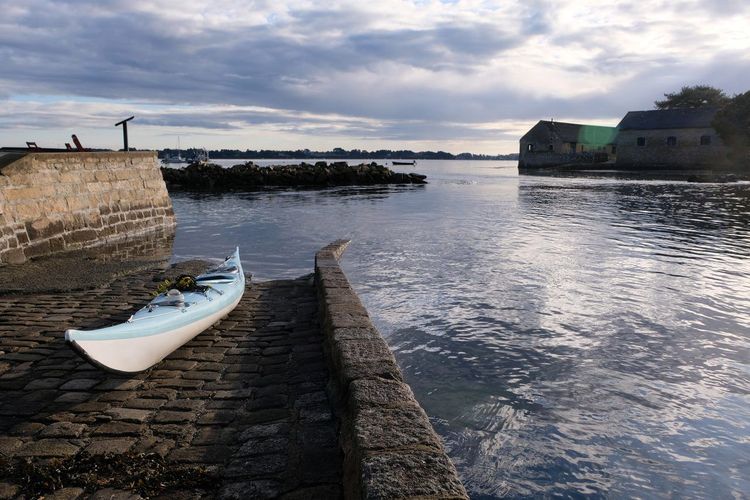
The Rance, between Saint-Malo and Dinan, lends itself to every kind of gliding sport. By rental canoe-kayak, you paddle up the estuary at your own pace, between wooded banks and malouinières glimpsed from the water. The e-foil, an electric board that seems to fly above the surface, appeals to a more sporty crowd and requires a short introductory session. More relaxed, rental paddleboarding suits families and beginners, on sheltered areas away from the current.
At low tide, land yachting makes the most of the vast expanses of sand. It can be practised on the Sillon beach, and especially at Cherrueix, in the bay of Mont-Saint-Michel, one of the great hubs of the sport. A supervised introductory session with an instructor is enough to get you moving at speed.
To discover the bay without any effort, a guided boat cruise reveals the secrets of the coastline from the deck of a vessel: forts, islets, and corsair tales. A shorter sea excursion, often by rigid inflatable boat, focuses on speed, with some options including a detour to the Chausey islands or Cap Fréhel.
Finally, an introductory dive in Saint-Malo introduces you to the English Channel seabed, cooler than the Mediterranean but rich in marine life and wrecks. No prior experience is required: a thick wetsuit is provided, an instructor stays by your side, and the depth is shallow. Set aside a full morning, including the briefing and the return to port.
Food Experiences and Wellness around Saint-Malo
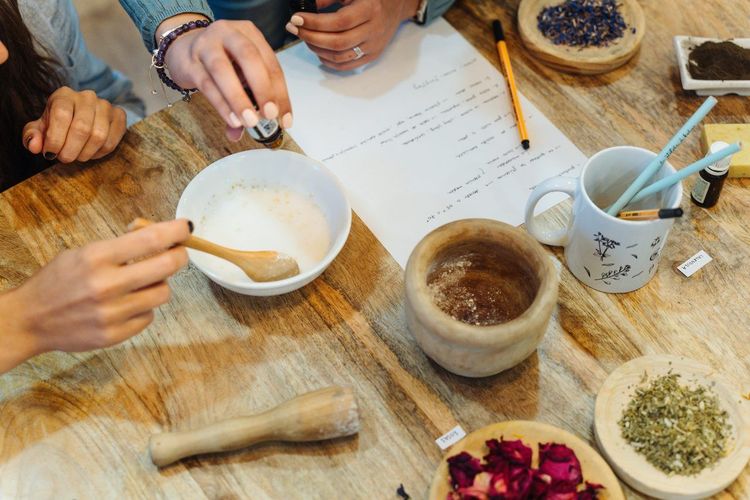
A soap-making workshop introduces you to cold-process saponification, often using local ingredients such as seaweed. A hands-on and fragrant experience, perfect for solo visitors, couples, or families.
The "Robinson Crusoe-style" lunch offers a meal by the water in an isolated setting, far from any crowd. More urban in feel, brunch in an arty hotel lets you discover an establishment decorated by contemporary artists.
Near Dinan, about a thirty-minute drive away, a night in a kota with spa and sauna takes its cue from the Finnish wooden cabin tradition, heated by a wood-burning stove, with a private wellness space. Also near Dinan, a river cruise with aperitif glides along the Rance at the end of the day, accompanied by a board of local produce.
For a longer break, Saint-Malo remains one of France's leading thalassotherapy destinations: a thalasso weekend combines seawater treatments, seaweed wraps, and a heated seawater pool overlooking the Sillon beach. Outside school holidays, prices drop and treatment slots become easier to book.
Outdoor Games and Challenges with Friends
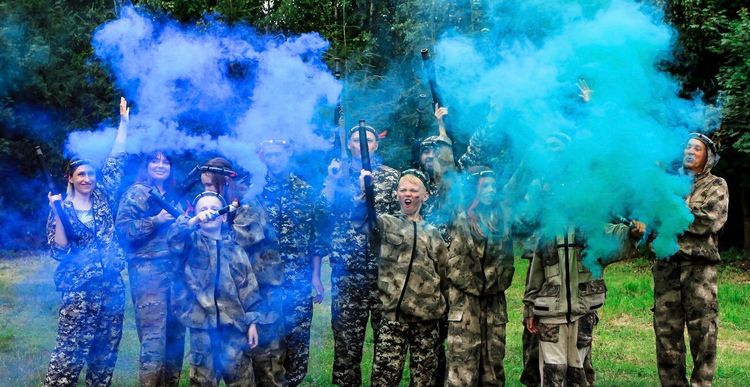
With friends or family, several venues in the area focus on games and adrenaline. Outdoor laser game is played in open nature, far from the usual indoor arenas.
Paintball and archery tag — where pellets are replaced by foam-tipped arrows fired from a bow — round out the offer for groups. They are generally accessible from the age of 10 to 12, depending on the venue.
Bubble football, finally, involves playing football while encased in a giant inflatable bubble. Collisions and tumbles replace technical skill, and laughter is virtually guaranteed. Allow around one hour — perfect for a stag party or a team outing.
Day Trips around Saint-Malo
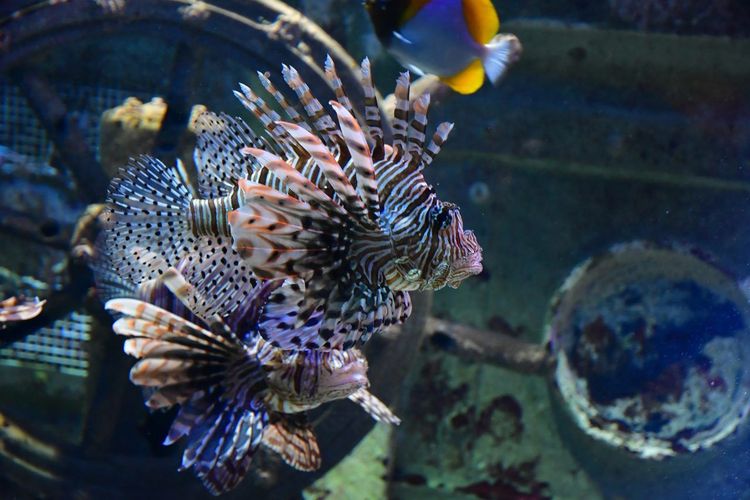
Ille-et-Vilaine is full of other outing ideas within an hour's drive. Just ten minutes from the historic centre, the Grand Aquarium de Saint-Malo brings together sharks, a touch pool, and a large circular tunnel — enough to keep children occupied for half a day.
Further inland, in Pleugueneuc, the Bourbansais zoological park (La Bourbansais, 35720 Pleugueneuc, rated 4.5/5 on Google from 5,322 reviews) spreads around a château whose construction began in 1583. The château and its grounds have been listed as historic monuments since 1959, and the birds of prey display is one of the highlights of the visit.
Heading towards Normandy, a sailing initiation weekend in Granville alternates theory with time on the water, so you return home with the basics of dinghy or catamaran sailing. The "In the Shoes of a Breton" experience offers a day shaped by local traditions. Finally, "Defying Weightlessness" lets you try indoor skydiving in a vertical wind tunnel: sensations close to freefall, with no aircraft required.
When to Visit and Practical Tips for a Successful Outing
Spring tides, with a coefficient above 100, occur several times a year, with the strongest episodes around the March and September equinoxes. The sea then retreats very far, uncovering rocks that are usually submerged, before rushing back in rapidly. On stormy days, waves crash against the Sillon sea wall and draw crowds to the ramparts. This is also when crossings to the Grand Bé and Fort National require the most caution.
Outside these episodes, your schedule will mostly depend on the weather and the time you have available. Half a day is enough to combine the Sculpted Rocks and the Manoir de Jacques Cartier. A full day is needed to take in the Cité d'Alet, the Rosais cemetery, and a nautical or aerial activity. Whatever the season, consult the tide tables as soon as you arrive: they govern half of the visits on offer.
The rest of the city can be explored without any booking, and the Ryo app lets you slip in a historical stop between two activities, whenever suits you.

FAQ
Which unusual attraction in Saint-Malo should you visit first?
The Sculpted Rocks of Rothéneuf are usually at the top of the list: more than 300 figures carved into the rock by Abbé Fouré between 1894 and 1907, a unique ensemble in Brittany. Admission is charged but remains very affordable.
Can you visit the Bunker of the Cité d'Alet freely?
The Alet peninsula and its surroundings can be explored freely year-round via the GR 34. The 39-45 Memorial housed inside the bunker, however, follows a seasonal opening schedule: it's best to check before you visit, especially outside the summer months.
Can you always reach the Grand Bé island on foot?
Yes, but only around low tide, according to the times posted near the Porte des Bés. During spring tides, a bell-ringer alerts walkers with a foghorn: do not linger on the island after this signal.
What is the best time to see the great tides in Saint-Malo?
The highest tidal coefficients generally occur around the March and September equinoxes. Tide tables, published online and available at the tourist office, allow you to identify the best dates several months in advance.
What can families do in Saint-Malo off the beaten track?
The Grand Aquarium, the Bourbansais zoo, an intra-muros treasure hunt, or a paddle outing on the Rance are all great for children. Older kids will enjoy bubble football or the walk across to the Grand Bé.
How much time should you allow to explore the Sculpted Rocks of Rothéneuf?
Allow 30 to 45 minutes on site, a little more if you extend the walk towards the Rothéneuf harbour or the Manoir de Jacques Cartier.
Between hidden heritage and aerial thrills, an unusual visit to Saint-Malo is mostly about stepping away from the most photographed ramparts and planning your schedule around the tides. Most of these experiences can be combined in a single day.
To start with the historic centre without any reservation or time constraint, launch the Ryo audio guide of Saint-Malo and set off to discover the walled city, ramparts beneath your feet.
À lire également