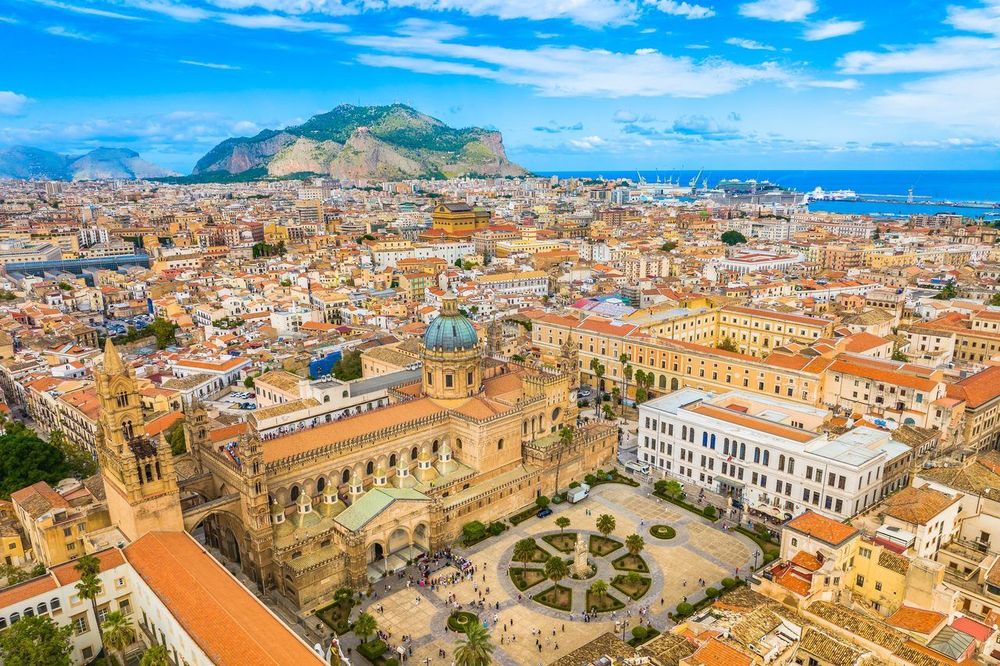
© Shutterstock
 Votre guide Ryo
Weekend in Palermo: The Complete Guide to 2 to 3 Days in Sicily (2026)
Palermo is unlike any other Italian city, and that is exactly what unsettles some visitors at first: Baroque façades stand alongside red domes of Arab inspiration, the markets smell of grilled fish and coriander, and traffic seems to obey its own laws. Yet a weekend in Palermo is enough to understand why the Sicilian capital fascinates as much as it bewilders. In 2 to 3 days, you travel through a thousand years of history shared between Normans, Arabs and Byzantines, you eat a pani ca meusa at 10 in the morning without anyone judging you, and you end the day on the heights of Monte Pellegrino facing the Tyrrhenian Sea. A cathedral reworked over eight centuries, the golden mosaics of the Palatine Chapel, the joyful chaos of the Ballarò market, the opera house where The Godfather Part III ends: here is everything you need to know to plan your stay, from the arrival flight to where to sleep. To get your bearings as soon as you step off the plane, the Ryo audio-guided tour of Palermo links the 23 stops that tell this intertwined story over 3 hours and 7.7 km, directly on your phone.
Why Choose Palermo for a Weekend in Sicily
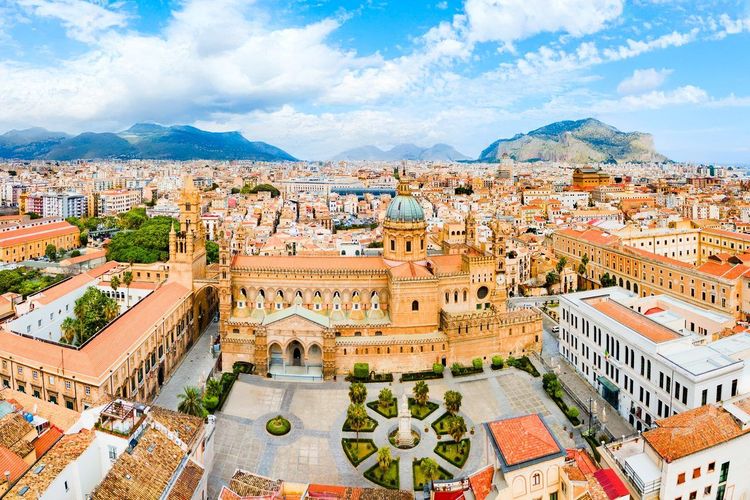
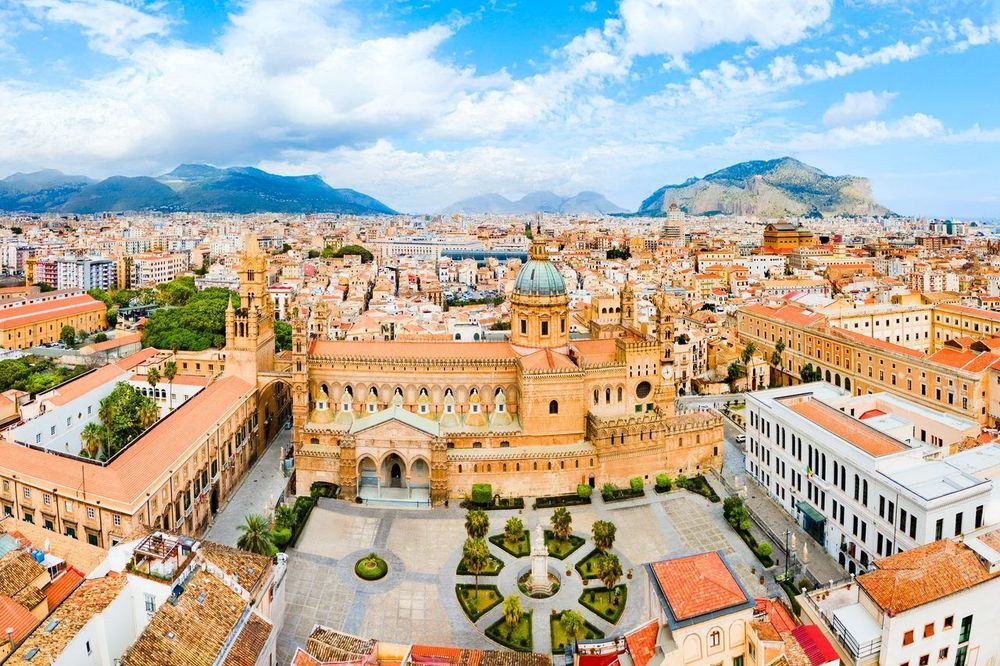
Palermo is the capital of Sicily, but it has long lived in the shadow of Taormina or Etna on classic tourist circuits. A complete mistake: the city is home to seven of the nine monuments of the Arab-Norman itinerary listed as a UNESCO World Heritage Site in 2015 (the other two are the cathedrals of Monreale and Cefalù), and its modest size makes it perfectly suited to a 2- or 3-day visit.
Palermo's identity comes from its blend of cultures. The Normans who conquered Sicily in the 11th century kept the Arab craftsmen and Byzantine mosaicists already settled there, and the result can still be read today on the walls of the Norman Palace or the Cathedral: red domes, Arabic calligraphy, a Christ Pantocrator in golden mosaic, sometimes in a single building. This layering of civilizations, rare at this scale in the Mediterranean, explains why a weekend in Palermo often has more cultural density than a stay twice as long elsewhere.
The historic center can be covered on foot in one long day, which frees up time for the sea and the mountains from the second day: Mondello beach 20-30 minutes away, the Capo Gallo reserve, the panorama from Monte Pellegrino. So, without a car, you can alternate between heritage and nature in a short format.
Add to this one of the most generous street food scenes in Italy and prices that are still reasonable compared with Rome or Venice, and you understand why so many travelers come back from a simple weekend in Sicily feeling they have seen a destination in its own right. The city can be visited all year round, but it is at its best between April and June, then in September-October, when the heat eases without the tourists abandoning the terraces.
How to Get to Palermo for a Weekend
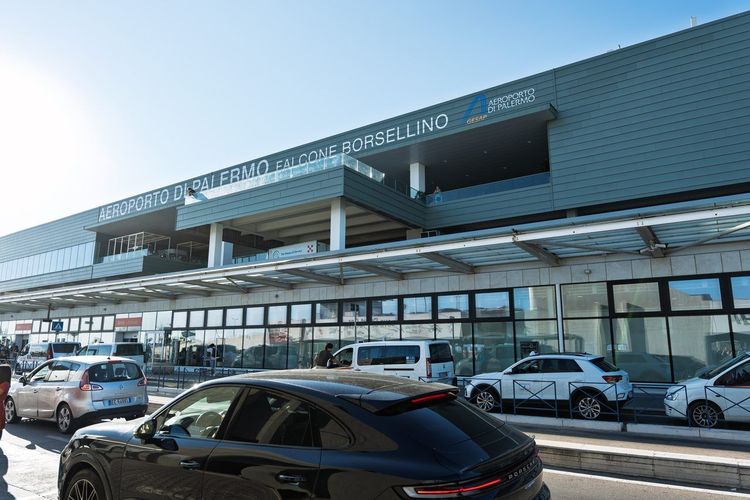
The international airport Falcone-Borsellino (also called Palermo-Punta Raisi Airport) is located about 35 kilometers from the city center, on the northwest coast. From France, direct flights operate from Paris, Lyon or Marseille depending on the season, operated notably by easyJet, Volotea or Ryanair; in low season, a layover in Rome or Milan is often necessary and only lengthens the journey by an hour or two.
To reach the center, three options coexist. The Trinacria Express train links the airport to the central station in 45 to 60 minutes depending on stops, for about 6 euros, with a departure every half hour during the day. The Prestia e Comandè shuttle serves several stops in the city in 45 to 50 minutes and is convenient if you are staying near a stop. Finally, taxis charge a fixed fare displayed at the airport, which is worthwhile if you are traveling in a group or arriving late at night.
Once there, forget the car for exploring the historic center: the streets are narrow, parking is scarce, and everything is easily done on foot or by bus. Keep the scooter or rental car option for the second day, when you want to reach Capo Gallo or Monte Pellegrino. Our article on the transfer from Palermo airport details each option with up-to-date schedules.
Where to Stay in Palermo: Neighborhoods and Good Addresses
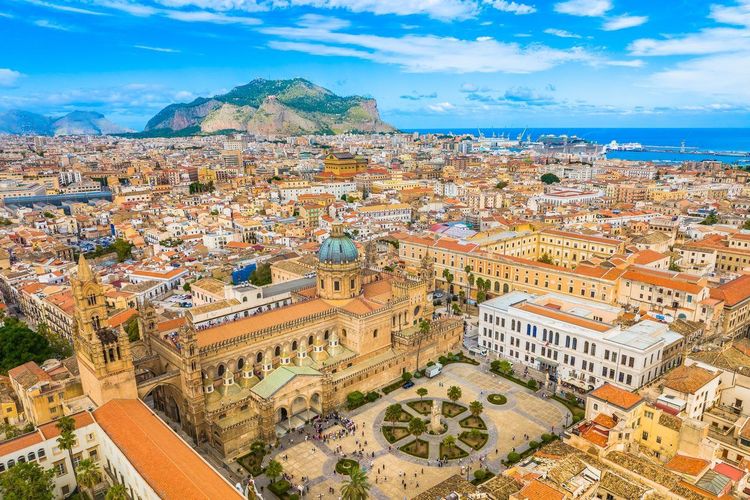
The choice of neighborhood largely determines the success of a short stay, since the city is only a few kilometers wide once you stay within its historic heart.
The historic center, around Quattro Canti and the Cathedral, remains the most practical option: you are within walking distance of almost all the monuments, which simplifies logistics from the first morning. Expect small boutique hotels set in renovated palaces, from 80-100 euros a night for a double room, up to more upscale addresses close to 200 euros.
The Kalsa district, the former citadel of the Arab emirs, appeals to travelers looking for a more bohemian atmosphere: colorful alleys, art galleries, wine bars in the evening, and immediate proximity to the waterfront and public gardens. It is also where several hostels and independent apartments are concentrated, often 20 to 30% cheaper than the strict center.
Finally, the waterfront around the Foro Italico and the Cala, the renovated small harbor, suits those who prefer to wake up facing the water while staying 10-15 minutes on foot from the first monuments. Several contemporary places have opened there in recent years, with terraces overlooking the harbor.
To choose the right hotel, three criteria matter more than the stars displayed: air conditioning (essential from June to September), soundproofing on the street side (the historic center is noisy late at night) and the actual walking distance to the Norman Palace, which often serves as a landmark. If possible, book accommodation with breakfast included: cafés in the center sometimes open late, and a coffee and brioche enjoyed on site before 9 a.m. saves you a good half hour on your sightseeing day.
If your budget is tight, all-inclusive Palermo trip packages, with flight and hotel booked together, often save 15 to 20% compared with booking separately, especially when booking six to eight weeks in advance.
The Norman Palace and the Palatine Chapel
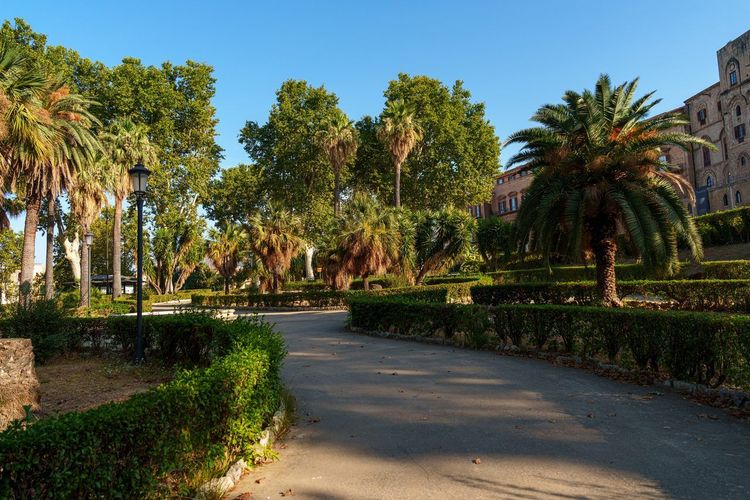
If you could remember only one monument from a weekend in Palermo, this would be it. The Norman Palace (Palazzo dei Normanni (Piazza del Parlamento 1, 90129 Palermo, rated 4.5/5 on Google from 28,995 reviews)), today the seat of the Sicilian Regional Assembly, occupies the highest point of the old city, on a site fortified since Punic times. The Normans made it their royal residence in the 12th century, and Roger II had one of the densest decorative ensembles in the entire Mediterranean built there starting in 1130.
The Palatine Chapel, nestled on the first floor, combines Byzantine mosaics on a gold background, a honeycomb wooden ceiling (muqarnas) painted by Arab craftsmen and a marble marquetry floor. The Christ Pantocrator overlooking the apse has become, along with the one in Monreale, one of the most reproduced images of Sicilian art. The visit takes 45 minutes to 1 hour, and it is best to book your ticket online the day before: on weekends, lines can exceed 30 minutes without a reservation.
This is the place where the Norman, Arab and Byzantine coexistence that shapes the whole city is most clearly visible under a single roof. Our dedicated article on the visit to the Norman Palace details the opening hours, which vary depending on whether the Assembly is in session.
Just opposite, the gardens of Villa Bonanno offer a shady corner where you can catch your breath after the visit, with a view of the palace façade and some remains of Roman houses uncovered on site.
As for prices, the full ticket costs 14.50 euros from Thursday to Monday (Palatine Chapel, royal apartments and gardens), and 10 euros on Tuesday and Wednesday, days when the royal apartments remain closed for parliamentary work. Accompanied children under 13 enter free, a detail that often goes under the radar of general guidebooks. If you want to see the royal apartments, schedule your visit for Saturday, Sunday morning or Monday.
The Ryo audio-guided tour starts just a few steps from here: its first stops tell the history of the monument before you even cross the threshold, which changes the way you will then look at each mosaic. Allow about 20 minutes for this first section before heading to the Cathedral, five minutes' walk down the Corso Vittorio Emanuele.
Strolling Through the Historic Center: Cathedral, Quattro Canti and Old Palermo
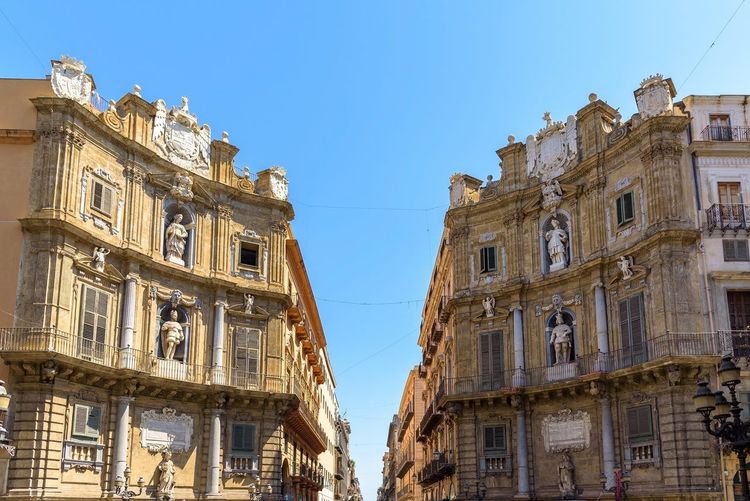
The historic center of Palermo is best discovered on foot, without a rigid itinerary, letting yourself drift from one square to the next. This is logically the densest section of this guide: it is also where you will spend the most time during your weekend.
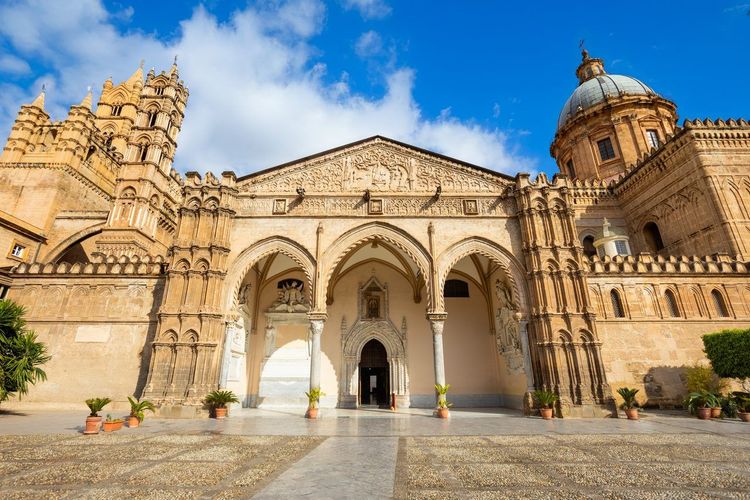
Heading down from the Norman Palace, the Cathedral of Palermo (Cattedrale Maria Santissima Assunta) appears after a few minutes' walk. Built from 1185 on the site of a mosque, itself built on an ancient basilica, it combines Arab-Norman, Catalan Gothic and Neoclassical styles, with a surprisingly coherent result when seen from the outside. You can visit the royal tombs, including those of Roger II and Frederick II of Hohenstaufen, and it is possible to climb onto the roof terraces for a 360-degree panorama over the city's domes, one of the least known and most spectacular views of Palermo.
Continue along the Corso Vittorio Emanuele to the Quattro Canti (Piazza Vigliena, 90133 Palermo, rated 4.7/5 on Google from 31,833 reviews), the Baroque crossroads that historically marks the division of the old city into four districts. Each of the four curved façades represents, over several levels, a season, a Spanish king who ruled over Sicily and a patron saint of the city. The place is tiny, you cross it in thirty seconds, but stopping for five minutes to decipher the sculptures is worth it, especially in late afternoon when the light grazes the façades.
Just steps away, the Piazza Pretoria and its Renaissance fountain covered in nude statues long earned the place the nickname "square of shame." Right behind, the church of Martorana and that of San Cataldo, with its three typically Arab red domes, form one of the most beautiful architectural contrasts in the city on an otherwise modest square.
To truly get lost, head into the alleys that lead south from this core: you will pass half-decrepit aristocratic palaces, secret gardens glimpsed through wrought-iron gates, and the urban fabric inherited from Arab Palermo, then one of the largest cities in the Mediterranean. It is in this maze that the history and heritage of Palermo are best read, far more than in the monuments taken individually: the city itself is the historical document.
On this stretch, the Ryo audio guide to Palermo links the Cathedral and then Quattro Canti and slips in anecdotes about the alleys and palaces of old Palermo between stops, which keeps you from missing details that you only see when you look for them. To then broaden your view to the whole island, our selection of the must-sees in Sicily takes over.
If rain shows up, and it does in winter, retreat to the interiors: the Palatine Chapel already mentioned, the Oratory of Santa Cita with its Serpotta stuccoes, or the modern art gallery housed in the former convent of Sant'Anna. These are visits that can easily fill an entire afternoon under cover.
In the evening, this part of the center changes character: terraces set up on the sidewalks, guitar players take over the porches, and it is not uncommon to come across a religious procession leaving a church without warning. It is also when the Palermitans themselves go out, which gives the old town a different atmosphere from the more touristy one of the daytime. Allow a good half day for this area alone if you want to go inside the churches rather than only admire them from the outside.
The Teatro Massimo and Evenings in Palermo
With its colonnaded Neoclassical façade, the Teatro Massimo (Piazza Giuseppe Verdi, 90138 Palermo, rated 4.7/5 on Google from 57,569 reviews) is the largest opera house in Italy and one of the largest in Europe, often cited as third behind Paris and Vienna. Inaugurated in 1897 after more than twenty years of construction, it owes its recent international fame to a few minutes of cinema: the final scene of The Godfather Part III takes place on its monumental staircase.
The guided tour of the interior lasts about 30 minutes and gives access to the main hall, with its remarkable acoustics, as well as the royal box. If your weekend falls on a performance evening, booking an opera seat remains a rather spectacular way to end a day of sightseeing, at prices often more accessible than in Paris or Milan.
Around the Piazza Verdi, the terraces fill up from 7 p.m. It is a good spot for an aperitif before choosing where to have dinner: the neighborhood mixes modern wine bars and old trattorias that have not changed their menu in thirty years, which says a lot about how much you can trust them.
Markets, Street Food and Sicilian Cuisine
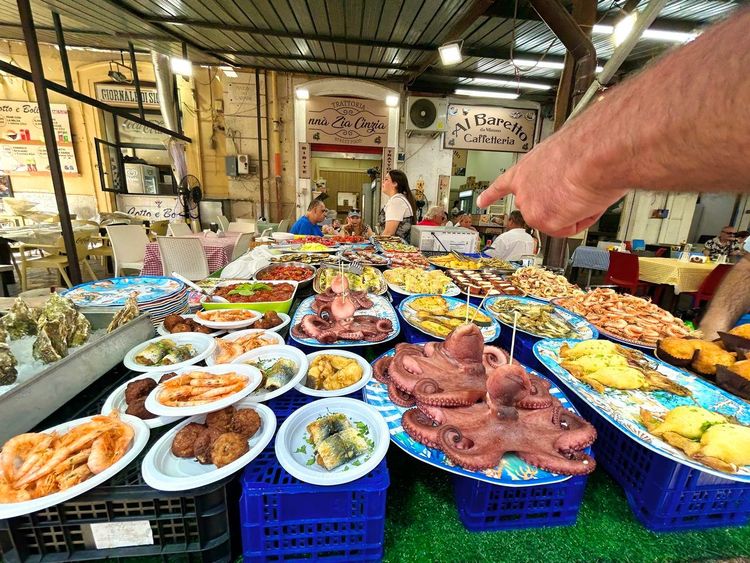
Palermo is eaten as much as it is visited, and this is undoubtedly the aspect of the trip that surprises first-time visitors the most.
The Vucciria market, between Via Roma and the Cala, has lost its function as a traditional food market over the decades but remains a must-stop at the end of the day: from 6 p.m., tables spill out onto the square and the place becomes a haunt for street food and cheap beer, very popular with students and local residents.
The Mercato Ballarò, for its part, has remained a true daily market, often presented as the oldest in the city, set in the working-class neighborhood of Albergheria. In the morning, fish stalls stand alongside mountains of citrus fruits and stands of vegetables grilled on the spot. It is here, far more than in a restaurant, that Sicilian cuisine is understood: a market cuisine, noisy, generous, built on simple products prepared with olive oil and citrus.
As for street food proper, four specialties come up consistently. The arancine, fried rice balls filled with meat, butter or spinach, are found everywhere and rarely cost more than 2 to 3 euros. The pani ca meusa, a sandwich of boiled veal spleen and lung fried in lard, served in a small round bun, is disconcerting at first but is one of the rites of passage for travelers in Palermo. The sfincione, a sort of thick pizza topped with onions, tomato and breadcrumbs, readily replaces a full meal. And the pane e panelle, fried chickpea fritters tucked into a bread roll, remains the oldest and most popular version in the repertoire.
For a sit-down meal, the popular taverns and trattorias of the center serve affordable set menus built around pasta with sardines and wild fennel (pasta con le sarde), eggplant caponata or grilled fish. Expect to pay 12 to 18 euros for a full meal with a drink at these places, compared with double that in the tourist restaurants on the main squares. Here you enjoy Italy at an affordable price, far from the bills of Rome or Venice.
As for sweets, Sicilian granita with lemon or pistachio, served with a warm brioche for breakfast, is a local habit to adopt from the first morning rather than as a dessert. Cannoli, filled with sheep's milk ricotta when you order and never in advance, are enjoyed standing up in any pasticceria in the center, for 2 to 3 euros.
Our article on the culinary specialties of Palermo lists ten dishes to try first if your stomach cannot absorb everything in a single weekend.
With the Ryo audio-guided tour in your ears, a stop at the markets becomes a little history lesson: the rather raw anecdote about the origin of pani ca meusa will tell you exactly what to order before you even reach the stall. A practical tip if you try Ballarò in the morning: come before 10 a.m. to see the market in full swing, and bring cash, as many vendors do not take cards.
Nature and Fresh Air: Capo Gallo Reserve and Monte Pellegrino
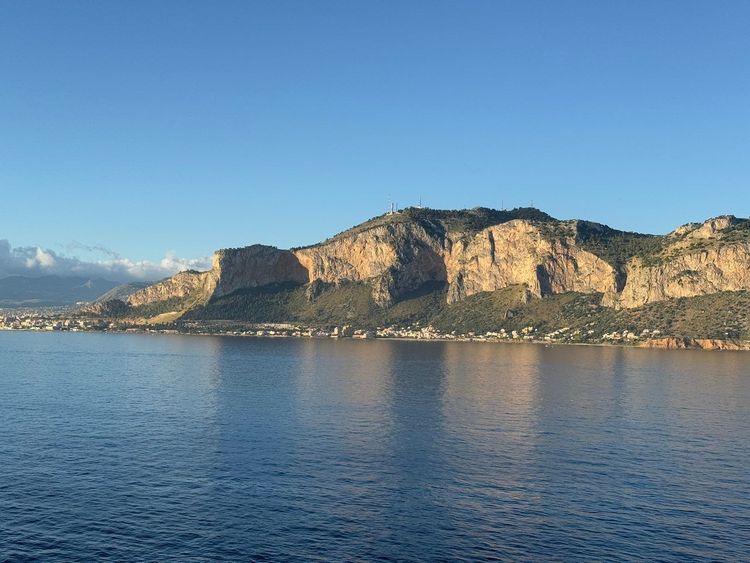
Your stay is not limited to ancient stones: the city is framed by the sea and by a mountain that drops almost directly into the water, and it would be a shame to leave without setting foot there.
The Capo Gallo nature reserve, half an hour from the center, protects a rocky coast that has remained largely wild despite the immediate proximity of the city. The limestone cliffs plunge into intensely blue water, ideal for snorkeling in summer, and several coastal trails let you walk for an hour or two above the sea without meeting many people, even in high season. Right next door, the beach of Mondello, with its fine sand and its Liberty-style bathing establishment on stilts, concentrates most of the Palermitans' seaside life on weekends: colorful parasols, granita kiosks, and an atmosphere that is far more local than touristy. Our selection of the most beautiful beaches in Palermo details other coves accessible by bus or scooter if Mondello is too crowded for your taste.
On the other side of Mondello bay, Monte Pellegrino rises to about 600 meters and offers, from its heights, the most complete panorama of Palermo and its gulf. On its north slope, the Addaura caves preserve rock engravings from the Upper Paleolithic, among the oldest human depictions in Sicily; access to the site is restricted, but the area is worth the detour for prehistory enthusiasts.
The road that climbs from the city, Via Pietro Bonanno, winds along the cliffside with regular viewpoints. Near the summit, the Sanctuary of Saint Rosalia (Santuario di Santa Rosalia (Via Bonello, 90142 Palermo, rated 4.7/5 on Google from 8,744 reviews)), set in the cave where the city's patron saint is said to have lived as a hermit in the 12th century, deserves a stop even if you are not a believer: the water that seeps from the rock is collected and considered miraculous by the locals.
The best time to climb Monte Pellegrino is late afternoon, an hour before sunset: the low light illuminates the bay of Palermo, and the road then leads straight back down to the waterfront terraces for an aperitif.
To combine the two sites in the same half day, renting a scooter remains the most flexible solution: expect to pay around 35 to 45 euros for 24 hours from a rental shop in the center. A standard car license is generally enough for small-displacement models, but check the conditions with the agency before booking. The bus serves Mondello, but not Capo Gallo or the summit of Monte Pellegrino directly, which limits its usefulness if you want to see both sites on the same day.
If your weekend only has two full days, it is better to choose between the two: Capo Gallo suits swimming and coastal walking enthusiasts, Monte Pellegrino those who prioritize the panorama. Plan a full half day, travel included.
Itinerary Ideas Based on Your Weekend Style
Not all the activities in Palermo combine well in a short format: here are three outlines to adapt your stay to your pace and your wishes.
For a classic 2-day weekend, devote the first day to the historic center: Norman Palace and Palatine Chapel in the morning, Cathedral and Quattro Canti in the early afternoon, Ballarò or Vucciria market at the end of the day. Reserve the second day for nature, choosing between Capo Gallo and Monte Pellegrino depending on whether you want to swim or enjoy a panorama, before returning early to enjoy a last evening around the Teatro Massimo.
For a romantic weekend in Palermo, slightly reverse the order: start with an aimless stroll through the alleys of the Kalsa at daybreak, when the city is still quiet, then book the Palatine Chapel in late morning to enjoy the light streaming through the mosaics. End with a late dinner near Piazza Verdi and a night walk to the Cala, the illuminated small harbor, where fishing boats now stand alongside bar terraces.
If you really only have one day to visit Palermo, focus on the axis of Norman Palace, Cathedral, Quattro Canti and Mercato Ballarò: this route covers most of the Arab-Norman heritage and a culinary immersion in under six hours of walking, breaks included.
Conversely, if you are lucky enough to have a week in Palermo rather than just a weekend, use the city as a base for excursions to Agrigento and its Valley of the Temples, or to Taormina on the east coast, two destinations we detail in our articles on what to do in Agrigento and what to do in Taormina.
Whatever format you choose, the 23 audio stops of the Ryo audio-guided tour of Palermo, about 3 hours for 7.7 kilometers, can easily be spread over an entire weekend or condensed into a single well-filled day: you move at your own pace, without following a guide or fitting your visits to a group schedule. Our detailed article on visiting Palermo in 2 days offers an hour-by-hour breakdown if you prefer a fully marked itinerary.
Practical Info: Budget, Best Season and Ideal Length of Stay
A weekend in Palermo remains one of the most affordable getaways in Southern Europe. Plan a total budget, flight included from France, of 250 to 450 euros per person for two days and two nights in a mid-range hotel, excluding optional excursions. On site, a typical day (meals in local taverns, two or three monument entrances, a few bus rides) comes to around 50 to 70 euros per person, street food included. Tip: on the first Sunday of the month, Italian state cultural sites are free, which can lighten the bill if your stay falls on that day.
The best season to visit Palermo is between April and June, then between September and early November: temperatures remain pleasant for walking all day, around 20 to 25 degrees Celsius, without the stifling heat of July-August, which can exceed 35 degrees. Winter is still manageable, with mild temperatures (12 to 16 degrees) but a few rainy days to expect, especially in December and January.
As for safety, Palermo does not deserve the dubious reputation sometimes attached to it: violent crime rarely affects tourists, and the precautions to take are the same as in any large city in southern Europe. Keep an eye on your belongings in very busy markets like Ballarò or the Vucciria, where crowds encourage pickpocketing, and avoid walking alone very late in the deserted streets of Albergheria.
Two full days are enough to cover the historic center and a natural site; the third day, if you have it, lets you add an excursion to Monreale or Cefalù, or simply slow down the pace. Beyond three days, it is better to consider the city as a base for exploring the rest of Sicily rather than multiplying urban visits.



FAQ
How many days do you need to visit Palermo?
Two full days are enough to cover the essentials of the historic center and a natural site such as Capo Gallo or Monte Pellegrino. With a third day, you can add a trip to Monreale, Cefalù or Agrigento, or simply slow down the pace of your visits.
What budget should you plan for a weekend in Palermo?
Plan on 250 to 450 euros per person, including a flight from France, for two days and two nights in a mid-range hotel. On site, a day of sightseeing and meals in local taverns costs 50-70 euros per person.
How do you get to Palermo from France?
Direct flights operate from Paris, Lyon and Marseille depending on the season; otherwise, a layover in Rome or Milan adds one to two hours of travel. From Falcone-Borsellino Airport, the Trinacria Express train reaches the center in about 50 minutes for nearly 6 euros.
What is the best time of year for a weekend in Palermo?
April to June and September to early November offer the best conditions, with temperatures around 20-25 degrees Celsius. July and August can exceed 35 degrees and make outdoor sightseeing difficult.
What should you see first in Palermo in 1 day?
Focus on the Norman Palace and the Palatine Chapel in the morning, then the Cathedral, Quattro Canti and the Ballarò market in the afternoon and early evening. This route covers most of the Arab-Norman heritage in a single day of walking.
Is Palermo a safe city for tourists?
Yes, violent crime very rarely affects visitors, and the precautions to take are the usual ones in any large southern European city. Just keep an eye on your belongings in crowded markets like Ballarò or the Vucciria.
In Summary
A weekend in Palermo lives up to all its promises as long as you do not try to see everything: it is better to choose between Capo Gallo and Monte Pellegrino, between the Vucciria and Ballarò, rather than chasing every recommendation found online. Palermo is savored in layers, much like its monuments overlay the civilizations that shaped it.
And to avoid wasting time piecing together an itinerary, keep the 23 stops of the Ryo audio guide at hand: 3 hours of guided walking over 7.7 kilometers, from the Norman Palace to the alleys of old Palermo, directly on your phone. Enough to turn two short days into a real Sicilian memory.
À lire également