© Shutterstock
 Votre guide Ryo
What to Do in Hanoi in 2026: 22 Must-Have Experiences
In Hanoi, a scooter can carry a family of four, a crate of mangoes, and a Buddhist monk — often at the same intersection where nobody seems to stop. Wondering what to do in Hanoi quickly becomes overwhelming, so many are the options in a city where Vietnam's capital layers centuries of history over just a few square kilometres. This thousand-year-old city has kept a pace that few Asian capitals have managed to preserve: street markets at dawn, incense-filled temples at noon, bia hoi terraces as night falls. The Ryo audio-guided tour of Hanoi lets you grasp this layering of eras on foot, street by street, without losing the thread between 11th-century legends and Cold War remnants.
A freight train passes less than a metre from the tables of an Old Quarter café, several times a day, without a single customer looking up from their cup. A temple over 1,500 years old can be visited by rowing boat a short distance from the city centre. A soup sold on a plastic stool draws longer queues than a Michelin-starred restaurant. And two hours' drive away, rice paddies wedged between limestone peaks are crossed by rowing boat, feet skimming the water. These experiences, and a good fifteen others besides, paint the true face of Hanoi — far removed from the cliché of a mere stopover before Ha Long Bay.
1. Hoan Kiem Lake and the The Huc Bridge
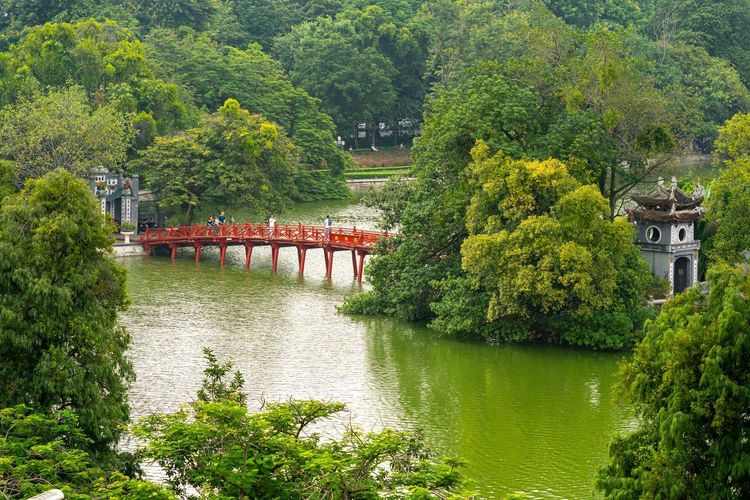
No list of what to do in Hanoi can overlook the historic heart of the city: Hoan Kiem Lake. Its name, Lake of the Returned Sword, comes from a 15th-century legend: Emperor Le Loi is said to have returned a magical sword to a divine turtle here, the weapon that had helped him drive out Chinese invaders. Hanoians still believe it enough that when a giant turtle was found dead in 2016, it was mourned as a matter of national grief.
The The Huc Bridge, painted bright red and built in 1865, connects the shore to Ngoc Son Temple, set on a small islet shaded by centuries-old banyan trees. Allow twenty minutes for the temple visit, which houses among other things the taxidermied remains of a lake turtle, presented as tangible proof of the legend. Around the lake, the 1.7 km promenade transforms at the weekend: from 7pm on Friday to midnight on Sunday, traffic is cut and Hanoian families take over the road to dance, play giant Chinese checkers, or simply sit in circles on low stools.
At the centre of the lake stands the Turtle Tower (Thap Rua), a miniature pagoda closed to the public, built in the late 19th century on an islet said, according to legend, to have been the resting place of the sacred turtle itself. It is only lit at night, making it one of the most photographed images in the city, particularly from the terrace of one of the cafés at the south-east corner of the lake.
At the north end, the statue of Ly Thai To, the emperor who founded Hanoi in 1010 (then called Thang Long, rising dragon), serves as a gathering point for Tet celebrations. You can continue directly to the Old Quarter, five minutes' walk north, which makes Hoan Kiem Lake the natural starting point for any walking exploration of Hanoi. Avoid Saturday afternoons, when school groups on day trips descend on The Huc Bridge for class photos. Ryo's Land of the Ancient Dragon audio-guided tour starts from this very lake, right by Ngoc Son Temple.
2. The Old Quarter and Its 36 Guild Streets
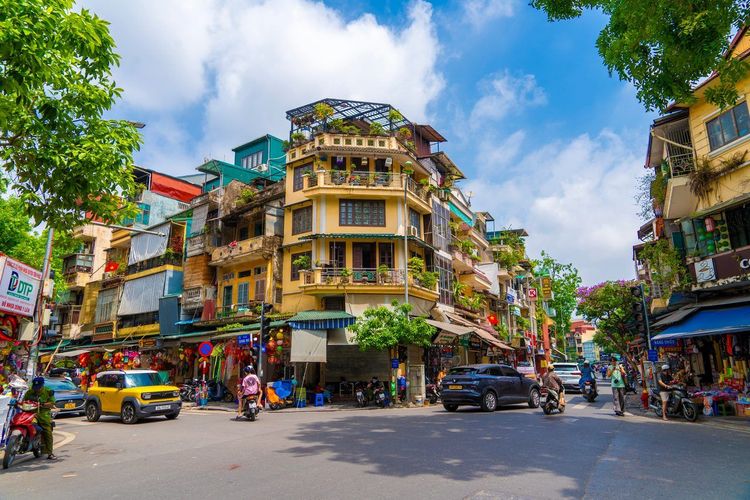
Hanoi's Old Quarter took shape from the 11th century around the royal citadel of Thang Long, when each guild of craftsmen and merchants was assigned its own street. The Vietnamese name, 36 phố phường, refers to these thirty-six historic streets, even though their actual number fluctuated between 36 and more than 50 depending on the era. The principle is still legible today in the street names: Hang Bac (Silver Street) still concentrates jewellers, Hang Gai (Silk Street) fabric shops, and Hang Ma (Paper Votive Street) paper lanterns and cardboard funeral offerings.
Walking through this grid of narrow lanes, often less than seven metres wide, means crossing several centuries of commerce without changing pavements. The narrow, deep façades — sometimes called tube houses — were a response to colonial taxation calculated on façade width rather than total floor area: residents therefore built deeper, sometimes over 60 metres back, with interior courtyards to let in light.
To explore this neighbourhood without getting lost in the chaos of scooters and dangling electrical wires, the Ryo audio-guided tour of Hanoi, Imperial and Eternal Capital offers a route designed to connect the historic streets without retracing your steps.
Three streets deserve a particular detour. Hang Buom, the former Sail Street, now concentrates the best bia hoi spots and late-night street food. Ma May, where a traditional 19th-century house (number 87) survives and is open to visitors, gives a precise idea of how an original tube house was organised, with its central light well and ancestral altar. Hang Dao, the dyed-silk street, opens onto the weekend night market.
Classic landmarks can sometimes be hard to find in this labyrinth: street numbers do not always follow a continuous sequence, and a single address may house several businesses stacked across three floors. A paper map remains useful alongside GPS, whose accuracy drops noticeably between tall buildings and metal awnings. Regulars recommend navigating by shop signs rather than numbers: the corner of Hang Bac and Hang Ngang, for example, serves as an informal landmark for the whole neighbourhood.
As evening falls, bia hoi terraces set up directly on the pavement, on plastic stools barely twenty centimetres high, become the social stage of the neighbourhood. Beer here rarely costs more than a dollar a glass, brewed locally and delivered fresh each day in stainless steel kegs, with no preservatives or extended pasteurisation: it is meant to be drunk within 24 to 48 hours of brewing. You could spend an entire morning in this neighbourhood without exhausting its side streets; wear sturdy closed shoes, as pavements — often taken over by market stalls — regularly force you onto the road.
3. The Temple of Literature
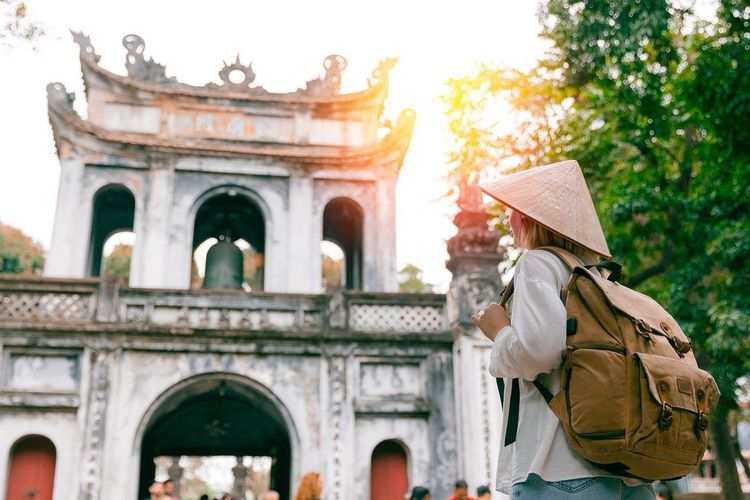
Founded in 1070 by Emperor Ly Thanh Tong in honour of Confucius, the Temple of Literature (Van Mieu) welcomed the Quoc Tu Giam six years later, considered Vietnam's first national university. For more than 700 years, the institution trained high-ranking royal officials through a system of imperial examinations modelled on the Chinese system.
The site unfolds across five successive courtyards, separated by monumental gateways, leading to the Khue Van Cac pavilion, which has become a visual symbol of Hanoi, reproduced on banknotes and the city's official logo. The fourth courtyard contains the site's most precious element: 82 stone stelae mounted on granite turtles, engraved with the names of more than 1,300 graduates of the imperial examinations between 1442 and 1779. The ensemble has been inscribed on UNESCO's Memory of the World Register since 2011.
A persistent tradition has students come to touch the heads of the stone turtles before their exams, a gesture believed to bring good luck. You will often see uniformed secondary school students photographing themselves in front of the stelae the day before a university entrance exam, bouquet of flowers in hand for the temple offering.
Between the second and third courtyards, two rectangular pools called Thien Quang (Wells of Heavenly Clarity) reflect the Khue Van Cac pavilion when the morning light is low — a moment sought out by local photographers. The garden planted with centuries-old banyans and frangipani trees, laid out in strict symmetry according to Confucian feng shui principles, contrasts sharply with the organised chaos of the Old Quarter just fifteen minutes' walk to the south-east.
Allow one to one and a half hours, more if you linger in the fifth courtyard dedicated to Confucius and his disciples, where a reconstructed classroom with desks and calligraphy panels survives. Entry costs around 70,000 dong and the site closes earlier on Mondays. Avoid university graduation days, generally in June, when hundreds of graduates in gowns flood the courtyards for their graduation photos.
4. The Ho Chi Minh Mausoleum
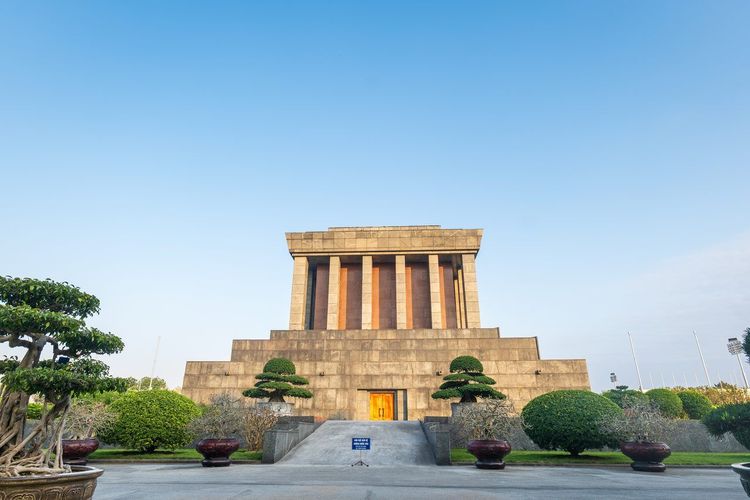
Completed in 1975 on the model of Lenin's Mausoleum in Moscow, the Ho Chi Minh Mausoleum preserves the embalmed body of the revolutionary leader, displayed in an air-conditioned chamber guarded by soldiers in immaculate white uniforms. Ho Chi Minh had nonetheless requested a simple cremation in his will — a wish that was never honoured by the party that succeeded him.
The visit is made in complete silence, with no photography, no shorts, and no sleeveless tops, in a queue that can exceed an hour's wait in high season. The body is sent to Russia each year for several weeks of maintenance, generally between September and December, during which time the mausoleum remains closed to the public.
Set aside your morning: the mausoleum only opens from 8am to 11am, Tuesday to Sunday, and is completely closed on Mondays and Fridays. Ba Dinh Square surrounding it — the vast esplanade where Ho Chi Minh proclaimed Vietnamese independence on 2 September 1945 — is also worth a few minutes, particularly for the flag-raising and lowering ceremony performed each day at fixed times by an honour guard.
The entire complex, which also includes the adjacent Ho Chi Minh Museum, can be visited on a single combined ticket. The museum, more surprising in its design than the mausoleum itself, blends biographical chronology with abstract symbolic installations, including a reconstruction intended to represent the intellectual currents of the 20th century. Allow half a day for the whole site if you wish to visit the mausoleum, museum, and stilt house without rushing.
5. The Stilt House and the One Pillar Pagoda
A short walk from the mausoleum, the stilt house where Ho Chi Minh lived and worked from 1958 until his death in 1969 is striking in its modesty: a simple wooden structure on stilts, just two rooms, surrounded by a garden of mango trees and a carp pond he fed himself each evening. The contrast with the neighbouring Presidential Palace — the former residence of the French Governor-General, built in 1906 and never inhabited by Ho Chi Minh by personal choice — is deliberate and frequently noted by local guides.
Two minutes' walk away, the One Pillar Pagoda (Chua Mot Cot) replicates a lotus flower emerging from water on a single concrete pillar — an architectural feat originally built in wood in 1049 under Emperor Ly Thai Tong, in gratitude for the birth of an heir after a dream in which the Buddha appeared to him on a lotus. The current structure, rebuilt in 1955 after its destruction by French forces in 1954, remains one of the most widely reproduced Buddhist symbols in Vietnam, appearing even on coins, a stop that Ryo's Eternal Imperial Capital audio-guided tour also makes, not far from the Presidential Palace.
6. Hoa Lo Prison
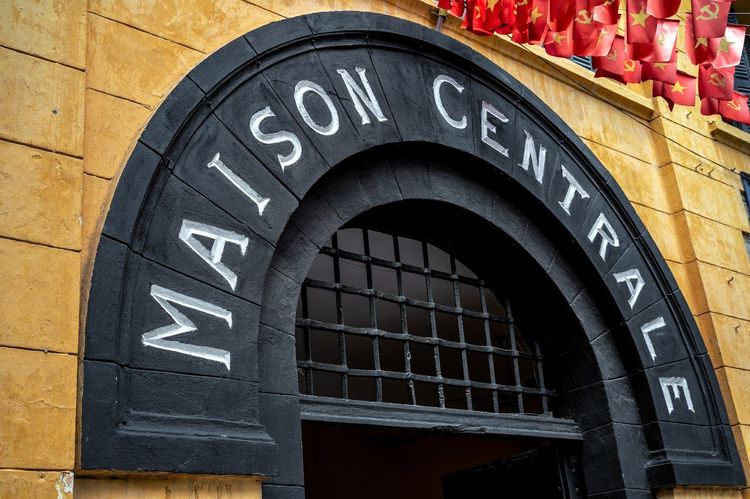
Built by the French colonial administration in 1896 to imprison Vietnamese independence activists, Hoa Lo Prison had a second historical purpose far better known in the West: between 1964 and 1973, it held American pilots shot down over North Vietnam, including future senator John McCain. It was these prisoners of war who gave it its bitterly ironic nickname, the Hanoi Hilton.
The current museum, which occupies only a fraction of the original building — the rest having been demolished in 1993 to build an office tower — devotes most of its tour to the French colonial period: cramped cells, a preserved guillotine system, and death-row dungeons. The section dedicated to American prisoners is smaller and presents their conditions of detention in a highly favourable light, at odds with testimonies collected after the war.
Allow 45 minutes to an hour for the visit. The French-language audio guide, available at the entrance for a small additional fee, provides a level of context that the display panels alone do not always offer. The personal items on display — including McCain's flight suit and letters from prisoners — give the visit a more intimate dimension than the austere façade of the building, squeezed between two modern towers in the heart of the city, might suggest.
7. The Vietnam Museum of Ethnology
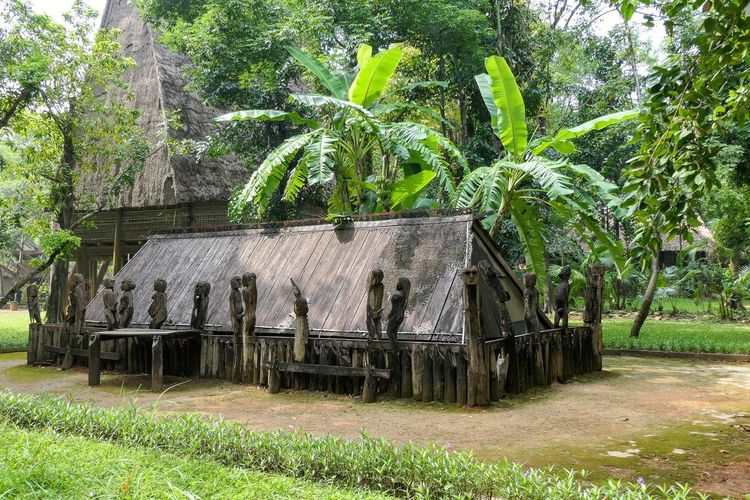
Opened in 1997 in the Cau Giay district, about twenty minutes by taxi from the historic centre, the Vietnam Museum of Ethnology dedicates its collections to the 54 officially recognised ethnic groups in the country, of which the majority Kinh (Viet) are just one component. The distance from the Old Quarter puts off visitors in a hurry, which paradoxically makes it one of the least-visited museums in the city given the quality of its collections.
The main building, designed in the shape of a stylised Dong Son bronze drum, displays costumes, musical instruments, agricultural tools, and ritual objects from the highland minorities of the North (Hmong, Dao, Tay) as well as from the Mekong Delta communities. The explanations in French and English are dense but accessible, placing each object in its social context rather than simply labelling it.
The site's real highlight, however, is its outdoor garden of more than two hectares, where about ten traditional dwellings have been reconstructed piece by piece using original materials: a 19-metre-high Bahnar communal house on stilts, a Tay stilt house, a richly carved Jarai tomb. You can enter each of these structures, which gives a concrete understanding of Vietnamese vernacular architecture that neither books nor photographs convey as well.
Allow half a day if you include the garden, especially if you have children with you: several structures lend themselves to an impromptu treasure hunt. The museum closes on Mondays, like most public institutions in Hanoi, and the entry fee is one of the lowest in the city, around 40,000 dong. A taxi or ride-share rarely costs more than two or three dollars from Hoan Kiem Lake, well worth it for the peace and quiet compared to the tourist density of the centre.
8. Train Street
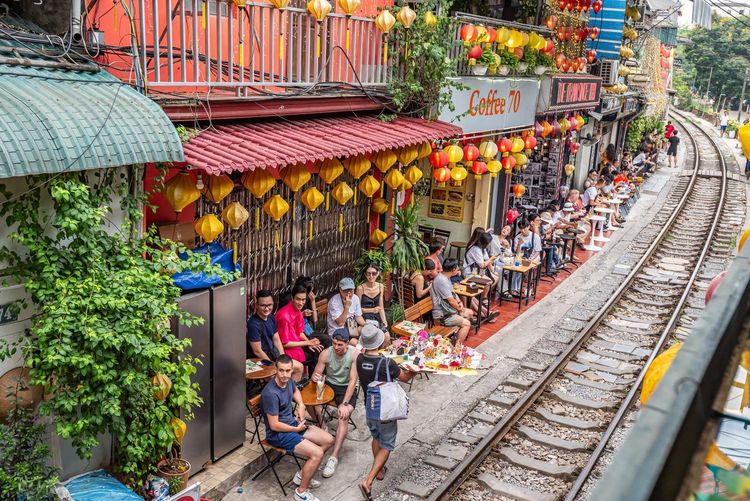
For around 800 metres, the railway line linking Hanoi to Ho Chi Minh City passes through a residential alley so narrow that trains literally graze the house façades. This Train Street, popularised on social media since the mid-2010s, saw dozens of cafés spring up less than a metre from the tracks, where visitors sip iced coffee while waiting for the train to pass — usually announced by the shopkeepers, who clear away chairs and umbrellas a few minutes beforehand.
The authorities have closed access on several occasions since 2019, citing safety risks for tourists crowding onto the track, before reopening it under stricter conditions. Check access before making the trip: some sections now require you to order something at one of the trackside cafés to gain entry, with access monitored by dedicated staff.
Train times vary by day, generally around 3pm and 7pm, but change without fixed notice: it is better to ask directly at the café where you are sitting rather than relying on a timetable found online.
9. Long Bien Bridge
Built between 1899 and 1902 by the French firm Daydé & Pillé (long and incorrectly attributed to Gustave Eiffel), Long Bien Bridge spans the Red River over 2.4 kilometres and remains, more than a century after its construction, one of Hanoi's most recognisable landmarks. Its riveted metal structure, a legacy of the golden age of French metal construction, withstood repeated bombing during the Vietnam War, repaired section by section ever since.
The bridge is still used daily by trains, scooters, and pedestrians in a coexistence that looks improbable from a distance but works perfectly well up close. Come at sunrise: the raking light on the metal trusses and the vegetable market that sets up every morning under the arches on the north bank create one of the most photogenic scenes in the city, far less crowded than Hoan Kiem Lake at the same hour.
10. Saint Joseph's Cathedral
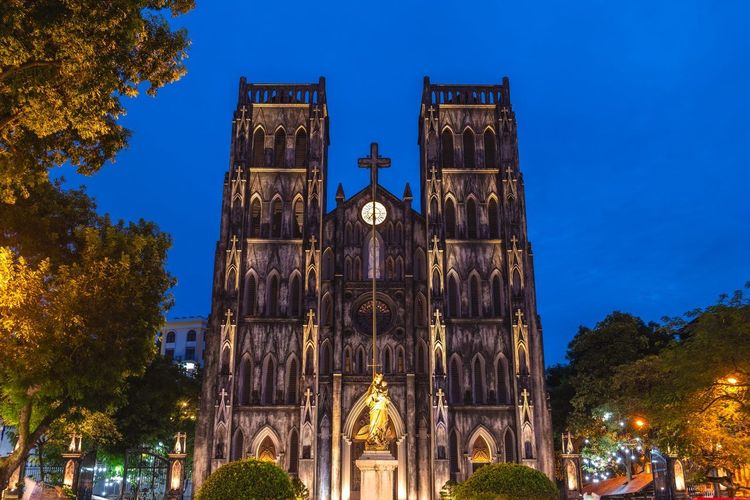
Completed in 1886, Saint Joseph's Cathedral echoes, on a smaller scale, the neo-Gothic style of Notre-Dame de Paris, with its two square towers standing 31.5 metres tall and visible from several surrounding streets.
The interior, more understated than the façade suggests, remains open for daily services; mass times posted at the entrance allow for a respectful visit outside of celebrations. Around the forecourt, several upper-floor cafés offer a bird's-eye view of the façade — a welcome alternative for photographing the building without the crowd that gathers at street level in the late afternoon.
11. Dong Xuan Market
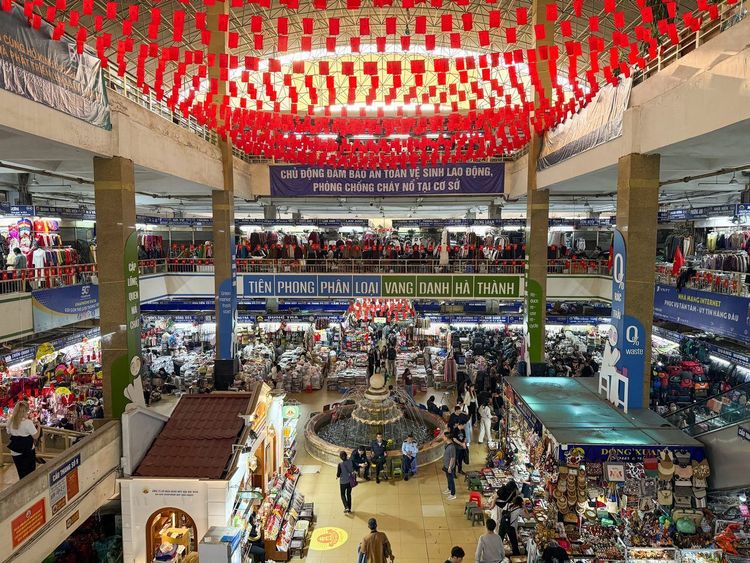
Built in 1889 and largely rebuilt after a deadly fire in 1994, Dong Xuan Market remains Hanoi's largest covered market, with nearly 2,000 stalls spread across three levels. You can find almost anything here: fabric by the metre, toys, spices, kitchen utensils, various counterfeits, and on the ground floor a food section where bargaining is expected, almost ritualistic.
Always negotiate: displayed prices, where they exist, are mainly a starting point, and a reduction of 30 to 50% from the first price quoted is not unusual for a patient buyer. Behind the main building, a street market set up every evening offers dense, cheap street food — less touristy than Ta Hien.
12. West Lake and Tran Quoc Pagoda
Covering 500 hectares, West Lake (Ho Tay) is Hanoi's largest body of water, far calmer than Hoan Kiem Lake, which nonetheless attracts most of the tourist attention. A local legend — of a nine-tailed fox driven from its cave by a water spirit — explains the lake's formation in Vietnamese mythology, a tale that local guides like to recount while pointing to the residential neighbourhoods that surround it today.
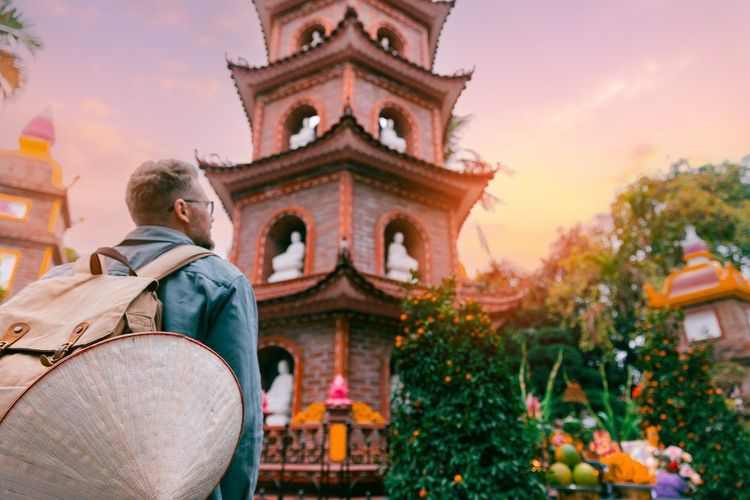
On an islet linked to the shore by a short causeway stands Tran Quoc Pagoda, considered Hanoi's oldest Buddhist pagoda, with a history going back more than 1,500 years according to monastic records, though the current structure largely dates from the 17th century. Its eleven-storey tower, completed in 1998, houses Buddha statues at each level and visually dominates the entire tip of the lake.
The full circuit of West Lake, around 17 kilometres, can be done by bicycle or scooter in half a day, with stops at floating cafés, bonsai gardens, and the cycle path most regularly cited by the city's expat community. The Ryo audio guide for Hanoi includes a section dedicated to this area, less dense than the Old Quarter but equally revealing of everyday Hanoian life.
In the late afternoon, the Trinh Cong Son promenade, recently redeveloped along the east bank, gathers a range of terrace cafés facing the sunset over the water. You will encounter more Hanoian families on a weekend outing than tourists. The village of Nghi Tam, on the north bank, still cultivates flower fields that supply the city's markets, particularly spectacular in late January when peach blossoms (dao) herald the approach of Tet. A stroll during this period, even a brief one, reveals a seasonal side of Hanoi that most visitors miss by staying confined to the centre.
13. Thang Long Water Puppet Theatre
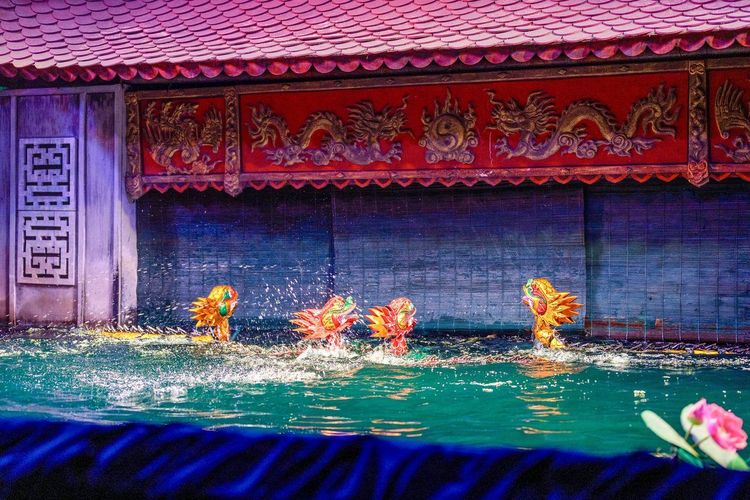
Born in the rice-farming villages of the Red River Delta nearly a millennium ago, the art of water puppetry originally used flooded ponds and paddy fields as its natural stage. Thang Long Theatre, on the edge of Hoan Kiem Lake, has offered an indoor condensed version since 1969, performed over an opaque pool that conceals the puppeteers immersed up to their waists.
Performances, lasting around fifty minutes, stage popular legends (the turtle and the sacred sword, ploughing scenes, dragon battles) accompanied by a traditional orchestra playing live dan bau and sinh tien — no subtitles needed, as the storytelling remains largely visual.
Book at least the day before: evening shows, especially the 8:15pm performance, sell out several days in advance during high tourist season (November to March). Front-row seats, slightly more expensive, occasionally expose you to splashes of water during the most animated scenes.
14. The Imperial Citadel of Thang Long
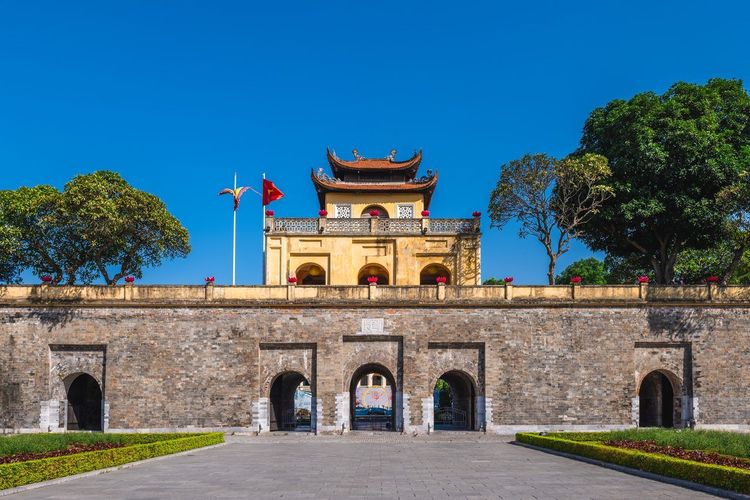
Listed as a UNESCO World Heritage Site in 2010, the Imperial Citadel of Thang Long served as the centre of Vietnamese political power almost continuously from its founding in 1010 by Emperor Ly Thai To through to the 19th century. Archaeological excavations carried out since 2002, during construction work for a new National Assembly building, have uncovered layers of remains spanning eleven centuries: foundations from the era of Chinese domination, ceramics from the Ly, Tran, and Le dynasties.
The site combines an open-air archaeological zone, where excavation trenches remain partially visible under protective structures, with better-preserved historic buildings such as the Doan Mon gate and the Dien Kinh Thien — the platform of the former imperial palace, decorated with stone dragons carved in the 15th century. A permanent exhibition displays a selection of excavated objects: imperial ceramics, coins, official seals, documenting over a thousand years of court life.
This depth of historical layering makes it well worth pairing with the Ryo audio-guided tour of the Imperial and Eternal Capital, which helps connect the different archaeological strata without getting lost in the dynastic chronology — often disorienting for a non-specialist visitor. Allow an hour and a half for a complete visit, more if a temporary exhibition catches your interest.
A few minutes' walk away, the Flag Tower (Cot Co), built in 1812 under the Nguyen dynasty, offers one of the few elevated viewpoints in the historic city centre, accessible via a narrow spiral staircase to an observation platform 33 metres high.
15. The French Quarter and Hanoi Opera House
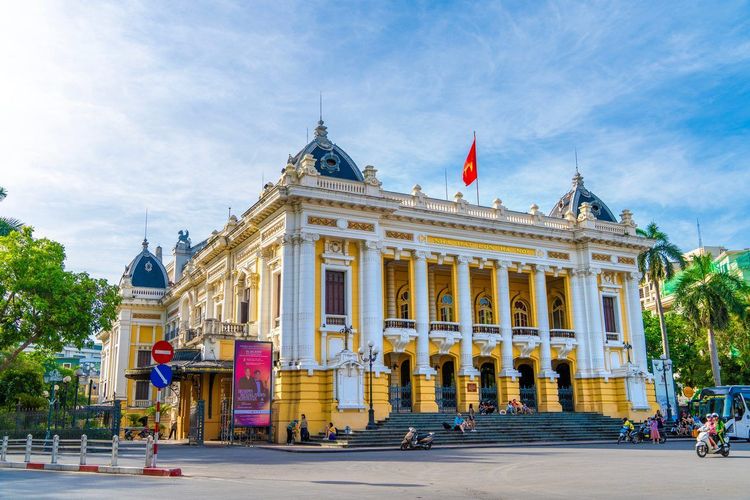
Built between 1901 and 1911 on the model of the Palais Garnier, the Hanoi Opera House epitomises the aesthetics of the French colonial quarter surrounding it, with its green-shuttered villas, broad avenues lined with flame trees, and converted former ministries. The current programme blends Western opera, traditional Vietnamese music, and contemporary dance performances, with tickets often available for under $20.
Around the Opera House, Trang Tien Street concentrates historic bookshops and outlets of the national ice-cream brand Trang Tien, open since 1958 and still besieged in the late afternoon by a largely local clientele. The architectural contrast with the nearby Old Quarter, barely ten minutes' walk away, gives a clear sense of Hanoi's urban duality — between an assumed colonial heritage and a preserved Asian commercial fabric.
16. Ta Hien Street and the Bia Hoi Corners
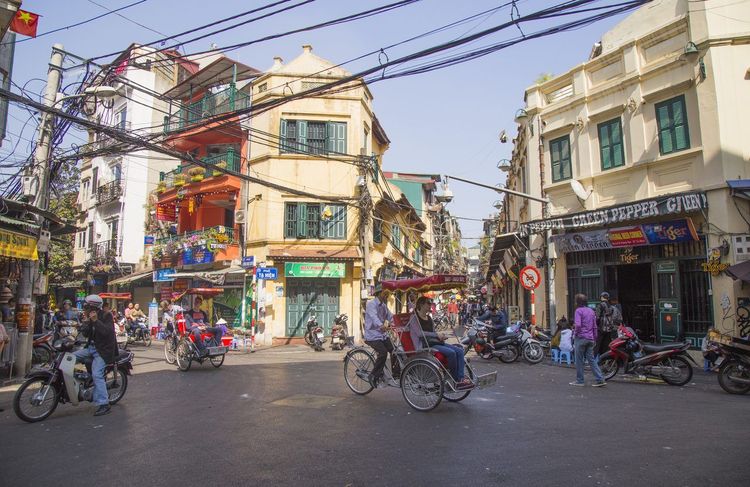
At the corner of Ta Hien and Luong Ngoc Quyen in the Old Quarter sits Hanoi's best-known nocturnal meeting point for foreign visitors: the bia hoi corner. Low stools spill onto the pavement from 6pm, clustered around kegs of unpasteurised craft beer sold for rarely more than 10,000 to 15,000 dong a glass.
The atmosphere, dense and noisy at weekends, draws a mix of backpackers, expats, and Hanoians coming after work, within a radius of barely 200 metres where grilled skewer stands, roaming fruit vendors, and single-cigarette sellers overlap. Come on a weekday if you prefer a quieter atmosphere: on Friday and Saturday evenings, the street becomes almost impassable after 9pm, the crowds are so dense.
17. The Vietnam Fine Arts Museum
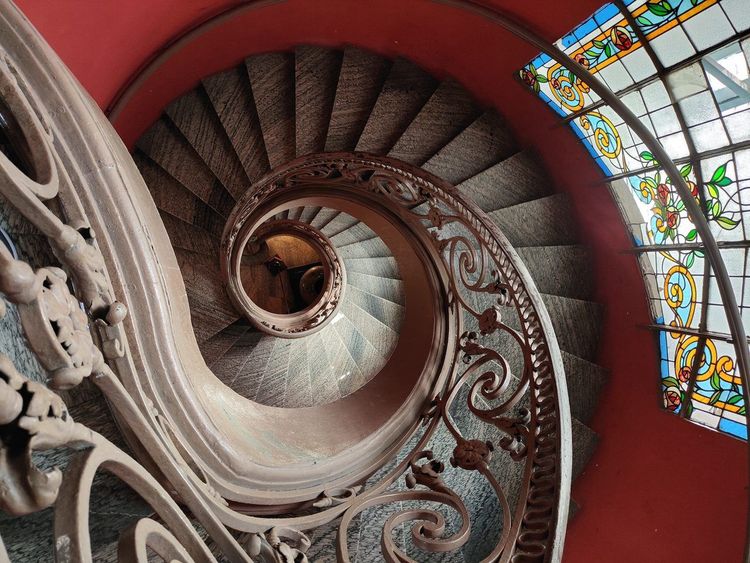
Housed in a former Catholic boarding school from the colonial era, the Vietnam Fine Arts Museum holds one of the most comprehensive collections of Vietnamese art, from Dong Son bronze drums over 2,000 years old to 20th-century lacquerwork and painted silks.
Less crowded than the historic sites in the centre, the museum can be visited in about an hour and benefits from well-considered natural lighting in its first-floor galleries, ideal for observing the details of traditional lacquerwork without distracting reflections.
18. The Bat Trang Ceramic Village
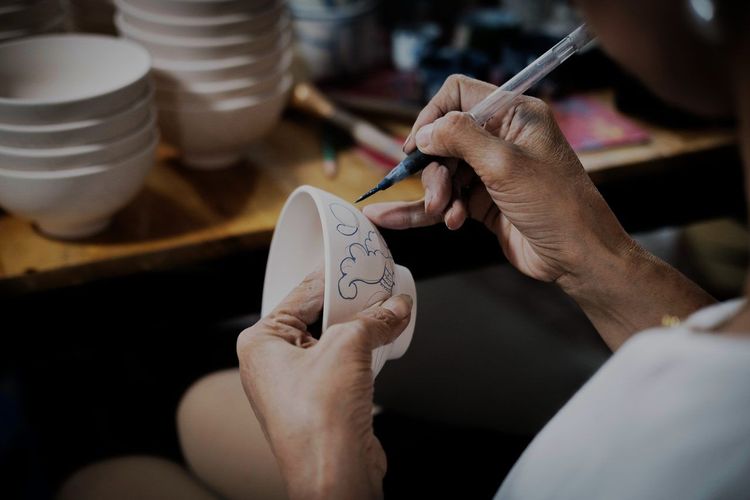
About thirty minutes from the centre, following the bank of the Red River, the village of Bat Trang has maintained a ceramic tradition documented for over 700 years, originally fed by local clay deposits now exhausted but replaced by white clay imports from neighbouring provinces.
The village's central market groups hundreds of shops, from everyday pieces costing a few dong to fine porcelain dinner sets destined for export. Unlike city-centre markets, bargaining here is relatively restrained: displayed prices are already relatively low, with most profit coming from volume rather than unit margin.
Try a pottery lesson: several workshops offer, for a few dollars, a half-hour introduction to throwing on a real electric wheel, with an artisan on hand to rescue the awkward folds of a stubborn lump of clay. Children in particular often leave with a better memory of this hands-on experience than of the temple visits that preceded it.
The village also retains a 15th-century communal pagoda and several old houses built with wood-fired bricks, a material that has become rare since traditional kilns were banned for environmental reasons around 2000. A handful of craftspeople still fire certain pieces using the old method, recognisable by the colour variations that are precisely what collectors value. The public bus (line 47) costs a few thousand dong but can take up to an hour with stops; a taxi or ride-share cuts the journey to 25–30 minutes for around ten dollars.
19. Day Trip to Ninh Binh: Tam Coc and Trang An
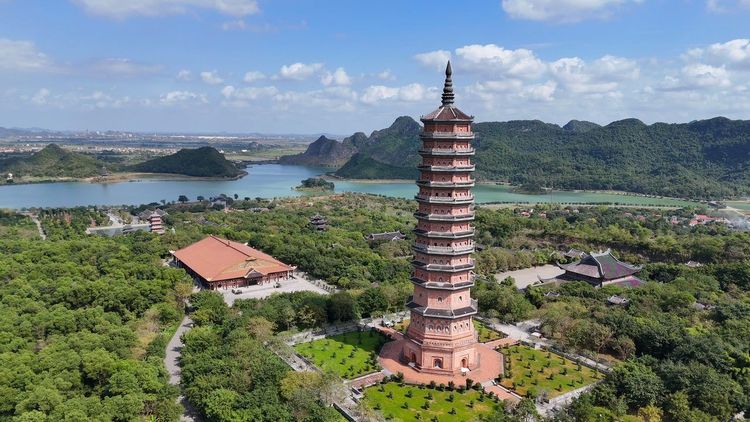
About two hours' drive south of Hanoi, the province of Ninh Binh concentrates a landscape of limestone peaks rising from flooded rice paddies, often described as the inland version of Ha Long Bay. The comparison, somewhat overused, at least gives an accurate idea of the scenery: dozens of karst sugar-loaf formations, 100 to 200 metres tall, erupting from an agricultural plain threaded by winding rivers.
Two sites draw the most visitors. Tam Coc, literally the three caves, is explored by rowing boat, most often piloted by a local rower using her feet rather than her arms to manoeuvre, on a 45-minute to one-hour route passing through three limestone tunnels carved by the Ngo Dong River. During the harvest season, between late May and early June, the rice paddies turn golden and completely transform the landscape from the green that dominates the rest of the year.
Trang An, a few kilometres away, offers a similar experience but on a longer circuit (around three hours), passing through up to nine caves and several cave temples accessible only by water. Listed as a UNESCO mixed World Heritage Site since 2014, it also served as a filming location for several scenes in the 2016 film Kong: Skull Island, which significantly boosted visitor numbers in the years that followed.
Nearby, Hoa Lu, Vietnam's capital between 968 and 1010 before power was transferred to Thang Long (present-day Hanoi), preserves the ruins of two dynastic temples dedicated to emperors Dinh Tien Hoang and Le Dai Hanh, at the foot of the same limestone cliffs. The visit, shorter (30 to 45 minutes), usefully fills in the historical picture for anyone wanting to understand why Hanoi became the capital in the 11th century.
Two options are available for organising this excursion. A day trip from Hanoi by organised minibus with a guide is the most common format: departure around 7:30am, return in the late afternoon, typically including either Tam Coc or Trang An, rarely both on the same day due to time constraints. A more comfortable option is to spend a night on-site, in one of the many bungalow guesthouses set among the rice paddies, which allows you to enjoy the sunrise and sunset light on the karst peaks without the midday tour-group crowds.
You can also climb to the top of Hang Mua Mountain, around 500 irregular stone steps leading to a panoramic viewpoint over the entire Tam Coc valley. Wear good shoes and avoid climbing during the hottest part of the day, generally between 11am and 3pm, when the humidity makes the effort considerably harder. The best time to visit is October to December or March to April, outside the humid summer heat and the rainy season, which is more intense in July and August in this part of the delta.
20. Street Food: Pho, Bun Cha, and Egg Coffee
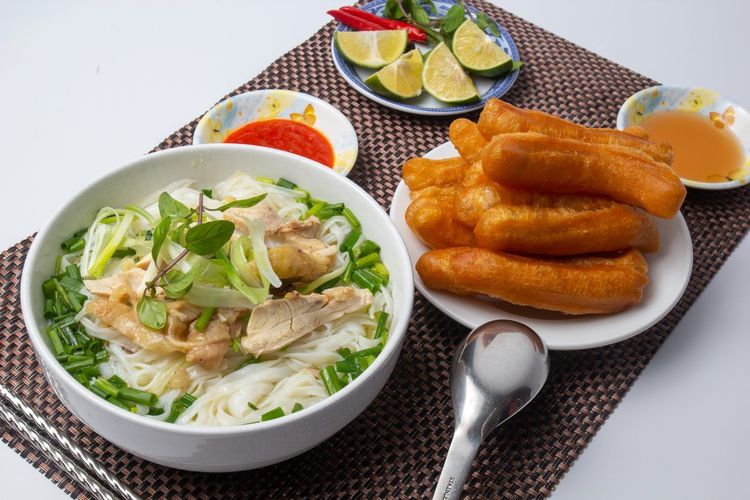
No list of what to do in Hanoi would be complete without dedicating time to its street food scene, considered by many travellers to be the best reason to return to the Vietnamese capital. Three dishes structure this culinary scene to the point of becoming national symbols.
Pho, a rice noodle soup with beef or chicken simmered for hours in a broth of bones and toasted spices (star anise, cinnamon, ginger), is thought to have originated in the Red River Delta at the very start of the 20th century, under both Chinese and French influence according to the most well-documented theories. Hanoi's version is more restrained than the one found in Ho Chi Minh City, with fewer table condiments added, as the seasoning is considered already perfect in the bowl as served.
Bun cha, charcoal-grilled pork served with cold rice vermicelli and a sweet-savoury fish sauce dip, gained unexpected worldwide fame in May 2016 when US President Barack Obama and chef Anthony Bourdain shared the dish on plastic stools in a small restaurant in the Hai Ba Trung district. The restaurant in question, Bun Cha Huong Lien (24 Le Van Huu Street, Hai Ba Trung, Hanoi), still displays a photo of the meal and has since added a combo version to its menu.
Egg coffee (ca phe trung) was born in 1946 at Cafe Giang, at a time when cow's milk was in desperately short supply during the Indochina War. The founder, a former bartender at the Metropole Hotel, hit upon the idea of replacing milk with an egg yolk beaten with condensed sugar, whipped into a foam on top of a strong robusta coffee. The recipe, passed down through three generations of the same family, remains a closely guarded secret; the original café, still run by the founder's descendants, serves the drink in a discreet cellar in the Old Quarter.
To explore these flavours safely, favour stalls with a fast turnover and a queue already made up of local customers — a generally more reliable indicator than any written guide. Avoid ice in drinks served away from tourist areas equipped with filtered ice machines, and bear in mind that most Western stomachs need two or three days to adjust before handling the most authentic street food without hesitation.
An organised evening tour, on foot or by vintage sidecar, covers five to seven addresses in three hours with a guide who negotiates and translates each vendor's explanations. This option, more expensive than going solo, suits travellers who worry about choosing the wrong stall in the jungle of sign-free carts in the Old Quarter.
21. The Weekend Night Market in the Old Quarter
Every Friday, Saturday, and Sunday evening, Hang Dao Street and its continuation towards Dong Xuan transform into a pedestrian market roughly one kilometre long, closed to traffic from 6pm. Hundreds of stalls offer clothing, souvenirs, toys, and above all a dense street food offering, set up on the side streets rather than on the main thoroughfare.
The atmosphere is largely family-oriented, with children's games set up on certain sections and amateur music groups occasionally taking over small side squares. Come after 8pm: the daytime heat has faded, the paper lantern lighting on Hang Ma Street comes into its own, and the crowd, already sizeable, remains more manageable than at the very start of the evening.
22. A Cyclo Ride or Bicycle Tour through the Old Quarter
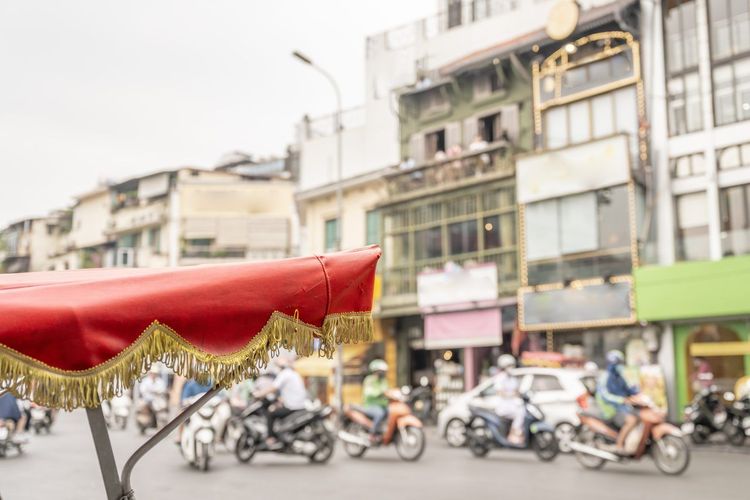
The cyclo (xich lo), a pedal-powered tricycle with a passenger seat at the front, has largely disappeared from Hanoi's daily traffic but is still offered to visitors for tourist circuits of around an hour through the Old Quarter and around Hoan Kiem Lake. The fare, never set in advance by the driver, is always negotiated before getting in, between 200,000 and 400,000 dong depending on duration and season.
A more active alternative is to rent a self-service electric bicycle, available through several local apps, to reach West Lake or Long Bien Bridge at your own pace, free from scooter traffic jams. Bring your own helmet if you have one: the models provided with self-service bikes are rarely the right size and are often missing altogether.
FAQ
How many days do you need to visit Hanoi?
Three full days are enough to cover the essentials of the city centre: Hoan Kiem Lake, the Old Quarter, the Temple of Literature, the Ho Chi Minh Mausoleum, and an evening of street food. Add a full day if you want to include a day trip to Ninh Binh, and an extra half-day for the Museum of Ethnology and West Lake, which are further out but well worth the detour for those with time to spare.
What is the best time to visit Hanoi?
October to December and March to April offer the best climatic balance: moderate temperatures, low humidity, and little rainfall. Summer, from June to August, combines stifling heat with near-daily tropical downpours, while winter, in January and February, remains cool and often misty without becoming unpleasant, provided you pack a few warm layers for the evenings.
Is Hanoi's Old Quarter safe at night?
Yes, generally speaking: violent crime remains rare and the streets of the Old Quarter stay lively and well-lit late into the night. The main concerns are pickpocketing in the dense crowds of the night markets and price scams from taxis and cyclos, rather than any real threat to physical safety.
Should you book the Water Puppet Theatre in advance?
Yes, especially for evening shows during the high tourist season from November to March, which often sell out several days in advance. Booking online or directly at the box office the day before is perfectly sufficient in low season, when attendance drops noticeably.
What can you do for free in Hanoi?
Walking around Hoan Kiem Lake, strolling through the Old Quarter, visiting Ba Dinh Square, viewing the exterior of the Imperial Citadel, and walking around West Lake are all free. Only temple, museum, and mausoleum entry fees apply, and these are generally modest, typically between 30,000 and 100,000 dong.
What budget should you plan for a stay in Hanoi?
A daily budget of $25 to $40 comfortably covers basic accommodation, several street meals, local transport, and two or three paid site entries. Organised excursions, such as Ninh Binh or a guided street food tour, typically add between $20 and $45 per activity depending on the package.
Hanoi does not suit a rushed visit. The city rewards those who are willing to stop: for an egg coffee served in a century-old basement, for an impromptu game of Chinese checkers by Hoan Kiem Lake, for a train passing less than a metre from a cup of tea. Between imperial ruins, colonial scars, and a street scene always in motion, Vietnam's capital packs a large part of the country's history into just a few square kilometres.
A three- to four-day stay allows you to cover the highlights without rushing, and adding a day trip to Ninh Binh provides a welcome breath of fresh air after the density of the city centre. To connect all these places without losing the chronological thread between the dynasties, colonisation, and the contemporary period, our Ryo app offers a route designed to walk intelligently through the Old Quarter and beyond, rather than collecting unrelated sites. Whether you stay three days or two weeks, Hanoi is best discovered on foot, one bowl of pho at a time.