© Shutterstock
 Votre guide Ryo
La Rochelle Neighborhoods in 2026: Complete Guide from the Vieux-Port to Villeneuve-les-Salines
In La Rochelle, changing neighborhoods can mean changing eras: a half-hour walk separates the arcades of the Vieux-Port from the pontoons of one of Europe's largest marinas. La Rochelle's neighborhoods stack up atmospheres that have almost nothing in common, in a city that is nonetheless modest in size, with close to 80,000 residents within the city limits.
In the city center, three medieval towers stand guard over arcaded streets lined with shop fronts. In les Minimes, around 4,700 moorings line up beside a university campus that brings the area to life in the evenings. Further north, La Pallice still loads cargo ships at the foot of the bridge to the île de Ré, while la Genette is home to the Parc Charruyer and the plage de la Concurrence, just a few minutes' walk from the Vieux-Port. This guide covers each of these areas in detail, from the tourist city center to residential neighborhoods such as Mireuil, Tasdon and Villeneuve-les-Salines, with price-per-square-meter differences and concrete reference points to help you decide where to settle down or simply where to wander. To get your bearings on the ground before making a decision, the Ryo audio guide tour of La Rochelle (26 audio tracks, 2h30, 6.1 km) unfolds the history of the old town stop by stop.
Map of La Rochelle Neighborhoods: How the City is Organized
On a map, La Rochelle wraps around its historic port, with the Atlantic to the west and south and marshland to the east. The historic center occupies the heart of the whole, ringed by the boulevards and green spaces that replaced part of the fortifications demolished around the turn of the twentieth century: this is where the monuments, the commercial arcades and the Vieux-Port are concentrated.
Around this core, the neighborhoods are organized according to a fairly readable logic once you know it. To the south, les Minimes jut out into the sea with their marina, beaches and university. To the west and north-west, la Genette and then Port-Neuf run along the coastline and the Parc Charruyer. Far to the north, Laleu and La Pallice turn their backs on tourism and live to the rhythm of the commercial port, at the foot of the bridge to the île de Ré. Just to the east of the Vieux-Port, Saint-Nicolas bridges the city center and the station district. Further from the quays, Mireuil, Saint-Eloi, Beauregard, Tasdon-Bongraine and Villeneuve-les-Salines form the residential belt — less photogenic but home to a large share of La Rochelle's permanent residents.
A street map of La Rochelle will help you visualize these boundaries, which often follow old paths, canals or railway lines rather than strict administrative frontiers. If you are visiting for a few days and want to take in several of these areas, our Ryo guide to visiting La Rochelle in 3 days offers an itinerary that already crosses a good portion of this geography.
The Historic Center and the Vieux-Port
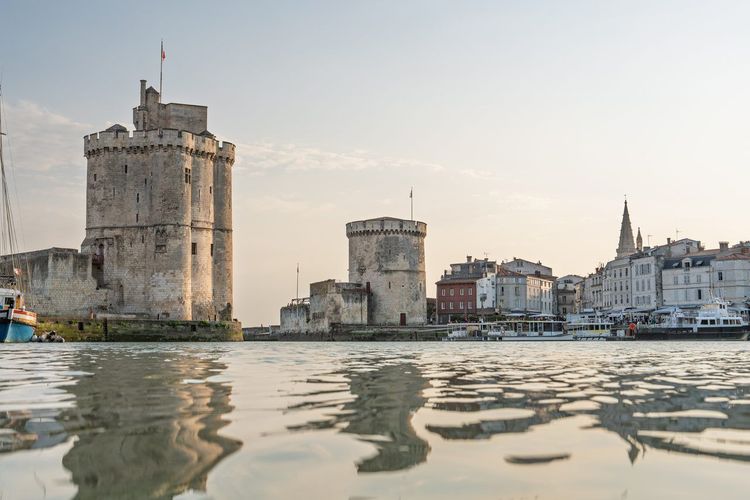
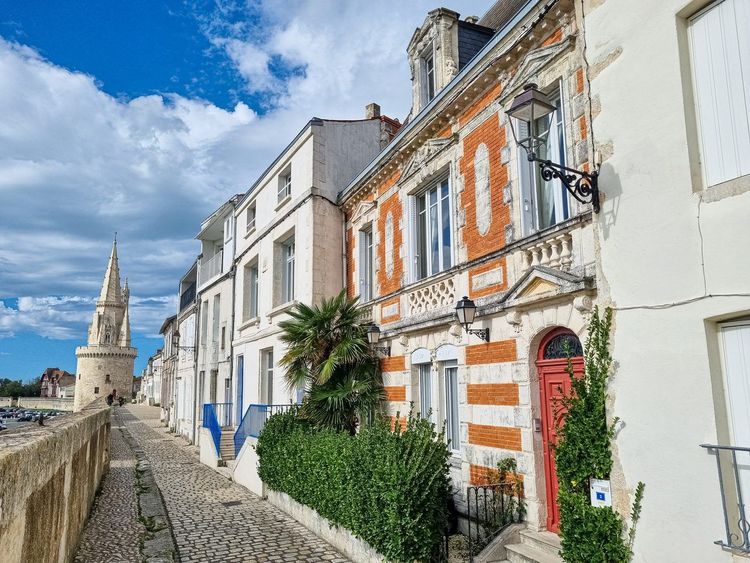
The tourist heart of La Rochelle goes by several names depending on who you ask: city center, downtown or old town — it is essentially the same area, bounded by the old ramparts and the port. Most of the city's postcards come from here.
Three medieval towers guard the entrance to the port and serve as a visual landmark from any point along the quays. The Tour Saint-Nicolas, massive and asymmetrical, dates from the fourteenth century and can be visited for its hidden staircases that climb all the way to the terrace.
Opposite, the Tour de la Chaîne takes its name from the chain once stretched between the two towers to close the port at night.
A little further along the ramparts, the Tour de la Lanterne, the tallest of the three with its Gothic spire, long served as a prison: the graffiti carved by captive sailors in the seventeenth and eighteenth centuries can still be read on its interior walls.
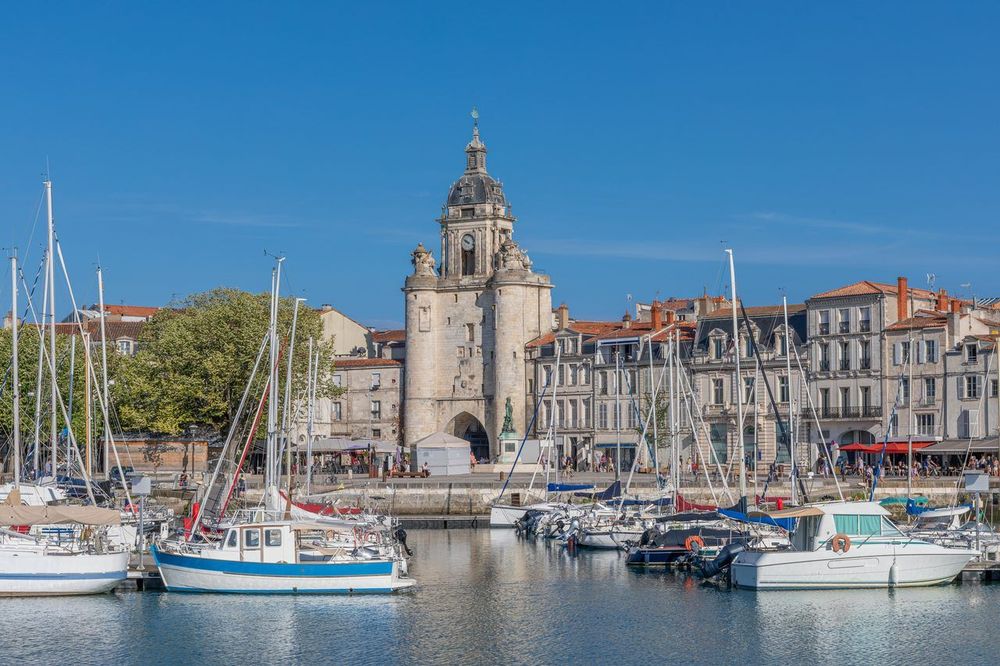
At the foot of the towers, the quays of the Vieux-Port change character depending on the hour. In the morning, the terraces have barely set out their chairs and joggers enjoy the quiet. In the evening, those same terraces overflow with people, often as many locals as tourists. You can spend an hour there with no particular aim, simply watching the masts and the seagulls competing for the best spots.
Heading inland, the old town unfolds its network of arcaded streets, the legacy of a merchant city enriched by maritime trade. Rue du Palais concentrates the shops, while the rue des Merciers retains some of the city's best-preserved half-timbered façades. The Hôtel de Ville, with its crenellated Gothic enclosure and Renaissance courtyard, is worth a detour even without going inside: the contrast between its defensive appearance and its interior galleries alone tells the story of the Protestant city besieged by Richelieu in 1627–1628.
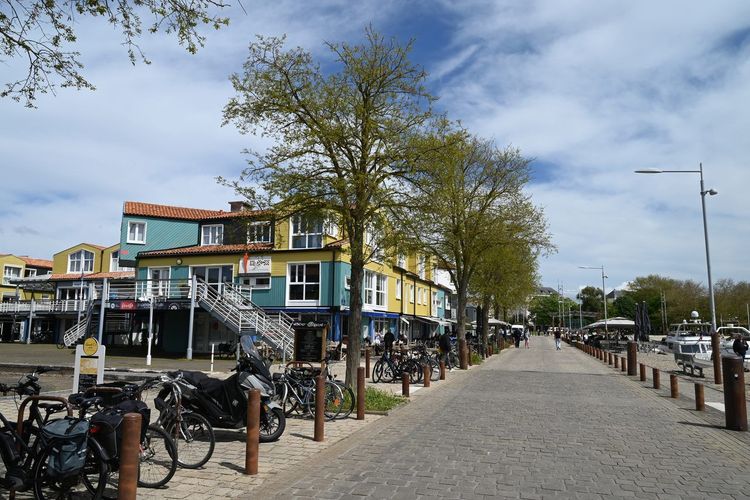
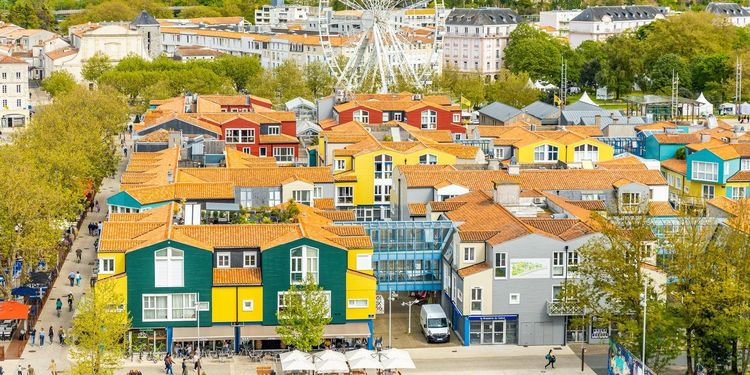
A stone's throw from the towers, the Gabut district stands in stark contrast to the rest of the city center. Its colorful wooden façades, inspired by Scandinavian fishermen's houses and built at the end of the twentieth century on the site of an old bastion, house shops, restaurants and bars that spill out onto the quay when the weather is fine. It is easy to miss if you do not know it is there, tucked between the trawler basin and the Ville-en-Bois district.
Just next door, on the edge of the Grand Yachts basin, the Aquarium La Rochelle (Quai Louis Prunier, 17000 La Rochelle, rated 4.1/5 on Google with 11,451 reviews) remains one of the most visited paid attractions in the city, with over 12,000 marine animals including sharks and jellyfish. Many visitors still look for it in les Minimes, where it was located until 2001. Our Ryo article dedicated to the La Rochelle aquarium covers the visit in detail.
It is within this area that the Ryo audio guide of La Rochelle comes into its own: its 26 audio tracks tell the stories of the towers, the great siege of 1628 and the merchant alleyways over a 6.1 km loop, without you ever having to unfold a map. A solid backbone for exploring the neighborhood at your own pace.
On the accommodation front, the city center remains the most sought-after area for visitors but is not necessarily the most practical for everyday life: parking is difficult, prices are high and the population turns over considerably in summer. Locals who live there year-round are often long-established owners or retirees attached to the charm of the old buildings.
Saint-Nicolas, between Shopping Streets and the Seafront
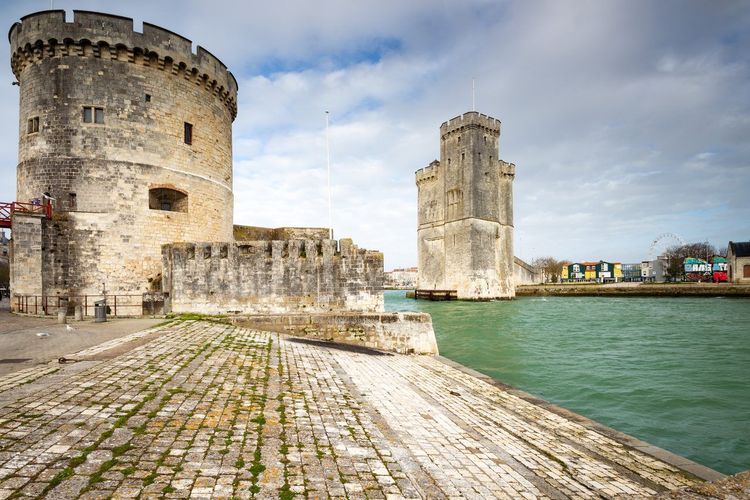
Saint-Nicolas does not feature on any postcard, which explains why so few tourist guides linger here. Yet it is one of the neighborhoods that has changed its face the most over the past century.
For a long time, this area wedged between the basin and the train station was a working-class neighborhood of sailors, craftsmen and fishermen, with low houses clustered around narrow streets. Fishing declined, La Rochelle's property prices rose, and Saint-Nicolas gradually filled with small independent shops, antique dealers, neighborhood cafés and renovated buildings that nonetheless retain their original scale.
People come here today as much for shopping as for living. Rue Saint-Nicolas and its neighboring streets remain less touristy than rue du Palais on the other side of the port, with more reasonable shop prices and a largely local clientele. If you enjoy browsing for vintage finds, this is where you will spend the most time.
On the housing front, Saint-Nicolas appeals to those who want immediate proximity to the center without paying the full premium or enduring all the summer crowds. Many of the buildings are old, with medium-sized apartments that suit couples or small families rather than large households. Another rarely mentioned advantage: the TGV station is just a few minutes' walk away, which matters if you make frequent trips to Paris or Bordeaux.
The neighborhood's position also makes it a natural transit point. A few minutes are enough to reach the Tour de la Chaîne by walking along the basin. Keeping the Ryo audio guide tour in your earphones along this stretch allows you to connect the stories of the old town to this neighborhood that has remained working class, and to understand why the two sides of the port long lived at such different rhythms.
Les Minimes, the Large Marina and Student Neighborhood
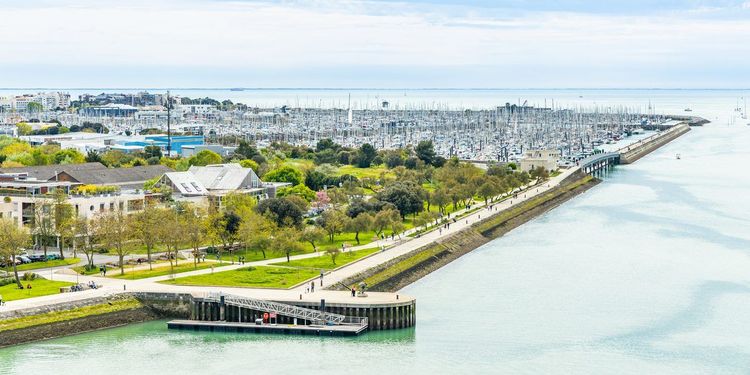
Les Minimes alone concentrates a large part of what has made La Rochelle's maritime reputation, and it is also the neighborhood most frequently mentioned when people talk about the city's districts.
The Port des Minimes lines up around 4,700 berths spread across several basins, making it one of the largest marinas in Europe. At the weekend, you can walk for a full hour without encountering the same boat model twice, among the vessels moored year-round and the rental boats that change hands every Saturday.
The port has not always been this large. Built between 1970 and 1972 to meet the growth of leisure boating on the Atlantic coast, it celebrated its 50th anniversary in 2022 and has expanded in stages, to the point of now welcoming racing catamarans and major nautical gatherings such as the Grand Pavois, the floating boat show held each autumn.
Les Minimes is also a fully-fledged student neighborhood. La Rochelle Université has set up most of its campus here, and the surrounding residences live to the rhythm of the academic year. This young population explains the density of affordable small restaurants and bars that stay open late — a profile quite different from the rest of the city.
For swimming, the plage des Minimes (Boulevard Aristide Rondeau, 17000 La Rochelle, rated 4.3/5 on Google with 2,208 reviews), supervised in season, remains quieter than the one in the center, with a wider stretch of sand at low tide. You will find more local families than passing tourists there, especially outside July and August. Our La Rochelle beaches guide compares the various options.
On the housing front, les Minimes attracts a broad audience: students looking for small units close to campus, young professionals drawn by the port views, and retirees attracted by the newer seafront residences. Prices vary considerably from one building to the next depending on the view and proximity to the basins. The neighborhood has its own local shops, making it possible to live there without constantly heading into the center; the Yélo bus network serves it at good frequency during the day, though less so at night.
Allow 35 to 40 minutes on foot from les Minimes to the Vieux-Port, around fifteen minutes by bike along the coastal path, or take the sea bus that links the two ports by water. Arriving at the foot of the towers is, in fact, the best way to kick off the Ryo audio guide tour and its 2h30 of stories through the old town.
La Genette, between Nature and the Seafront
To the west of the center, la Genette has a name whose origin is still debated. Some see it as referring to the genet, a small spotted carnivore that may have roamed the coastal thickets before urbanization; others lean toward the genêt, a yellow-flowering shrub that colonized sandy ground. Neither version has been definitively settled.
The neighborhood owes its reputation to two neighboring features. The plage de la Concurrence, at the foot of the Tour de la Lanterne, remains the city center's urban beach; its name is most commonly said to derive from the rivalry between bathing establishments in the nineteenth century. Today it is above all a family beach, supervised in summer, where you can swim between visits to the historic center without needing a car.
Just behind it, the Parc Charruyer (Avenue du Parc Charruyer, 17000 La Rochelle, rated 4.5/5 on Google with 5,728 reviews) stretches for about two kilometers along the old ramparts, following a landscaped waterway: a continuous green corridor that skirts the center to the west and north. Shaded, dotted with ponds and animal enclosures, it attracts morning joggers and families out for a Sunday stroll alike.
Between the park and the seafront, le Mail refers to the long tree-lined promenade that runs along the beach. You will find cyclists, joggers and, in summer, a good portion of the city simply come to watch the Atlantic sunset. It is also the venue for certain sporting and festive events.
This blend of nature and seafront makes la Genette a sought-after residential neighborhood, where prices track fairly closely those of the city center despite the absence of monuments. If you stay in this area, the Tour de la Lanterne is just a few minutes away: it is one of the monuments covered by the Ryo audio guide tour, which you can join on foot along the beach before diving into the alleyways.
Further to the north-west, Port-Neuf extends this coastline with its small port, its old basins and a mix of housing combining individual houses and apartment blocks: less well known, more affordable, but still by the water.
Laleu and La Pallice, the Port and Industrial Neighborhoods
Laleu and La Pallice (Avenue Jean Guiton, 17000 La Rochelle) occupy the north-western tip of the city, where La Rochelle reverts to being a working city before a holiday one. Guides rarely mention them, which paradoxically makes this one of the least documented areas despite its genuine economic role.
La Pallice owes its existence to a very practical problem: at the end of the nineteenth century, the Vieux-Port could no longer accommodate modern high-tonnage vessels. After about a decade of construction work, a deep-water port, accessible at any state of the tide, was inaugurated on 19 August 1890 by President Sadi Carnot. It is still in operation today, handling grain, timber, petroleum products and bulk cargo, and it houses a submarine base built by the Germans between 1941 and 1943, whose concrete walls survived 17 Allied bombing raids.
This area is also where the bridge to the île de Ré begins, opened in 1988: if you plan to spend your days on the island, staying here will spare you from crossing the city during peak summer traffic.
Laleu, more residential, spreads to the east of the port, towards Mireuil and Lagord. It offers fairly standard suburban housing, some apartment blocks and business parks on the outskirts. The neighborhood benefits from its pivotal location: direct access to the bridge to the île de Ré and the ring road, without the prices of the city center.
Living in Laleu or La Pallice means accepting a less picturesque, at times industrial setting, in exchange for some of the lowest prices per square meter in the municipality.
Mireuil, Saint-Eloi, Tasdon-Bongraine and Villeneuve-les-Salines, the Residential Neighborhoods
These neighborhoods share one thing in common: they house a large share of La Rochelle's permanent population, far from the postcard clichés, in housing largely built between the 1960s and 1980s.
To the north, Mireuil is the most populous of these large housing estates, built from the 1960s onwards to house a rapidly growing population. Classified as a priority urban area, it has been the subject of an urban renewal program for several years that has demolished, rehabilitated and rebuilt part of the housing stock, with an active community life and well-established public facilities.
Saint-Eloi and the neighboring Rompsay area, to the north-east of the center, form a quiet residential district organized around small apartment blocks and suburban housing zones. You will find schools, local shops and a pace of life noticeably calmer than in the city center. It is a popular choice for families who work in the city but do not want to pay historic center prices.
To the east of the station, Tasdon-Bongraine stretches between the railway line and the Tasdon marshes, a landscaped natural area that serves as the neighborhood's green lung. The Tasdon district long suffered from a somewhat landlocked image, cut off from the center by the railway infrastructure, but improvements around the station and links to les Minimes have brought it closer to the rest of the city.
Villeneuve-les-Salines, to the south-east, was built in the 1970s on former salt marshes, hence its name. It has a significant amount of social housing and remains classified as a priority area. It is a district often absent from tourist guides and sometimes cited in discussions about La Rochelle's more deprived neighborhoods. The reality is more nuanced: neighborhood life is active, sustained by associations, sports facilities and local shops, even if some socio-economic indicators remain more challenging than elsewhere in the municipality.
All of these areas are served by the Yélo bus network, with adequate frequencies during the day but more limited service in the evening and on Sundays — a point worth checking if you plan to manage without a car. Each has its own schools and a local secondary school, which reduces travel for families. These are also the neighborhoods where prices per square meter remain the most affordable in the city, an argument that carries weight given the housing pressure in the center and along the coast.
For an investor or a family primarily looking for peace and contained prices, Saint-Eloi and Tasdon-Bongraine offer a fairly clear-cut compromise. Mireuil and Villeneuve-les-Salines warrant an in-person visit before committing, as would any neighborhood in the middle of urban transformation.
The Beauregard Neighborhood
Beauregard remains one of the least commented-on neighborhoods in La Rochelle online. Attached to the Lafond-Prieuré-Beauregard area, to the north-east of the center, it is an essentially residential neighborhood with no particular tourist appeal.
Its housing mix includes co-owned properties from the 1970s and 1980s, individual houses and some more recent developments, with price levels generally lower than those of the coastal neighborhoods. You will find schools, local shops and quick access to the ring road, making it a pragmatic choice if you work in business parks or neighboring municipalities such as Puilboreau.
Beauregard does not appear among the areas recommended by tourist offices, and that is precisely what makes it a relevant option for living without paying the tourist premium of the Vieux-Port or les Minimes. It appeals above all to working professionals and families looking for practicality over architectural charm.
Which Neighborhood to Choose in La Rochelle Based on Your Profile
It is hard to name an objectively best neighborhood when priorities shift so much from one profile to the next. Here, for each type of resident, are the areas that come up most often in our neighborhood recommendations for finding accommodation.
Do you have children? Saint-Eloi-Rompsay and Tasdon-Bongraine tick most of the boxes: nearby schools, reasonable prices, quiet surroundings and quick access to parks and the plage des Minimes at the weekend. Beauregard also works very well for this profile, with the added advantage of direct access to the ring road for commuting.
For a student or a young professional just starting out, les Minimes is almost the natural choice thanks to the campus and a more abundant supply of small units than anywhere else. Saint-Nicolas is an interesting alternative for those who prefer lively neighborhood life and proximity to the train station, often at a slightly lower price than the Vieux-Port.
A retiree looking for peace and walkable shops? The city center and la Genette remain the safe bets, despite higher prices: everything there is accessible on foot, from food shops to healthcare professionals, and the Parc Charruyer provides a much-appreciated daily walking setting.
On the rental investment front, les Minimes and Saint-Nicolas are generally judged the most profitable, driven by student and seasonal demand. The city center remains attractive for long-term appreciation but with weaker yields, due to high purchase prices.
If you are only visiting for a few days, the question is different: it is better to stay in the city center or Saint-Nicolas to do everything on foot, then venture out to les Minimes or la Genette during the day.
Whatever your profile, a few criteria come up consistently in conversations with local agencies: walking distance to the market or daily shops, exposure to summer noise (very pronounced near the Vieux-Port in July and August), the availability of resident parking spaces, and public transport coverage in the evening. The same budget might get you a studio with a sea view in les Minimes or a three-room apartment with a garden in Saint-Eloi: it all depends on what you are willing to sacrifice. If you are torn between two neighborhoods, renting for a few months before buying remains the most reliable way to check that the area's rhythm suits you, especially given the seasonality that dramatically changes the atmosphere between summer and the rest of the year.
In any case, nothing beats a few hours of walking before signing anything. In 2h30 and 6.1 km, the Ryo audio guide tour makes a great warm-up: it gives you the historical keys to the center, the reference point from which all other neighborhoods are positioned. Our Ryo article on things to do in and around La Rochelle usefully completes this exploration once your neighborhood choice is made.
Price per Square Meter and Housing Budget by Neighborhood
General property portals rarely break down prices neighborhood by neighborhood in La Rochelle, even though the differences between areas are real. Here is an indicative hierarchy, to be refined with a local agency depending on the condition of the property and the floor.
In the city center and around the Vieux-Port, expect some of the highest prices in the city, driven by the scarcity of older buildings and demand for seasonal rental. La Genette, despite the absence of monuments, tracks these levels fairly closely thanks to the beach and the Parc Charruyer.
Les Minimes shows intermediate to high prices, with a noticeable gap between the newer port-view residences and the older buildings further into the neighborhood. Saint-Nicolas generally sits one notch below the Vieux-Port for a location that is nonetheless very central, making it one of the best price-to-location compromises in the city.
On the outskirts, Laleu, La Pallice, Port-Neuf, Saint-Eloi-Rompsay, Tasdon-Bongraine and Beauregard offer more accessible budgets, with gaps of several hundred euros per square meter compared to the city center. Mireuil and Villeneuve-les-Salines have the lowest prices in the municipality, consistent with their priority neighborhood status.
These differences reflect proximity to the sea and the historic center more than the quality of the buildings — two criteria that carry significant weight in the La Rochelle market. Before trusting an online estimate, cross-reference several recent listings and the public sales data for the specific area you are interested in: prices can vary considerably from one street to the next within the same neighborhood.
Neighborhoods to Avoid in La Rochelle: What You Really Need to Know
The question comes up frequently in searches, and the answer deserves some nuance: La Rochelle remains an overall safe city, regularly well-ranked in quality-of-life surveys, with no neighborhood that would warrant outright avoidance.
The expression rough neighborhood, as sometimes used in connection with La Rochelle, generally refers to Mireuil and Villeneuve-les-Salines, the city's two major priority areas. They do concentrate more challenging socio-economic indicators and, occasionally, incidents that fuel their reputation beyond the day-to-day reality. This does not mean they should be avoided wholesale: community life there is active and the vast majority of residents encounter no particular problems.
If you are simply passing through, the question barely arises: the tourist zones (city center, Vieux-Port, les Minimes, la Genette) present no particular risk beyond the usual precautions against pickpocketing in summer crowds, particularly around the Vieux-Port on summer evenings.
For a future resident, the most useful advice remains to visit the area you are interested in at different times of day before signing a lease or a purchase agreement, rather than relying on a reputation built on isolated anecdotes. Public crime statistics, published by municipality, give a more reliable picture than word of mouth.
Why Settle Down and Live Well in La Rochelle
Beyond the choice of neighborhood, a broader question often comes up: is La Rochelle, overall, a good place to settle down? The indicators tend to work in its favor.
The oceanic climate limits temperature swings throughout the year, with rarely harsh winters and summers softened by the sea breeze. The sunshine levels, generous for the Atlantic coast, tip the balance for many newcomers arriving from the north or east of the country.
On the practical side, La Rochelle benefits from its human scale: most daily journeys can be done on foot or by bike, the city having been a pioneer with its yellow self-service bicycles as early as 1976, well before it became a national trend. The Yélo network, supplemented by the sea bus and the ferryman that cross the port, covers most needs without a car.
Student and community life animates the city year-round, with highlights that extend beyond the tourist season: the Francofolies in July, the Grand Pavois in autumn, the Festival de la fiction, offshore races. Our Ryo article on events in La Rochelle lists the main events of the year, useful for getting a sense of the local rhythm before moving in.
The main caveat remains the property market, under pressure from tourism and demand for second homes, which has been pushing prices up for several years. It is no surprise that so many newcomers expand their search toward peripheral neighborhoods or neighboring towns such as Lagord, Aytré or Puilboreau. La Rochelle's quality of life more than justifies its appeal, provided you accept the budgetary compromises that come with it.

FAQ
What is the best neighborhood to stay in La Rochelle?
It largely depends on your profile: the city center and Saint-Nicolas for car-free neighborhood life, les Minimes for students and investors, Saint-Eloi-Rompsay or Beauregard for families looking for peace and more affordable prices. No single neighborhood suits everyone, but Saint-Nicolas frequently comes up as the best compromise between centrality and budget.
Which neighborhood should you avoid in La Rochelle?
No neighborhood warrants complete avoidance. Mireuil and Villeneuve-les-Salines, classified as priority neighborhoods, do concentrate more challenging socio-economic indicators, but they remain lively areas rather than places to steer clear of. It is better to visit in person than to rely on the reputation of a rough neighborhood sometimes mentioned online.
What is the price per square meter by neighborhood in La Rochelle?
The highest prices are found in the city center, around the Vieux-Port and in la Genette, driven by the scarcity of older buildings and proximity to the sea. Les Minimes and Saint-Nicolas sit in an intermediate range, while Laleu, La Pallice, Beauregard, Mireuil and Villeneuve-les-Salines offer the most affordable prices in the municipality.
Which neighborhood should you choose based on your profile (family, student, retiree)?
Families generally favor Saint-Eloi-Rompsay, Tasdon-Bongraine or Beauregard for the peace and quiet and nearby schools. Students tend to gather in les Minimes, close to the campus. Retirees often opt for the city center or la Genette, where everything can be done on foot.
Is La Rochelle a good place to live?
Yes, by the vast majority of indicators: mild oceanic climate, compact city walkable and bikeable, rich cultural and community life year-round. The main drawback remains the housing market pressure, which is pushing some residents toward peripheral neighborhoods or neighboring towns.
How many neighborhoods are there in La Rochelle?
There is no single official breakdown, but around fifteen districts are generally distinguished: the city center and the Vieux-Port, Saint-Nicolas, les Minimes, la Genette, Port-Neuf, Laleu, La Pallice, Mireuil, Lafond-Beauregard, Saint-Eloi, Fétilly, Tasdon-Bongraine and Villeneuve-les-Salines, among others.
Choosing a neighborhood in La Rochelle ultimately comes down to choosing a pace of life: the dense, tourist-heavy rhythm of the city center and its towers; the wider, windswept atmosphere of les Minimes with its thousands of boats; or the quieter feel of the residential areas where many locals live year-round. None of these choices is wrong — they simply reflect different priorities.
Before making up your mind, treat yourself to a first outing in the old town with the Ryo audio guide tour of La Rochelle: 26 stories in your earphones to understand how the city was built, and to look at each neighborhood with fresh eyes, whether you are scouting for a future home or simply curious.
À lire également