© Shutterstock
 Votre guide Ryo
A Weekend in Nantes in 2026: Itinerary, Must-Sees and Great Places
In Nantes, a weekend often starts with a surprise: a twelve-metre elephant trumpeting at the corner of a former shipyard, steps from an intact medieval castle. This city doesn't choose between its past as the city of the Dukes of Brittany and its present as an open-air workshop for contemporary artists; it makes them coexist within just a few kilometres. A weekend in Nantes is more than enough to take in both faces: the ramparts of the Château des Ducs de Bretagne, the suspended galleries of the Passage Pommeraye, the Buren rings set on the Loire quays and the mechanical ballet of the Machines de l'île. Plan two full days to cover the historic centre and the Île de Nantes without rushing, and a third if you add a side trip to Clisson or the former fishing village of Trentemoult. On site, the Ryo audio-guided tour of Nantes (Des Grands-Ducs aux Petits Lu) links the cathedral, the castle and the cobbled lanes of old Nantes in 2h30 and 30 audio stops, a way to frame your first half-day without a second thought. Between buckwheat crêpes, city-centre brunches and hotels tucked into 19th-century buildings, this guide details hour by hour what to see, where to stay depending on the neighbourhood and how to organise a stay that fits into 48 hours.
The Must-Sees of Old Nantes to Visit First
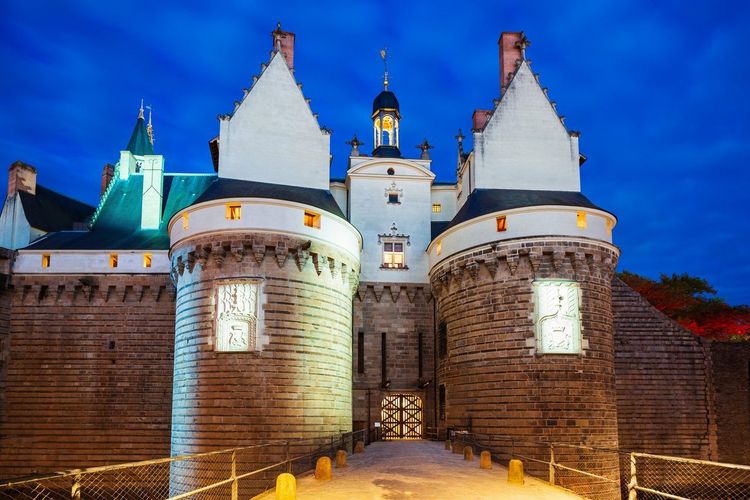
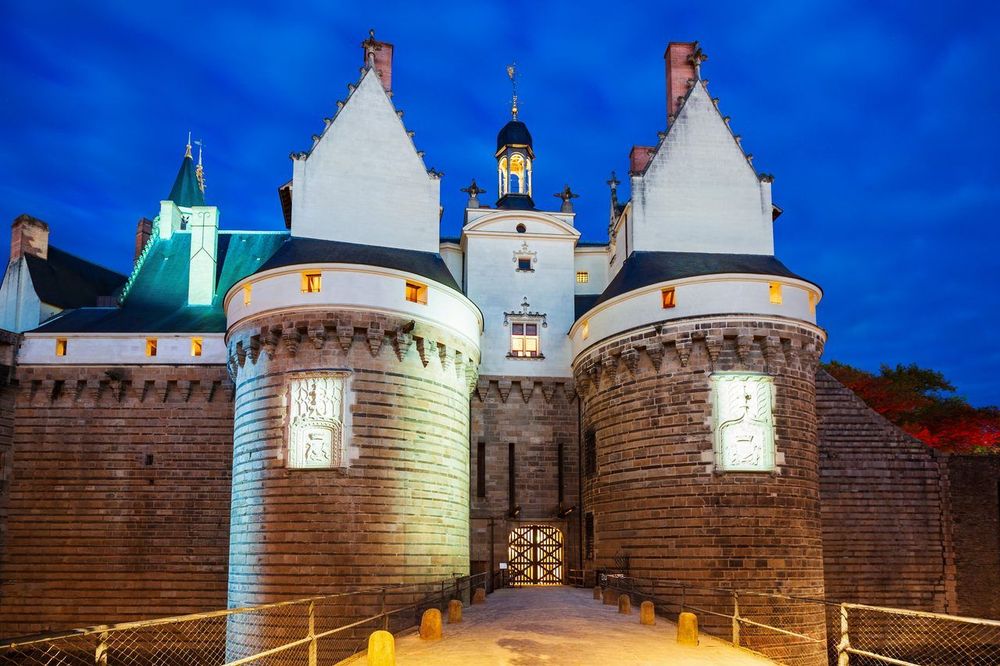
The logical starting point for a weekend in Nantes is the Château des Ducs de Bretagne. Behind its moats, still filled with water, and its wall-walk of about 500 metres, Duchess Anne of Brittany was born, grew up and saw the union of her duchy with the kingdom of France take shape. The inner courtyard and the ramparts can be visited for free, which makes it an easy stop to fit between two appointments; the Nantes History Museum housed in the buildings, however, requires a ticket and traces the city's history from its origins to its 20th-century industrial past, without glossing over the Atlantic slave trade. Plan one hour for the courtyard and ramparts alone, two more if you add the museum.
Ten minutes' walk away, the Passage Pommeraye deserves a look upward. Opened in 1843, this three-level shopping arcade links rue de la Fosse to rue Santeuil, a stone's throw from rue Crébillon, by way of a central staircase of wood and cast iron beneath a glass roof. The 9.40-metre difference in level, which the architects of the time turned into scenography rather than a constraint, explains this cascade of galleries. The shops lining the balconies change over the years, but the structure has hardly moved since Jules Verne, then a teenager, strolled here.
Two religious buildings complete this historic core, on very different scales. The Cathedral of Saint-Pierre-et-Saint-Paul took four hundred and fifty-seven years to rise from the ground, from 1434 to 1891, which explains its blend of Flamboyant Gothic and 19th-century finishes. Closed after the arson fire of July 2020, it reopened on 27 September 2025, although restoration work continues until 2028. Its tomb of Francis II, the last Duke of Brittany, and its white nave, 37.5 metres high under the vault, taller than that of Notre-Dame de Paris, are worth the stop, which is free too.
A few streets away, the Basilica of Saint-Nicolas in Nantes (Place Saint-Nicolas, 44000 Nantes, rated 4.6/5 on Google from 1,520 reviews) attracts far fewer people, even though its 19th-century neo-Gothic architecture has nothing to envy from better-known buildings. You will generally find more silence than at the cathedral, a good option if you want a break away from the bustle of the centre.
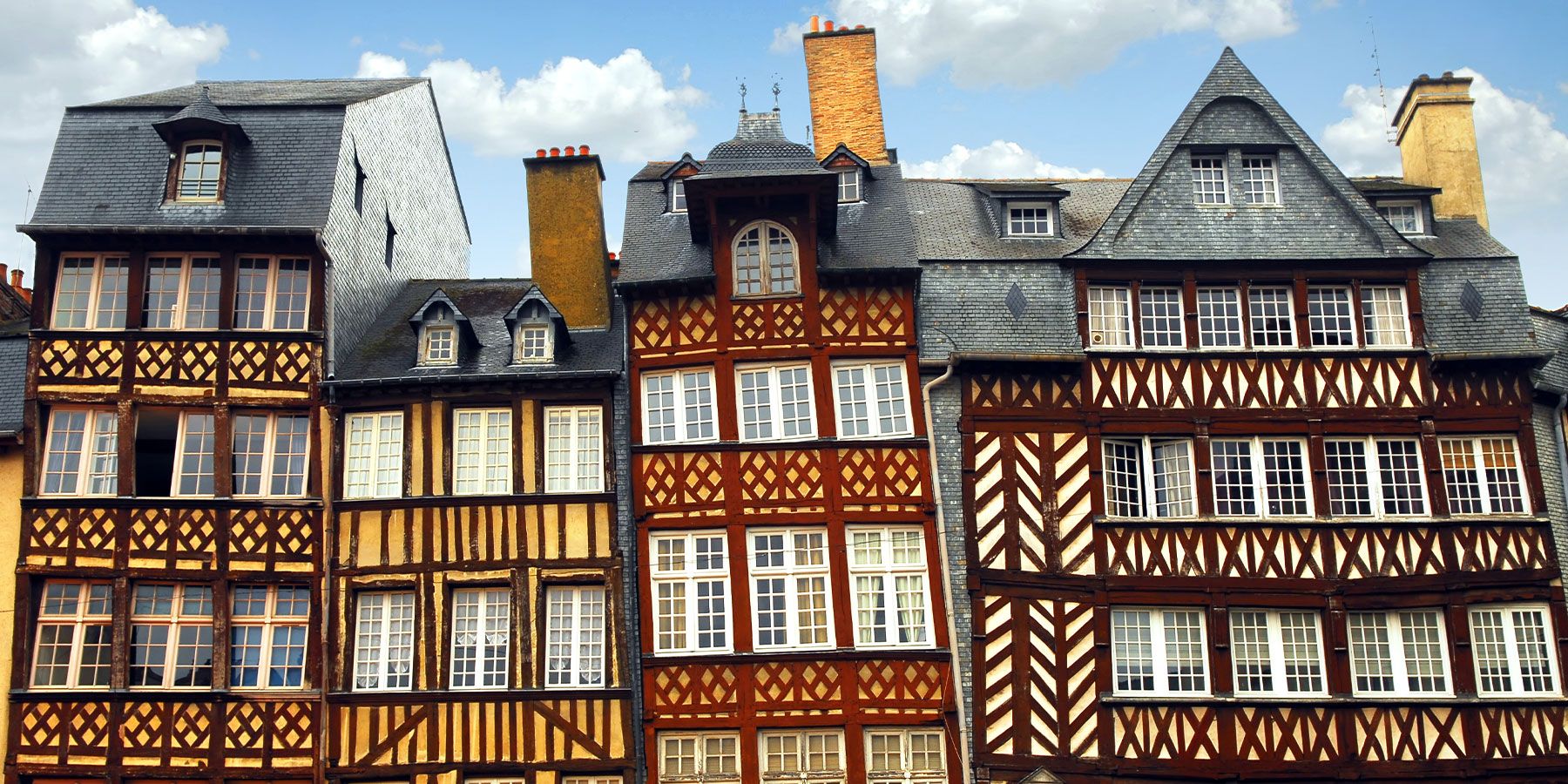
If you add a stroll through the nearby Bouffay district, allow a good hour more: its half-timbered houses, cobbled lanes and central square, lively in the evening, form the best counterpoint to the more imposing monuments in the rest of the centre. On weekends, the stalls of the place du Bouffay market are a good chance to leave with some muscadet or local products before moving on to the next visits. If possible, avoid the 3pm–5pm slot on Saturday, when the crowd around the castle peaks; a visit in late morning or late afternoon completely changes the experience.
To link these sites without endlessly searching for directions on your phone, the Ryo audio-guided tour of Nantes lays out a thread of 30 audio stops over 2h30 and 6.4 kilometres through exactly this historic quarter. Each stop tells a fragment of local history, from the castle to the cathedral via the lanes of old Nantes, to be listened to through headphones while walking at your own pace.
The Voyage à Nantes and the Green Line: Following the Green Thread Through the City
Nantes has a way of its own to guide visitors without forcing them to follow a fixed plan: a green line painted on the ground, quite literally, winding for about twenty kilometres through the city centre and the Île de Nantes. This route is the work of the Voyage à Nantes, the city's cultural and tourism organisation, which uses it to link contemporary artworks, gardens and heritage without the need for a paper map.
Following the green line means agreeing to let chance organise part of your walk. It passes permanent installations such as the giant rings of the quai des Antilles, crosses the Jardin des Plantes, runs alongside the castle and sometimes leads to an ephemeral work installed for just a few months. The principle changes little from one year to the next, while the content is renewed: each summer brings its share of new installations, some of which become permanent when the public adopts them.
For a weekend, there's no need to follow it from beginning to end. Instead, pick out the two or three stretches that cross the neighbourhoods you plan to visit anyway (old Nantes, quai de la Fosse, Île de Nantes) and let yourself be carried along those sections. The up-to-date map, showing the works currently on view, can be picked up at the tourist office at 9 rue des États, right opposite the castle.
Walking with children? The green line works like a natural treasure hunt, with no app or QR code to scan, which makes it valuable for keeping the youngest entertained between museum visits. Many of these installations are, moreover, concentrated on the Île de Nantes, the former shipyard district turned showcase of urban art.
The Île de Nantes: Machines, Quai des Antilles and the Loire Riverside
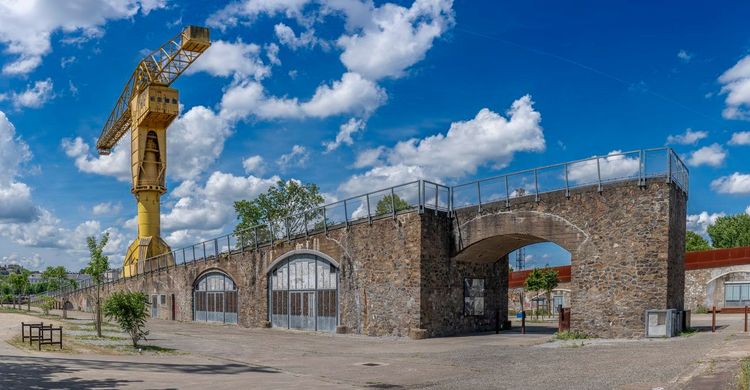
About forty years ago, the Île de Nantes still housed the city's shipyards, which closed in 1987. Since then, the district has reinvented itself around creativity and industrial heritage, without erasing the cranes and old hangars that recall its past.
The star of the district remains Les Machines de l'île, a mix of craft workshop and giant carousel set up in the former shipyard halls. The Elephant, an articulated structure twelve metres high and weighing nearly fifty tonnes, carries its passengers while puffing, trumpeting and spraying the curious crowd gathered around. Next to it, the Marine Worlds Carousel unfolds over three levels a ride of mechanical creatures inspired by the universe of Jules Verne, a native of the city. Allow a good half-day if you want to combine a stroll, an elephant ride and the gallery of machines.
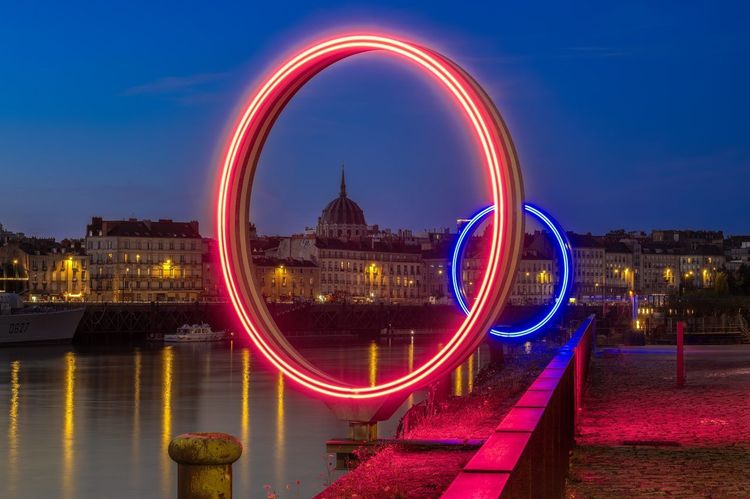
Right next door, the Buren rings lined up along the quay light up at nightfall and offer one of the most photographed views of the Loire. To see the city from the water, there are two options: the Navibus, which crosses the Loire to Trentemoult with a simple transport ticket, or a guided cruise with the Bateaux Nantais, which goes up the Erdre and its follies (those 18th-century pleasure residences) from the quai de la Motte-Rouge.
To eat on site without leaving the district, la Cantine du Voyage (Quai des Antilles, 44200 Nantes, rated 4/5 on Google from 4,789 reviews), on the quai des Antilles, serves simple seasonal food in an unapologetic open-air café setting, with wooden tables and large shared benches; the venue also hosts concerts on summer evenings.
The district is easy to explore on foot from the historic centre, by crossing the Anne de Bretagne bridge, but if you want a guided version of this same route, the Ryo short-version sub-tour of the Grands-Ducs aux Petits Lu focuses the listening on this area: the history of the former shipyards, the birth of the Machines and the conversion of the quai des Antilles, told step by step as you walk along the Loire.
Museums and Culture: What Not to Miss
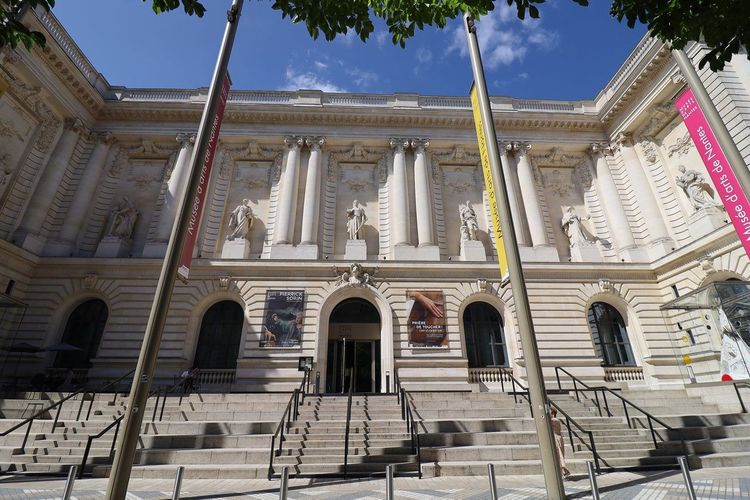
Nantes has enough museums to fill an entire weekend, so it is better to prioritise according to the time you have.
The musée d'Arts de Nantes, reopened in 2017 after six years of works, remains the benchmark: its collections range from the 13th century to contemporary art, in a 19th-century palace extended by a cube of glass and concrete. Allow two hours for a full visit, one hour if you head straight for the 19th-century and contemporary rooms.
The Natural History Museum will appeal more to families: suspended skeletons, including that of a rorqual, insect collections and a vivarium follow one another over several floors. Children easily linger there for an hour and a half. Check the opening hours before going, as some rooms occasionally close for works.
Less well known, the FRAC des Pays de la Loire presents contemporary art exhibitions on the Île de Nantes, next to the HAB Galerie, housed in the former banana hangar. Entry there is often free, a good tip if your weekend budget is tight.
The Dobrée Museum (18 Rue Voltaire, 44000 Nantes, rated 4.5/5 on Google from 1,034 reviews) reopened in May 2024 after thirteen years of closure. It owes its name to Thomas Dobrée, a shipowner's son who abandoned maritime trade to collect manuscripts, goldsmithing and works of art, later bequeathed to the département. The renovated visit combines these treasures with the region's archaeological collections, an ideal detour for lovers of rare objects.
If you can only choose one, go for the musée d'Arts for the quality of its collections, or the Natural History Museum if you are travelling with family.
Day 1: Historic Centre, Castle and City Heart
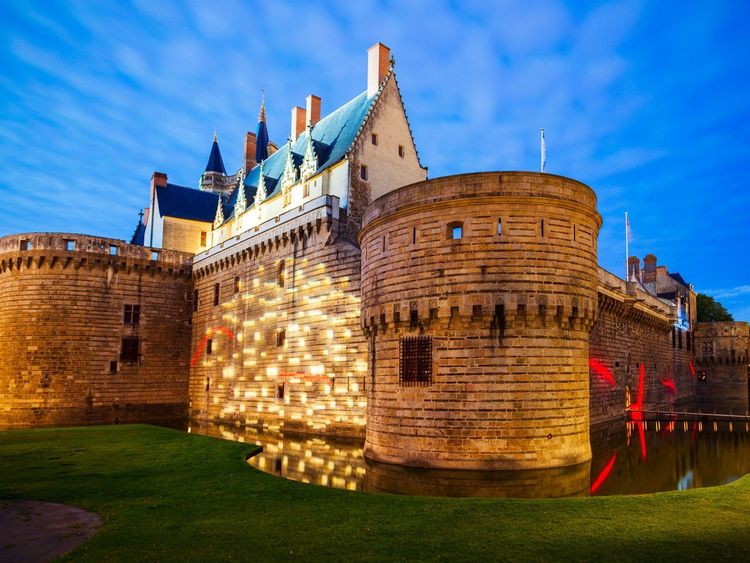
Morning. Start with the Château des Ducs de Bretagne right at opening time to enjoy the inner courtyard before the groups arrive; it is also when the low light on the ramparts is most photogenic. On the way from the castle to the quai de la Fosse, make a detour through the Îlot Feydeau, this former island on the Loire, now filled in, whose 18th-century façades, adorned with mascarons and wrought-iron balconies, reveal the wealth of the merchants of the time. Some visibly lean, a consequence of unstable ground reclaimed from the river.
From there, head back up toward the cathedral before plunging into the lanes of the Bouffay district for a coffee on a terrace. Some of the half-timbered houses lining place du Bouffay date from the 15th century, one of the few preserved medieval ensembles in the centre.
Midday. Head to the Passage Pommeraye for lunch: the rues Crébillon and de la Fosse that frame it concentrate a good share of the city-centre addresses, from traditional crêperies to more contemporary restaurants. Then continue to the Cours Cambronne, a tree-lined promenade bordered by neoclassical buildings from the early 19th century, one of the most elegant and quietest corners of the centre, in contrast to the commercial bustle of the neighbouring streets.
Afternoon. Two options depending on your mood: the musée d'Arts de Nantes for a two-hour cultural immersion, or a lighter stroll to the Basilica of Saint-Nicolas before reaching the Jardin des Plantes in the late afternoon. This seven-hectare botanical garden, opposite the station, closes the day on a calmer note, among greenhouses, camellias and ponds, with the quirky installations of the artist Claude Ponti.
Evening. The Bouffay district and place du Change concentrate most of the historic centre's nightlife, including wine bars and small live-music venues. For a dinner that sums up Nantes's Belle Époque identity, the brasserie La Cigale (4 Place Graslin, 44000 Nantes, rated 4.3/5 on Google from 11,132 reviews), opposite the Graslin theatre, serves in a setting of ceramics and mirrors listed as a historic monument. Book on weekends, as the dining room fills quickly on Saturday night.
To keep up this programme without checking your phone between monuments, the Ryo audio-guided tour unfolds its 30 audio stops through this very same historic centre: castle, cathedral, Bouffay lanes and Cours Cambronne follow one another at walking pace, hands free and eyes on the city rather than on a screen.
Day 2: Île de Nantes, Creative Districts and the Loire
Second morning, second atmosphere. Cross the Anne de Bretagne bridge to reach the Île de Nantes and start directly with the Machines de l'île, before the crowds that generally build up after 11am on weekends. If you are travelling with children, buy your tickets for the Elephant as soon as it opens, as places go quickly on busy days.
On leaving, follow the quai des Antilles westward: the former industrial halls, immense metal structures that once housed shipbuilding, now serve as exhibition venues and occasional markets. Continue to the Hangar à Bananes, a former warehouse converted into a row of bars and restaurants, pleasant for a break on a terrace facing the water.
Midday, head to Chantenay, on the other bank. The Chantenay workshops walk runs along former industrial sites rehabilitated as artists' studios and alternative cultural venues, a less photographed Nantes but just as revealing of the river's transformation. The district climbs the butte Sainte-Anne, with fine views over the Loire and the port cranes.
Fans of music and contemporary performance will push on to the Lieu Unique, the former LU biscuit factory converted into a contemporary culture centre with a bar, bookshop and concert programme. The LU tower, a survivor of the factory, remains one of the visual landmarks of the city centre, and the exhibitions there are often free to enter.
In the afternoon, return to the centre along the quays, on foot or by tram. A detour through the Île de Versailles (44000 Nantes, rated 4.6/5 on Google from 449 reviews), a Japanese garden laid out on an islet of the Erdre, offers a green break ten minutes from the Bouffay. Access is free and the place remains surprisingly calm even on a sunny Saturday. Then head back down to the Loire to pass the Buren rings again at the hour when the late-afternoon light makes them stand out on the water.
Evening. Finish on the quai des Antilles or at the Cantine du Voyage for a relaxed dinner facing the river, before a last walk to the illuminated rings. This is also where the Ryo audio-guided tour of Nantes closes its loop: its final stops follow these quays and tell the industrial history of the city, from LU biscuits to the shipyards closed in 1987, to be listened to at leisure along the Loire to end the weekend.
Nantes to Suit Your Mood: Romantic, Family, Nature or Wellness
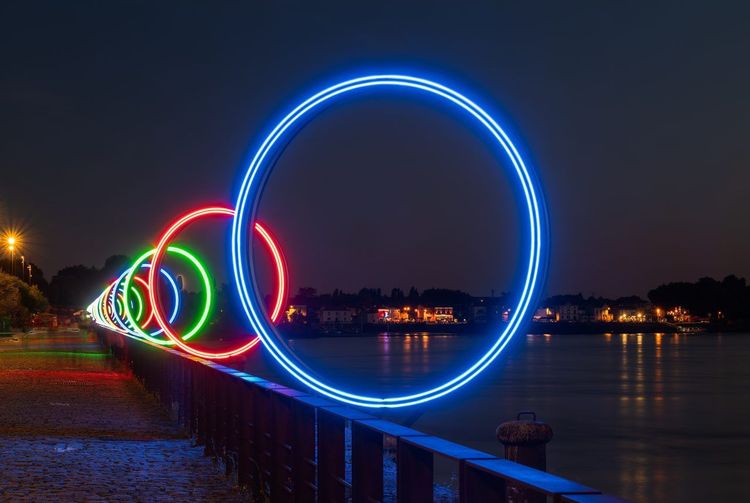
Romantic. A weekend in Nantes as a couple lends itself to a slow wander: dinner at La Cigale, a night walk along the quays to the illuminated Buren rings, or a break in the Japanese garden of the Île de Versailles, often deserted at the end of the day. Hotels in the Graslin district, with their 19th-century façades and often more intimate rooms, complement this kind of stay for two well.
Family. A family weekend in Nantes naturally revolves around the Natural History Museum and the Machines de l'île, two sites designed to captivate children for hours. The Jardin des Plantes, with its playgrounds and ponds, rounds out a calmer afternoon, and the green line turns the walk between sites into a treasure hunt.
Nature and relaxation. The Jardin des Plantes, the Île de Versailles and the parc de Procé (Boulevard des Poilus, 44300 Nantes, rated 4.6/5 on Google from 5,068 reviews), further out to the west, offer three versions of a green break: a botanical garden for the first, a little-known Japanese garden for the second, a large English-style park crossed by a stream for the third. Allow a good hour for each if you really want to unwind.
Spa and wellness. Several city-centre hotels offer half-day spa packages, hammam and treatments included, welcome after a day of walking on cobblestones. Book several days ahead on weekends, as slots go quickly.
Where to Eat in Nantes: Great Places and Brunches
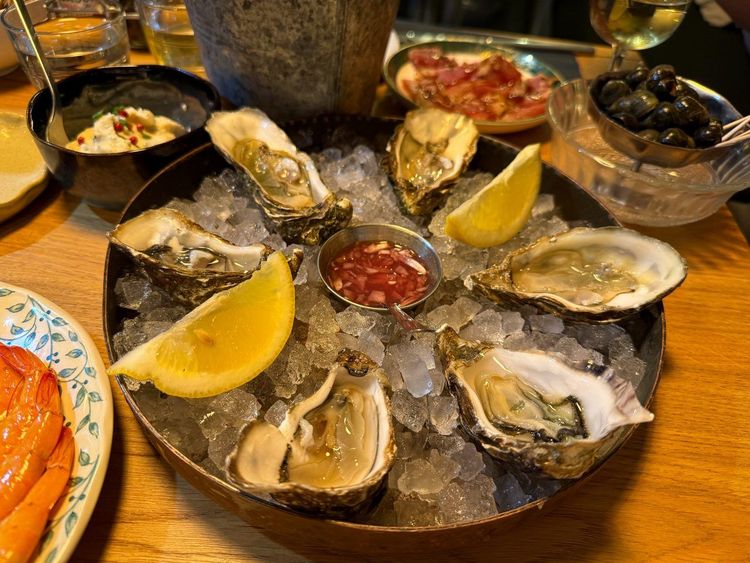
It is impossible to cover all the good places in Nantes in one weekend, but four styles are enough to give a representative overview of the local scene.
For a Sunday brunch, Chez Handy Brunch serves generous set menus in a relaxed setting, poached eggs, homemade pancakes and pressed juices, often with a queue on Sunday mornings if you haven't booked. Arrive before 11am to limit the wait.
For burgers, Made Nantes claims local meat and artisan buns, far from standardised chains. The menu changes with the seasons, a sign that generally doesn't lie about the freshness of the produce.
For a more classic meal in a brasserie style, le Café des Expos, in the city centre, plays the contemporary bistro card with a slate that changes every week and convenient service if you arrive between two visits.
If you want to mark the occasion, le Manoir de la Régate (155 Route de Gachet, 44300 Nantes, rated 4.8/5 on Google from 1,191 reviews), recognised by the Michelin guide and set in a bourgeois house on the banks of the Erdre, offers seasonal cuisine driven by local produce. Expect a noticeably higher budget than the other places mentioned here, and book at least two weeks ahead for a Saturday night.
On the Île de Nantes, the Cantine du Voyage remains a safe bet for a relaxed meal facing the river. And for a sweet break in the afternoon, the city centre is full of tea rooms and artisan pastry shops, especially around the Cours des 50 Otages, the axis that crosses the centre from north to south.
Don't leave the city without trying at least once the gâteau nantais, a moist cake made with almonds, butter and rum, or a glass of muscadet, the white wine from the vineyard that stretches to the south-east of the city. To go further, our article on the culinary specialities of Nantes explores gâteau nantais, muscadet and curé nantais well beyond what a weekend guide can cover.
Where to Stay in Nantes by Neighbourhood
For a two- or three-day weekend, the choice of neighbourhood often matters more than the name of the hotel, especially if you plan to do everything on foot.
City centre, around the castle and the Bouffay. This is the most comfortable option for a first stay: everything is reachable on foot in fifteen minutes at most, from the castle to the Passage Pommeraye via the cathedral. Establishments here are generally more expensive on weekends, as tourist demand is concentrated in this area.
Near Nantes station. This area suits you well if you arrive by train and want to limit trips with your luggage, or if you plan an excursion to Clisson the next morning, as regional trains leave from there. The castle is only about ten minutes' walk away.
Île de Nantes and toward the Zénith. More off-centre, especially on the Zénith side in Saint-Herblain, this area appeals to visitors who prioritise the Machines de l'île, concerts and the quayside atmosphere over the heritage of the historic centre. Prices there are often lower, provided you rely on the tram to get to old Nantes in the evening.
Bed and breakfast, for a more local experience. Several places in bourgeois houses, notably around the Graslin district or toward Procé, offer guest rooms with homemade breakfast, often cheaper than an equivalent hotel and with a more personal welcome. Book early, as the supply remains limited.
As a guide, expect to pay between 90 and 160 euros a night for a decent double room in the city centre outside events, and 70 to 110 euros in more outlying neighbourhoods. These rates climb noticeably in summer, during the Voyage à Nantes festival: it is better to book several weeks ahead for these periods.
Getting Around and Practical Tips in Nantes
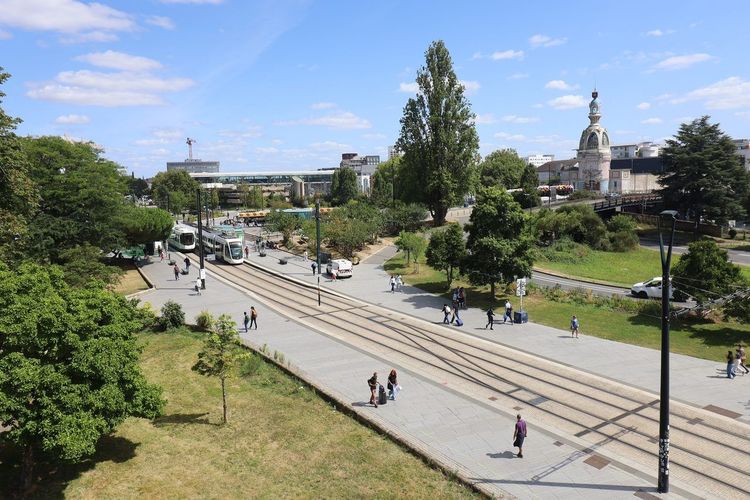
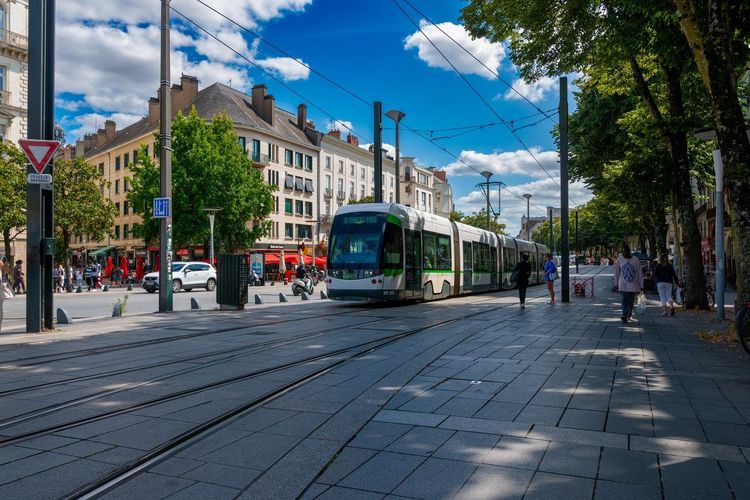
Nantes is easy to explore without a car. The TAN network offers three tram lines, supplemented by the Busway and a dense web of buses, which serve most points of interest in the centre and the Île de Nantes. To cross the Loire toward Trentemoult, the Navibus, part of the network, makes the crossing in about ten minutes, a pleasant alternative to walking in hot weather.
The Pass Nantes, sold at the tourist office and online, combines access to around fifty activities (museums, castle, guided tours) and public transport, for a duration ranging from 24 hours to 7 days. It becomes worthwhile as soon as you plan to visit three or more paid sites, which matches the programme detailed above if you add the castle museum, the Machines and the musée d'Arts.
The historic centre can be crossed on foot from end to end in under thirty minutes, which makes a car largely unnecessary, even counter-productive given the limited and expensive parking on weekends. As for arrival, Nantes station is a ten-minute walk from the castle: Paris is reached in a little over two hours by TGV, which makes a round trip easily doable over two days. If you arrive by car anyway, prefer a park-and-ride on the outskirts combined with the tram.
When to Go to Nantes for a Successful Weekend
Nantes can be visited all year round, but each season noticeably changes the experience. Spring and early summer, from May to June, offer the best compromise between pleasant weather and reasonable crowds, before the summer peak of July–August driven by the Voyage à Nantes programme. Autumn, less busy, suits you if you prefer museums and foodie spots to long walks, with beautiful light on the quays at the end of the day.
Winter remains underrated: accommodation prices drop, the museums and the castle can be visited without queues, and the Christmas market adds a special atmosphere to the city centre in December. The only downside is that several terraces close or reduce their hours during this period.
If your budget is tight, know that the city offers many free weekend events, temporary exhibitions, open-air concerts or themed markets, in addition to free access to the castle courtyard, the cathedral and the parks. Check the cultural calendar a few days before your visit to plan your stay around these events.
Around Nantes: Day Trips to Clisson, Trentemoult and Nearby Villages
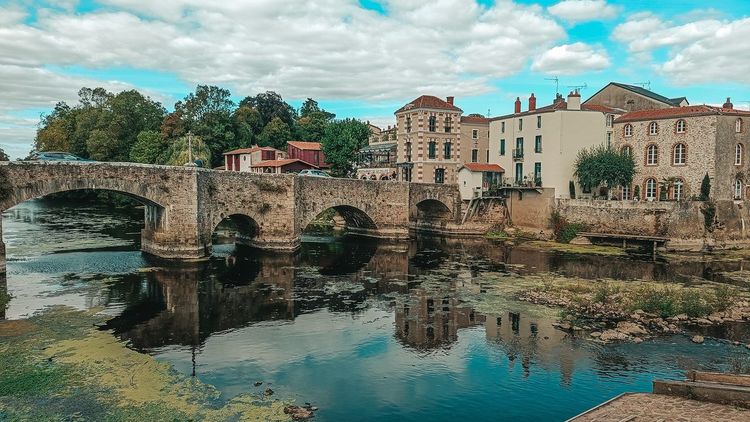
If your weekend stretches to three days, or if you simply want to catch your breath, two short escapes round out the programme well.
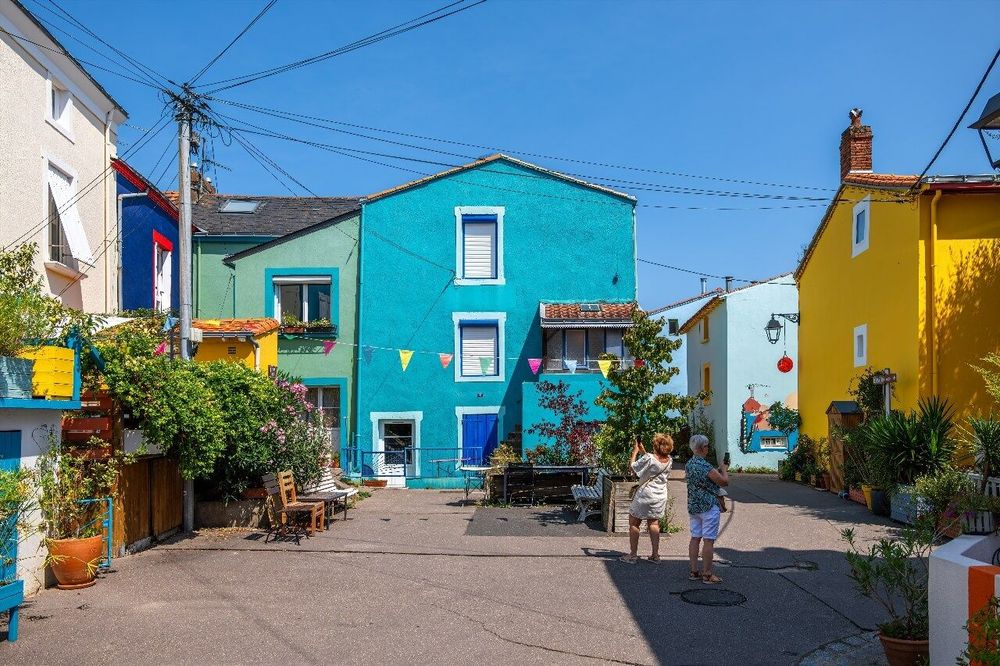
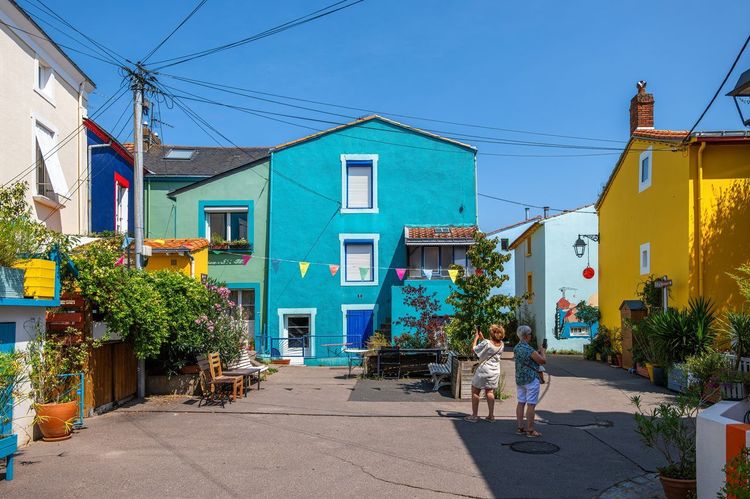
Trentemoult (Cale de Trentemoult, 44400 Rezé, rated 4.4/5 on Google from 3,044 reviews), on the south bank of the Loire, is reached in about ten minutes by Navibus from the Gare Maritime stop. This former village of fishermen and sea captains has kept its narrow lanes and colourful façades, now occupied by artists' studios, cafés and a few independent shops. The crossing alone offers a lovely view of the Nantes quays. Our article dedicated to the village of Trentemoult details the best places and the right time slot to avoid the Sunday afternoon crowds.
Clisson, about thirty minutes by train south-east of Nantes, surprises with its resolutely Italian architecture: tiled roofs, campaniles and loggias recall Tuscany rather than neighbouring Brittany, a legacy of the Cacault brothers and the sculptor Lemot, who rebuilt the town after the Vendée wars drawing on inspiration from their stays across the Alps. The medieval castle that overlooks the Sèvre nantaise and the surrounding muscadet vineyards complete a day that is easy to organise without a car. Our article on what to do in Clisson details the full itinerary.
If you still have time, several villages in the Nantes vineyard are worth the detour, among winemakers' houses and bocage landscapes. And to extend your stay toward the Loire châteaux, a little over an hour away by road, the Ryo audio-guided tour dedicated to the Loire châteaux accompanies you from site to site if you turn this Nantes weekend into a multi-day stay.
FAQ
How much time should I plan for a weekend in Nantes?
Two full days are enough to cover the historic centre and the Île de Nantes without rushing, by following the day 1 and day 2 itinerary detailed above. If you want to add a side trip to Clisson or Trentemoult, plan on three days to keep a comfortable pace.
What can I do in Nantes this weekend for free?
The courtyard and ramparts of the Château des Ducs de Bretagne, the cathedral, the Basilica of Saint-Nicolas and most of the parks, including the Jardin des Plantes and the Île de Versailles, can be visited for free all year round. The city also regularly adds free weekend events, such as temporary exhibitions or open-air concerts, which you should check in the cultural calendar before you go.
What is the best time to visit Nantes?
Spring and early summer, from May to June, offer the best balance between weather and crowds. July and August are the months of the Voyage à Nantes, livelier but more expensive. Winter, less busy, lets you visit the castle and the museums without queuing.
Where should I stay in Nantes to be well located?
The city centre, around the castle and the Bouffay, remains the most convenient for doing everything on foot. The train station is a good choice if you plan a train excursion the next day, and the Île de Nantes appeals to those who prefer the Machines and the riverside atmosphere at a lower cost.
How do I get around Nantes without a car?
The tramway, the Busway and buses cover most of the city, supplemented by the Navibus to cross the Loire. The historic centre can be crossed entirely on foot in under thirty minutes, which makes a car unnecessary for a weekend.
What can I do in Nantes as a couple or with family?
As a couple, go for a night walk along the quays to the Buren rings and a dinner beneath the ceramics of La Cigale. With family, the Natural History Museum and the Machines of the Island easily fill a full day.
A weekend in Nantes fits comfortably into two well-filled days, between the castle, the Machines of the Island and the Loire quays, with the option of stretching it to a third day around Clisson or Trentemoult. The city lends itself well to improvisation, guided by the green line of the Voyage à Nantes and a historic centre compact enough to cover entirely on foot.
To frame your first day, the Ryo audio-guided tour of Nantes (Des Grands-Ducs aux Petits Lu) remains the simplest way to link the castle, cathedral and old town in 2h30, with headphones on and your phone in your pocket. For the rest of the weekend, let the city and its quays do the work.