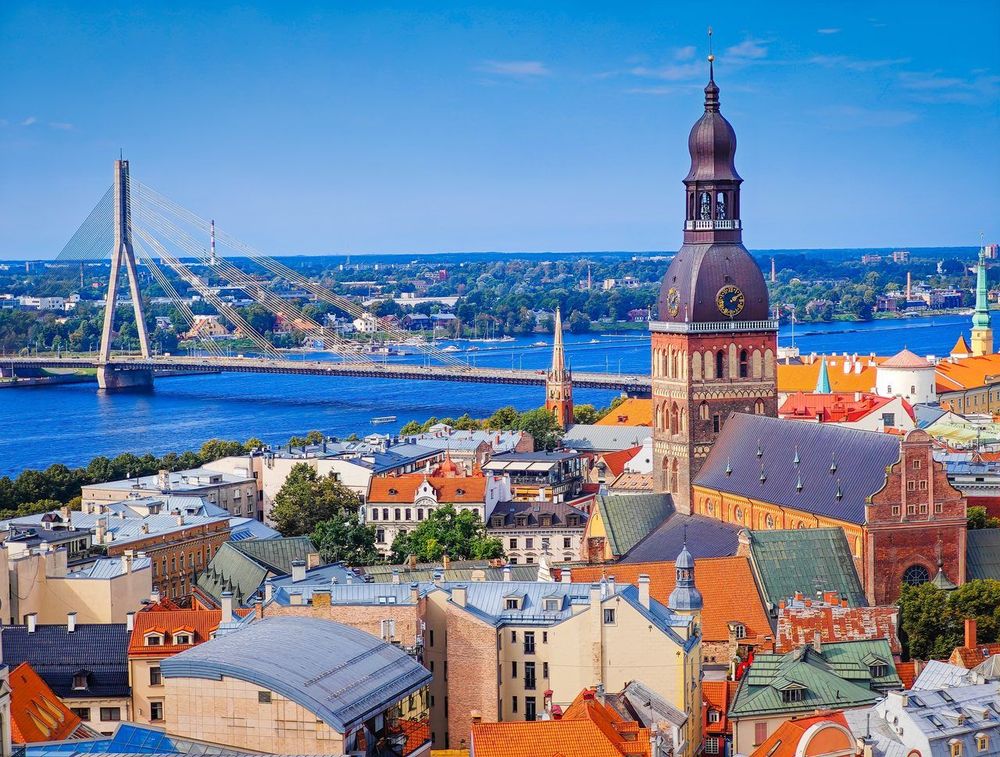
© Shutterstock
 Votre guide Ryo
Riga in 2026: 30 Totally Free Activities to Explore the Latvian Capital Without Spending a Cent
Free things to do in Riga aren't hidden: the UNESCO World Heritage Old Town can be explored without a ticket, the finest Art Nouveau facades in Europe can be admired by simply walking with your head up, and several of the most talked-about museums are free to enter or run on voluntary donations. You'll discover a compact city designed for exploring on foot across just a few square kilometers: an ideal playground for the Ryo audio-guided tour of Riga, which links most of these places without you needing to buy a single ticket.
Here, a Swedish Gate from the late 17th century slips into a lane two meters wide, a house topped with two black cats has been taunting the guild across the street for over a century, and the National Library, nicknamed the Castle of Light, lets you go up to its upper floors with a simple visitor card. Between a covered market housed in former zeppelin hangars, a memorial hidden on an island in the Daugava and an urban forest of several hundred hectares, this article details some thirty ideas for outings, from the medieval lanes of Vecrīga to the beaches of the Baltic, not forgetting practical information (season, transport, accommodation, budget) to plan a complete stay.
1. Riga Old Town (Vecrīga), an Open-Air Museum
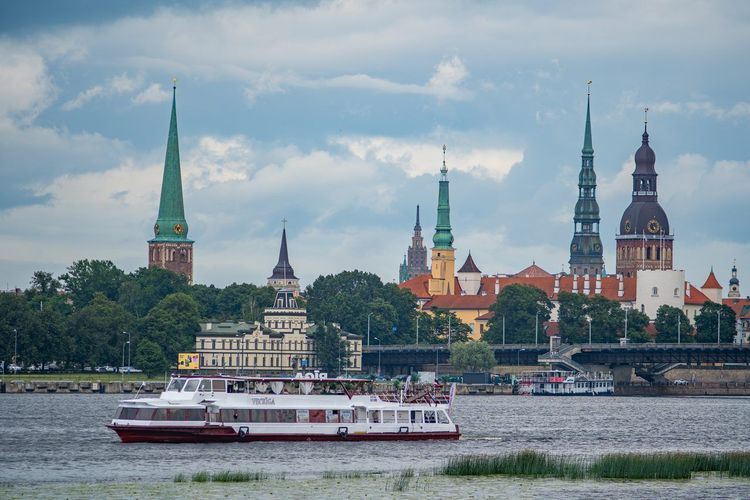
Vecrīga, Riga's old town, covers just under one square kilometer between the Daugava and the city canal. Listed as a UNESCO World Heritage Site since 1997, it concentrates most of the monuments that make the Latvian capital famous, and none of them requires a ticket to be admired from the street. Allow half a day to explore it without rushing, cobbled lane after cobbled lane.
The Medieval Treasures of Vecrīga's Lanes: Three Brothers, Cat House and Swedish Gate
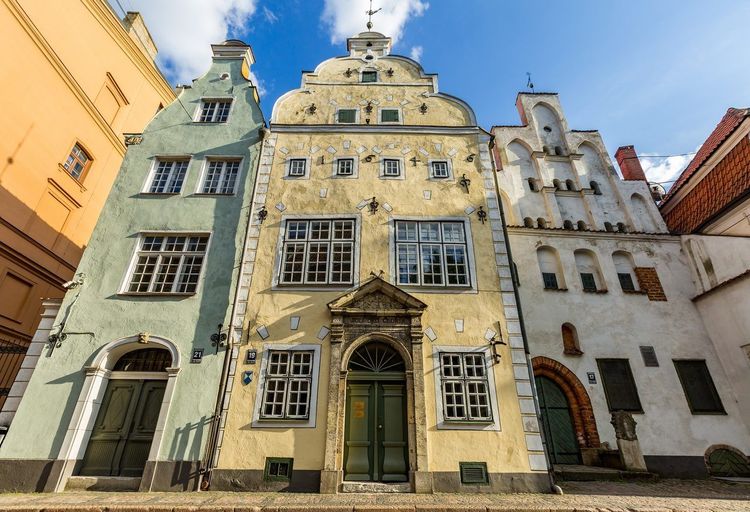
The Three Brothers form Riga's oldest complex of civil dwellings, built between the 15th and 18th centuries. The oldest house, at number 17, recognizable by its stepped gable, dates from the late 15th century. The middle one houses the architecture museum (see below), but the three facades can be admired from the street at any hour.
A few steps away, the Cat House tells a less consensual story. Its owner, a Latvian merchant rejected by the Great Guild located across the street, is said to have had two black cats placed on his turrets, tails raised and rear ends turned toward the guild building, until a lawsuit forced him to reorient the felines. Look up: their current posture is much more diplomatic.
Farther on, the Swedish Gate is the only surviving gate of the medieval ramparts. Opened in 1698, under Swedish rule, in a building attached to the wall, it hides so well that you almost have to look for it. Legend has it that a young Latvian woman was walled up alive there for having consorted with a Swedish soldier; no historical source supports this, but local guides still tell the tale.
On the boulevard side, the Laima Clock, installed in 1924 at the intersection of Brīvības and Aspazijas boulevards and adorned with the advertisement of the confectioner Laima since 1936, has served as a meeting point for Riga's residents for a century. Behind St. Peter's Church, on Skārņu iela, the bronze Bremen Town Musicians, a gift from the German twin city, await passersby: tradition has it that you rub the animals' snouts for good luck, which explains their golden patina.
Town Hall Square, Dome Square and the Lively Heart of the Old Town
Begin (or end) your stroll at Town Hall Square. The House of the Blackheads, built in the 14th century, destroyed during the Second World War and then rebuilt identically in the late 1990s, displays its Gothic and Mannerist facade there. The interior can be visited with a ticket; the square itself comes alive on summer evenings with its terraces and street musicians.
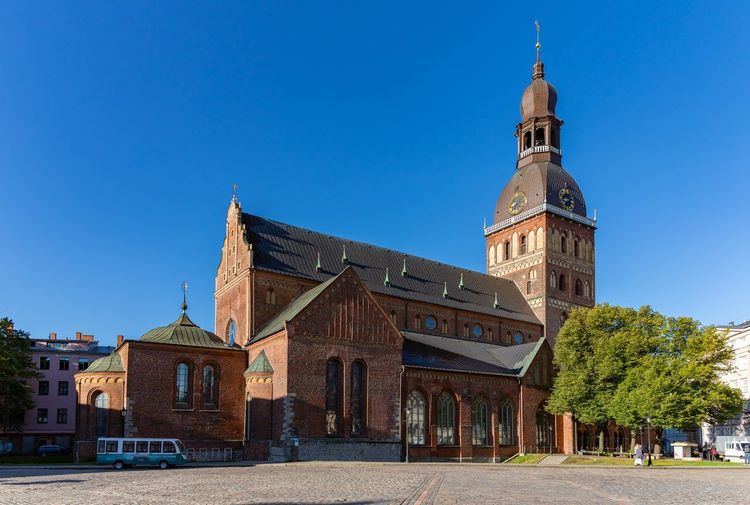
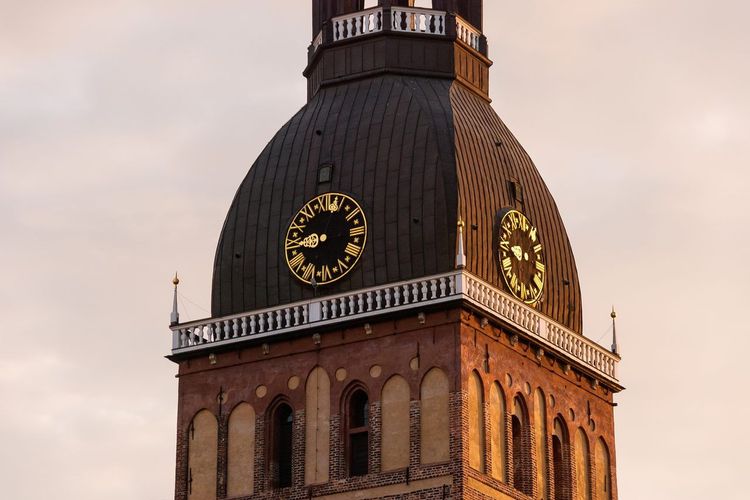
Five minutes on foot away, Dome Square opens onto the largest square in the old town, dominated by the Dome Cathedral, whose organ of 6,718 pipes was, at its inauguration in 1884, the largest in the world. If you pass by at noon, listen closely: short organ concerts are regularly scheduled there (paid), but the square, lined with cafés and former merchant houses, can be explored freely from morning to night.
Heading back north, venture into Jauniela iela (LV-1050 Rīga), one of the most photographed streets in Vecrīga with its colorful facades. Film buffs will recognize it: it served as the setting for the Bern of the cult Soviet series "Seventeen Moments of Spring," Riga being the place where Moscow's studios came to shoot their "Western" scenes.
The Ryo audio guide to Riga goes right through these medieval lanes and stops in front of the Three Brothers, the Cat House and the Swedish Gate: you move at your own pace, phone in your pocket, without having to keep searching a paper map.
2. The Freedom Monument and Esplanade Park
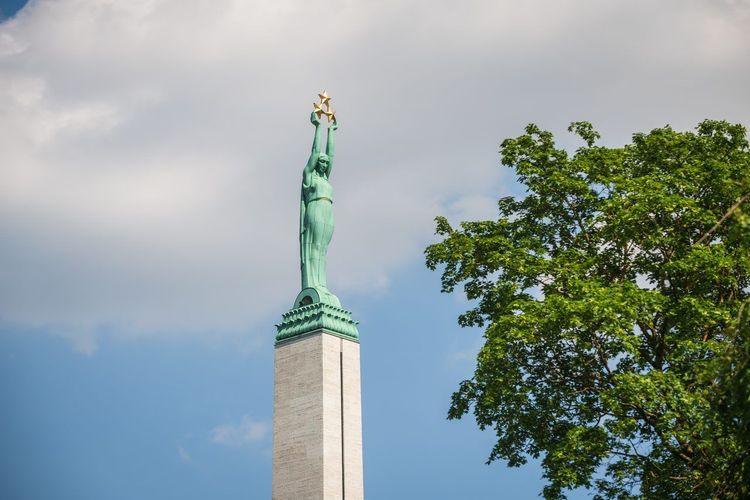
The Freedom Monument (Brīvības piemineklis) and Its Changing of the Guard
Erected in 1935 thanks to a public subscription, the Freedom Monument towers over the boulevard of the same name at a height of 42 meters. Milda, the female figure crowning it, holds up three gilded stars symbolizing the historical regions of Latvia. The monument survived the Soviet occupation, which considered demolishing it: the official version at the time claimed that Milda represented Russia carrying the three Baltic republics.
Two honor guard soldiers stand at the foot of the monument, and the changing of the guard takes place every hour, from 9 a.m. to 6 p.m. Position yourself on the esplanade, a few meters from the base: the ceremony lasts barely two minutes but always draws a small crowd.
Esplanade Park and Its Neoclassical Buildings
Just behind the monument stretches Esplanade Park (Esplanāde, LV-1010 Rīga, rated 4.5/5 on Google from 9,889 reviews), a rectangle of greenery framed by the Orthodox Nativity Cathedral, with its golden domes, and by the Latvian National Museum of Art (see below). Less crowded than the canal banks, it offers shaded benches and an unobstructed view of the neoclassical facades. On weekends, you'll meet local families and, depending on the calendar, craft markets or open-air concerts.
3. Riga's Art Nouveau, Exceptional Facades Without Paying a Cent
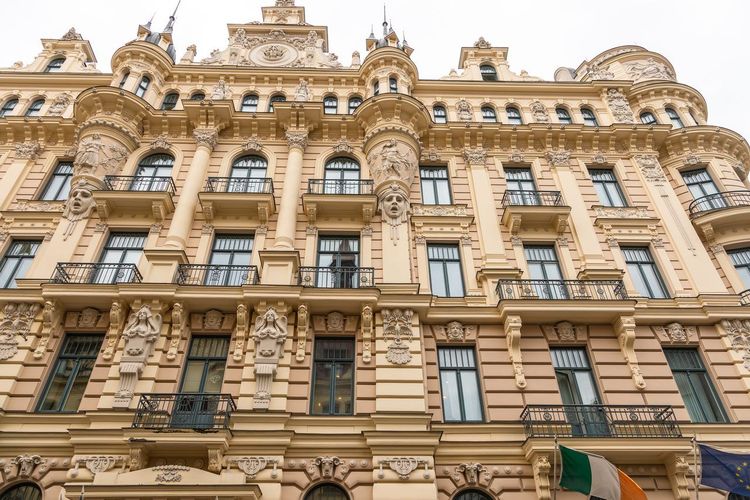
Riga claims the highest concentration of Art Nouveau buildings in Europe, ahead of Vienna or Brussels: some 800 buildings, nearly a third of the structures in the center, were erected at the turn of the 20th century, mainly northeast of the old town. No need for a museum to appreciate them, a stroll with your head held high is enough.
Alberta iela, the Most Spectacular Art Nouveau Street in the World
Alberta iela lines up, over a few hundred meters, a series of buildings signed by the great architects of the period, including Mikhail Eisenstein, father of the filmmaker Sergei Eisenstein, and the Latvian Konstantīns Pēkšēns. Screaming masks, winged women, sphinxes and floral motifs compete for space on the facades, in a style that borrows as much from Latvian national romanticism as from Viennese eclecticism.
Allow half an hour to walk up the street, stopping in front of number 2a, the most photographed, then continue along Elizabetes iela, where more Eisenstein facades await you. The buildings are private residences; only the Art Nouveau Museum, at number 12, opens its doors to the public, with a modest ticket, for those who want to see a reconstructed period apartment and its painted spiral staircase.
The Latvian Museum of Architecture and the National Opera
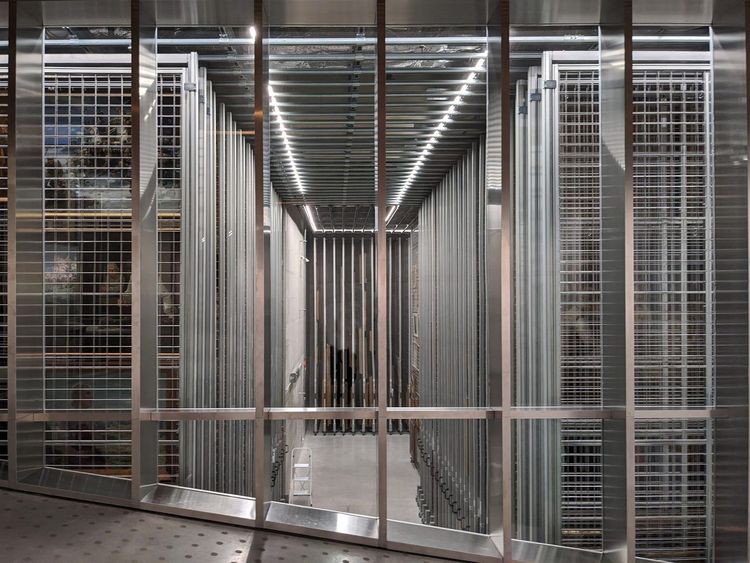
The Latvian Museum of Architecture, housed in the central house of the Three Brothers, traces the country's architectural history, from the Hanseatic era to Soviet urban planning. Admission is free on weekdays, and the temporary exhibitions, often devoted to a neighborhood or an architect, change several times a year. Good to know: it closes on weekends.
Ten minutes on foot away, the Latvian National Opera (Aspazijas bulvāris 3, LV-1050 Rīga, rated 4.7/5 on Google from 7,782 reviews) occupies an elegant 19th-century neoclassical building set on the edge of the canal. Its white facade and flower garden can be admired freely, and if you feel like attending a performance, look out for low-priced seats sold for the back rows or on the same day.
On the other side of the Daugava, the Castle of Light, nickname of the National Library of Latvia, hands out a free visitor card at reception: it opens the building's public areas up to the twelfth level. We detail the visit in the section on museums, a little further down.
4. Parks and Daugava Riverbanks for a Green Break
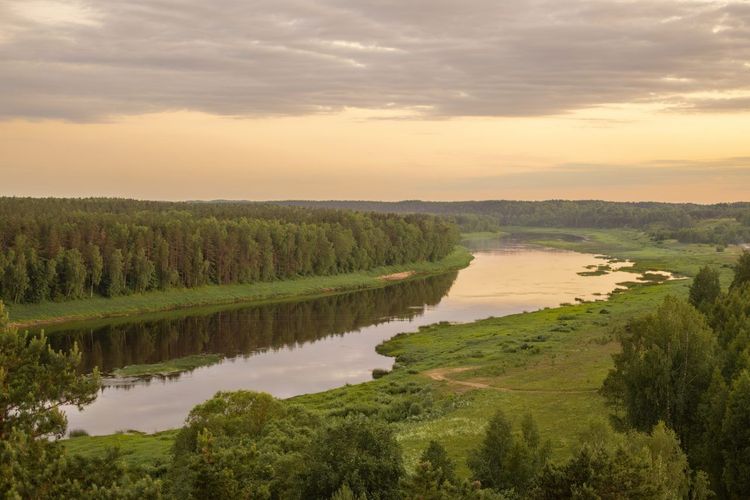
Riga is not just stone and facades: the city offers large green lungs, from the canal that encircles the old town to the urban forest of Mežaparks, by way of the islands of the Daugava. All of these walks are accessible on foot or by tram, with no admission ticket.
Bastejkalns Park and the Old Town Canal Loop
The Bastejkalns Park, also called Bastion Hill, borders the canal that curves around the old town, on the former line of the fortifications dismantled in the 19th century. Wrought-iron bridges, weeping willows, an artificial waterfall and small boats in summer make up an almost pastoral setting two minutes from the Freedom Monument.
Engraved stones in the park commemorate the victims of the Soviet special forces' shootings of January 20, 1991, during the days of the barricades that preceded the return to independence. Stroll along the canal, from the Opera to the bridge on Kr. Valdemāra street: allow about forty minutes if you take the time to stop on the footbridges.
Mežaparks, Riga's Largest Urban Forest
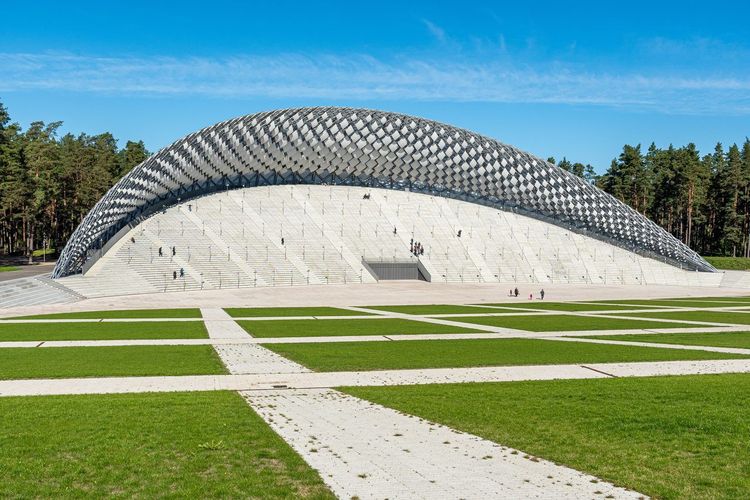
About twenty minutes by tram from the center, Mežaparks extends over several hundred hectares of pine forest. This neighborhood, founded in 1901 under the name Kaiserwald, is among the first garden cities in Europe: its wooden and Art Nouveau villas coexist with the great stage of the Song and Dance Festival, an amusement park and the Riga Zoo, the latter two being paid.
Escape there for a bike ride or a walk along Lake Ķīšezers: the forest remains largely ignored by visitors who don't go beyond the old town, and that is precisely what makes it so charming on a Sunday morning.
Lucavsala Recreational Park on the Daugava
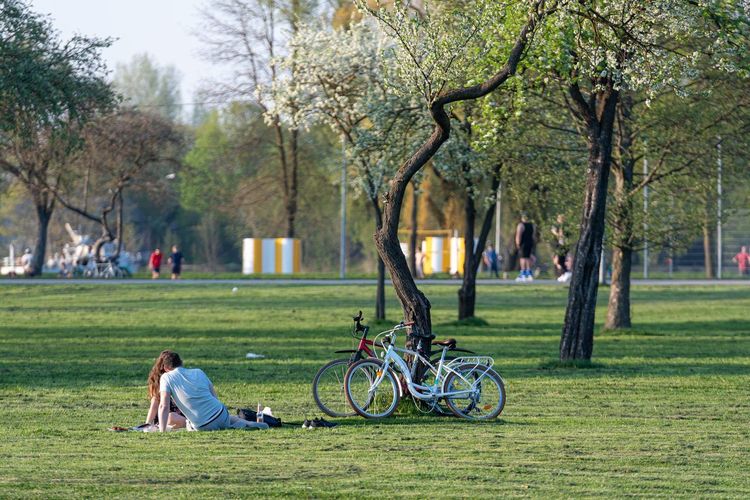
The Lucavsala Park (Lucavsalas iela, LV-1004 Rīga, rated 4.6/5 on Google from 6,141 reviews) occupies a river island connected to the city by the Islands Bridge (Salu tilts). Bike paths, sports fields, allotment gardens and small beaches make it a Sunday relaxation spot for residents, far from the crowds of the historic center.
Along the quays, between the Stone Bridge and the island of Ķīpsala, you'll enjoy the finest panoramas of the old town skyline. One section of our Ryo audio tour of Riga runs right alongside Bastejkalns Park and then joins the banks of the Daugava: handy for walking from the old town to the riverbanks without getting lost.
5. Riga's Central Market and Local Neighborhoods to Wander
South of the old town and on the left bank, between historic halls and residential wooden neighborhoods, Riga continues to live its daily life far from tourist routes. These markets and lanes cost nothing to visit, just a good pair of shoes.
Riga Central Market (Rīgas Centrāltirgus), Free Entry and Spectacular Architecture
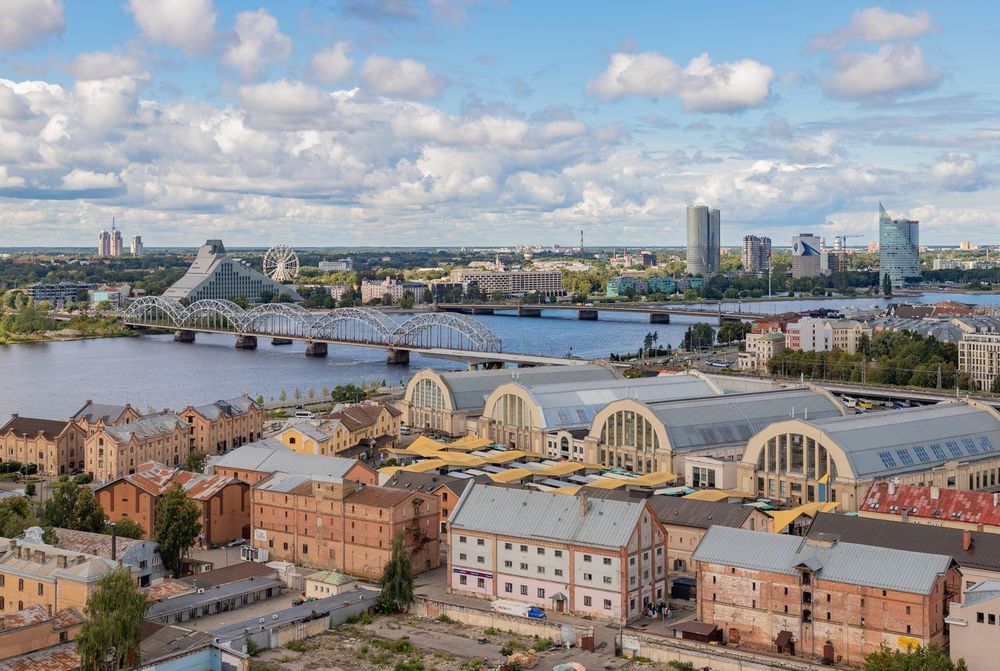
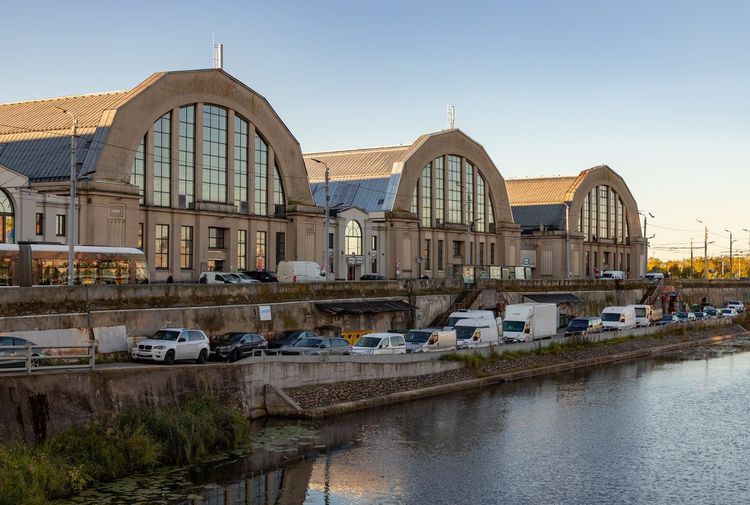
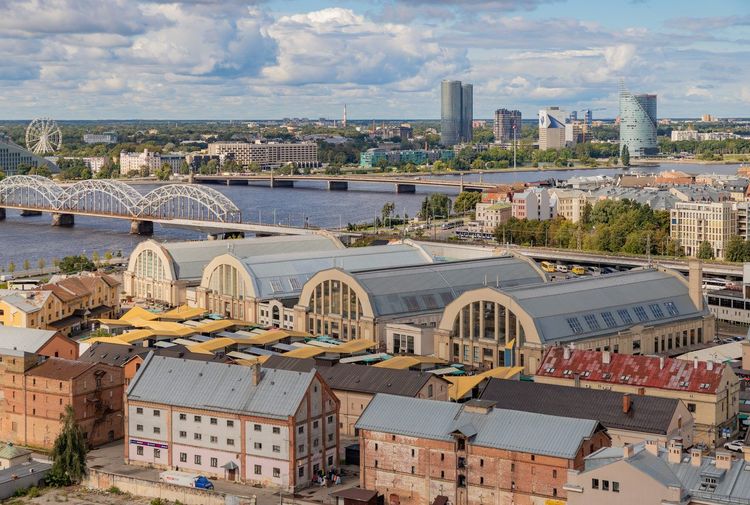
The Riga Central Market occupies five pavilions inaugurated in 1930, built from the structures of former German zeppelin hangars from the First World War. It is among the largest covered markets in Europe and is part of the UNESCO perimeter of the historic center. Entry is free and you can wander through without buying anything, among stalls of smoked herring, fresh Latvian cheeses, black rye bread and cut flowers.
The Ryo audio-guided tour of Riga dedicates a stop to these halls and tells how military hangars became the belly of the city. Allow an hour to explore the five pavilions, ideally in late morning on a weekday, when the aisles are still quiet, then cross the railway line to have a look at the red-brick Spīķeri warehouses, converted into cafés and galleries.
Neighborhood Markets: Kalnciema and Āgenskalns
On the left bank of the Daugava, the Kalnciema neighborhood brings together a set of early 20th-century wooden houses, restored since the 2000s as galleries, cafés and craft workshops. On Saturdays, its farmers' market can be explored in complete freedom, even with no intention of buying, often to the sound of a small concert.
A little further on, the Āgenskalns market (Nometņu iela 64, LV-1002 Rīga, rated 4.3/5 on Google from 9,019 reviews), whose 1914 brick hall was renovated and reopened in 2022, mixes producers' stalls and street food counters. Strolling through it lets you gauge the gap between the postcard Riga and the one where its residents actually live.
6. Riga's Free or Pay-What-You-Wish Museums
Museum of the Occupation of Latvia and Popular Front Museum
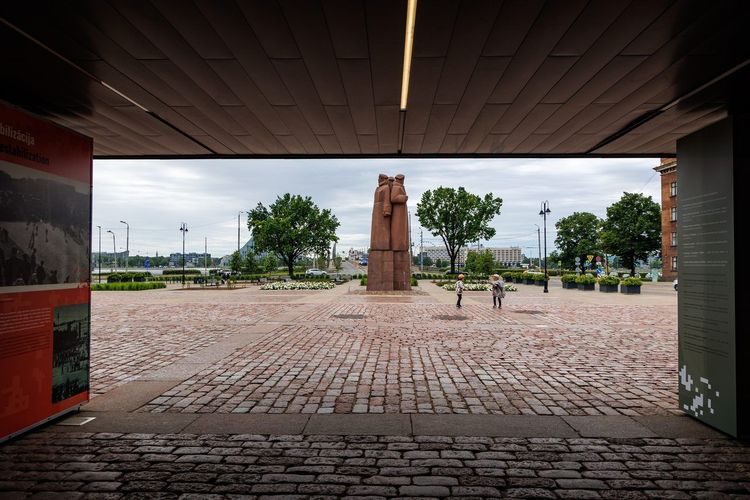
The Museum of the Occupation of Latvia traces half a century of successive Soviet and Nazi occupations, through everyday objects, letters from deportees and the reconstruction of a gulag barrack. An independent institution, it doesn't charge for entry and lives on donations left at the exit: allow a good hour, the panels are translated into English.
In the old town, the Museum of the Latvian Popular Front, housed in the offices that served as headquarters for the independence movement in the late 1980s, can also be visited free of charge. Typewriters, posters and leaflets recreate the feverish atmosphere of the months that led to independence in 1991.
Nearby, the Powder Tower (Smilšu iela 20, LV-1050 Rīga), the only surviving tower of the old fortifications, houses the Latvian War Museum, also free to enter. Before going in, look for the cannonballs embedded in its masonry, souvenirs of the Russian sieges of the 17th and 18th centuries.
Latvian National Museum of Art and National Library
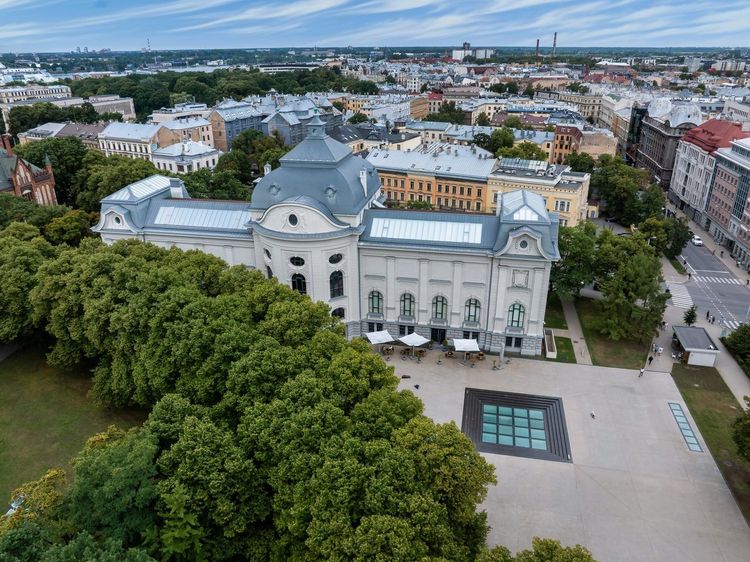
The Latvian National Museum of Art, housed in a neo-Baroque palace reopened in 2016 after a spectacular renovation, opens its exhibitions without a ticket on the last Sunday of each month, as well as on May 18 for International Museum Day. The collections cover Latvian art from the 18th century to the interwar period, with many Symbolist paintings little known outside the Baltic countries. Time your stay accordingly if you can.
The National Library of Latvia, designed by architect Gunārs Birkerts and inaugurated in 2014, can be visited with the visitor card handed out at reception on simple request: it gives access to the public areas up to the twelfth level and to several reading rooms. Don't miss the "people's library," a wall of books donated by Latvians that rises over several floors, nor the view of the old town and the Daugava from the picture windows on the upper levels.
Ethnographic Open-Air Museum and Botanical Garden
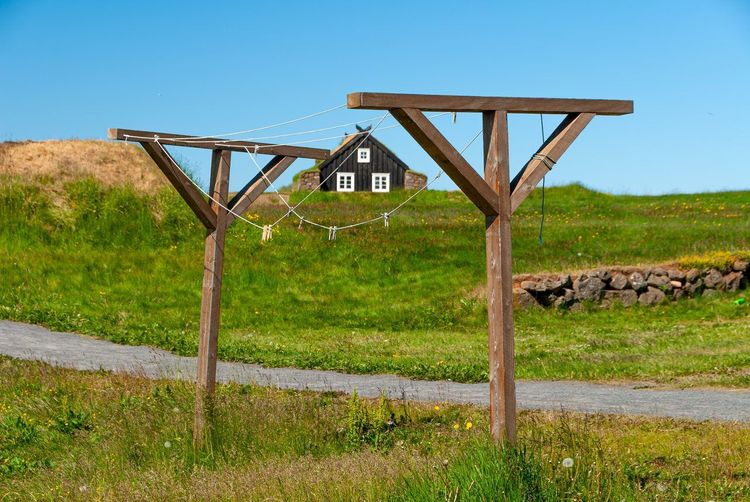
Two visits fall outside the "no ticket" category but deserve a mention for their low price. The Latvian Ethnographic Open-Air Museum (Brīvības gatve 440, LV-1024 Rīga, rated 4.6/5 on Google from 6,133 reviews) brings together more than a hundred traditional buildings (farms, mills, wooden churches) moved from the country's four historical regions, on the shores of Lake Jugla. The adult ticket costs around 8 euros, and half a day is none too much.
The Botanical Garden of the University of Latvia (Kandavas iela 2, LV-1083 Rīga), in the Āgenskalns neighborhood, surprises with its tropical greenhouse and its collections of centuries-old trees. Entry costs about 7 euros for an adult, with a 30% discount on Mondays: enough to put together a green morning at a gentle price if you stay on the left bank.
7. Memory and History: Places That Tell Riga's Past
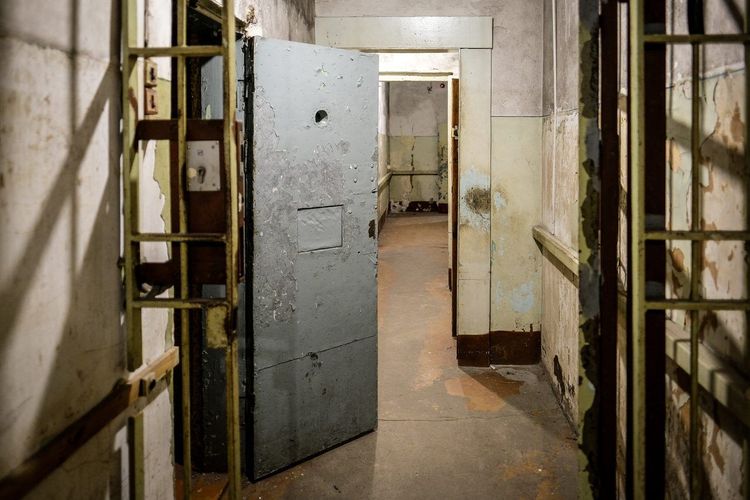
Riga bears the visible traces of its turbulent 20th century. Several memorial sites, open without a ticket or on simple donation, let you grasp the broad outlines without resorting to a paid guide.
The Riga Ghetto Museum and the Žanis Lipke Memorial
The Riga Ghetto and Latvian Holocaust Museum, largely in the open air, documents the confinement of nearly 30,000 Jews in the Moscow Suburb ghetto (Maskavas forštate) in 1941, then their massacre, for the most part, in the Rumbula forest. Entry is free, a donation of about 5 euros is suggested, and the dense explanatory panels require one to two hours of careful reading. A reconstructed wooden house and a deportation railcar complete the tour.
On the island of Ķīpsala, the Žanis Lipke Memorial pays tribute to the Latvian dockworker who, with his wife Johanna, saved more than fifty Jews during the Nazi occupation, notably by hiding them in a shelter dug beneath his shed. The black wooden building, designed as an overturned ark, can be visited freely, with a suggested contribution on the way out. Go down into the reconstructed bunker: the cramped space says more than any speech about what those hiding there experienced.
The Salaspils Memorial, on the Outskirts of Riga
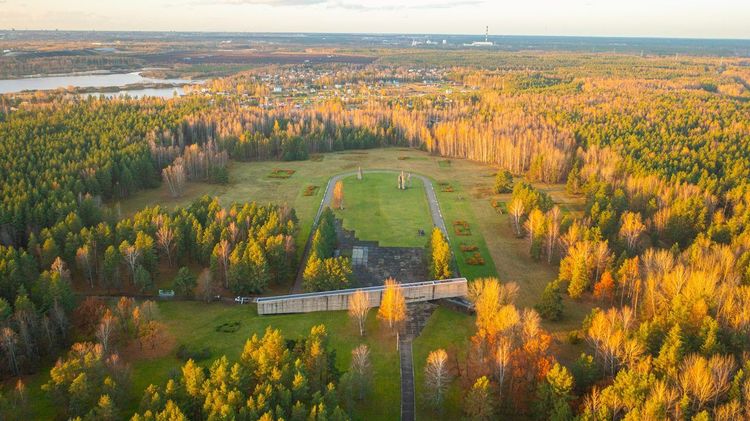
The Salaspils Memorial (Salaspils, LV-2121, rated 4.8/5 on Google from 1,397 reviews) is located about twenty kilometers southeast of the center, on the site of a former Nazi camp where several thousand prisoners were held between 1941 and 1944. Allow about thirty minutes by train from the central station to the Dārziņi stop, then about twenty minutes of walking through the forest: plan on half a day.
The monumental concrete sculptures that punctuate the vast clearing, erected in the Soviet era, are among the most striking memorial ensembles in the Baltic countries. Access to the site is free, and a metronome hidden in a concrete block beats there continuously, like a heart.
8. Free Walking Tours, to Visit Riga in a Group
Several associations and independent guides organize free walking tours departing from Town Hall Square or the Bremen Town Musicians statue, generally in the morning and early afternoon. The principle is the same everywhere: you pay nothing when signing up, but a tip is expected at the end of the tour, from 10 to 15 euros per person depending on your satisfaction.
Book your spot the day before in high season, from June to August, as groups fill up quickly. The tour lasts about two hours and covers most of Vecrīga; some organizers also offer themed tours (Art Nouveau, the Soviet period, the Maskavas forštate neighborhood).
Prefer to go alone, at a time that suits you? The Ryo app works a bit like a guided tour that is available at all times: you start when you want, and you linger as long as you like in front of a facade, without waiting for the group to finish taking photos.
9. The Daugava and the Beaches Near Riga
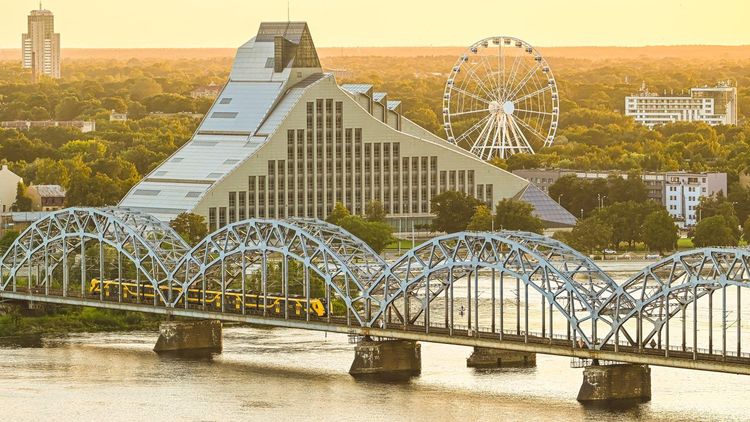
Riga runs along the Daugava for kilometers, but the city also has direct access to the Gulf of Riga, less than an hour from the center. In the evening, head to the left bank, at the foot of the National Library or on the island of Ķīpsala: that's where the spires of St. Peter's and the Dome Cathedral stand out best against the sky at sunset.
For a day trip, Garciems beach (Garciems, LV-2163, rated 4.8/5 on Google from 32 reviews), about forty minutes by train from the central station, offers fine sand and wooded dunes typical of the Latvian coast, far from the bustle of Jūrmala, the country's best-known seaside resort. Access and swimming cost nothing, only food on site is paid.
In summer, Latvians themselves gladly forsake museums for these stretches of sand, especially on weekdays when trains are less crowded. Bring a towel, water and a picnic: shops are rare once you leave the small station.
10. The Best Free Viewpoints over Riga
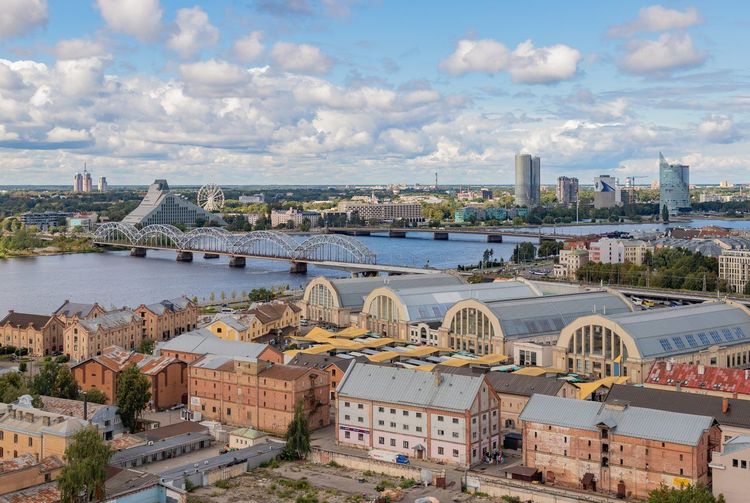
Several places already mentioned are also among the city's best viewpoints. The upper levels of the National Library offer the most spectacular and easiest-to-get view: the visitor card is enough.
The Stone Bridge (Akmens tilts), between the old town and Pārdaugava, unrolls a complete perspective over the spires of the cathedral and St. Peter's Church, particularly beautiful at the end of the day. From the top of the hill in Bastejkalns Park, the view is more intimate, framed by the foliage with the Freedom Monument in the background.
Note that the bell tower of St. Peter's Church, often cited as the best viewpoint in Riga, is paid (about 9 euros with the church visit): save it for clear blue-sky days if you're set on the view from 72 meters.
11. When to Go to Riga to Make the Most of the City
Summer, from June to August, remains the most comfortable period for exploring the old town and the parks: around the solstice, daylight lasts more than 17 hours, and the Kalnciema and Āgenskalns markets are in full swing. It is also high season, with noticeable crowds around the Three Brothers and Town Hall Square in the middle of the day. If you are there on June 23, the Jāņi festival empties the city in favor of the countryside: an experience in itself.
Spring (April-May) and early autumn (September) offer a good compromise: still mild temperatures, thinner crowds and low-angle light ideal for photographing the facades of Alberta iela. Winter limits long walks, with temperatures often below zero from December to February, but donation-based museums then become an excellent fallback option, and the Christmas market on Dome Square lights up the old town. To prepare a stay at this time of year, see our guide to visiting Riga at Christmas.
12. Getting Around Riga on Foot, by Bike or by Public Transport
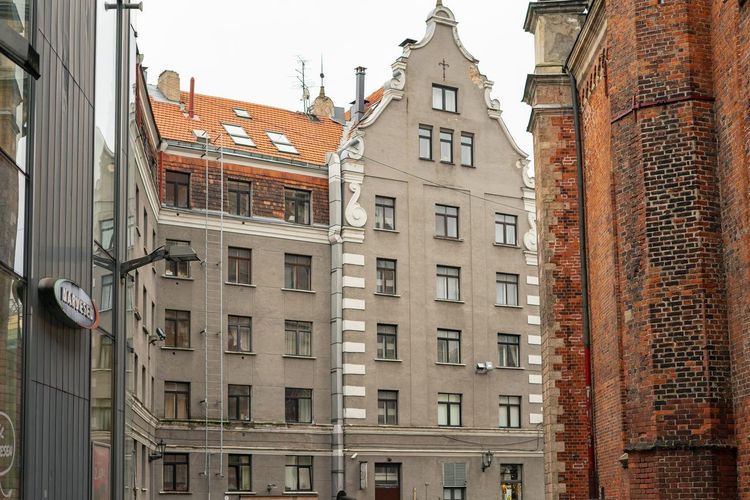
The old town and the Art Nouveau district can be explored on foot: the cobbled streets of Vecrīga are largely closed to traffic, and the distance between the Central Market and Alberta iela does not exceed 2.5 kilometers, or half an hour of leisurely walking.
For Mežaparks, Lucavsala or the ethnographic museum, the Rīgas Satiksme network of trams, buses and trolleybuses remains inexpensive: a ride costs 2 euros bought from the driver, but only 1.15 euros with an e-ticket bought in advance, and the 24-hour ticket costs 5 euros. For Salaspils or Garciems, take regional trains departing from the central station.
Finally, bikes are easy to rent via the self-service stations in the center. The path that runs along the Daugava, from the old town to Lucavsala, is among the most pleasant routes in the city, far from car traffic.
13. Where to Stay in Riga According to Your Budget
If you plan to string together visits on foot, staying in or around Vecrīga remains the most practical choice: allow 60 to 100 euros a night for a double room in a small hotel set in a restored mansion. The downside: the cobbled lanes are noisy on some weekend evenings, especially near Town Hall Square.
The Centrs neighborhood, which includes the Art Nouveau area around Alberta iela and Brīvības boulevard, offers a compromise between residential calm and proximity to the historic center, with guesthouses and apartments at around 45 to 75 euros a night. It is also the neighborhood best served by trams to Mežaparks.
For tight budgets, Pārdaugava, on the left bank, offers hostels and apartments for between 25 and 45 euros a night, 15-20 minutes on foot from the Stone Bridge. The neighborhood lacks a bit of charm but makes up for it with its Kalnciema and Āgenskalns markets and direct access to Lucavsala. Around the central station and the market, finally, prices rarely exceed 80 euros, even in high season.
14. What Budget to Plan for in Riga Beyond Ticket-Free Visits
Even though most of this selection costs nothing, a stay in Riga involves a few unavoidable expenses. A meal in a simple Latvian restaurant costs 8 to 15 euros, and rises to 20-30 euros at a more upscale address in the historic center. For eating cheaply, the self-service canteens of the Lido chain and the Central Market remain unbeatable: black bread, smoked herring and fresh cheese make up a very local picnic.
As for transport, plan 2 to 5 euros a day for tram or train trips to Mežaparks, Salaspils or Garciems. Paid extras remain modest: a few euros for the Dome Cathedral, about 9 euros for the St. Peter's bell tower, 8 euros for the ethnographic museum, or a last-minute seat at the National Opera.
Over three days, combining budget accommodation and a few extras, expect 150 to 250 euros per person excluding air travel, a figure well below that of a comparable Western European capital. To organize those three days step by step, our article on a weekend in Riga offers a detailed program.



FAQ
What are the best things to do in Riga?
Most of Riga's ticket-free sights are concentrated in the UNESCO-listed Old Town (Three Brothers, Cat House, Swedish Gate), the Art Nouveau district around Alberta iela and several parks, from Bastejkalns to Mežaparks. The Central Market, the National Library and the donation-based museums round out a dense offering for a minimal budget.
What are the must-see sights to visit in Riga for free?
The Three Brothers, the Swedish Gate, the Freedom Monument, Alberta iela and the Central Market are among the must-sees, all accessible without a ticket from the street or public spaces. Add the Museum of the Occupation, which is free to enter on a donation basis.
What can I do in Riga in 3 days?
Spend a first day on the Old Town and the Art Nouveau district, a second on the museums, the National Library and the Central Market, and a third on Mežaparks or Lucavsala, or on an excursion to Salaspils or Garciems beach: this pace covers the essentials without rushing.
What souvenir should I bring back from Riga?
At the Central Market and on the stalls of the Old Town, look for Latvian honey, Baltic amber worked into jewelry, Riga Black Balsam (Rīgas Melnais balzams) and linen textiles embroidered with traditional patterns.
Is Riga an expensive city to visit?
No: Riga remains one of the most affordable capitals in the European Union, with meals and accommodation noticeably cheaper than in Paris or London, and a large share of its main attractions accessible without a ticket.
Do I need to book free walking tours in Riga in advance?
Yes in high season, from June to August: groups often fill up the day before, especially for morning departures. Outside the season, booking on the same day is usually enough.
Riga proves that a European capital can be explored in depth without reaching for your wallet at every street corner: the Old Town, the facades of Alberta iela, the parks along the Daugava and a good number of museums are free or nearly free, for a cost of stay among the most reasonable on the continent.
To link these places without juggling maps or depending on a group schedule, the Ryo audio-guided tour of Riga accompanies you at your own pace, headphones on, from the lanes of Vecrīga to the Art Nouveau facades. A simple way to turn this list of ideas into a real itinerary, with the stories that go with it.