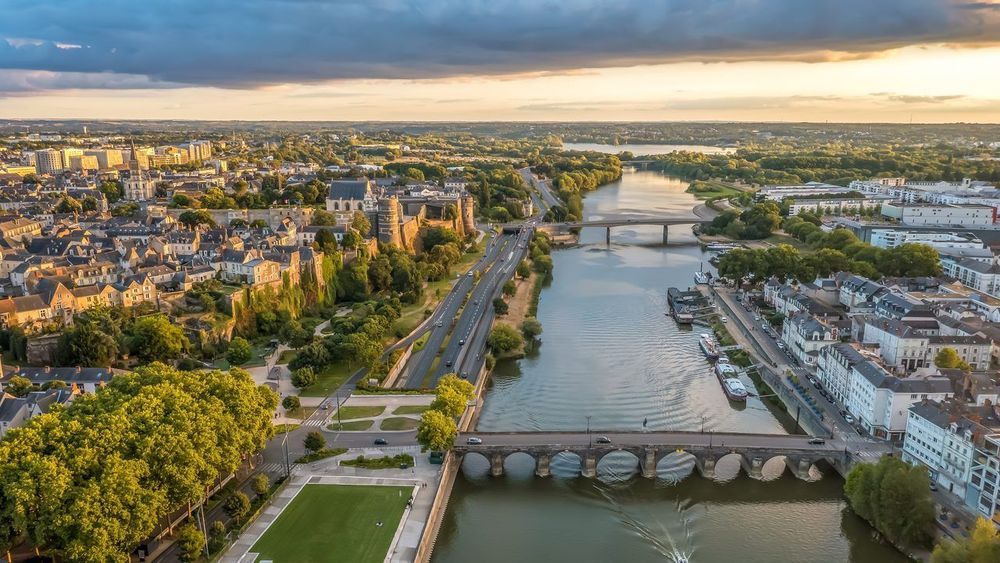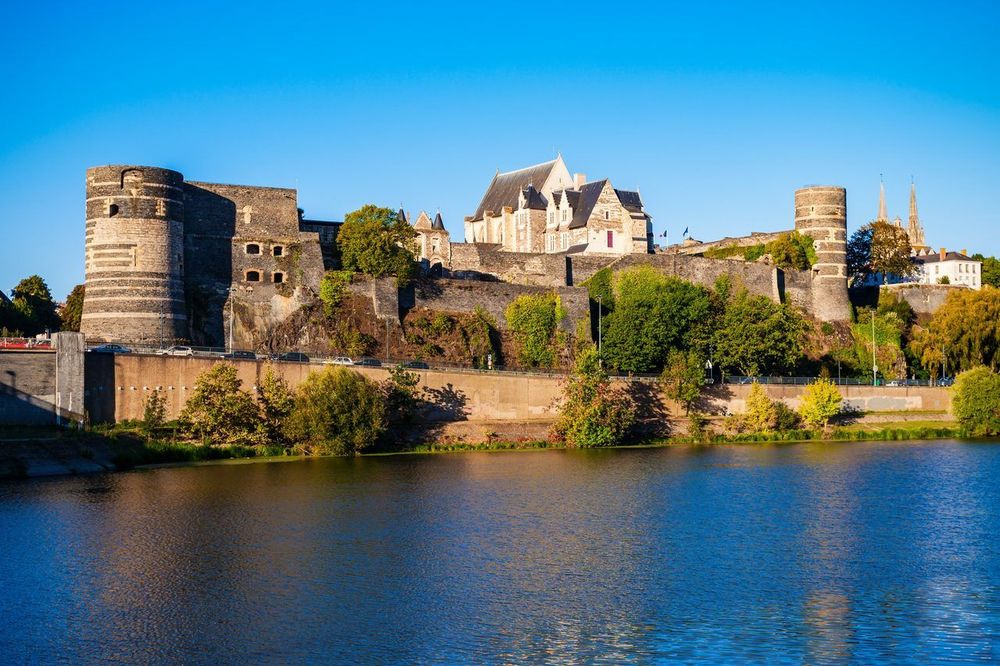
© Shutterstock
 Votre guide Ryo
The 10 Neighborhoods of Angers in 2026: Which One Should You Choose to Visit or Move To?
In Angers, crossing a street can feel like crossing centuries: on one side, half-timbered houses dating back to the 15th century, on the other, brand-new buildings replacing the tower blocks of the 1960s. The neighborhoods of Angers officially number ten, as defined by the city council, and together cover just over 42 km² on both banks of the Maine, each with its own pace. The Ryo audio-guided tour of Angers sets off from the château and lets you feel this contrast from the very first minutes, moving between the fortress, la Doutre, and the shopping streets of the city center.
Here, there is no fixed hierarchy between "nice" and "less nice" neighborhoods. Belle-Beille is home to a campus of over 15,000 students and sees its original tower blocks demolished one by one; la Doutre still lines up medieval façades just a few minutes' walk from the cathedral; and the plateau des Capucins, in Hauts-de-Saint-Aubin, was built on former military land. Since July 2023, three tram lines have connected most of these areas to the city center, reshuffling the cards for many residents. This guide to the neighborhoods of Angers covers all ten areas recognized by the city, their real atmosphere, and the criteria that should guide your choice — whether you are looking for somewhere to spend three days or somewhere to sign a lease.
Centre-Ville - La Fayette - Éblé: The Historic and Lively Heart of Angers
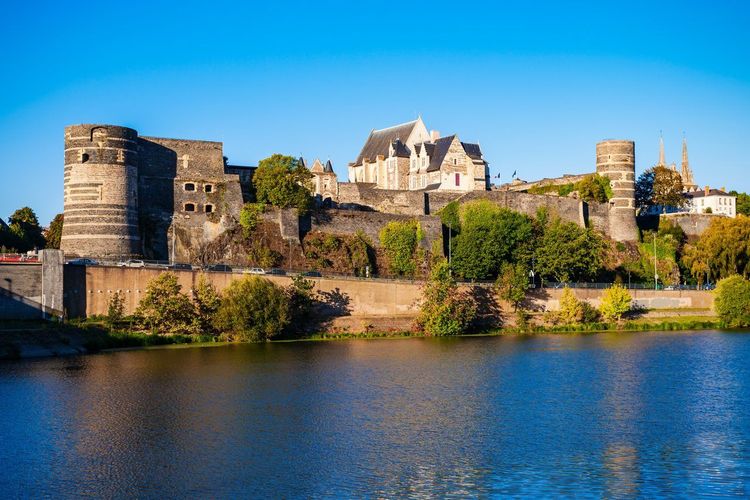
Centre-Ville - La Fayette - Éblé alone concentrates the majority of Angers's listed heritage and most of its commercial activity. It is the logical starting point for any visit: you arrive at the Saint-Laud train station, which marks the southern boundary of the area, and within fifteen minutes on foot you are already standing before the ramparts of the Château d'Angers, seventeen towers of schist and tuffeau raised in the 13th century under Blanche de Castille. Inside, the Tapestry of the Apocalypse still unfolds nearly a hundred metres of tapestry commissioned by Duke Louis I of Anjou at the end of the 14th century.
Just steps away, the Cathédrale Saint-Maurice of Angers dominates the montée Saint-Maurice with its three-tower façade and gallery of statues. Inside, the nave is one of the founding examples of Angevin Gothic — also known as Plantagenet Gothic — recognizable by its domed vaults. Take time to look up at the stained-glass windows, among the oldest preserved in France.
The neighborhood is not limited to its two landmark monuments. The Place du Ralliement (Place du Ralliement, 49100 Angers), flanked by the Grand Théâtre inaugurated in 1871, lives up to its name: it is the meeting point of the people of Angers, and the tram now runs right through its heart. On weekdays, you will find office workers on lunch breaks, high-school students, and tourists, before the terraces overflow at the first sign of fine weather.
A little further on, the Galerie David d'Angers (33bis Rue Toussaint, 49100 Angers, rated 4.7/5 on Google with 1,022 reviews) occupies the former Toussaint abbey church, whose 13th-century nave has been covered with a glass roof. The large plaster works by the Angevin sculptor are bathed in natural light — a setting worth the detour even if you are not a sculpture enthusiast.
For a leisurely stroll, rue Saint-Laud, the place du Pilori, and the surrounding pedestrian streets blend old houses, independent shops, and national retail chains. This is also the most expensive area per square metre: immediate proximity to everything, heritage surroundings, and a lively nightlife on weekend evenings. Further south, La Fayette and Éblé offer a more bourgeois character, with fine townhouses and the jardin du Mail within easy reach.
To connect all of this without getting lost, the Ryo audio-guided tour (2h15 for 5.6 km) links the château, the cathedral, the place du Ralliement, and the jardin du Mail, with a story told — rather than a simple list of dates — at every stop.
La Doutre - Saint-Jacques - Nazareth: Historic Charm on the Right Bank
Cross the Maine via the pont de Verdun and the scenery changes immediately. La Doutre, whose name comes from "outre-Maine" (beyond the Maine), has been spared the major thoroughfares that modernized the left bank. The result: entire streets of half-timbered houses, several of which date back to the 15th century, around the place de la Laiterie and the rue Beaurepaire.
The former abbaye du Ronceray is its oldest monument: its Romanesque abbey church, rebuilt between 1060 and 1119, now serves as an exhibition venue for the city, while the cloister has been occupied since 1815 by the École des Arts et Métiers. In summer, it also hosts performances from the Festival d'Anjou.
A little further up, the former hôpital Saint-Jean, founded in the 12th century, houses the Musée Jean-Lurçat et de la tapisserie contemporaine (4 Boulevard Arago, 49100 Angers, rated 4.7/5 on Google with 1,411 reviews). Its grand salle des malades, with its Angevin vaults, displays the tapestry cycle "Le Chant du Monde," Lurçat's modern response to the Apocalypse tapestry in the château.
Saint-Jacques and Nazareth, which extend la Doutre toward the northwest, are more residential and far less touristy. You will find 19th-century townhouses, an active network of local associations, and rents that are still reasonable given their proximity to the center. This is typically the kind of area that residents recommend to one another but that guidebooks barely mention.
The quai des Carmes, facing the château, is the best spot for a late-afternoon break: views over the ramparts, public benches, and a rare tranquility for a location so central. You will quickly sense the difference from the left bank: fewer shop fronts, more neighborhood cafés, and the feeling of a village absorbed by the city without losing its identity. The Ryo audio tour also passes through la Doutre, with audio stops to listen to in front of the half-timbered façades, no map required.
Belle-Beille: The Student Neighborhood in Full Transformation

Belle-Beille is the student neighborhood of Angers par excellence. Its campus, in the west of the city, brings together over 15,000 students across the faculties of the Université d'Angers, Polytech Angers, the IUT, the ESSCA, and the ISTOM, among others. The residential part of the neighborhood is home to approximately 13,500 residents and was built in three phases between 1954 and 1960, making it one of Angers's first large housing estates.
Reducing Belle-Beille to its lecture halls would be to miss what has been unfolding there over the past decade: one of the largest urban renewal programmes in the metropolitan area. The Hamon towers have been demolished, other buildings are being rehabilitated, and new housing — partly intended for students — is taking over. The neighborhood still lives to the rhythm of construction sites, but the first completed buildings give a fairly clear picture of what Belle-Beille will look like in a few years. Architecture enthusiasts should seek out the tour Viollet, clearly inspired by Le Corbusier.
The real lung of the area is the étang Saint-Nicolas, a semi-natural wooded space of over 100 hectares bordering the neighborhood. You will find as many joggers as students revising on a blanket, and the paths lead on toward the parc de Balzac and the Lac de Maine. The area is also home to the Angers technopole, specializing in plant science and headquarters of the Végépolys competitiveness cluster.
If you are looking for affordable student housing with direct access to campus, Belle-Beille is hard to beat. Since 2023, tram lines B and C have connected it to the city center, significantly reducing the sense of distance. For a tourist stay of a few days, however, this is not the neighborhood to prioritize: the heritage sites and lively areas are elsewhere.
Roseraie: The Large Residential and Family-Friendly Neighborhood
In the south of the city, la Roseraie is one of the most populous neighborhoods in Angers, with around 15,000 residents. Born out of a priority urban development zone launched in 1965, it welcomed its first residents in 1968 and already had 20,000 by 1980. Since then, the housing stock has diversified: original large blocks, detached houses in the more recent sections, and a handful of new developments.
Schools, middle schools, sports facilities, a local shopping center: la Roseraie ticks all the boxes for a practical neighborhood in which to raise children without leaving the city. Property prices per square metre remain significantly more accessible than in the city center, which explains why many families from Angers stay rather than moving to the suburbs.
La Roseraie is also the neighborhood best served by the tram: line A, in service since 2011, has its terminus here, and line C has joined it since 2023. You can thus reach the place du Ralliement without changing trams. The downside: few tourist attractions and a resolutely residential atmosphere. For visiting Angers over a few days, la Roseraie is only worthwhile if you find advantageous accommodation there, precisely thanks to the tram.
Justices - Madeleine - Saint-Léonard: The Quiet and Accessible Alternative
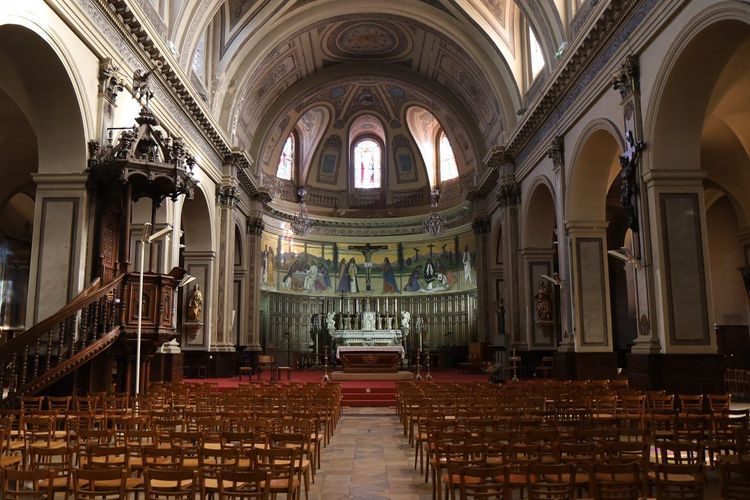
To the southeast of the center, this three-part neighborhood functions as a safe haven for those who want peace and quiet without being cut off from everything. Les Justices, la Madeleine, and Saint-Léonard form three areas with similar identities: a mix of detached houses and small apartment buildings, tree-lined streets, and local shops around the église de la Madeleine.
The neighborhood nevertheless houses some major facilities. The stade Raymond-Kopa (Boulevard Pierre de Coubertin, 49000 Angers, rated 4.3/5 on Google with 2,779 reviews), home ground of SCO d'Angers, is part of the city's main sports complex, and on match nights the atmosphere contrasts sharply with the usual calm of the surrounding streets. The area also hosts the Université catholique de l'Ouest and the École supérieure d'agriculture, ensuring a discreet but very real student presence.
The neighborhood is particularly appealing to young professionals and families looking for a compromise: quick access to the center, rents lower than those in the hypercentre, and a greener setting. No major monument or iconic shopping street, but it is precisely this residential calm that makes it a reliable choice for settling down long-term.
Saint-Serge - Ney - Chalouère: Between University, Market, and the Banks of the Maine
Just north of the center, along the left bank of the Maine, Saint-Serge is a former floodplain area that has been profoundly transformed. A little-known fact: the gravel extracted in the 1960s to create Lac de Maine was used to backfill these plots of land, which made it possible to establish the Marché d'intérêt national, inaugurated in 1963, followed by a business and university district.
The campus Saint-Serge now houses the faculty of law, economics, and management of the Université d'Angers, served by the Saint-Serge Université tram stop. Around it, offices, recent housing, and landscaped riverbanks make up a mixed neighborhood where students and young professionals cross paths every day.
The église Saint-Serge, which gave the neighborhood its name, is the former abbey church of a monastery first mentioned in 705. Its Angevin Gothic choir, with its remarkably slender columns, is among the most elegant in the city. The church still serves as a parish, while the conventual buildings house the lycée Joachim-du-Bellay. The Jardin des Plantes, nearby, provides the transition to the city center.
Further north and east, Ney and Chalouère offer a more residential character, with townhouses and long-established families. For a buy-to-let investment, the presence of the campus and the tram sustains demand throughout the year.
If you are staying in this area, the historic center is just a few stops away: get off at Ralliement and launch the Ryo audio-guided tour, which loops in 2h15 between the château, the cathedral, and the riverbanks, with no reservation and no group to follow.
Lac de Maine: Nature, Sport, and Relaxation at the City's Edge
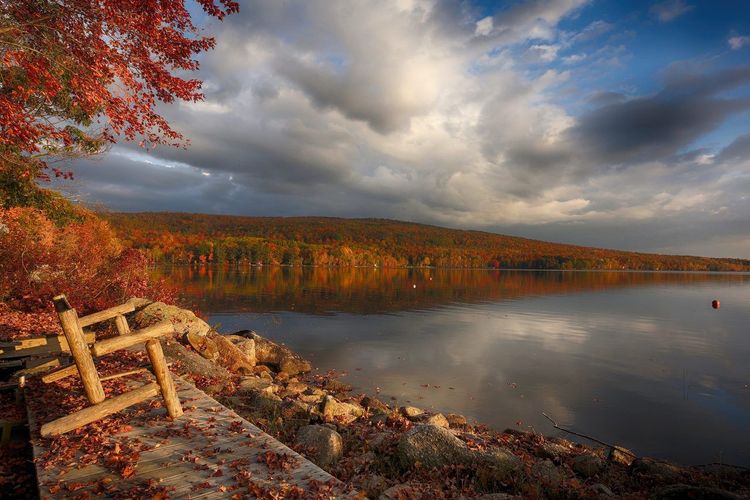
In the southwest of the city, the Lac de Maine neighborhood developed from the 1970s around an artificial lake of approximately 110 hectares, created by gravel extraction in the 1960s. The result is now Angers's main leisure park, classified as a zone of special ecological interest (ZNIEFF).
Sailing, canoeing, paddleboarding, fishing, supervised swimming in season: the offer is wide-ranging, and the pyramid built in 1969, renovated from 2017 onward, houses the water sports center and a restaurant. Keep an eye on city announcements in summer, as swimming can be suspended due to cyanobacteria, as happened in August 2018.
At weekends, the place takes on the air of a miniature seaside resort: families settled on the grass, joggers circling the lake, anglers on the quieter stretches of bank. To the north, the parc de Balzac extends this green corridor toward Belle-Beille and the banks of the Maine, a route popular with cyclists, especially since the Loire à Vélo cycling trail passes nearby.
In terms of housing, the neighborhood blends detached houses, small apartment buildings, and sports facilities, with a positioning clearly geared toward families and working residents who prioritize quality of life over centrality. Prices remain competitive, in exchange for a real distance from the center, especially if you are not a cyclist.
Monplaisir: A Neighborhood in Full Renewal
Monplaisir, to the northeast of the center, was born out of a priority urban development zone launched in 1959; its first tenants moved in in December 1963. The place de l'Europe has remained its administrative, social, and commercial hub. Classified as a priority neighborhood under the city's urban policy, it benefits from an urban renewal programme: targeted demolitions, new public spaces, and thermal rehabilitation of retained housing stock.
It is a working-class neighborhood in the fullest sense: genuine social diversity, some of the lowest rents in the city, and a community identity proudly claimed by its residents despite an sometimes unfair image. Tram line B, which has had its terminus here since July 2023, has significantly improved connections to the center — an argument that is beginning to carry weight for new arrivals.
For an investor or a prospective tenant, Monplaisir remains a gamble: prices are low and renovation is progressing, but tourist appeal remains limited.
Deux-Croix - Banchais: A Working-Class and Vibrant Neighborhood
To the east of the center, Deux-Croix - Banchais shares with Monplaisir its working-class status, while having its own identity. Its most visible landmark is the tour Chaptal, which rises above the cité du Grand-Pigeon and can be seen from a distance in the urban skyline.
Housing is predominantly made up of apartment buildings, with some of the most affordable rents in the city. The neighborhood is absent from tourist guides, making it an almost exclusively residential area with no particular appeal for a short stay.
For its residents, however, it is a neighborhood appreciated for its rich associative life, its open-air markets, and its community atmosphere. Newcomers will find above all a good value-for-money ratio for access to the center, which remains reasonable by bus.
Hauts-de-Saint-Aubin: Angers's New Eco-Neighborhood
On the right bank, north of la Doutre, Hauts-de-Saint-Aubin brings together two former neighborhoods — Verneau and les Capucins — as well as the plateau des Capucins, a large urban development project built on former military land. Designed as an eco-neighborhood, this plateau focuses on controlled density, green spaces integrated from the outset, and a direct tram line A connection.
The neighborhood also concentrates some top-tier facilities: the Centre hospitalier universitaire, the AquaVita water leisure center, and above all Terra Botanica (Route d'Épinard, 49100 Angers, rated 4.5/5 on Google with 17,692 reviews), a plant-themed park opened in 2010 and one of the most popular family outings in the region.
Still under construction on part of its programme, the area appeals mainly to young families attracted by new-build housing at prices more affordable than those in the city center. Neighborhood life is gradually taking root, as shops and amenities follow the arrival of new residents.
Which Neighborhood Should You Choose in Angers Based on Your Profile?
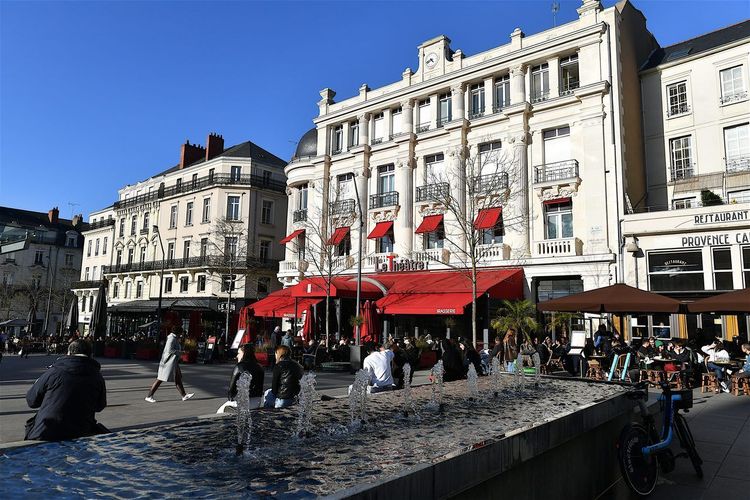
With ten such different neighborhoods in Angers, the question is not "which is the best neighborhood in Angers" but "which one suits your situation." Here is a quick reference guide.
If you are a student, Belle-Beille and Saint-Serge - Ney - Chalouère remain the logical choices: campus on your doorstep, a dense student housing offer, and a direct tram connection. Belle-Beille wins on price and for science students; Saint-Serge is better for law, economics, and proximity to the center. Students at the UCO or the ESA will be better off looking toward les Justices.
For a family, la Roseraie and Justices - Madeleine - Saint-Léonard come out on top: schools, green spaces, peace and quiet, and a more manageable budget than the hypercentre. Hauts-de-Saint-Aubin and Lac de Maine also appeal to families who prioritize new-build housing or a natural setting.
A working professional who frequently takes the train would do well to target La Fayette or Éblé, just a few minutes from the Saint-Laud station, or the hypercentre if the budget allows and nightlife matters.
Finally, if you are above all looking for peace and quiet, Deux-Croix - Banchais, Monplaisir, and a large part of la Roseraie are among the least lively and least sought-after neighborhoods in Angers. These are not neighborhoods to avoid, as some investment-oriented guides imply — simply areas that live at a different pace.
In any case, walk through the neighborhood at the times that matter to you — early in the morning, in the evening, on a Sunday — before signing anything.
Where to Stay in Angers to Visit the City in 2 or 3 Days
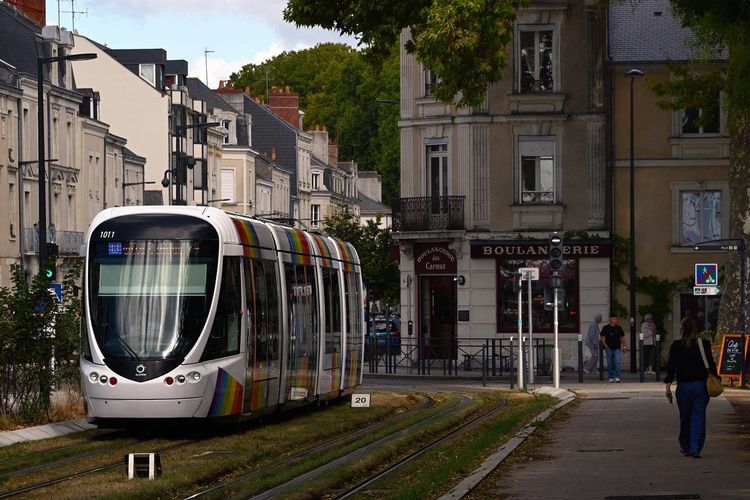
For a short stay, the question is framed differently. The goal is to walk as little as possible between visits and to enjoy the terraces in the evening: Centre-Ville - La Fayette - Éblé remains by far the most practical base, especially around the train station if you are arriving by TGV from Paris, which takes approximately 1h30. La Doutre comes a close second if you prefer a quieter setting without losing walking access to the monuments.
Angers is well suited to a two-day visit focused on the château, the cathedral, and la Doutre, or a three-day trip adding Lac de Maine, Terra Botanica, or the musée Jean-Lurçat. To refine your itinerary, our guides cover both formats: visiting Angers in 2 days for the essentials, visiting Angers in 3 days to go deeper.
Wherever you stay in the center, walking remains the best way to move from one neighborhood to the next. With over twenty audio stops spread across 5.6 km, the Ryo guided walk links the historic center to la Doutre in a loop: start from the stop closest to your hotel, with no time slot to book.
Experiencing Angers for a weekend also means understanding why it is nicknamed "the green city": between the Jardin des Plantes, the jardin du Mail, the banks of the Maine, and the étang Saint-Nicolas, even a stay concentrated on the center leaves time to breathe between two museums.
FAQ
How many neighborhoods does Angers have?
Angers officially has ten neighborhoods: Centre-Ville - La Fayette - Éblé, Doutre - Saint-Jacques - Nazareth, Belle-Beille, Roseraie, Justices - Madeleine - Saint-Léonard, Saint-Serge - Ney - Chalouère, Lac de Maine, Monplaisir, Deux-Croix - Banchais, and Hauts-de-Saint-Aubin. Each includes several sub-neighborhoods recognized by local residents.
Which is the most pleasant neighborhood to live in in Angers?
It all depends on your profile: la Doutre for historical charm, la Roseraie or les Justices for a quiet family life, La Fayette and Éblé for proximity to the train station. There is no single answer, only different priorities.
Where should I stay in Angers to visit the city in a few days?
Centre-Ville - La Fayette - Éblé remains the most convenient base, within walking distance of the château, the cathedral, and la Doutre. La Doutre itself is a good alternative, quieter in nature.
Which is the student neighborhood in Angers?
Belle-Beille, which hosts the main campus with over 15,000 students, remains the student neighborhood par excellence. Saint-Serge, with its faculty of law, economics, and management, and les Justices, home to the UCO, round out the offer.
Which are the quietest or least lively neighborhoods in Angers?
Among the quietest neighborhoods in Angers, Deux-Croix - Banchais, Monplaisir, and a large part of la Roseraie stand out: far from the hustle of the city center, they still offer a genuine local community life. Justices - Madeleine - Saint-Léonard is also well known for its peaceful atmosphere.
Is Angers a pleasant city to live in?
Yes, with nuances depending on the neighborhood. Nicknamed "the green city," Angers combines a dense historic center, numerous green spaces (Lac de Maine, étang Saint-Nicolas, Jardin des Plantes), and a network of three tram lines that makes most neighborhoods accessible without a car.
Ten neighborhoods, ten different speeds: that is the best way to sum up what Angers has to offer. The center concentrates heritage and activity, la Doutre preserves the charm of a slower era, Belle-Beille and Saint-Serge live to a university rhythm, while la Roseraie, les Justices, and Monplaisir move along quietly, far from the tourist radar. None is the best in absolute terms, only the most suited to what you are looking for.
To get to know the city, nothing beats walking. In 2h15, the Ryo audio-guided tour of Angers takes you from the château to the cathedral and then to la Doutre, at your own pace, with stories that bring every façade to life. The perfect way to turn a first visit into a genuine neighborhood-by-neighborhood discovery.
À lire également