
Créé par Romane, le 4 oct. 2026
Votre guide Ryo
Ottawa, Canada
Setting course for Canada's capital
Parcours audioguidé pour visiter Ottawa en 1 jour
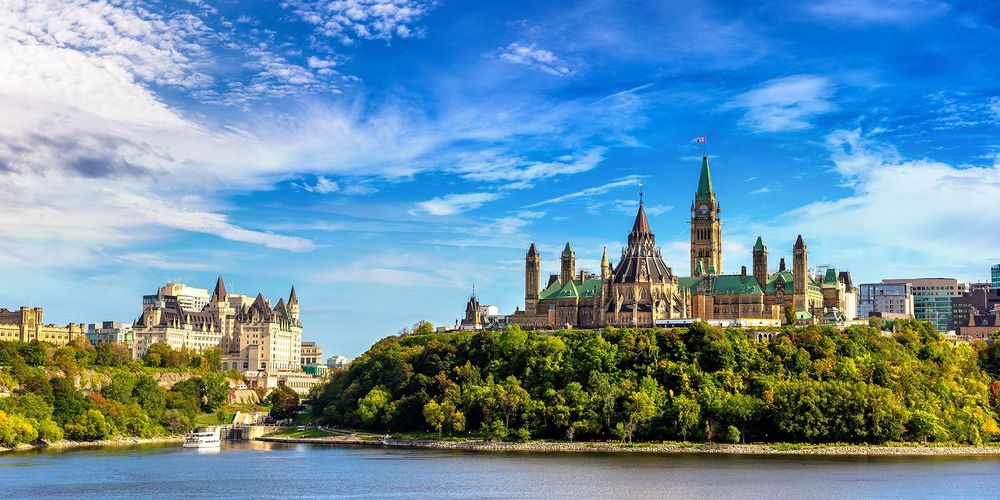
The capital of Canada, Ottawa charms with its major institutions and elegant architecture, dominated by Parliament. With its diverse neighborhoods and both Francophone and Anglophone influences, the city presents a character that is both political and welcoming.
Quand partir à Ottawa ?
Jan.
-10°
7
Feb.
-8°
6
March
-2°
8
April
7°
10
May
15°
11
June
20°
11
July
23°
10
Aug.
22°
10
Sept.
17°
9
Oct.
10°
9
Nov.
3°
10
Dec.
-6°
9
The best time to visit Ottawa is between June and September, when temperatures are mild and the city enjoys long hours of sunshine. The coldest months are December and January, with temperatures most often below freezing, sometimes dropping as low as -15°C. During winter, daylight lasts only a few hours each day, and snowstorms are not uncommon. It is therefore recommended to wait until late spring to visit Ottawa.
Départ conseillé
No need to worry about where to begin! Our tours are designed as a loop, so you can jump in wherever you are. The navigation system and audio-guide will automatically adjust to your location. However, if you happen to be nearby, we do have a preferred starting point: In front of the CityHall
Parking à proximité
Ottawa City Hall Parking, 110 Laurier Avenue West
Careful, many underground parkings close at 6 or 7pm in Ottawa. It can even be earlier, so make sure that where you park stays open, or that you don't need to take the car back again at night.
À savoir
The currency used in Ottawa is the Canadian dollar.
Découvrez 26 lieux d'intérêt pour visiter Ottawa




















Le plein d'inspirations
Explorez le monde en totale liberté, à pied au cœur des villes ou au fil des routes. Nos guides audios transforment chaque destination en une découverte culturelle immersive et unique.





FAQ for visiting Ottawa
When is the best time to visit Ottawa?
The ideal time to discover Ottawa runs from June to September. During these months, you'll enjoy pleasant temperatures and long sunny days, perfect for exploring the Canadian capital. Summer lets you fully appreciate the green spaces, terraces and the many open-air festivals. The winter months, particularly December and January, are very harsh, with temperatures often below freezing that can drop as low as -15°C. The days are short and snowstorms are frequent. Spring remains unpredictable, with temperatures still on the cool side. So if you're looking for the best conditions for your stay, opt for late spring and summer.
How many days do you need to visit Ottawa?
For a first visit to Ottawa, ideally plan on three to four days. This will give you enough time to comfortably explore the major attractions such as Parliament Hill, the national museums and the city's various neighbourhoods. In two days, you can see the essential landmarks, but at a rushed pace. With a week, you'll have the leisure to discover Ottawa in greater depth, explore its markets, venture into the less touristy neighbourhoods and perhaps even take a trip across the river to Gatineau. The Ryo audioguide helps you make the most of your time with routes tailored to the length of your stay.
How do you get around Ottawa?
Ottawa has an efficient public transit system run by OC Transpo, comprising buses and the O-Train light rail. The city centre is relatively compact and easy to explore on foot, especially around Parliament Hill and the ByWard Market. For longer distances, the bus network serves the whole city well. Taxis and ride-sharing services are also available. In summer, cycling is an excellent option thanks to the many bike paths and the bike-sharing system. In winter, public transit remains your best option for avoiding the difficulties of snow and cold.
What can you do in Ottawa in winter?
Winter turns Ottawa into a true winter wonderland offering unique activities. The Rideau Canal usually becomes the world's longest natural skating rink, where you can skate for several kilometres. The national museums, such as the Canadian Museum of History or the National Gallery of Canada, offer a warm cultural refuge. Winterlude, the city's iconic winter festival, enlivens the town with ice sculptures and family activities. Winter sports enthusiasts can enjoy cross-country skiing in the urban parks or head to the nearby Gatineau Hills. Don't forget to try BeaverTails, local pastries that are especially comforting in cold weather.
What languages are spoken in Ottawa?
Ottawa perfectly reflects Canadian bilingualism, with English and French as official languages. Located on the border between anglophone Ontario and francophone Quebec, the city has a large bilingual population. You'll find that most government and tourist services are offered in both languages. In everyday life, English predominates slightly, but French remains very present, particularly in certain neighbourhoods and in interactions with federal employees. This linguistic duality enriches the city's cultural experience. International visitors will generally have no difficulty communicating in English, while French speakers will also feel at ease.
What are the main neighbourhoods to visit in Ottawa?
Ottawa is made up of distinct neighbourhoods, each offering a unique atmosphere. The city centre, dominated by Parliament Hill, is home to the government institutions and the major museums. The ByWard Market, a lively historic district, is packed with restaurants, shops and nightlife. The Glebe draws visitors with its charming Victorian houses and independent shops. Westboro appeals to trendy visitors with its cafés and fashionable boutiques. Little Italy celebrates the city's Italian heritage with excellent restaurants. Chinatown offers an immersion in Asian culture. The Ryo audioguide takes you through these different neighbourhoods, revealing their stories and secrets along commented routes tailored to your interests.
Can you explore Ottawa on foot?
Ottawa lends itself wonderfully to exploration on foot, particularly in the city centre where the main attractions are concentrated. From Parliament Hill to the ByWard Market, taking in the Rideau Canal and the national museums, you can easily explore the must-sees on foot. The distances remain reasonable and the sidewalks are well laid out. The city also has many pedestrian paths along the rivers offering pleasant walks. To make the most of your exploration, the Ryo audioguide offers commented walking itineraries that guide you through the iconic sites while sharing anecdotes and historical context. This approach lets you discover Ottawa at your own pace without missing any point of interest.
Which museums are worth visiting in Ottawa?
As befits a capital, Ottawa gathers the country's major national institutions. The National Gallery of Canada, recognisable by its glass nave and the huge bronze spider standing outside the entrance, holds remarkable Canadian and Indigenous collections. The Canadian Museum of Nature occupies a neo-Gothic building that looks like a castle and is a firm favourite with families, while the Canadian War Museum offers a restrained and powerful journey through the country's military history.
Directly opposite, on the far bank of the Ottawa River, the Canadian Museum of History unfolds millennia of stories beneath a spectacularly curved roof, with one of the finest views of Parliament Hill. Anyone keen on technology will happily round off the list with the museums devoted to aviation, agriculture or science, further out but served by public transport.
What is there to see on Parliament Hill in Ottawa?
Perched above the Ottawa River, Parliament Hill lines up neo-Gothic buildings dominated by the Peace Tower and its carillon, whose bells punctuate the day. In front of the main entrance burns the Centennial Flame, ringed by the emblems of the provinces and territories; in summer, the changing of the guard takes place on the lawn in the late morning, in a highly photogenic setting.
The lawns at the back offer an open walk along the cliff, with views over the river, the Rideau Canal locks and the Quebec shore. Tours of the interior are available depending on how the major restoration works are progressing, so it is best to check once you are there. The Ryo audio guide offers a dedicated Ottawa route linking the hill to the surrounding neighbourhoods.
Which local specialities should you taste in Ottawa?
The city's most emblematic treat is the beaver tail, a piece of fried dough stretched into a paddle shape and topped with cinnamon sugar or chocolate, invented here and sold near the Rideau Canal. Poutine, chips smothered in cheese curds and brown gravy, remains a must, and maple syrup turns up in sweet products in every shop.
Ottawa is also known for its shawarma counters, the legacy of a sizeable Levantine community, found more or less everywhere in the centre. To sample all of this in one place, the ByWard Market brings together farmers' stalls, bakeries, local breweries and restaurants, with seasonal produce such as berries in summer or squash in autumn.
Vos commentaires, idées et suggestions
Aucun avis pour le moment