© Shutterstock
 Votre guide Ryo
Visit Angers in 1 Day: The Complete Itinerary for 2026
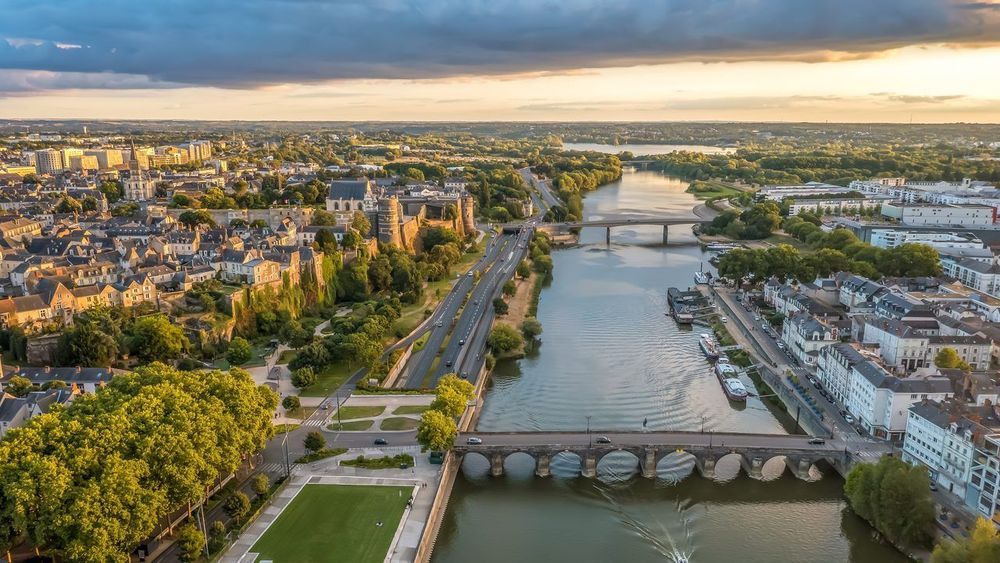
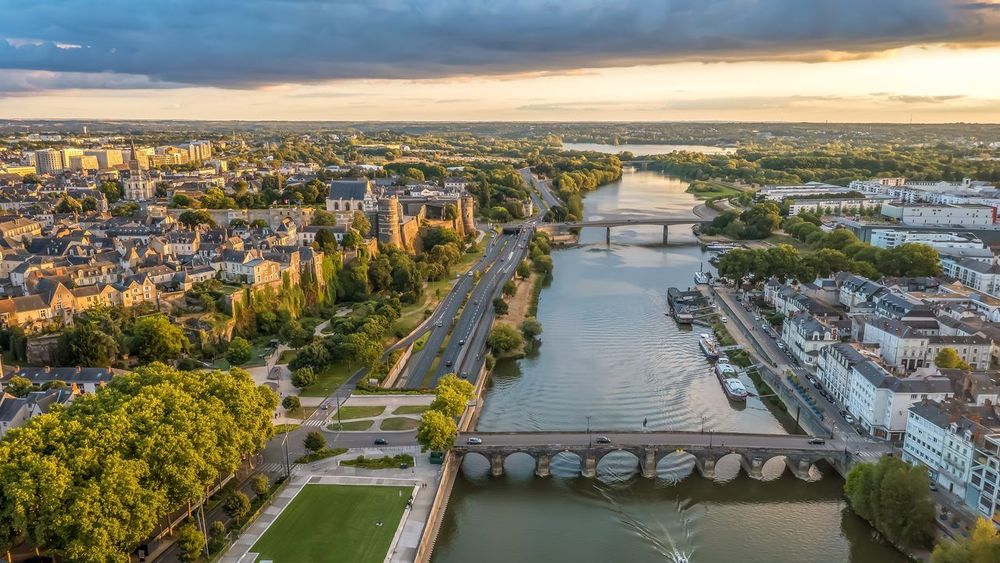
In Angers, a castle of black schist and white tuffeau has watched over the Maine for eight centuries, and inside sleeps the largest medieval tapestry preserved in the world — a hundred metres of wool woven more than six hundred years ago. That is where you should start your visit to Angers in 1 day, before the city fully wakes up and the half-timbered lanes of the Cité fill with people. The Ryo audio guide tour of Angers follows exactly this thread: 22 audio stops and 5.6 kilometres on foot to connect the key sites without losing time between visits, with stories in the background that a paper guide never tells.
In one well-paced day, you can take in seventeen medieval towers striped with white limestone, a tapestry of more than one hundred metres woven in the 14th century for a Duke of Anjou, a 12th-century hospital converted into a museum of contemporary tapestry, and a botanical garden redesigned by Édouard André around a Romanesque church. Angers can be crossed on foot in about twenty minutes from one end to the other — an advantage few cities of this size can claim, and one that makes all the difference when fitting so many sites into a single day without ever rushing. Add to that a cuisine deeply rooted in the region, from confit rillauds to warm fouées, and you have a stop that deserves far more than a quick layover between two trains. Here is how to organise this day, hour by hour, without missing anything essential.
The Château d'Angers and the Tapestry of the Apocalypse
Start early, at opening time if possible: the site attracts crowds by late morning, and the full visit, tapestry included, easily takes an hour and a half to two hours if you take your time. It is also the most frequently cited attraction in every guide to the city, and for good reason: nowhere else in Angers concentrates so much history in a single location.
The Château d'Angers and Its 17 Schist Towers
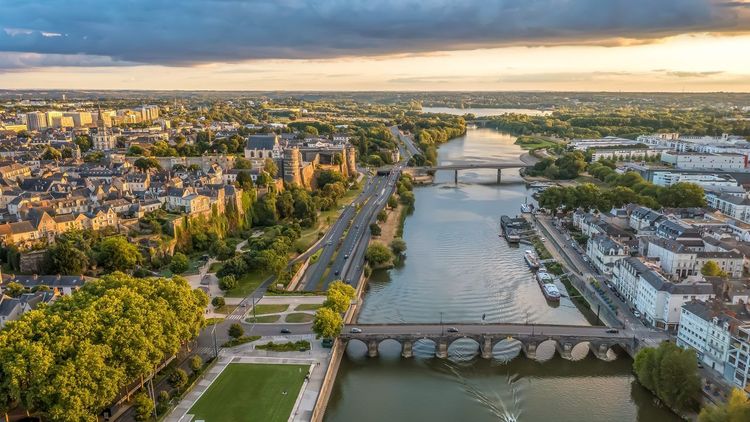
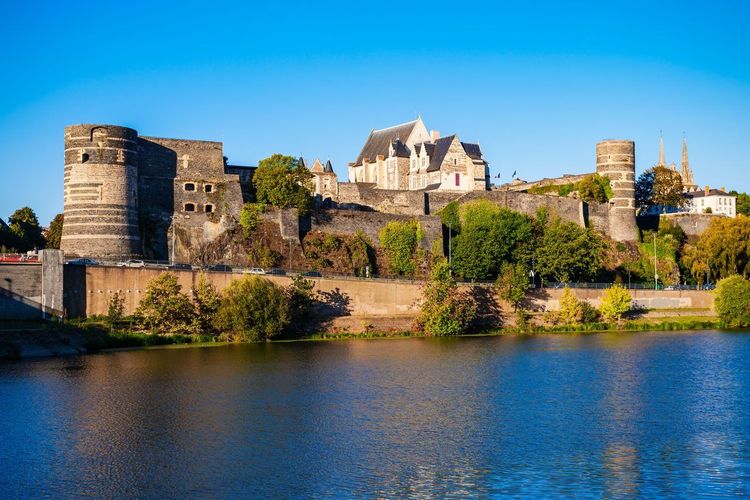
The Château d'Angers (2 Promenade du Bout du Monde, 49100 Angers, rated 4.5/5 on Google with 19,512 reviews) dominates the Maine from a rocky spur, with its seventeen towers of bluish schist striped with beds of white limestone — a deliberate interplay of materials chosen by Blanche de Castille and her son Louis IX in the 1230s to assert Capetian power over an Anjou that was then fiercely contested. The ramparts encircle a vast esplanade, while at the foot of the walls the former moats — never filled with water on the city side — today accommodate gardens and lawns.
You climb the wall walk and then to the top of the Tour du Moulin, which the monument itself describes as "the finest panorama of Angers", to take in the lower city and the Maine valley — a viewpoint that immediately reveals the topography of the city, wedged between the river and the hillsides. On the way back down, you pass through the inner courtyard where the 15th-century chapel and the royal lodgings still stand, two buildings more discreet than the ramparts but telling of daily life at the Angevin court. Full-price admission costs 11 euros, free for under-26s residing in the European Union and for everyone on the first Sunday of the month. If you also plan to visit the Jean-Lurçat Museum in the afternoon, the "Pass Tapisserie" at 15 euros covers both sites.
Online ticketing helps avoid queuing in high season — a detail that genuinely matters when you only have one day to see everything. If you are visiting with children, note that the wall walk does not always have very high guardrails: it is worth keeping a close eye on young ones at the top of the ramparts. This first stop sets the tone for the whole day: in Angers, history is not contemplated from a distance behind glass — it is walked through, climbed, and followed along its edges.
The whole spirit of the Ryo audio guide tour lies in this idea: you start at the foot of the ramparts, listen to the story of the castle and its royal fortress, then 22 audio stops mark out the historic centre over 5.6 kilometres.
The Tapestry of the Apocalypse, a Medieval Masterpiece
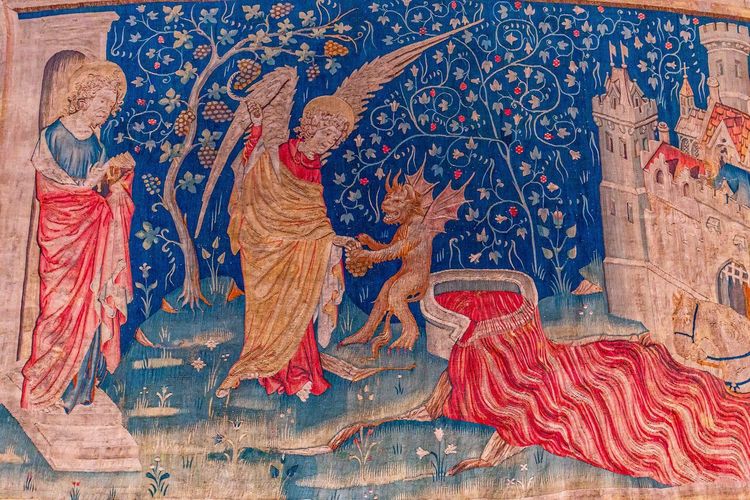
Inside the ramparts, a gallery built in 1954 by architect Bernard Vitry houses the Tapestry of the Apocalypse, woven between approximately 1373 and 1382 for Louis I of Anjou by the Parisian workshop of Nicolas Bataille, based on cartoons by Hennequin de Bruges, court painter to King Charles V. It is the largest ensemble of medieval tapestries preserved anywhere in the world: originally around 140 metres long, divided into six pieces each roughly twenty metres wide and 4.5 metres tall. About one hundred metres survive today.
The scenes illustrate the Apocalypse of Saint John with a graphic intensity that is quite striking for a late 14th-century religious text: seven-headed dragons, herald riders, angels sounding the trumpet of judgement, collapsing cities. Take the time to read the explanatory captions — interpreting the scenes is not always intuitive, and certain narrative details are easily missed within the sheer scale of the whole if you move through too quickly.
The tapestry had a turbulent history: cut up during the Revolution, it was used to protect orange trees from frost or to cover horses, before being painstakingly reassembled from 1848 onwards by Canon Joubert. This chaotic trajectory explains why certain scenes are missing. The story is still unfolding: around thirty fragments discovered at a Parisian dealer's in 2020 joined the collections in 2021. A thorough, attentive visit to this gallery takes around 45 minutes, bringing the total visit to the site, castle included, to nearly two hours.
Cathédrale Saint-Maurice and the Heart of the Historic Cité
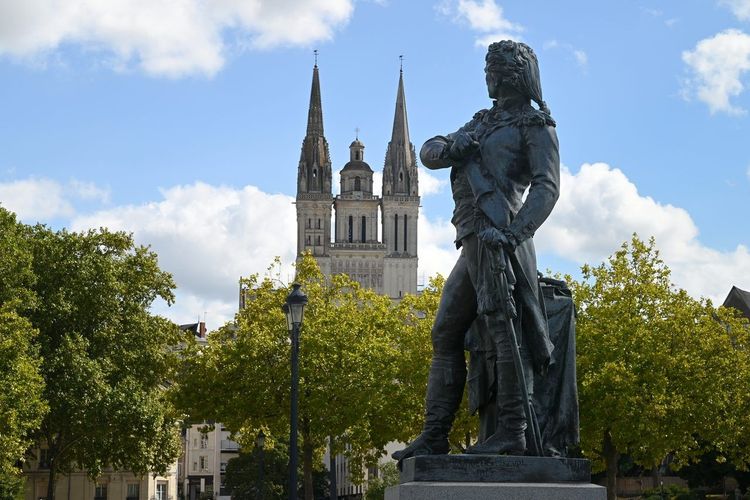
Leaving the castle, head up towards the Cité, the oldest district of Angers, perched on the hill overlooking the Maine and retaining its medieval street layout almost entirely intact.
Cathédrale Saint-Maurice and Its View over the Maine
The Cathédrale Saint-Maurice is recognisable from afar by its two twin towers flanking a third central tower added during the Renaissance — a silhouette you will spot from the quays. The building is the most iconic example of Angevin Gothic, also known as Plantagenet Gothic, a regional variant that spread throughout western France. The single nave, 16.4 metres wide (as wide as Chartres) without a single intermediate pillar, impresses with its technical feat from the mid-12th century: domed vaults whose keystone rises far higher than the arches, set upon existing Romanesque walls.
Inside, the stained glass spans eight centuries of production, from the 12th to the 20th century, with the transept rose windows made in 1451 by master glazier André Robin, which catch the light particularly well in late morning. Admission is free, making it a quick, cost-free stop to slot between two paid visits. Allow 20 to 30 minutes to look around at a leisurely pace, then head down the Montée Saint-Maurice for the view over the Maine.
The Maison d'Adam and the Half-Timbered Lanes
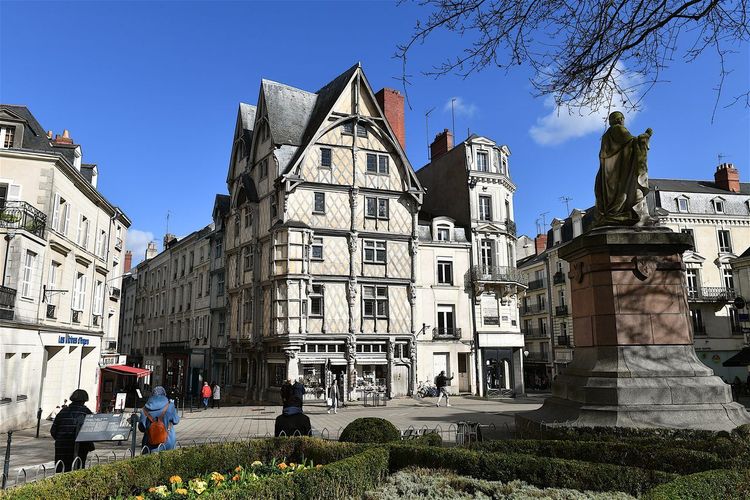
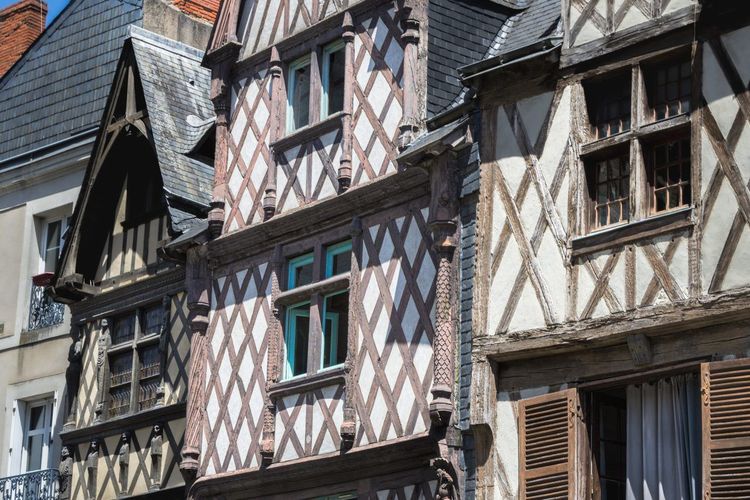
Just nearby, on Place Sainte-Croix, the Maison d'Adam (1 Place Sainte-Croix, 49100 Angers, rated 4.7/5 on Google with 734 reviews) draws all eyes with its late 15th-century half-timbered façade, the most photographed in the city. Its name comes from the tree of life carved at the corner of the building, once flanked by statues of Adam and Eve: destroyed during the Revolution, they were replaced by copies. Look up at the carved posts depicting figures — some decidedly bawdy — which give the façade all its flavour.
From there, let yourself drift through the cobbled lanes of the Cité: Rue Saint-Aignan, Rue Saint-Laud, Montée Saint-Maurice. Half-timbered façades follow one after another, some visibly leaning with age, and the signs of craft workshops give the neighbourhood a character found nowhere else in the city centre. Along the way you will pass several hôtels particuliers from the 16th and 17th centuries, now converted into shops, whose inner courtyards are sometimes still visible from the street.
The same Ryo audio guide tour then winds you through these lanes, with stories about the cathedral and the half-timbered houses told directly in your ears, without having to search for an information panel or consult a map.
Lunch Break: Angevin Cuisine
Around 1 p.m., the historic centre lends itself particularly well to a break. Angevin cuisine is worth lingering over — it goes well beyond the dishes of the neighbouring Loire and has its own specialities found nowhere else.
Try the rillauds, pieces of pork belly slow-cooked then browned in the oven, usually served warm with a salad and a touch of wholegrain mustard. Fouées, small puffed breads baked in a wood-fired oven that you split open and fill with rillettes, goat's cheese, or homemade jam, are found at several addresses in the historic centre and make for a convivial, affordable lunch, typically around 12 to 16 euros for a set menu. All of this pairs nicely with a glass of Rosé d'Anjou or a well-chilled Savennières, two appellations produced less than 20 kilometres from the city centre and found on almost every restaurant menu in the Cité.
If you prefer a quicker break, the streets around the Place du Ralliement and Rue Saint-Laud are full of bakeries and tea rooms where you can easily grab a set menu in under 30 minutes — handy when the afternoon programme is still packed. For those with a sweet tooth, don't leave without trying Cointreau, the house founded in Angers in 1849 (the famous orange liqueur dates from 1875) and still distilled in Saint-Barthélemy-d'Anjou, on the outskirts of the city: several patisseries in the centre incorporate a hint of it into their cakes, sometimes even in a filled chocolate sold individually. You'll find more addresses and local specialities in our Ryo article on Angers's culinary specialities, useful if you'd rather put together your own food-lover's route than follow ours to the letter.
The Musée des Beaux-Arts and the Galerie David d'Angers
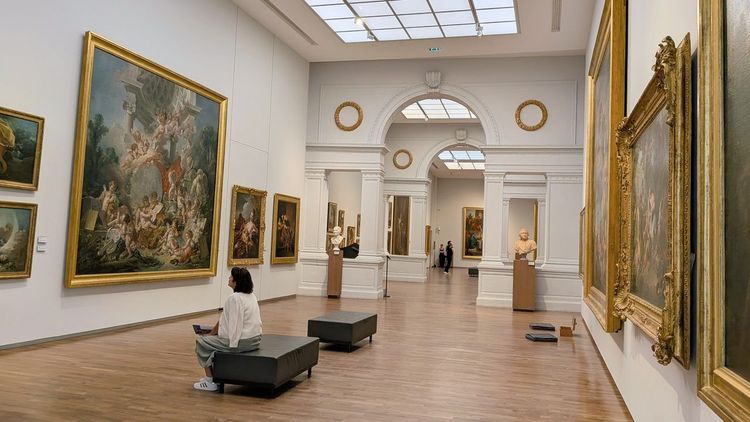
The afternoon begins gently, in two cultural institutions five minutes' walk apart that complement each other well: painting on one side, sculpture on the other.
The Musée des Beaux-Arts and Its Collections
Housed in the Logis Barrault, a late 15th-century mansion reopened in 2004 after five years of renovation, the Musée des Beaux-Arts displays collections spanning the Middle Ages to contemporary art across three distinct levels. You will encounter Ingres, Watteau, Chardin's still lifes, and Fragonard's spectacular "Corésus et Callirhoé", as well as a section devoted to the history of Angers, from the earliest Neolithic traces and the Gallo-Roman city of Juliomagus (mosaics, ceramics, funerary sculptures) through to contemporary urban projects.
A full visit easily takes an hour to an hour and a half if you go through all the rooms attentively, but you can also do a quick 30-minute pass by focusing on the medieval and Renaissance collections, the densest and most characteristic of the tour. Admission is 6 euros, free for under-26s. A little-known tip: Angers's municipal museums are free for everyone from 5 p.m. to 6 p.m., and the "discovery ticket" at 12 euros gives access to all six city museums.
Through the 22 stops of the Ryo audio guide tour, you also begin to understand how Angers built its reputation as a city of art — a thread the audio weaves between the castle, the cathedral, and the museum quarter.
The Galerie David d'Angers and Its Sculptures
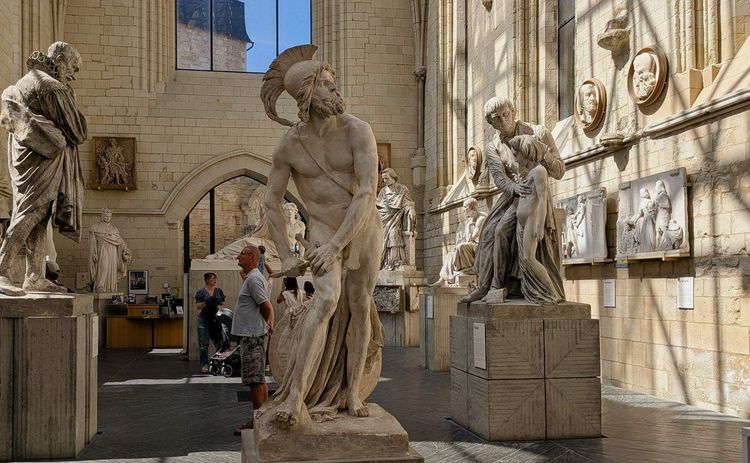
A few streets away, the former Toussaint abbey church, deconsecrated during the Revolution and then covered with a contemporary glass roof in the 1980s to protect it, houses the Galerie David d'Angers (33bis Rue Toussaint, 49100 Angers, rated 4.7/5 on Google with 1,022 reviews). Here you discover the work of the sculptor born in the city in 1788, Pierre-Jean David, known as David d'Angers, celebrated for his portrait medallions and monumental statues scattered across France, from the Paris Panthéon to the public squares of several major cities.
The natural light filtering through the glass roof shows the original plaster casts to particular advantage — often more expressive and more alive than the definitive bronzes found elsewhere in public spaces. Admission is 4 euros (included in the discovery ticket); allow 30 to 45 minutes for an attentive visit. It is a less well-known stop than the castle, but it offers a rare glimpse into the work of a 19th-century sculptor, with tools and plaster moulds displayed alongside the finished pieces, almost like an open studio.
The Doutre District: Collégiale Saint-Martin and Contemporary Tapestry
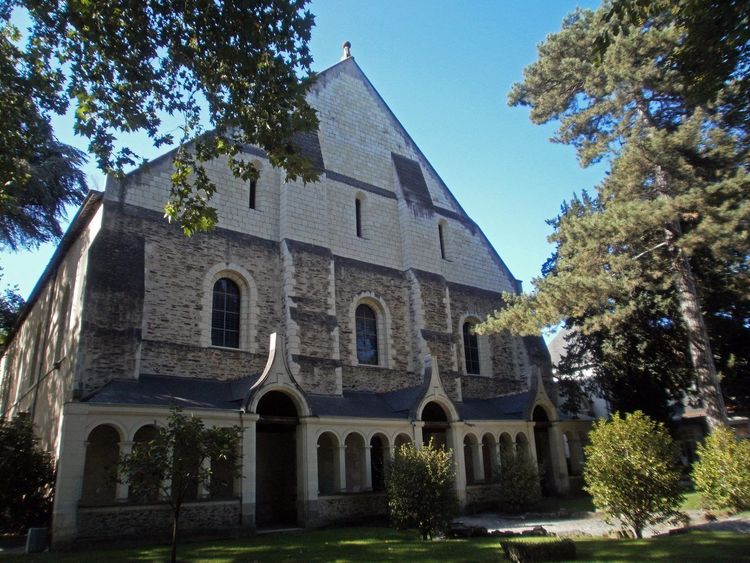
Cross the Maine via the Pont de Verdun to reach the Doutre — literally "beyond the Maine" — a district that long lived apart from the comital power established on the hill opposite, and which has preserved a more working-class urban fabric, with its own half-timbered houses clustered around the Place de la Laiterie.
The Collégiale Saint-Martin, a Gem of Angevin Romanesque Art
Before crossing the river, a detour is in order to the Collégiale Saint-Martin, one of the oldest religious buildings in western France: from the first Christian constructions of the 5th–7th centuries to the Romanesque rebuilding of the 10th–11th centuries, then the Angevin Gothic choir, each era has left its mark. Owned by the Département since 1986 and deconsecrated in 2006, it became a cultural venue, and its Carolingian crypts offer a rare reading of the successive layers of a single building.
Don't miss the Chapelle des Anges and its polychrome sculptures, nor the collection of stone statues spanning the 8th to the 17th century. The visit takes 20 to 30 minutes — an easy halt to fit in without disrupting the rest of the programme.
The Musée Jean Lurçat and Contemporary Tapestry
Once across the Maine, the Musée Jean Lurçat et de la Tapisserie Contemporaine (4 Boulevard Arago, 49100 Angers, rated 4.7/5 on Google with 1,411 reviews) occupies the former Hôpital Saint-Jean, founded in 1174 and considered one of the oldest hospital buildings still standing in France, in use as a hospital until 1854. The patients' ward, with its ribbed vaults supported by slender limestone columns, has housed since 1967 the Chant du Monde, a monumental tapestry in ten pieces woven by Jean Lurçat as a direct response to the medieval Apocalypse seen that morning at the castle.
This pairing of the two tapestries — one from the 14th century, the other from the 20th — gives the day a particular depth: two artists, separated by nearly six hundred years, each answering in their own way the same questions about the end of the world, destruction, and the hope that persists in spite of everything. Jean Lurçat himself described the shock he felt on first encountering the medieval tapestry in 1938, which makes visiting both sites on the same day especially coherent.
Allow 45 minutes to an hour for the visit; admission is 6 euros (or included in the Pass Tapisserie taken that morning at the castle). A section of the Ryo audio guide tour crosses the Doutre on foot in about twenty minutes, between half-timbered houses, the collegiate church, and the former hospital — handy if you prefer to have the history told to you rather than deciphering it from panels as you walk.
Gardens and Parks: Jardin des Plantes, Parc Balzac, and Jardin du Mail
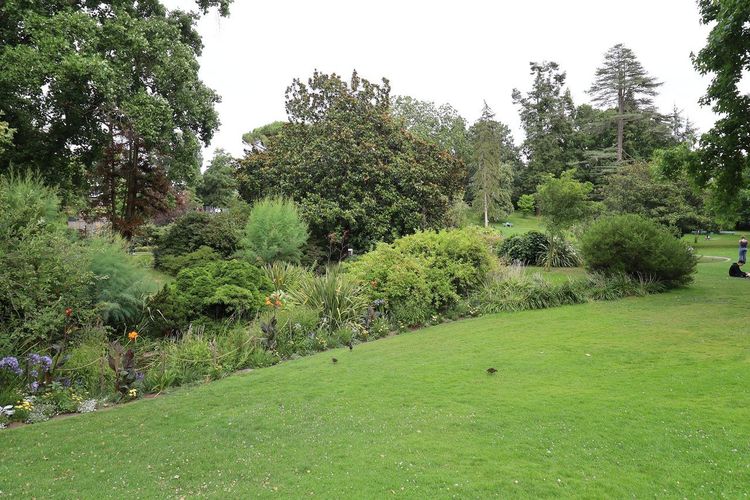
After a day packed with heritage visits, a breath of fresh air is welcome before picking up the pace again for the end of the day.
The Jardin des Plantes, the City Centre's Green Lung
To the north-east of the centre, about ten minutes' walk from the Place du Ralliement, the Jardin des Plantes of Angers spreads its 4 hectares of lawns, cascades, and statues. Created in 1742 for the faculty of medicine, moved here in 1789, then redesigned between 1901 and 1905 by landscape architect Édouard André, it is home to remarkable trees (paulownia, ginkgo biloba, sweetgum) and, at its centre, the Romanesque church of Saint-Samson, which served as an orangery in the 19th century. It is a favourite spot among the people of Angers themselves for picnicking or simply sitting on a bench between appointments, far from the tourist bustle of the historic centre.
If you are following the Ryo audio guide tour, its 2h15 of walking and listening goes down better with a real break: this garden, with its ducks and swans, is the perfect place to catch your breath before heading back into the centre.
Parc Balzac and the Jardin du Mail
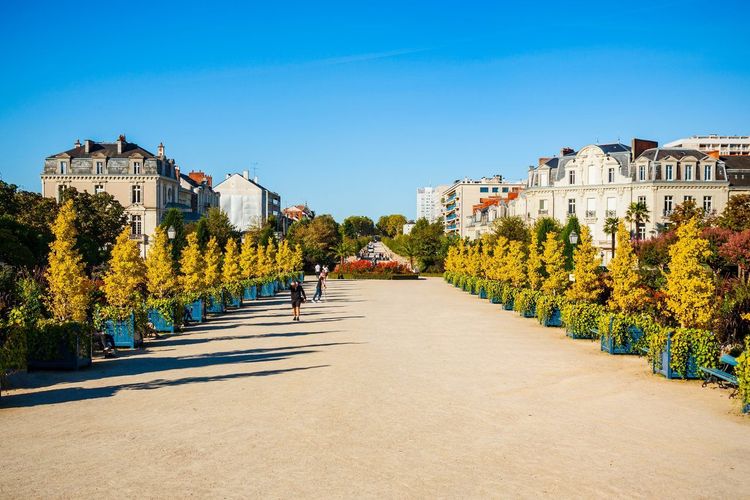
If time allows, two other green spaces are worth a quick detour in the late afternoon. Parc Balzac, to the south-west of the centre along the Maine, is a large natural space of wet meadows and walking paths, perfect for a stroll or a run away from the traffic. The Jardin du Mail (Place du Mail, 49100 Angers, rated 4.4/5 on Google with 1,374 reviews), a stone's throw from the town hall, takes the opposite approach with its formal French-style layout, flowerbeds, bandstand, and large fountain — a very urban setting for a sunny afternoon break.
The Mail fits easily into your city-centre itinerary; Parc Balzac, further out, requires about twenty minutes' walk from the station and is best saved for days when you have time to spare.
Strolling the City Centre: Shops and Street Art
In the late afternoon, the pace can slow down. Rue Saint-Laud (49100 Angers) and its surroundings concentrate most of the independent shops in the centre: concept stores, local designers' studios, antiquarian bookshops tucked between newer premises, without the street ever quite losing its pedestrian, lively character.
Angers also has a genuine taste for street art, something you might not expect in a city so attached to its medieval heritage. Several façades in the centre and neighbouring districts carry murals, some covering an entire gable end. Spotting these works as you walk, without a fixed route and simply by looking up at random streets, gives a different reading of the city — more contemporary, in stark contrast with the heritage seen that morning.
This is also the right moment for a light snack break — a coffee on a terrace at the Place du Ralliement, or a pastry to take away before the final stretch of the day. The people of Angers often call this square the beating heart of the city, and sitting there for ten minutes at the end of the day, watching the trams go by and the terraces fill up, makes it easy to understand why.
Going Further: Terra Botanica and the Surroundings of Angers
If you are extending your stay beyond one day, or travelling with children and looking for an alternative to built heritage, two options are worth knowing about before you go.
Terra Botanica, the Plant-Themed Park
About fifteen minutes by car from the city centre, on the former Angers-Avrillé aerodrome, Terra Botanica (Route d'Épinard, 49000 Angers, rated 4.5/5 on Google with 17,692 reviews) bills itself as Europe's first park dedicated to the plant world. Opened in April 2010, it spreads across some twelve visitable hectares divided into five themed areas. Greenhouses, themed gardens, shows, and gentle attractions designed for families: the park can be visited in half a day, making it more of an extension to plan separately than a stop to bolt onto the historic centre on an already full day.
Adult admission costs around 17.50 to 22 euros online depending on the date (tickets are dated and cheaper when booked more than 7 days in advance); plan to give it a full day rather than an afternoon carved out of your city-centre programme, at the risk of rushing everything. Our dedicated article details the attractions and tips for Terra Botanica if you are considering this extension for a second day.
Vineyards and Châteaux around Angers
The Anjou wine country begins virtually on the city's doorstep. In less than 30 minutes by road, you reach Savennières and its dry white wines, rated among the finest on the Loire, or Rochefort-sur-Loire, the starting point for the Coteaux du Layon appellation known for its sweet wines. The small village of Béhuard, built on a Loire island accessible via a road that floods during high water, is also worth the trip for its church clinging directly to the rock that dominates the village.
As for châteaux, the Château de Brissac, nicknamed the "giant of the Val de Loire" with its seven storeys, can be visited about twenty kilometres south of Angers. Further west, the Château de Serrant rounds off a circuit of châteaux reachable in a day from the city. For organising a multi-day excursion in the region, the Ryo road-trip tour dedicated to the Loire châteaux covers several of these sites with commented audio stops — a good base if Angers is just the first stage of your trip. You'll also find our selection of the most beautiful Ryo villages to discover around Angers to extend your exploration beyond the city itself.
Where to Stay and How to Get Around Angers
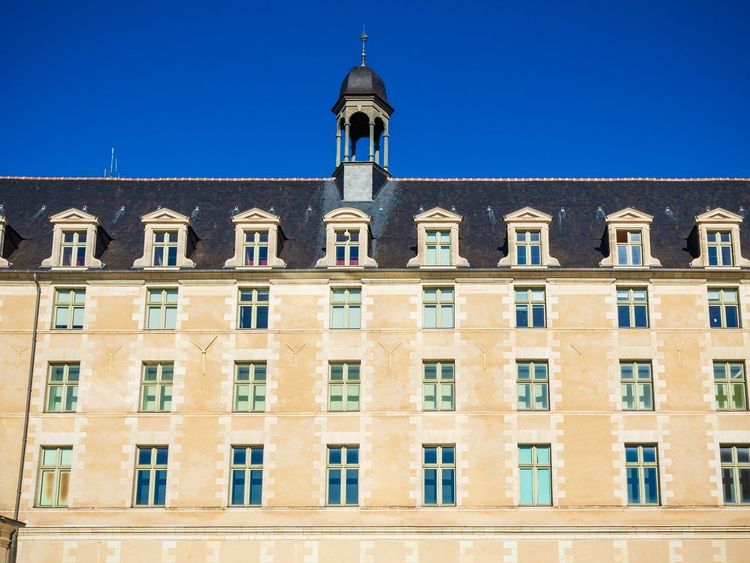
Angers remains a compact city, which greatly simplifies logistical decisions for a one-day visit, even if you don't know the neighbourhoods in advance.
Staying in or around the City Centre
For an overnight stop before or after your day of sightseeing, the Cité district and its immediate surroundings let you reach the castle and the cathedral on foot in under 10 minutes, at the cost of a budget that is generally higher than elsewhere in the city. The area around the station offers an interesting compromise, with direct tram access and often gentler prices, 10 to 15 minutes' walk from the historic centre depending on your pace. The Doutre, quieter in the evening once the shops have closed, suits those looking for a less touristy atmosphere while still being within walking distance of everything.
If you are thinking of turning this day trip into a longer stay, our Ryo guide to visiting Angers in 2 days details a complementary itinerary, with excursions that a single day simply does not allow you to fit into the programme.
Getting Around on Foot, by Bike, or by Tram
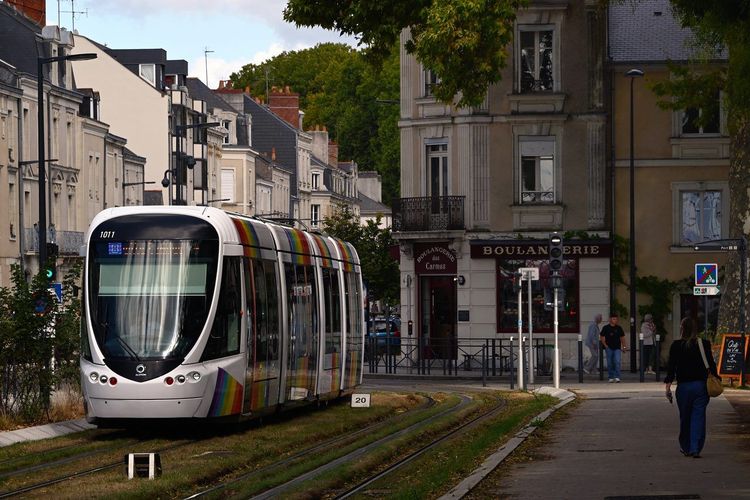
The city centre can be crossed on foot from one end to the other in about 20 minutes, making a car largely unnecessary for the typical day described in this article. The Irigo network has run three tram lines since lines B and C opened in July 2023: line C connects the Gare Saint-Laud to the Place du Ralliement in just a few minutes — handy when you're tired or caught in a sudden shower — and the new lines' routes include a detour through the Doutre. For greater distances, bike rental is a good option for reaching the banks of the Maine or Parc Balzac, especially since the Angers City Pass gives a 50% discount on rental.
Practical Info: Budget, Weather, and the Angers City Pass
A few key figures to plan your day without any nasty surprises once you arrive.
Budget and the Angers City Pass
Adding up the main paid sites of the day (castle 11 euros, Musée des Beaux-Arts 6 euros, Musée Jean-Lurçat 6 euros) and a lunch, budget between 35 and 55 euros per person, excluding accommodation. Two combined tickets reduce the bill: the Pass Tapisserie (15 euros, castle and Musée Jean-Lurçat) and the municipal museums discovery ticket (12 euros, six museums). Under 26? Most of the programme then becomes free.
The Angers City Pass, sold by the Destination Angers tourist office in 24h, 48h, and 72h versions (different rates in high season, April to September, and low season), opens the doors to 24 sites: the Château d'Angers, the Musée des Beaux-Arts and Jean-Lurçat, but also Terra Botanica, the Cointreau distillery, and the châteaux of Brissac, Serrant, and Plessis-Bourré. It also includes guided tours, a tasting at the Maison des Vins d'Anjou et de Saumur, a little-train ride, and a free left-luggage service. For a single day in the city, it is most worthwhile if you are doing guided tours back to back or adding an excursion — compare it against the combined tickets before you buy.
When to Go: Weather and Crowds
Angers enjoys a mild oceanic climate, with summers that are rarely stifling and winters moderated compared to the rest of France, including the nearby Paris region. Spring, between April and June, often offers the best compromise between mild temperatures and gardens in full bloom. Tourist crowds remain noticeably lighter than at Saumur or the major Loire châteaux nearby, except during big events such as the Festival Premiers Plans, dedicated to first European films, in January. On weekdays, arriving at the castle right at opening time is the quietest slot, and the municipal museums often empty out at the end of the day when admission becomes free between 5 p.m. and 6 p.m.
Sample Schedule Hour by Hour
- 9:30–11:30 a.m. – Château d'Angers and Tapestry of the Apocalypse.
- 11:45 a.m.–12:45 p.m. – Cathédrale Saint-Maurice, Maison d'Adam, and the lanes of the Cité.
- 1:00–2:00 p.m. – Lunch around the Place du Ralliement (fouées, rillauds).
- 2:15–3:45 p.m. – Musée des Beaux-Arts and Galerie David d'Angers.
- 3:45–5:15 p.m. – Collégiale Saint-Martin, crossing the Maine, and Musée Jean-Lurçat in the Doutre.
- 5:15–6:30 p.m. – Jardin des Plantes or Jardin du Mail, then a stroll along Rue Saint-Laud.
This thread follows the city's geography and minimises back-and-forth; the Ryo audio guide tour lets you cover it at your own pace, launching each audio once you have arrived at the relevant site.

FAQ
How much time do you need to visit Angers in one day?
A full day, from around 9:30 a.m. to 6:30 p.m., is enough to cover the castle and its tapestry, the cathedral, a museum of your choice, and the Doutre district with its collegiate church. If you add Terra Botanica or a wine excursion in the surrounding area, plan for two days instead so you don't rush and can enjoy each stop.
Do you need to book the Château d'Angers and the Tapestry of the Apocalypse in advance?
It's not mandatory in low season, but online ticketing helps you skip the queues in July–August and during school holidays. Admission costs 11 euros (free for under-26s residing in the EU and on the first Sunday of the month), or 15 euros including the Jean-Lurçat Museum via the Pass Tapisserie.
What is the Angers City Pass and is it worth it for one day?
It's a 24h, 48h, or 72h pass sold by the tourist office, giving access to 24 sites (castle, museums, Terra Botanica, Cointreau, nearby châteaux) with guided tours included. For a single day limited to the city centre, the Pass Tapisserie (15 euros) and the museum discovery ticket (12 euros) are often sufficient; the City Pass makes most sense if you add an excursion.
How do you get around Angers in one day without a car?
Mostly on foot: the historic centre can be crossed in about 20 minutes from one end to the other. Tram line C connects the station to the city centre in just a few stops, and bike rental is a great complement for reaching the banks of the Maine or more outlying neighbourhoods.
What is the best time to visit Angers?
Spring, from April to June, combines blooming gardens with still-manageable crowds at the main sites. Summer remains pleasant thanks to the region's oceanic climate, but draws more visitors around the castle and the cathedral, with longer queues more common during the middle of the day.
Where should you stay in Angers to extend your trip?
The Cité district puts everything within walking distance but is generally pricier than the rest of the city. The area around the station offers a good compromise between cost and transport access, while the Doutre appeals to those seeking a calmer atmosphere once night falls.
What can you do in Angers with children in one day?
Terra Botanica is the most family-friendly option, with its gentle attractions and immersive greenhouses to explore at their own pace. In the city, the castle ramparts and the monsters of the Tapestry of the Apocalypse often captivate younger visitors, and the Jardin des Plantes, with its ducks and swans, offers a welcome outdoor break between two more static visits.
Angers can be visited in a single day without ever feeling rushed, as long as you follow a geographical thread rather than zigzagging between sites on a whim. From the medieval castle to the Doutre and through the city-centre museums, each stop is just a few minutes' walk from the next, leaving time for a proper lunch break and a detour through the gardens at the end of the route.
For those who prefer to be guided without constantly consulting a map, the Ryo audio guide tour of Angers covers this complete itinerary in 22 commented stops, to follow at your own pace between the castle, the cathedral, and the Doutre, with all the stories told directly in your ear.
À lire également