© Shutterstock
 Votre guide Ryo
Hanoi in 3 Days: A Complete 2026 Itinerary
By 6am, Hoan Kiem Lake is already busy with tai chi groups, badminton games, and a few jet-lagged travelers wondering whether three days is really enough to see Hanoi. Planning Hanoi in 3 days works well, as long as you organize the walking by neighborhood rather than chasing every pagoda across town by taxi. Ryo's audio-guided tour of Hanoi follows roughly that logic, starting at the lake and working outward on foot while a narrator fills in what you're actually looking at.
This itinerary covers a city where a single bowl of pho carries a decades-old neighborhood rivalry, where a stretch of residential railway track known as Train Street doubles as a row of cafes between trains, and where a French-built prison nicknamed the Hanoi Hilton sits a few streets from hotels serving egg coffee on their rooftops. Day 1 covers Hoan Kiem Lake and the Old Quarter, Day 2 moves through the Ho Chi Minh monuments and the French Quarter, Day 3 finishes at West Lake and the old Imperial Citadel, and the sections after that handle food, neighborhoods, entrance fees, day trips, and the practical questions most people ask before landing.
Is 3 Days Enough to Explore Hanoi?
Three days is enough to cover Hanoi's core sights without rushing, provided you group nearby neighborhoods by day instead of bouncing across the city chasing a list. The itinerary below puts Hoan Kiem Lake and the Old Quarter on Day 1, the Ho Chi Minh monuments and French Quarter on Day 2, and West Lake plus the Imperial Citadel on Day 3, which mirrors how locals actually move through the city rather than how it looks scattered across a map.
If you only have two days, compress Day 3 down to West Lake alone and skip the citadel. If you're building a longer trip, four or five days lets you add a cooking class, a proper wander through Dong Xuan Market, or an extra evening on Ta Hien Beer Street without rushing the history-heavy days. Either way, three days in Hanoi is the sweet spot most travelers land on, and it's enough time to understand why people compare the Old Quarter's organized chaos to Hoi An's quieter lanes or Ho Chi Minh City's bigger, faster scale.
Day 1: Hoan Kiem Lake and the Old Quarter
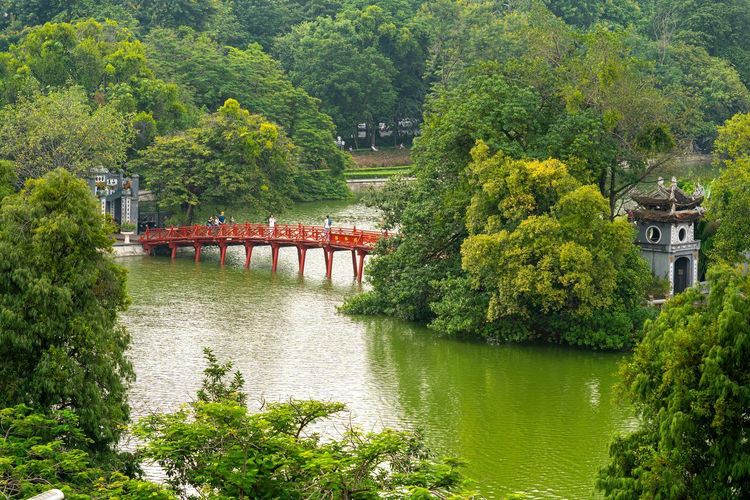
Start where Hanoi itself starts its morning: the lake. Hoan Kiem means « lake of the returned sword », a name tied to a legend about a golden turtle and the blade of Emperor Le Loi, and the water draws walkers, badminton games, and banh mi vendors well before 7am. Spend the first stretch of the morning here, then let the Old Quarter pull you in for the rest of the day.
Hoan Kiem Lake, Ngoc Son Temple, and St. Joseph's Cathedral
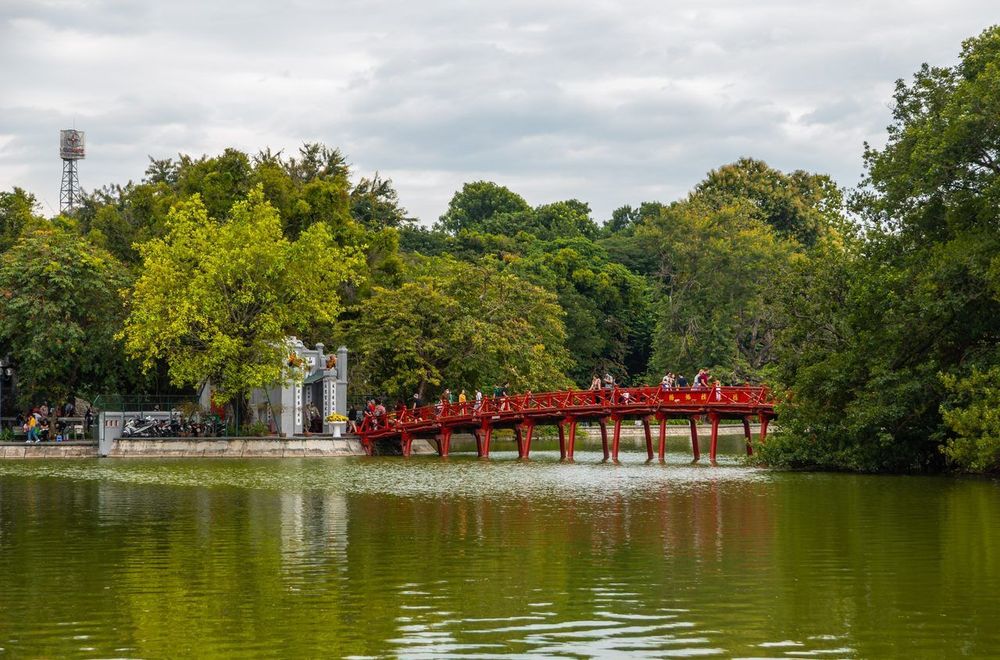
Hoan Kiem Lake) sits at the literal center of the city, ringed by a path that locals use for exercise long before most visitors are awake. A small red bridge, The Huc Bridge, crosses to Ngoc Son Temple (Dinh Tien Hoang, Hoan Kiem, Hanoi, rated 4.4/5 on Google (13 322 avis)), an island shrine dedicated partly to Tran Hung Dao, the 13th-century general who repelled the Mongols, and, oddly, to a preserved giant softshell turtle once pulled from the lake. Entrance costs around 50,000 VND (about two dollars), and fifteen minutes covers the temple itself, though the bridge photo alone justifies the stop.
Go before 8am if you want the lake at its calmest, or come back near sunset when the light turns the water copper and the tai chi groups give way to couples on benches. On Friday to Sunday evenings, the streets around the lake close to traffic and turn into a pedestrian zone full of street performers, families, and kids on rented electric cars. Walk the full loop once either way. It takes twenty minutes and is the easiest way to get your bearings before the Old Quarter's grid of streets starts to blur together.
Five minutes west of the lake, St. Joseph's Cathedral) rises above Nha Tho street with twin square bell towers that look borrowed from Notre-Dame de Paris. The French colonial administration completed it in 1886 on the site of a demolished pagoda, and its weathered grey facade now frames one of the busiest people-watching corners in town. You can step inside during Mass times; the rest of the day, the doors usually stay shut, so the real draw is the square itself, ringed by cafes serving lemon tea on low plastic stools.
Old Quarter Streets, Book Street, and Train Street
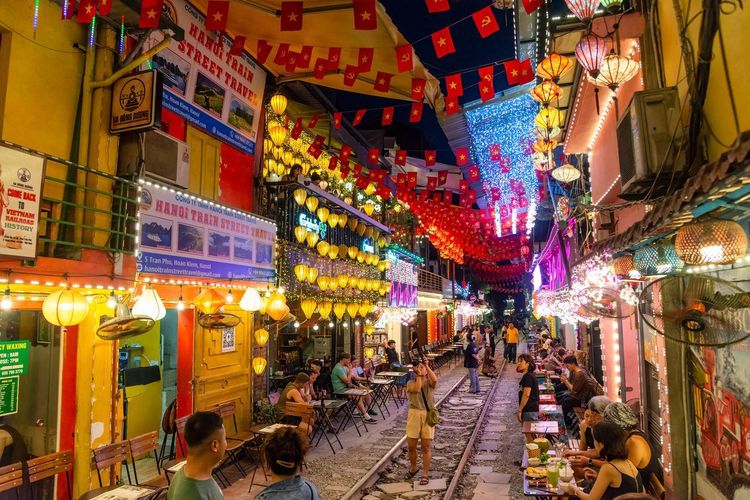
North of the lake, the Old Quarter unfolds into a district traditionally known as the « 36 streets », each historically tied to a single guild or trade, which is why you'll still find a Silk Street (Hang Gai) and a Tin Street (Hang Thiec) today. Wander without a fixed plan for an hour; it's the only way the district makes sense. Book Street (Pho Sach), a short pedestrian lane lined with bookstalls and café tables, makes a good mid-morning stop for shade and iced coffee. From there, cut west toward Train Street), the narrow residential corridor where the tracks run so close to the houses that cafes along it pull their chairs back within arm's reach of the rails every time a train comes through.
Be aware that Train Street has officially been off-limits to sightseers since 2019, after too many close calls involving tourists standing on the tracks for photos. In practice, you can still visit by sitting down at one of the licensed cafes along the line and ordering a drink, but police checks happen and you may be turned away at the entrance. There is no fixed public timetable: roughly five to eight trains pass each day, mostly in the afternoon and evening, so ask the cafe staff for the next expected time and arrive at least twenty minutes early.
The Thang Long Water Puppet Show and an Evening Stroll
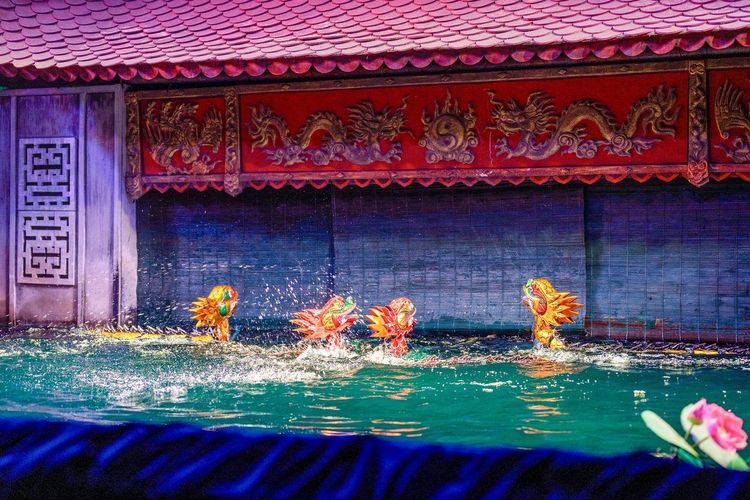
Close out Day 1 with the Thang Long Water Puppet Theatre), where performers wade waist-deep behind a bamboo screen to animate wooden puppets across a pool built to resemble a rice-paddy stage. The stories draw on village folklore and the same turtle legend tied to Hoan Kiem Lake, with a live orchestra playing traditional instruments throughout the show. Performances run about 50 minutes, tickets cost between 100,000 and 200,000 VND depending on the seat, and evening shows sell out in peak season, so book a day ahead rather than the same afternoon.
Afterward, the lake is a five-minute walk away, lit up and considerably quieter than it was at dawn. If you'd rather have this route narrated as you walk it instead of stopping to read every plaque, the Ryo audio-guided tour of Hanoi runs close to the same path between the lake and the Old Quarter, with the turtle legend told right at the bridge where it supposedly happened.
Day 2: Ho Chi Minh Monuments and the French Quarter
Day 2 trades the Old Quarter's density for wide boulevards and formal gardens. Mornings here are cooler and the mausoleum complex opens early, so this is one day where getting up at dawn pays off before the midday heat sets in.
Ho Chi Minh Mausoleum Complex and the One Pillar Pagoda
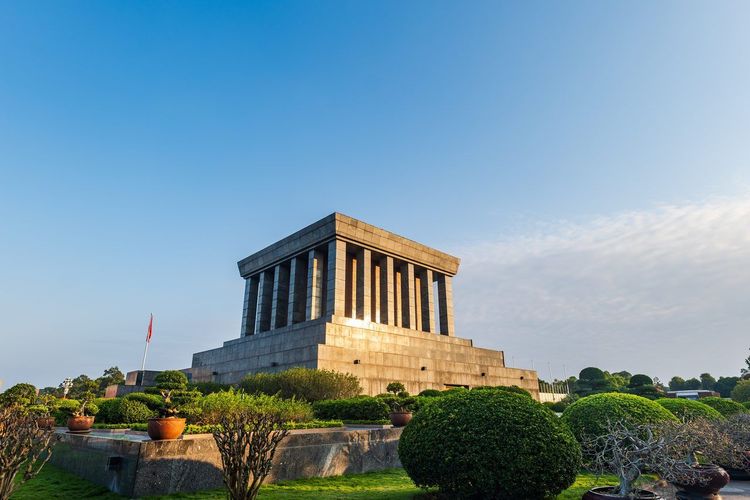
The Ho Chi Minh Mausoleum) dominates Ba Dinh Square, guarded closely and open only in the morning, with strict rules on dress (cover shoulders and knees) and silence inside. Entry is free. Most visitors underestimate how much walking the full complex requires. Beyond the mausoleum itself sit the Presidential Palace grounds, Ho Chi Minh's modest stilt house, and the One Pillar Pagoda (Chua Mot Cot, Doi Can, Ba Dinh, Hanoi, rated 4.3/5 on Google (10 843 avis)), a small temple first built in 1049 and balanced on a single stone column above a lotus pond.
Arrive by 7:30am if you want to see the embalmed body rather than just the grounds. The mausoleum closes every Monday and Friday, shuts its doors by 10:30 or 11am the rest of the week, and closes for around two months every autumn for preservation work (from September 4 to November 2 in 2026). If your trip falls in that window, you can still walk the square, the palace gardens, and the pagoda. Leave large bags at your hotel, since bag checks are routine and big items go to a cloakroom.
The Temple of Literature and Vietnamese Women's Museum
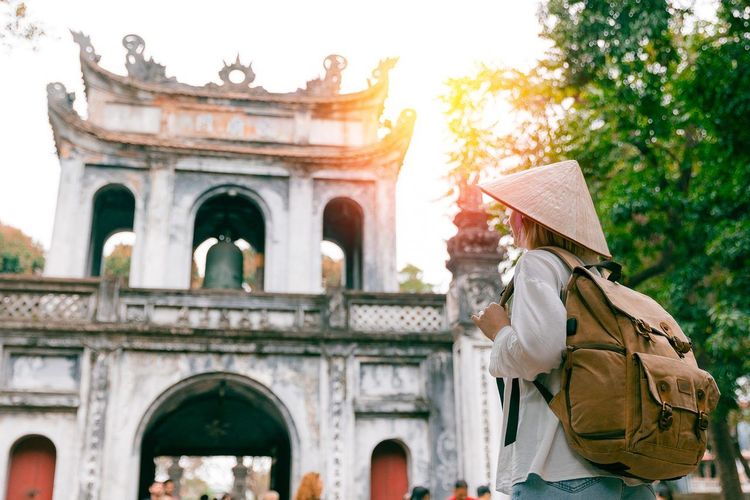
From Ba Dinh, head south to the Temple of Literature), founded in 1070 to honor Confucius. Six years later, the Imperial Academy was added on the same grounds, making it Vietnam's first national university. Stone stelae mounted on turtle backs still record the names of the doctors who passed the royal exams between the 15th and 18th centuries. The five courtyards get progressively quieter and more formal as you move deeper in, and the ticket costs 70,000 VND. Budget close to an hour if you want to read even a fraction of the inscriptions, and expect groups of students in graduation gowns posing for photos in spring.
On the way back toward the Old Quarter, the Vietnamese Women's Museum) is worth an hour for anyone curious about how differently Vietnam's wartime history gets told when the lens shifts away from battles and toward the women who ran farms, markets, and supply lines while the fighting happened elsewhere. The upper floors on traditional costume and street vendors are just as strong as the war galleries.
Hoa Lo Prison and French Colonial Architecture
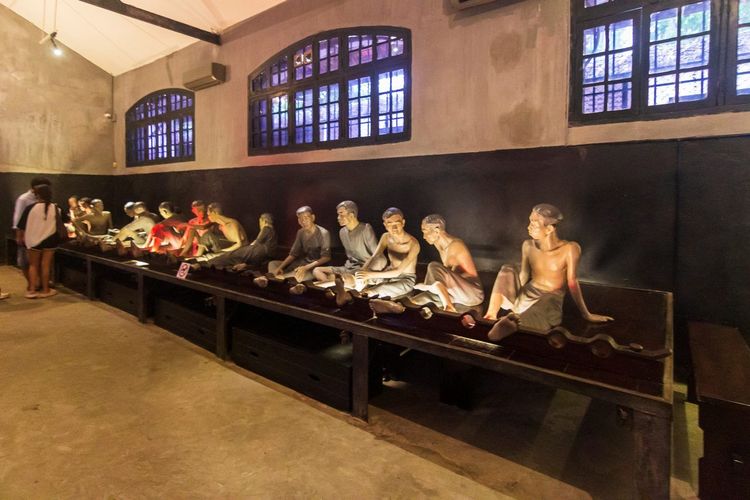
Hoa Lo Prison), grimly nicknamed the « Hanoi Hilton » by American POWs held there during the war, sits almost incongruously among office towers a few streets from the Opera House. Built by the French in the 1890s, only a fragment of the original complex survives. Half the exhibits cover its use by colonial authorities against Vietnamese independence fighters, and half cover the American War years; both halves are uncomfortable in different ways, and neither is a quick stop. Tickets cost 50,000 VND, and the audio guide available at the desk is worth adding.
From the prison, the French Quarter spreads out toward the Hanoi Opera House), a smaller cousin of the Palais Garnier completed in 1911, surrounded by tree-lined streets, yellow colonial villas, and a noticeably calmer pace than the Old Quarter just a few blocks north. A sub-route of Ryo's imperial Hanoi audio tour covers the mausoleum complex and the Temple of Literature, with history specific to each monument rather than one generic script repeated at every stop.
If you still have energy at sunset, walk ten minutes north of the Old Quarter to Long Bien Bridge, the steel cantilever bridge built by the French between 1899 and 1902 and bombed repeatedly during the war. Trains, scooters, and pedestrians still share it, and the narrow walkway gives you a view over the banana plantations on the islet in the middle of the Red River.
Day 3: West Lake, the Imperial Citadel, and Hanoi by Night
Day 3 opens things up. West Lake) is Hanoi's largest body of water, the pace slows down compared to the first two days, and the evening ends somewhere much louder than it started.
West Lake and Tran Quoc Pagoda
West Lake (Ho Tay) has a shoreline of around 17 km, and renting a bicycle for an hour along it is one of the few truly relaxed mornings this itinerary offers. Along the causeway separating West Lake from the smaller Truc Bach Lake sits Tran Quoc Pagoda (Thanh Nien, Tay Ho, Hanoi, rated 4.4/5 on Google (47 782 avis)), considered Hanoi's oldest Buddhist temple, founded in the 6th century and moved to its current islet in the 17th. An eleven-tier red stupa rises above a garden of bonsai and frangipani trees right at the water's edge. Entry is free, but you'll need covered shoulders.
Stop for coffee at one of the lakeside cafes before continuing. The audio commentary built into Ryo's app continues around the lake and tells the pagoda's foundation legend while you're standing at the causeway, rather than leaving you to decode a faded sign.
Imperial Citadel of Thang Long and Dong Xuan Market
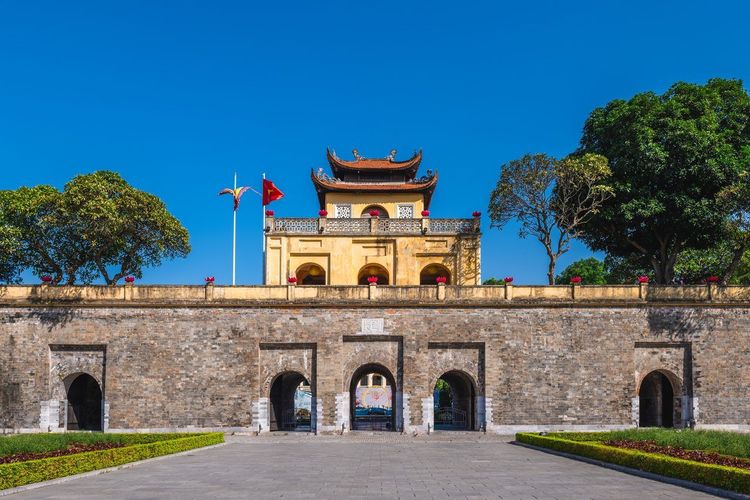
From West Lake, double back toward the center for the Imperial Citadel of Thang Long), listed as a UNESCO World Heritage site in 2010 and the seat of Vietnamese power for more than a millennium, from the 11th-century Ly dynasty through French colonial military use and the wartime command bunkers you can still walk down into. Tickets cost 100,000 VND. The Flag Tower, built in 1812 under the Nguyen dynasty and now one of Hanoi's best-known landmarks, stands just south of the complex beside the Vietnam Military History Museum grounds.
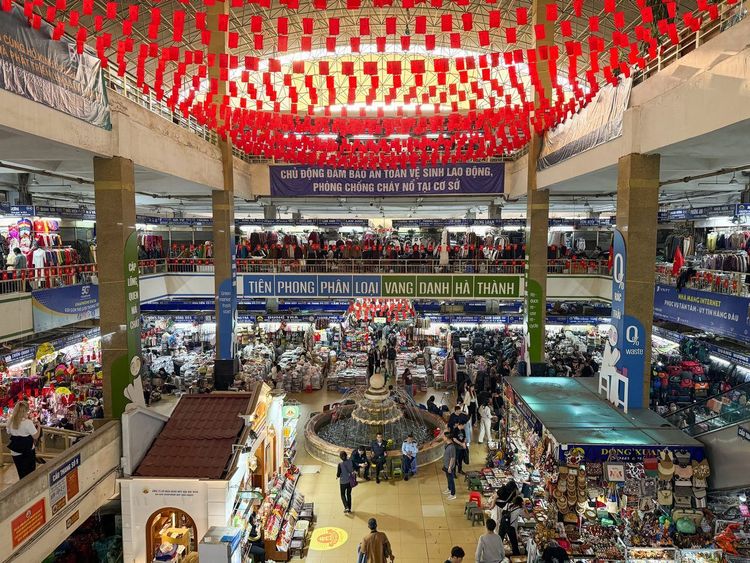
End the afternoon at Dong Xuan Market), Hanoi's largest covered market, three floors deep in textiles, housewares, and dried goods, with a weekend night market stretching south along Hang Dao street from Friday to Sunday. It's louder and more commercial than the citadel, which is exactly the contrast worth experiencing back to back. Haggle with a smile, and start at around half the first price on souvenirs.
A Double-Decker Bus Tour and Ta Hien Beer Street at Night
If your feet need a break by late afternoon, a double-decker open-top bus loop covers most of the city's major landmarks in about an hour with recorded commentary, a reasonable option if you're traveling with kids or simply walked too much on Days 1 and 2. Hop-on hop-off tickets usually run on a 4-hour or 24-hour basis.
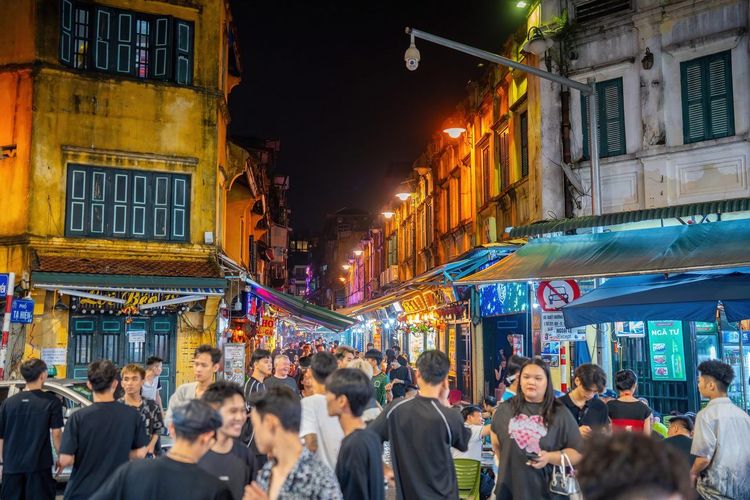
When night falls, head to Ta Hien Beer Street), the corner where Ta Hien and Luong Ngoc Quyen streets meet in the Old Quarter, lined with plastic stools, draft bia hoi sold by the glass for well under a dollar, and a crowd that spills into the road by 9pm. It's touristy and loud, and you should still do it once.
What to Eat in Hanoi: Pho, Bun Cha, and Egg Coffee
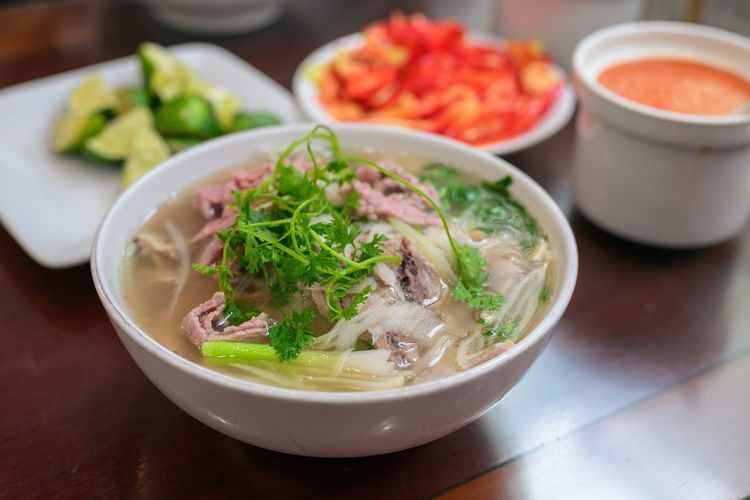
Hanoi's food scene runs on a handful of dishes that locals argue about with real intensity, and a three-day trip is enough to taste most of them if you plan meals around neighborhoods rather than treating food as an afterthought.
Pho and Bun Cha: Hanoi's Signature Dishes
Pho originated in the north, and Hanoi's version skews lighter and clearer than the sweeter, herb-heavy bowls found further south. Pho Ly Quoc Su) and Pho Thin anchor a long-running local debate over whose broth and beef are better, and ordering a bowl at each on different mornings is the only fair way to settle it yourself. Expect to pay 50,000 to 80,000 VND a bowl.
Bun cha, grilled pork patties and pork belly served over cold rice noodles with a dipping broth of fish sauce, vinegar, and garlic, is a lunch dish: most stalls grill from late morning and sell out by mid-afternoon. Build a lunch around it at a no-frills local spot in the Old Quarter rather than a tourist-facing restaurant with an English menu taped to the window. Barack Obama's 2016 meal with Anthony Bourdain at Bun Cha Huong Lien made the dish famous abroad, but the smoke from any busy corner grill is a better guide than a celebrity photo.
Banh Mi, Street Food Markets, and Quick Bites

A good banh mi, a baguette inherited from French rule and now filled with pâté, pickled vegetables, cilantro, and either grilled pork or egg, costs under two dollars at most street stalls and makes a solid breakfast between sightseeing stops. Banh Mi 25 on Hang Ca street is the Old Quarter address most visitors queue at. Morning markets scattered through residential streets sell banh mi alongside sticky rice and fresh fruit before most sit-down restaurants have even opened.
Street food markets around the Old Quarter's edges are worth grazing through rather than committing to one stall. Look for bun rieu (crab noodle soup), banh cuon (steamed rice rolls), and nem ran (fried spring rolls). A plastic stool and a bowl of something unfamiliar is usually the better decision than the restaurant with the laminated photo menu.
Egg Coffee and Cha Ca La Vong

Egg coffee (ca phe trung), a whipped mixture of egg yolk, condensed milk, and sugar poured over strong Vietnamese coffee, was invented in Hanoi in the 1940s during a milk shortage and remains one of the city's defining drinks. Cafe Giang), run by the family of the bartender credited with the original recipe, is usually busy, tucked down a narrow alley, and worth the wait. The Note Coffee, by the lake, is the alternative covered in thousands of handwritten sticky notes.
Cha Ca La Vong (14 Cha Ca, Hoan Kiem, Hanoi, rated 4.9/5 on Google (1 146 avis)), grilled turmeric fish cooked tableside over a charcoal pot with dill and spring onion, gave its name to an entire street and remains a dinner worth booking ahead for, since the restaurant serves essentially one dish and still fills up most nights. Between stops like these, the commentary in Ryo's Hanoi tour tends to point toward the stalls and cafes locals actually queue at, rather than just dropping a pin on a map and leaving you to guess.
Where to Stay in Hanoi: Best Neighborhoods
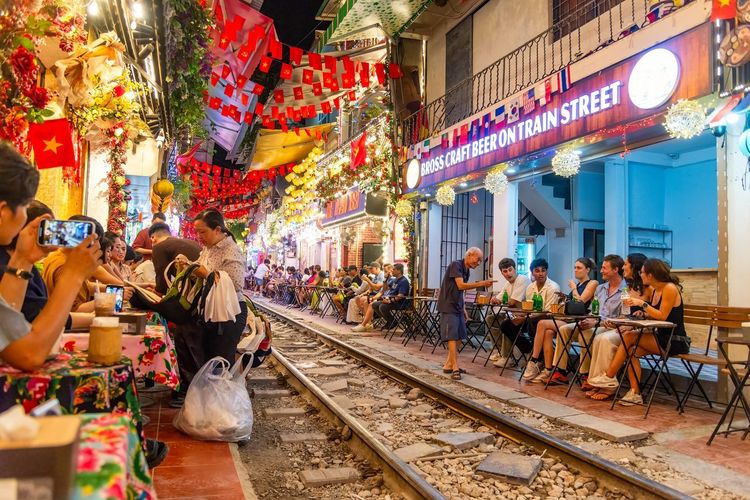
Where you sleep in Hanoi changes the itinerary more than people expect, since the three obvious neighborhoods sit far enough apart that your evening options shift depending on which one you pick.
Old Quarter: Best for First-Time Visitors
The Old Quarter puts you within walking distance of Hoan Kiem Lake, Train Street, and most of Day 1's stops, along with the densest concentration of budget hotels, hostels, and street food in the city. Doubles in a decent mid-range hotel start around 25 to 40 dollars a night. The trade-off is noise: motorbike horns, karaoke bars, and Ta Hien's crowd carry late into most nights, so request a room away from the main streets if you're a light sleeper.
French Quarter: Boutique and Upscale Hotels
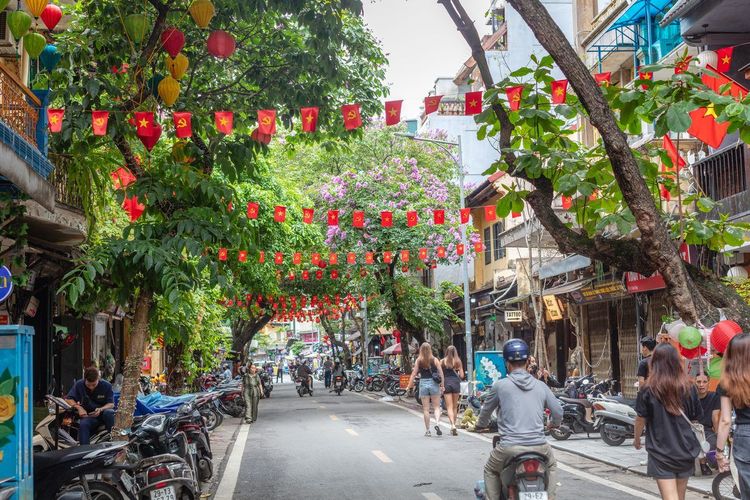
The French Quarter, closer to the Opera House and Hoa Lo Prison, trades some of that energy for wider streets, colonial-era villas converted into boutique hotels, and a noticeably quieter night. This is also where Hanoi's grand old hotels sit, including the Sofitel Legend Metropole, open since 1901. It suits travelers who want to be close enough to walk into the Old Quarter for dinner without sleeping in the middle of it.
West Lake: Quiet Stays Near the Water
West Lake sits further out, favored by longer-term expats and travelers who'd rather wake up near water than traffic. It costs more in taxi or Grab fares to reach the Old Quarter each day, but the lakeside cafes and quieter streets make it worth considering if you're staying more than three nights. Listening to a few stops of Ryo's Hanoi audio guide before booking helps here, since it shows roughly how much walking connects each neighborhood to the sights, which makes picking between the Old Quarter, the French Quarter, and West Lake a lot less of a guess.
Getting Around Hanoi
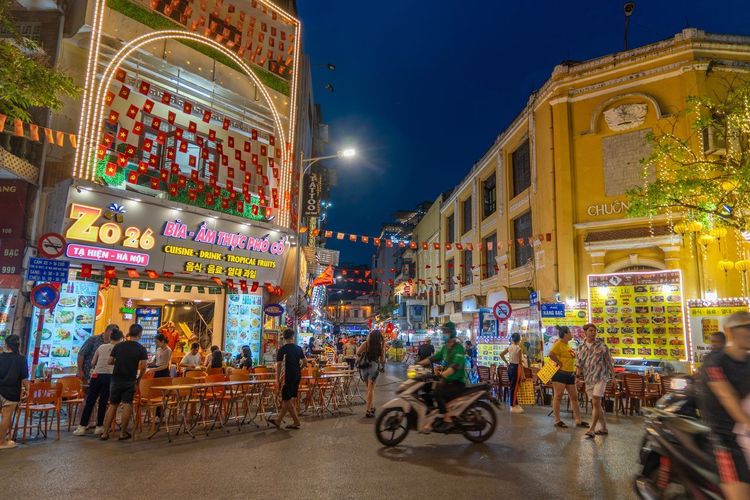
The Old Quarter and most of Day 1 and Day 2's stops are walkable, but Hanoi's heat and chaotic crossings mean you'll probably mix walking with short rides rather than covering everything on foot. Grab, the regional ride-hailing app, is the easiest option for cars and motorbike taxis, with fixed fares shown before you book, which avoids the haggling that comes with flagging down a traditional taxi or cyclo. A Grab bike across the center rarely costs more than 30,000 VND.
Crossing the street takes a bit of nerve the first time: traffic doesn't stop, so you walk at a steady pace and let motorbikes flow around you rather than darting or hesitating. Hanoi's metro is still young: Line 2A runs from Cat Linh to Ha Dong in the southwest, and the elevated section of Line 3 links Nhon to Cau Giay in the west since 2024, but neither reaches the Old Quarter or West Lake yet, so it won't serve this itinerary. From Noi Bai Airport, count 45 minutes to an hour into the center by Grab or the express 86 bus. For day trips outside the city, tour buses and private cars booked a day ahead are the standard option.
Best Time to Visit Hanoi
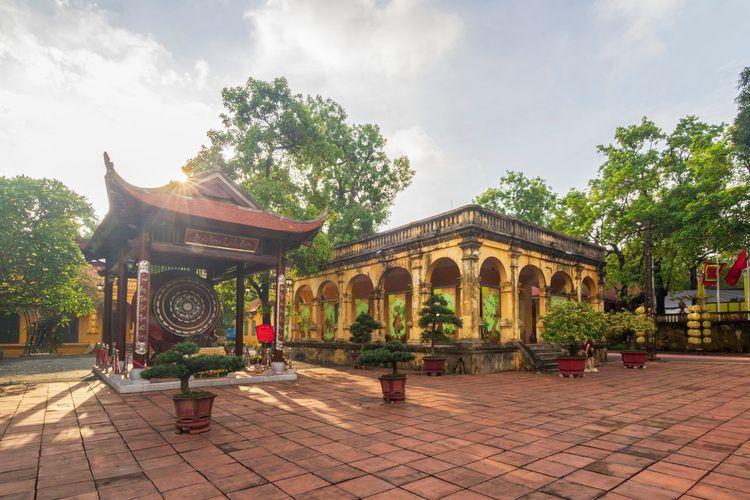
Hanoi has four seasons, unlike the south of Vietnam. The weather splits roughly into a cool, dry period from October through April and a hot, humid one from May through September, with the latter also bringing most of the year's rainfall in short, heavy afternoon bursts rather than all-day drizzle.
October to December offers the most comfortable combination of mild temperatures and lower humidity, which is why you'll see it recommended first almost everywhere. January and February run cooler still, occasionally cold enough for a light jacket in the early mornings, which surprises visitors expecting tropical heat year-round. Keep in mind that Tet, the Lunar New Year (mid-February in 2026, early February in 2027), closes many shops and restaurants for several days. March and April warm back up gradually before the real heat of summer sets in. Avoid planning rooftop evenings or long walking days in July and August unless you don't mind sweating through them; the humidity at that point makes even short outdoor stretches uncomfortable.
Day Trips and Itinerary Extensions Beyond 3 Days

Three days covers Hanoi itself, but the city also works as the launch point for some of northern Vietnam's biggest draws, and plenty of travelers tack on extra days specifically to reach them.
Halong Bay and Ninh Binh: Easy Day Trips
Halong Bay)'s limestone karsts rising out of emerald water are roughly two and a half to three hours by expressway from Hanoi, close enough for a long day trip but much better as an overnight cruise if your schedule allows a fourth day. Most cruises include kayaking, a cave stop, and a sunset or sunrise view over the bay that a single-day visit simply can't match.
Ninh Binh, roughly two hours south of Hanoi, gets compared to Halong Bay for good reason: the rice paddies and limestone cliffs around Tam Coc and Trang An) look similar from a boat, just inland instead of at sea. It works comfortably as a single day trip, usually combining a rowing boat tour with the climb of around 500 steps to Mua Cave for a viewpoint over the valley.
Hanoi Itinerary 4 Days or 5 Days: How to Extend

For a Hanoi itinerary of 4 days, the simplest option is to add a day trip to Ninh Binh after Day 3 and keep the evening free for a cooking class. With five days, swap that for a one-night Halong Bay cruise (Day 4 and Day 5), returning to Hanoi by early afternoon on the last day. Both can be booked the day before through most hotel front desks, though cruises fill quickly in October and November.
Ha Giang Loop and Cat Ba Island for Longer Stays
For a longer stay, the Ha Giang Loop, a multi-day motorbike route through Vietnam's far northern mountains, draws travelers who want switchback roads, terraced valleys, and homestays rather than another city day. It typically needs three to four days plus the overnight bus from Hanoi, and isn't something to squeeze into a short itinerary. If you've never ridden a motorbike, book an « easy rider » tour where a local driver handles the bends.
Cat Ba Island (Hai Phong, Vietnam, rated 4.4/5 on Google (1 380 avis)), reachable by bus and ferry in roughly four hours from Hanoi, makes a quieter weekend extension than Halong Bay itself, with beaches, hiking trails through Cat Ba National Park, and boat trips into the less crowded Lan Ha Bay. It suits travelers who want a beach day attached to the same trip rather than flying home straight after.
Practical Tips: Safety, Money, and Language in Hanoi
Hanoi is generally safe for tourists; the real risks are traffic and pickpocketing in crowded markets rather than violent crime, and you'll most likely move through the city without incident if you keep valuables zipped away in busy areas like Dong Xuan Market or Ta Hien Beer Street. Watch for bag snatching from passing motorbikes, and keep your phone on the side away from the road.
ATMs are common throughout the Old Quarter and French Quarter, though many charge a withdrawal fee on top of whatever your home bank adds, so withdrawing larger amounts less often saves money over time. Cash still dominates street food stalls and markets, while hotels, restaurants, and larger shops increasingly accept cards. Double-check banknotes: the 10,000 and 200,000 VND notes, and the 20,000 and 500,000 notes, have similar colors. A local SIM card or eSIM, available at the airport or Old Quarter phone shops for a few dollars, is worth getting on arrival for Grab and maps.
As for entrance fees, budget is rarely a problem in Hanoi. Over three days, the main paid sights (Temple of Literature 70,000 VND, Hoa Lo Prison 50,000 VND, Imperial Citadel 100,000 VND, Ngoc Son Temple, and a water puppet show) add up to roughly 400,000 to 500,000 VND, under 20 dollars, while the mausoleum and most pagodas are free.
English is spoken reasonably well in hotels, restaurants catering to tourists, and by younger people generally, though it thins out quickly at local food stalls and markets; a translation app or a few memorized phrases (xin chào for hello, cảm ơn for thank you) go a long way. Is Hanoi worth visiting? Most travelers come away saying yes: the food, history, and value for money consistently outweigh the mild hassle of language gaps and chaotic traffic. For more ideas beyond this itinerary, see our list of things to do in Hanoi.



FAQ
Is Hanoi safe for tourists?
Yes, Hanoi is considered safe for tourists. Violent crime targeting visitors is rare; the more realistic risks are traffic accidents while crossing streets and petty theft in crowded tourist areas, both manageable with basic caution.
Is English widely spoken in Hanoi?
English is common in hotels, tourist-facing restaurants, and among younger Hanoians, but it's inconsistent at local food stalls, markets, and with older generations. A translation app covers most gaps.
How many days do you really need in Hanoi?
Three days covers the city's core sights comfortably. Two days works if you cut back on Day 3, and four or five days leaves room for a cooking class, a deeper market visit, or a trip to Ninh Binh or Halong Bay.
What is the best time of year to visit Hanoi?
October through April is the most comfortable window, with October to December offering the best balance of mild temperatures and lower humidity. May through September is hot, humid, and prone to sudden afternoon downpours.
Can you combine Hanoi with Halong Bay or Ninh Binh in one trip?
Yes, and it's one of the most common extensions. Halong Bay is roughly two and a half to three hours away and Ninh Binh about two, so adding one or both as day trips or an overnight cruise onto your three days in Hanoi is straightforward.
Do you need a visa to visit Vietnam?
It depends on your passport. Citizens of a list of countries, including the UK, France, Germany, and Japan, can enter visa-free for up to 45 days, while others (including US, Canadian, and Australian travelers) apply online for an e-visa valid up to 90 days. Requirements change periodically, so check Vietnam's official immigration portal close to your travel dates.
Three days in Hanoi is tight but enough, as long as the itinerary above keeps you moving by neighborhood instead of crisscrossing the city chasing a checklist. By the time you're sitting on a plastic stool on Ta Hien Beer Street on the last night, the lake, the mausoleum complex, and West Lake's pagodas will likely feel like they happened over a much longer trip than three days actually allows.
If you want the version of this walk with someone else doing the narrating, the Ryo app's Hanoi tour covers much of the same ground on foot, stop by stop, with the legends of the lake and the old citadel told where they happened.
À lire également