© Shutterstock
 Votre guide Ryo
Visiting Occitanie: Complete Guide to Must-Sees in 2026
Visiting Occitanie, the second-largest region in metropolitan France, means confronting a question of scale first and foremost. This vast region of southern France brings together 13 départements, from the Lot to the Pyrénées-Orientales, from the Aveyron to the Mediterranean, across more than 72,000 km² — the size of Portugal. Landscapes shift dramatically within a few dozen kilometres: the viticultural plains of the Languedoc give way to the bare ridges of the Corbières, the fragrant garrigue of the Gard opens onto the Camargue delta, and the pink cities of the Garonne fade before the snow-capped walls of the Pyrénées.
Visiting Occitanie without spreading yourself too thin requires choosing an entry point. A week is enough to travel from Toulouse to Montpellier via Carcassonne and Nîmes, but the Pyrénées alone deserve three days of hiking, the Lozère a separate escape, and the Canal du Midi a whole week by barge. This guide covers what to visit in Occitanie, city by city and site by site, with practical information to plan a trip in 2026. For a first introduction to the region, the Ryo audio guide to Toulouse takes you through the capital of Occitanie in 2h40, across 23 commented stops on the history of the Pink City.
Three figures to grasp the scale of the territory: the Cité de Carcassonne is the second most visited site in France after Mont-Saint-Michel, with 3 million visitors per year; the Viaduc de Millau has remained the world's tallest bridge since its inauguration in 2004; and the Canal du Midi stretches 240 kilometres of scenery between Toulouse and the Mediterranean, inscribed on the UNESCO World Heritage List since 1996.
Toulouse: the Pink City and Its Hidden Treasures
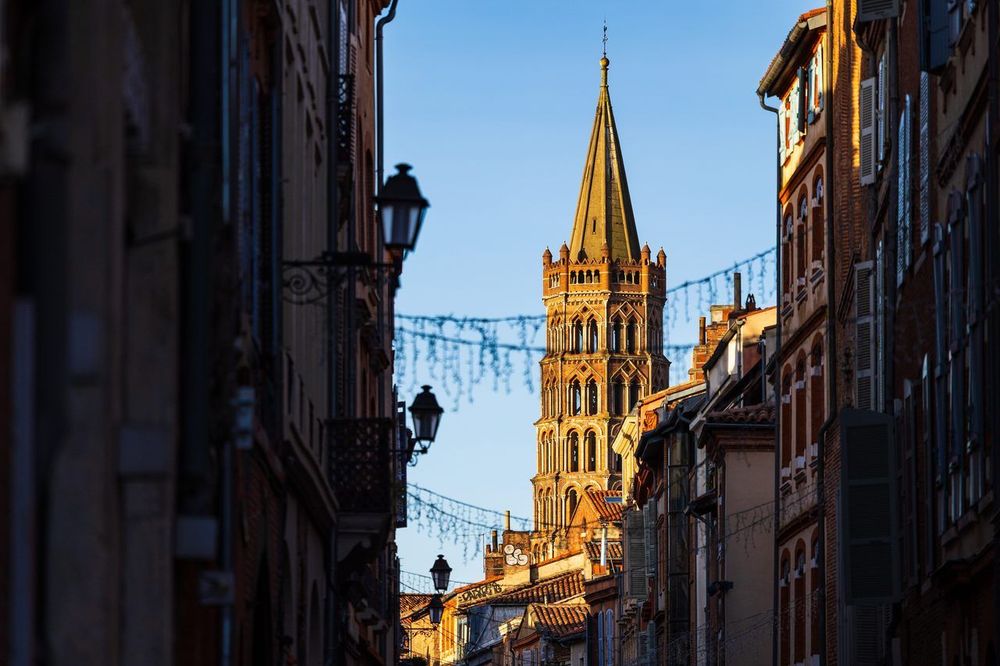
The first thing you notice when arriving in Toulouse is the singular tint that bathes the façades: a pink-orange terracotta brick that changes colour with every hour of the day, ochre in the midday sun, almost mauve under clouds. This is no aesthetic whim — it is local geology. The Garonne plain is rich in red clay, and since antiquity, the people of Toulouse have built with whatever lay beneath their feet.
The Capitole is the beating heart of the city. This 18th-century town hall and theatre opens onto a paved square 120 metres on each side, where a lively market takes place every morning. Inside, the Salle des Illustres is worth the detour for its monumental frescoes, gilded panelling, and paintings depicting the great moments of Toulouse's history. Entry is free and often overlooked by tourists who stop at the façade.
The Basilique Saint-Sernin, ten minutes' walk from the Capitole, is one of the most impressive Romanesque buildings in Europe. Built between 1080 and 1120 to welcome pilgrims on the road to Santiago de Compostela, it stretches 115 metres in length and rises to 65 metres with its five-storey octagonal bell tower. The five naves, the ambulatory around the choir, and the radiating chapels form a near-perfect example of southern Romanesque architecture. Pilgrims on their way to Compostela can have their "credencial" stamped at the sacristy.
The Musée des Augustins, housed in a 14th-century Gothic convent, holds one of France's most important collections of medieval sculpture. Romanesque capitals salvaged from cloisters demolished in the 19th century, Gothic gargoyles, and painted altarpieces from the 15th and 16th centuries make up a two-hour journey through southern art. The museum opens free of charge on the first Sunday of each month.
Les Abattoirs, on the other side of the Garonne, occupy a former municipal slaughterhouse converted into a museum of modern and contemporary art. The permanent collection features works by Picasso, Miró, Soulages, and several artists from the regional scene. The building itself — red bricks, industrial skylights, repurposed chimneys — is an architectural success in its own right.
For families, the Cité de l'Espace (Avenue Jean Gonord, 31500 Toulouse, rated 4.2/5 on Google across 8,312 reviews) is the unmissable stop. This space exploration theme park features a real Soyuz capsule, a full-scale replica of the International Space Station, the Ariane 5 launch simulator, and a 200-seat planetarium. Toulouse is home to the headquarters of Airbus and the CNES; this aerospace vocation is no geographical coincidence.
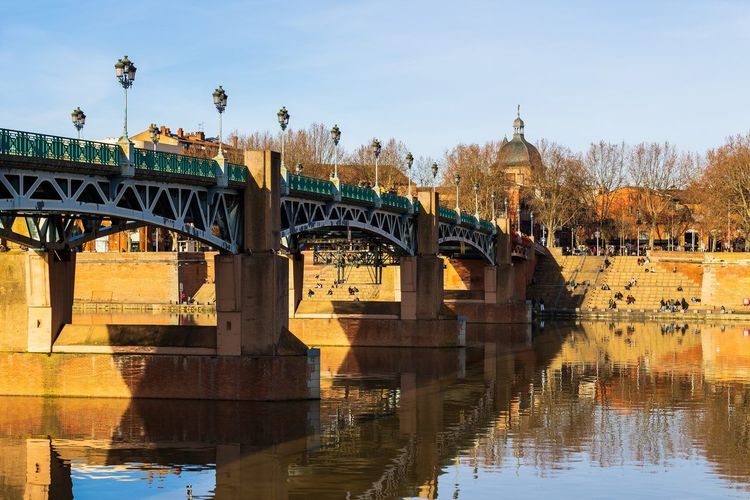
The banks of the Garonne form the recreational lungs of the metropolis. The Quais de la Daurade, facing the Pont Neuf (the oldest bridge in Toulouse, built between 1544 and 1632), come alive in the evening with terraces and pétanque players. The Prairie des Filtres, a 10-hectare linear park on the left bank, hosts festivals and night markets in summer.
The Ryo audio walking tour of Toulouse guides you across 6.5 km through the Pink City in 2h40, from its Roman origins to the 21st century, from the Capitole to the banks of the Garonne.
Carcassonne: the Medieval Fortress That Stops Time
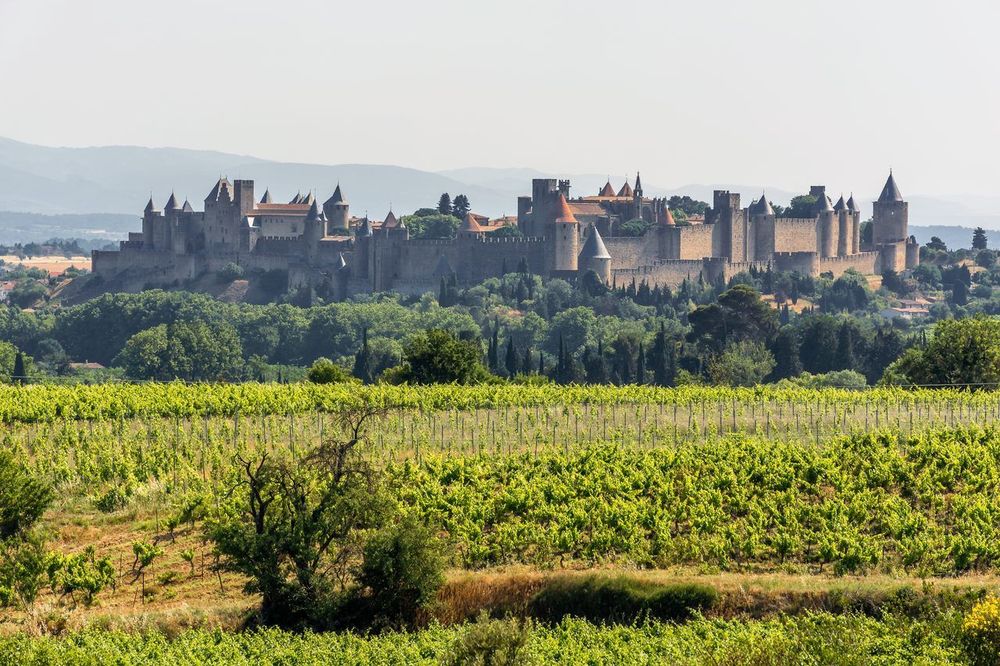
You have to see the Cité de Carcassonne at sunrise, before the tourist coaches arrive, to understand its hold on the imagination. The 52 towers of the double medieval wall stand out in the morning mist like a film set — which they have often been, since the 1920s. In the height of August, the site can receive 30,000 visitors per day. In December, you walk through the lanes almost entirely alone.
The Cité is partly the work of Viollet-le-Duc, who undertook its restoration between 1853 and 1879. His slate roofing has been criticised (the originals were canal tiles), but the architectural mass remains impressive: 3 kilometres of ramparts, two concentric walls, a comtal castle (the Château des Trencavel, 12th century), and the Basilique Saint-Nazaire. Access to the lices — the corridor between the two walls — is permanently free; the interior of the comtal castle is ticketed.
The Basilique Saint-Nazaire, at the heart of the Cité, is the most moving building on the site. Its 11th-century Romanesque nave and 14th-century Gothic choir coexist within the same space — this superposition of two styles reflects 300 years of uninterrupted construction. The transept stained-glass windows rank among the finest in the Languedoc: the north rose window depicts the Last Judgement with remarkable iconographic precision.
Below the Cité, the Bastide Saint-Louis forms the lower town of Carcassonne. Its Place Carnot and arcaded streets host the twice-weekly market (Tuesday and Saturday mornings) and the city's best restaurants. The local cassoulet inspires near-religious devotion among the people of Carcassonne, and an unresolved dispute with Castelnaudary and Toulouse over the recipe's origins.
Carcassonne is also the gateway to the Cathar country and its vertiginous castles. The Ryo article on the Cathar castles of Occitanie offers several itineraries through the Corbières and Ariège from Carcassonne.
The Ryo audio guide to Carcassonne, 27 audio stops over 5.7 km, guides you through the Cité and the Bastide in 2h30, from the ramparts to the comtal castle through the medieval lanes.
Montpellier: the Gifted City of the South
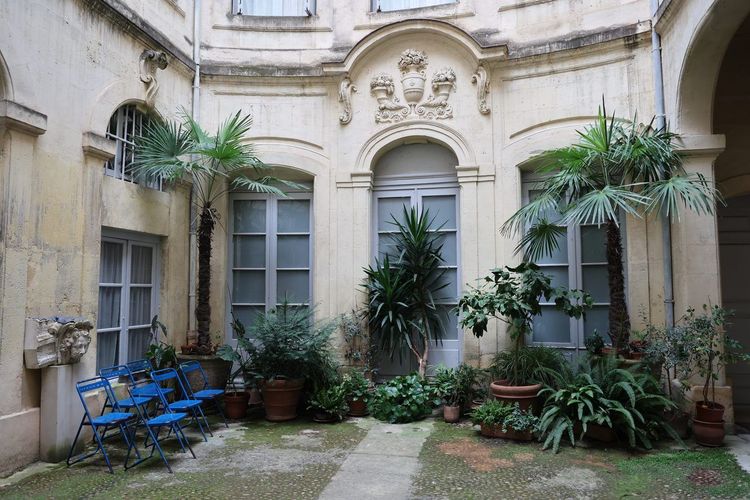
Montpellier displays a striking demographic particularity: it is the French metropolis whose population has grown the most since the 1960s, rising from 100,000 to more than 300,000 inhabitants. This growth has shaped a hybrid city — the medieval heart known as "l'Écusson" sits alongside ambitious contemporary districts such as Port Marianne, designed by international architects.
The Place de la Comédie is every visitor's first port of call. This broad esplanade, surrounded by Haussmann-style façades and dominated by the Opéra Comédie (late 19th century), sees thousands of Montpellier residents pass through every day. The Fontaine des Trois-Grâces stands at its centre. From there, the Promenade du Peyrou climbs toward a 17th-century triumphal arch and the monumental water tower that once supplied the entire city.
The Musée Fabre (39 Boulevard Bonne Nouvelle, 34000 Montpellier, rated 4.5/5 on Google across 4,649 reviews), regularly cited among France's top five fine arts museums outside Paris, holds a collection spanning five centuries of European painting. Courbet, Delacroix, Frédéric Bazille (a Montpellier native), Rubens, Poussin, and an entire room dedicated to Soulages make up a two-hour minimum itinerary. Free entry on the first Sunday of each month.
Montpellier's Faculty of Medicine is the oldest still in operation in France, founded in 1220. Its 18th-century anatomy amphitheatre, its cabinet of medical curiosities, and its collections of antique surgical instruments constitute a museum in their own right, open by reservation.
By the sea, Montpellier is 12 km from the nearest beaches (Palavas-les-Flots, Carnon). For a more natural setting, the coastal lagoons between Montpellier and Sète are home to a permanent population of flamingos that can be observed from the banks without any special equipment.
To explore the historic Écusson, the Ryo audio-guided tour of Montpellier, "Say Hello to the Gifted City!", offers 19 audio stops over 3.5 km in 1h30, from the Place de la Comédie to the gardens of the Peyrou.
Nîmes: Two Millennia of Rome in the Languedoc
Most travellers pass through Nîmes without stopping, eager to reach Avignon or the Camargue. It is a mistake that those in the know guard jealously: the city hides a concentration of Roman monuments that few French cities can rival.
The Arènes de Nîmes are the city's undisputed symbol. Built around AD 100, they rank among the best-preserved Roman amphitheatres in the western world — their 60 yellow limestone arches, 34 rows of tiers seating 24,000 spectators, and underground galleries are still fully functional today. In summer, the arena hosts férias (bullfights, Camargue races) and large-scale concerts. The Feria de Pentecôte and the Feria des Vendanges in September each draw more than 200,000 spectators over five days.
The Maison Carrée, five minutes' walk away, is one of the best-preserved Roman temples in the world. Built in the 1st century BC to honour Augustus's grandsons, its six-column Corinthian façade captivated Thomas Jefferson, who commissioned plaster casts of it to design the Virginia State Capitol. Opposite stands the Musée de la Romanité (opened in 2018), which brings together 5,000 years of local history in a contemporary building whose glass façade forms a draped Roman toga.
25 km from Nîmes, the Pont du Gard (400 Route du Pont du Gard, 30210 Vers-Pont-du-Gard, rated 4.8/5 on Google across 50K reviews) is unmissable. This 1st-century Roman aqueduct — 49 metres high, 275 metres long, three tiers of arches — once carried water to Nîmes from springs at Uzès, 50 km away. In summer, the banks of the Gardon below allow swimming in clear water, shaded by holm oaks.
For two millennia of Roman history in 2h45, the Ryo audio walking tour of Nîmes traces a 6 km route with 26 audio stops, from the arena to the Maison Carrée via the Jardins de la Fontaine.
Albi: the Red City and the Genius of Toulouse-Lautrec
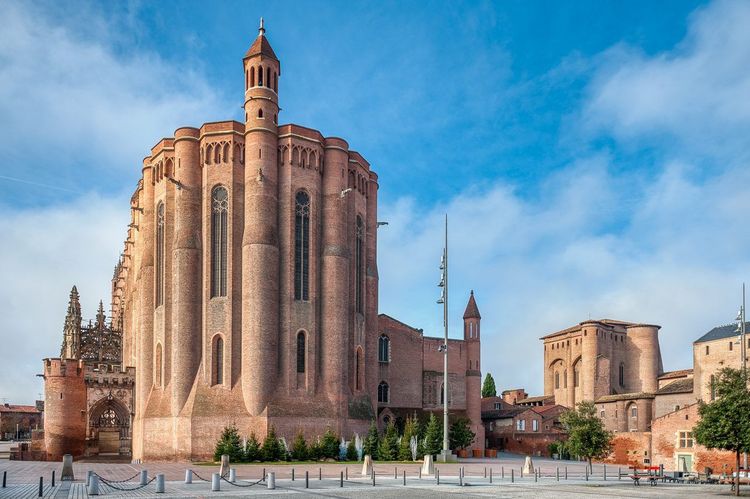
Albi surprises visitors with its architectural coherence. The medieval ensemble of the Episcopal City, inscribed on the UNESCO World Heritage List in 2010, is built entirely in pink Toulouse brick: the Cathédrale Sainte-Cécile, the Palais de la Berbie, and the bourgeois houses of the old quarter. Walking through it, one quickly understands why the city is nicknamed the "Red City".
The Cathédrale Sainte-Cécile is a fascinating architectural anomaly. Begun in 1282, it looks more like a fortress than a church: its smooth brick walls 40 metres high, with no visible windows from the outside, its 78-metre square bell tower, and its fortified entrance portal all testify to a Church seeking to assert its authority in the aftermath of the Crusade against the Cathars. The interior is a counter-shock: a Gothic rood screen of lace-like delicacy, 15th-century frescoes covering 1,800 m² of ceiling, and sumptuous choir stalls where each seat depicts a figure from the Old Testament.
The Musée Toulouse-Lautrec (Palais de la Berbie, 81000 Albi, rated 4.5/5 on Google across 2,368 reviews), housed in the Palais de la Berbie steps from the cathedral, is the world's largest collection of the painter's works. Henri de Toulouse-Lautrec was born in Albi in 1864 and his works have returned to his home city. The collection comprises more than 1,000 drawings, paintings, and posters: his depictions of the cabarets of Montmartre, the dancers of the Moulin Rouge, and the characters of Parisian bohemian life are displayed in a medieval setting that contrasts with the provocative modernity of his line.
The old town deserves an hour's stroll: the 11th-century Pont Vieux over the Tarn, the medieval lanes of the Madeleine quarter, and the Castelviel market hall converted into a cultural space. 25 km away, Cordes-sur-Ciel, often cited as the first bastide of the Southwest, founded in 1222, is the natural day trip from Albi, with its steeply sloping cobbled lanes and Gothic houses.
The Ryo audio guide to Albi covers 26 stops over 3.5 km in 1h40, between the Cathédrale Sainte-Cécile, the Musée Toulouse-Lautrec, and the medieval lanes.
Perpignan: Catalan Identity at the Edge of France
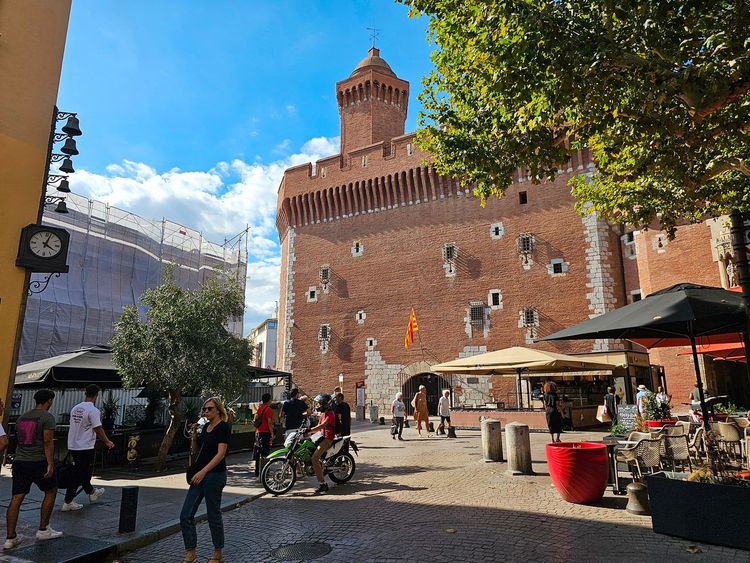
Perpignan is unlike any other city in Occitanie. The colours of Catalonia — red and yellow — adorn façades and market stalls. The language heard in cafés sometimes slides into Catalan. With good reason: the city belonged to the Crown of Aragon until 1659, when the Treaty of the Pyrénées attached it to France. This different history gives Perpignan a distinctly Mediterranean and Catalan personality, one that its residents proudly claim.
The Palais des Rois de Majorque dominates the city from its hilltop. Built in the late 13th century for the sovereigns of the Kingdom of Majorca — a short-lived Catalan state that had Perpignan as its continental capital — this complex includes two superimposed chapels (the Grande Chapelle and the Chapelle Sainte-Croix) as well as state rooms with panoramic views over the Roussillon plain and the Pyrénées.
In the centre, the Place de la Loge and the Castillet — a 14th-century red-brick tower, today the Museum of Catalan Arts and Traditions — concentrate the essence of the old town. The covered Cassanyes market, two minutes' walk away, is one of the best in the region for Catalan produce: Collioure anchovies, charcuterie, sheep's milk cheeses, and seasonal fruit.
The Ryo audio-guided tour of Perpignan follows a 2.4 km route in 1 hour, with 19 audio stops on the city's Catalan identity and its major monuments.
Narbonne: Two Thousand Years of Roman Capital
Narbonne was the first great Roman city in Transalpine Gaul, founded in 118 BC under the name Narbo Martius — a provincial capital and thriving commercial crossroads on the Via Domitia. Most of that former grandeur has been swallowed by the layers of the Middle Ages, but what remains is eloquent.
The Cathédrale Saint-Just-et-Saint-Pasteur has technically been unfinished since 1340, when the Hundred Years' War abruptly halted construction of the nave. The result is a singular silhouette: a colossal Gothic choir, 41 metres high beneath the vault — one of the highest vaults in France — standing without a nave, surrounded by medieval ramparts integrated into the urban fabric. This architecture born of misfortune has something deeply moving about it.
The Roman Horreum (7 Rue Rouget de Lisle, 11100 Narbonne, rated 4.2/5 on Google across 1,530 reviews), an underground museum dating from the 1st century BC, allows visitors to slip into the galleries of an ancient commercial warehouse — one of the best-preserved in Gaul. Narbonne also hosts the Canal de la Robine, a natural extension of the Canal du Midi (itself UNESCO-listed), which runs through the city alongside the medieval Halles market.
The Ryo audio guide to Narbonne guides you across 4 km in 1h40, with 20 audio stops from ancient Narbo Martius to the canal banks.
Montauban: Pinker Than Toulouse
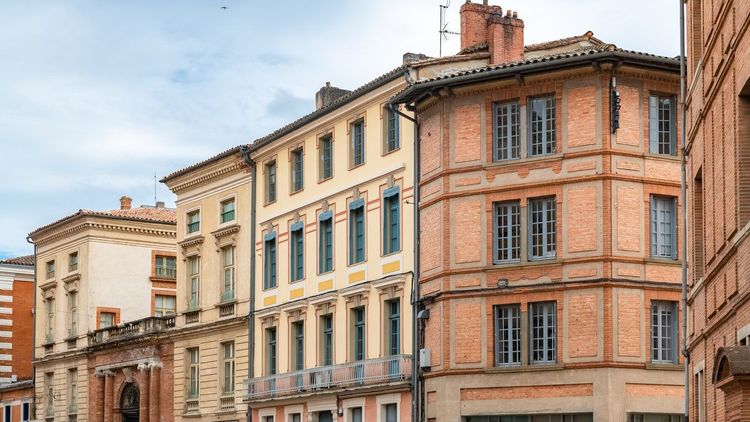
It is often said that Montauban is "pinker than Toulouse". The brick used in its monuments is a warmer, more orange hue that gives the city a particularly luminous atmosphere. Founded in 1144, it is one of the oldest bastides in the Southwest: a new town built on a grid plan by the Count of Toulouse, who sought to attract settlers with tax privileges.
The Place Nationale is one of the finest arcaded squares in the Southwest. Its double-row covered galleries allow visitors to stroll in the shade, surrounded by 17th-century pink brick façades. This is where life in Montauban unfolds, between the morning market and the evening terraces.
The Musée Ingres-Bourdelle (19 Rue de l'Hôtel de Ville, 82000 Montauban, rated 4.7/5 on Google across 1,592 reviews) holds the world's largest collection of works by Neoclassical painter Jean-Auguste-Dominique Ingres (born in Montauban in 1780) — more than 4,000 pieces, including his celebrated portraits and large-scale compositions. Antoine Bourdelle's sculptures complete an ensemble of surprising depth for a city of this size.
The Ryo audio walking tour of Montauban, "The Pinkest of Pink Cities", offers 18 audio stops over 2.8 km in 1h10, from the Place Nationale to the Pont Vieux over the Tarn.
Collioure: Where Painters Discovered Fauvism
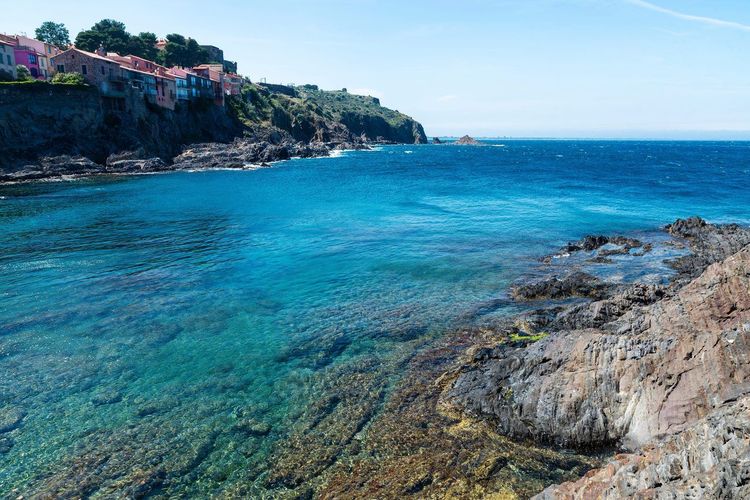
Collioure fits within 3 km of coastline and two coves separated by the Château Royal, yet the artistic density of this village far exceeds its size. It was here in 1905 that Henri Matisse and André Derain laid the foundations of Fauvism — pure colours applied without regard for realism — which the critic Louis Vauxcelles mockingly labelled their creators "fauves" (wild beasts). Matisse spent three successive summers in Collioure; the result was a revolution in the history of modern art.
The turquoise waters of the bay, the ochre and white houses clustered against the fortress, and the church of Notre-Dame-des-Anges with its lighthouse bell tower reflected in the sea: Collioure is photogenic around every corner. Out of season (October to May), it is a quiet Catalan fishing village where you can lunch on marinated anchovies overlooking the Mediterranean.
The Ryo audio-guided tour of Collioure, "The City of Painters", retraces in 21 audio stops over 3 km the village's artistic history, from Matisse's studios to the Fauvist works preserved in the castle.
The Pyrénées: Summits for Every Level
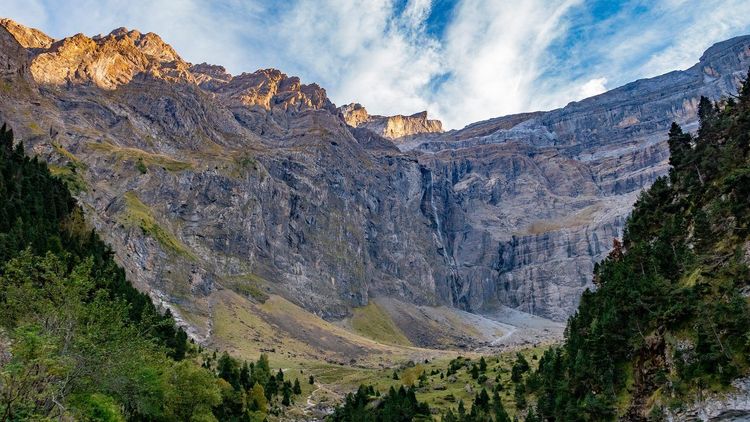
The Pyrenean massif concentrates in Occitanie — across the Hautes-Pyrénées, Ariège, and Pyrénées-Orientales — some of France's most dramatic landscapes. The Cirque de Gavarnie is the premier Pyrenean destination: a natural amphitheatre 14 km in diameter, enclosed by a 1,700-metre wall down which a dozen waterfalls tumble, including the Grande Cascade (423 metres, the tallest in France). The site has been inscribed on the UNESCO World Heritage List since 1997.
The Cirque is reached on foot from the village of Gavarnie: 9 km round trip, 2h30 of walking for an average hiker. The path follows the Gave de Pau through an impressive glacial landscape. Horse and donkey rides are available for families — an alternative for children who cannot complete the full route on foot.
The Pic du Midi de Bigorre (2,877 m) is reached by cable car from La Mongie. The astronomical observatory at the summit, active since 1882, offers immersive overnight astronomy stays. The simple daytime visit to the panoramic terrace is well worth the journey: on a clear day, the Pyrenean chain and the Gulf of Gascony stretch across 360°.
In Ariège, the Grotte de Niaux (Route de la Grotte, 09400 Niaux, rated 4.6/5 on Google across 850 reviews) is one of the world's most impressive decorated caves. The bison and deer drawn in charcoal in the "Salle Noire" date back 13,000 years and represent one of the most detailed expressions of Magdalenian art. Unlike Lascaux, which has been closed to the public since 1963, Niaux remains accessible — but visits are limited to 30 people and reservation is compulsory. In summer, plan two to three weeks in advance.
In the Pyrénées-Orientales, the Pic du Canigou (2,784 m) is the symbol of Catalan culture. Midsummer bonfires are lit there every 23 June, and the flames are then carried down from summit to village. The ascent from Vernet-les-Bains is a serious hike (6 hours round trip) reserved for experienced walkers, but the view over the Mediterranean from the summit justifies the effort.
The resort of Font-Romeu in the Pyrénées-Orientales is among the 29 active ski resorts in Occitanie, with exceptional sunshine (more than 300 days per year) and slopes accessible to all levels. Back down in Toulouse, our audio walking tour takes over, exploring the Pink City at walking pace.
The Canal du Midi: 240 Kilometres of Waterway Heritage
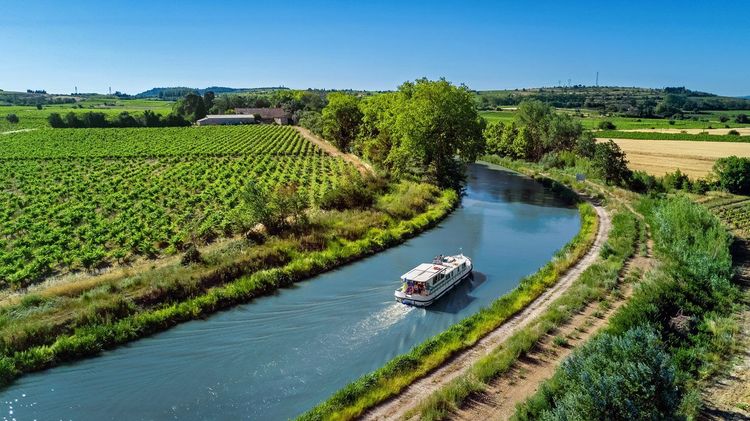
Built between 1666 and 1681 at the initiative of Pierre-Paul Riquet, the Canal du Midi is one of the most ambitious engineering works of the 17th century. The idea was revolutionary: to link the Atlantic to the Mediterranean via the Languedoc plain, avoiding the perilous route around Gibraltar. The result — 240 km of navigable waterway between Toulouse and the Étang de Thau at Sète, inscribed on the UNESCO World Heritage List since 1996 — remains one of the most beautiful waterways in France.
The most enjoyable way to discover it is by barge. Hire companies are based in Toulouse, Carcassonne, Colombiers, Le Somail, and Agde, with licence-free boats for 2 to 12 people. A week on the canal, among its 91 locks, century-old plane trees, and sleepy villages, is an immersive and relaxing experience. Each lock is a pause in time — and often an opportunity to chat with the lock-keeper, who knows every good restaurant in the next village.
By bicycle, the Véloroute des Deux-Mers follows the canal banks from Toulouse to Sète (360 km) in 5 to 7 days. Specialist accommodation — campsites, bed and breakfasts, and cycling-friendly hotels — lines the route from end to end.
The Écluses de Fonserannes (Chemin des Écluses, 34500 Béziers, rated 4.5/5 on Google across 15,149 reviews), near Béziers, are the most spectacular moment of the route: a staircase of eight successive basins that lowers barges 21 metres over 300 metres. The mirror-like sheet of water between the basins is one of the canal's most iconic photographic subjects.
Our Ryo article on visiting the Canal du Midi details the best stops and points of interest between Toulouse and the sea, with practical advice on waterway accommodation.
Cathar Castles and the Aude Country
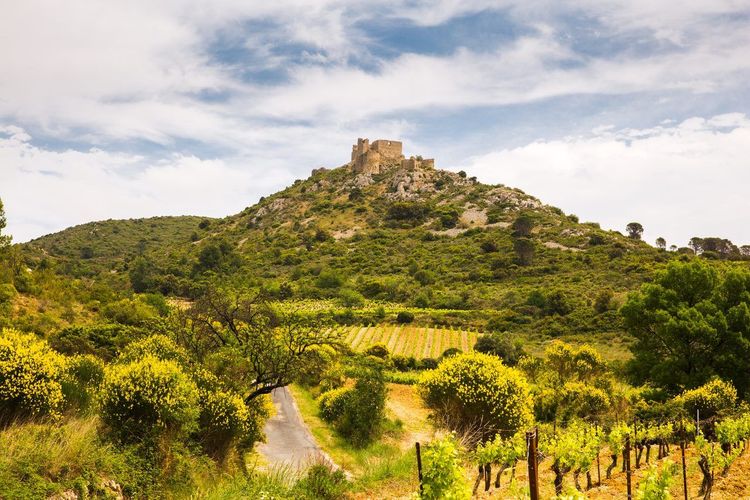
The history of the Cathars runs deep through the Aude and Hérault. This dualist religious movement, which regarded the material world as the work of Evil, found fertile ground in the lordships of the Languedoc during the 12th century. The crusade launched in 1209 by Pope Innocent III was brutal: 20 years of fighting, towns massacred (Béziers, Minerve), and the gradual eradication of the Cathar faith. The fortresses perched on the ridges of the Corbières are the silent witnesses to this tragedy.
Quéribus (830 m altitude) was the last Cathar castle to surrender, in 1255 — eleven years after Montségur. Perched on a rocky outcrop in the Corbières, its keep with its unique ribbed Gothic vault is of austere beauty. The climb from the car park (20 minutes) is vertiginous, and the view over the Roussillon plains and the sea in the distance is among the finest in the region.
Peyrepertuse is the largest Cathar fortress. Stretching 300 metres in length along a ridge at 800 metres altitude, it comprises two castles linked by a staircase cut into the rock. In strong winds — common in the Corbières — the visit takes on an extra dimension that photographs cannot convey.
Montségur in Ariège carries the heaviest symbolic weight. On 16 March 1244, 220 Cathars who refused to abjure their faith were burned alive at the foot of the castle in the field still known as the "Camp dels Cremats". The climb from the village (1 hour round trip) is accessible to any walker. The view stretches across the Ariège to the Pyrenean ridges.
The Ryo article on the Cathar castles of Occitanie offers several circular itineraries to discover these sites over 2 to 3 days from Carcassonne or Perpignan.
Picturesque Villages and Unusual Places
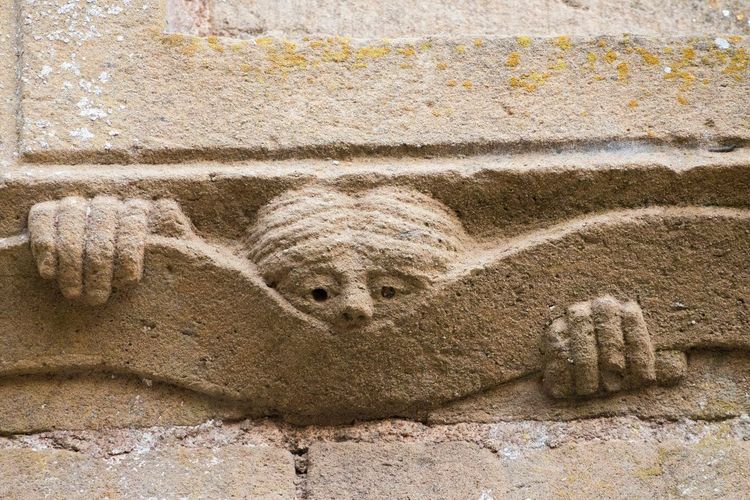
Occitanie concentrates a remarkable proportion of "Most Beautiful Villages of France". In the Aveyron, Conques is the jewel in the crown: its medieval schist lanes, its abbatiale Sainte-Foy (11th–12th century), and its gilded Romanesque tympanum of the Last Judgement formed an ensemble that stopped Compostela pilgrims in the Middle Ages — and continues to stop visitors today.
In the Hérault, Saint-Guilhem-le-Désert shelters in its gorge the heart of a 9th-century Cluniac abbey. The Abbaye de Gellone, founded by Guillaume d'Orange around a relic of the True Cross, is inscribed on the World Heritage List as a stop on the Way of Saint James. The tiny, authentic village is well worth the detour.
The Gorges du Tarn (Lozère–Aveyron) rank among France's most spectacular gorges. The Tarn has carved a 50 km canyon into the limestone causses, with cliffs reaching 500 metres. From La Malène, local boatmen offer descents by traditional flat-bottomed boat — a centuries-old practice in this village of 80 inhabitants.
For lovers of natural curiosities, the Salins d'Aigues-Mortes (Gard) offer an unexpected spectacle in summer: the evaporation ponds turn intense shades of pink due to halophilic micro-algae. The colour ranges from pale pink to fuchsia depending on salt concentration. The medieval fortified town of Aigues-Mortes, built by Saint Louis as the departure port for the Crusades, is also worth an hour's visit.
The Viaduc de Millau (A75, 12100 Millau, rated 4.7/5 on Google across 20K reviews), on the A75 at the northern gateway to Occitanie, deserves a stop even if you are not using the motorway. The rest area on the Aveyron side offers the best view of the seven piers rising to 343 metres above the Tarn valley. Millau itself — a city of gloves and Roquefort — has a pleasant medieval centre beneath its arcades.
Vineyards and Gastronomy of Occitanie
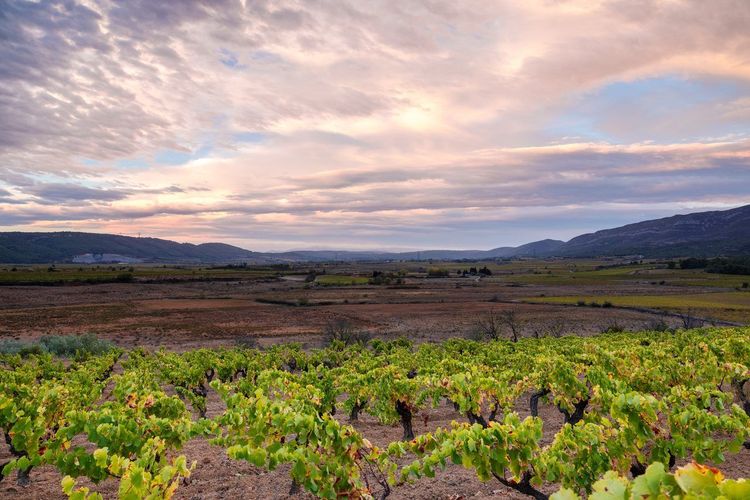
Occitanie produces 30% of French wine by volume — it is France's foremost wine-producing region. Long associated with everyday table wine, the region has undergone a qualitative revolution since the 1980s that today earns it well-deserved international recognition.
The Languedoc AOCs (Faugères, Saint-Chinian, Pic Saint-Loup, Terrasses du Larzac, La Clape) produce characterful reds, often blends of Grenache, Syrah, and Mourvèdre. Pic Saint-Loup, 20 km north of Montpellier, has carved out the strongest reputation: estates such as l'Hortus or Château de Cazeneuve produce wines that stand comparison with the finest appellations of the southern Rhône.
The Blanquette de Limoux deserves a special mention: it is the world's oldest sparkling wine, produced since 1531 by the monks of the Abbaye de Saint-Hilaire using the ancestral method — fermentation in bottle without added sugar — 150 years before Champagne. The cellars of Limoux offer tastings year-round.
On the gastronomic side, cassoulet (whose paternity Castelnaudary claims, with its Lauragais lingot beans and duck confit) is the region's culinary emblem. But Occitanie also means: brandade de morue from Nîmes, Roquefort aged in the natural caves of Combalou in the Aveyron (PDO since 1925), Bouzigues oysters from the Étang de Thau, and foie gras from the Gers.
The vineyards of Roussillon — Banyuls, Collioure AOC, Maury — produce fortified wines of surprising complexity, often compared to Port. Banyuls Grand Cru, aged beneath the rooftops of cellars facing the Mediterranean, pairs perfectly with dark chocolate or foie gras.
Our Ryo article on the vineyards of Occitanie details the best wine routes and cellars open for tasting, territory by territory.
Visiting Occitanie by Train
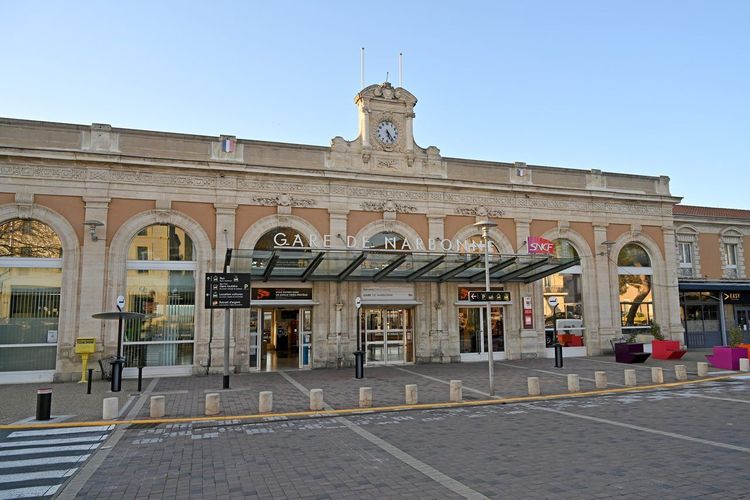
Good news for those who want to visit Occitanie without a car: the region has developed a solid rail offering. From Paris, Toulouse is reachable in 4h10 by TGV and Montpellier in 3h20. The Bordeaux–Toulouse–Montpellier–Marseille corridor connects major cities in under two hours from one to the next.
For intercity journeys, TER Occitanie regional trains cover the main routes: Toulouse–Carcassonne (45 min), Carcassonne–Narbonne (30 min), Narbonne–Perpignan (45 min), Montpellier–Nîmes (30 min). These connections make it possible to build a complete Mediterranean itinerary without a car: Montpellier–Nîmes–Narbonne–Perpignan in four rail stages over two to three days.
Natural sites and Cathar castles remain more difficult to reach without a vehicle. The Gorges du Tarn, the Cirque de Gavarnie, and the Corbières fortresses require a hire car or an organised tour from the nearest city. In July and August, seasonal shuttles connect some stations to the most-visited Pyrenean resorts.
For cyclists, the Canal du Midi cycling route combines naturally with the train: take the TER to Toulouse, return by TER from Sète or Montpellier after 360 km of shaded towpaths. Several hire companies offer one-way rental packages.
When to Go and Practical Information
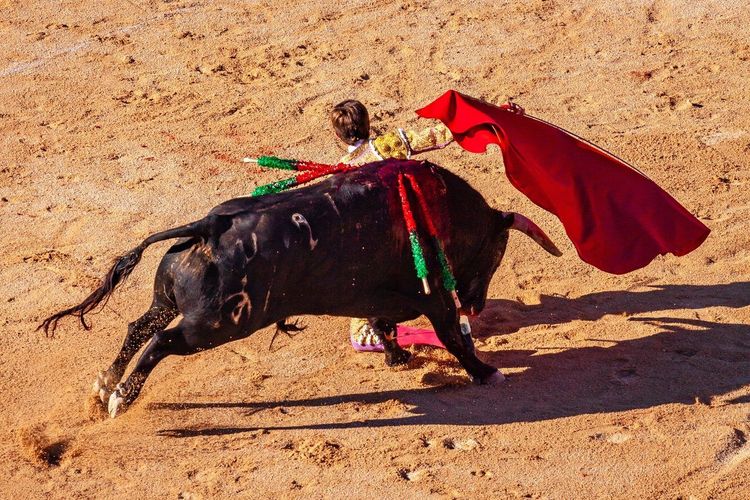
May–June offers the best balance between quality and crowds. Temperatures reach 22–26°C, natural sites emerge from their winter dormancy, and vegetation is at its peak. The férias are in full swing — the Feria de Nîmes in May draws 200,000 spectators over five days. In the vineyards, the June flowering perfumes the garrigue.
July–August is peak season. The Cité de Carcassonne can receive 30,000 visitors a day in August — arrive before 9am or after 6pm for a peaceful visit. The Pyrénées, on the other hand, are ideal in midsummer: open mountain passes, working refuges, alpine flora in bloom. The Mediterranean coast is lively, though some spots can feel saturated.
September–October is the underrated season. Once the holiday crowds have gone, the sun remains (the Mediterranean reaches 24°C in September). The grape harvest in the Languedoc vineyards opens estates to visitors. Hiking in Ariège takes on magnificent autumn colours from mid-October.
November to March suits skiers (29 resorts in the Pyrénées) and lovers of art cities without crowds. The Cité de Carcassonne in winter mist or dusted with the first snowflakes is particularly beautiful. The Limoux Carnival (from January to late March, the longest in France) and the Christmas markets in Toulouse and Montpellier bring the winter months to life.
Indicative budget: between 90 and 180 euros per person per day (accommodation and meals in a 3-star hotel). Toulouse and Montpellier have prices comparable to other major French cities. Albi, Narbonne, and Montauban are noticeably more affordable.



FAQ
What Is the Best Time to Visit Occitanie?
May and June offer the best compromise: pleasant temperatures (20–26°C), uncrowded sites, lush vegetation, and local events (Nîmes férias in May). September is an excellent alternative for vineyards and mountain scenery. July and August are ideal for the Pyrénées and water sports, but the most popular sites — Carcassonne, Pont du Gard — are saturated in peak season.
How Many Days Do You Need to Visit Occitanie?
A minimum of 10 days covers the must-sees: Toulouse and Albi (2–3 days), Carcassonne (1–2 days), the Narbonne–Nîmes corridor (2 days), Montpellier (1 day), and the Pyrénées (2 days). Three weeks allow you to add the Canal du Midi, the Cathar castles, Perpignan–Collioure, and the Gorges du Tarn. For a week, it is better to focus on one area: the Toulouse–Albi–Carcassonne triangle or the Mediterranean corridor Nîmes–Montpellier–Perpignan.
How Do You Visit Occitanie by Train?
The Toulouse–Carcassonne–Narbonne–Perpignan corridor and the Nîmes–Montpellier corridor are well served by TER Occitanie regional trains. From Paris, Toulouse is 4h10 away and Montpellier 3h20 by TGV. For natural sites (Pyrénées, Cathar castles, Gorges du Tarn), a rental car is almost indispensable outside peak season. In July and August, seasonal shuttles connect some stations to the most-visited sites.
What Are the Must-See Sites in Occitanie?
Five sites not to be missed: the Cité de Carcassonne (UNESCO-listed medieval fortress), the Pont du Gard (UNESCO-listed Roman aqueduct), the Cirque de Gavarnie (UNESCO-listed natural site), the Viaduc de Millau (the world's tallest bridge), and the Canal du Midi (UNESCO-listed waterway). Among the cities: Toulouse for its pink architecture, Albi for its fortress-cathedral and the Toulouse-Lautrec museum, and Nîmes for its intact Roman monuments.
What Can Families Do in Occitanie?
Several experiences are particularly well suited to families: the Cité de l'Espace in Toulouse (full day, simulators and full-scale space replicas), the Grotte de Niaux in Ariège (prehistoric paintings, reservation required), the Salins d'Aigues-Mortes (unexpected pink natural spectacle), swimming at the Pont du Gard (clear river with sandy banks), and Pyrenean resorts (horse riding, summer sledging, tree-top adventures). The Cité de Carcassonne, with its medieval castle atmosphere, is universally loved by children.
What Can You Do in Occitanie in Winter?
Winter offers two distinct experiences. In the mountains: 29 ski resorts in the Pyrénées, from Font-Romeu (Pyrénées-Orientales) to Cauterets (Hautes-Pyrénées), with slopes for all levels. In the cities: art towns can be visited without crowds, and the Cité de Carcassonne under the first snowflakes is a sight in itself. The Limoux Carnival (from January to late March, the longest in France) is a unique cultural event. The Christmas markets in Toulouse and Montpellier bring December to life.
What Can Couples Do in Occitanie?
Occitanie offers many romantic settings. Collioure out of season, with its turquoise waters and Catalan alleyways, is one of the most photogenic villages in France. A stargazing night at the Pic du Midi, a barge cruise on the Canal du Midi, a weekend at a wine estate in Pic Saint-Loup, or a twilight stroll through the medieval lanes of Albi — the backdrops are endless. For food lovers, the Halles de Narbonne market on a Saturday morning is a sensory experience to share.
Conclusion
Occitanie resembles no other French region. Within a few hundred kilometres, it moves from Mediterranean plains to Pyrenean glaciers, from the Roman arenas of Nîmes to the pink bastides of Toulouse, from the vineyards of the Languedoc to the vertiginous gorges of the Tarn. Each geographical area deserves a trip in its own right, and travellers discovering the region for the first time often leave with a longer list of reasons to return than the one they arrived with.
To start exploring Occitanie, Ryo's audio-guided tours cover all the region's major cities. From Toulouse to Carcassonne, and through Nîmes, Albi, Montpellier, Perpignan, Narbonne, Montauban, and Collioure, each tour follows your own pace — from 1 hour to 2h45 depending on the city — with stories, anecdotes, and local secrets delivered directly to your ears.
À lire également